01
Bodh Gaya
Bihar
Enlightenment, the Mahabodhi Temple and the Bodhi Tree
Overview
The Buddhist Circuit of India is the most meaningful journey a follower of the Buddha can make, and one of the most moving trips any traveller can take. In a single unbroken route across Bihar and Uttar Pradesh you walk through the great events of the Buddha's life and the places where he lived and taught. You sit under the Bodhi Tree at Bodh Gaya where he found enlightenment, you stand in the deer park at Sarnath where he gave his first sermon, you bow at Kushinagar where he passed into mahaparinirvana, and you walk the quiet hills of Rajgir and the ruins of the great Nalanda university. Whether you come as a pilgrim from Sri Lanka, Thailand, Myanmar, Japan or Vietnam, or as an Indian traveller discovering your own heritage, this circuit gives you time to pray, to meditate and to feel the living presence of the Dhamma.
The Buddhist Circuit is the path of the Buddha's own life. You go to the place of his enlightenment, the places where he taught, the place of his last sermon, the place of his mahaparinirvana, and the place of his first sermon. This tour follows that path across Bihar and Uttar Pradesh in 8 days and 7 nights, from Gaya to Varanasi.
Tradition says the Buddha himself named four places for pilgrims to visit: Lumbini, where he was born (now in Nepal), Bodh Gaya, Sarnath and Kushinagar. This tour covers three of these four, plus Rajgir, Nalanda and Vaishali. Lumbini can be added as an extension.
Bodh Gaya, Bihar: the Mahabodhi Temple and the Bodhi Tree, where the Buddha attained enlightenment. A UNESCO World Heritage Site since 2002.
Rajgir, Bihar: Griddhakuta, the Vulture's Peak, where the Buddha gave many teachings. Venuvana, the bamboo grove, and the Vishwa Shanti Stupa on Ratnagiri hill.
Nalanda, Bihar: the ruins of Nalanda Mahavihara, one of the oldest universities of the ancient world. A UNESCO World Heritage Site since 2016.
Vaishali, Bihar: the Ashokan pillar with a single lion on top, and the relic stupa. Tradition says the Buddha gave his last sermon here.
Kushinagar, Uttar Pradesh: the Mahaparinirvana Temple with the reclining Buddha, about 6 metres long, and the Ramabhar Stupa where he was cremated.
Sarnath, Uttar Pradesh: the deer park where the Buddha gave his first sermon, the Dhamek Stupa, and the museum that keeps the Lion Capital, the national emblem of India.
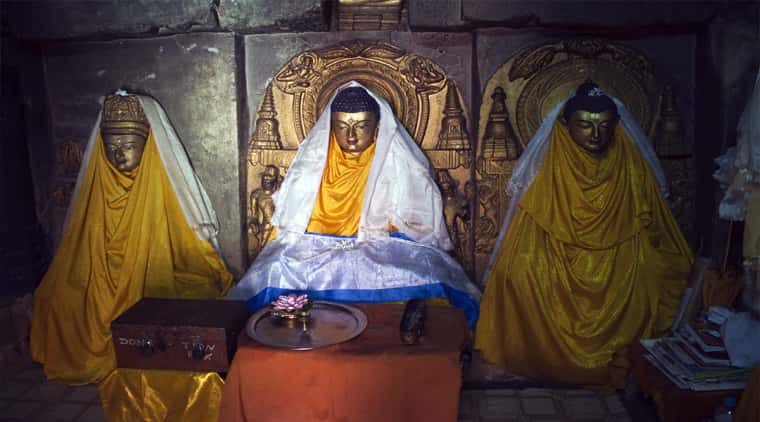
The Mahabodhi Temple rises to about 50 metres. Beside it grows the Bodhi Tree, believed to come from the tree under which the Buddha sat. The Vajrasana, the diamond throne, marks the spot of his enlightenment. Monks and pilgrims from Sri Lanka, Thailand, Myanmar, Bhutan, Tibet, Japan and Vietnam chant and meditate here all day.
Around the temple, many Buddhist countries have built their own monasteries. A slow walk past the Thai, Japanese, Bhutanese and Tibetan monasteries feels like a walk through the whole Buddhist world. The 25 metre Great Buddha Statue is also close by.
Rajgir was the capital of the old kingdom of Magadha. The Buddha spent many rainy seasons here. A ropeway goes up Ratnagiri hill to the white Vishwa Shanti Stupa. The path to Griddhakuta is a gentle climb on old stone steps.
Nalanda is about 12 to 15 km from Rajgir. The red brick ruins of monasteries and temples spread over a wide area. Students and teachers came here from China, Korea and Central Asia. The Chinese pilgrim Xuanzang studied here in the 7th century.
Vaishali is quiet and green. The Ashokan pillar here is one of the best kept in India. Kushinagar is the place where the Buddha passed away. Pilgrims offer robes and flowers at the reclining Buddha. Sarnath, about 10 km from Varanasi, is where the Buddha first taught the Four Noble Truths to five companions.
This route starts where the Buddha found enlightenment and ends where he first shared it. In between, it follows the road from south Bihar to the north and then west into Uttar Pradesh, so you never drive back over the same road. It also lets you finish in Varanasi, which has good flights and trains to the rest of India.
You arrive at Gaya airport, which is about 5 to 10 km from Bodh Gaya. You leave from Varanasi airport. A private AC car with an experienced driver takes you between all the sites. Patna is another gateway, and Kushinagar has had its own international airport since 2021.
Some days have long drives of 6 to 7 hours, because the sites are far apart. Start early on these days and stop for rest. Roads in parts of Bihar and Uttar Pradesh can be slow, so keep extra time.
IRCTC also runs a Buddhist Circuit Tourist Train. Routes, dates and fares change by season, so please confirm the current details with IRCTC.
October to March is the best time. The days are cool and pleasant for walking and sitting in meditation. December and January mornings can be foggy, so keep some flexibility on drive days. April to June is very hot. July to September brings heavy rain.
These are living places of prayer. Wear modest clothes that cover shoulders and knees. You remove your shoes at many shrines, so carry socks for hot or cold stone. Speak softly, walk clockwise around stupas, and follow the signs about phones and photos.
You need a valid Indian visa. If you add Lumbini, you also need to follow the rules for entering Nepal. Many countries run monasteries and guest houses in Bodh Gaya, so you may find a familiar home there. Carry some Indian rupees for offerings and small shops.
The circuit is a journey into India's own history. It pairs well with Varanasi and the Ganga aarti, which you see on the last evening of this tour. Families and seniors can do it comfortably with a private car and an easy pace.
Bodh Gaya has simple cafes run by monasteries, with Tibetan momos and thukpa as well as Indian food. In Bihar, try litti chokha. In Varanasi, try kachori sabzi for breakfast and a cup of lassi. Drink bottled or filtered water through the trip.
October to March
Buddhist pilgrims, spiritual seekers, history and heritage lovers, families and seniors
Easy to moderate
Route & distances
Accurate distances and travel times for every leg: 668 km by road. Road times include a traffic buffer; distances marked “aerial” are straight-line for flight, helicopter, ropeway and water legs.
| # | Leg | Mode | Distance | Time |
|---|---|---|---|---|
| 1 | Gaya Airport → Bodh Gaya | By road | 10 km | ~18mest. |
| 2 | Bodh Gaya → Rajgir | By road | 79 km | ~1h 28mest. |
| 3 | Rajgir → Nalanda | By road | 14 km | ~18mest. |
| 4 | Nalanda → Vaishali | By road | 129 km | ~2h 16mest. |
| 5 | Vaishali → Kushinagar | By road | 180 km | ~2h 54mest. |
| 6 | Kushinagar → Sarnath | By road | 247 km | ~4h 4mest. |
| 7 | Sarnath → Varanasi | By road | 9 km | ~14mest. |
Day by day
A carefully paced plan, day by day. Tap any day for the stay, meals and altitude detail.
Today you land at Gaya International Airport. Your driver takes you to Bodh Gaya, a short drive away. After check in and rest, you make your first visit to the Mahabodhi Temple in the evening, when the lamps are lit and monks chant around the Bodhi Tree.
Special Tips for This Day: Carry a light shawl or socks, as you remove your shoes and may sit on cool stone. The evening is calm and good for a slow first visit.
Today you spend the morning at the Mahabodhi Temple, the Bodhi Tree and the Vajrasana. You can sit for your own meditation near the tree.
After lunch you walk among the monasteries built by Buddhist countries, and see the Great Buddha Statue.
Special Tips for This Day: Early morning, soon after the temple opens, is the most peaceful time at the Bodhi Tree. Rules on phones and bags inside the main complex change from time to time, so follow the signs and confirm timings locally.
Today you drive to Rajgir. You visit Griddhakuta, the Vulture's Peak, on foot or by the ropeway to the Vishwa Shanti Stupa. You also see Venuvana, the bamboo grove, and the hot springs.
In the afternoon you drive about 12 to 15 km to Nalanda and walk among the red brick ruins of the old Mahavihara. Tonight you stay in Rajgir or nearby.
Special Tips for This Day: Start early so you climb Griddhakuta before the day gets warm. At Nalanda, a licensed local guide brings the ruins to life.
Today you drive toward Vaishali, usually passing near Patna. Vaishali is a quiet, green site. Tradition says the Buddha gave his last sermon here.
You see the Ashokan pillar with its single lion, the relic stupa and the Abhishek Pushkarini tank. Tonight you stay in Vaishali or Patna.
Special Tips for This Day: Roads here can be slow, so keep water and snacks in the car. If you are tired, Patna has more choice of hotels for the night.
Today is a long drive to Kushinagar in Uttar Pradesh, so you start early. If you reach in time, you make a first quiet visit to the Mahaparinirvana Temple to see the reclining Buddha.
Special Tips for This Day: Plan stops for food and a stretch on the way. Keep your documents and valuables in your day bag on travel days.
This morning you visit the Mahaparinirvana Temple, the reclining Buddha of about 6 metres, the Ramabhar Stupa and the Matha Kuar shrine. Many pilgrims offer robes, flowers or lamps.
After lunch you drive to Varanasi and check in.
Special Tips for This Day: Early morning at the Ramabhar Stupa is very peaceful for walking around it. Leave Kushinagar by early afternoon so you reach Varanasi in daylight.
Today you visit Sarnath, where the Buddha gave his first sermon. You see the Dhamek Stupa, the monastery ruins, the Ashokan pillar site and the museum with the Lion Capital.
In the evening you take a boat on the Ganga and watch the Ganga aarti at the ghats.
Special Tips for This Day: The Sarnath museum is a highlight, so keep extra time and confirm its weekly closing day locally. Reach the ghats early for a good place at the aarti.
After breakfast, and an early sunrise boat ride if your flight time allows, your driver takes you to Varanasi airport for your onward journey.
Special Tips for This Day: Keep a buffer for the drive to the airport, as Varanasi traffic can be heavy.
Travel tips
Follow the Buddha's own path across Bihar and Uttar Pradesh: Bodh Gaya, Sarnath, Kushinagar, Rajgir, Nalanda and Vaishali. Here is how to travel it well, in the right order, whether you come from abroad or from within India.
The circuit is loveliest in the cool, dry months when walking and sitting in meditation are comfortable. Most pilgrims avoid the fierce summer and the heavy monsoon. Winter mornings can be foggy, so keep your early plans flexible.
Fly into Gaya for Bodh Gaya and out of Varanasi near Sarnath, with Patna and Kushinagar as extra gateways. On the ground, a private car gives you the most freedom. The IRCTC Buddhist Circuit Tourist Train is a comfortable all-in-one alternative.
The IRCTC Buddhist Circuit Tourist Train is a fully air-conditioned, guided package that links the main sites and ends near Agra. Routes, dates and fares change by season, so confirm the latest details directly with IRCTC.
Every site on the circuit marks a real moment in the Buddha's life, and knowing the story of each one deepens your visit. Take them slowly and in order if you can.
These are living places of worship, and more than monuments, so a little care goes a long way. Dress and behave as a respectful guest, and simple rituals like circumambulation make your visit more meaningful.
The circuit is at its best when you do more than look. Give yourself time to sit, to chant and to simply be present, because these quiet moments are what pilgrims remember most.
The circuit can suit many budgets, from simple pilgrim guest houses to comfortable hotels. Beyond your tour cost, keep money aside for entries, guides and offerings, and carry some cash for small places.
We do not promise fixed figures here, because prices and fees change often. Please confirm current hotel rates, entry fees and IRCTC train fares at the time of booking, and treat any amount you read online as a rough guide only.
A few simple habits make the whole trip smoother. Think about food, water, connectivity and what to carry each day, and prepare in the bigger towns because the smaller ones have fewer facilities.
The circuit is a safe, well-travelled pilgrim route when you take normal care. Pace yourself on long drive days, protect your stomach, and keep documents and valuables close during transfers.
The circuit welcomes pilgrims, families, seniors and curious first-time visitors alike. A private car and a gentle pace make it suitable for almost everyone, and a little planning tailors it to your needs.
Pilgrims from Sri Lanka, Thailand, Myanmar, Japan, Vietnam and beyond are warmly welcomed across the circuit, and national monasteries offer a familiar home at several sites. Visas and timing need a little planning.
From the Bodhi Tree to the deer park, the whole of a life laid out along one road.
The circuit is the map of a life: awakened at Bodh Gaya, teaching at Sarnath, and at peace at Kushinagar. Travel it slowly, sit a while at each place, and the Dhamma becomes less a lesson and more a living memory you carry home.
What's included
What travellers say
“Had a wonderful experience with way to india for my badrinath kedarnath yatra.everything was well organized-from travel accommodation to food. A special thanks to Ms. Neha who managed everything so beautifully n was extremely supportive n cooperative throughout the journey. They took great care of us n darshan was done very smoothly.”a month ago · Google
“A big thanks to Way To India for organising such a truly memorable and spiritually fulfilling experience during our 12 Jyotirlinga Darshan pilgrimage from 1st May to 18th May. They organized the entire journey exceptionally well, ensuring that every aspect of the trip was smooth, comfortable, and hassle-free. From transportation and hotel arrangements to darshan planning and coordination, everything was managed professionally. Despite the extensive travel across multiple destinations, the itinerary was well-structured, allowing us to complete all the Jyotirlinga darshans comfortably. Thanks to staff of Way To India, especially, Ms Neha, who was supportive, responsive, and attentive throughout the journey, always ready to assist whenever needed. Her dedication and careful planning made this sacred pilgrimage stress-free and enjoyable. I sincerely appreciate their excellent service, commitment, and hospitality. Highly recommend Way To India to anyone planning a spiritual tour, especially for the 12 Jyotirlinga Yatra. Thank you for making this divine journey so special and memorable.”5 months ago · Google
“We have successfully completed the 12 Jyotirlinga Yatra, with Waytoindia and it was a truly blessed and unforgettable journey. Every aspect of the tour was well planned and professionally organized, from transportation and accommodations to temple visits and sightseeing. Visiting all twelve sacred Jyotirlingas was a deeply spiritual experience. The itinerary was designed efficiently, allowing us to have darshan at each shrine comfortably while enjoying the cultural and religious significance of every destination. We sincerely appreciate the excellent support and coordination throughout the trip. The team was always available to assist, ensuring a smooth and stress-free pilgrimage. Thank you Waytoindia for making our dream of completing the 12 Jyotirlinga Yatra a reality. We highly recommend this tour to anyone seeking a well-organized and spiritually enriching pilgrimage experience. Har Har Mahadev! 🙏🕉️”5 months ago · Google
Travelled with Way to India?
Share your experience on Google — it takes a minute and helps fellow travellers plan with confidence.
FAQ
The Buddhist Circuit is the pilgrimage route that connects the key places in the Buddha's life and teaching. It mainly covers Bodh Gaya, Rajgir, Nalanda, Vaishali, Kushinagar and Sarnath, and it can be extended to Sravasti, Sankassa and to Lumbini in Nepal. Travelling it lets you follow the Buddha's journey from enlightenment to his first sermon and finally to his mahaparinirvana.
The core six-site circuit is comfortable in about 8 days and 7 nights. If you want to add Sravasti, Sankassa or Lumbini in Nepal, plan for about 10 to 14 days. Taking a little more time is always better, because these sites are made for slow, reflective visits.
The best season is from about October to March, when the weather across Bihar and Uttar Pradesh is cool and pleasant. The summer months from April to June are very hot, and the monsoon from July to September brings heavy rain. Winter mornings can be foggy, so keep a little flexibility in your travel timings.
Gaya International Airport is the natural starting point because it is closest to Bodh Gaya, and Varanasi International Airport is ideal for ending the trip near Sarnath. Patna is another well-connected option, and since 2021 Kushinagar International Airport has given overseas pilgrims a direct way into the heart of the circuit. Check current flight connections before you book.
Yes. IRCTC runs the Buddhist Circuit Tourist Train, a fully air-conditioned guided package that links the main Buddhist sites and ends near Agra. Routes, departure dates and fares change by season, so please confirm the latest details directly with IRCTC.
Bodh Gaya is the place where the Buddha attained enlightenment under the Bodhi Tree. Its Mahabodhi Temple Complex is a UNESCO World Heritage Site and is regarded as the holiest place in the Buddhist world. Pilgrims from every Buddhist nation come here to meditate, and many countries have built their own monasteries around the temple.
Yes, it suits most ages because the sightseeing is mostly gentle walking, and a private car keeps travel comfortable. A few days do involve long drives, so seniors should plan early starts, regular rest stops and a relaxed pace. Rajgir has a ropeway that makes the Vulture's Peak easier to reach.
Dress modestly, with shoulders and knees covered, as a mark of respect at temples and stupas. You will need to remove your shoes at many shrines, so easy footwear and a pair of socks help on cool or hot stone. Speak softly, walk clockwise around stupas, and follow local photography and phone rules.
Yes, and these sites welcome overseas pilgrims warmly, with monasteries and guest houses run by many Buddhist nations. You will need a valid Indian visa, and if you add Lumbini you will also need to follow the rules for entering Nepal. Travelling with an organised plan makes visas, transport and language much easier to manage.
The circuit is a well-travelled pilgrim route and is generally safe when you take normal travel care. Roads in parts of Bihar and Uttar Pradesh can be slow, so patience and early starts help on the long drive days. Carry your essential medicines, drink bottled or filtered water, and keep your documents and valuables with you during transfers.
You may also like
 7D / 6N
 3D / 2N
 18D / 17N
 7D / 6N
 19D / 18N
 4D / 3N
Tell us your dates and group size. A WayToIndia travel expert replies within a few hours with a plan you can customise freely. Planning India journeys since 2010.
Explore Way to India
© 2026 Way to India. All rights reserved.