 6D / 5N
 All World Heritage Sites
UNESCO World Heritage · Cultural · inscribed 1986
Churches and Convents of Goa
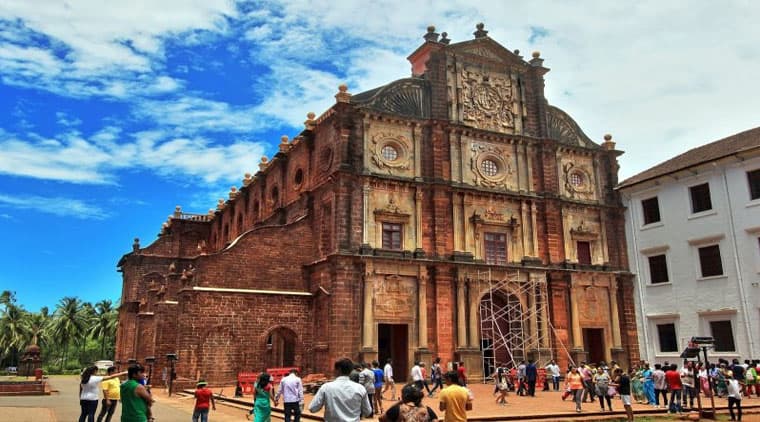
About 10 km east of Panaji lies Old Goa, once the capital of the Portuguese Indies and so grand in its day that people called it the Rome of the Orient. Its surviving churches and convents, led by the Basilica of Bom Jesus with the relics of St Francis Xavier, have been a UNESCO World Heritage Site since 1986. These are living places of prayer, and they ask for the same respect you would carry into any temple.
The story of this place
The Portuguese took Goa in 1510, and the riverside city they built became the capital of their territories in Asia. Religious orders arrived one after another, Franciscans, Jesuits, Augustinians, Dominicans and others, and each raised churches and convents in the styles of Europe, built with local laterite stone and local craftsmanship. Out of this meeting grew a distinct Indo-Portuguese style, and from Goa these forms of Manueline, Mannerist and Baroque art spread to missions across Asia.
The most loved figure of this story is St Francis Xavier, the Jesuit missionary who travelled across Asia in the 16th century and passed away in 1552. His body was brought to Goa, and devotees found it remarkably preserved. Goans of all faiths lovingly call him Goencho Saib, and his relics rest in the Basilica of Bom Jesus, completed in 1605.
Old Goa itself declined after epidemics, and the capital shifted towards Panjim, but seven great monuments survive, protected today by the Archaeological Survey of India. UNESCO inscribed them in 1986.
What you will see
The Basilica of Bom Jesus is the emotional centre of Old Goa. Inside, to the right of the altar, stands the mausoleum of St Francis Xavier. The tomb was commissioned in 1665 by the Grand Duke of Tuscany, made in Florence, with fine bronze work, and the silver casket holding the relics rests on top. You view it from the floor of the chapel; the casket is brought down only during the exposition.
Across the road rises the Se Cathedral, completed in 1652, with its calm Tuscan style exterior and a vast, cool interior. It is the seat of the Archbishop of Goa. Beside it stands the Church and Convent of St Francis of Assisi, one of the oldest complexes here, with Manueline, Gothic and Baroque elements.
A short walk away is the Chapel of St Cajetan, modelled on St Peter's in Rome, and on a nearby hill the lone tower of the ruined St Augustine church, of which only about a third of the bell tower still stands. The Church of Our Lady of the Rosary, in the Manueline style, is the earliest of the surviving churches. Everything lies within easy walking distance, under great old trees.
Mass, timings and church etiquette
These are working churches, and daily prayer continues as it has for centuries. The general pattern is that the Basilica and the main churches stay open through the day, roughly from morning until 5 or 6.30 in the evening, with mass in the early morning and again in the evening, and fuller schedules on Sunday. Timings shift, and some smaller churches open only for services, so please check current timings before you plan a specific darshan of the relics.
Dress modestly, exactly as you would for a temple. Shorts, sleeveless tops and beachwear are not allowed, and ladies with bare shoulders are asked to use a stole. Keep silence inside, do not disturb worshippers during mass, and ask before photographing the interiors. Entry to the churches is free.
The exposition of St Francis Xavier
About once every ten years, the relics of St Francis Xavier are brought down from their high mausoleum and moved in procession from the Basilica of Bom Jesus to the Se Cathedral, where pilgrims can venerate the casket up close. This is the exposition, one of the great religious gatherings of India, and it draws millions of devotees from around the world.
The 18th exposition was held from 21 November 2024 to 5 January 2025. Going by the ten year tradition, the next one is expected around 2034, and the exact dates will be announced by the Church authorities in Goa closer to the time. Every year on 3 December, Old Goa also celebrates the feast of St Francis Xavier, and the days around it are full of pilgrims, novenas and a great fair.
Best time to visit
November to February is the ideal season, warm but not harsh, and it overlaps with the feast of St Francis Xavier on 3 December and the Christmas season, when Old Goa is at its most alive and also at its most crowded.
The monsoon, from June to September, turns everything deep green and the old laterite walls glow against the rain clouds, a beautiful time for photographs if you do not mind the downpours. Within the day, come early. The tour buses arrive from late morning, and the churches are at their most peaceful in the first hours after opening.
How to reach
Old Goa sits about 10 km east of Panaji, an easy 20 to 30 minute drive, and buses and taxis run all day. If you are staying in North Goa or Panaji, this is a simple half day trip.
By train, Karmali station is only about 2 km away, and several Konkan Railway trains stop there. By air, Dabolim airport is about 25 to 30 km from Old Goa, and the newer Manohar International Airport at Mopa serves North Goa. Most of our guests combine Old Goa with Panaji's old Latin quarter, Fontainhas, for a full day of heritage.
For our NRI and OCI travellers
If you are planning your Goa trip around Christmas and New Year, book early, because this is the peak of the peak season and Old Goa fills up on feast days. If your family hopes to attend the next exposition, expected around 2034, tell us early and we will plan the pilgrimage properly, with stay near Panaji and time built in for the queues.
Many overseas visitors are surprised by how Indian these churches feel, with local flowers, Konkani hymns and devotees of every faith. Treat the visit as a darshan, not a photo stop, and it will stay with you.
Questions travellers ask us
When is the next exposition of St Francis Xavier?
The 18th exposition was held from 21 November 2024 to 5 January 2025, when the relics were moved from the Basilica of Bom Jesus to the Se Cathedral for veneration. The tradition is roughly once every ten years, so the next is expected around 2034. The Church authorities in Goa announce the exact dates.
Can I see the relics of St Francis Xavier on a normal day?
Yes, in the sense that the silver casket rests on top of the mausoleum inside the Basilica of Bom Jesus, and you can see it from the chapel floor. The casket is brought down for close veneration only during the exposition, held about once in ten years.
Is there a dress code for the churches of Old Goa?
Yes. These are working churches, so dress as you would for a temple. Shorts, sleeveless tops and beachwear are not allowed, and ladies with bare shoulders are asked to cover them with a stole. Keep silence inside and do not disturb worshippers during mass.
Is there an entry fee for the churches?
No, entry to the churches of Old Goa is free. The monuments are protected by the Archaeological Survey of India, and donations for the upkeep of the churches are voluntary.
How much time do I need in Old Goa?
Keep at least half a day. The Basilica of Bom Jesus, the Se Cathedral, the Church of St Francis of Assisi and the Chapel of St Cajetan are all within walking distance, and the tower of St Augustine is a short drive or an uphill walk. With Panaji and Fontainhas added, it becomes a very satisfying full day.
Which is the best time of day to visit?
Early morning, soon after the churches open. The light is soft, mass is often in progress, and the tour bus crowds have not yet arrived. December is the most festive month, with the feast of St Francis Xavier on 3 December and Christmas soon after.
A note on the tours below. These packages travel close to Churches and Convents of Goa, but a package may not include a guided visit to the site itself. If you would like this place added to your journey, please tell your Way to India travel consultant and they will happily build it into your itinerary for you.