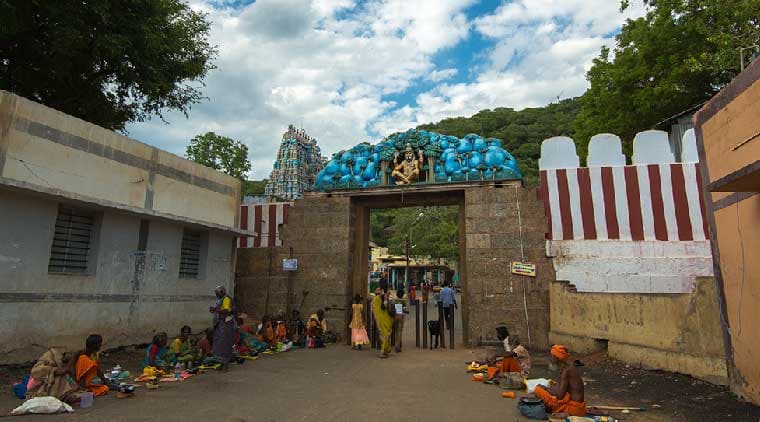
 7D / 6N
Tirupati Madurai Rameshwaram Kanyakumari Tour Package
● Starts Chennai
From₹20,500* / person
Explore →EMI from ₹1,004/mo
Overview
Madurai Rameshwaram Kanyakumari tour package includes the most venerated pilgrimage cities of India.
Apart from being the most esteemed holy cities of India, Madurai, Rameshwaram and Kanyakumari are among the few cities that can boast of meticulously carved, spectacular temples, displaying brilliant workmanship.
The Meenakshi temple of Madurai deserves special mention for being an architectural marvel. It has made its entry into the top 30 nominees for the new Seven Wonders of the World. No wonder then that South India Temple Tours cannot be complete without a visit to Madurai's Meenakshi Amman Temple.
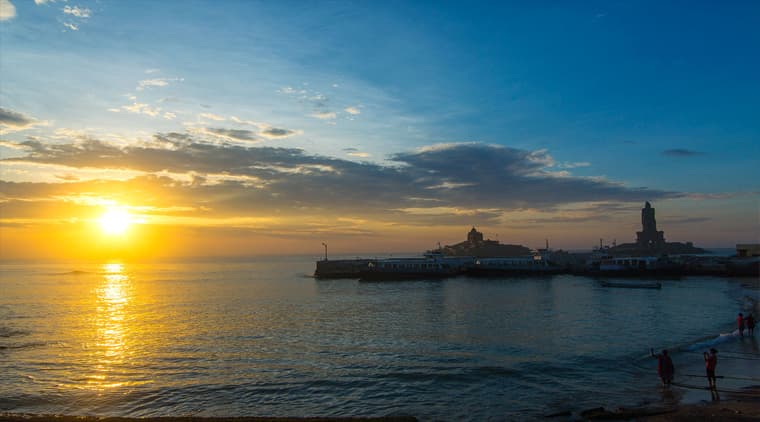
The Madurai Rameshwaram Kanyakumari tour is a wholesome travel package for pilgrims and vacationers alike. It includes the sun soaked pristine beaches, rich flora and lush greenery, architectural marvels like the bridges, museums that reflects the culture and rich heritage of India, meticulously carved holy shrines of India and a radiant sunset against the epic Kanyakumari temple.
The Madurai Rameshwaram Kanyakumari Tour is a well-rounded travel experience, ideal for pilgrims as well as leisure travellers. This journey offers a perfect blend of spirituality, heritage, and natural beauty—from sun-kissed pristine beaches and lush green landscapes to architectural landmarks, cultural museums, and finely carved sacred temples that reflect India’s rich spiritual legacy.
Madurai Rameshwaram Kanyakumari tour package includes the most venerated pilgrimage cities of India. Apart from being the most esteemed holy cities of India, this tour makes you experience meticulously carved, spectacular temples, displaying brilliant workmanship.
For those who cherish History and Architecture, it is fascinating to note that Meenakshi Amman Temple located in Madurai. Walking through those gates, you really feel the weight of the centuries. It’s not just a building; it’s a survivor. While its roots go back to antiquity, the temple is actually a living timeline of three different empires that refused to let this place fade away.
The Early Pandyas (6th–10th Century CE): The Foundation I love thinking about the fact that people were writing poetry about this spot as far back as the 500s. The Early Pandyas were the ones who first put Madurai on the map, building the original, humble shrines that started it all.
The Later Pandyas (13th Century CE): The "Golden Age" This is when the scale really shifted. If you look at the massive gopurams (those iconic gateway towers), you're seeing the ambition of kings like Maravarman Sundara Pandyan I. They turned a sacred site into a true architectural statement.
The Nayaka Dynasty (16th–17th Century CE): The Grand Rebirth What’s wild is that most of what you see today almost didn't happen. The temple was nearly destroyed during the 14th-century invasions. It was the Nayakas—specifically Viswanatha and Thirumalai Nayak—who picked up the pieces. They didn't just restore it; they reimagined it, expanding the complex into the massive, labyrinthine masterpiece we wander through today.
If you thought Madurai is the only marvel to visit, read further about Rameshwaram and it would make you pack your bags and visit this fantastic destination.
Rameswaram is a place where geography and legend collide. It’s an island outpost where the air tastes of salt and incense, but beyond the typical pilgrimage, there are layers of history that most casual tourists walk right past.
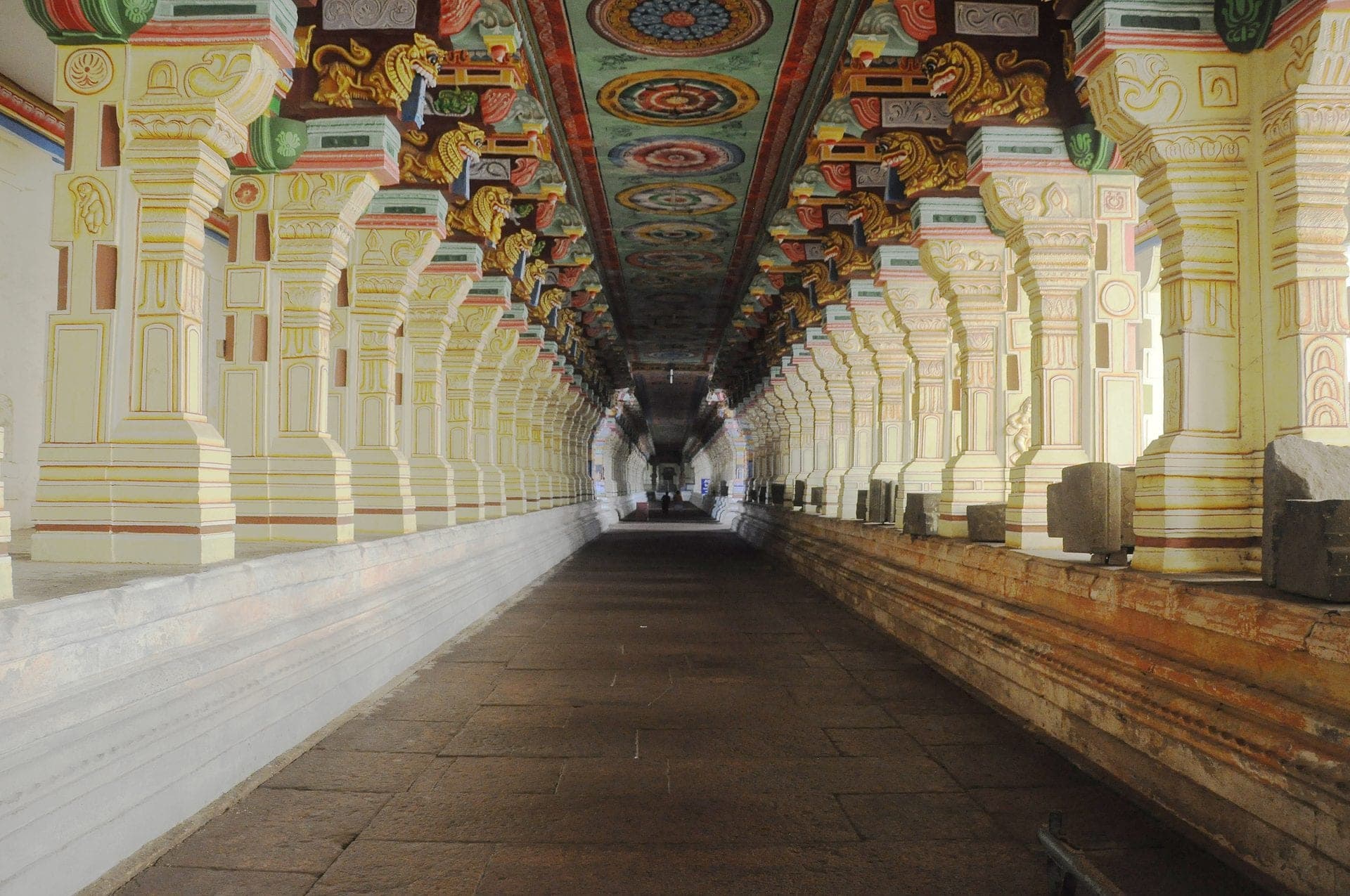
The Hall of Infinite Symmetry: The third corridor is world-famous for its length, but the real magic is the engineering. There are 1,212 pillars, and they are so perfectly aligned that when you look down the row, they converge into a single point. These massive granite blocks were shipped across the sea by the Sethupathy Rajas in the 1700s—a massive logistical feat for the era.
The Geological Puzzle of the 22 Wells: Inside the temple, you’ll find 22 theerthams (wells). Despite being surrounded by the salty ocean, every single well contains fresh water. Even weirder? Each one has a slightly different temperature and mineral taste. It’s an ancient "hydrotherapy" circuit that defies basic coastal geology.
The Hierarchy of the Lingams: There are two main deities inside. Legend says one was made of sand by Sita, and the other was brought from the Himalayas by Hanuman. To honor Hanuman’s effort, a tradition has held for centuries: the "Himalayan" stone lingam must be worshipped first, a small but beautiful detail of ancient etiquette still practiced today.
The Ghost of Ram Setu: If you head to the Panchmukhi Hanuman Temple, you’ll see the "floating stones." Whether you view them through the lens of the Ramayana or as volcanic pumice, seeing heavy rocks bob in water at the edge of the subcontinent is a surreal experience you shouldn't miss.
Last leg f this tour takes you to another very exciting destination - Kanyakumari.
Kanyakumari is much more than just a "Land’s End" photo op. It’s where the Western Ghats meet the ocean, and if you’re planning a trip, there are a few unique details that will change how you see the place:
The Lighthouse of the Goddess: Inside the Kumari Amman Temple, the deity wears a diamond nose ring so brilliant that legend says it used to confuse ancient mariners, who mistook its sparkle for a lighthouse and crashed into the rocks. Because of this, the temple's sea-facing gate remains permanently locked.
The "Gondwana Junction": Geological nerds, take note: The rock where the Vivekananda Memorial stands is actually the spot where India, Madagascar, Sri Lanka, Antarctica, and Australia were once joined 160 million years ago. Geologists literally call it the "Gondwana Junction."
The Chitra Pournami Phenomenon: If you can, time your visit for the full moon in April or May (Chitra Pournami). It’s one of the rare times on Earth where you can stand on the beach and watch the sun set and the moon rise simultaneously on the same horizon.
Architecture of the Sun: In the Gandhi Mandapam, the roof is engineered with a tiny hole so that on October 2nd (Gandhi’s birthday), the sun’s rays fall exactly on the spot where his ashes were once kept. It’s a beautiful bit of "solar architecture" that most people walk right past.
The Healing Sand: Don't just look at the sea; look at the sand. Because of the three-sea confluence, the beach has multicolored sand (red, black, and white). If you head to the nearby Nagaraja Temple, the "prasadam" is actually the temple's clay, which locals have used for centuries to treat skin ailments
Oct - March
Hindus
Easy
Day by day
A carefully paced plan, day by day. Tap any day for the stay, meals and altitude detail.
Madurai Rameshwaram Kanyakumari tour begins from Madurai as we pick you from the Madurai airport or railway station and transfer to the hotel booked at Madurai. Popularly known as the city of nectar, Madurai is the largest cultivator and exporter of Jasmine flowers.
On arrival, check in at the booked hotel and relax. Later, join us for the tour of the fascinating Meenakshi Amman Temple, one of the most awe-evoking temples that is the temple of the triple breasted warrior goddess Meenakshi. The Meenakshi Amman Temple of Madurai, dating back thousands of years, commemorates the divine wedding of Goddess Meenakshi (Parvati) and Lord Sundareswar (Shiva) and stands as a timeless symbol of South Indian spirituality and architecture.
According to legend, Goddess Meenakshi, an incarnation of Parvati, was born to the Pandya king of Madurai. She ruled the kingdom with great strength and wisdom. When she met Lord Shiva in the form of Sundareswarar, she recognized him as her divine consort. Their celestial wedding, known as Meenakshi Tirukalyanam, was witnessed by gods and sages and is believed to have sanctified the city of Madurai. The Meenakshi Amman Temple stands as a sacred reminder of this divine union, symbolizing love, balance, and cosmic harmony.
Men: Dhoti / Mundu; shirts not allowed in sanctum.
Women: Saree, Set-Mundu, Salwar Kameez; no jeans, leggings, shorts, or sleeveless tops.
After breakfast, proceed for sightseeing in Madurai, often referred to as the “Athens of the East” due to its rich antiquity and historical significance. The name Madurai is derived from the word “Madhura” (sweetness), and legend says that divine nectar once flowed from Lord Shiva’s matted locks, blessing the city with sweetness and prosperity.
Meenakshi Amman Temple
Thirumalai Nayakkar Mahal
Gandhi Memorial Museum
Alagar Kovil
Vandiyur Mariamman Teppakulam
Traditional South Indian meals on banana leaves
Famous local dishes like Jigarthanda, Idli, Dosa, Pongal
Popular local eateries and heritage restaurants
Handloom silk sarees
Brass and bronze artifacts
Temple jewelry and handicrafts
Spices and traditional sweets
⚠️ Please note: The above suggestions are provided to help you plan your visit better and may not be part of the standard tour package. Kindly inform us in advance if you wish to include any of these experiences in your Madurai–Rameshwaram–Kanyakumari Tour booked through WaytoIndia.com.
After breakfast, check out from your hotel in Madurai and drive to Rameshwaram. Upon arrival, check in to your hotel and freshen up. Later, proceed for sightseeing in Rameshwaram, one of the most sacred pilgrimage destinations in India and an important Char Dham site.
The other three Dhams are Badrinath, Puri, and Dwarka.
Early morning, around 4:30 AM, begin the temple rituals, which are performed in four sacred stages:
Stage 1: Mani Darshanam (Sphatic Lingam Darshan)
• Time: 5:00 AM – 6:00 AM
Stage 2: Samudra Snanam
• Holy sea bath at Agni Theertham, located about 300 meters from the temple
Stage 3: Teerth Snanam
• Ritual bath at the 22 sacred wells inside the temple complex
Stage 4: Main Pooja
• Perform the main pooja with the assistance of local priests
Story of Teerth Snanam – Rameshwaram
It is believed that after defeating Ravana, Lord Shri Rama worshipped Lord Shiva at Rameshwaram to seek absolution from the sin of Brahmahatya. On the instructions of sages, he performed sacred baths at 22 holy Teerths inside the Ramanathaswamy Temple. Each Teerth is associated with divine energies and holy rivers. Taking Teerth Snanam is believed to wash away past sins, purify the soul, and bless devotees with peace, health, and spiritual up-liftment.
Men: Dhoti / Mundu; shirts not allowed in sanctum.
Women: Saree, Set-Mundu, Salwar Kameez; no jeans, leggings, shorts, or sleeveless tops.
Kanyakumari Sightseeing
After breakfast, check out from the hotel and drive to Kanyakumari. On arrival, check in to your hotel and relax. In the afternoon, proceed for sightseeing of this spiritually significant and scenic destination, known for its temples, memorials, palaces, and breathtaking ocean views.
Places to Visit in Kanyakumari:
Devi Kanyakumari Temple, Suchindram Temple, Bhagavathy Amman Temple, Adi Keshava Perumal Temple, Vivekananda Rock Memorial, Thiruvalluvar Statue, Gandhi Memorial, Vattakottai Fort, Mathur Aqueduct, Padmanabhapuram Palace, Triveni Sangam, Thirparappu Falls, Our Lady of Ransom Church, and Kanyakumari Beach.
In the evening, witness the mesmerizing sunset at Kanyakumari, where the Arabian Sea, Bay of Bengal, and Indian Ocean meet—an unforgettable experience. Overnight stay at the hotel in Kanyakumari.
Best Places to Eat in Kanyakumari:
The Ocean Restaurant(2/12, E Car St, Kanyakumari, Tamil Nadu 629702, 04652 246 704, INR 400) offers superb vegetarian Chinese, Indian and seafood; Udupi International Restaurant (Highway Road Side, Thenkarai Kumaracoil Junction, Kanyakumari, India, Kanyakumari, 914652272036, INR 70) offering excellent South Indian cuisines; The Curry Restaurant (East Car Street, Kanyakumari 629702, (91) 4652246355, INR 400 Cost for two) is a multi-cuisine restaurant offering, Thai, Chinese, Japanese, Mexican, North Indian and South Indian cuisines; Le Arabia Restaurant (Opp. to Sri Devi Lodge, Kanyakumari 629072, 918012377537, INR 500) offers delectable sea food.
After checking out from your hotel in Kanyakumari, drive towards Poovar Island, a serene destination where river, lake, and sea converge. On arrival, enjoy a peaceful backwater boat ride through the lush mangroves, coconut groves, and fishing villages, while soaking in the scenic beauty of the golden beaches and calm waters. You can also take a short break at the beach for refreshments and photography.
After spending 2–3 hours at Poovar, continue your drive to Trivandrum. On the way or upon arrival, visit the Padmanabhapuram Palace, an architectural marvel, and proceed for darshan at the Sri Padmanabhaswamy Temple, one of the richest and most revered temples in the world, dedicated to Lord Vishnu and renowned as one of the richest temples in the world. Dedicated to Lord Vishnu, the deity is worshipped in the unique Anantha Shayana posture—reclining on the serpent Anantha (Adishesha). The temple beautifully blends Kerala and Dravidian architectural styles and is an important center of Vaishnavite devotion. Darshan of Lord Padmanabha is considered highly auspicious and spiritually fulfilling
Morning:
03:30 am – 04:45 am
06:30 am – 07:30 am
08:30 am – 10:00 am
10:30 am – 11:10 am
Evening:
04:00 pm – 06:15 pm
Timings may vary on festivals and special pooja days.
The temple follows a strict traditional dress code for all visitors:
Dhoti / Mundu is mandatory (traditional Kerala style)
Shirt is not allowed inside the sanctum; bare-chested or a shawl draped over shoulders is acceptable
Trousers, pants, jeans, shorts, lungis, or T-shirts are not permitted
Traditional Saree, Set-Mundu, Salwar Kameez, or long skirt with blouse
Jeans, leggings, shorts, mini-skirts, sleeveless tops are not allowed
En route or on way to Trivandrum, if time permit you may also visit Aazhimala Shiva Temple perched on cliffs overlooking the Arabian Sea, perfect for spiritual blessings and sunset views.
The Aazhimala Shiva Temple is a beautiful and historic temple located near Kanyakumari, perched on a scenic cliff overlooking the Arabian Sea. Dedicated to Lord Shiva, this temple is renowned for its peaceful ambiance, stunning sea views, and spiritual significance. Devotees often visit to seek blessings and witness the majestic sunset over the ocean, which adds a divine aura to the temple experience.
In the evening, The day concludes with a drop at Trivandrum Airport or Railway Station, marking the end of a spiritually enriching and scenic journey from Madurai – Rameshwaram – Kanyakumari.
Temples on the way
On this journey you come close to 4 holy temples of India, from the Jyotirlinga, Char Dham, Shakti Peetha, Arupadai Veedu circuits. Below you can see each temple and how far it is from where you stay, so you can plan your darshan with a calm mind and enough time.
Jyotirlinga · Char Dham · Shiva · Tamil Nadu
While you stay at Rameshwaram, you can have darshan at Ramanathaswamy Jyotirlinga.
Shakti Peetha · Shakti · Tamil Nadu
While you stay at Kanyakumari, you can have darshan at Bhagavathy Amman (Kanyakumari) Shakti Peetha.
Arupadai Veedu · Murugan · Tamil Nadu
While you stay at Madurai, you can have darshan at Thiruparankundram Murugan Temple.
Arupadai Veedu · Murugan · Tamil Nadu
Pazhamudircholai Murugan Temple is a short drive from your stay at Madurai (about 18 km). You can go for darshan and come back the same day.
Travel tips
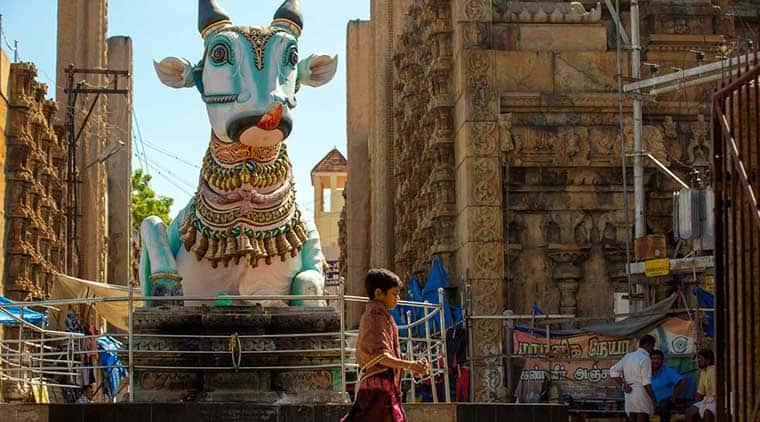
The great southern temple trail, from Meenakshi's towering gopurams to the sea-washed Ramanathaswamy shrine and the sunrise where three oceans meet. Here is what to know before you go and while you travel.
The comfortable months are October to March, when the Tamil Nadu plains are cooler and the coast is pleasant. Avoid the high heat of April to June.
Most pilgrims fly into Madurai and travel south by road through Rameshwaram to Kanyakumari, often flying home from Trivandrum or back from Madurai.
This is one of India's greatest living temples, a city within a city of soaring gopuram towers and a famous thousand-pillar hall. It is free, but it is a working temple with real rules, and most websites get the details wrong. Here is how to do it properly.
Because of the midday break and the no-camera rule, an unplanned drop-in often disappoints. Go in the morning or evening, leave your phone and camera at the locker, dress modestly, and consider staying for the night ceremony. That is the difference between a quick look and a real visit.
The great temple, with the longest corridor in the world, is the reason to come. The darshan has a few choices worth understanding before you join the queue.
Phones, cameras and electronics are not allowed inside the temple, with lockers available at the gate. Dress is modest: men in a dhoti or trousers with a shirt, women in a saree or churidar. The next section sets out the full ritual order.
Rameshwaram is a place of doing, not just seeing. The bathing rituals have a traditional order, and getting it right makes the morning flow and the meaning land.
Beyond the bathing rituals, the heart of Rameshwaram is the worship of Shiva himself. The sanctum holds two lingams, and there is a right order, kept since Lord Rama's own time.
Tell us if you wish to sponsor an abhishekam or take the special or Sphatika darshan, and we pre-book it and brief you on the order of worship, so the morning is unhurried and correct. Temple fees change, so we reconfirm the current rates for your dates.
For many families this is the real reason to come. Rameshwaram is one of the most revered places in India for rites to the departed, often called the Kashi of the south.
This whole shore is the Ramayana made visible. For pilgrims who grew up on the Ramcharitmanas, every site here is a remembered verse.
लिंग थापि बिधिवत करि पूजा। सिव समान प्रिय मोहि न दूजा॥ (ling thapi bidhivat kari puja, siva samana priya mohi na duja). Having installed the lingam and worshipped it with due rite, Lord Rama declares that none is as dear to him as Shiva. It is the moment Rameshwaram is founded.
Kanyakumari's magic is the light over the water. It is one of the only places in India to watch both the sunrise and the sunset over the sea from the same shore, above the meeting of three seas.
Thiruvannamalai is not part of this five day tour. It lies about 277 km from Madurai, and many families add two more days to include it. If you can spare the time, this is the extension we suggest most often. The devotion here is unusual, because you do not simply visit a shrine, you walk around a sacred hill.
A few shared rules smooth every temple on this route: dress modestly, leave shoes and phones outside the inner shrines, and follow the queue system.
At Rameshwaram many pilgrims bathe at the 22 wells inside the temple before darshan, so carry a change of clothes and a small towel on that day.
Visitors from overseas come for very different reasons, and the trip is best shaped around yours. Four kinds of traveller make this journey.
A diaspora pilgrimage, a family rite, a meditation retreat and an architecture tour are four different journeys along the same road. Tell us which you are, and we plan the days, the guides and the pace to match.
If you are returning to your roots or coming to honour your ancestors, two parts of this trail matter most: the Murugan connection at Madurai and the ancestral rites at Rameshwaram.
If there is a particular rite, a family deity, or an ancestral village near the route, tell us in advance. We will build the days and arrange the right priests around it, so nothing is improvised on the morning.
Two of this trail's greatest draws for foreign visitors have nothing to do with ritual: the silence of Arunachala and the artistry of Meenakshi.
The questions overseas visitors most want answered: can I go inside, what must I wear, and what do I need to arrive. Here is the honest position, which we reconfirm for your dates.
OCI families should carry the physical card with its linked passport to claim the Indian rate at monuments. Keep modest temple clothing in your day bag, since you may visit a sanctum at short notice.
जे रामेस्वर दरसनु करिहहिं। ते तनु तजि मम लोक सिधरिहहिं॥ जो गंगाजलु आनि चढ़ाइहि। सो साजुज्य मुक्ति नर पाइहि॥
Having founded the lingam, Lord Rama promises that those who take darshan of Rameswar will, on leaving the body, go to his own abode, and that whoever brings Ganga water and offers it here attains liberation. Pilgrims still carry Ganga water to bathe the lingam to this day, just as the verse foretold.
What travellers say
“A big thanks to Way To India for organising such a truly memorable and spiritually fulfilling experience during our 12 Jyotirlinga Darshan pilgrimage from 1st May to 18th May. They organized the entire journey exceptionally well, ensuring that every aspect of the trip was smooth, comfortable, and hassle-free. From transportation and hotel arrangements to darshan planning and coordination, everything was managed professionally. Despite the extensive travel across multiple destinations, the itinerary was well-structured, allowing us to complete all the Jyotirlinga darshans comfortably. Thanks to staff of Way To India, especially, Ms Neha, who was supportive, responsive, and attentive throughout the journey, always ready to assist whenever needed. Her dedication and careful planning made this sacred pilgrimage stress-free and enjoyable. I sincerely appreciate their excellent service, commitment, and hospitality. Highly recommend Way To India to anyone planning a spiritual tour, especially for the 12 Jyotirlinga Yatra. Thank you for making this divine journey so special and memorable.”3 months ago · Google
“We have successfully completed the 12 Jyotirlinga Yatra, with Waytoindia and it was a truly blessed and unforgettable journey. Every aspect of the tour was well planned and professionally organized, from transportation and accommodations to temple visits and sightseeing. Visiting all twelve sacred Jyotirlingas was a deeply spiritual experience. The itinerary was designed efficiently, allowing us to have darshan at each shrine comfortably while enjoying the cultural and religious significance of every destination. We sincerely appreciate the excellent support and coordination throughout the trip. The team was always available to assist, ensuring a smooth and stress-free pilgrimage. Thank you Waytoindia for making our dream of completing the 12 Jyotirlinga Yatra a reality. We highly recommend this tour to anyone seeking a well-organized and spiritually enriching pilgrimage experience. Har Har Mahadev! 🙏🕉️”3 months ago · Google
“We recently entrusted our honeymoon planning to 'Way to India', and it turned out to be one of the best decisions we made. From itinerary finalization to on-ground execution, everything was handled with remarkable professionalism, warmth, and attention to detail. Every aspect of our trip — flights, hotels, transfers, experiences, and even the small thoughtful touches — was perfectly curated. The itinerary was balanced, well-planned, and tailored exactly to what we wanted. We never had to worry about a single thing; all arrangements were seamless and absolutely hassle-free. What truly stood out was their responsiveness and genuine care. They were always available, always patient, and consistently went the extra mile to ensure our journey was special. Special thanks to Neha Ma'am for planning everything. We are incredibly grateful and wholeheartedly recommend their services to anyone looking for a stress-free, personalised, and delightful travel experience. Thank you for making our honeymoon truly magical!”6 months ago · Google
Travelled with Way to India?
Share your experience on Google — it takes a minute and helps fellow travellers plan with confidence.
FAQ
The best time to visit Madurai, Rameshwaram, and Kanyakumari is from October to February. During these months, the weather is pleasant, making it ideal for sightseeing and temple visits. Summers can be extremely hot, while the monsoon season brings humidity.
Yes, when visiting temples like Meenakshi Amman Temple and Ramanathaswamy Temple, it is advisable to wear modest clothing. Men should wear long pants and shirts, while women should wear sarees or long dresses. Avoid shorts and sleeveless tops.
Travel times vary, but generally, it takes about 4 hours to drive from Madurai to Rameshwaram (175 km) and approximately 6 hours from Rameshwaram to Kanyakumari (250 km). Ensure to account for traffic and road conditions.
All hotels in India require a valid photo ID for check-in, as per government regulations. Accepted ID Proofs: Passport Voter ID (EPIC Card) Aadhaar Card Driving License PAN Card (accepted at some hotels) Government-issued Photo ID (employee ID, student ID – only in approved hotels) Important Notes: Foreign tourists must show a Passport and valid Visa. Original ID is mandatory; some hotels may take a photocopy for records. Always carry your ID while traveling, as it may be required at multiple check-ins during the tour.
Yes, Madurai, Rameshwaram, and Kanyakumari are generally safe for tourists. However, it's wise to stay vigilant, avoid isolated areas at night, and keep your belongings secure. Always follow local guidelines and respect cultural norms.
Pack lightweight, breathable clothing for the warm climate, along with comfortable walking shoes for temple visits. Don't forget essentials like sunscreen, a hat, and a reusable water bottle. If visiting during monsoon, include a raincoat or umbrella.
Yes, when visiting temples, it's customary to remove your shoes before entering. Additionally, avoid taking photographs in restricted areas and be respectful during religious ceremonies. Speaking softly and greeting locals with a smile is appreciated.
Mobile connectivity is generally good in Madurai, Rameshwaram, and Kanyakumari. Most major networks provide coverage. Consider purchasing a local SIM card for better rates on data and calls. Wi-Fi is available in many hotels and cafes.
In Madurai, visit the Meenakshi Amman Temple and Thirumalai Nayakkar Palace. Rameshwaram is famous for the Ramanathaswamy Temple and Dhanushkodi Beach. In Kanyakumari, don't miss the Bhagavathy Amman Temple and the Vivekananda Rock Memorial.
Yes, many tour operators offer customizable itineraries. You can discuss your preferences and interests with your travel agent to tailor the tour to include specific attractions or activities that you wish to experience.
You may also like
7D / 6N 6D / 5N
 5D / 4N
 18D / 17N
 19D / 18N
 4D / 3N
Tell us your dates and group size. A WayToIndia travel expert replies within a few hours with a plan you can customise freely. Planning India journeys since 2010.
Explore Way to India
© 2026 Way to India. All rights reserved.