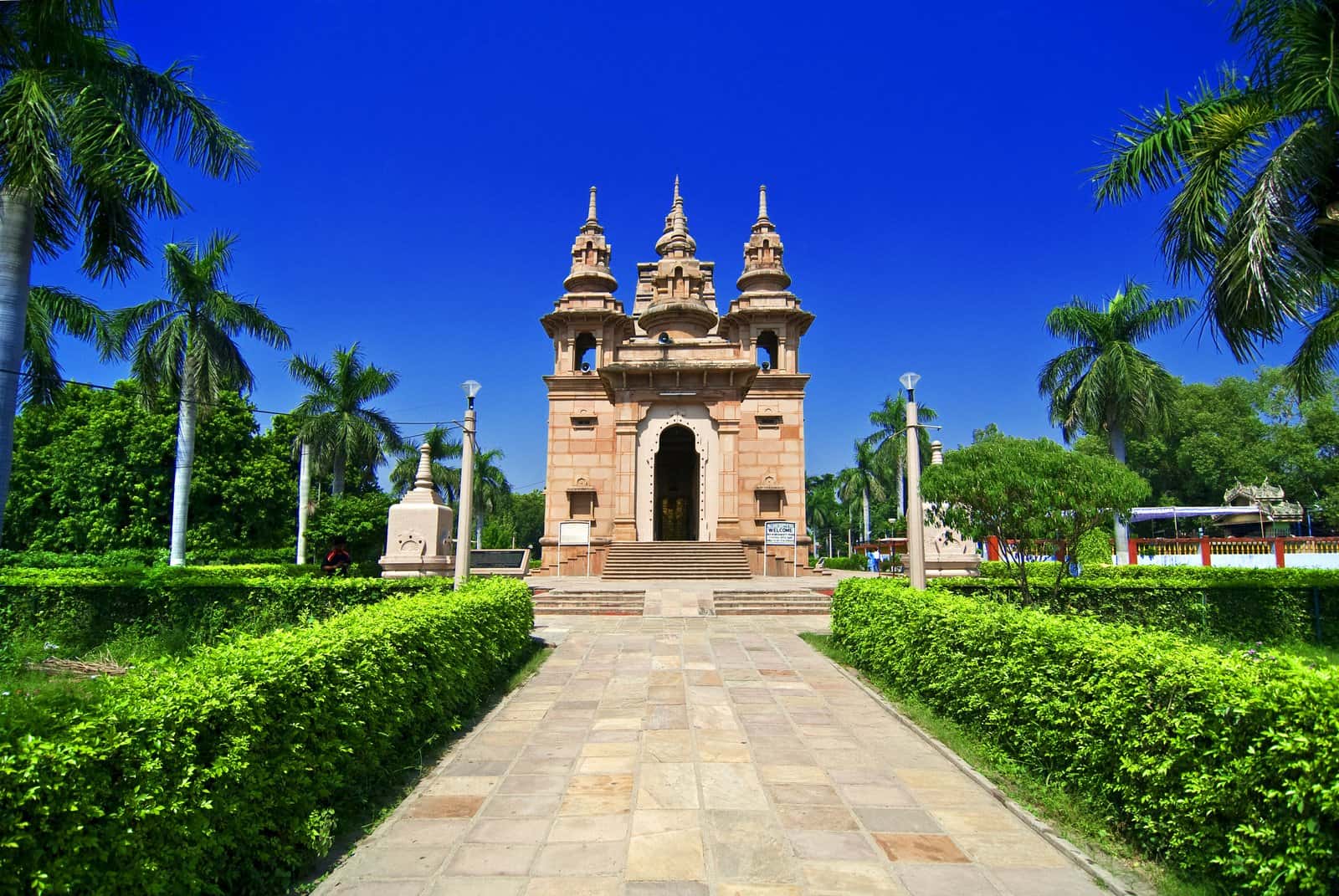
Sarnath Travel Guide
The best months are October to March , cool and pleasant on the open ruins. The one date trap is the day of the week, not the season: the museum is closed every Friday .
When to visit Sarnath, and which day to avoid
The best months are October to March, cool and pleasant on the open ruins. The one date trap is the day of the week, not the season: the museum is closed every Friday.
- October to March: cool and comfortableThe most pleasant window, mild by day and cool at night, ideal for the open ruins and the walk to the Dhamek Stupa. This stretch also carries festivals tied to the Buddhist calendar, and the light on the brick is at its best for photography early and late.
- April to June: hot, and best avoidedHigh summer on the Gangetic plain is fierce, often climbing toward 45 degrees Celsius, and the ruins offer little shade. If you must come then, do the site soon after it opens, carry water and sun cover, and keep the middle of the day for the museum and the cool of the temples.
- July to September: the monsoonThe rains bring heavy downpours and humidity. The ruins are quieter and greener, but a wet afternoon can wash out a half-day plan, so keep some flexibility and have the museum and indoor temples as your rain option.
- Time of day, and the Friday ruleEarly morning or late afternoon is gentlest for the open site. More important than the month is the day: the Sarnath Archaeological Museum is closed every Friday, so if seeing the Lion Capital matters to you, do not come on a Friday.
The Sarnath Archaeological Museum, the only place to see the original Lion Capital of Ashoka, is closed every Friday and otherwise opens about 10 am to 5 pm. The archaeological site with the Dhamek Stupa and the ruins stays open on Fridays, so the day is not wasted, but you will miss the museum and the national emblem inside it. If your free time in Varanasi falls on a Friday and the museum is the reason you are going, shift the visit to another day. This is the single most common ruined plan in Sarnath.
How to reach Sarnath from Varanasi
Sarnath has no airport of its own and only a tiny station. Almost everyone comes the short hop from Varanasi by auto or taxi, about 8 to 10 km from the city.
- By auto-rickshaw from VaranasiThe usual way in. Sarnath is about 8 to 10 km northeast of Varanasi city, roughly 30 to 40 minutes depending on traffic. A private auto commonly runs roughly 150 to 400 rupees one way, and a shared auto is cheapest at roughly 30 to 60 rupees per person. Agree the fare, or the round trip with waiting, before you set off.
- By taxi or cabA taxi from the ghats or your hotel is the easy choice for a half day, commonly roughly 600 to 900 rupees one way or more for a round trip with waiting time. App cabs reach Sarnath in about 20 to 30 minutes from the city; settle whether the driver waits or you arrange a return.
- By train and airVaranasi Cantt is the main railhead, about 11 km away, and Lal Bahadur Shastri International Airport at Babatpur is about 25 to 32 km, typically a 50 to 60 minute drive. Sarnath has its own small station (code SRNT) with limited services, so most travellers still arrive by road from Varanasi rather than rely on it.
- As part of a Varanasi daySarnath slots neatly onto a Varanasi stay as a morning or afternoon, paired with the Kashi Vishwanath temple and the Ganga ghats. On our Kashi Vishwanath tour we run Sarnath as a half-day add-on with a car and driver, which removes the fare haggling entirely.
Fly into Delhi and connect to Varanasi (Lal Bahadur Shastri Airport, Babatpur), then drive the short hop to Sarnath. There are no international flights to Sarnath itself, and the site is an easy half day from a Varanasi base.
Fly into Delhi or directly to Varanasi where routes exist, then reach Sarnath by road in under an hour. Sarnath pairs naturally with a Varanasi stay and the wider Buddhist circuit.
Take a train to Varanasi Cantt, the main railhead, and drive the 8 to 10 km to Sarnath by auto or taxi. The tiny Sarnath station has only limited services, so the Cantt railhead is the simpler way in by rail.
The Dhamek Stupa, the ruins, and the Lion Capital
Sarnath is the first-sermon ground: the great Dhamek Stupa, the excavated monasteries, the Ashoka pillar stump, and the museum that holds the Lion Capital of India's national emblem.
- The Dhamek StupaThe towering cylindrical stupa, about 43.6 metres high and 28 metres across in its present Gupta-period form, marks the very spot where the Buddha gave his first sermon to his five companions. It is the heart of the site and the image everyone remembers. Walk the path around it slowly and read the carved lower band.
- The excavated ruins and the Ashoka pillarAround the stupa lie the brick foundations of ancient monasteries, the Dharmarajika stupa remains, and the stump of the Ashoka pillar standing in situ. The pillar's famous four-lion capital, which became India's national emblem, was moved into the museum, so what you see here is the lower shaft.
- The Sarnath Archaeological Museum and the Lion CapitalThe oldest site museum of the Archaeological Survey of India, opened in 1910, displays the original Lion Capital of Ashoka in the centre of its main Shakyasimha gallery, along with masterpieces of the Sarnath school of sculpture. It opens about 10 am to 5 pm, costs about 5 rupees, is closed on Fridays, and bans photography inside.
- Chaukhandi StupaA little apart on the way in, this tall brick mound is topped by an octagonal Mughal tower built in 1588 to mark a visit by the emperor Humayun. Tradition holds it as the place the Buddha met his first five disciples, and it makes a quick first or last stop.
The original Lion Capital of Ashoka, the sculpture on the Indian national emblem and on the rupee note, is not out at the ruins. It stands in the centre of the Shakyasimha gallery, the main hall, of the Sarnath Archaeological Museum, sourced to the official ASI museum page. Photography is not allowed inside the museum, so you leave your camera and phone at the counter and there are no photos of the capital from inside. What you can photograph outdoors is the pillar stump, the Dhamek Stupa and the ruins.
Signature experiences in Sarnath
Beyond the ruins, Sarnath is its living temples and its calm. These are the experiences people remember, and how to make the most of a short visit.
- Mulagandha Kuti Vihara and the Nosu frescoesThe modern Maha Bodhi Society temple, consecrated in 1931, is free to enter and holds frescoes of the Buddha's life by the Japanese artist Kosetsu Nosu, completed in 1936, along with relics of the Buddha and a Bodhi tree sapling grown from the tree at Anuradhapura in Sri Lanka. It is the most atmospheric stop after the stupa; reconfirm the hours locally as it breaks at midday.
- The international monasteriesSarnath gathers temples from across the Buddhist world, generally free in daylight. The Thai temple with its tall standing Buddha, and the Tibetan, Japanese, Burmese and Chinese temples each carry their own style, and the Central University of Tibetan Studies sits near the Deer Park. Pick two or three rather than trying to see them all in a short visit.
- Sit with the calmThe thing most travellers end up valuing is not a single monument but the quiet. After the intensity of Varanasi's ghats and lanes, the green lawns and the slow circuit of the stupa are a genuine contrast. Give yourself twenty unhurried minutes by the Dhamek Stupa rather than rushing the whole list.
- The light and sound show, if timings suitAn evening light and sound show on the life of the Buddha runs at the complex, commonly cited around 6:30 to 7:30 pm for about half an hour and recently upgraded. The narration is by Amitabh Bachchan. Timings and the rate change, so confirm locally before you build an evening around it.
The small modern deer park and mini-zoo on the site, a nod to the ancient Deer Park where the Buddha taught, disappoints most visitors: a few deer, tired enclosures and little to see. Travellers on the review sites repeatedly say skip it so it does not sour the trip. Spend that time instead on the Dhamek Stupa, the museum and one or two of the international temples, which are the real reward of a Sarnath morning.
Where to stay for Sarnath, and how many days
Almost everyone bases in Varanasi and visits Sarnath as a half day. A handful of quiet guesthouses sit at Sarnath itself for pilgrims who want to wake to the calm.
- Base in Varanasi: the usual choiceVaranasi has the full range of rooms, from riverside guesthouses near the ghats to mid-range and heritage hotels, and Sarnath is an easy half-day trip from there. This keeps you close to the Ganga aarti, the ghats and Kashi Vishwanath while still seeing the first-sermon ground.
- Stay at Sarnath: quiet and pilgrim-focusedSarnath itself has a smaller cluster of guesthouses, simple hotels and monastery-run lodgings, calmer than central Varanasi and convenient for an early or late visit to the stupa. Better for Buddhist pilgrims and anyone who wants the contemplative pace rather than the city buzz.
- How long you needHalf a day is enough for Sarnath: about three to four hours covers the Dhamek Stupa, the ruins, the museum and a couple of temples. Most people do it as a morning or afternoon around a Varanasi stay rather than an overnight. A pilgrim wanting an unhurried day with the temples can give it longer.
- Booking notesVaranasi rooms fill around major festivals and the winter season, so book ahead for October to March and for Buddha Purnima. If you want to stay at Sarnath itself, the choice is limited, so reserve early rather than arriving on spec.
Sarnath is small and the sites take half a day, so an overnight there means a quiet evening with limited dining and little else once the temples close. Varanasi, ten minutes by road, has the ghats, the evening Ganga aarti, the food and the buzz. Unless you are a pilgrim who specifically wants to wake beside the stupa, basing in Varanasi and visiting Sarnath for a morning or afternoon gives you the best of both: the calm of the first-sermon ground and the intensity of the holy city.
Sarnath costs and the two tickets to know
Sarnath is cheap to visit. The one thing to get right is that there are two separate tickets, the cheap museum and the dearer archaeological site, and the foreign rate at the site is much higher.
- The museum ticketThe Sarnath Archaeological Museum, where the Lion Capital is, costs about 5 rupees per head, with children up to 15 free, per the official ASI page. It is the same low fee for everyone and is the bargain of the trip, but remember it is closed on Fridays.
- The archaeological site ticketThe ASI site with the Dhamek Stupa and the ruins is a separate ticket, commonly reported at around 25 rupees for Indian, SAARC and BIMSTEC visitors and about 300 rupees for foreign visitors, with a small discount on the ASI e-ticket. Reconfirm the live rate at the gate or on the ASI e-ticketing portal, as the exact amount could not be machine checked.
- Guide and extrasA local guide is roughly 500 to 1,000 rupees for about an hour and a half, the light and sound show is commonly around 100 to 250 rupees, and the temples are free. The biggest variable cost is your transport from Varanasi, the auto or taxi covered in the getting-there section.
- Cash, cards and a half-day totalCarry small cash for the tickets, an auto and any offering, as the site counters do not take cards. A modest half day from Varanasi, transport plus both tickets plus a guide, often lands around a few hundred to a couple of thousand rupees per person depending on whether you share a taxi and hire a guide.
Do not confuse the two tickets: the museum is about 5 rupees and the archaeological site is the separate, dearer ticket, around 25 rupees for Indian visitors and about 300 rupees for foreigners, so the foreign rate at the site surprises people who only knew the museum fee. One traveller reported a gate attendant pocketing the whole ticket without returning a stub, so insist on keeping your portion. Confirm the current site rate at the gate or on the ASI e-ticketing portal before you assume a number.
Practical logistics: tickets, photography, timings and getting around
The small things that make a Sarnath morning smooth, from the museum camera ban to the Friday closure, the timings and walking the compact site.
- Photography rulesPhotography is not allowed inside the Sarnath Archaeological Museum, so you leave your camera and phone at the cloakroom counter at the entrance. Outdoors you can freely photograph the Dhamek Stupa, the Ashoka pillar stump and the ruins. Be courteous and ask before photographing monks or people at prayer in the temples.
- Timings and the Friday closureThe archaeological site is open roughly sunrise to sunset. The museum opens about 10 am to 5 pm and is closed every Friday. Mulagandha Kuti Vihara and the temples are usually open through the day with a midday break, so plan the museum and the indoor temples around the early afternoon if you are out in the heat.
- Getting around the siteSarnath is compact and the core, the stupa, the ruins, the museum and the nearest temples, is walkable on mostly level paths. The wider spread of international monasteries is a short auto hop apart, so keep your driver or an auto for the temple loop if walking in heat is tiring.
- Money and essentialsCarry small cash for the tickets, the auto and any offering, as the counters are cash only. Bring water and sun cover for the open ruins, wear modest dress for the temples, and be ready to remove shoes where asked at the working temples.
You will be approached by men offering to guide you, and opinions split: without any context the ruins can read as just a heap of old bricks, and a good guide brings the first sermon and the Sarnath sculptures alive, but some touts steer you away from the site to sell other services. If you want a guide, agree the price and the length first, roughly 500 to 1,000 rupees for about ninety minutes, and ask your hotel or the official ticket counter rather than accepting the first approach.
Safety, small scams, and staying well
Sarnath is calm and low-hassle compared with central Varanasi. A little awareness of the gate touts, the heat and the usual travel-health basics keeps the visit easy.
- Generally calm and low-hassleTravellers consistently find Sarnath gentler than the crowded Varanasi ghats, with less pressure and a quieter pace. The main friction is the guide touts at the gate and autos quoting high, both handled by agreeing prices in advance and keeping a polite firm no ready.
- Keep your ticket stubA reported sharp practice at the site gate is an attendant pocketing your whole ticket without returning a stub, said to be aimed at reselling, especially for the dearer foreign ticket. Insist on keeping your portion of the ticket, and buy at the official counter or the ASI e-ticket rather than from anyone offering to help.
- Heat, sun and waterThe ruins are open with little shade, so in the warmer months carry water and sun cover and do the site early. Drink bottled or filtered water, take the usual care with street food, and use the museum and the cool interiors of the temples for the hottest part of the day.
- Respect the holy groundSarnath is sacred to Buddhists worldwide. Dress modestly, lower your voice near worshippers, walk clockwise around the stupa and shrines as the tradition asks, remove shoes where required, and do not climb on the ruins or the stupa. Quiet respect is the etiquette that matters most here.
Most solo travellers, including women, find Sarnath straightforward in daylight, calmer and less crowded than central Varanasi, with standard precautions enough. The friction reported is sales pressure from guides and autos rather than anything more serious. Visit in daylight, keep your valuables close in any crowd, agree fares before you ride, and pair the trip with your Varanasi day rather than arriving late, and Sarnath is one of the easier, gentler stops in the region.
Sarnath for every kind of traveller, and on access
Sarnath rewards very different visitors in different ways. Here is what it offers you and the one tip that matters for each, including how a senior visits comfortably.
- Buddhist pilgrimsThis is one of the four great pilgrimage sites, the place of the first sermon. Give it more than a quick half hour: circumambulate the Dhamek Stupa, sit at Mulagandha Kuti Vihara with the Nosu frescoes and the Bodhi sapling, and pair it with the wider circuit of Bodh Gaya, Kushinagar and Lumbini.
- History and culture loversThe Sarnath sculptures and the Lion Capital are a high point of Indian art, and the layered ruins repay an unhurried look. Consider a guide or read up first, since the meaning of the bricks and the school of sculpture is what turns the visit from pleasant to memorable.
- Senior travellers and on accessibilityVery doable with a little planning. The main path to the Dhamek Stupa is mostly level with places to sit, so the core is manageable for slow walkers, though the ruins underfoot are uneven and harder for wheelchairs. Visit in the cool of morning, keep an auto for the temple loop, and rest in the museum during the heat.
- Families with childrenAn easy, colourful half day with space to walk and the great stupa to see. Set expectations that the small deer park and zoo disappoints, so lean into the open lawns, the temples and the museum instead, and keep water and snacks for younger ones in the heat.
- First-time and curious travellersIf you have seen Bodh Gaya, Sarnath can feel quieter by comparison, so come for the calm and the history rather than spectacle. As a contrast to Varanasi's intensity it is a gentle, grounding half day that many travellers end up valuing more than they expected.
- PhotographersThe Dhamek Stupa in low morning or late light, the pillar stump and the temple architecture are the rewards. Remember the museum bans photography, so the Lion Capital is for the eyes only, and ask before photographing monks or worshippers.
A suggested Sarnath half-day itinerary
How to shape a smooth half day from Varanasi so you see the stupa, the museum and the best temples without backtracking or hitting a closed gate.
- Morning start from VaranasiLeave Varanasi after breakfast, about a 30 to 40 minute hop, and start at the Chaukhandi Stupa on the way in. Reach the main archaeological site while the light is soft and the heat is low, and walk the Dhamek Stupa and the ruins first.
- The museum and the Lion CapitalCross to the Sarnath Archaeological Museum, open about 10 am to 5 pm and closed Fridays, to see the Lion Capital and the Sarnath sculptures. Leave your camera at the counter, as photography inside is not allowed. Allow about forty minutes here.
- The templesFinish with Mulagandha Kuti Vihara for the Nosu frescoes, the Bodhi sapling and the relics, then pick one or two international temples, perhaps the Thai temple and a Tibetan or Japanese one. Skip the deer park and zoo, which most visitors regret.
- Back to Varanasi for the eveningReturn to Varanasi in the afternoon in time for the ghats and the evening Ganga aarti, which is the natural counterpoint to a calm Sarnath morning. If you want the Sarnath light and sound show instead, check its current timing locally before you commit.
The single thing that breaks a Sarnath plan is arriving on a Friday expecting the museum, since it is closed every Friday while the rest of the site stays open. If your free day in Varanasi is a Friday and the Lion Capital is the reason you are going, move the visit to another day. If you cannot, still go for the Dhamek Stupa, the ruins and the temples, and accept that the museum and the national emblem inside it will wait for next time.
The real questions travellers ask about Sarnath
Straight answers to the questions that come up again and again on traveller forums, so you arrive already knowing the score.
- Is the museum really closed on Friday?Yes. The Sarnath Archaeological Museum is closed every Friday and otherwise opens about 10 am to 5 pm, per the official ASI page. The archaeological site with the Dhamek Stupa and the ruins stays open on Fridays, so the trip is not wasted, but you will miss the Lion Capital, which is inside the museum.
- Is half a day enough?Yes. About three to four hours covers the Dhamek Stupa, the ruins, the museum and a couple of temples comfortably. Most people do Sarnath as a morning or afternoon around a Varanasi stay rather than an overnight, and only dedicated pilgrims need longer.
- Is a guide worth it?It depends on you. Without context the ruins can read as a heap of old bricks, and a good guide brings the first sermon and the Sarnath sculptures alive for roughly 500 to 1,000 rupees for about ninety minutes. Some touts at the gate are pushy, so agree the price and length first and hire through your hotel or the official counter.
- Is it underwhelming compared with Bodh Gaya?Some travellers who have seen Bodh Gaya find Sarnath quieter, so manage expectations. Come for the history, the Lion Capital and the calm rather than spectacle, and as a contrast to Varanasi's intensity it is a grounding half day that many end up rating highly.
- Should I skip the deer park?Most people say yes. The small modern deer park and mini-zoo is run down and disappoints, so spend the time on the stupa, the museum and the temples instead, which are the real reward.
- How much are the entry fees, Indian and foreign?The museum is about 5 rupees for everyone. The separate archaeological site is commonly around 25 rupees for Indian, SAARC and BIMSTEC visitors and about 300 rupees for foreign visitors, so the foreign site rate is the one that surprises people; reconfirm the current rate at the gate or on the ASI e-ticket portal.
Planning Sarnath from abroad
Sarnath is the calm, contemplative half day that frames a Varanasi trip and anchors the wider Buddhist circuit. A little preparation makes the tickets, the Friday closure and the photography rules easy.
- Know the Friday closure before you fix the dayThe museum that holds the Lion Capital is closed every Friday. With a tight India itinerary it is easy to land your Varanasi free day on a Friday by accident, so check the day of the week against the museum before you lock your Sarnath visit, and shift it if the national emblem is the reason you are going.
- Budget for the foreign site ticketThe museum is a token few rupees, but the separate archaeological site charges foreign visitors much more, commonly about 300 rupees against around 25 rupees for Indian visitors. It is still inexpensive by global standards; just carry small cash and reconfirm the rate at the gate or the ASI e-ticket portal.
- Pair it with the Buddhist circuitSarnath, the first sermon, sits with Bodh Gaya, the enlightenment, Kushinagar, the passing, and Lumbini in Nepal, the birth, as the four great Buddhist sites. Many overseas pilgrims string these together, with Varanasi as the practical base for the Sarnath leg, an easy half day from the city.
- Expect calm, and respect the groundAfter the intensity of Varanasi's ghats, Sarnath is gentle and quiet, which most first-time visitors find a relief. Dress modestly, walk clockwise around the stupa and shrines, remove shoes at the working temples, and keep your voice low near worshippers.
Money, a guide and timing for foreign visitors
The practical basics an overseas traveller needs for a small heritage site: cash, a guide decision, the photography rule, and how much time to give it on a wider India trip.
- Carry small cashThe ticket counters, the autos and small offerings are cash only, so carry small rupee notes rather than relying on cards. Draw cash in Varanasi before you go, since the site is compact and not the place to hunt for an ATM.
- Decide on a guide in advanceFor an overseas visitor without background, a good guide turns the ruins from puzzling to meaningful for roughly 500 to 1,000 rupees for about ninety minutes. Arrange one through your hotel or a reputable operator rather than accepting the first tout at the gate, and agree the price and length first.
- Remember the museum camera banPhotography is not allowed inside the museum, so you leave your camera and phone at the counter and there are no photos of the Lion Capital. Plan to simply look, and save your photography for the Dhamek Stupa, the pillar stump and the temple architecture outdoors.
- How long to give it on a bigger tripOn a wider India or Buddhist-circuit trip, half a day from a Varanasi base is the right weight for Sarnath: enough for the stupa, the museum and the best temples without slowing the itinerary. Slot it as a morning, then return to Varanasi for the evening Ganga aarti.
Sarnath is an unusually gentle piece of a first India trip: small, walkable, green and quiet, and an easy contrast to the overwhelming wonder of Varanasi just down the road. Base in Varanasi, give Sarnath a calm morning, leave your camera at the museum counter for the Lion Capital, and let the first-sermon ground be the still, reflective chapter between the ghats. Many overseas visitors say the calm of Sarnath is what stays with them.
Why Sarnath is where Buddhism began to be taught
After his enlightenment at Bodh Gaya, the Buddha walked to the Deer Park at Isipatana, the place now called Sarnath, to find the five companions who had practised austerities with him. There, tradition holds, he gave his first sermon, the Dhammacakkappavattana Sutta, the setting in motion of the wheel of the Dhamma, teaching the middle way and the four noble truths. That sermon is remembered as the moment the Buddhist community, the Sangha, was first formed, which is why Sarnath stands with Lumbini, Bodh Gaya and Kushinagar as one of the four great pilgrimage sites of the Buddhist world. The great Dhamek Stupa is traditionally held to mark the spot of that first teaching, and centuries later the emperor Ashoka raised a pillar here whose four-lion capital, now in the Sarnath museum, became the national emblem of India. The detail of the sermon comes from the Buddhist canon as preserved in the Pali suttas and retold across traditions; the precise spot is honoured by long tradition rather than fixed by a single inscription.
Planning a Sarnath trip?
Our Uttar Pradesh travel experts plan your full journey for you: route, hotels, darshan timings and transport. You get a free day-by-day plan and an exact quote on WhatsApp, usually within a few hours. No payment is needed to get your plan.
Tour packages that visit Sarnath
Every journey below is private, hand-crafted and fully customizable. Tell us your dates and we tailor the itinerary, the pace and the priests or guides around you.
 19D / 18N
12 Jyotirlinga Tour Package from Delhi
- All Jyotirlinga darshans
- Ganga Aarti experiences
 3D / 2N
Kashi Vishwanath Jyotirlinga Tour Package
- Visit Manikarnika Ghat
- Visit Kaal Bhairav Temple