Araku Valley Travel Guide
The best months are November to February , when the Eastern Ghats are cool and clear and the coffee hills are at their loveliest. Araku is green in the monsoon too, but the roads...
When to visit Araku Valley
The best months are November to February, when the Eastern Ghats are cool and clear and the coffee hills are at their loveliest. Araku is green in the monsoon too, but the roads and waterfalls change the plan.
- November to February: cool and clearThe most comfortable window, and the one WayToIndia plans most Araku trips around. Days are mild, winter mornings are crisp at this altitude, and the skies are clear for the train and the valley views. Carry a light jacket even if you came up from the warm Vizag coast, as the early mornings can be genuinely cold.
- The monsoon: green but wetFrom about June to September the valley turns lush and the waterfalls run full, which is beautiful, but the ghat road can be slow and slippery, mist can hide the views, and a forest trek like Katiki gets muddy. Lovely for greenery and photography, less so for a tight schedule or anyone uneasy on winding wet roads.
- March to May: warmer but bearableEven in summer Araku stays cooler than the coast at Vizag thanks to the altitude, so it still makes a pleasant escape, though the afternoons warm up and the light turns hazier. It is the quieter season for crowds, which some travellers prefer.
- Decide your pace before you bookAraku rewards a slow visit far more than a rushed one. If you only have a single day from Vizag, winter gives you the clearest light and the best odds against a late train; if you can stay overnight, you will catch the valley at dawn and dusk when it is at its best.
Araku sits high in the Eastern Ghats, with an average elevation commonly cited around 900 to 911 m, so it is noticeably cooler than Vizag, and the winter mornings in particular are cold. Bring a light jacket or shawl, especially for the early train and the misty viewpoints. The cool climate is one of the real reasons to come.
How to reach Araku Valley from Visakhapatnam
Almost everyone reaches Araku from Visakhapatnam (Vizag), about 110 to 120 km away. The famous Vistadome train and the scenic ghat road are both part of the experience, and the smart move is to use both.
- The Vistadome glass-roof trainThe signature way in is the Vistadome coach on the Visakhapatnam to Kirandul passenger, commonly the 58501 in the up direction, which climbs through roughly 50 plus tunnels and over many bridges. The morning train leaves Visakhapatnam around 7 am and reaches Araku around late morning. The glass-roof seats are reserved and limited, so book ahead on IRCTC and reconfirm the current train number and times.
- By road on the ghatThe drive on the Vizag to Araku road takes around 3 to 3.5 hours through the Anantagiri hills, with viewpoints like Galikonda and coffee slopes along the way. It is winding, so anyone prone to motion sickness should sit in front and carry tablets. We arrange a car with an experienced hill driver, which also lets you stop at Borra Caves and the viewpoints.
- The best plan: train up, car backThe plan most experienced visitors use is to ride the Vistadome train UP in the morning for the views, then return by road in the afternoon. The afternoon return by train runs into fading light and the long tunnels with much less to see, while the car gives you Borra Caves, Galikonda View Point and the freedom to stop. We can set this up so the train and the car dovetail.
- From Hyderabad and the rest of IndiaFrom Hyderabad, most travellers reach Visakhapatnam by flight or an overnight train and then do the valley from there, as Vizag is the gateway for everything in Araku. There is no direct quick route that skips Vizag, so plan the trip as Hyderabad to Vizag, then Vizag to Araku.
Fly into a major Indian hub such as Delhi, Mumbai, Hyderabad or Bengaluru, then connect by domestic flight to Visakhapatnam (VTZ) and continue to Araku by train or road. Araku has no airport of its own.
Visakhapatnam (VTZ) has some international links, including Gulf routes such as to Abu Dhabi, so you may be able to fly closer to Araku before the train or road leg up to the valley. Check current schedules, as routes change.
Reach Visakhapatnam by flight or train from across India, then take the Vistadome train or drive the ghat road up to Araku. Vizag is the gateway for everything in the valley.
The Vistadome train: booking it and riding it right
The glass-roof Vistadome train through fifty-odd tunnels is the reason many people come to Araku at all. Knowing how to book it, which way to ride, and how late it can run is the difference between a magical day and a frustrating one.
- The train is the experienceThe glass-roof Vistadome coach on the Visakhapatnam to Kirandul passenger climbs the Kottavalasa to Kirandul line through roughly 50 plus tunnels and over many bridges, with rotating seats and a glass ceiling, and the most scenic stretch between about Borra Guhalu and Araku. People come for the ride itself, not just to get from A to B, and on the way up the line passes Shimiliguda, long cited as one of the highest broad-gauge stations in India at around 996 m.
- How to book it (the reality)The glass-roof seats are reserved and limited, so they sell out, especially on weekends and in season. Book ahead on IRCTC (the website or app), not as a walk-on ticket, choosing the Vistadome class on the up train, and reconfirm the train number, the timings and the fare, which is commonly quoted around 700 to 1200 rupees per person depending on the date and demand. A small Tatkal quota opens about a day before travel and goes almost instantly, so do not rely on it.
- Ride UP in the morning, return by roadThe single best tip for the train: ride it UP to Araku in the morning, when the light is good and the valley opens out, then return by road. Real travellers warn that the afternoon return by train runs into fading light and the long dark tunnels with far less to see, so it is the weaker leg. Doing the car on the way back also lets you stop at Borra Caves and the viewpoints.
- Expect delays, do not plan a tight returnThis is a passenger train on a busy single-line section, so it can run late, sometimes by a long way. Do not book a same-day connecting train or an evening flight from Vizag on the day you return, and keep the day relaxed rather than packed. Carry water and snacks, as on-board catering is basic.
Because the Vistadome seats are reserved and limited and the train is in heavy demand, they can be sold out well ahead in season and on weekends. If the train matters to you, tell us early and we will line up your dates around an available booking, with the car arranged for the return leg so a late train never strands you.
Borra Caves: fee, timings and going in safely
On the road between Vizag and Araku, the vast, million-year-old Borra Caves are the valley's other icon. They are dim, deep and slippery in places, so a little preparation makes them a highlight rather than a scramble.
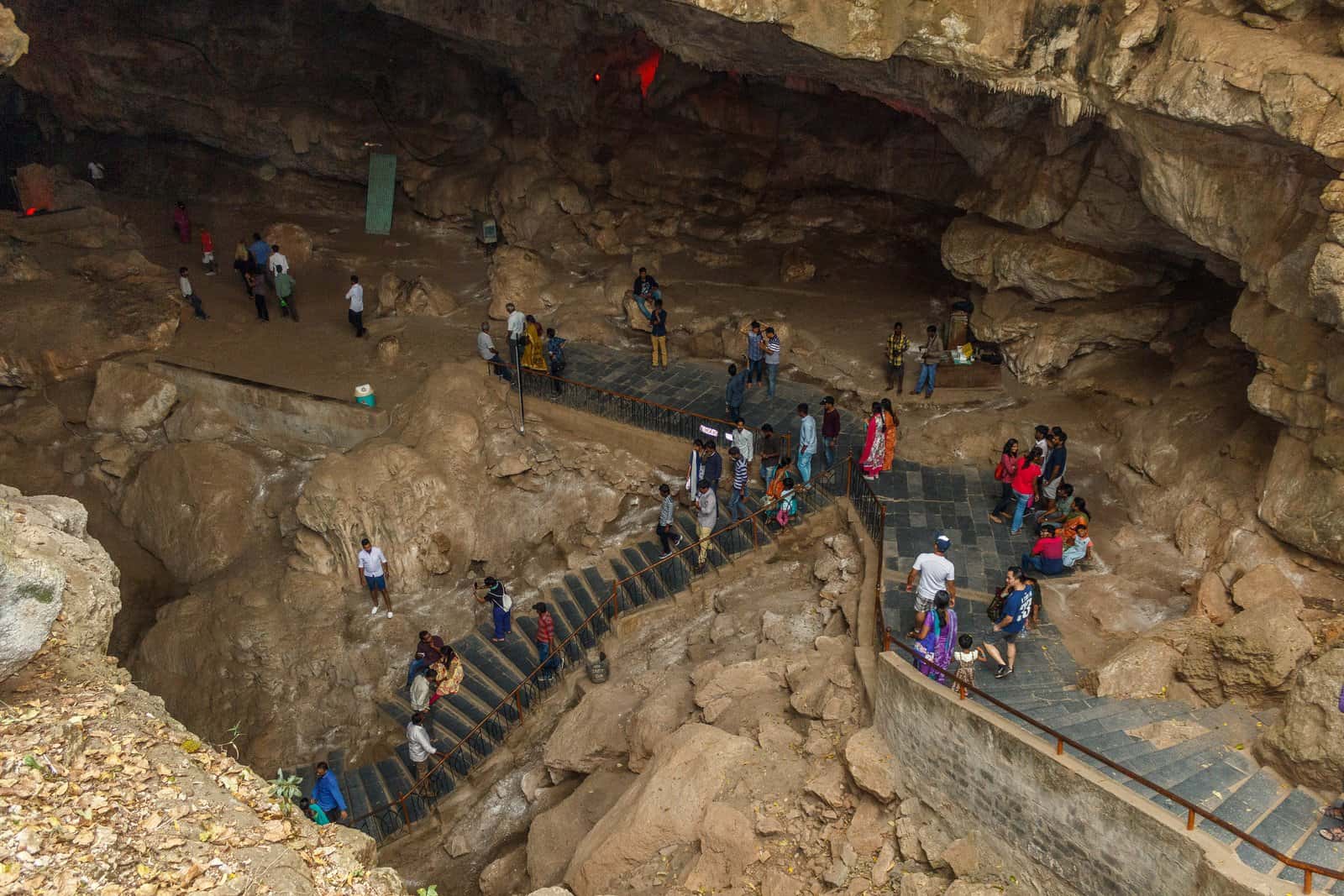
- What and whereAbout 35 to 40 km from Araku town on the road up from Vizag, the Borra Caves are a limestone system over a million years old, with the main entrance about 705 m up and the lowest point around 625 m. They are among the largest caves in India, with dramatic stalactite and stalagmite formations and coloured lighting, and a guide brings the formations and the local legends to life.
- Entry fee and camera chargesEntry is commonly quoted around 60 rupees for Indian adults, about 45 to 60 rupees for children and around 300 rupees for foreign nationals, with extra charges of about 25 rupees for a phone camera and about 100 rupees for a still or digital camera and about 100 rupees for video on the official Vizag tourism listing (older blogs still quote 1000 rupees for video, which the live listing no longer supports). Rates change, so carry change and reconfirm at the counter. Parking is charged separately.
- TimingsThe caves are open through the day, commonly cited around 10 am to 5 pm. Go in the morning if you can, before the day-trip crowds, and allow about an hour inside. If you are riding the train up and the car back, the caves fit naturally on the return road leg.
- Go in carefullyThe caves are deep, the lighting is dim and coloured, there is no strong natural light, and the steps and stone can be slippery. Wear shoes with grip, carry a phone torch for the dark stretches, hold the rails, and take it slowly. They are not ideal for anyone with serious mobility limits, and you can skip the deeper sections and still see plenty.
Mobile signal is weak or absent inside the caves and in the remote stretches of the road, so download your maps and tickets in advance and tell anyone expecting you that you may be out of contact for a while. This is a genuine wilderness pocket of the Eastern Ghats, which is part of its charm.
The gardens, the museums, the viewpoint and the waterfalls
Beyond the train and the caves, Araku is coffee hills, a tribal museum, a botanical garden, a famous viewpoint and waterfalls. Here is what they cost and the one thing to know about each.
- The Tribal Museum and Dhimsa danceThe Tribal Museum tells the story of the valley's tribes through dioramas, crafts and musical instruments, and it is the place to see the Dhimsa, the traditional group dance of the hill tribes, often performed for visitors. Commonly open around 10 am to 6 pm. A good first stop to understand where you are.
- The Coffee MuseumThe Araku Coffee Museum tells the story of the valley's organic, tribal-grown Arabica, with a tasting and a shop. Entry is commonly around 10 rupees, so it is an easy stop, and it is the place to buy genuine Araku coffee rather than gamble on roadside tins.
- Padmapuram GardensThe valley's botanical garden, with its famous hanging cottages and a small toy train, gentle and pleasant and good for families. Entry is commonly quoted around 60 rupees for adults after a recent downward revision (the garden cut its adult ticket to about 60 rupees), so reconfirm at the gate.
- Galikonda View Point on the ghat roadOn the road up, Galikonda is the highest viewpoint near Vizag at around 1290 m, free to visit and open through the day, with a sweeping look over the layered Eastern Ghats. It is the best single road stop on the drive, so build it into the car leg.
- Chaparai and Katiki waterfallsChaparai is a wide cascade over flat rocks, easy to reach and lovely after rain. Katiki is more dramatic but needs a short forest trek of roughly half an hour each way, so wear proper shoes and skip it if the path is muddy.
Araku coffee is famous as tribal-grown organic Arabica, exported around the world, so it is worth buying. For the real thing, buy at the Coffee Museum, a recognised Araku Coffee outlet or the official store, rather than unmarked roadside tins of unknown origin. Picking up coffee powder and fresh beans is one of the things our travellers enjoy most.
Signature experiences in Araku
Beyond ticking off the sights, these are the experiences people remember, and how to arrange them so you get the real version.
- Ride the Vistadome glass-roof trainThe single most memorable thing to do in Araku. Book the reserved glass-roof seats ahead on IRCTC, take a left-side window on the way up for the best valley views, and ride the train up while doing the car on the way back.
- A coffee tasting in the hillsVisit the Coffee Museum and, if you can, a working plantation in the Anantagiri slopes, to taste the valley's organic Arabica at the source. Carry some genuine Araku coffee home from an official outlet, which makes one of the best souvenirs from this part of India.
- See the Dhimsa tribal danceThe traditional group dance of the hill tribes, often performed for visitors near the Tribal Museum. An honest, lively window into the culture of the valley you are travelling through. Watch respectfully and ask before filming individual performers.
- Walk to Katiki waterfallA short, pretty forest trek of roughly half an hour each way leads to the Katiki falls. Go with proper shoes in the dry season, and give it a miss after heavy rain when the path is slippery and the stream is high.
- Stop at the viewpoints on the ghatThe drive itself is an experience, with Galikonda View Point and other lay-bys looking out over the folded Eastern Ghats. Time the car leg for clear light, and keep the camera handy for the coffee slopes and the mist.
Some travellers add a night of camping near a waterfall or in the valley. If you do, reach the spot by early afternoon, around 2 pm, and set up before evening, because the valley turns dark and cool quickly and the remote stretches have little mobile network. Plan light, carry warm layers, and go with a known local operator.
Where to stay in Araku, and overnight versus day trip
Stay in Araku town to be near the museums and the train, or in a valley resort for calm and views. One overnight is the sweet spot for most travellers, and far gentler than a rushed single day.
- Araku town and the APTDC resortsThe state tourism APTDC Haritha properties and a cluster of guesthouses and resorts sit in and around Araku town, walkable or a short hop from the museums, the gardens and the station. Convenient and well placed for an early start, and the reliable budget-to-mid choice.
- Valley and coffee-estate staysQuieter resorts and homestays sit out in the hills and the coffee estates, with sunrise valley views and more space, but you will need transport into town. Better for couples and anyone who wants to slow down and wake up to the mist.
- Overnight, not a rushed dayOne overnight is the right length for most people: it lets you ride the train up, see the caves and the museums, catch the valley at dusk and dawn, and avoid the strain of a 3 hour drive both ways in one day. A single long day from Vizag is possible but tiring, and a late train can wreck the return.
- Book ahead in season and on weekendsAraku has limited good rooms, so winter weekends and holidays fill up. Book the room and the train together and well ahead, and if you cannot get a room in the town core, a valley resort with transport laid on works just as well.
If you are travelling with parents, grandparents or small children, the overnight is worth it almost every time. The ghat road is long and winding, the train can run late, and trying to fit the train, the caves, the museums and the drive into one day leaves everyone frazzled. A night in the valley turns it into the calm, green pause that Araku does best.
Araku costs and a realistic budget
Araku is gentle on the wallet: the sights cost very little, and the train is the one experience worth paying up for. Here is what the main things cost so you can plan.
- The train, the one paid-up experienceThe Vistadome glass-roof fare is commonly quoted around 700 to 1200 rupees per person depending on the date and demand, and it is the one thing worth the spend, since the ride itself is the attraction. A regular non-Vistadome second-seater on the same train is far cheaper but without the glass roof.
- The sights are cheapBorra Caves are around 60 rupees for Indian adults and around 300 for foreign nationals, the Coffee Museum is around 10 rupees, Padmapuram Gardens is commonly around 60 rupees, and Galikonda View Point is free. Camera charges at the caves are about 100 rupees for stills and about 100 for video on the official Vizag tourism listing. Carry change for the counters.
- The car is the main road costA car with a driver for the Vizag to Araku run and the local sightseeing is the largest single cost for most road travellers, and it buys you the freedom to stop at the caves and the viewpoints and to dodge a late train on the return. We quote this as part of the package so there are no surprises.
- Food, stays and cashFood and rooms in Araku are reasonable, with the APTDC resorts and local eateries the affordable mainstay and a few smarter valley resorts at the top end. Carry cash, as cards and UPI are not accepted everywhere in the hills and at the small counters, and ATMs are limited once you leave Vizag.
Practical logistics: network, cash, food and getting around
The small things that make an Araku day smooth, from the weak mobile network in the hills to cash, food and how to move around the valley.
- Network is weak in the hillsMobile signal drops in the remote stretches of the ghat road, inside the Borra Caves and in parts of the valley. Download your maps, tickets and bookings before you leave Vizag, and do not count on mobile data for navigation or payments once you are up in the hills.
- Carry cashCards and UPI work at the bigger resorts but not at the small counters, the museum tickets, the roadside stalls and many local eateries, and ATMs are limited once you leave Vizag. Draw enough cash in the city before you head up.
- Getting around the valleyThe Araku sights are spread out, so a car with a driver is the practical way to cover the caves, the gardens, the museums, the viewpoints and the waterfalls in a day. Local autos and shared jeeps exist for short hops, but they are limited and slow for a full sightseeing circuit.
- Food and waterStick to bottled or filtered water, eat at the resorts, the museum cafes and the busier eateries, and carry snacks and water for the train and the long road, where options thin out. The valley grows its own coffee, so a fresh Araku brew is the local treat to seek out.
Safety, the ghat road, and staying well
Araku is calm and friendly, with no notable scam culture, but the long winding road, the dim caves and the weak network are the real things to plan for so the trip stays smooth.
- The ghat road and motion sicknessThe Vizag to Araku road is a long, winding climb of around 3 to 3.5 hours. If you or your family are prone to motion sickness, sit in front, carry tablets, and keep the windows cracked. Driving in daylight is far safer on these bends, so avoid the road after dark.
- Inside the caves, mind your footingBorra Caves are dim, deep and slippery in places, with many steps. Wear shoes with grip, carry a torch, hold the rails, and skip the deeper sections if steps are difficult for you. Keep a close hand on small children near the edges and the wet stone.
- Network, daylight and a full tankBecause mobile signal drops in the hills, share your plan with someone, download maps offline, and do not set off late in the day. On a self-drive, fill the tank in Vizag, as fuel stops thin out on the climb.
- Health and the cool climateThe altitude keeps Araku cool, so carry warm layers for the early train and the evenings, and sun protection and water for the daytime walks and the waterfall treks. Take normal care with food and water, and carry any personal medicines, as pharmacies are limited in the valley.
Araku is the home of the Eastern Ghats hill tribes, and parts of the wider region are tribal-agency areas. Be a respectful guest: ask before photographing people, buy crafts and coffee from the genuine tribal cooperatives and the museum so your money reaches the community, and do not wander into restricted forest or village areas without a local guide.
Araku for every kind of traveller, and on access
Araku rewards very different visitors in different ways. Here is what it offers you and the one tip that matters for each, including how a senior does the train-and-caves day comfortably.
- Families with childrenThe glass-roof train, the toy train at Padmapuram Gardens and the caves all delight children. Book the Vistadome seats early so the family sits together, keep the day gentle with an overnight, and hold small hands on the slippery cave steps.
- Senior travellers and on accessibilityVery doable with planning. Stay overnight rather than rush the winding ghat road, ride the train up for the comfortable scenic leg and return by car, and at Borra Caves go slowly, hold the rails and skip the deeper, slippery sections. The cool climate is kind, and the museums and gardens are gentle on the legs.
- CouplesA calm, green, uncrowded escape, far gentler than the busy southern hill stations. The train ride, a coffee tasting in the hills and a quiet valley stay with mist at dawn make an easy romantic couple of days.
- Photographers and train loversThe Vistadome run through the tunnels and over the bridges is the prize, with the Borra Guhalu to Araku stretch the most scenic. Take a left-side window on the way up, and shoot the coffee hills, Galikonda View Point and the waterfalls in the clear winter light.
- Coffee loversAraku is a genuine single-origin coffee destination. Visit the Coffee Museum, taste at the source, tour a plantation if you can, and carry home genuine Araku coffee from an official outlet rather than a roadside tin.
- Budget and solo travellersReach Vizag cheaply by train, ride the affordable Vistadome coach up, and use the APTDC Haritha resorts and local guesthouses in Araku. The sights cost very little, and the valley is relaxed and easy for a careful solo traveller, though keep to daylight on the road.
A suggested Araku itinerary
How to shape one or two days so you catch the train at its best, see the caves and the valley without rushing, and dodge the late-train trap on the way back.
- The two-day plan (recommended)Day one, take the morning Vistadome train up from Vizag for the scenic climb, reach Araku by late morning, and spend the afternoon on the Tribal and Coffee Museums, Padmapuram Gardens and a valley sunset. Stay overnight. Day two, drive down by car, stopping at Galikonda View Point and Borra Caves, and reach Vizag in the afternoon.
- The one-day plan (possible but tight)Train up in the morning, then a hired car for the museums and a quick valley loop, returning by road via Borra Caves the same afternoon. It works for fit travellers in winter, but it is a long day, and any train delay eats into it, so keep it simple and skip the waterfalls if time is short.
- Adding the waterfalls and coffee estateIf you have the extra time, add Chaparai for an easy stop or Katiki for the short forest trek, and a working coffee estate for a tasting at the source. These reward a second night more than a packed single day.
- Pairing Araku with VizagMost trips pair Araku with a day or two in Vizag on the coast for the beaches, the harbour and the submarine museum. A common shape is Vizag for the coast, then up to Araku for the hills, train and coffee, which gives you sea and mountains in one trip.
The thing that breaks an Araku plan is a late train on a tight return. Ride the train UP in the morning when delays matter least, do the road on the way back so you control your own time, and never book a same-day onward train or evening flight from Vizag on your return day. Plan the train as the highlight of the morning and the car as your safety net for the afternoon.
The real questions travellers ask about Araku
Straight answers to the questions that come up again and again on traveller forums, so you arrive already knowing the score.
- One day or overnight?Overnight wins for most people. A single day from Vizag is doable for fit travellers in winter, but the long ghat road both ways plus a late-running train makes it tiring, and families and seniors are far happier with a night in the valley.
- Train both ways, or train up and car back?Train up, car back. The morning climb is the scenic leg, while the afternoon return by train runs into fading light and the long tunnels with much less to see. Real travellers specifically warn against the return train for this reason, and the car lets you stop at the caves and viewpoints.
- Do the train seats really sell out?Yes, the glass-roof Vistadome seats are reserved and limited and sell out in season and on weekends. Book ahead on IRCTC rather than turning up hoping for a ticket, and treat the small Tatkal quota a day before as a long shot.
- Is the train reliable for a same-day return?Not reliably. It is a passenger train on a busy single line and can run late, so do not plan a same-day connecting train or an evening flight from Vizag on your return day. Returning by road gives you control over your own timing.
- Are Borra Caves okay for kids and seniors?With care. The caves are dim and the steps are slippery, so hold small children's hands, take seniors slowly with a hand on the rail, and skip the deepest sections if needed. Plenty of the caves is visible without the hardest stretches.
- Is Araku worth it, or overhyped?Worth it if you come for the train, the coffee, the tribal culture and the calm green valley, rather than expecting a polished resort town. It is offbeat and gentle, which is exactly the appeal, and far quieter than the famous southern hill stations.
Planning Araku from abroad
Araku is the calm, green, coffee-and-train alternative to India's crowded hill stations, reached through Visakhapatnam. A little planning, and one reassurance about permits, make it smoother.
- Arrive through Visakhapatnam (VTZ)Vizag has wide domestic links and some international flights, including Gulf routes such as to Abu Dhabi, so it can be a handy gateway, particularly for NRI travellers from the Gulf. From the airport, reach Araku in about 3 to 3.5 hours by road, or take the Vistadome train, which you should book ahead on IRCTC.
- An offbeat, gentle IndiaAraku is far quieter and greener than the famous hill stations, with the unusual draw of a glass-roof train ride, tribal culture and single-origin coffee. It pairs well with a few days in Vizag on the coast for the beaches and the harbour, giving you sea and mountains in one calm trip.
- Book the train, plan the bufferBook the glass-roof Vistadome seats ahead on IRCTC, and because the train can run late, do not schedule a same-day onward flight from Vizag on your return day. Ride the train up in the morning and arrange a car for the return so a delay never strands you.
- Senior-friendly with careFor parents and grandparents visiting from abroad, ride the train for the easy scenic leg, stay overnight rather than rush the ghat road, and take the caves gently. The cool Eastern Ghats climate is comfortable through the winter months, which are also the best time to visit.
Permits, money and timing for foreign visitors
The practical basics an overseas traveller needs for an offbeat hill valley: the permit position, cash and connectivity, and how many days to give it on a wider India trip.
- No special permit is neededAndhra Pradesh is not on India's Protected or Restricted Area list, which mainly covers parts of the northeast, Sikkim and the island territories, so foreign nationals do not need a special permit for Araku. The Ministry of Home Affairs list is the official reference, so reconfirm there before travel, especially if you plan to visit remote tribal-agency villages off the main route.
- Carry cash and download offlineCards and UPI work at the bigger resorts but not at the small museum counters, the stalls and many eateries, and mobile network drops in the hills and inside the caves. Draw cash in Vizag, download maps and tickets offline, and do not rely on mobile data once you are up in the valley.
- Foreigner rates at the sightsA few sights charge a higher foreigner rate, for example Borra Caves at around 300 rupees against around 60 for Indian adults, plus camera charges of about 100 rupees for stills and about 100 for video on the official Vizag tourism listing. Carry change and reconfirm at the counter, as rates change.
- How long to give itOn a wider South India trip, two days and one night in Araku is the right weight: enough for the train up, the caves, the museums, the coffee and a valley night, without slowing the whole itinerary. Pair it with Vizag for the coast and you have a complete, offbeat few days.
Araku is an unusually gentle, uncrowded corner of India: a glass-roof mountain train, coffee hills, ancient caves and tribal culture, all reached through a friendly coastal city. Give it a night, book the train ahead, keep a buffer for delays, and let it be the slow green chapter of a wider trip. Many overseas visitors find this quiet valley the part they remember most warmly.
The little train that climbs to the clouds
The real keepsake of Araku is not a temple verse but a railway line. The Kottavalasa to Kirandul line was built through some of the hardest terrain in the Eastern Ghats, boring roughly fifty tunnels and throwing scores of bridges across the gorges to carry iron ore down from the Bailadila hills. Along the way it lifts the traveller from near sea level at Visakhapatnam to Shimiliguda, long honoured as one of the highest broad-gauge railway stations in India at around 996 m, before rolling on to Araku. Ride the glass-roofed coach up that line on a clear winter morning, watching the coffee slopes and the mist-filled valleys appear and vanish between the dark tunnels, and you understand why people come to Araku for the journey itself. The destination is lovely; the climb to it is the thing you remember.
Planning a Araku Valley trip?
Our Andhra Pradesh travel experts plan your full journey for you: route, hotels, darshan timings and transport. You get a free day-by-day plan and an exact quote on WhatsApp, usually within a few hours. No payment is needed to get your plan.