Rayadurg Travel Guide
The kind months are about October to February . This is one of the driest, hottest corners of India, so the season you pick decides whether the climb is a pleasure or an ordeal.
When to visit Rayadurg, and the heat to plan around
The kind months are about October to February. This is one of the driest, hottest corners of India, so the season you pick decides whether the climb is a pleasure or an ordeal.
- October to February: the comfortable windowThis is the only truly pleasant time to climb the fort. Winter days in the Anantapur region sit at a comfortable range of about 15 to 28 degrees Celsius, the light on the granite is beautiful in the early morning and late afternoon, and the sky is usually clear. Come in these months and give yourself a sunrise or a late-afternoon climb.
- March: warming up fastStill doable if you start very early, but the afternoons begin to bite. Do the fort in the first hours after dawn, keep the middle of the day for a shaded rest or the drive on to Hampi, and carry more water than you think you need.
- April to June: fierce and best avoidedHigh summer on the Rayalaseema plain is punishing, often near 40 degrees Celsius, and the fort is a bare, shadeless granite hill. This is genuinely unsafe for a midday climb. If you must come in these months, be on the hill at first light and off it well before the heat builds.
- Monsoon, about July to SeptemberThe rains here are light and unreliable, since Anantapur is one of the driest districts in the country, but a wet spell makes the bare rock slippery. The greenery is a relief and the crowds are nil, just check the sky before you climb and skip the ascent if the rock is wet.
Almost every problem on this fort comes from the sun, not the slope. There is no shade, no water and no shelter on the hill. Between about April and June the exposed granite becomes dangerous in the middle of the day. Plan your visit for the cool months, climb at either end of the day, and always carry water, a hat and sun cover. Treat this as the single most important line on the page.
How to reach Rayadurg
Rayadurg is a small Rayalaseema town off the main tourist grid. Most people arrive by road from Anantapur or Ballari, and history travellers often reach it as a side trip from Hampi.
- By airThe nearest airport is Jindal Vijayanagar, also called Vidyanagar airport, near Ballari in Karnataka, about 53 km away, but it has only very limited scheduled flights, usually a single Bengaluru link, so do not build a plan around it. Kempegowda International airport at Bengaluru, about 265 km and roughly 5 to 6 hours by road, is the reliable gateway for most travellers, including those flying in from abroad.
- By trainRayadurg has its own small junction station, station code RDG, on the Hubli division of South Western Railway, but only a handful of trains stop and long-distance services are few. Check current timetables carefully. For most journeys the larger railheads of Guntakal, about 95 km, and Ballari, about 53 km, give you far more options, and you cover the last stretch by road.
- By roadThis is how most visitors come. Rayadurg is about 98 to 99 km from Anantapur, about 265 km from Bengaluru and about 449 km from Hyderabad, on the NH 544DD highway. State and private buses and shared cabs run from Anantapur, Ballari and Kalyandurg. A hired car with a driver is the easiest way to reach the fort and move on the same day.
- As a side trip from HampiThe smartest way to see Rayadurg is on a Vijayanagara heritage loop. It is about 100 to 110 km by road from Hampi, roughly 2 to 3 hours, so a history traveller already at Hampi or Hospet can take it in as an offbeat day or half-day detour rather than a separate trip.
Fly into Bengaluru, the practical gateway, then drive about 5 to 6 hours to Rayadurg, ideally as part of a wider Hampi and Vijayanagara heritage trip. There are no direct international flights anywhere near the fort.
Fly into Bengaluru or Hyderabad, then continue by road or rail. From Hyderabad it is a long drive of about 449 km, so most travellers pair Rayadurg with Hampi and base the trip out of Bengaluru or Hospet.
Take a train to Guntakal or Ballari, or a bus to Anantapur, then drive the last stretch. Travellers already visiting Hampi should simply add the short road hop over the Karnataka border.
The fort, the ten-armed Ganesha and the temples
Rayadurg is really one great sight, the fort, with a cluster of Vijayanagara-era temples and carvings inside and below it. Here is what to look for and why it matters.
- The hill fort and its rings of wallsBuilt on a granite hill at about 2,727 feet, the fort is famous for its several concentric rings of inner walls, a layered defence that made it very hard to attack. Much of it still stands, though sections of the outer wall have fallen. As you climb you pass gateways, bastions and cisterns cut into the rock, with the town spreading out below.
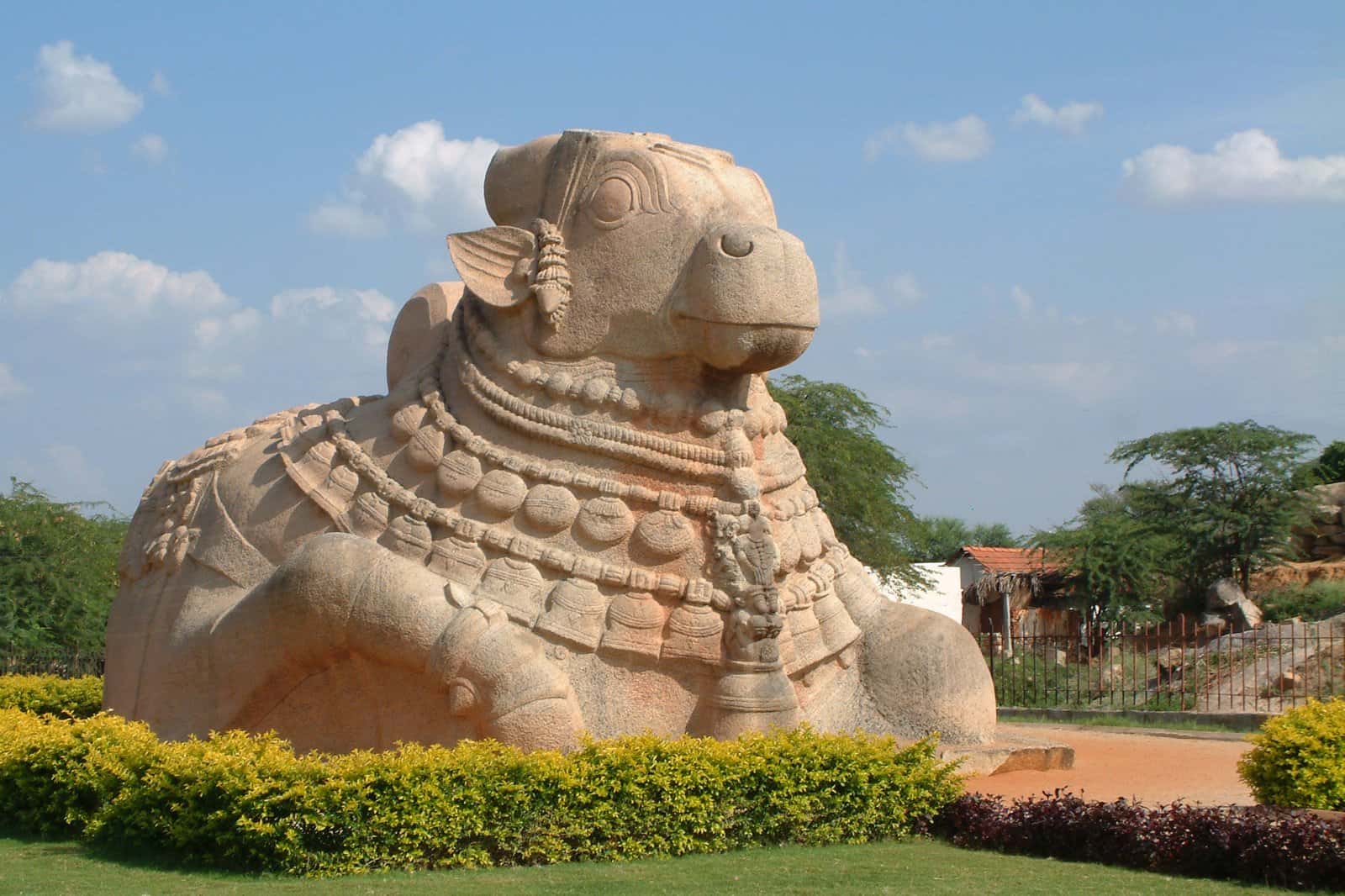
- The Dasabhuja GanapatiThe signature monument is a ten-armed Ganesha, the Dasabhuja Ganapati, carved from a single monolith standing about 4 metres, roughly 10 to 13 feet, tall. The district government heritage listing describes it as a 10-foot statue, so treat the exact height as approximate. The ten-armed form is unusual and is a fine example of Vijayanagara stone craft.
- The Prasanna Venkateswara templeIn the fort town stands the Prasanna Venkateswara temple, dated to about the 16th century, with a five-storey Galigopuram tower about 40 feet high covered in carving. Around the fort are living village shrines to Narasimha Swamy, Hanuman, Ellamma, Venugopala, Jambukeswara, Veerabhadra and Kanyaka Parameswari.
- The four Siddha cavesPartway up the hill are four caves fronted by small stone doors carved with figures of Siddhas, the accomplished sages of tradition. They are modest and easy to miss, so look for them on the ascent. They are the clue to Rayadurg's deeper story, told in the keepsake below.
The Anantapur district administration lists Rayadurgam as a prominent Jain centre and records a Shiva temple with an emerald lingam among its monuments. Almost no travel page mentions either detail. We flag this as a government heritage record rather than something we have measured or verified on the ground, and we would love a reader who has seen the emerald lingam to write in and confirm it.
The experiences worth the climb
Beyond ticking off the monuments, these are the things that make the detour to Rayadurg memorable, and how to do each one well.
- The granite sunriseThe best free experience here is the climb at first light. The low sun turns the bare granite gold, the air is still cool, and the view over the town and the plain opens up as you rise. Start before dawn, take it slowly, and you will have the fort almost to yourself.
- Reading the layered defencesTake your time over the rings of walls, the gateways and the rock-cut cisterns. This is a soldier's fort, built to be almost impossible to storm, and walking it slowly, imagining the sieges it saw after the fall of Vijayanagara, is more rewarding than rushing to the top for a photo.
- Finding the Siddha cavesHunt out the four caves with their small carved stone doors on the way up. They are unglamorous but atmospheric, and they connect this hill to the old Rasa Siddha, or alchemist-sage, tradition of the region. A torch helps you see the carvings inside.
- The temple detailLook closely at the Dasabhuja Ganapati and the Galigopuram carvings rather than glancing and moving on. This was Vijayanagara territory, the same empire that built Hampi, and the quality of the stonework rewards a patient eye.
- A quiet town wanderRayadurg is a working handloom and textile town, not a tourist stop, so a short walk through its lanes and market is an honest slice of small-town Rayalaseema life. Buy a cold drink, watch the weaving, and enjoy being somewhere that sees very few visitors.
If you do only one thing properly, make it the sunrise climb. The fort is not a polished monument with signboards and cafes, it is a raw granite hill with old stones on it, and its reward is atmosphere and quiet rather than spectacle. Give it an unhurried early morning, let the light do the work, and Rayadurg gives back far more than a mid-morning rush ever will.
How to climb the fort safely
The ascent is short but steep, exposed and without any facilities. A little preparation turns it from a risk into a highlight.
- How long and how hardThe climb takes most reasonably fit visitors about 30 to 45 minutes each way, up rock-cut steps and stretches of bare granite. It is steep in places and there is no railing on much of the route, so wear proper shoes with grip and take your time. The difficulty is the exposure and the heat, not the length.
- Carry your own water and shadeThere is no drinking water, no shop and no shade anywhere on the hill. Carry at least one to two litres of water per person, a hat, sunglasses and sunscreen, even in winter. This is the practical difference between a good climb and a miserable one.
- Go early, come down before the heatAim to start at or just after sunrise, or in the last cool hours before dusk. The middle of the day is to be avoided in every season and is genuinely dangerous from about April to June. Tell someone your plan, since you may meet very few other people on the hill.
- Footing and wildlifeWatch your footing on loose stone and smooth rock, especially coming down, which is where most slips happen. As on any dry, rocky Deccan hill, be alert for snakes in warm weather, keep to the path, and do not put hands into crevices in the rock.
This bears repeating because it catches people out: Rayadurgam Fort is an open, free, unticketed site with no water, no toilets, no lighting, no guides and no rescue point on the hill. You are entirely self-sufficient up there. That is also its charm, but it means you must arrive prepared, climb within your limits, and never attempt the ascent in the midday sun of the hot months.
Where to stay for Rayadurg
Rayadurg town has only basic lodges. Most travellers sleep better in Ballari, Anantapur or Hospet and visit the fort on a day run.
- In Rayadurg town: basic and simpleThe town has a few simple lodges, generally clean but modest, running from about 600 to 1,500 rupees a night. This is the option if you want to be at the foot of the fort for a dawn climb and do not mind rough-and-ready rooms. Do not expect tourist-grade hotels, room service or English signage.
- Ballari: the most comfortable baseBallari, about 53 km away in Karnataka, has the widest choice of proper hotels, with mid-range rooms roughly 1,500 to 4,000 rupees. It is a sensible base if you are also seeing Hampi, since it sits between the two.
- Anantapur: on the highwayAnantapur, about 98 to 99 km away, is the district town and has decent business hotels, useful if you are approaching from Bengaluru or from the Sri Sathya Sai side. It works as an overnight stop on the drive in or out.
- Hospet and Hampi: for the heritage travellerIf Rayadurg is part of a Vijayanagara trip, base yourself at Hospet or Hampi, which have the region's best range of stays from budget to boutique, and add Rayadurg as a day trip of about 100 to 110 km each way.
Rayadurg itself needs only half a day: the fort, the temples and a short town wander. You do not need a night here at all if you are based in Ballari, Anantapur or Hampi. Give it a single early morning for the climb, and spend your nights somewhere with better rooms and food. As a standalone destination it does not justify a long stay, and we would rather tell you that than pad the trip.
Rayadurg costs and a realistic budget
Rayadurg is very cheap because there is almost nothing to pay for. The fort is free, and your main costs are transport, a room and food.
- The fort is freeThere is no entry fee for Rayadurgam Fort. It is an open hill fort, not a ticketed ASI monument, so unlike the nearby Gooty Fort or the Tadipatri temples there is nothing to pay at the gate and no camera charge. Your money goes on getting there and staying, not on the sight itself.
- A rough daily budgetExcluding long-distance travel, a frugal day for two runs about 1,000 to 1,500 rupees, mostly food and local transport, while a comfortable day with a hired cab and a better room is more like 2,500 to 4,000 rupees. By big-city standards this is a very inexpensive stop.
- Rooms and transportBasic lodges in town are about 600 to 1,500 rupees, better hotels in Ballari or Anantapur about 1,500 to 4,000 rupees. The biggest variable cost is a car with a driver for the day, which is well worth it here given the thin public transport and the need to move on the same day.
- A useful rest-day extraIf you are basing in Anantapur, the Padmasri Kalluru Subbarao District Archaeological Museum is a cheap and worthwhile stop, with entry about 30 rupees for an adult and about 20 rupees for a child. It is open about 10:30 am to 5 pm and closed on Fridays and public holidays, so plan around that.
This is a small town with patchy card and UPI acceptance outside the bigger shops. Draw enough cash in Ballari, Anantapur or Bengaluru before you come, keep small notes for buses, autos, drivers and roadside food, and do not rely on finding a working ATM at the fort. Cash keeps a Rayadurg day simple.
Practical logistics: language, food, money and getting around
The small practicalities of a town that sees very few tourists, so your day runs smoothly and you know what to expect.
- LanguageTelugu is the everyday language, with Kannada and Urdu also heard given the Karnataka border and the town's history. English is limited, so a few words of Telugu or a translation app help, and a local driver doubles as an interpreter. People are friendly and helpful to the rare visitor.
- Food and waterEat simple, fresh South Indian vegetarian food at local tiffin places and hotels, which is tasty and very cheap. Stick to bottled or filtered water, carry your own up the fort, and eat where the turnover is high. Do not expect tourist cafes or continental menus here.
- Getting aroundThe town is small and walkable, and autos handle short hops. For the fort and any onward travel, a hired car with a driver is by far the most practical choice, since buses are infrequent and timings are not tourist-friendly. Arrange the car in Ballari, Anantapur or through your hotel.
- Connectivity and cashMobile coverage in town is generally fine for calls, maps and data on the main networks. Carry cash, as covered in the costs section, since card and UPI acceptance is patchy once you leave the bigger shops.
Safety, heat and health at Rayadurg
Rayadurg is a calm, low-crime small town. The real risks here are natural, the heat and the exposed climb, not people.
- Heat and dehydration firstThe biggest danger by far is the sun on a shadeless granite hill in one of India's driest regions. Climb only in the cool hours, carry plenty of water, and abandon the ascent if you feel dizzy or overheated. From about April to June a midday climb is genuinely dangerous, not merely uncomfortable.
- Footing on the rockSteep, unrailed rock-cut steps and smooth granite mean slips are the other real risk, especially on the way down. Wear grippy shoes, take the descent slowly, and do not climb on wet rock during a monsoon spell. Keep children within reach at all times on the hill.
- Snakes and open ruinsAs on any dry Deccan hill, be alert for snakes in warm weather, stay on the path, and do not reach into crevices or dark cave corners without a light. The ruins are unrestored and unguarded, so watch for loose stones and unstable edges.
- General safety and healthPetty crime is low and the town is welcoming, but as anywhere keep valuables discreet and your phone charged. Carry a basic first-aid kit and any personal medicines, since the nearest good hospitals are in Ballari or Anantapur, not in Rayadurg itself.
Rayadurg is a quiet, conservative small town where a visitor is a novelty rather than a target, and most solo travellers, including women, find it calm and friendly with standard precautions. Because you may be alone on the hill, tell your hotel or driver your plan, climb in the cooler, brighter hours, and dress modestly in keeping with a small Rayalaseema town. The sensible caution here is about the empty hillside and the heat, not about the people.
Rayadurg for every kind of traveller
This is an offbeat, raw site that suits some travellers far more than others. Here is the honest word for each, including seniors and families.
- History lovers and offbeat travellersThis is your kind of place: a real Vijayanagara-era fort with layered defences, unusual carvings and almost no crowds. If you like Hampi and want the same history without tour buses, Rayadurg rewards you handsomely.
- PhotographersGranite, old stone and big skies at sunrise and sunset make for strong, uncluttered images. The ten-armed Ganesha, the gopuram carvings and the cave doors are all worth the frame. Go at either end of the day for the light and the quiet.
- Families with childrenFine for active older children who can manage a steep, unrailed climb in the cool hours, but not suited to toddlers or anyone who needs facilities, since there are none on the hill. Keep children within arm's reach on the rock and carry plenty of water for them.
- Senior travellers and on accessibilityBe honest with yourself here. The climb is steep, exposed and without railings or resting shade, so it is hard for anyone with limited mobility, heart or breathing issues, or a low tolerance for heat. Seniors who are fit and used to hill walking can do it slowly in winter at dawn, but there is no easy or assisted route to the top, and those who prefer can enjoy the temples and town at the base instead.
- Solo travellersA rewarding, safe-feeling solo stop for the self-sufficient traveller who is comfortable being off the tourist trail. Tell someone your climbing plan and go in daylight, since you may have the hill to yourself.
- Pilgrims and heritage-minded visitorsThe living temples, the Jain-centre heritage and the Rasa Siddha caves give a devotional and cultural depth beyond the fort walls. Visit the shrines respectfully, remove footwear where asked, and treat the caves as the quiet, sacred places they are.
How long to give Rayadurg, and how to pair it
Rayadurg is a half-day sight best folded into a Hampi and Vijayanagara heritage loop rather than visited on its own.
- The half-day coreA sunrise climb of the fort, the Dasabhuja Ganapati and the caves, the Prasanna Venkateswara temple and a short town wander fit comfortably into a single morning of about three to four hours. That is the honest length of a Rayadurg visit before the heat builds.
- The Hampi heritage loopThe best plan is to base at Hospet or Hampi and drive out to Rayadurg, about 100 to 110 km and roughly 2 to 3 hours each way, for a morning at the fort. You get two Vijayanagara sites, the world-famous ruins and the quiet soldier's fort, on one trip.
- The Rayalaseema forts routeHistory-minded drivers can string Rayadurg together with the ASI-protected Gooty Fort and the Tadipatri temples, all in the Anantapur region, for a two to three day Rayalaseema heritage drive out of Bengaluru or Hyderabad.
- A stop on the Anantapur roadIf you are travelling between Bengaluru and the Sri Sathya Sai and Anantapur side, Rayadurg makes a worthwhile early-morning detour before you press on, provided you time it for the cool hours.
The one planning mistake is treating Rayadurg as a destination worth a long dedicated journey. It is a rewarding half-day for the right traveller, but the honest advice is to reach it as part of a wider Hampi or Rayalaseema route rather than a special trip. Pair it well and it shines. Visit it in isolation after a long drive and it can feel slight.
The real questions travellers ask about Rayadurg
Straight answers to the questions that come up when travellers research an offbeat fort with very little written about it.
- Is it worth visiting, or is it just ruins?It is worth it if you love history and quiet and are happy with a raw, unrestored site. It is a genuine Vijayanagara fort with unusual carvings and no crowds. If you want polished monuments with signboards and cafes, it will disappoint, and we would rather say so.
- What are the timings and the entry fee?There is no ticket and no fixed timings, because it is an open hill fort, not a managed monument. In practice you visit in daylight, and the sensible window is dawn to mid-morning or the late afternoon, avoiding the midday heat.
- Can I combine it with Hampi?Yes, and you should. Rayadurg is about 100 to 110 km from Hampi by road, roughly 2 to 3 hours, so it is a natural offbeat add-on to a Vijayanagara trip based at Hospet or Hampi.
- How hard is the climb?Steep but short, about 30 to 45 minutes up over rock-cut steps and bare granite, with no railings in places. Reasonably fit walkers manage it easily in the cool hours. The heat, not the height, is what makes it hard.
- Are there facilities on the hill?None. No water, no toilets, no shops, no guides and no lighting on the fort. Carry your own water and sun cover, and use toilets in the town before you climb.
- When is the best time to go?About October to February, when winter days are a comfortable 15 to 28 degrees Celsius. Avoid April to June, when the exposed granite gets close to 40 degrees Celsius and a midday climb is unsafe.
Planning Rayadurg from abroad
For the overseas or NRI history traveller, Rayadurg is a quiet, uncrowded companion to Hampi. A little preparation for a raw, untouristed site makes it easy and rewarding.
- Treat it as a Hampi add-onFly into Bengaluru, do Hampi, and add Rayadurg as an offbeat day trip of about 100 to 110 km. Seeing it this way, rather than as a special journey, is what makes it worthwhile for a visitor who has come a long way for the Vijayanagara story.
- Expect a raw, unmanaged siteThis is not a curated heritage attraction. There are no signboards in English, no guides, no facilities and very few other visitors. Arrive self-sufficient with water, sun cover and cash, and enjoy the rare feeling of having a real fort almost to yourself.
- Hire a car with a driverThe single best decision for an overseas visitor is a car with a local driver from Hospet, Ballari or Bengaluru. It solves the thin public transport, the language gap and the same-day return in one step, and the driver often knows the fort path.
- Respect a living, sacred placeThe temples and caves are still in worship. Dress modestly, remove footwear where asked, ask before photographing people at prayer, and be a quiet, respectful guest in a town that sees almost no tourists.
Money, connectivity and timing for foreign visitors
The practical basics an overseas traveller needs for a small Rayalaseema town: cash, a SIM, the language reality and how much time to give it.
- Carry cash, do not rely on cardsCard and UPI acceptance is patchy in a town this small. Draw rupees at an ATM in Bengaluru, Ballari or Anantapur, carry small notes for drivers, buses and food, and do not count on finding a working machine near the fort.
- Get a SIM in the cityBuy an Indian tourist SIM or an eSIM when you land in Bengaluru or Hyderabad rather than hunting for one here. Coverage in Rayadurg is fine for maps, calls and messaging on the main networks, which is all you really need.
- Give it a morning, not a tripOn a wider South India itinerary, Rayadurg deserves a single early morning as part of a Hampi loop, not a dedicated multi-day journey. Plan your days so the fort falls at dawn and the long drives fall in the heat of the day.
- Time it to the cool seasonCome between about October and February. This is one of the hottest, driest parts of India, and an overseas visitor unused to the Rayalaseema sun should not attempt the climb outside the cool months or the cool hours.
Rayadurg is a rewarding taste of the real, unpolished Deccan for a traveller who already knows the famous sites. It asks a little more of you, self-sufficiency, patience and a tolerance for rough edges, and gives back solitude, history and an honest slice of small-town Andhra life. Pair it with Hampi, keep your expectations set to raw rather than curated, and it becomes a quiet highlight rather than a letdown.
The alchemist-sages in the caves of the fort
Halfway up the fort hill are four caves fronted by small carved stone doors bearing figures of Siddhas, the accomplished sages of Indian tradition. They are the clue to a deeper story. The Anantapur district administration records Rayadurgam as a prominent Jain centre, and the surrounding country was a seat of the Rasa Siddhas, the adepts of rasa or mercury, alchemists who sought both gold and immortality. Just across the region the hill of Rasasiddula Gutta at Konakondla is honoured as the birthplace of the great Jain Acharya Kundakunda, whose Jaina sculptures, rock-bed caves and cosmological carvings survive there. So the quiet cave doors on Rayadurg's granite are not a footnote but a thread that ties this soldier's fort to one of South India's oldest spiritual and philosophical lineages. We tell this as heritage record and living tradition, not as a single dated scripture: no one verse can be reliably pinned to these caves, and the honest wonder is that a raw, uncrowded fort still carries so old a memory.
Planning a Rayadurg trip?
Our Andhra Pradesh travel experts plan your full journey for you: route, hotels, darshan timings and transport. You get a free day-by-day plan and an exact quote on WhatsApp, usually within a few hours. No payment is needed to get your plan.