Visakhapatnam Travel Guide
The best months are October to March , cool, dry and pleasant. The one honest caveat is that October and November carry a real Bay of Bengal cyclone risk, so this is the window...
When to visit Vizag, and the cyclone caveat
The best months are October to March, cool, dry and pleasant. The one honest caveat is that October and November carry a real Bay of Bengal cyclone risk, so this is the window to watch the forecasts.
- December to February: the golden windowThe most comfortable time, with warm days around 28 C and cool, dry nights closer to 15 to 18 C, clear skies and low humidity. This is the easiest time for the beaches, the long Araku day and the hill viewpoints, so it is the window most visitors should aim for.
- October, November and March: warm but fineStill good for the coast, with March warming up quickly into the afternoon and October to November greener after the rains. The only real catch is cyclone season, covered in the caveat below, so keep your plans a little flexible if you come in late autumn.
- April to June: hot and humidHigh summer on the Bay of Bengal is hot and sticky, tiring for the open beaches and the inland drive. If you must come then, keep the middle of the day for rest and air-conditioning, and do the beaches and viewpoints early or at sunset.
- Late June to September: the monsoonThe southwest monsoon brings the heaviest rain, which makes the Eastern Ghats and the Araku waterfalls lush and dramatic but the sea rough and the inland roads slow. It can be a beautiful, quiet time to visit if you do not mind rain and you watch the weather.
This is a Bay of Bengal coast, and tropical cyclones are most likely just before and just after the monsoon, with October and November the peak window. Vizag was hit directly by Cyclone Hudhud in October 2014, which caused widespread damage. None of this should put you off a winter trip, but if your dates fall in October or November, watch the India Meteorological Department forecasts in the days before you travel, keep your itinerary flexible, and do not plan the beaches or the Araku drive on a day with a storm warning.
How to reach Visakhapatnam
Vizag is easy to reach: a busy airport with wide domestic and some international flights, and a major railway junction on the east-coast line. Most visitors fly or take the train.
- By airVisakhapatnam airport has frequent domestic flights to Hyderabad, Bengaluru, Chennai, Delhi, Mumbai and other cities, plus some international routes including Singapore and Gulf destinations, though international schedules change, so check current flights before you rely on them. The airport is well inside the city, a short drive from the beach hotels.
- By trainVisakhapatnam Junction is a major stop on the busy Howrah to Chennai coastal route, with direct trains from Kolkata, Bhubaneswar, Chennai, Hyderabad, Delhi and beyond. Book on IRCTC a little ahead in season. The station is central and well connected to the beach road by auto and taxi.
- By roadGood highways link Vizag to Hyderabad, around 600 km, and along the coast to Bhubaneswar and Vijayawada. Many domestic visitors arrive on an overnight bus or a self-drive trip, and the city is the natural base for the inland run up to Araku.
- Getting around townAutos, app cabs and a cheap city bus network cover the beach road and the sights. A full-day sightseeing cab is the easiest way to string together the city viewpoints, and a separate longer cab or the train handles the Araku day. Agree the cab rate and the stops before you set off.
There are no direct long-haul flights, so connect through Delhi, Mumbai, Hyderabad or Bengaluru onto a domestic flight to Vizag, or via a Gulf hub. Vizag works well as a calmer coastal stop on a wider south or east India trip.
Vizag has some direct international flights, including Singapore and Gulf routes such as Abu Dhabi, on a limited and changeable schedule, so check current routes; otherwise connect through Hyderabad or Chennai. A new Bhogapuram international airport for the region is also due to open, so confirm which airport your flight uses.
Fly direct from most metros, or take a train to Visakhapatnam Junction on the east-coast line. The overnight trains from Hyderabad, Kolkata and Chennai are a comfortable, scenic way in.
The beaches, the submarine and the hill views
Vizag is a beach city wrapped around a working port, with a famous submarine on the sand, a hilltop park reached by ropeway, and ancient Buddhist hills above the sea. A few timings and closures are worth knowing.
- RK Beach and the sea frontRamakrishna Beach, always RK Beach, is the long city promenade where Vizag gathers at dawn and dusk. It is a place to walk, watch the fishing boats and catch the sunrise rather than to swim, for reasons in the safety section. The beach road links most of the city sights.
- INS Kursura Submarine MuseumA real decommissioned submarine hauled onto RK Beach, the first submarine museum in Asia, where guides walk you through the cramped interior. Per the Vizag tourism listing, updated March 2026, the adult ticket is about 70 rupees and a child about 40 rupees, with a still-camera fee of about 50 rupees and video about 200 rupees. Older pages still show about 40 rupees, so the fee has risen. It is closed on Mondays, so do not save it for a Monday.
- Kailasagiri and the ropewayA hilltop park with a giant Shiva and Parvati statue and sweeping views over the coast, reached by road or by a short ropeway cable car of a few minutes. The ropeway is inexpensive, but the old quoted fares are out of date and there is no current published rate online, with recent visitors reporting roughly 150 rupees for the round trip, so confirm the exact ropeway and toy-train rates at the booth. There is a small toy train in the park.
- Simhachalam temple and the Buddhist hillsSimhachalam, the Varaha Lakshmi Narasimha temple on a hill about 16 km out, keeps its deity in sandalwood paste all year. Above the coast, the ancient Thotlakonda and Bavikonda Buddhist complexes are free, uncrowded and atmospheric, and most package tours skip them.
Simhachalam is an active, important temple. Dress modestly, cover shoulders and knees, remove shoes where asked, and expect photography to be restricted in the inner shrine. Darshan runs roughly 7 am to 4 pm and 6 pm to 9 pm with midday and afternoon breaks, so go in the morning or early evening and reconfirm the current timings, which change around festivals.
Signature experiences in and around Vizag
Beyond the beach promenade, these are the experiences people remember, from the glass-roofed Araku train to a sunrise on the sand, and how to arrange them well.
- The Araku train through the Eastern GhatsThe signature journey: the morning train from Vizag climbs into the hills through dozens of tunnels and bridges to Araku Valley. The glass-roofed Vistadome coach is the one to want and books out ahead, with fares commonly around 700 to 1,200 rupees one way, while ordinary classes are far cheaper. Sit on the left going up for the valley views.
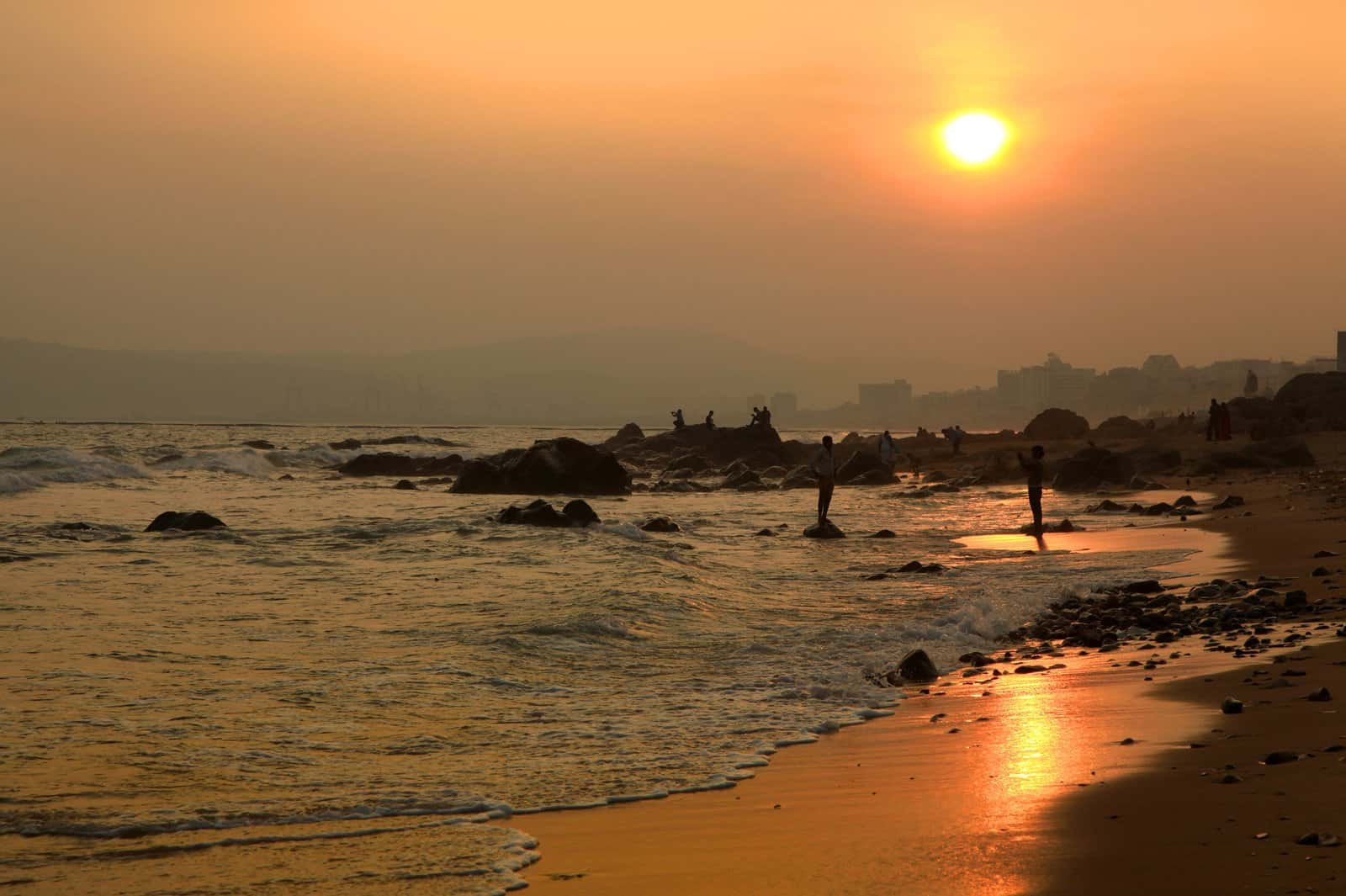
- Sunrise on RK BeachThe loveliest free experience in Vizag is the dawn on the beach road, when the fishing fleet is out, walkers and yoga groups gather, and the light comes up over the Bay of Bengal. Walk the promenade, watch the sunrise, and skip the swim.
- Borra Caves and the coffee hillsIn the Araku direction, the vast Borra Caves, lit and full of strange limestone formations, and the Ananthagiri coffee plantations make a full inland day. Buy fresh local coffee in Araku, a WayToIndia tour favourite, and stop at the Galikonda viewpoint on the high ridge.
- The submarine and the war memorialWalk through the INS Kursura submarine on RK Beach, then the Victory at Sea war memorial nearby, for the naval story that defines this port city. Aircraft and naval exhibits along the beach road round out an easy, child-friendly couple of hours, just not on a Monday.
- The viewpoints and the lighthouseDolphin's Nose headland, the Yarada and Rushikonda beach overlooks, and the hill drives give the big coastal panoramas. These are best at golden hour, and a half-day sightseeing cab strings them together comfortably.
- The Buddhist hilltopsFor a quiet, reflective half-day, climb to Thotlakonda or Bavikonda, the ancient Buddhist monastery ruins on the hills above the sea. They are free, rarely crowded, and a complete change of pace from the busy promenade.
If you do only one thing slowly, make it the Araku train on a clear morning. Booked ahead in the Vistadome coach, with a left-hand seat for the climb out of Vizag, it is one of the great hill-railway journeys in India, all tunnels, waterfalls and tea-and-coffee country. Give it a full day, return by road or the afternoon train, and it becomes the centrepiece of the trip rather than a tick-box ride.
Where to stay in Vizag, and how many nights
Stay on or near the beach road for the sea and the sights, or out at Rushikonda for a quieter resort feel. Two to three nights is the sweet spot, more if you add an Araku overnight.
- Beach Road and the city centreThe most convenient base, walking distance or a short hop from RK Beach, the submarine museum and the promenade, with the widest choice of hotels across budgets. Best for first-timers who want to be in the thick of the sea-front scene and close to the sights.
- Rushikonda and the northern beachesQuieter resort-style stays on the hillier coast north of the city, with sea views and a calmer pace, though you will need transport into town. Better for couples and anyone who wants space, and the natural choice for a relaxed beach-leaning trip.
- How many nightsTwo nights covers the city comfortably, the beaches, Kailasagiri, the submarine and the viewpoints. Add a third night, or an overnight in Araku, for the inland day of Borra Caves and the coffee hills without rushing. A single night only scratches the surface.
- Room budgetsOff-season, simple budget rooms run from roughly 800 to 2,000 rupees, comfortable mid-range hotels roughly 2,500 to 5,000 rupees, and beach resorts and four to five star stays from about 6,000 rupees upward. Beach-road and Rushikonda rates run higher, and all rise on long weekends and holidays.
Most travellers keep a single Vizag base and do Araku as a long day trip by train or cab. If you want a slower hill experience, an overnight in Araku lets you enjoy the coffee country, the tribal museum and the waterfalls in the cool of the evening and morning, then return to Vizag the next day. Either works; the day trip is simpler, the overnight is calmer.
Vizag costs and a realistic daily budget
Vizag is gentle on the wallet for a big city. Here is what the main things cost, so you can plan and agree fares before you commit.
- A rough daily budgetExcluding your room and long-distance transport, plan on about 1,500 to 2,500 rupees a day as a budget traveller, about 3,500 to 6,000 rupees mid-range, and about 8,000 rupees and up for a comfortable day with cabs, meals out and the train.
- The fixed-price thingsEntry fees are small: per the Vizag tourism listing the submarine museum is about 70 rupees for an adult (up from an older 40 rupees), Borra Caves about 60 rupees for an adult, and the Kailasagiri ropeway is inexpensive but has no current published rate, with recent visitors reporting roughly 150 rupees for the round trip. These are useful anchors, though camera fees are extra and rates can change, so reconfirm at the gate.
- Cabs and the Araku dayA full-day city sightseeing cab runs roughly 2,000 to 3,000 rupees, and a Vizag to Araku round-trip cab roughly 3,500 to 5,000 rupees depending on the vehicle. The Araku Vistadome train is around 700 to 1,200 rupees one way. Agree the cab rate, the stops and any waiting charge before you start.
- Cash and cardsCards and UPI work in hotels, malls and bigger restaurants, but autos, small eateries, beach stalls and the inland villages run on cash. ATMs are plentiful in the city. Carry enough cash for the day, and small notes for the autos and entry fees.
The single habit that saves money and friction in Vizag is to agree the price before anything begins, whether that is a sightseeing cab, an auto across town, or the Araku round trip with its stops and waiting time. Metered or app cabs take the guesswork out in the city; for the longer inland trips, settle the full fare, the route and the waiting charge in advance, and the day runs smoothly.
Practical logistics: food, money, SIM and getting around
The small things that make a Vizag day smooth, from the seafood and the local cuisine to ATMs, app cabs and the language you will hear.
- Food and seafoodVizag is a seafood city, with Andhra cuisine that runs spicy, so say mild if you need it. There is plenty of vegetarian food too, from tiffin breakfasts to thalis, and the fresh coastal fish and prawns are a highlight. The fishing harbour and the beach road have the liveliest eating.
- Getting around townAutos, app cabs and a cheap public bus network cover the city, and a full-day cab is the easiest way to chain the sights. The beach road is walkable, but the city is spread out, so plan on transport between the headlands and the hill viewpoints.
- Money and ATMsATMs and card or UPI payments are everywhere in the city. Carry cash for autos, beach stalls and the inland Araku villages, where coverage and card acceptance thin out. Keep small notes for the entry fees and the autos.
- SIM, signal and languageMobile coverage is good across the city and reasonable on the Araku road, though it can drop in the hill tunnels and remote spots, a point WayToIndia's tour notes flag for the inland leg. Telugu is the main language, with Hindi and English widely understood in the tourist and hotel trade.
Safety, the sea, and staying well
Vizag is a relaxed, friendly city, but the sea is the one real danger here. A little awareness of the beaches, the heat and the seasons keeps the visit happy.
- Do not swim: the sea is genuinely dangerousThis is the most important fact on the page. RK Beach, Rushikonda and Yarada have strong, shifting rip currents and have recorded well over 100 drowning deaths in recent years. Treat the beaches as places to walk, sit and watch the sunrise, not to swim. Obey the lifeguard flags and whistles, keep children well back from the waterline, and never wade out, even where others do.
- General safetyVizag is widely regarded as one of the safer, calmer big cities in India, easy to walk by day and lively in the evenings on the beach road. Use normal city sense: keep valuables close in crowds, use app cabs at night, and stick to the busier, lit stretches after dark.
- Heat, water and healthDrink bottled or filtered water, take the usual care with very spicy food and street food, and carry sun protection for the open beaches and the long Araku day. In the warmer months the midday heat and humidity are tiring, so pace the outdoor sights for the early morning and evening.
- Cyclone and monsoon awarenessIn October and November, and during the monsoon, watch the India Meteorological Department forecasts. If a cyclone or heavy weather is warned, stay off the beaches and the exposed headlands, postpone the Araku drive, and follow local advice. The sea turns rough and the inland roads slow in heavy rain.
Most solo women report Vizag as one of the more relaxed big Indian cities to travel in, comfortable to explore by day and on the busy beach road in the evening. Use standard precautions: dress to your own comfort, prefer app cabs after dark, keep to lit and busier areas at night, and trust your instincts. The sea, not personal safety, is the real hazard to plan around here.
Vizag for every kind of traveller, and on access
Vizag suits very different visitors in different ways. Here is what it offers you, and the one tip that matters for each, including how a senior does the city and Araku comfortably.
- Families with childrenEasy and rewarding, with the submarine museum, the ropeway, the toy train, the zoo and the beaches. The one rule is firm: do not let children swim or wade in the sea here. The beaches are for sandcastles and sunrise, and the rip currents are dangerous.
- Couples and honeymoonersRelaxed and scenic: sunrise on RK Beach, the Kailasagiri views, a quiet Rushikonda resort and the Araku train make a gentle, unhurried few days. An overnight in Araku adds a cool hill-country pause.
- Senior travellers and on accessibilityVery doable with planning. Use the Kailasagiri ropeway rather than the climb, choose a beach-road hotel to keep walking short, and treat Araku as one long, well-paced cab or train day rather than a rush. Borra Caves involve steps and damp, uneven floors, so take them slowly or admire the entrance. The beach promenade is flat and easy.
- Solo and budget travellersVizag is friendly, affordable and easy to navigate by bus, auto and app cab, with budget rooms and good cheap food. It is a comfortable, low-stress city for independent and first-time travellers.
- Solo female travellersOne of the more relaxed big cities for solo women, comfortable by day and on the busy beach road in the evening. Use standard city precautions after dark and prefer app cabs, and the main thing to respect is the sea, not personal safety.
- PhotographersSunrise over the fishing fleet on RK Beach, the Araku train through the tunnels and waterfalls, the coastal viewpoints at golden hour, and the Buddhist hills. Ask before photographing people, and respect the photography limits inside the Simhachalam shrine.
A suggested Vizag and Araku itinerary
How to shape two or three days so you catch the city sights and the beaches on a compact day, and give the long inland Araku run its own day.
- Day one, the city and the coastStart at sunrise on RK Beach, then the submarine museum (any day but Monday), the Victory at Sea memorial and Kailasagiri by ropeway for the views. In the afternoon take in Dolphin's Nose, the Rushikonda and Yarada overlooks and a beach-road dinner.
- Day two, the Araku runGive Araku and Borra Caves their own full day. The classic version is the morning Vistadome train up, sit on the left, with a cab or the afternoon train back; the simpler version is a round-trip cab via Borra Caves, the coffee plantations and the Galikonda viewpoint. Either way it is a long, scenic day, so start early.
- Day three, if you have itSlow down: the quiet Thotlakonda or Bavikonda Buddhist hills in the morning, Simhachalam temple, a calmer northern beach, or simply more time on the promenade and over the local seafood. A third night turns a brisk trip into a relaxed one.
- The two-night versionIf you only have two nights, keep day one for the city and day two for Araku, and accept that you will skip the Buddhist hills and the slower corners. It is a satisfying short break, but three nights is more comfortable if Araku is on the list.
Two things break a tight Vizag plan: arriving at the INS Kursura Submarine Museum on a Monday, when it is closed for maintenance, and underestimating the Araku day. Araku and Borra Caves are about 90 to 120 km inland, a three to four hour drive or a four hour-plus train each way, so it genuinely needs its own day. Slot the submarine on a non-Monday and keep Araku as a standalone long day, and the plan holds together.
The real questions travellers ask about Vizag
Straight answers to the questions that come up again and again on traveller forums, so you arrive already knowing the score.
- Is two nights enough?Two nights covers the city and the beaches comfortably, with a long day trip to Araku. Add a third night if you want Araku overnight, the Buddhist hills or simply a slower pace. A single night only lets you skim the sea front and the submarine.
- Is it safe to swim?No. The sea at RK Beach, Rushikonda and Yarada has dangerous rip currents and a serious record of drownings. Walk, sit and watch the sunrise, but do not swim or wade out, and keep children back from the water. This is the one rule that matters most here.
- How do I book the Araku train?Book on IRCTC in advance, choosing the Vistadome coach for the glass roof and the best views; it sells out ahead, with fares commonly around 700 to 1,200 rupees one way. Sit on the left going up from Vizag for the valley and waterfalls. Ordinary classes are cheaper but lack the views.
- Day trip or overnight in Araku?A day trip works well: morning train or early cab up, sights through the day, back by evening. An overnight is calmer and lets you enjoy the coffee hills and waterfalls in soft light, but it means a second base. Most visitors do the day trip from a single Vizag base.
- Is Vizag just an industrial port?It is a working port and a steel city, yes, but it is also a relaxed beach city with a long promenade, hill viewpoints, ancient Buddhist sites and the Eastern Ghats behind it. Most visitors are pleasantly surprised by how green, calm and scenic it is.
- When exactly is the submarine museum open?Per the Vizag tourism listing, updated March 2026, the museum runs in the afternoon to evening, roughly 2 pm to 8:30 pm Tuesday to Saturday with an extra morning window on Sunday, and is closed on Mondays, with adult entry about 70 rupees (older pages still show about 40 rupees); the published hours vary between listings, so treat it as an afternoon and evening visit on any day except Monday, and reconfirm the day's timing locally.
Planning Vizag from abroad
Vizag is India's most relaxed big coastal city and an easy, uncrowded stop, with some direct flights from Singapore and the Gulf. A little preparation on the sea, the seasons and the train makes it simple.
- Getting there from abroadVizag has some direct international flights, including Singapore and Gulf cities, on a limited and changeable schedule, so check current routes; otherwise connect through Delhi, Mumbai, Hyderabad, Bengaluru or a Gulf hub onto a domestic flight. It pairs well as a calmer stop on a wider south or east India trip.
- Respect the seaThis is the one thing to internalise before you arrive. The beaches here are beautiful but the sea is dangerous, with strong rip currents and many drownings on record. Enjoy the promenade and the sunrise, but do not swim, and keep children well away from the water.
- Time it for the cool, calm windowAim for December to February for the most comfortable weather. If you come in October or November, watch the India Meteorological Department forecasts, because this coast carries a real cyclone risk in late autumn. The monsoon, late June to September, is green but wet.
- Gentle and senior-friendly with planningVizag is easy on older travellers: a flat beach promenade, the Kailasagiri ropeway instead of a climb, and Araku as one well-paced day. It is a low-stress, friendly introduction to coastal India for parents and grandparents.
Money, connectivity and timing for foreign visitors
The practical basics an overseas traveller needs for a coastal city and a hill day trip: cash, cards, a SIM, and how many days to give it on a wider India trip.
- Cards in the city, cash for the restCards and UPI work well in city hotels, malls and bigger restaurants, but autos, beach stalls and the inland Araku villages run on cash. Draw cash at the plentiful city ATMs and keep small notes for autos, entry fees and tips.
- Get a SIM at the airportPick up an Indian tourist SIM or an eSIM when you land, ideally at your arrival airport, rather than hunting for one later. City coverage is good; expect it to drop in the Araku hill tunnels and the remote stretches, which WayToIndia's tour notes flag for the inland leg.
- How long to give it on a bigger tripOn a wider India trip, two to three nights in Vizag is the right weight: a day for the city and beaches and a long day for Araku and Borra Caves. It works as the calm, coastal chapter between the busier cities and temple towns of the south and east.
- Book the train and the cab aheadThe Araku Vistadome coach sells out, so book it on IRCTC well before you arrive, or arrange a private cab with your hotel. For the city, app cabs and a full-day sightseeing car are the easiest options, agreed in advance.
Vizag is an unusually gentle introduction to India: a big city that still feels relaxed, with a long sea-front promenade, easy app cabs, good food and a famous hill-railway day trip on its doorstep. Slot it as the calm coastal chapter of a wider trip, give it two or three nights, respect the sea, and let the Araku train be the day you remember. Many overseas visitors leave surprised by how easy and green this corner of the east coast is.
Why a Cold War submarine sits on Vizag's beach
Of all the sights on the Indian coast, few are as unlikely as a full-length submarine resting on a city beach. INS Kursura was a Soviet-built I-641 class submarine, commissioned into the Indian Navy on 18 December 1969 and decommissioned in early 2001 after more than three decades of patrols. Rather than scrap her, the Eastern Naval Command and VMRDA hauled the entire 91-metre vessel, weapons and all, out of the sea and set her on a concrete cradle on Ramakrishna Beach, opening her to the public in 2002 as the first submarine museum in Asia. Retired naval guides walk visitors through the cramped interior, where 77 men once shared two washbasins and two toilets at sea, and the day-to-day life of a submariner is told in the very space it happened. It is a working port city's proudest landmark, and a reminder that Vizag's story is as much about the navy and the sea as about beaches and hills.
Planning a Visakhapatnam trip?
Our Andhra Pradesh travel experts plan your full journey for you: route, hotels, darshan timings and transport. You get a free day-by-day plan and an exact quote on WhatsApp, usually within a few hours. No payment is needed to get your plan.