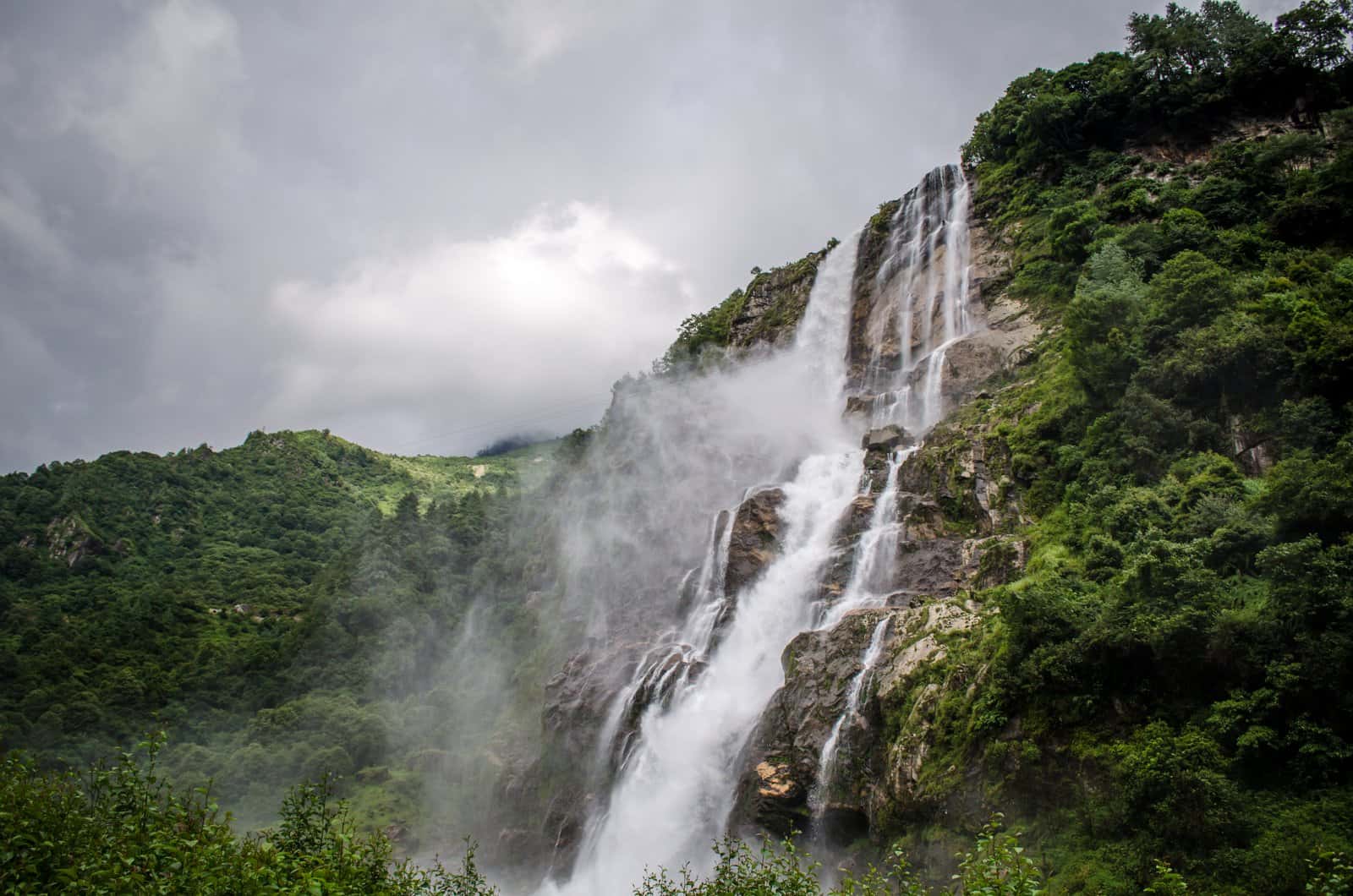
Bhalukpong Travel Guide
The dependable window is October to April . October and November give the clearest river and mountain light, February to April brings the orchids into bloom, and June to...
When to visit Bhalukpong, and the monsoon truth
The dependable window is October to April. October and November give the clearest river and mountain light, February to April brings the orchids into bloom, and June to September is a serious foothill monsoon best avoided on the hill road.
- October and November: the clearest daysThe rain has washed the dust out of the air, the Kameng runs a deep glassy green, and the forested ridges above town stand out sharply. This is the sweet spot for rafting, angling, riverside camping and photography, and the most comfortable time to start the climb toward Bomdila and Tawang.
- December to February: mild here, cold up thereBhalukpong itself sits low, at only about 200 m, so winter days are pleasant and mornings just crisp. But remember most people sleep here on the way to Tawang: the same week that feels mild by the river can be snow and ice near the Sela crossing, so pack for two different climates in one trip.
- February to April: orchid seasonThis is when the Tipi orchid centre and the Sessa sanctuary reward the detour, with the peak of bloom roughly February to April. Spring also brings the best birding weeks, when hornbills and foothill forest species are active and the weather is still dry enough for the road.
- June to September: the monsoon, honestlyThe Arunachal foothills take some of the heaviest rain in India. The river turns brown and violent, rafting and angling stop, leeches own the forest trails, and the hill road to Bomdila can block with landslides. Come in these months only if you accept delays as part of the plan.
Bhalukpong is a year-round town, but almost nobody comes only for Bhalukpong. If your real goal is Tawang, the road decides your season: October to April is reliable, the monsoon is a gamble, and deep winter needs a flexible day in the plan for snow higher up even though the Sela Tunnel, dedicated in March 2024, has made the far end far more dependable than it used to be. Build one spare day into any itinerary that crosses the passes.
How to reach Bhalukpong
Everyone arrives by road, through Tezpur. Guwahati is the reliable airport and railhead, Tezpur the short final approach, and the town's own tiny railway station is a curiosity you should not plan around.
- From Tezpur: the short approachTezpur in Assam is about 55 to 60 km away, roughly 1.5 to 2 hours through tea gardens and the Balipara forest belt. Shared vehicles and taxis run this stretch through the day. Tezpur is also your last dependable stop for cash, fuel and a proper market before the check gate.
- From Guwahati: the reliable gatewayGuwahati is about 230 to 250 km, roughly 5 to 6 hours by road, and has the region's major airport and railway station with connections across India. Most Tawang-circuit travellers land or detrain in Guwahati, leave early, and sleep the first night in Bhalukpong.
- The railway truthBhalukpong genuinely has its own station at the end of a branch line, converted to broad gauge back in May 2015, but passenger service on the branch has been skeletal and unreliable for years. Treat Rangapara North and Dekargaon near Tezpur as the nearby railheads, use Guwahati for long-distance trains, and check the current timetable on IRCTC or NTES before trusting any train to the border.
- Flying options, honestlyTezpur's Salonibari airport is temptingly close but was shut to passenger flights from October 2024 to March 2026 for runway resurfacing, and has only recently resumed limited regional services, so confirm a live schedule before building a plan on it. Guwahati is the airport that always works. There is no airport at Bhalukpong itself.
Fly into Delhi or Kolkata, connect to Guwahati, then travel by road via Tezpur. Remember foreign passport holders need a Protected Area Permit arranged in advance, covered in the overseas section below.
Route through Kolkata or Delhi to Guwahati. With an early start you can be beside the Kameng by evening, and the Tawang circuit begins at your doorstep the next morning.
Take a train or flight to Guwahati, or a train toward Rangapara North / Dekargaon (Tezpur), then finish by road. Carry your eILP already downloaded; the Bhalukpong gate checks permits, it does not issue them.
Orchids, a legendary fort, and the river itself
Bhalukpong's sights are quiet ones: Asia-class orchid science at Tipi, the ASI-protected ruins of a legendary fort above the river, and the Kameng valley scenery that starts at the edge of town.
- Tipi Orchid Research and Development CentreAbout 5 km from town, on the river bank at about 190 m elevation, this state forest department centre is a working research station rather than a manicured tourist garden, and that is its charm. The district's own guide credits the glass house with over 7,500 orchids, and the campus keeps around 10,000 plants across its species houses plus a museum and herbarium. Come between roughly February and April for peak bloom; a small entry fee may apply at the gate, so carry change and reconfirm on arrival.
- Ruins of the Bhalukpong fortOn a low hill by the Bharali-Kameng bank lie brick structures and ring wells that the Archaeological Survey of India protects as the legendary capital of king Bhalukpa. It is an atmospheric, unfenced sort of ruin: expect a short walk, forest sounds and almost no other visitors, not a ticketed monument experience. Pair it with the riverfront in the golden hour.
- The Kameng riverfrontThe wide, boulder-strewn river emerging from the mountains is the town's real spectacle. Walk the banks in the early morning when mist hangs on the water, watch anglers and camp fires in season, and enjoy the odd fact that the same river changes its name to Jia Bhoroli the moment it enters Assam.
- Sessa Orchid Sanctuary, up the roadRoughly 24 to 30 km toward Bomdila, this 1979-vintage sanctuary of about 100 sq km protects over 200 orchid species. There is no grand entrance: you experience it as short roadside forest walks on the climb, so tell your driver in advance you want to stop rather than expecting a gate and a ticket counter.
- Nag Mandir, correctly locatedMany blogs place the famous snake temple in Bhalukpong; it actually stands near Singchung, about 135 km from Tezpur, well up the Tawang road. Army road builders of Project Vartak raised it in 1966 after a cobra was killed during construction, and their successors maintain it today. Plan it as a stop on the climb to Bomdila, not as a stroll from your Bhalukpong hotel.
The ASI Guwahati Circle record describes the site as the legendary capital of king Bhalukpa, grandson of Bana and a contemporary of Naraka of Pragjyotishpur, associates the ruins with the Salasthambha rulers from the middle of the seventh century and later the Palas of Assam between the tenth and twelfth centuries CE. Popular retellings scramble the genealogy in several directions, so enjoy the legend, but know which version stands in the official record.
River, forest and tribe: the Bhalukpong experiences
This is an outdoors town: rafting on a state-recognised stretch of the Kameng, storied golden mahseer angling, hornbill country birding, and the culture of the Aka people whose legend named the place.
- Raft the KamengArunachal Tourism's own rafting page lists Seppa to Bhalukpong as one of the state's recognised river routes, and shorter commercial runs are arranged near town in season. Go in the dry October to April window, use an operator with proper kit, and agree the run length and price before you get in the boat. In the monsoon the river is simply not a place to play.
- Cast for golden mahseerThe Kameng and its Assam continuation the Jia Bhoroli are among India's storied mahseer waters. Responsible camps and operators fish catch and release in the cool dry months; bring or hire proper tackle, and treat every fish as the endangered river legend it is. Even a blank day here, mist on the water and hornbills overhead, is a good day.
- Bird the foothill forestsThe lowland and foothill forest around Bhalukpong, Tipi and the Sessa road is genuinely rich: hornbills, pheasants, forktails and a long supporting cast. Early mornings along quiet road stretches deliver plenty without any permit complexity, and spring is the liveliest season.
- Cross to Nameri's eco campOn the Assam side of the river, about 25 to 35 km away near Potasali, Nameri National Park's eco camp offers guided forest walks and gentle river trips. Nameri and Pakke are two halves of one forest divided by a state line, and pairing a Nameri morning with a Bhalukpong night is one of the region's easiest wins.
- Meet the Aka countryThe Bhalukpong circle is traditional Aka (Hrusso) country, and some clans trace their line to king Bhaluka of the fort legend. If your dates align with a local festival celebration, accept the invitation to watch; otherwise, the weekly market and village lanes around town are a gentle window into foothill tribal life. Ask before photographing people, and buy something small from the sellers you photograph.
Blogs list Pakhui (Pakke) Tiger Reserve as a Bhalukpong attraction, and on the map it is indeed just across the river. But tourist entry is arranged on the Seijosa side in East Kameng district, reached by a separate drive via the Assam plains, and your ILP must cover East Kameng for Seijosa where West Kameng covers Bhalukpong. If hornbills and the reserve are your priority, plan Seijosa as its own base, ideally around the Pakke Paga Hornbill Festival held there each January (the 2026 edition ran 18 to 20 January), and confirm current entry arrangements with the reserve office before you commit a day to it.
Where to stay in Bhalukpong
Expect simple and clean rather than fancy: a government tourist lodge, the long-loved Prashanti cottages, small private hotels and seasonal river camps. Book ahead in peak season, when the whole Tawang circuit sleeps here on the same nights.
- Prashaanti cottages and the government lodgeThe Prashaanti Cottage compound, the name travellers mention first, began life as the Assam government tourist lodge and is now privately run; it sits on the Assam bank just before the border gate with the river at its edge, simple rooms with river air and food on order. Forum travellers have long reported the cottages at around 1,500 rupees, a dated benchmark worth reconfirming when you book. The district administration also lists a government rest house and tourist lodge in Bhalukpong itself.
- Small private hotels and homestaysA handful of modest hotels, of which Kameng Inn is the name travellers mention most on review forums, plus family homestays cover the rest of the market, roughly 800 to 2,500 rupees for a clean double outside peak weeks. Hot water can be by the bucket in the cheapest rooms; ask when you check in.
- River camps in seasonBetween roughly October and April, tented camps appear on the banks for anglers, rafters and birders, usually sold with meals and activities as a package through operators rather than walk-in. If falling asleep to the river is the point of your trip, this is the way to do it; just confirm bathroom arrangements and what happens if weather turns.
- The booking strategyBhalukpong fills with Tawang-circuit groups on peak nights around holidays and festival weeks, because everyone's day one ends here. Book ahead in season rather than gambling on arrival, and if the town is full, Tenga and Dirang further up offer alternatives at the cost of a longer first day.
Nobody comes to Bhalukpong for thread counts. Rooms across town are simple, food is fresh but limited to what the kitchen bought that day, and evenings are dark and quiet by big-city standards. Travellers who arrive expecting a hill-station hotel scene grumble; travellers who arrive expecting a clean bed beside a great river tend to remember Bhalukpong with disproportionate fondness. Carry a torch, order dinner early, and give the river bank your evening.
Bhalukpong costs and a realistic budget
The town itself is cheap; the circuit around it is what costs money. Permits are small, rooms are modest, and the big line item is always the vehicle that carries you up the mountain.
- The permitThe official portal's Tourist eILP application page states the revised fee plainly: about 300 rupees for up to 3 days and about 500 rupees for stays of 4 to 14 days, even though an older information table on the same portal still shows about 100 rupees per person. Budget for the revised figures and pay only what the official portal shows at checkout; nothing is payable at the gate itself.
- Rooms and foodClean doubles run roughly 800 to 2,500 rupees off season, with the reported cottage benchmark around 1,500 rupees. Simple meals, dal, rice, local greens, river fish when available, cost about 150 to 300 rupees a plate. There is no fine dining and no bar scene; budget accordingly and enjoy the honesty of it.
- The vehicle is the budgetA private SUV with driver for the Tawang circuit is typically quoted roughly 4,000 to 6,000 rupees a day depending on vehicle, season and bargaining, and most trips need five to seven days of it. Shared sumos from Tezpur toward Bomdila cost a fraction of that but fill early and give you no say over stops. Agree price, fuel, driver lodging and route in writing before day one.
- ActivitiesRafting runs, angling camp packages and Nameri eco camp activities are priced by operators seasonally, so get current quotes rather than trusting any number a blog froze years ago. The great sights of the town itself, the river bank, the fort ruins, the Sessa roadside, cost nothing, and the Tipi centre at most asks a small gate fee.
Fee pages disagree across the web because the figure has moved, and the official portal itself carries both numbers as we write: its older information table still shows about 100 rupees per person, while its Tourist eILP application page declares the revised fee of about 300 rupees for up to 3 days and about 500 rupees for 4 to 14 days. The revised figures are the ones you will pay. The rule that never changes: apply on eilp.arunachal.gov.in, pay what the portal itself shows at checkout, keep the printout, and walk past anyone at the roadside offering to arrange it for more.
Permits, cash, fuel and signal: the practical run-through
One border gate, few ATMs, fading phone signal and a permit that must exist before you arrive: Bhalukpong logistics are simple if you prepare in Tezpur, and miserable if you do not.
- Get the eILP rightIndian visitors apply online at the official portal, uploading a photo (the portal is fussy: about 20KB to 50KB, light background, recent) and one ID such as Aadhaar, voter card, passport or driving licence, with Digilocker accepted. The tourist permit covers up to 14 days; under-14s need no individual permit but must travel with an adult. Approval is usually quick, but apply days ahead rather than hours, and carry printed copies plus the PDF offline on your phone.
- At the check gateThe Bhalukpong gate is a working border post: papers are checked, vehicles queue, and the process is polite but unhurried. Keep permits and ID where you can reach them, expect the driver to handle the vehicle side, and remember the gate verifies permits rather than issuing them, so arriving without an approved eILP means turning back to apply.
- Cash and fuel disciplineATMs in Bhalukpong are few and unreliable, and cards are near-useless in small kitchens and camps. Draw what you need in Guwahati or Tezpur, keep small notes for meals and tips, and fuel the vehicle at Tezpur or Balipara. UPI works where there is signal, which is precisely where you must not rely on it.
- Signal, maps and languageJio, Airtel and BSNL are usable in town, then fade to patchy or nil on stretches of the climb. Download offline maps and your documents before Tezpur. Hindi and English work almost everywhere alongside Assamese and the local languages, so communication is the easy part of this border.
Experienced Tawang-road drivers all make the same stops in Tezpur or Balipara: full tank, cash drawn, water and snacks bought, permits printed, offline maps saved. That single unglamorous hour prevents nearly every avoidable problem travellers report from the far side of the gate, because past Bhalukpong the mountains supply scenery generously and services grudgingly.
Safety and health on the Kameng: the honest brief
People here are famously gentle; the risks are natural ones. Respect the river, respect the monsoon mountain road, take basic foothill health precautions, and this is one of India's safest corners.
- The road is the main riskFrom June to September heavy rain brings genuine landslide risk on the climb to Bomdila, and in any season the sensible rules hold: drive in daylight, keep speeds modest on blind hill bends, give way to army convoys, and never schedule a same-day flight out of Guwahati tight against a mountain descent.
- Respect the riverThe Kameng looks inviting and is genuinely dangerous: cold, fast and moody, with currents that shift around the boulders. Do not swim, keep children at arm's length on the banks, do rafting only with proper operators in the dry season, and stay off midstream rocks however good the photo looks.
- Foothill health basicsThis is low-altitude forest country: use repellent morning and evening as a routine mosquito precaution, expect leeches on wet-season trails (salt or a firm flick removes them, no drama), drink bottled or filtered water, and carry your regular medicines because the town pharmacy is basic.
- Where help isFor anything serious, Tezpur has the nearest full hospitals, under two hours back down the good road, and Bomdila the district facilities up the hill. Travel insurance that covers road evacuation is cheap peace of mind for any Tawang-circuit trip, and worth having before you cross the gate.
Traveller forums agree with long experience here: theft and hassle are rare, touts are almost nonexistent, and solo travellers, including women, report the border towns of Arunachal among the most courteous places they move through. The respect flows both ways in tribal country: ask before photographing people, tread lightly at religious sites, and remember alcohol is sold but evenings are early and quiet. Your biggest safety decisions remain the road, the river and the season.
Bhalukpong for every kind of traveller
A river town at 200 m that opens the eastern Himalaya: superb for birders, anglers and road-trippers, gentler than you would expect for seniors and small children, and an easy first taste of Arunachal for everyone.
- Families with childrenLow altitude, short walks, a big dramatic river and orchid houses full of colour make this an easy family stop. Keep the riverbank rule strict with small children, order dinner early, and let the kids fall asleep to water sound instead of traffic.
- Senior travellers and accessibilityBhalukpong is one of the rare places that serves Himalayan scenery with zero altitude risk, at about 200 m. Paths are uneven rather than steep, the Tipi centre is an easy visit, and the hard part of the circuit, the high passes, can be skipped entirely by making Bhalukpong, Tipi, Sessa and Nameri the whole trip. Choose a lodge with few stairs and travel October to April.
- Birders and wildlife travellersHornbill country from your doorstep, Nameri across the river, and Pakke's Seijosa gate a separate planned excursion away. Spring mornings are the payoff; bring binoculars, patience and a local guide for the best forest edges.
- Anglers and river peopleThe golden mahseer water here is storied, the season is the dry winter, and the ethic is catch and release through responsible camps. If a fishing trip is the goal, plan around a camp package rather than improvising from a hotel room.
- Bikers and self-driversBhalukpong is the ceremonial start of one of India's great mountain roads. Cross the gate with papers perfect, fuel and cash topped up in Tezpur, and treat the first climb to Bomdila, about 4 hours officially, as the day's whole work rather than a warm-up.
- Solo travellers, including womenCourteous, low-hassle and safe by forum consensus, with the practical caveats that evenings are dark and quiet, shared vehicles thin out by afternoon, and solo logistics beyond town depend on pre-arranged transport. Join a vehicle share for the circuit rather than counting on hailing anything on the hill road.
How long in Bhalukpong, and how to slot it into the circuit
One night is the classic, two nights is the connoisseur's call, and the official drive times explain both: Bomdila is about 4 hours up the hill, Tezpur about 6 hours from Bomdila, so the first night belongs here.
- The classic night haltArrive from Guwahati or Tezpur by late afternoon, clear the gate, walk the river bank at sunset, sleep early. Next morning visit Tipi's orchid houses as your first stop, then climb through Sessa toward Bomdila or Dirang. This single tweak, Tipi in the morning rather than skipped, upgrades the standard itinerary at zero cost.
- Two nights: the river dayGive the middle day to Bhalukpong itself: fort ruins and riverfront in the morning, a rafting run or Nameri eco camp crossing after lunch in season, evening with tea by the water. Two nights turns the town from a bed into a place, and it remains the itinerary choice travellers report being happiest about.
- Slotting the full circuitA comfortable Tawang round trip runs roughly like this: day one Guwahati to Bhalukpong; day two over Bomdila to Dirang; day three across the Sela crossing to Tawang; two days for Tawang and around; then two days back, often sleeping Bomdila or Bhalukpong again. Faster is possible; happier rarely is.
- The standalone weekendBhalukpong also works with no Tawang at all: a two-night foothill escape of orchids, river, birds and Nameri, entirely at low altitude on good roads. For seniors, young families and anyone short on days, this is the underrated version of Arunachal.
Every leg of this circuit rewards a dawn start: the gate is quicker, the light is better, and the official drive times, about 4 hours Bhalukpong to Bomdila and about 6 from Tezpur to Bomdila, stretch in real life with tea stops, photo stops and the occasional held convoy. Mountain afternoons bring cloud and, in season, rain; travellers who leave by about 7 am collect views, travellers who leave at ten collect fog.
The real questions travellers ask about Bhalukpong
Straight answers to the questions that repeat across TripAdvisor and IndiaMike threads, so you arrive already knowing the score.
- Is Bhalukpong worth a halt, or should I push to Dirang?If you left Guwahati in the morning, Bhalukpong is the sane first night; pushing to Dirang means finishing a mountain road in the dark, which no view justifies. If you started from Tezpur at dawn with permits ready, sleeping higher up is defensible. Either way, give Tipi its morning hour.
- Can I get the permit at the gate?No. The Bhalukpong gate verifies permits; it does not issue them. Apply on the official eILP portal before travel; approval is usually quick but not guaranteed same-hour. Tourist ILP facilitation counters exist at Guwahati airport and a few other arrival points, but the online permit done days ahead is the stress-free path.
- Is there really a train to Bhalukpong?There is really a station, and there are rarely useful trains. The branch was converted to broad gauge in May 2015, yet passenger service has stayed skeletal. Plan by road from Guwahati or Tezpur and let the little station remain a trivia point.
- Can I do a Pakke safari from Bhalukpong?Not as a casual add-on. Tourist entry runs through Seijosa in East Kameng, a separate drive via the plains with its own district on your ILP. Treat Pakke as its own one or two night plan, confirmed with the reserve office, ideally around the January hornbill festival.
- What about network and ATMs?Town coverage on Jio, Airtel and BSNL is workable; the climb beyond is patchy to blank. ATMs are few and moody, so carry cash from Tezpur or Guwahati and keep your permit PDF offline.
- Can I combine Bhalukpong with Kaziranga?Yes, and it is a classic pairing: Kaziranga lies a comfortable half-day's drive from Tezpur on the far side of the Brahmaputra, so rhinos, Nameri's river forest and the Kameng valley can share one unhurried week with almost no wasted kilometres.
Foreign passports, NRIs and OCI holders: the permit reality
Arunachal is a Protected Area for foreign nationals, and, less obviously, for OCI and PIO card holders and long-term NRIs too. The paperwork is entirely manageable, but only if you start weeks ahead.
- The PAP, in plain wordsForeign nationals need a Protected Area Permit in addition to the Indian visa. The Arunachal Police guidance describes travel arranged through a registered tour operator, permits of 10 days with a possible 7 day extension, a fee of about 30 US dollars, and the Bhalukpong-Bomdila-Tawang route among those opened to foreign tourists. Rules and group-size practice shift, so let your operator confirm the current requirements when booking.
- The trap nobody mentionsIf you hold an OCI or PIO card, or you are an NRI who has been abroad more than 6 months, you are not eligible for the simple Inner Line Permit. You fall under the PAP regime like any foreign passport holder. Families of mixed status should check every member's document early, because one overlooked OCI card can stall the whole vehicle at the gate.
- How to actually applyThe practical route is a registered Arunachal tour operator who files for you, with the e-FRRO online service (indianfrro.gov.in) as the official channel; Indian missions abroad and FRRO offices also handle it. Apply about 4 weeks before travel, keep passport-and-visa scans ready, and carry multiple printed copies on the road, where photocopiers are scarcer than waterfalls.
- Citizens needing special approvalNationals of a small set of countries, including China and Pakistan, need Ministry of Home Affairs approval rather than the standard process, which takes materially longer. If this applies to anyone in your group, start the conversation with your operator months, not weeks, ahead.
For foreign passport and OCI travellers the sequence matters: confirm a registered operator and permit feasibility first, then buy international flights. The permit machinery is friendly but unhurried, and the one recurring sad story on the forums is the traveller who booked everything around fixed dates and then discovered the paperwork needed a fortnight more. Reverse the order and Arunachal becomes one of the smoothest frontier permits in Asia.
Planning the Kameng valley from abroad: money, SIM and pacing
The practical basics for an overseas traveller pointing at the Tawang road: where to get cash and a SIM, how to pace jet-lagged days, and how Bhalukpong pairs with Assam's big-name parks.
- Cash strategyChange money and load cash in Guwahati; after Tezpur, assume every payment is cash or, with luck and signal, UPI. Cards belong at the Guwahati hotel and almost nowhere after it. Small notes matter in kitchens and camps where change is a communal project.
- SIM and connectivityBuy an Indian SIM or eSIM on arrival in Delhi, Kolkata or Guwahati with your passport; activation can take a few hours, so do it at the airport rather than the trailhead. Download offline maps, your permit PDFs and entertainment before Tezpur, and warn people at home about the quiet stretches; the signal gaps are part of the product.
- Pace the first daysComing off a long-haul flight, resist compressing the circuit: sleep one night in Guwahati, make Bhalukpong the gentle second day, and let the low-altitude river night reset your clock before the climb. The route rises gradually over days, which is the healthiest acclimatisation shape a Tawang trip can have.
- Pair with Assam's parksFor an overseas trip, the compelling shape is river-and-rhino: Kaziranga's grasslands, Nameri's forest river, then the Kameng valley and up the Tawang road. Ten to twelve days does it without a single wasted transfer, and every night sits somewhere memorable.
Plenty of the world sells mountains; very little of it sells this: a broad Himalayan river bursting onto the plains, hornbills over primary forest, a permit line on the map that has kept mass tourism out, and a road that climbs from banana palms to snow passes, made kinder since the Sela Tunnel opened in 2024, in two unforgettable days. Bhalukpong is the doorstep where all of it begins, and the doorstep deserves a night of its own.
The bear-king's capital at the gate of the mountains
Bhalukpong carries a king's name. In the record the Archaeological Survey of India keeps for the fort ruins above the river, this was the legendary capital of Bhalukpa, grandson of Bana and a contemporary of Naraka of Pragjyotishpur, the old name of Assam's ancient kingdom. Archaeology gives the romance a spine: the brick structures and ring wells on the hill are associated with the Salasthambha rulers from the middle of the seventh century, and later with the Palas of Assam between the tenth and twelfth centuries CE. The Aka people of these hills, the Hrusso, fold the story into their own: some clans trace their descent from king Bhaluka himself, and the community has gathered at Bhalukpong for festival celebrations within sight of the old walls. Popular retellings swap the genealogy around, making Bhaluka now the grandfather, now the grandson, of the demon-king of the epics; no single scriptural verse settles it, and we say so plainly. What stands beyond argument is the setting the old king chose: the last hill of the Himalaya, holding the gate where the Kameng leaves the mountains for the plains.
Planning a Bhalukpong trip?
Our Arunachal Pradesh travel experts plan your full journey for you: route, hotels, darshan timings and transport. You get a free day-by-day plan and an exact quote on WhatsApp, usually within a few hours. No payment is needed to get your plan.