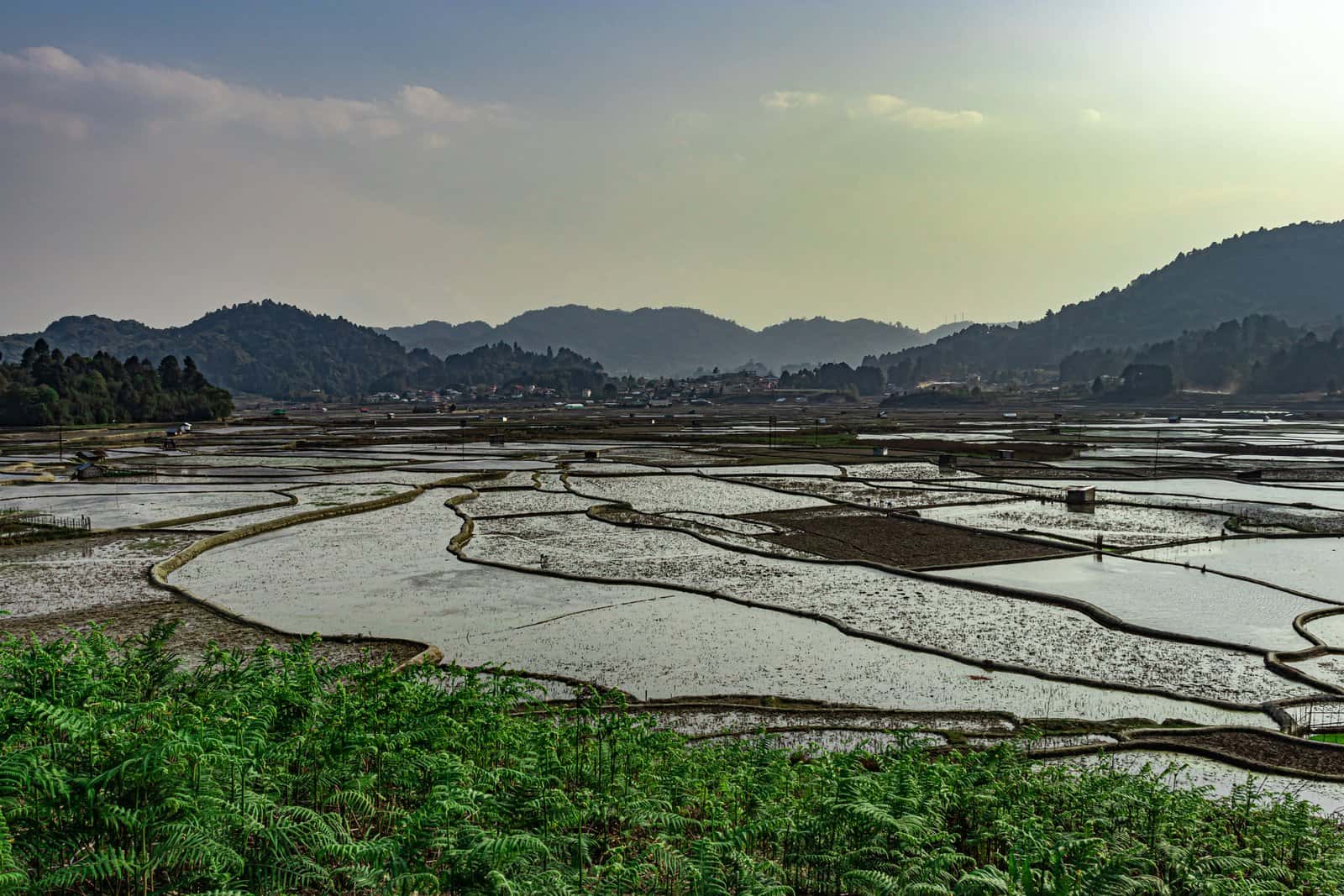
Ziro Travel Guide
You cannot enter Arunachal Pradesh without a permit. Indian citizens need an Inner Line Permit (ILP) ; foreign nationals need a Protected Area Permit (PAP) . Sort this before...
The permit you must have before you go: ILP and PAP
You cannot enter Arunachal Pradesh without a permit. Indian citizens need an Inner Line Permit (ILP); foreign nationals need a Protected Area Permit (PAP). Sort this before anything else, because it shapes your whole plan.
- Indians: the Inner Line Permit, done onlineEvery Indian citizen who is not a resident of Arunachal Pradesh needs an ILP. Apply on the Government of Arunachal Pradesh portal at eilp.arunachal.gov.in, upload a recent photo and one ID (Aadhaar, passport, voter ID, driving licence, ration card or PRC), and pay the fee online. The provisional eILP is valid for up to 30 days. Carry printed copies, because there is a checkpost at the state border and sometimes a second check inside.
- The fee is about Rs 100, not Rs 300 to Rs 500On the official portal the Tourist eILP fee is about Rs 100 per person, whether for one district or more than one. A lot of travel blogs quote about Rs 300 to Rs 500; that is why you should apply on the government site and confirm the current fee there rather than trust a third-party page.
- Foreigners: the Protected Area Permit, through an operatorForeign nationals cannot apply alone. The PAP is arranged by a government-registered tour operator who applies on your behalf, on a fixed tour circuit, and foreign tourists pay about USD 30 per head as royalty to the Government of Arunachal Pradesh. The group-size and validity rules are hedged in the official sources themselves: the Arunachal police page still lists the older group of four and a 10-day permit with a 7-day extension, while current tourism practice commonly runs to a group of two on a roughly 30-day permit. Apply about 4 to 6 weeks ahead and confirm the current rule with your operator.
- Apply early, print copiesIndian ILP approvals commonly come through in about 24 to 72 hours, so apply about 5 to 7 days before you travel, and allow longer around the September festival when the portal is busy. Print two or three copies and keep a photo on your phone as backup.
Permit rules, fees and district coverage in Arunachal change from time to time. Treat the figures here as a guide (about Rs 100 per person for the Indian eILP, valid up to 30 days) and reconfirm on the official portal at eilp.arunachal.gov.in before you pay for flights or a tour. Foreign nationals should confirm the current PAP rule with a registered Arunachal operator, since the group-size, validity and royalty conditions are stated differently across official pages and are periodically revised. The permit is the one thing that can stop you at the border, so never leave it to the last day.
When to visit Ziro, and when the paddy is green
The comfortable months are about March to October. Come in the green paddy season for the landscape, or in late September for the music festival, and pack for cold nights whatever the month.
- March to May: spring, clear and greenPleasant days, cool nights and hillsides of rhododendron. The paddy terraces begin to green up through this window, and Myoko, the Apatani purification festival, falls in March, so it is a fine time for both landscape and culture.
- June to August: monsoon, lush but slowThe valley is at its greenest and the fish-and-paddy fields are in full swing, but the mountain roads are landslide-prone and journeys slow down. Come for the green if you do not mind rain and buffer your travel days.
- September to October: festival and harvest lightLate September brings the Ziro Music Festival and the fields turn gold before harvest, with generally settled weather. It is the busiest and most beautiful window, so book far ahead, especially for the festival dates.
- Pack for cold nights year-roundZiro sits at roughly 1,500 to 1,800 metres, so even in summer the evenings and nights are cool to cold. Carry a warm layer whatever the season. Winter, December to February, is cold and quiet and better skipped unless you want the valley to yourself.
The two great reasons to come pull in slightly different directions. The paddy-cum-fish terraces are at their most photogenic roughly May to September, deep green with water glinting between the ridges. The Ziro Music Festival lands in late September on the cusp of harvest, when the same fields turn gold. Both are wonderful; decide which you are chasing before you fix dates, because the festival week is a different trip in crowd and cost from a quiet green-season visit.
How to reach Ziro, and why it is a long road
Ziro has no airport or railway of its own. Everyone arrives through Assam or Itanagar and then drives a slow mountain road. Plan the getting-there day as a real day, not an afterthought.
- Nearest railhead: NaharlagunNaharlagun station near Itanagar is the closest railhead at about 100 km, roughly 3 to 4 hours by road up to Ziro. Overnight and day trains such as the Donyi Polo Express connect it to Guwahati, and this is the most popular way in for Indian travellers.
- Nearest airports: Lilabari and HollongiLilabari (IXI) in Assam and the newer Donyi Polo airport at Hollongi (HGI) near Itanagar are each roughly 100 to 125 km away, about 4 to 5 hours by road. Flight schedules to both are limited and change, so check current routes before you rely on either.
- Through Guwahati, the main gatewayGuwahati in Assam is the practical gateway with wide flight and train connections, about 440 to 470 km and a full day (7 hours or more) by road, or an overnight train to Naharlagun. Most Northeast itineraries route through Guwahati either way.
- The last leg is by shared cab or hired carFrom Naharlagun or Itanagar, shared Sumo-type cabs and hired cars run up to Ziro. Roads are mountainous and can be slow or disrupted in the monsoon, so start early, and we can arrange a private car with an experienced hill driver for comfort.
Fly into Delhi or Kolkata, connect to Guwahati, then continue by road or the newer Hollongi airport and drive up to Ziro. Remember foreign nationals need a Protected Area Permit arranged through a registered operator, so plan this leg with your tour operator.
Route via Delhi or Kolkata to Guwahati, the Northeast hub, then reach Ziro by road through Assam and Arunachal. Pair Ziro with Assam and Meghalaya to make the long journey worthwhile.
Fly or take a train to Guwahati, then an overnight train to Naharlagun or a flight to Lilabari or Hollongi, and drive the last 3 to 5 hours up. Sort your ILP online before you set off.
The Apatani villages, the fields, and the hills
Ziro is a lived-in cultural landscape, not a list of monuments. The heart of it is the Apatani villages and their paddy-cum-fish fields, ringed by hill viewpoints and a wildlife sanctuary above.
- The Apatani villagesThe traditional villages of Hong, Hija, Hari, Bulla and Dutta are the soul of Ziro, with bamboo houses, sacred groves, ceremonial platforms and everyday life carrying on around you. Hong is one of the largest. Walk them slowly, ideally with a local guide who can explain what you are seeing.
- The paddy-cum-fish fields and Tarin fish farmThe valley floor is a patchwork of terraces where rice and fish are grown together, the practice that earned Ziro its UNESCO tentative listing. The Tarin fish farm is an easy place to understand the system, greenest and most active roughly May to September.
- Kile Pakho and the viewpointsA short trek up to Kile Pakho gives a ridge-top panorama over the whole valley, with pine on one side and the patchwork fields on the other. Pamu Yalang and other viewpoints reward an early start with soft morning light.
- Meghna Cave TempleA Shiva shrine set high on a hillside, reached by a climb and popular with both pilgrims and travellers for the views. Wear proper shoes and go in the cooler part of the day.
The Apatani Cultural Landscape has sat on India's UNESCO World Heritage tentative list since April 2014, recognised for the tribe's sustainable land use and living cultural landscape. That means Ziro is a candidate site, not an inscribed World Heritage Site, and you should read pages that call it a World Heritage Site with that correction in mind. The distinction matters because it is exactly the kind of detail travel pages get wrong.
Signature experiences in Ziro
Beyond the sights, these are the experiences people remember, and how to arrange them honestly and respectfully in a place where you are a guest in a living community.
- An Apatani village walk with a local guideThe single best thing to do in Ziro is a slow, guided walk through a village such as Hong or Hija, learning about the houses, the sacred groves and daily life. A local guide turns a quiet lane into a story and makes sure your visit is welcome and respectful. Agree the fee before you set off.
- Understand the paddy-cum-fish systemAsk your guide to walk you through the aji terraces, where fish fingerlings are released into the paddies from about April and reared until about September as the rice grows. It is one of the most elegant traditional farming systems anywhere, and seeing it explained on the ground is a highlight in itself.
- The Ziro Music FestivalIf your dates match late September, the festival is a special experience: independent and indigenous music in a bamboo-built arena among the pines. Buy tickets through the official channels linked from zirofestival.com and book your stay three to four months ahead, because both sell out.
- Trek into Talley ValleyA guided full-day or overnight trek up into the Talley Valley Wildlife Sanctuary rewards you with deep forest and rare wildlife. Go with a local guide, check current access and permissions, and carry warm and waterproof layers.
- Stay in an Apatani homestaySleeping in a family homestay, sharing home-cooked meals and rice beer if offered, is how Ziro is best experienced. It puts your money directly into the community and gives the trip its warmth.
- Sunrise and slow morningsZiro rewards slowness. A quiet morning over the misty fields with tea, or a dawn climb to a viewpoint, is what people remember long after. Do not overschedule; the valley is the experience.
If you do only one thing properly, make it an unhurried village walk with an Apatani guide. The valley is not a set of ticket-gate attractions; it is a way of life you are briefly allowed into. Given time and a good guide, a morning in Hong or Hija, watching the fields worked and hearing how the sacred groves and the fish terraces fit together, is the memory that lasts, and it is the part a quick festival-only visit misses entirely.
Where to stay in Ziro, and for how many nights
Ziro is homestay country. Base yourself near Hapoli or in a village homestay, and give it two to three nights so the long road up is worth it.
- Hapoli and Old ZiroHapoli (lower Ziro) has most of the guesthouses, shops, fuel and ATMs, while Old Ziro sits closer to the traditional villages and fields. Stay in Hapoli for convenience or nearer the villages for atmosphere; the two are a short drive apart.
- Apatani homestaysFamily homestays and boutique bamboo houses are the best way to stay, with home-cooked Apatani food and a warm welcome. They put money straight into the community and are far more memorable than a standard room.
- Room budgetsSimple guesthouses and homestays commonly run about Rs 800 to Rs 2,000 a night, while boutique Apatani bamboo homestays run about Rs 3,500 to Rs 4,500 a night, often with meals. These rise sharply for the festival, so book early.
- How many nightsTwo to three nights is the sweet spot: one to settle in and walk a village, one for Kile Pakho and the fields, and one for a Talley Valley trek or the festival. A single night barely justifies the long drive up and down.
During the Ziro Music Festival in late September, homestays, guesthouses and camps sell out three to four months in advance and prices climb. If your dates fall on the festival, book your bed and your ILP as soon as the dates and tickets are confirmed, or you may find yourself commuting long distances or sleeping in a crowded campsite. Outside festival week, rooms are easy and a homestay can often be arranged a few days ahead.
Ziro costs and a realistic daily budget
Ziro is affordable on the ground, but the long road, the guide and the permit add up. Here is what the main things cost so you can plan and carry enough cash.
- The fixed costsThe Indian ILP is about Rs 100 per person on the government portal. A festival four-day pass runs roughly from about Rs 3,500 for early-bird tiers up to about Rs 9,000 and higher. A homestay is about Rs 800 to Rs 2,000 a night simple, or about Rs 3,500 to Rs 4,500 for a boutique bamboo house.
- Guides and transportA local village or trek guide and a shared or hired cab are the main day costs and are worth every rupee for both experience and safety. Agree guide and cab rates in advance, as there is no meter and prices are negotiable.
- A rough daily budgetExcluding your room, the permit and long-distance transport, plan on about Rs 1,500 to Rs 2,500 a day as a budget traveller and about Rs 3,500 to Rs 6,000 for a comfortable day with a guide, meals and short treks. The festival week costs considerably more.
- Carry cashATMs in Ziro are few and can run dry, and many homestays and small eateries are cash-only. Draw cash in Itanagar or in Assam before you head up, and carry enough for your whole stay plus a buffer.
Because there are no meters and few fixed prices in the valley, the single habit that saves money and friction is to agree every rate in advance: the cab up from Naharlagun, the village guide, the trek, the homestay with or without meals. Quotes are usually fair here, far from the hard-sell of tourist hotspots, but settling the number first turns any doubt into a non-event. Pair that with enough cash drawn before you arrive, and Ziro is an easy place to travel.
Safety, health, and travelling responsibly in Ziro
Ziro is one of the safer, gentler corners of India to travel, with warm hosts and very low crime. The real care items are the road, the cold, the thin connectivity, and respectful conduct as a guest.
- The road is the main riskThe mountain roads to and around Ziro are slow and, in the monsoon, prone to landslides and delays. Travel by day, use an experienced driver, buffer your schedule, and do not push a long drive after dark. This is a bigger real risk than crime, which is very low.
- Cold, altitude and healthAt around 1,500 to 1,800 metres, nights are cold, so carry warm layers even in summer. Drink safe water, carry a basic medical kit, and remember Ziro is remote: the nearest good hospitals are in Itanagar or Assam, so travel with any regular medication and simple first aid.
- Connectivity and cash safetySignal and data are patchy and ATMs are unreliable, so tell someone your plan, carry enough cash, and do not count on being reachable at all times. Download offline maps and your permit before you head up the valley.
- Alcohol, rice beer and respectLocal rice beer (apong) may be offered warmly at a homestay; enjoy it in moderation and with respect. Follow your hosts' lead on sacred sites and groves, do not enter or photograph ritual spaces uninvited, and dress modestly in the villages.
Older Apatani women are known for their facial tattoos and cane nose plugs (yapin hullo), a tradition their generation carries and younger ones have discontinued. These are their identity and heritage, not a spectacle. Always ask before you photograph anyone, accept a no gracefully, never thrust a camera in an elder's face, and consider buying a craft or hiring a village guide so your visit gives back to the community. The most rewarding photos come after a conversation, not before.
Ziro for every kind of traveller, and on access
Ziro suits slow, curious travellers more than sightseers. Here is what it offers you, and the one tip that matters for each, including how an older traveller manages the long road.
- CouplesQuiet, green and unhurried, with homestays, misty mornings and slow village walks. An overnight or two lets you catch both the fields at dusk and a dawn viewpoint. Ziro is romance by way of calm, not luxury.
- Families with childrenRewarding for curious families who like nature and culture, though the long road and basic facilities suit older children better than toddlers. The fish farm, the fields and friendly homestays make it engaging; buffer the travel days.
- Senior travellers and on accessibilityVery doable with planning, but the long mountain drive is the main hurdle: break the journey in Itanagar or Assam, travel by day with an experienced driver, and choose a comfortable homestay near Hapoli to limit walking. The village lanes and viewpoints involve uneven paths and some climbing, so pick the gentler walks and skip the harder treks.
- Backpackers and budget travellersA slow-travel favourite: cheap homestays, warm hosts, and the festival crowd in September. Shared cabs from Naharlagun keep costs down, and a few days here is easy to love. Carry cash and patience for the road.
- Solo female travellersZiro is regarded as one of the safer, gentler places in India for solo women, with low crime and hospitable communities. Standard precautions apply, and a village homestay is both safe and a lovely way to travel alone. Keep some cash and an offline map for the patchy signal.
- PhotographersThe fields, the bamboo villages, the viewpoints and the festival are a photographer's gift. Always ask before photographing people, treat the elders' tattoos and nose plugs with respect, and shoot the fields in the green of the monsoon or the gold of harvest.
A suggested Ziro itinerary
How to shape two to three days so the long road up is worth it and you catch the villages, a viewpoint and, if you have time, a trek or the festival.
- Getting-there dayReach Naharlagun or Lilabari or Hollongi, then drive up the 3 to 5 hours to Ziro, arriving in the afternoon. Settle into your homestay, take a gentle first walk through the nearest fields, and let the altitude and the quiet do their work.
- Day one: villages and fieldsSpend the morning on a guided walk through Hong or Hija and the paddy-cum-fish terraces, with the Tarin fish farm to understand the aji system. In the afternoon, climb Kile Pakho for the valley panorama and stay for the light.
- Day two: trek or temple, then slow downTake a guided trek toward Talley Valley or climb to the Meghna Cave Temple, then spend the late afternoon slowly, over tea and the fields. If you are here for the festival, this is your day in the bamboo arena.
- Getting-back dayDrive back down to your railhead or airport, ideally starting early to keep the mountain road in daylight. Build in a buffer, especially in the monsoon, so a landslide or a slow stretch does not risk your onward flight or train.
The mistake that spoils a Ziro trip is treating it as a one-night box to tick. The valley is a long, slow drive from anywhere, and its whole charm is in unhurried mornings, a proper village walk and time with your hosts. Two to three nights is the honest minimum for the round trip to be worth it, and if you are coming for the festival you will want an extra night on each side to travel calmly rather than race the road.
The real questions travellers ask about Ziro
Straight answers to the questions that come up again and again on traveller forums, so you arrive already knowing the score on permits, transport and how long to stay.
- How many days do I need?Two to three nights is right for most travellers: enough for a village walk, a viewpoint, the fields, and either a trek or the festival. A single night rarely justifies the long drive up and down.
- How do I reach Ziro from Guwahati?From Guwahati, take an overnight train to Naharlagun (about 100 km from Ziro) or fly to Lilabari or Hollongi, then drive the last 3 to 5 hours up. A direct road drive from Guwahati is about 440 to 470 km and a full day. Sort your ILP online before you set off.
- Is the ILP fee really about Rs 100?Yes, on the official Government of Arunachal Pradesh portal the Tourist eILP fee is about Rs 100 per person. Higher figures on blogs are usually copied errors, so apply on eilp.arunachal.gov.in and confirm the current fee there.
- Do I need a guide?Not strictly, but a local guide vastly improves a village walk and is important for any trek into Talley Valley, both for the experience and for safety. It also directs your money into the community. Agree the fee in advance.
- Is there signal and are there ATMs?Signal and data are patchy in the valley and villages, and ATMs are few and can run dry. Carry enough cash from Itanagar or Assam and download offline maps and your permit before you head up.
- Is Ziro worth the effort to reach?For travellers who like slow, cultural and natural travel, yes, emphatically. It is remote and the road is long, but the Apatani villages, the fields and the calm are the reward. If you want quick sightseeing and easy logistics, it may frustrate you.
Planning Ziro from abroad: the Protected Area Permit
For foreign nationals, the permit is the defining part of planning Ziro. You cannot apply alone; a registered operator arranges your Protected Area Permit and itinerary, and the lead time is weeks, not days.
- The PAP is arranged by an operator, not youUnlike the online ILP for Indians, foreign nationals cannot apply for an Arunachal permit individually. A government-registered tour operator applies for your Protected Area Permit on your behalf, based on a fixed itinerary, so your first step is to choose a reputable Arunachal operator.
- Group size, royalty and lead timeYou travel on an identified tour circuit and pay about USD 30 per head as royalty to the Government of Arunachal Pradesh. The official pages disagree on the finer print: the Arunachal police page still lists a group of at least four and a 10-day permit with a 7-day extension, while current tourism practice commonly allows a group of two on a roughly 30-day permit. Apply about 4 to 6 weeks ahead, as processing can take a few weeks, and confirm the current group-size and validity rule with your operator.
- Carry your passport, visa and permitYou will need a valid Indian visa plus the PAP, and you should carry printed copies for the checkpost at the state border and any inland checks. Keep digital backups on your phone as well.
- Pair Ziro with AssamBecause you route through Guwahati anyway, most foreign visitors combine Ziro with Kaziranga, Majuli or Meghalaya. It turns a long journey into a rich Northeast circuit and lets your operator plan permits and logistics as one trip.
The most common way a foreign traveller's Ziro plan goes wrong is leaving the Protected Area Permit late. Because the permit is operator-arranged, tied to a fixed itinerary and can take a few weeks to process, you should have your operator and dates locked about 4 to 6 weeks ahead, and confirm the current PAP rules with them directly rather than relying on a blog. Get this right and the rest of Ziro is one of the warmest, safest trips in India; get it wrong and you can be turned back at the border.
Money, connectivity and timing for foreign visitors
The practical basics an overseas traveller needs for a remote valley: cash over cards, a SIM sorted in the plains, and how many days to give Ziro on a wider Northeast trip.
- Carry cash, do not rely on cardsZiro is largely a cash economy with few and unreliable ATMs. Draw Indian rupees in Guwahati, Itanagar or Assam before you head up, and carry enough for your whole stay plus a buffer. Homestays, guides and small eateries mostly want cash.
- Get an Indian SIM in the plainsPick up an Indian tourist SIM in Guwahati or at the airport rather than hoping to find one in the valley. Even then, expect patchy signal and data in Ziro and the villages, so download offline maps and your permit in advance.
- How long to give it on a bigger tripOn a Northeast trip, give Ziro two to three nights within a wider loop through Assam and perhaps Meghalaya. That is enough for the villages, a viewpoint and a trek without racing the long roads that link the region.
- Time it for weather and festivalMarch to October is the comfortable window; the fields are greenest May to September and the music festival is in late September. If you want the festival, plan far ahead with your operator because permits, tickets and rooms all need lead time.
Ziro is one of the warmest and safest corners of India for an overseas traveller, but it is genuinely remote, so treat it as a slow, self-sufficient trip rather than a quick add-on. Come with your permit sorted weeks ahead, enough cash for the whole valley, offline maps for the patchy signal, and a couple of nights to spare. Do that and the Apatani villages, the fields and the calm reward the effort many times over, and it slots beautifully into an Assam and Meghalaya circuit.
How a valley farms rice and fish together, and became a UNESCO candidate
Ziro's fame rests less on any monument than on a way of living. The Apatani people farm the flat valley floor with a system they call aji: rice and fish grown together in the same terraced paddies. Fish fingerlings are released into the flooded fields from about April and reared through the growing season until about September, feeding on pests and fertilising the soil while the rice ripens above them. Bunds channel water field to field, sacred groves are left standing, and the whole valley works as one careful, centuries-old balance of people and land. It is this living cultural landscape, not a fort or a temple, that placed the Apatani Cultural Landscape on India's UNESCO World Heritage tentative list in April 2014 under criteria (iii) and (v). Ziro is a candidate, not yet an inscribed site, but stand on a ridge above the green terraces at dusk and you understand why the case was made.
Planning a Ziro trip?
Our Arunachal Pradesh travel experts plan your full journey for you: route, hotels, darshan timings and transport. You get a free day-by-day plan and an exact quote on WhatsApp, usually within a few hours. No payment is needed to get your plan.