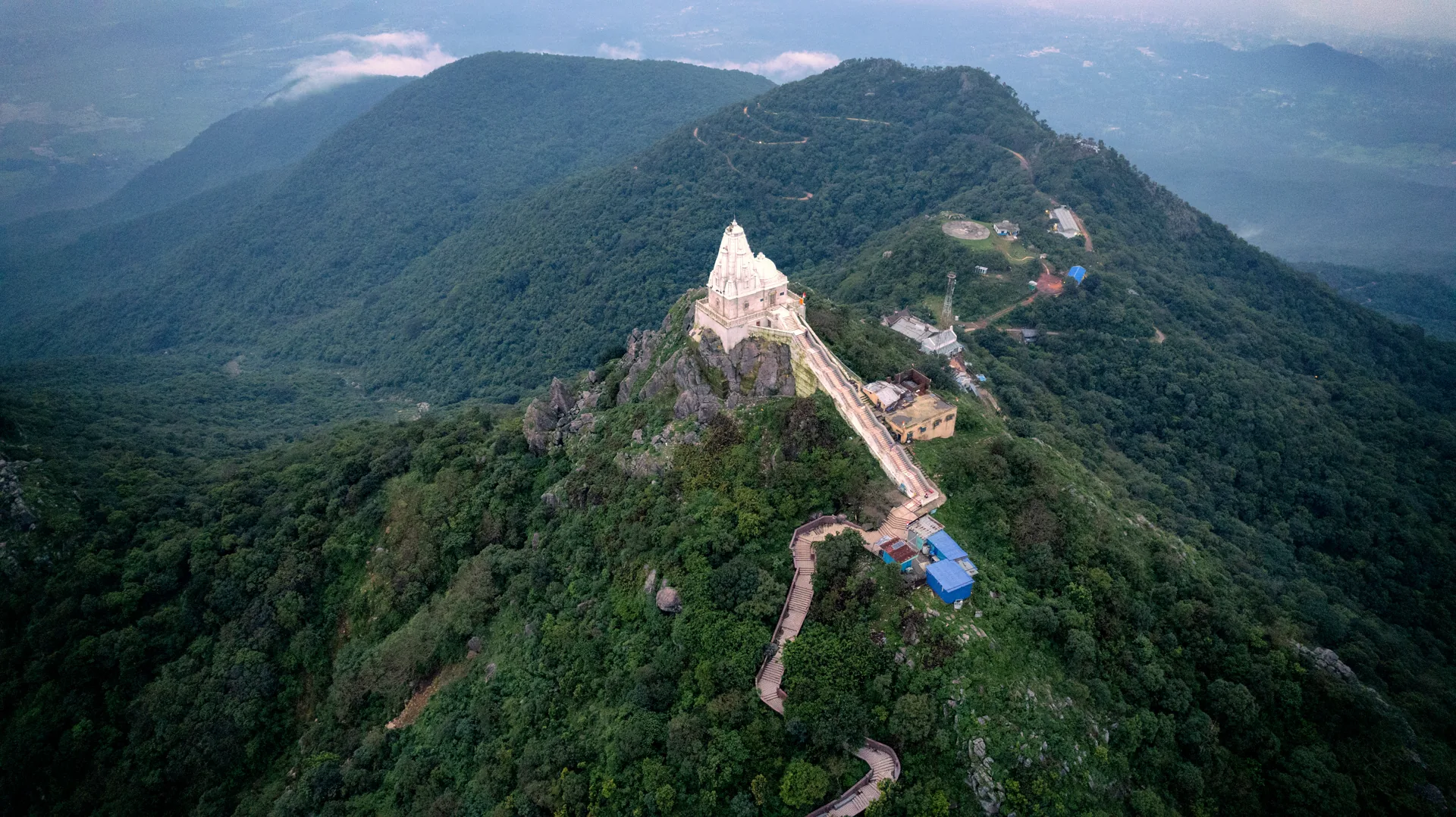
Rajgir Travel Guide
The kind season is about October to March , cool and comfortable; the Bihar summer is fierce and the monsoon is humid, and the Rajgir Mahotsav and the Malmas Mela bring their own...
The best time to visit Rajgir
The kind season is about October to March, cool and comfortable; the Bihar summer is fierce and the monsoon is humid, and the Rajgir Mahotsav and the Malmas Mela bring their own crowds.
- October to March, the cool and easy monthsThe sensible time to come to Rajgir is roughly October to March, when the Bihar plains cool down and the days are pleasant for climbing to Vulture's Peak, walking the ropeway hill and the Nature Safari, and bathing at the hot springs. Mornings and evenings can be cold in December and January, so carry a warm layer. For most pilgrims and families, and for the overseas visitor on the Buddhist circuit, these winter months are much the best window and the busiest, so book stays ahead.
- Respect the fierce summerFrom about April to June the plains of Bihar turn very hot, often well above 40 degrees, with dusty afternoons and little shade on the open sites and the hills. A summer climb to Griddhakuta or a walk on the treeless Nature Safari hill is hard and tiring, especially for seniors and children. If you must come in summer, move at dawn and rest through the fierce middle of the day, drink plenty of water, and keep plans short and gentle.
- The monsoon, green but humidFrom about July to September the monsoon brings rain and heavy humidity, greening the hills but making the stone paths slippery and the air sticky. It is the quietest season, and the springs and the ropeway still run, but sudden showers can interrupt a climb. Come only with flexible plans, watch the weather, and enjoy the fresh green valley between the rains rather than expecting long clear days on the peaks.
- Time it with the festivals, or avoid themRajgir holds the Rajgir Mahotsav, a dance and music festival organised by the Nalanda district administration and Bihar Tourism, usually for about three days late in the year, its dates shifting each year, so reconfirm before planning around it. The great Malmas Mela, a month long fair at the hot springs, falls only in the extra lunar month of Malmas about every three years and draws huge crowds of pilgrims. Both are wonderful to witness but fill every hotel, so decide whether you want the festival or the quiet.
Rajgir is at its kindest from about October to March, cool and comfortable for the hills, the springs and the safari. Respect the fierce Bihar summer from about April to June, when a climb to Vulture's Peak is hard, and treat the humid monsoon with flexible plans. Check the dates of the Rajgir Mahotsav and, in its rare years, the month long Malmas Mela, and book well ahead if you want to be there for them, as the town fills up.
How to reach Rajgir, on the Magadha plain
Reach Rajgir by its own railway station, by road from Patna in about three hours, or by air through Gaya, about 78 km, or Patna, about 100 to 110 km.
The nearest airport is Gaya, about 78 km away, which in the winter pilgrimage season takes some direct international flights for the Buddhist circuit as well as domestic services, making it the natural gateway for many overseas pilgrims. Patna airport, about 100 to 110 km away, is better connected day to day within India and has its own international flights. From either airport you continue to Rajgir by road, a drive of roughly two to three hours, easily arranged as a taxi or as part of a circuit tour.
Rajgir has its own railway station, a terminus on the Bakhtiarpur to Rajgir to Tilaiya line, with direct trains including the Shramjeevi Express toward New Delhi and services that connect through to Patna. It is one of the few towns on the circuit you can reach by rail right to the door, which suits budget and domestic travellers well. Check current trains and book ahead in the busy winter season, as seats on the popular services fill early.
Most visitors arrive by road, on a circuit that links Patna, Nalanda, Rajgir, Pawapuri and Bodh Gaya. From Patna it is roughly a two and a half to three hour drive, from Bodh Gaya about two to two and a half hours, and from Nalanda only about 30 to 40 minutes. The roads on the main circuit are reasonable, and a shared car for a group is the most flexible way to see the scattered sites without waiting on local buses.
Around the town, the classic way to move between the springs, Venuvana and the ropeway is the horse drawn tonga, still common in Rajgir, along with cycle rickshaws, autos and taxis. For Ghora Katora you take a tonga, cycle or electric vehicle into the eco zone, as private cars are kept out. Agree the fare before you set off, and for a full day of scattered sites a hired car or a tonga for the day saves both time and haggling.
For the Buddhist circuit, fly into Gaya, about 78 km away, which takes seasonal international flights in winter, or into Patna, about 100 to 110 km, which is better connected within India; then drive two to three hours to Rajgir. Rajgir also has its own railway station with direct trains toward Delhi and links to Patna. Around town, use the traditional tonga, autos and taxis, and take a tonga or electric vehicle for the Ghora Katora eco zone.
The peak, the peace pagoda and the springs
The great draws are Vulture's Peak and the Vishwa Shanti Stupa, the Saptaparni caves and hot springs, Venuvana, the Nature Safari and Glass Bridge, and Ghora Katora lake.
- Griddhakuta, Vulture's Peak, and the peace pagodaThe most sacred site is Griddhakuta, Vulture's Peak, the hill where the Buddha meditated and taught for years; pilgrims climb the old stone path, said to date from Bimbisara's time, to the quiet preaching terrace with its small shrine. Above, on Ratnagiri Hill, the white Vishwa Shanti Stupa, the World Peace Pagoda built by the Japanese Nipponzan Myohoji order, crowns the ridge with its four gilded Buddhas. You can climb or take the ropeway; give this the heart of your day.
- The Saptaparni caves and the Brahmakund hot springsAt the foot of Vaibhava hill lie the Brahmakund hot springs, where warm water sacred to Hindus feeds open bathing tanks and pilgrims bathe freely. Above them a steep climb leads to the Saptaparni caves, revered as the place where the First Buddhist Council gathered after the Buddha's passing to recite and preserve his teachings. Together the springs and the caves hold some of the oldest living memory in Rajgir, one a place of worship, the other a cradle of Buddhist scripture.
- Venuvana, Ajatashatru fort and Jarasandha's akharaIn the town, Venuvana marks the bamboo grove King Bimbisara gave the Buddha, the first monastery of the order, now a calm park with a pond. Around the valley you can trace the older, epic Rajgir: the ruined Ajatashatru fort, Bimbisara's Jail, the wrestling ground of Jarasandha ka Akhara linked to the Mahabharata, and stretches of the ancient Cyclopean Wall of rough stone that once ringed the whole city across its hills. These quieter sites reward the traveller who wants the full story.
- The Nature Safari, the Glass Bridge and Ghora KatoraOn Swarnagiri hill the Rajgir Nature Safari, opened in about 2021 to 2022, offers a zoo safari, a sky walk and the popular Glass Bridge, a see through walkway high on the hillside. Book only on the official portal and expect a timed slot and crowds. Further out, the horseshoe lake of Ghora Katora sits in the hills with boating and a large Buddha statue by the water, reached by tonga, cycle or electric vehicle through a car free eco zone, a gentle and lovely half day away from the busier sites.
The Brahmakund hot springs are free to bathe in. The ropeway up to the Vishwa Shanti Stupa costs roughly around 120 to 150 rupees, and the Nature Safari about 250 rupees with the Glass Bridge around 150 rupees or bundled in a combined ticket of about 250 to 300 rupees. The nearby Nalanda ruins cost around 25 rupees for Indians and about 300 rupees for foreign nationals. These are cash gate figures that change, so reconfirm on the official Bihar government portals before you go, and never on a lookalike ticket site.
Rajagriha: first capital, first council, three faiths
Rajgir is ancient Rajagriha, first capital of Magadha, where the Buddha taught on Vulture's Peak, the First Buddhist Council met, and Jain and Hindu memory runs just as deep.
- The first capital of MagadhaLong before Patna, Rajgir was Rajagriha, the walled first capital of the Magadha kingdom under the Haryanka kings Bimbisara and his son Ajatashatru, from roughly the 6th to the 5th century BC, until the capital moved to Pataliputra. The five hills around the valley and the great Cyclopean Wall of rough stone, dated to about the 6th century BC, are the bones of that ancient city. To walk Rajgir is to walk one of the oldest political capitals of the Indian subcontinent, where empire and religion first grew together.
- Where the Buddha taught, and the First Council metThe Buddha spent many rainy seasons at Rajgir, teaching on Griddhakuta, Vulture's Peak, and living at Venuvana, the bamboo grove Bimbisara gave the order. After his passing, tradition holds that the First Buddhist Council gathered in the Saptaparni caves above the hot springs, where five hundred elders under Maha Kassapa recited and set down his teachings for the first time. For a Buddhist, few places on earth carry this weight, which is why pilgrims from across Asia come to climb the peak.
- A city sacred to the JainsRajgir is just as holy to the Jains. Mahavira, the 24th Tirthankara, is said to have spent fourteen rainy season retreats at Rajgir and nearby Nalanda, and Munisuvrata, the 20th Tirthankara, is traditionally held to have been born here. Jain temples stand on the surrounding hills, and the town lies close to Pawapuri, where Mahavira attained nirvana. This living Jain devotion, woven through the same hills the Buddhists revere, is part of what makes Rajgir so layered and so quietly powerful.
- The older, epic memoryBeneath the Buddhist and Jain layers runs an even older memory. Rajgir appears in the Mahabharata as the seat of the mighty King Jarasandha, and the wrestling ground of Jarasandha ka Akhara recalls his epic duel with Bhima. The Brahmakund hot springs are worshipped by Hindu pilgrims to this day. Three great traditions, Buddhist, Jain and Hindu, remember Rajgir as sacred, each for its own reasons, and that rare overlap is the deeper story most quick visits miss entirely.
It is easy to reduce Rajgir to a ropeway and a bathe, but its meaning is far larger. This is Rajagriha, first capital of Magadha, where the Buddha taught on Vulture's Peak and the First Buddhist Council preserved his words, where Mahavira kept many retreats, and where the Mahabharata's Jarasandha ruled. Read a little before you come, climb the peak slowly, and let the layers of three faiths and an ancient kingdom settle on you; it turns a day out into a pilgrimage.
The experiences that make Rajgir
Ride the ropeway to the peace pagoda, climb to Vulture's Peak, bathe at the hot springs, take the Nature Safari and Glass Bridge, and ride a tonga to Ghora Katora.
- Ride the ropeway to the World Peace PagodaThe signature ride in Rajgir is the ropeway up Ratnagiri Hill to the gleaming Vishwa Shanti Stupa. There are now two lines, the original single seater chairlift, on which you sit alone with your feet dangling over the forest, a small thrill in itself, and a newer enclosed cabin that carries about eight people and suits nervous riders, families and seniors far better. Run by Bihar State Tourism, it is called the oldest ropeway in India and runs all year, with wide views over the valley from the top.
- Climb to Vulture's Peak at first lightFor a Buddhist pilgrim, and for anyone who loves quiet places, the climb to Griddhakuta, Vulture's Peak, is the heart of a Rajgir visit. Go early, when the air is cool and the light soft on the hills, up the old stone path to the small preaching terrace where the Buddha is said to have taught. Sit a while in the stillness with the valley spread below. Many pilgrims chant here softly; move gently and quietly, and let the place do its work.
- Bathe at the hot springs, then the Nature SafariDown at the Brahmakund, join the pilgrims for a warm, free bath at the sacred hot springs, keeping to the etiquette of a holy place. Then, on another part of your day, cross town to the Rajgir Nature Safari on Swarnagiri hill for the zoo safari, the sky walk and the Glass Bridge, a see through walk high on the hillside that thrills children and draws long queues. Book your slot online in advance, wear proper shoes, and go early before the midday crowds build.
- Ride a tonga, and drift on Ghora KatoraTake at least one ride in a horse drawn tonga, still part of everyday Rajgir, clopping between the springs, Venuvana and the ropeway; it is slow, characterful travel that children love. And give a gentle half day to Ghora Katora, the horseshoe lake in the hills, reached by tonga, cycle or electric vehicle through a car free eco zone. Drift on the water in a boat below the big lakeside Buddha, with only the wind and the hills around you, a quiet counterpoint to the busy pilgrim sites.
The finest Rajgir experiences reward an early start: climb Vulture's Peak in the cool first light, ride the ropeway before the queues, and take the Nature Safari and Glass Bridge on a slot you booked online in advance. Choose the enclosed cabin ropeway if you or your parents are uneasy with heights. Wear proper shoes for the hills and the glass bridge, carry water in every season, and leave the gentle drift of Ghora Katora for a slow afternoon.
Where to stay in Rajgir
Rajgir has simple hotels, pilgrim guest houses and a few resorts; base here for the circuit, or in Patna for wider choice, and book ahead in the winter and festival season.
- Rajgir town, close to the sitesRajgir itself has a good spread of stays, from simple budget hotels and pilgrim guest houses near the springs and the bus stand to a handful of better hotels and resorts on the edge of town, including Bihar Tourism run options. Staying in Rajgir puts you minutes from the ropeway, the hot springs and Venuvana, and lets you climb Vulture's Peak at dawn. It is the natural base for the Rajgir and Nalanda leg of the circuit, and the most convenient for early starts.
- Nalanda nearby, Patna for wider choiceAlmost no one sleeps at Nalanda, about 12 to 15 km away; travellers there base in Rajgir, the natural hub with the most hotels, or in Patna, about 100 to 110 km, which has the widest range of good hotels and the airport. If you want more comfort or are arriving late by air, a night in Patna works well, with Rajgir and Nalanda done as a long day trip. For the unhurried pilgrim, though, one or two nights in Rajgir itself is far better.
- What the rooms costRajgir suits a range of budgets. Simple clean hotels and guest houses start from around 1,500 rupees a room, while the better hotels and resorts can run to about 6,000 rupees or more in the peak winter and festival weeks. Prices climb sharply during the Rajgir Mahotsav and, in its rare years, the Malmas Mela, when the town fills completely. Book ahead for the October to March season and around any festival, and confirm rates directly, as they move a lot between seasons.
- Give Rajgir a night, not just a stopMany tours race through Rajgir in a few hours between Bodh Gaya and Patna, and miss it. If you can, give the town at least one night, so you can climb Vulture's Peak in the cool morning, ride the ropeway, bathe at the springs and still reach Nalanda without rushing. A single unhurried night turns Rajgir from a blurred half day into a real place, and lets the weight of Rajagriha and its hills actually reach you.
For the Rajgir and Nalanda leg, base in Rajgir town, minutes from the ropeway, the springs and Vulture's Peak, with rooms from about 1,500 rupees up to 6,000 rupees or more at the better resorts. Patna, about 100 to 110 km away, offers wider hotel choice and the airport if you prefer more comfort or arrive late. Either way, book ahead for the October to March season and any festival, and try to give Rajgir at least one full night rather than a rushed half day.
A gentle guide to the cost of a Rajgir trip
Rajgir is affordable; the main costs are the car or transport around the circuit, the stay, and small ticket fees, and it helps to carry cash.
- Tickets are small, the springs are freeThe individual attractions in Rajgir are inexpensive. The Brahmakund hot springs are free, the ropeway is roughly around 120 to 150 rupees, and the Nature Safari about 250 rupees with the Glass Bridge around 150 rupees or a combined ticket of about 250 to 300 rupees. Vulture's Peak and most of the ruins cost little or nothing. Even with a family, the entry fees for a full day of Rajgir add up to a modest sum, so the ticket cost is rarely the thing that shapes the budget.
- Transport around the circuit is the real costThe bigger expense is usually getting around. Rajgir, Nalanda, Pawapuri and Bodh Gaya are spread out, so a hired car for the circuit, or shared taxis and tongas within the town, is where most of the money goes. Agree the car rate and the route in advance for the day, and share the cost across a group where you can. Local buses and the train are far cheaper if you have time, but for scattered sites in a short trip a car saves both money and frustration.
- What a day roughly runsAs a rough guide, a modest day in Rajgir, sharing a car or using local transport and eating simply, runs around 2,000 to 4,000 rupees per person including tickets and food, before your room. Add the stay, from about 1,500 rupees for a simple room to 6,000 rupees or more for a resort, and you have a fair sense of the budget. It is an affordable destination by any measure; the journey to reach Bihar, more than the days on the ground, tends to set the real cost.
- Carry cashCash is still king in Rajgir. The tongas, small eateries, hot spring offerings, local guides and many small hotels prefer cash, and card and mobile payment can fail where the signal is weak or the shop is small. Draw enough rupees in Patna, Gaya or a larger town before you come, keep small notes for tongas and tickets, and you will move around the town and the circuit far more smoothly than a traveller who arrives relying only on a card or a phone.
Mistakes to avoid in Rajgir
Avoid the summer heat, be careful with the hot spring hygiene and crowds, book only on the official portals to dodge ticket touts, and remember the Monday closure.
- Do not underestimate the summerThe commonest mistake is coming in the fierce Bihar summer and trying to do too much. From about April to June the heat is punishing on the open hills and the treeless Nature Safari, and a midday climb to Vulture's Peak can leave seniors and children genuinely unwell. If you visit in the hot months, move only at dawn and dusk, rest through the middle of the day, and drink far more water than you think you need. Better still, plan for the cool October to March window.
- Mind the hot spring hygiene and crowdsThe Brahmakund hot springs are sacred and wonderful, but they are busy communal bathing tanks used by many pilgrims, so the water is not pristine and can be crowded, especially at festival times. Bathe if you wish, in the spirit of the place, but do not treat it as a private spa, keep your head above the water if you are cautious about hygiene, mind your footing on the wet stone, and watch your belongings and your children closely in the press of the crowd.
- Book only on the official portalsRajgir has a real problem with fake ticket websites, especially for the Nature Safari and Glass Bridge. Book only through the official Bihar government portals, and be wary of lookalike sites and touts near the gates who promise to skip the queue. Do not hand your money or card details to an unofficial site. If a slot is sold out officially, it is genuinely full for the day; a tout offering a way around it is a warning sign, not a lucky break.
- Remember the Monday closure and the queuesMany travellers arrive at the Nature Safari and Glass Bridge on a Monday and find them shut, as they close on Mondays for maintenance and open about 09:00 to 17:00 from Tuesday to Sunday. Plan that attraction for another day. And even on open days the Glass Bridge draws long timed queues, so book an early slot and come at opening. Checking the day and booking ahead saves the classic wasted trip up the safari hill to a locked gate.
Two rules save most Rajgir disappointments. First, book the Nature Safari and Glass Bridge only on the official Bihar government portals, never on a lookalike site or through a tout, and remember they are closed on Mondays. Second, come in the cool October to March season if you can, and if you must come in summer, keep to dawn and dusk and rest through the heat. Add a little care at the crowded hot springs, and Rajgir stays a joy rather than a struggle.
Safety and health in Rajgir
Rajgir is a calm pilgrim town; the real cares are the heat and hydration, the hill climbs, the food and water, and the ordinary care in crowds.
- Heat and hydration come firstThe main health risk in Rajgir is the heat, not crime. In the hot months the sun on the open hills and the safari can bring on exhaustion and heatstroke, so carry and drink plenty of water, wear a hat and light cotton, use sunscreen, and rest in shade through the fierce middle of the day. This matters most for seniors and young children. Even in winter the midday sun on a climb is strong, so keep water with you on Vulture's Peak and the ropeway hill in every season.
- Take the climbs at your own paceThe climbs to Griddhakuta and the Saptaparni caves are on old stone steps and paths that can be uneven and, in the monsoon, slippery. Wear proper shoes with grip, take the steps slowly, and use the handrails where they exist. If your knees or heart are not strong, take the ropeway for the Vishwa Shanti Stupa and skip the steeper Saptaparni climb. There is no shame in going gently; the point is to arrive at the peak calm and well, not to race up in the heat.
- Be careful with food and waterAs anywhere in the Bihar plains, be sensible about food and water. Drink only sealed bottled or properly filtered water, eat freshly cooked hot food from busy clean places rather than long standing snacks, and be cautious with cut fruit and roadside items in the heat. Carry basic medicines for an upset stomach and any personal prescriptions, as good pharmacies are limited in a small town. A little care with what you eat and drink prevents the most common traveller illness on the whole circuit.
- Ordinary care, and a calm townRajgir is a small, devout pilgrim town and generally safe and welcoming, including for families and solo travellers. The usual sense applies: watch your belongings in the crowds at the springs and the safari, agree fares with tongas and taxis before you set off, and keep an eye on children near the water and the busy roads. Solo women travellers generally find the circuit calm with normal precautions. With care about the heat, the climbs and your food, Rajgir is a restful and rewarding place.
Practical logistics for Rajgir
A few facts help: carry cash and water, expect basic small town services, respect the temples and springs, and dress modestly for the holy sites.
- Cash, signal and small town servicesCarry enough cash, as noted, and do not expect big city services in Rajgir; the ATMs are few and can run dry, so draw money in Patna or Gaya first. Mobile signal is generally fine in the town on the main Indian networks but can weaken on the hills and out at Ghora Katora. Pharmacies and shops are basic, so bring any special medicines and supplies with you. Coming prepared on cash, water and essentials keeps a small town pilgrimage smooth and free of small frustrations.
- Dress and behave for holy sitesRajgir is sacred to three faiths, so dress modestly, with shoulders and knees covered, especially at temples, the hot springs and the Jain shrines. Remove your shoes where asked, keep your voice low on Vulture's Peak and in the shrines where pilgrims are praying or chanting, and ask before photographing people at worship. This is a living pilgrimage place, not just a sightseeing stop, and a little respect in how you dress and behave is both expected and warmly received.
- Plan the ticketed sites around their rulesTwo ticketed attractions need planning. The ropeway runs all year but its posted hours vary between notices, roughly between about 08:00 and 17:00, so check on the day. The Nature Safari and Glass Bridge open about 09:00 to 17:00 from Tuesday to Sunday, close on Mondays, run on timed slots and sell out, and must be booked on the official portals. Fit these around the rest of your day, and keep Vulture's Peak and the springs, which have no such limits, for the flexible hours.
- Guides, language and the circuitA good local guide, arranged through your hotel or a reputable tour, greatly deepens Rajgir, where so much is ruins and memory that needs explaining; agree the fee first. Hindi is the main language, with English understood at hotels and by guides, less so with tongas and small shops, so a few Hindi words or a translation app help. Plan Rajgir as part of the circuit with Nalanda, Pawapuri and Bodh Gaya rather than alone, and it falls naturally into place.
Rajgir rewards a little preparation: carry cash and water, draw money before you arrive, bring your own medicines, and expect basic small town services. Treat it as the living pilgrimage place it is, dressing modestly and behaving quietly at the temples, springs and Vulture's Peak. Plan the ropeway and the ticketed Nature Safari and Glass Bridge around their hours and the Monday closure, and consider a local guide to bring the ruins of Rajagriha to life. Handled so, the town gives far more than a quick stop ever could.
Rajgir for every kind of traveller
Rajgir suits pilgrims, families, seniors and history lovers, with a little care over the heat and the hill climbs for the less mobile.
- Buddhist and Jain pilgrimsFor pilgrims, Rajgir is one of the great stops on the circuit: Vulture's Peak where the Buddha taught, the Saptaparni caves of the First Council, Venuvana, and the Jain shrines on the hills, with Pawapuri and Nalanda close by. Give it unhurried time, climb the peak in the cool morning, and travel with the reverence the place asks. Whether you come from within India or from the Buddhist lands of East and South East Asia, this is devotional travel at its most meaningful, not mere sightseeing.
- Families with childrenRajgir works well for families, with plenty to keep children happy: the ropeway ride, the tonga clopping through town, the boats and big Buddha at Ghora Katora, and the thrill of the Glass Bridge at the Nature Safari. Keep to the cool season, carry water, and choose the enclosed cabin ropeway for nervous young ones. Balance the temples and ruins with these lighter treats, and the mix of history, hills and small adventures makes Rajgir an easy and rewarding family stop on the circuit.
- Seniors and less mobile travellersRajgir is very doable for seniors and less mobile pilgrims if you plan around the climbs. Take the ropeway to the Vishwa Shanti Stupa rather than walking, choose the enclosed cabin, and skip the steep Saptaparni caves if the knees are weak. Vulture's Peak has a climb, so go slowly in the cool morning or arrange help. The hot springs, Venuvana and Ghora Katora are gentle and level. With the ropeway and a hired car, elderly parents can see the heart of Rajgir in comfort.
- History and heritage travellersFor anyone who loves history, Rajgir is a quiet treasure: the first capital of Magadha, the Cyclopean Wall, Bimbisara's Jail, Jarasandha's akhara and layers of Buddhist, Jain and Mahabharata memory across five hills. It is less polished and less crowded than the famous monuments, which is part of its charm, but it rewards reading beforehand and a good guide on the ground. Come curious and unhurried, pair it with the ruins of Nalanda, and Rajgir opens into one of the richest historical landscapes in India.
Planning Rajgir from abroad
For overseas visitors, Rajgir is a key stop on the Buddhist circuit, reached through Gaya or Patna, and a deeply meaningful one for pilgrims from East and South East Asia.
- A sacred stop for Asian pilgrimsFor Buddhist pilgrims from Sri Lanka, Thailand, Myanmar, Japan, Korea, Vietnam and beyond, Rajgir is one of the essential stops, home to Vulture's Peak where the Buddha taught and the Saptaparni caves of the First Council. Many arrive on organised circuit tours that link Bodh Gaya, Rajgir, Nalanda, Vaishali, Kushinagar, Sarnath and Lumbini across the border in Nepal. If you are coming for faith, give Rajgir more than a passing hour; the peak in the quiet morning is one of the most moving places on the whole journey.
- Route in through Gaya or PatnaFrom abroad, the smoothest way in is often through Gaya airport, about 78 km from Rajgir, which takes seasonal direct international flights in the winter pilgrimage season, or through Patna, about 100 to 110 km, which has its own international links and better year round connectivity within India. Many overseas visitors fly into Delhi or Kolkata and take a domestic flight on to Gaya or Patna, then travel the circuit by road. Build in a little buffer, as the winter pilgrim season is busy.
- Visas, OCI and the practicalitiesForeign nationals need an Indian visa, easily arranged for most as an e visa online before travel; people of Indian origin holding an OCI card can travel freely. No special permit is needed for Rajgir itself. Carry your passport or OCI card, keep copies, and note that foreign nationals pay a higher entry at ticketed heritage sites such as the Nalanda ruins, around 300 rupees against about 25 rupees for Indians. Arrange stays and any circuit transport in advance, especially in the busy October to March window.
- Come for the meaning, prepared for a simple townOverseas visitors should come to Rajgir for its depth of meaning rather than for polish or luxury; it is a small, devout pilgrim town with simple hotels and basic services, not a resort. Carry cash, drink only sealed water, respect the temples and springs as living holy places, and be ready for the heat outside winter. Handled with that understanding, Rajgir gives the pilgrim and the curious traveller from abroad something rare, a direct touch of the world in which Buddhism and Jainism were born.
For the overseas pilgrim, Rajgir is a highlight of the Buddhist circuit, best reached through Gaya, about 78 km, in the winter season when it takes direct international flights, or through Patna, about 100 to 110 km. Arrange your e visa or carry your OCI card, book the circuit and stays ahead for the busy October to March window, carry cash and sealed water, and respect the holy sites. Give Vulture's Peak an unhurried morning; for many it is the most moving stop of the whole journey.
How long to spend, and a Buddhist-circuit itinerary
Give Rajgir and Nalanda about a day and a night, and fit them into a wider Buddhist-circuit itinerary of about a week from Bodh Gaya to Sarnath and Lumbini.
- How long for Rajgir and NalandaFor Rajgir and Nalanda together, plan about a full day and ideally a night. A good rhythm is to reach Rajgir the evening before, climb Vulture's Peak and ride the ropeway in the cool morning, bathe at the springs and see Venuvana, then drive the short distance to the Nalanda ruins and museum in the afternoon. If you add the Nature Safari and Glass Bridge or a slow visit to Ghora Katora, give Rajgir a second half day. Rushing both sites into a few hours, as many tours do, sells them short.
- A one week circuit itineraryA classic overseas Buddhist circuit runs about a week: fly into Gaya or Patna and start at Bodh Gaya, the place of enlightenment, for two nights; drive to Rajgir and Nalanda for a night; continue to Vaishali and on toward Kushinagar, where the Buddha attained final nirvana; then Sarnath near Varanasi, where he first taught; and, for those with time and a Nepal visa, Lumbini, his birthplace, across the border. Rajgir and Nalanda sit naturally in the middle of this arc.
- Money and booking from abroadRajgir runs largely on cash, so draw plenty of rupees at the airport or in Patna or Gaya, as small town ATMs are unreliable. Tickets are modest, roughly around 120 to 150 rupees for the ropeway and about 250 rupees for the Nature Safari with the Glass Bridge around 150 rupees, while the Nalanda ruins are about 300 rupees for foreign nationals; book the safari only on the official Bihar portals. A comfortable circuit with a private car and good hotels costs more, but the sites themselves are very affordable.
- Time it for winter, and travel gentlyTime an overseas circuit for the cool, dry October to March window, when the climbs are comfortable and Gaya takes its pilgrim season flights; avoid the fierce April to June heat and the humid monsoon, which are hard on visitors unused to the plains. Build a rest buffer for long road transfers between sites, keep each day gentle after jet lag and travel, and let the meaning of the places, not the pace, shape the trip. A calm week on the circuit is worth far more than a rushed one.
Overseas visitors should give Rajgir and Nalanda about a day and a night, and set them in a roughly week long circuit from Bodh Gaya through Rajgir and Nalanda to Vaishali, Kushinagar, Sarnath and, with a Nepal visa, Lumbini. Come in the October to March season, fly in through Gaya or Patna, carry cash for a town that runs on it, and book the Nature Safari only on the official portals. Kept unhurried, this is one of the world's great journeys of faith and history.
The peak, the caves and the springs of Rajagriha
Long before Patna rose on the Ganga, the kings of Magadha ruled from a walled city among five hills, and called it Rajagriha, the royal house. Here Bimbisara and his son Ajatashatru held their court, and a great wall of rough stone, older than most cities of the world, climbed the ridges to guard the valley. To this city came the Buddha, again and again, through many rainy seasons, to live in the bamboo grove of Venuvana that the king had given him, and to climb a rocky spur the people called Griddhakuta, Vulture's Peak, where he sat and taught while the valley darkened below. After he was gone, the elders are said to have gathered in a cave above the warm springs, the Saptaparni, and there, reciting together, first set down his words so they would not be lost. In the same hills the Jains remember Mahavira keeping his retreats, and the birth of a Tirthankara, and the Hindus still bathe in the hot springs the Mahabharata knew, where Jarasandha once wrestled Bhima. Today a white peace pagoda built by Japanese monks crowns the highest hill, reached by the oldest ropeway in India, and pilgrims from Thailand and Sri Lanka, from Japan and Korea, climb the old path to the peak at dawn to sit where the Buddha sat. To come to Rajgir is to stand in one place and feel three faiths and an ancient kingdom pressing close, and to learn, climbing slowly in the cool morning air, why so many have called these quiet hills sacred.
Planning a Rajgir trip?
Our Bihar travel experts plan your full journey for you: route, hotels, darshan timings and transport. You get a free day-by-day plan and an exact quote on WhatsApp, usually within a few hours. No payment is needed to get your plan.
Tour packages that visit Rajgir
Every journey below is private, hand-crafted and fully customizable. Tell us your dates and we tailor the itinerary, the pace and the priests or guides around you.