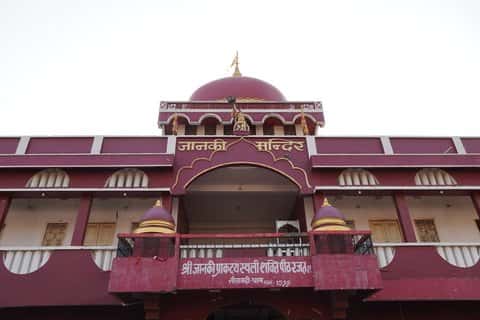
Sitamarhi Travel Guide
The comfortable window is roughly October to March , and Bihar Tourism lists the best time for Punaura Dham as September to April . Decide early whether you want a quiet darshan...
When to visit Sitamarhi
The comfortable window is roughly October to March, and Bihar Tourism lists the best time for Punaura Dham as September to April. Decide early whether you want a quiet darshan or the big festival crowds.
- October to March: cool and clearNorth Bihar winter is the easiest time to travel here, pleasant by day and cool at night, so carry a layer for early mornings. This is when the temple courtyards are comfortable and a walking circuit of the town Janaki Mandir, Punaura Dham and Haleshwar Sthan is genuinely pleasant.
- April to June: hot on the plainsNorth Bihar summers are hot and draining, hard work for open temple courtyards and road travel. If you must come then, keep the middle of the day for rest and shade and do your darshan early or late.
- June to September: the monsoonThe rains green the Mithila countryside but can flood low-lying parts of the district and make rural roads slow. Bihar Tourism still lists up to April as best, so treat the peak monsoon as the least convenient window and check local conditions before you set out.
- Festival or quiet, decide firstSita Navami in spring and Ram Navami bring the biggest crowds to the temples, while an ordinary winter week gives you a calm, unhurried darshan. Both are meaningful, so choose the experience you want before you book, because rooms and transport are tighter around the festivals.
Sita Navami, Ram Navami and Vivah Panchami all move each year with the Hindu lunar calendar, so never trust a fixed date copied from an old page. Per Drik Panchang, Sita Navami falls on about 14 May 2027 for Sitamarhi, since the 2026 date of about 24 April has already passed, and Vivah Panchami falls on about 13 December 2026. Reconfirm the exact date close to your travel before you book anything, as these are the days when the town is busiest and rooms are scarcest.
How to reach Sitamarhi
Sitamarhi has its own small railway station and good bus links from Patna. For longer journeys most travellers route through Muzaffarpur by rail or fly into Darbhanga or Patna.
- By its own railway stationSitamarhi Junction sits about 3 km from the town centre on the East Central Railway Raxaul to Darbhanga line, with regular trains to Muzaffarpur, Darbhanga and Raxaul. It is the simplest arrival if a convenient train serves your city.
- Via Muzaffarpur, the main railheadThe nearest major railway station is Muzaffarpur, about 53 km away, which has direct trains to New Delhi, Anand Vihar and Howrah. For long journeys from Delhi or Kolkata, routing through Muzaffarpur and then covering the last stretch by road or a local train is often the reliable option.
- From Patna by roadPatna is about 139 km from Sitamarhi, and state and private buses run regularly, charging roughly 155 to 180 rupees per person one way per the district administration. A hired car is more comfortable for a family or an older pilgrim and lets you fold in the temples along the way.
- Nearest airportsDarbhanga Airport is the closest at about 85 km and has grown as a regional hub, followed by Patna about 139 km away and Gaya about 236 km away. Flight routes from Darbhanga change, so confirm current schedules before you rely on it, and plan a road transfer of about two hours from the airport.
Fly into Delhi or Kolkata, then take a train to Muzaffarpur or a flight to Patna or Darbhanga, and finish by road to Sitamarhi. There are no international flights anywhere near the town, so build in a domestic connection and a road transfer.
Route via Delhi or Kolkata and on to Patna or Darbhanga, then drive to Sitamarhi. Pair it with a wider Bihar and Nepal Ramayana trip to make the long journey worthwhile.
Take a train to Sitamarhi itself if one serves your city, or to Muzaffarpur for the widest choice, or drive up from Patna in about three to four hours. Road is how most Indian pilgrims arrive.
The two Sita temples, and the sites around them
Sitamarhi is really two temples and a short circuit around them. Knowing the difference between the town Janaki Mandir and Punaura Dham before you arrive saves confusion and makes sure you see both.
- Janaki Mandir in the townAbout 1.5 km from the railway station and bus stand, this is the temple most day visitors reach first. The district administration puts it at roughly 100 years old, with Ram, Sita and Hanuman as presiding deities, a large gateway and a spacious courtyard, and the Janaki Kund tank just to the south where King Janaka is believed to have bathed the infant Sita.
- Punaura Dham, the believed birthplaceAbout 5 km from the town, Punaura Dham (Janaki Janmasthali Mandir) is revered as the exact spot where Sita rose from the furrow, with the Sita Kund pond behind the temple. This is one of the few temples in the subcontinent where Sita is worshipped in her own right rather than only beside Rama, and it is the heart of the pilgrimage.
- Haleshwar SthanAbout 5 km northwest of the town, this Shiva temple is traditionally linked to the yajna King Janaka performed, and is a natural add-on to the Sita circuit. It is quieter than the main temples and rounds out the story of the place.
- Panth Pakar and Sita KundPanth Pakar is associated with Sita's wedding journey, and the Janaki Kund and Sita Kund tanks carry their own beliefs, including one that bathing at Sita Kund is linked to the blessing of children. Together these smaller sites turn a temple visit into a proper Ramayana circuit of the town.
These are living temples, not monuments. Remove footwear where asked, dress modestly with shoulders and knees covered, and offer your prayers quietly and respectfully. Bihar Tourism notes that mobiles and cameras are generally allowed at Punaura Dham, but always follow the signs and the priests inside the sanctum, and ask before photographing people at prayer.
Signature experiences in and around Sitamarhi
Beyond darshan, these are the experiences that give the visit its meaning, and how to arrange them without getting lost between the scattered sites.
- Do the full Sita circuit in a dayString together the town Janaki Mandir, Punaura Dham, Haleshwar Sthan and Panth Pakar in one unhurried day, ideally with a hired car or auto for the day since the sites are a few kilometres apart. Doing all four, rather than just the town temple, is what separates a proper pilgrimage from a quick stop.
- Eat at the free Sita RasoiThe Mahavir Mandir Trust runs a free community kitchen, the Sita Rasoi, at Punaura Dham, started on 27 January 2019, serving simple meals to visiting pilgrims. It is a warm, humble experience and a reminder that this is a devotional place first.
- Take the trust bus toward JanakpurThe Mahavir Mandir Trust operates a daily morning bus from Punaura Dham linking Haleshwar Sthan, Panthpakar and the Janaki Mandir at Janakpur in Nepal, returning in the evening. It is a practical, devotion-minded way to reach the Nepal side without arranging your own cross-border transport.
- Time it to a festival, if you canSita Navami and Ram Navami fill the temples with colour and crowds, and Vivah Panchami, the Ram and Sita wedding day, peaks across the border at Janakpur. If your dates line up, the atmosphere is unforgettable, but come prepared for dense crowds and book rooms early.
- Taste Mithila foodThis is the Mithila region, so look for local vegetarian thalis, fish curry where you eat non-vegetarian, litti chokha and seasonal sweets at simple eateries. Do not expect fancy restaurants; the pleasure here is authentic home-style cooking in its own land.
- Sit with the storyThe quiet reward of Sitamarhi is standing at Sita Kund or in the Punaura Dham courtyard and simply feeling the weight of the Ramayana in the place it is set. Give yourself unhurried time rather than rushing between photo stops.
If you do only one thing properly, make it Punaura Dham rather than only the town Janaki Mandir. Many day trippers see the convenient in-town temple and leave thinking they have seen the birthplace, when the site revered as the exact spot of Sita's birth is about 5 km out. Build the short trip to Punaura Dham into your plan and you will not leave with the wrong impression of where you stood.
Where to stay in Sitamarhi, and how many nights
Be honest with yourself: Sitamarhi has basic hotels, guesthouses and dharamshalas rather than resorts. Many travellers base in Muzaffarpur or Darbhanga for more choice and day-trip in.
- In Sitamarhi townStaying in town keeps you close to the Janaki Mandir and cuts morning transfers to Punaura Dham. Expect simple hotels, guesthouses and dharamshalas rather than polished properties, so choose a clean, well-reviewed budget or mid-range room and keep expectations modest.
- Dharamshalas and trust lodgingAs a devotional town, Sitamarhi has dharamshala-style pilgrim lodging that is plain but inexpensive and close to the temples. It suits pilgrims who want simple, faith-focused stays and do not need hotel comforts.
- Base in Muzaffarpur or DarbhangaFor a wider choice of comfortable hotels, many travellers stay in Muzaffarpur, about 53 km away, or Darbhanga, and visit Sitamarhi as a day trip. This is often the smarter option for families and older travellers who want a reliable room and better food at night.
- How many nightsOne full day covers the town Janaki Mandir, Punaura Dham and Haleshwar Sthan comfortably. Add a night if you want an unhurried pace, a festival, or to continue across to Janakpur, which realistically needs its own day. A single night in Sitamarhi is enough for the core sites.
Around Sita Navami, Ram Navami and Vivah Panchami the modest room stock in and around Sitamarhi fills quickly and prices rise. If your dates fall on a festival, book well ahead or plan to base in Muzaffarpur or Darbhanga and commute in, because turning up on the day expecting a room is a real risk in a town with limited hotels.
Sitamarhi costs and a realistic budget
Sitamarhi is inexpensive by nature. The main costs are transport to reach it, a simple room and a hired vehicle for the local circuit, since the sites are spread out.
- Getting thereState and private buses from Patna cost roughly 155 to 180 rupees per person one way per the district administration, and trains are cheap in sleeper and second-seating classes. A private car from Patna or the airport is the comfortable option and the biggest single transport cost, worth sharing across a family.
- Rooms and foodBecause the town runs on basic hotels, guesthouses and dharamshalas, rooms are inexpensive and simple Mithila meals at dhabas cost little. Budget modestly and treat any comfort you find as a bonus rather than the norm.
- The local circuitThe real convenience cost is a hired auto or car for the day to link the town Janaki Mandir, Punaura Dham, Haleshwar Sthan and Panth Pakar, since they are a few kilometres apart. Agree the fare and the full list of stops with the driver before you set off.
- Temple and donationsDarshan at the temples is free. Any donation is voluntary, so give what you wish at the official temple counter or hundi rather than to anyone who pressures you, and be wary of self-appointed guides quoting a fee. The free Sita Rasoi at Punaura Dham even removes the cost of a midday meal.
The single habit that keeps a Sitamarhi trip smooth is to agree every price before it begins, whether that is the day rate for an auto around the circuit, a taxi across to the Nepal border, or a room. Quotes to outside visitors can start high and come down without drama, and a sum settled in advance turns the only real friction of a small pilgrimage town into a non-event. Keep small cash for offerings and simple meals.
Practical logistics: getting around, money, food and etiquette
The small things that make a Sitamarhi day work: how to move between the scattered sites, cash, food and the etiquette a pilgrimage town expects.
- Getting aroundAuto-rickshaws and local buses handle the short hops between the town, the railway station and Punaura Dham, and a hired auto or car for a few hours is the easy way to cover the whole circuit. Distances are small but the sites are separate, so plan transport rather than assuming everything is walkable.
- Money and connectivityCarry cash: small eateries, autos, offerings and the bazaar run on it, and card and UPI acceptance is patchy in a small town. Draw money in Patna, Muzaffarpur or Darbhanga where ATMs are more reliable. Mobile coverage is generally fine for calls, maps and payments in town.
- Food and waterStick to freshly cooked, hot Mithila food at busy dhabas, and drink bottled or filtered water, especially in the warmer months. The free Sita Rasoi at Punaura Dham is a clean, simple option at midday.
- Holy-site etiquetteRemove footwear where required, dress modestly, keep your voice low in the sanctum and follow the priests' instructions. Treat the temples as places of worship first, ask before photographing worshippers, and give donations only at official counters.
Safety, common-sense caution, and staying healthy
Sitamarhi is a calm devotional town, but it has limited facilities and sits in a flood-prone belt. A little awareness on health, monsoon timing and pushy guides keeps the visit happy.
- Pushy guides and voluntary donationsAs at many pilgrimage sites, self-appointed guides or helpers may attach themselves and then press for a large payment or steer donations through themselves. Be polite but firm, agree any fee in advance, and give offerings only at the official temple counter or hundi. Darshan itself is free.
- Health and food careFacilities are basic and good hospitals are in Muzaffarpur, Darbhanga or Patna rather than in the town, so carry your regular medicines and a small first-aid kit. Eat freshly cooked hot food, drink sealed water, and take the usual precautions with street food to avoid an upset stomach.
- Monsoon and heatNorth Bihar summers are hot and the monsoon can flood parts of the district and slow rural roads, so favour the October to March window and check local conditions if you travel in the rains. Carry sun protection and water for open temple courtyards in warm weather.
- General cautionThis is a low-crime devotional town, but use standard travel sense: keep valuables secure in crowds around festivals, watch your belongings at the station and bus stand, and keep to well-used routes after dark, since a small town has little nightlife and quiet lanes early.
Sitamarhi is generally a calm, family-oriented pilgrimage town, and most pilgrims travel without trouble. As anywhere in India, dress modestly at the temples, be firm with anyone pressing for money, prefer the busier lanes and daytime for moving between sites, and keep a phone charged with a working number. Basing in Muzaffarpur or Darbhanga for the night, where hotels are more established, is a sensible choice for a solo traveller who wants a reliable, well-run room.
Sitamarhi for every kind of pilgrim, and on access
Sitamarhi rewards devotion and curiosity more than comfort-seeking. Here is what it offers different travellers, and the one honest tip that matters for each.
- Devotees of Ram and SitaThis is the emotional core of the visit: the believed birthplace of Sita, told in the land of the Ramayana. Do the full circuit including Punaura Dham and, if you can, continue to Janakpur for the marriage site to complete the story.
- Families with childrenDoable as a one-day pilgrimage, with the free Sita Rasoi easing the midday meal. Keep expectations modest on hotels and food, carry water and snacks for children, and consider basing in Muzaffarpur or Darbhanga for a more comfortable night.
- Senior travellers and on accessibilityVery doable with planning. Hire a car for the day so the scattered sites and their courtyards involve minimal walking, carry medicines since good hospitals are in the bigger towns, avoid the summer heat and the monsoon, and consider a comfortable base in Muzaffarpur or Darbhanga with day trips in. Temple courtyards are large and mostly flat but can be crowded on festival days.
- First-time Bihar travellersSitamarhi pairs naturally with Muzaffarpur, and with the wider Ramayan and Buddhist circuits of Bihar. Treat it as an authentic, unpolished pilgrimage stop rather than a resort town, and it rewards you with a real sense of place.
- Solo pilgrimsStraightforward and calm for a solo devotee. Move between sites in daylight, be firm with pushy helpers, and base your night in a larger town if you want a more established hotel. The temples are welcoming and used to visiting pilgrims.
- NRI and overseas HindusFor the diaspora this is the Indian half of Sita's story, paired with Janakpur across the border. Carry a passport for the Nepal crossing, prepare for basic facilities, and see the overseas section below for the border and money details.
A suggested Sitamarhi and Ramayan Circuit itinerary
How to shape one or two days so you see both Sita temples, add Haleshwar Sthan, and decide whether to continue across to Janakpur in Nepal.
- Day one, morningStart at the town Janaki Mandir near the station for an early, calm darshan and a walk to the Janaki Kund tank. Then drive the few kilometres out to Punaura Dham, the believed birthplace, and take your time at the Sita Kund pond and the temple courtyard.
- Day one, afternoonAdd Haleshwar Sthan and Panth Pakar to complete the Sita circuit, and break for a simple meal at the free Sita Rasoi or a local dhaba. Keep a hired auto or car for the day so the scattered sites are easy and unhurried.
- Day two, the Janakpur optionIf you have a second day and want the marriage site, continue about 60 km to Janakpur in Nepal via the Bhitthamore border, either on the Mahavir Mandir Trust bus from Punaura Dham or by hiring a taxi. Carry ID for the crossing and treat it as a full day out and back.
- The half-day versionOn a tight schedule you can see the town Janaki Mandir and Punaura Dham in a few hours, but do include Punaura Dham rather than only the in-town temple, or you will miss the site that is the whole point of coming.
Punaura Dham is in the middle of a large redevelopment on the pattern of Ayodhya, so parts of the site may be under construction, fenced or rerouted, and access can change from one visit to the next. It is still very much worth going, but check locally for the current state of the works when you arrive, keep your plan flexible, and do not be surprised to find cranes and hoardings alongside the darshan.
The real questions travellers ask about Sitamarhi
Straight answers to the questions that come up again and again on traveller forums and the district site, so you arrive already knowing the score.
- Was Sita born at Sitamarhi or Janakpur?In tradition, Sita was born from the furrow at what is now Punaura Dham near Sitamarhi, and later married at Janakpur, now in Nepal. So Sitamarhi holds the birth and Janakpur the marriage; the two towns share her story, and many pilgrims visit both. Remember this is religious belief rather than documented history.
- Janaki Mandir town temple or Punaura Dham?See both. The Janaki Mandir in town, about 1.5 km from the station, is convenient and roughly a century old. Punaura Dham, about 5 km out, is revered as the exact birthplace with the Sita Kund pond. Day trippers often see only the town temple by mistake, so make time for Punaura Dham.
- How do I reach Sitamarhi from Patna?Patna is about 139 km away, with regular buses at roughly 155 to 180 rupees per person, or a comfortable private car in about three to four hours. Trains also serve Sitamarhi's own station, or you can route via Muzaffarpur, the nearest major railhead 53 km away.
- How do I get to Janakpur, and is there a direct bus?Janakpur is about 60 km via the Bhitthamore border, and there is no single direct bus. The usual way is a local bus or shared vehicle to the border, cross on foot, then local transport onward, or hire a taxi from Sitamarhi. The Mahavir Mandir Trust also runs a daily bus from Punaura Dham toward Janakpur.
- Do Indians need a passport for Nepal?Indian citizens do not need a visa or passport to enter Nepal and can use a valid government photo ID such as a voter ID, Aadhaar or passport. Foreign nationals other than Indians must follow Nepal immigration rules at the border, so carry a passport and check current requirements before you cross.
- Is it worth visiting now with the construction?Yes, with realistic expectations. Punaura Dham is being rebuilt on the Ayodhya pattern, so expect construction and changing access, but the darshan and the sense of the place remain. Check the current state of the works locally when you arrive and keep your plan flexible.
Planning Sitamarhi from abroad
For the Hindu diaspora, Sitamarhi is the Indian half of Sita's birth story and pairs with Janakpur across the border. A little preparation makes the basic facilities and the crossing easy to handle.
- Set your expectations on facilitiesSitamarhi is a working pilgrimage town with basic hotels, dharamshalas and simple dhabas, not a resort destination. Come for the devotion and the story, carry your own essentials and medicines, and consider basing a night in Muzaffarpur or Darbhanga where hotels are more established.
- Plan the Janakpur crossing carefullyTo reach Sita's marriage site at Janakpur, about 60 km away in Nepal, foreign passport holders must follow Nepal immigration rules at the Bhitthamore border, so carry your passport and check current entry requirements. There is no single direct bus, so plan a taxi or the local bus-then-walk-then-local-transport route, and treat it as a full day.
- Pair it into a wider Ramayana tripThe long journey is best justified by combining Sitamarhi with Janakpur, Ayodhya and Bihar's Buddhist circuit of Bodh Gaya, Nalanda and Rajgir. Fly into Delhi or Kolkata, connect to Patna or Darbhanga, and build a route that ties the sites together.
- Respect the devotional settingThese are living temples central to the faith. Dress modestly, remove footwear where required, follow the priests inside the sanctum, ask before photographing worshippers, and give donations only at official counters. Your care will be noticed and appreciated.
Money, connectivity and timing for foreign visitors
The practical basics an overseas traveller needs for a small pilgrimage town and a Nepal border hop: cash, a SIM, and how many days to give it on a wider trip.
- Carry cash, do not rely on cardsCard and UPI acceptance is patchy in a small town, and autos, offerings and dhabas run on cash. Draw Indian rupees at reliable ATMs in Delhi, Kolkata, Patna, Muzaffarpur or Darbhanga before you arrive, and keep small notes for the temples and local transport. Carry some Nepali cash or small Indian notes if you cross to Janakpur.
- Get an Indian SIM on arrivalPick up an Indian tourist SIM or eSIM when you land at a major airport rather than hunting for one in a small town. Coverage in Sitamarhi is generally fine for maps, calls and payments, which makes moving between the scattered sites much easier.
- How long to give itOn a wider India and Nepal Ramayana trip, one day covers the Sitamarhi sites and a second day handles Janakpur across the border. Slot it between Patna or a Buddhist-circuit leg and the Nepal side rather than making it a standalone destination.
- Time your visit to the cool seasonOctober to March is the comfortable window, and Bihar Tourism lists up to April as best. If you want the great festivals, plan around Sita Navami in spring or Vivah Panchami in about mid-December, reconfirm the exact dates, and book far ahead, since rooms are limited.
Sitamarhi is not an easy, polished introduction to India, and that is part of its honesty: it is a small, devout town in a rural belt, best approached with patience and modest expectations. For many in the diaspora, standing at Punaura Dham where Sita is believed to have been born, then crossing to Janakpur where she is believed to have married, is a deeply moving thread of the Ramayana that no comfortable resort could offer. Come for that, and the basic facilities become a small price.
Why Sitamarhi is called the birthplace of Sita
In the Ramayana tradition, the land around Sitamarhi suffered a long famine, and King Janaka of Mithila was advised to plough a barren field himself to bring the rains. As his ploughshare turned the earth, an earthen pot rose from the furrow, and inside it lay an infant girl. Janaka adopted her and named her Sita, a word that means furrow, and Janaki, the daughter of Janaka. The pond behind the temple at Punaura Dham, Sita Kund, is where the baby is believed to have been bathed. This is held as sacred truth by millions of devotees and is recorded in tradition and in texts such as the Padma Purana, where the sage Narada is said to have described the sanctity of the place to Lord Rama himself. It is important to be honest that this is religious belief and epic tradition rather than documented history, and that Janakpur across the border in Nepal is revered as the place of Sita's marriage; the two towns together hold the story of her life. That does not lessen the feeling of standing at Punaura Dham, where a pilgrim is standing at the very furrow of the story.
Planning a Sitamarhi trip?
Our Bihar travel experts plan your full journey for you: route, hotels, darshan timings and transport. You get a free day-by-day plan and an exact quote on WhatsApp, usually within a few hours. No payment is needed to get your plan.