Baikunthpur Travel Guide
This is a forest district, so the season decides the trip. Come in winter for comfort and the princely-state and forest calm, and in or just after the monsoon if the waterfalls...
The best time to visit Baikunthpur and Koriya
This is a forest district, so the season decides the trip. Come in winter for comfort and the princely-state and forest calm, and in or just after the monsoon if the waterfalls are what you want.
- November to February: the comfortable windowWinter is the easiest time to be here, cool and clear, pleasant for the dams, the forest drives and the town. Nights on this plateau get genuinely cold, so carry a warm layer. This is also the gentlest season for a first offbeat visit, with dry roads and calm weather.
- July to September: the monsoon, for the waterfallsThe Hasdeo-fed falls like Gaurghat and Amrit Dhara are only truly worth the drive when they are running, which means the monsoon and the weeks just after. The forest is at its greenest then, but forest roads turn rough and slippery, leeches appear on damp trails, and some tracks flood, so travel by day and check conditions locally.
- March to mid-June: hot and dryLate spring and early summer get hot and dusty on the plains below, and the smaller falls dwindle or dry up. If you come in this window, keep to the mornings, focus on the dams and the shaded forest, and rest through the harsh middle of the day.
- Time it to Mahashivratri if you want the melaThe big local set-piece is the Mahashivratri fair at Amrit Dhara, held for generations around the festival, usually in February or March. It draws large crowds of devotees, so expect a lively, busy scene rather than a quiet nature day, and reconfirm the exact festival date for the year before you plan around it.
For scenery and waterfalls, the monsoon and the month right after it are unbeatable, but the roads are hardest then. For an easy, comfortable trip built around the town, the dams, the forest and the history, come in the November to February winter. Pick your season by whether you are chasing water or chasing comfort, because in a remote forest district the weather shapes the whole experience.
How to reach Baikunthpur
Baikunthpur is remote but not cut off. It has its own small railway station, a larger railhead and a new airport at Ambikapur, and reliable air links come through Raipur.
- By train, the practical way inBaikunthpur has its own small station, Baikunthpur Road (code BRH), on the Anuppur to Ambikapur line. About seven trains a day run the roughly 77 km to Ambikapur in about 1.5 to 3.5 hours, with connections towards Anuppur Junction, Bilaspur, Durg and Delhi. Ambikapur is the larger, better-served railhead if you want more train choices.
- By airThe nearest airport is Ambikapur, the Maa Mahamaya airport at Darima, about 95 km away, which opened in October 2024 under the UDAN scheme but has only limited and changeable regional flights, so check current routes before you rely on it. Raipur, about 320 km and roughly 7 to 8 hours by road, is the dependable airport with wide connections.
- By roadMost visitors reach Baikunthpur by road from Ambikapur, about 77 km and around 2 hours, or drive up from Bilaspur or Raipur to the south. The last stretches run through forest and hills, so allow extra time, keep to daylight, and fuel up before you leave the bigger towns.
- Base in Ambikapur if you preferBecause Baikunthpur is small with limited hotels, many travellers base in Ambikapur, the Surguja divisional hub, and make Baikunthpur and the Koriya sights a day trip. Ambikapur has more places to stay, more transport and both the airport and a busy railway station.
Fly into Delhi, then take a train or a domestic flight towards Raipur or Bilaspur, and continue by train to Ambikapur or Baikunthpur Road, or by hired car. There are no direct international links anywhere near here, so plan this as a deep add-on to a wider India trip.
Fly into Delhi or Raipur (via a metro hub), then reach the region by train to Ambikapur or by road. Raipur's Swami Vivekananda Airport is the reliable gateway for this corner of Chhattisgarh.
Take a train to Ambikapur or directly to Baikunthpur Road, or drive from Bilaspur or Raipur. The new Ambikapur airport has limited UDAN flights, so most domestic travellers still come by train or road.
Top sights in and around Baikunthpur
Be honest with yourself first: the town has few conventional monuments. The rewards here are the reservoir, the royal palace and old tanks, and the forest and waterfalls a drive away.
- Jhumka Dam, the town's outing spotThe reservoir about 5 km from Baikunthpur railway station is the most popular thing to do here. Built in 1982, it has a small island, calm water for boating, fishing, a lakeside resort and a new open-air theatre. It is an easy, safe half-day trip and a good place to feel the district's quiet rhythm.
- The royal palace and old tanksBaikunthpur became the capital of Korea State in 1900, when the ruler shifted the seat here from Sonhat and built a new palace with two tanks and a temple nearby. The palace and the old water tanks are the town's real heritage, best appreciated with a little of the princely-state history in mind rather than as a ticketed monument.
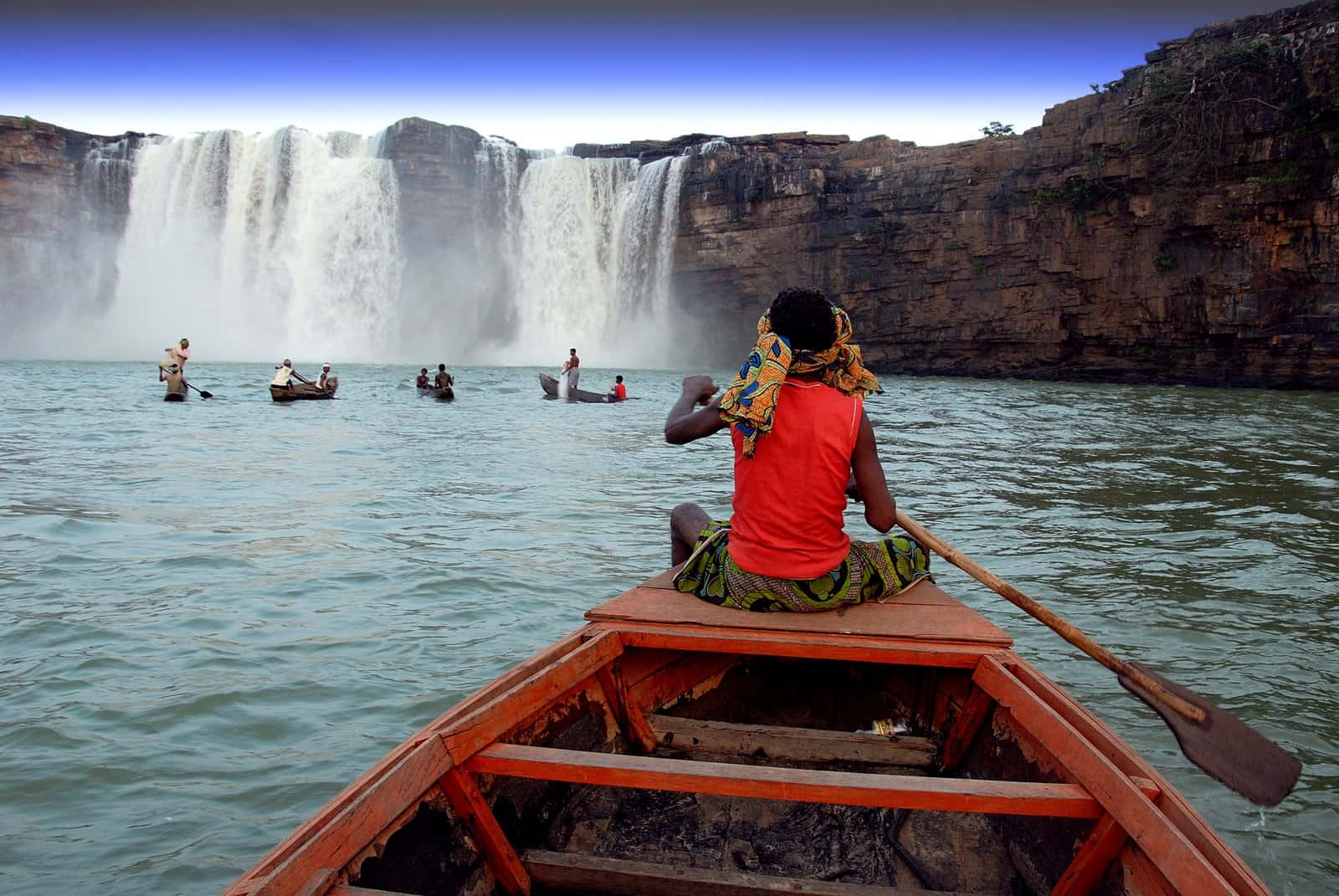
- Gaurghat waterfall, in the Sonhat forestAbout 35 km away near Tarra village in the Sonhat area, Gaurghat drops roughly 70 to 80 feet on the Hasdeo river onto a broad flat rock, a favourite picnic and camping spot. It stays inside Koriya district and is at its best in and just after the monsoon.
- Amrit Dhara, now just over the district lineThe classic Amrit Dhara waterfall, about 90 feet on the Hasdeo river with a Shiva temple beside it, is roughly a one and a half hour drive on NH43. Note that after the 2022 reorganisation it now lies in the neighbouring MCB district, not Koriya, though almost every old web page still lists it under Koriya.
Baikunthpur is a small, remote district headquarters, not a sightseeing town. If you arrive expecting forts, famous temples or a tourist circuit, you will be disappointed. If you come for sal forest, quiet rivers and dams, seasonal waterfalls, tribal Surgujia culture and an unusual slice of princely-state and cheetah history, it rewards you. Treat it as deep, offbeat travel and plan a car with a local driver, because the good things are spread across the forest, not packed into the town.
Experiences worth having in Koriya
The good days here are slow and outdoors: a boat on Jhumka Dam, a monsoon waterfall, a forest drive, and time among the tribal Surgujia culture that gives the district its character.
- A boat and a slow afternoon at Jhumka DamThe reservoir is the easy pleasure of a Baikunthpur trip: a boat ride out to the little island, a picnic on the bank, and a quiet sunset over the water. It is family-friendly and close to town, so it works even on a short stay or a day trip from Ambikapur.
- Chase a waterfall in the right seasonIn and just after the monsoon, drive out to Gaurghat in the Sonhat forest, about 35 km away, or to Amrit Dhara on NH43, about a one and a half hour drive over the MCB district line. Both are picnic falls rather than adventure sites, so go for the setting and the water, and keep well back from slippery rock edges.
- The Mahashivratri mela at Amrit DharaIf your dates fall around Mahashivratri, the fair by the Shiva temple at Amrit Dhara has run for generations and draws large crowds of devotees. It is a genuine local festival rather than a tourist show, so join it respectfully, dress modestly and expect it to be busy and devotional.
- Feel the forest and the tribal cultureThe real texture of Koriya is its sal forest and its Kol, Gond and Pando communities. A drive through the forest, a village market, or catching a Karma, Saila or Suva dance around a festival tells you more about this place than any single monument. Arrange it through a local guide and always ask before photographing people.
- Stand where the cheetah story endedThis district is where India's last recorded wild cheetahs were shot in 1947 by the last Maharaja of Korea State. There is no formal memorial, but knowing the history as you look out over the same forests, and remembering that cheetahs returned to Kuno in 2022, gives the landscape a quiet weight that few visitors realise.
If you do only one thing slowly here, make it an unhurried afternoon and evening at Jhumka Dam. It is close, calm and safe, it gives you the district's mood in a single sitting, and it is the easiest way to enjoy Baikunthpur without needing tourist infrastructure that this town simply does not have yet. The waterfalls and the forest are the bonus when the season and your time allow.
Where to stay in Baikunthpur, and how long
Accommodation is basic and limited. Stay in a simple lodge in town or at the Jhumka resort, or base in the larger town of Ambikapur and treat Koriya as day trips. One to two days is usually enough.
- In Baikunthpur townThe town has simple lodges and small hotels aimed at officials and business visitors rather than tourists. Rooms are functional and cheap, as a rough estimate about 800 to 2,500 rupees a night, and standards vary, so it is worth calling ahead and seeing the room before you commit.
- At Jhumka DamThere is a resort by the reservoir, which is the most scenic place to stay if you want to be at the water rather than in the town. It suits families and anyone who wants a calm base for a night, though you will want your own transport to move around.
- Base in Ambikapur insteadBecause choice in Baikunthpur is thin, many travellers stay in Ambikapur, about 77 km away, which has more and better hotels, more transport and the airport and railway. From there, Baikunthpur, Jhumka Dam and the nearer sights make a comfortable day trip.
- How many daysOne full day covers Baikunthpur town, the palace area and Jhumka Dam comfortably. Add a second day if you want a waterfall in the right season, a forest drive or a slower pace. Beyond two days, most travellers move on to Ambikapur, the Surguja sights, or the wider north Chhattisgarh circuit.
Do not expect a polished online hotel scene here. Many places are not well listed on the big booking sites, and details change, so a phone call to confirm a room, a rate and whether food is available saves surprises. If comfort matters to you or you are travelling with elders, basing in Ambikapur and driving in is the smoother choice.
Costs and budgeting for a Baikunthpur trip
This is one of the cheaper corners of India to travel, but it runs largely on cash, and your biggest cost is transport, not sights, since most of what you see here is free.
- The sights are mostly freeThere is little to pay for admission here. Jhumka Dam, the forest, the town and the waterfalls are essentially free to enjoy, with at most a small local charge for parking or a boat ride at the reservoir. That keeps daily costs low once you are here.
- Your real cost is the carThe main expense is a car with a driver, because the good things are spread across the forest and public transport is thin. Hiring a vehicle by the day from Ambikapur or Baikunthpur is the practical way to see the district, so budget for that as your largest single item.
- Rooms and food are inexpensiveSimple rooms run roughly about 800 to 2,500 rupees a night as an estimate, and local vegetarian meals are very cheap. Even a comfortable day here costs a fraction of what the headline tourist towns of India charge.
- Carry cashBaikunthpur town has bank branches and ATMs, but cash is king once you leave it: village stalls, boat operators, small eateries and rural fuel stops may not take cards or reliable UPI. Draw enough in town before any forest day trip.
Practical logistics: fuel, cash, signal and food
The small practical things matter more in a remote forest district. Sort out fuel, cash, a local driver and your phone in town, because services thin out quickly once you head into the forest.
- Fuel and a reliable vehicleFill your tank in Baikunthpur or Ambikapur before day trips, as fuel stations are sparse in the forest. A sturdy vehicle and a driver who knows the local roads is worth far more here than a fancy car, especially in the monsoon when tracks get rough.
- Money and connectivityUse the ATMs in Baikunthpur town and carry cash for everything beyond it. Mobile coverage is decent in town but patchy to absent in deep forest and hill areas, so download offline maps, share your route, and do not count on data once you are out among the sal.
- Food and languageFood is simple and mostly vegetarian, with Chhattisgarhi and North Indian staples in town; carry water and snacks for forest drives where there is nothing to buy. Hindi works everywhere, the local tongue is the Surgujia dialect, and a few polite words go a long way in the villages.
- A local guide or contact helpsBecause there is little tourist plumbing, a local driver, homestay host or district-tourism contact is the single most useful thing you can arrange. They know which falls are flowing, which forest roads are open, and where it is sensible to go, which saves you wasted drives and keeps you on safe, sensible routes.
Safety, the Naxal history, and staying well
Baikunthpur town and its everyday routes are calm, but this is a forested former-conflict district, so a little sensible planning matters. Handle the forest, the season and the remoteness with respect.
- The Red-Corridor reality, calmlyKoriya has long appeared in India's Left-Wing-Extremism map, and that reputation lingers online. In practice, Baikunthpur town, Jhumka Dam and the main routes are quiet and travelled normally. The sensible caution is for deep, remote forest interiors: go with local guidance, travel by day, avoid wandering off known roads, and follow any advice from local authorities.
- Forest and road careThe bigger day-to-day risks are ordinary ones: rough forest roads, slippery rocks at waterfalls, and getting caught out after dark far from town. Keep to daylight for forest drives, keep well back from the edges of falls, and do not swim in unfamiliar rivers or below waterfalls where currents and rocks are hidden.
- Monsoon, leeches and wildlifeIn the rains, expect leeches on damp trails, swollen streams and slick tracks, so wear covered shoes and check conditions locally. This is genuine wildlife country on the edge of a large tiger reserve, so treat the forest with respect, keep noise down, and never venture into notified park areas without proper permission.
- Health and the basicsMedical facilities are basic, with the better hospitals in Ambikapur or larger towns, so carry your own first-aid kit and any regular medicines. Drink bottled or purified water, take the usual care with food, and use mosquito repellent, especially near water and in the forest.
This is not a place to arrive with no plan. Solo travellers and first-timers to deep-India travel do best here with a booked room, a known local driver or contact, and a route shared with someone. Handled that way, Baikunthpur is a rewarding, low-hassle offbeat trip; treated casually, its remoteness and thin infrastructure can catch you out. Plan a little more than you would for a mainstream town and you will be fine.
Baikunthpur for every kind of traveller, and on access
Baikunthpur suits some travellers far more than others. Here is what it offers each, honestly, including who should think twice and how seniors can visit comfortably.
- Nature lovers and birdersThis is your kind of place: sal forest, rivers, dams and waterfalls, on the edge of a huge new tiger reserve landscape. Come in or after the monsoon for the falls, or in winter for easy forest drives, and travel with a local who knows where the wildlife and birds are.
- History and heritage travellersThe princely-state story, the Sonhat to Baikunthpur capital shift of 1900, the palace and tanks, and above all the cheetah history give this town a depth that its size hides. If you love the layered, lesser-told stories of India, Baikunthpur is quietly rich.
- FamiliesJhumka Dam is a genuinely nice, safe family outing with boating and space to picnic. Keep the itinerary light, base near the water or in Ambikapur, and treat the waterfalls as fair-weather bonuses rather than fixed plans with young children.
- Senior travellers and on accessibilityDoable with planning, but manage expectations: roads are long, forest tracks are rough, and facilities are basic. Base in Ambikapur for comfort, keep to Jhumka Dam and the town on easy days, hire a car with a driver, and skip rough monsoon forest trails. There is little formal accessibility infrastructure, so plan around that.
- Offbeat backpackers and road-trippersIf you already know deep-India travel and want somewhere genuinely off the trail, Koriya rewards patience and self-reliance. Pair it with Ambikapur and the wider Surguja region for a proper north Chhattisgarh forest loop.
- Who should think twiceIf you want polished hotels, a tourist circuit, nightlife or guaranteed wildlife sightings, this is not the place yet. Be honest about what you enjoy: Baikunthpur is for the curious and the patient, not for a conventional holiday.
A suggested Baikunthpur itinerary
How to shape one or two easy days around the town, the reservoir and a seasonal waterfall, and how to slot Baikunthpur into a wider north Chhattisgarh trip.
- Day one: town and the reservoirStart with the palace area and a feel for the town, then spend the afternoon and evening at Jhumka Dam with a boat ride and a picnic. This one relaxed day covers the essentials of Baikunthpur itself without needing much driving.
- Day two: a waterfall or a forest driveIn the right season, drive out to Gaurghat in the Sonhat forest, or over the district line to Amrit Dhara on NH43. Out of waterfall season, swap in a forest drive, a village visit or simply a slower morning before you move on.
- As part of a Surguja loopBaikunthpur pairs naturally with Ambikapur and the wider Surguja region. Base in Ambikapur, give Baikunthpur and Jhumka Dam a day, and add the Surguja sights and the forest belt for a three to five day north Chhattisgarh trip.
- The half-day versionIf you are only passing through, an hour or two at Jhumka Dam and a look at the town is the honest minimum. It is enough to say you have felt the place, though you will miss the forest and waterfalls that are the real reward.
The single thing that makes or breaks a Koriya itinerary is matching your days to the season. In the monsoon and just after, build the second day around a flowing waterfall. In winter, build it around forest drives and history instead, and keep the waterfalls as a maybe. Plan a car and a local driver either way, because timings and road conditions here change with the weather, not with a printed schedule.
The real questions travellers ask about Baikunthpur
Straight answers to the questions that come up again and again about this little-known district town, so you arrive already knowing the score.
- Chhattisgarh or Bihar, which Baikunthpur?There are two. This page is the Chhattisgarh one, the headquarters of Koriya district in the far north of the state. There is a separate, unrelated Baikunthpur in Bihar's Gopalganj district. Check the state and district carefully when you book a train, bus or hotel so you do not end up in the wrong one.
- Is it actually worth visiting?Yes, if you want deep, offbeat travel: forest, rivers, waterfalls, tribal culture and an unusual princely-state and cheetah history. No, if you want a monument circuit or polished tourism. Come with the right expectations and it is quietly rewarding.
- Is it safe given the Naxal reputation?The town and its main routes are calm and travelled normally, and the old Left-Wing-Extremism reputation is far heavier online than on the ground around Baikunthpur. The real caution is for remote forest interiors, where you should travel by day with local guidance. Handle it sensibly and it is a low-hassle trip.
- Is Amrit Dhara in Koriya or MCB now?After the 2022 district reorganisation, Amrit Dhara falls in the new Manendragarh-Chirmiri-Bharatpur (MCB) district, not Koriya, even though most old web pages still list it under Koriya. It is still an easy drive of about an hour and a half from Baikunthpur, so it stays on the trip, just under a different district name.
- Can I see tigers or the cheetahs?Not on a casual visit. The forest here is now part of the large Guru Ghasidas-Tamor Pingla Tiger Reserve, but tourist safari infrastructure is very new, so check with the forest department for current access. The reintroduced cheetahs are far away at Kuno in Madhya Pradesh, not here; Koriya is only where the last wild ones were shot in 1947.
- Should I base in Ambikapur?For most travellers, yes. Ambikapur, about 77 km away, has more hotels, more transport and the airport, and Baikunthpur and Jhumka Dam make an easy day trip from there. Stay in Baikunthpur itself if you want to be right in the district or at the Jhumka resort by the water.
Planning Baikunthpur from abroad
Baikunthpur is deep-India travel for the curious visitor who has already seen the headline sights. A little preparation on expectations, transit and safety makes this remote forest district an easy, rewarding add-on.
- Know what kind of trip this isThis is not a tourist town with guides, cafes and comfortable hotels waiting for you. It is a small forest district headquarters where the pleasures are nature, tribal culture and unusual history. Come with that expectation, and it is a genuine, memorable slice of deep India rather than a disappointment.
- Get here through a big hubThere are no international or direct big-city flights nearby. Fly into Delhi, then continue to Raipur by air or reach Ambikapur by train, and travel on by hired car or the local train to Baikunthpur Road. Build in generous travel time, because the last legs are through forest and hills.
- Take the safety history in your strideYou may read about Naxal activity in this district. The town and its main routes are calm, and everyday travel is normal, while the caution applies to remote forest interiors. Travel by day, go with a local driver or contact, and follow local advice, exactly as a sensible traveller would in any remote region.
- Hire a car and a local contactBecause there is almost no tourist plumbing, the smartest move from abroad is to arrange a car with a driver and a local contact in advance, ideally basing in Ambikapur. They handle the roads, the language and which sights are open in the season, and turn a potentially confusing trip into a smooth one.
Money, connectivity and how Baikunthpur fits a bigger trip
The practical basics an overseas traveller needs for a remote district: cash, a SIM, patchy signal, and where a couple of days in Koriya sensibly belong on a wider India itinerary.
- Carry cash, and get a SIM earlyThis is a cash economy once you leave the town, so draw money at the Baikunthpur ATMs and keep small notes for boats, food and fuel. Buy an Indian tourist SIM or eSIM when you land in Delhi or a metro, because sorting one out in a small town is harder, and coverage in the deep forest is patchy anyway.
- Expect basic comfortsRooms and food are simple and inexpensive, roughly about 800 to 2,500 rupees a night for a room as an estimate. There is little English tourist signage, so a driver or contact who speaks the local languages smooths everything from ordering food to finding a room.
- Where it belongs on an India tripBaikunthpur suits a second or third India trip, added to a wider Chhattisgarh or central-India journey, not a first two-week highlights tour. Give it one to two days as part of a Surguja and north Chhattisgarh loop, ideally with Ambikapur as your comfortable base.
- Come for the reason, not the checklistOverseas visitors who enjoy Baikunthpur are the ones who come for the forest, the tribal Surgujia culture and the princely-state and cheetah history, not for a list of famous sights. If that is the trip you want, this quiet district is one of the more honest, unpackaged corners of India you can visit.
For NRI travellers curious about the deeper, less-photographed India, Koriya offers something the golden-triangle trips never do: a working forest district, living tribal culture, and a real princely-state history you can stand inside. Pair it with Ambikapur and the Surguja region, keep your plans flexible, travel with a local driver, and let this be the slow, authentic chapter of a bigger central-India journey.
The Maharaja, the last three cheetahs, and the long road back
Baikunthpur is a quiet coal-and-forest town today, but it carries one of the saddest and most remarkable footnotes in Indian wildlife. Korea State, whose capital had shifted here from Sonhat in 1900, was ruled at Independence by Maharaja Ramanuj Pratap Singh Deo, crowned in 1925 and the last king of the state before it acceded to India on 1 January 1948. In 1947, driving through his forests at night, the Maharaja shot three cheetahs, the last wild cheetahs ever recorded in India. The photograph of the king with the dead animals reached the Bombay Natural History Society in 1948, and in 1952 the government declared the Asiatic cheetah extinct in India. For seventy-five years that was the end of the story, until, in 2022, cheetahs were flown from Africa and released at Kuno in neighbouring Madhya Pradesh. Standing in Koriya, in the same sal forests where the trail once went cold, gives this unassuming district a weight that its size never suggests.
Planning a Baikunthpur trip?
Our Chhattisgarh travel experts plan your full journey for you: route, hotels, darshan timings and transport. You get a free day-by-day plan and an exact quote on WhatsApp, usually within a few hours. No payment is needed to get your plan.