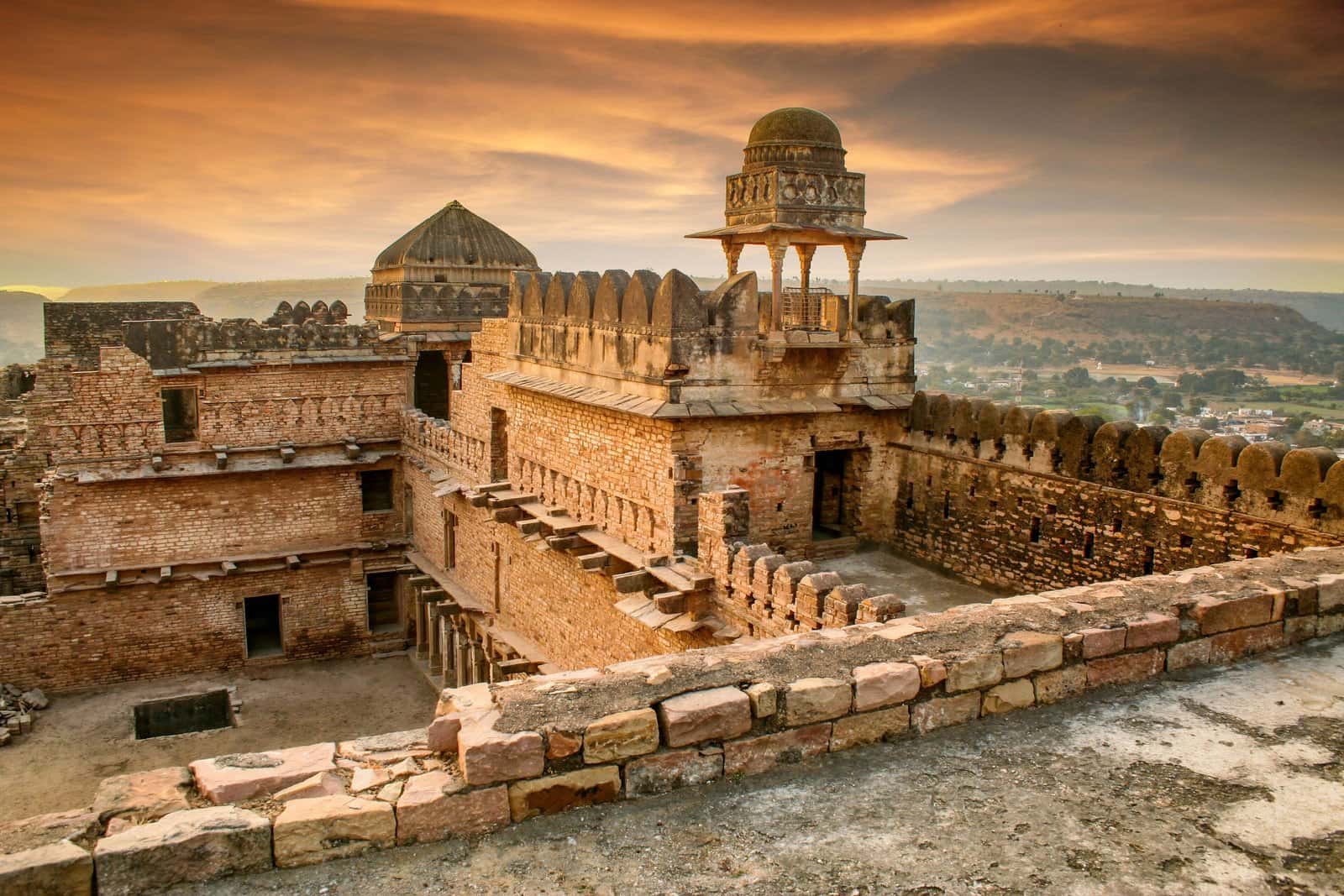
Durg Travel Guide
The comfortable window is October to March , cool and dry across the Chhattisgarh plain. Summer is fierce and the monsoon greens the land but slows the roads, so plan the season...
When to visit Durg and Bhilai
The comfortable window is October to March, cool and dry across the Chhattisgarh plain. Summer is fierce and the monsoon greens the land but slows the roads, so plan the season before anything else.
- October to March: cool and easyWinter on the plain is the pleasant season, roughly about 10 to 30 degrees Celsius, with dry, clear days that suit the temples, Maitri Bagh and a day trip up to Dongargarh. Nights can be genuinely cold in December and January, so carry a layer.
- April to June: very hotHigh summer on the Chhattisgarh plain is harsh, often climbing above 40 degrees, tiring for the open temple courtyards and the Dongargarh climb. If you must come then, keep the middle of the day for indoors and do any sightseeing early.
- July to September: green but wetThe monsoon greens the countryside and the Shivnath river runs full, but heavy downpours can disrupt road travel, and the waterfalls to the south are better reached with care. Good for atmosphere, less good for a tight schedule.
- Time it to a festival, if you canThe Deobaloda temple draws crowds and a small fair at Mahashivratri in late winter, and the Durg Chandi Mandir fills during Navratri. If a festival is your reason to come, arrive early in the day, as both get very busy.
Durg-Bhilai is a working plains town, not a hill station, so the season really matters for comfort. October to March is the clear choice for temple courtyards, the open garden at Maitri Bagh and the hill climb at Dongargarh. Come in the monsoon only if you want the green and do not mind a washed-out afternoon, and treat April to June as a heat you plan the day around rather than a season to enjoy.
How to reach Durg and Bhilai
Durg has no airport of its own but sits on a major railway junction and the old G.E. Road highway. Most travellers arrive by train at Durg Junction or fly into Raipur and drive across.
- By train, via Durg JunctionDurg Junction is one of Chhattisgarh's busiest railheads, on the Mumbai to Howrah main line, serving Durg, Bhilai and the whole steel belt. The district administration gives rail distances of about 1101 km from Mumbai, about 867 km from Howrah, about 1354 km from New Delhi and about 275 km from Nagpur, so for most Indian travellers the train is the natural way in.
- By air, via RaipurThe nearest airport is Swami Vivekananda Airport at Raipur, listed by the district at about 54 km away, connected to Delhi, Mumbai, Nagpur, Kolkata, Bhubaneswar, Chennai, Ranchi and Visakhapatnam. From the airport it is roughly 1 to 1.5 hours by road into Durg-Bhilai, depending on traffic. There are no flights into Durg itself.
- By road, on NH6Durg lies on National Highway 6, the old Great Eastern Road, directly connected to Nagpur and to Raipur, the state capital about 35 to 40 km east. Buses, taxis, tempos and autos are the everyday transport, and we can arrange a car with a driver for the temple and Dongargarh circuit.
- From Raipur, the easy hopRaipur and Durg-Bhilai run together along the highway, about 35 to 40 km apart and under an hour by road outside peak traffic. Many travellers fly or train into Raipur, see Sirpur or the city, then move to Durg-Bhilai for the garden and temples.
Fly into Delhi or Mumbai, the main international gateways, then take a domestic flight to Raipur and drive across, or ride the Mumbai to Howrah train that stops at Durg Junction. There are no international flights into Durg or Raipur.
Fly into Delhi, Mumbai or Kolkata, then connect to Raipur by domestic flight and drive the short hop to Durg-Bhilai, or continue by rail on the main line.
Take a train to Durg Junction on the Mumbai to Howrah line, or fly to Raipur and drive about 35 to 40 km. Durg-Bhilai sits neatly on a central-India route linking Nagpur, Raipur and the Chhattisgarh interior.
The temples, the garden and the river
Durg-Bhilai is temples and a famous friendship garden more than monuments. The headline sights are the ASI Deobaloda temple, the Nagpura Jain tirth, Maitri Bagh and the Shivnath riverfront.
- Deobaloda Mahadev TempleOn the Bhilai-Charoda side between Durg and Raipur stands a 13th-century sandstone Shiva temple built by the Kalachuris, a protected monument under the Archaeological Survey of India. It is east-facing with a garbhagriha and a pillared navaranga mandapa; its Nagara-style shikhara is missing, and the sanctum holds a Shiva linga about 1.5 feet high. The carved pillars and the stepped kund reward a slow look.
- Shri Uwassaggaharam Parshwa Tirth, NagpuraAbout 15 km from Durg on the bank of the Shivnath river, this marble Shwetambar Jain shrine to the 23rd Tirthankara Lord Parshwanath was established in 1995. Beyond the main temple the campus has half a dozen smaller shrines, a dharamshala, a bhojanshala, an auditorium and a garden, so it is both a pilgrimage and a peaceful stop.
- Maitri Bagh, BhilaiThe Bhilai Steel Plant's zoo-cum-garden, built in 1972 as a symbol of India-USSR friendship, with a zoo, a lake with boating, a toy train and an evening musical fountain. It is the city's headline family outing, but read the logistics section first, as it closes on Mondays.
- Chandi Mandir and the Shivnath riverfrontThe Durg-town Chandi Mandir, dedicated to Goddess Chandi, is one of the area's busiest temples and packed during Navratri. Durg itself sits on the east bank of the Shivnath river; quiet riverside and lakeside spots such as Burha Talab in town are pleasant at the end of the day.
The Chandi Mandir in Durg town is a busy local temple. The far more famous hilltop temple many travellers mean is Maa Bamleshwari, also called Chandi, at Dongargarh about 67 km west, which has the only ropeway in Chhattisgarh and is a separate half-day to full-day trip. Decide which one you want before you set out, as they are not the same place.
Signature experiences in Durg and Bhilai
In a working town the memorable things are simple: the friendship garden at its best, an old temple at a quiet hour, a hill climb at Dongargarh and an evening by the river.
- Maitri Bagh at its bestCome for a late-afternoon and evening visit so the children can ride the toy train and boat on the lake while the light softens, and stay for the musical fountain, which typically runs around 7 pm and, by several accounts, mainly at weekends. Go on a Saturday or Sunday evening if the fountain is your reason, and never on a Monday, when it is closed.
- Deobaloda temple, unhurriedGive the 13th-century Kalachuri temple an unhurried morning. Walk the carved mandapa pillars, find the stepped kund, and let the guide or a local tell you the 6-Maashi legend and the story of the hidden Arang tunnel. It is quiet outside Mahashivratri, which is the best time to appreciate the stonework.
- The Dongargarh climbThe Maa Bamleshwari hill temple at Dongargarh, about 67 km west, is the region's great pilgrim outing, reached by a long stair climb or the only ropeway in Chhattisgarh. Go early for the cool and the view over the plain, and treat it as a half-day to full-day trip from Durg.
- A quiet evening by the ShivnathDurg sits on the east bank of the Shivnath, and an evening walk by the river or at Burha Talab in town is the gentle local way to end a day. It is nothing dramatic, just the calm counterpoint to a busy steel-belt afternoon.
- A pilgrim day at NagpuraFor Jain pilgrims and anyone who likes a calm temple, the Nagpura Parshwa tirth on the Shivnath is a serene half day, with the option to eat at the bhojanshala and, for those on pilgrimage, to stay in the dharamshala.
- See the steel town itselfBhilai grew around one of India's first great integrated steel plants, and the planned township, its sectors and the wide avenues are part of the story. There is no casual public plant tour, so enjoy the township and Maitri Bagh, which the plant built, as the visitor-friendly face of it.
If you do only one thing, make it the Deobaloda temple in a quiet morning hour. In a region better known for steel than stone, this small 13th-century Kalachuri shrine, its carved pillars and its kund are the genuine surprise of a Durg visit, and far less crowded than Maitri Bagh. Pair it with the Nagpura tirth on the same side of town and you have the calm, cultural half of the trip in a single morning.
Where to stay in Durg-Bhilai, and how many nights
This is business-and-transit hotel country, not a resort scene. Stay in Bhilai or central Durg for convenience, or in Raipur if you want more choice, and give the area one to two nights.
- Bhilai and central DurgMost visitors sleep in Bhilai's newer commercial areas or in central Durg near the station, where the hotels are practical business-class rooms rather than character stays. This keeps you close to Maitri Bagh, the temples and Durg Junction.
- Raipur, for more choiceIf you want a wider hotel range, more restaurants and the Sirpur and city sights, base in Raipur about 35 to 40 km east and do Durg-Bhilai as a day out. It is under an hour on the highway outside peak traffic.
- Nagpura, for pilgrimsJain pilgrims can stay in the dharamshala at the Nagpura Parshwa tirth and eat at its bhojanshala, a calm riverside option quite different from a town hotel. Arrange it with the tirth directly rather than through an OTA.
- How many nightsOne full day and night covers Maitri Bagh, the Deobaloda temple and the Nagpura tirth comfortably. Add a second night if you want the Dongargarh hill temple, the Sirpur ruins near Raipur, or a slower pace. Durg-Bhilai is a base, not a place you linger for its own sake.
Durg-Bhilai is a working steel and administrative belt, so the lodging is business hotels and transit rooms, not heritage havelis or lakeside resorts. That is fine for a one to two night base: pick something clean and central, keep the sightseeing to the temples, the garden and a Dongargarh or Sirpur day trip, and do not expect a boutique scene the town does not have.
Durg-Bhilai costs and a realistic daily budget
This is one of the gentler parts of India on the wallet. Sights are cheap or free, and the real cost is a car for the day to link the temples and Dongargarh.
- The cheap and free sightsTemples are free to enter, with a donation box if you wish. Maitri Bagh entry is inexpensive, commonly about 20 rupees for an adult with a lower rate for children, plus small extras for the toy train and parking. These are the rare fixed prices in an otherwise low-cost town.
- The real spend: a car for the dayBecause the sights are scattered from Bhilai to Charoda to Dongargarh, a hired car with a driver for the day is the sensible spend and the biggest single cost. Agree the route and the price before you set off, especially if Dongargarh at about 67 km is on the plan.
- Food and everyday costsLocal Chhattisgarhi and north-Indian food is cheap and filling, and a full day of eating, autos and entry fees is modest by Indian tourist standards. Carry cash for temples, small eateries and the garden, though cards and UPI work in hotels and bigger restaurants.
- A rough daily figureExcluding your room and long-distance transport, a comfortable sightseeing day with a shared car, meals and entry fees is inexpensive by big-city standards; the number that matters is the car hire, so settle that first and the rest is small change.
In Durg-Bhilai the entry fees are trivial, so the day's cost is really the car. Whether you are linking Maitri Bagh, Deobaloda and Nagpura in town, or adding the 67 km run out to Dongargarh, agree the full route and the fare with the driver before you start. Do that and there is almost no other friction, because the sights themselves cost next to nothing.
Practical logistics: Maitri Bagh timings, money, getting around
The small things that make a Durg-Bhilai day work: the Maitri Bagh closure and fountain days, how to move between scattered sights, and money and language notes.
- Maitri Bagh: closed Mondays, weekend fountainMaitri Bagh is closed on Mondays. Opening hours are commonly reported as roughly 9 am to 6:30 pm, though some sources give about 10 am to 7:30 pm, so treat the exact hours as changeable and reconfirm locally. The musical fountain typically runs around 7 pm and, by several accounts, mainly at weekends, so plan a Saturday or Sunday evening for it.
- Getting around scattered sightsThe sights spread from central Durg to Bhilai to Charoda and out to Dongargarh, so a hired car for the day is the practical way to see them without wasting hours. Autos and shared transport handle short hops within the twin towns and to Durg Junction.
- Money and connectivityBank ATMs are easy to find in Bhilai and Durg, and cards and UPI work in hotels and bigger restaurants, but carry cash for temples, autos and small eateries. Mobile coverage across the twin towns is good for maps, calls and ride-hailing.
- Language and foodHindi and Chhattisgarhi are the local languages and Hindi will take you everywhere; English is understood in hotels and the tourist trade. The local vegetarian and north-Indian food is good and cheap, and Bhilai's cosmopolitan steel-township mix means plenty of variety.
Safety, health and responsible visits
Durg-Bhilai is an easy, low-hassle urban belt with little of the tout pressure of tourist hotspots. The main care is heat, road travel and temple etiquette.
- A generally easy, low-hassle townAs a working administrative and industrial belt rather than a tourist hotspot, Durg-Bhilai has little of the flower-and-donation touting of famous temple towns. Use normal city sense with your belongings on busy days and at crowded festivals, and it is a relaxed place to move around.
- Heat and waterThe plains heat from April to June is the real health issue: carry water and sun protection, do temple courtyards and the Dongargarh climb early, and rest through midday. Drink bottled or filtered water and take the usual care with street food.
- Roads and the Dongargarh tripHighway and city traffic can be heavy, so use a known car and driver for the scattered sights and the 67 km Dongargarh run rather than rushing yourself. In the monsoon, allow extra time and expect the odd flooded stretch.
- Temple and holy-site etiquetteDress modestly at the temples and the Nagpura Jain tirth, remove shoes and leather where asked, and follow any photography rules inside sanctums. At the Jain tirth in particular, keep quiet and respectful, as it is an active place of worship and pilgrim stay.
Central Chhattisgarh, including Durg, Bhilai and Raipur, is the settled, urban, industrial heart of the state and is routinely visited. Some government travel advisories flag caution about the remote southern districts of Chhattisgarh for security reasons; the Durg-Bhilai-Raipur belt is not that, but if you are travelling on from here into the deep interior, check your own government's current advisory before you plan that leg.
Durg-Bhilai for every kind of traveller
Durg-Bhilai suits pilgrims, families and roots travellers more than sightseers chasing monuments. Here is what it offers you, and the one tip that matters for each.
- Families with childrenMaitri Bagh is the natural family day, with the zoo, the toy train, boating and the weekend fountain. Plan it for a Saturday or Sunday evening, never a Monday, and pair it with an easy temple visit and a river-side stroll.
- PilgrimsThis is strong pilgrim country: the Nagpura Jain tirth with its dharamshala, the Deobaloda Shiva temple, the Durg Chandi Mandir and the Dongargarh hill temple. Plan the Jain tirth and Deobaloda together, and give Dongargarh its own morning.
- Senior travellers and on accessibilityThe town sights are flat and easy, and Maitri Bagh has gentle paths. The one demanding outing is Dongargarh, a long stair climb, so use the ropeway there and skip the crush of festival days. Keep the schedule unhurried and out of the midday heat.
- NRI and roots travellersFor families with roots in the Bhilai steel township, the trip is as much about the sectors, the plant town and Maitri Bagh as about sightseeing. Build a day around the township and the garden, then add the temples and a Dongargarh or Sirpur trip.
- Solo and business travellersEasy and low-hassle: good rail and road links, practical hotels and little tout pressure. A spare afternoon is well spent at Deobaloda or by the Shivnath rather than in the commercial centres.
- Photographers and history loversThe Kalachuri stonework at Deobaloda, the marble Jain tirth at Nagpura and the planned mid-century steel township are the frames worth chasing. Ask before photographing people at prayer and follow sanctum photography rules.
A suggested Durg-Bhilai itinerary
How to shape one or two days so you catch Maitri Bagh open, the temples at quiet hours, and a Dongargarh or Sirpur trip without doubling back.
- Day one, morningStart early at the Deobaloda Mahadev temple while it is cool and quiet, then cross to the Nagpura Parshwa tirth on the Shivnath, both on the calm cultural side of the trip. Break for an early lunch in Bhilai.
- Day one, afternoon and eveningSpend the late afternoon at Maitri Bagh with the toy train, the boating and the zoo, and stay for the musical fountain around 7 pm if it is a weekend. End with a quiet walk by the Shivnath or at Burha Talab. Avoid Monday, when Maitri Bagh is closed.
- Day two, if you have itGive the morning to Dongargarh, about 67 km west, for the Maa Bamleshwari hill temple by ropeway and the view over the plain, or drive east past Raipur to the ancient Buddhist and temple site of Sirpur. Either makes a full, rewarding day.
- The half-day versionPassing through on the highway, you can stop for the Deobaloda temple and a quick look at Maitri Bagh in a few hours, though you will miss the fountain and the slower pleasures of the river and the Jain tirth.
The single thing that breaks a Durg-Bhilai plan is building the day around Maitri Bagh on a Monday, when it is closed, or expecting the musical fountain on a quiet weekday. Fix your Maitri Bagh visit to a Saturday or Sunday evening around 7 pm for the fountain, keep Monday for the temples and Dongargarh, and reconfirm the current hours and fountain days locally before you go.
The real questions travellers ask about Durg-Bhilai
Straight answers to the questions that come up again and again on traveller forums and OTA guides, so you arrive already knowing the score.
- Is Durg-Bhilai worth visiting or is it just an industrial city?It is honestly an industrial and administrative belt, not a resort, but it has real depth for the curious: the ASI Deobaloda temple, the Nagpura Jain tirth, Maitri Bagh and a hill-temple day at Dongargarh. Treat it as a comfortable, well-connected base and it rewards a day or two.
- How many days do I need?One full day covers Maitri Bagh, Deobaloda and Nagpura. A second day adds Dongargarh or Sirpur. More than two nights only makes sense if you are visiting family or using it as a hub for wider central India.
- What are the Maitri Bagh timings and which day is it closed?It is closed on Mondays. Hours are commonly reported as roughly 9 am to 6:30 pm, though some sources say about 10 am to 7:30 pm, so reconfirm locally. Entry is inexpensive, about 20 rupees for an adult, with small extras for the toy train and parking.
- When does the musical fountain run?The fountain typically runs in the evening around 7 pm and, by several accounts, mainly at weekends. If it is the reason you are going, aim for a Saturday or Sunday evening and check on arrival, as the days and timing can change with the season.
- How do I get to Dongargarh from Durg?Dongargarh is about 67 km west of Durg, roughly 1.5 to 2 hours by road, and the Maa Bamleshwari temple sits on a hill reached by a stair climb or the only ropeway in Chhattisgarh. It is a comfortable half-day to full-day trip; go early.
- Can I combine Durg-Bhilai with Sirpur, Bastar or Kanha?Yes. Sirpur's ancient site is a day trip east past Raipur; the Bastar waterfalls such as Chitrakote are a longer drive south and a trip in themselves; and Kanha National Park lies to the north-west. Durg-Bhilai's rail and road links make it a sensible pivot for a wider central-India route.
Planning Durg-Bhilai from abroad
Durg-Bhilai is a roots destination and a central-India base more than a bucket-list stop. A little planning on the arrival route and the compact sight circuit makes an overseas or NRI visit smooth.
- Arrive via Raipur or Durg JunctionThere are no international flights here. Fly into Delhi or Mumbai, connect to Raipur's Swami Vivekananda airport, listed at about 54 km from Durg, and drive across; or ride the Mumbai to Howrah train that stops at Durg Junction. Both are straightforward for a first visit.
- Set expectations honestlyThis is a working steel and administrative belt, not a tourist town, so it rewards a focused day or two: the ASI Deobaloda temple, the Nagpura Jain tirth and Maitri Bagh, plus a Dongargarh hill-temple morning. Expect practical hotels rather than heritage stays.
- A natural roots tripFor NRI families the Bhilai steel township, its sectors and Maitri Bagh, built by the plant, are often the heart of the visit. Build a day around the township and the garden, then add the temples, and let the trip be about place and family rather than monuments.
- Fold it into a wider routeUse Durg-Bhilai as a hub: Sirpur's ancient site near Raipur, the Bastar waterfalls to the south, or a Kanha safari to the north-west all connect from here. The rail and road links that made it a steel town make it an easy pivot for central India.
Money, connectivity and timing for foreign visitors
The practical basics an overseas traveller needs for a central-India town: cash and cards, a SIM, and how much time to give Durg-Bhilai on a wider trip.
- Carry cash, cards for the restHotels and bigger restaurants take cards and UPI, but temples, autos, the garden and small eateries run on cash. ATMs are easy to find across Bhilai and Durg, so draw enough for the day and keep small notes for entry fees and tips.
- Get a SIM in the metro you land inPick up an Indian tourist SIM or an eSIM when you arrive in Delhi, Mumbai or on landing at Raipur, rather than hunting for one here. Coverage across Durg-Bhilai is good for maps, calls and ride-hailing to the scattered sights.
- How much time to give itOn a wider central-India trip, one to two days in Durg-Bhilai is the right weight: enough for the temples, the garden and a Dongargarh or Sirpur day, without slowing an itinerary that has bigger set-pieces elsewhere.
- Time your visit to the seasonOctober to March is the comfortable window. Avoid April to June, when the plains heat is fierce, and treat the July to September monsoon as green but slow for the road trips out to Dongargarh, Sirpur and the Bastar waterfalls.
Central Chhattisgarh is off the usual tourist trail, which is part of its appeal: uncrowded temples, a friendly steel town and easy logistics. Give Durg-Bhilai a day or two as a base, keep your expectations on hotels realistic, and let it be the practical, human chapter of a central-India route rather than a headline destination in itself.
The sculptor who finished a temple in six months
Durg's quiet keepsake is not a grand epic but a stonemason's tale. Local tradition holds that the Kalachuri-era Mahadev temple at Deobaloda was raised in just six months, which is why villagers still call it the 6-Maashi, or six-month, temple. The story goes that the sculptor worked day and night, so lost in his carving that he forgot even his own clothes. His wife brought him food each day, but when one day his sister came instead, both were so ashamed at his state that he leapt from the temple roof into the kund beside it, and his sister, carrying a water pot, jumped into a nearby pond. The two pools survive as the temple kund and the Kasara Talab, and folklore adds a hidden tunnel from the kund that carried the sculptor all the way to the old town of Arang, where he turned to stone. It is a legend, not a record, and the plainest true marvel is still visible: an ornate 13th-century Nagara temple whose towering shikhara was never finished, standing today as a protected monument in a modern steel belt.
Planning a Durg trip?
Our Chhattisgarh travel experts plan your full journey for you: route, hotels, darshan timings and transport. You get a free day-by-day plan and an exact quote on WhatsApp, usually within a few hours. No payment is needed to get your plan.