Jagdalpur Travel Guide
Bastar has a split season that catches most first-timers out. Chitrakote Falls is at its best in the monsoon and just after, while the Kanger Valley caves are shut in exactly...
When to visit Bastar, and the one choice you must make first
Bastar has a split season that catches most first-timers out. Chitrakote Falls is at its best in the monsoon and just after, while the Kanger Valley caves are shut in exactly those months. Decide which you have come for before you book.
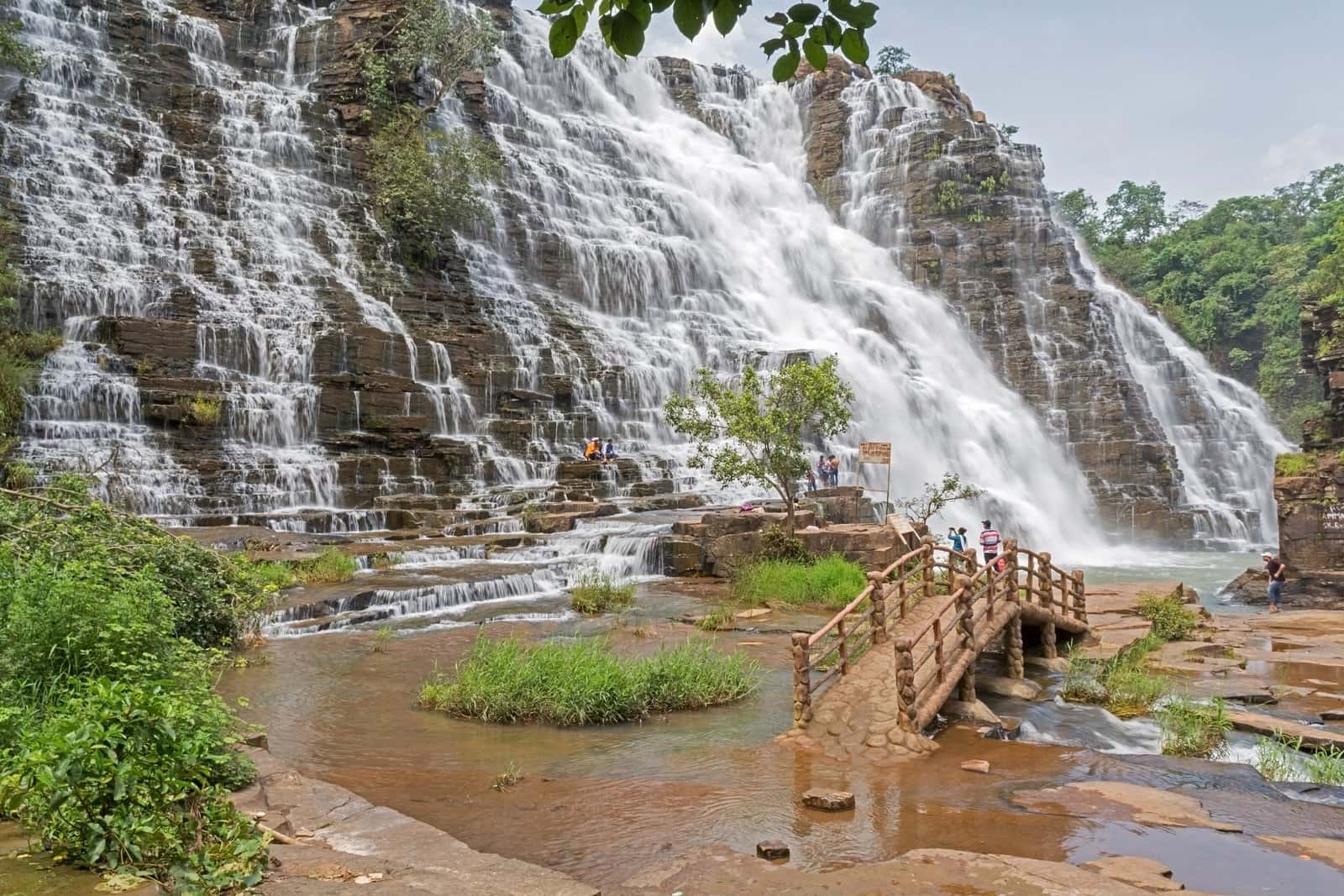
- July to October: Chitrakote at full roarThe monsoon and immediately after is when Chitrakote spreads across its full horseshoe and thunders, and the forests are green and rain-washed. This is the falls at its Niagara best. The trade-off is that the Kanger Valley caves are closed and Tirathgarh can be hard or unsafe to reach, so this season is for the falls, not the caves.
- November to February: the all-round sweet spotCool, dry and pleasant, this is the comfortable window for everything except peak-flow Chitrakote. The Kanger Valley caves and Tirathgarh are open, the haats and craft villages are easy to reach, and the falls, though gentler than in the rains, still carry good water into November. If you want to see the most in one trip, come now.
- March to mid-June: hot but caves still openThe Bastar plain warms up quickly and the middle of the day gets tiring, but the park and caves stay open until around mid-June. The falls shrink as the dry season deepens. Start early, rest through the afternoon heat, and this shoulder season is still workable, especially for the caves.
- Decide falls or caves first, then bookThe single planning mistake in Bastar is expecting Chitrakote at full flow and the caves open on the same visit. You cannot have both at their peak. Choose the roaring falls (monsoon) or the caves plus a gentler falls (winter), and everything else falls into place.
The Kanger Valley National Park's own tariff lists safari timings only from 1 November to 15 June, and the park closes to tourists through the monsoon, roughly mid-June to the end of October, because forest roads, swollen streams and rising cave water become dangerous. So the Kutumsar and Kailash caves and Tirathgarh are reliably open only in the dry half of the year. Treat these as the official pattern but reconfirm on the park site before you travel, as dates shift with the rains each year.
How to reach Jagdalpur and Bastar
Bastar is remote by design, which is part of its charm. Most people come by road from Raipur, by train from Visakhapatnam, or on the limited and changeable flights into Jagdalpur's own small airport.
- From Raipur by road, the reliable gatewayRaipur, the state capital, is the dependable air gateway with wide connections, about 290 to 300 km from Jagdalpur, roughly 6 to 7 hours by car on National Highway 30 through Kanker and Kondagaon. Most travellers fly to Raipur and drive down, often stopping at a craft village on the way.
- By train via VisakhapatnamJagdalpur sits on the scenic Kirandul to Kottavalasa line, and a direct train links Visakhapatnam (Vizag) with Jagdalpur in roughly 8 to 10 hours through forest and hill country. For travellers from the south and east coast, Vizag is often the easiest way in, and the ride itself is memorable.
- Flying into Jagdalpur (JGB)Jagdalpur has its own small airport, Maa Danteswari Airport, about 4 to 5 km from town, but flights are very limited and change often, with an Alliance Air link to Raipur and Hyderabad having operated. Treat a direct flight as a bonus, not a plan, and always check current JGB schedules before relying on it.
- Getting around once you arriveThe sights are spread far apart over forest roads, so a hired car with a driver, commonly about 2,500 to 4,000 rupees a day, is close to essential for covering Chitrakote, Kanger Valley and the haats. Autos work within Jagdalpur town, but not for the day trips out.
Fly into Delhi, Hyderabad or Raipur, then reach Jagdalpur by a domestic hop to Raipur and a road transfer of about 6 to 7 hours, or by the scenic train from Visakhapatnam. Bastar has no international flights of its own.
Fly into Hyderabad or Raipur, then drive down to Jagdalpur, or route via Visakhapatnam for the memorable forest train. Give yourself a transfer day, as the last leg is long.
Fly or train to Raipur and drive about 300 km, or take the direct train from Visakhapatnam. Jagdalpur's own JGB airport has occasional flights worth checking, but Raipur is the reliable air gateway.
Chitrakote, the caves, Tirathgarh and Jagdalpur town
Bastar's headline sights are its waterfalls and caves, spread out around Jagdalpur, plus the town's palace, museum and temple. Knowing which sit inside the national park and which do not saves a lot of confusion.
- Chitrakote Falls, the Niagara of IndiaAbout 38 km west of Jagdalpur on the Indravati river, Chitrakote is roughly 29 to 30 metres high and spreads up to about 300 metres wide in full monsoon flood, which makes it the widest waterfall in India. It sits outside the national park, so it is open year round, entry is free, and it is floodlit in the evening, usually until about 10 pm.
- Kutumsar and Kailash cavesDeep inside Kanger Valley National Park, the Kutumsar and Kailash limestone caves are among India's finest, full of stalactites and stalagmites and reached on a park gypsy with a guide. Kutumsar runs several hundred metres underground. Both are open only in the dry season, roughly November to mid-June, and are closed through the monsoon for safety.
- Tirathgarh FallsAlso inside Kanger Valley National Park, about 35 km south-west of Jagdalpur, Tirathgarh tumbles around 90 metres in tiers through the forest. Reaching the base means around 200 to 280 steep steps that turn slippery in the wet, so it rewards the cooler, drier months and tests anyone with mobility trouble.
- Jagdalpur town: palace, museum and templeIn town, the Bastar Palace recalls the region's royal past (much of it is not open inside, so it is mainly a photo and history stop), the Zonal Anthropological Museum gives an excellent, usually free introduction to Bastar's tribal life (closed Sundays and the 2nd and 4th Saturdays), and the town's Danteshwari temple beside the palace is the spiritual heart of Jagdalpur and the focus of the Bastar Dussehra rituals. Note that the famous 14th-century Danteshwari temple, one of the 52 Shakti Peethas, is at Dantewada about 80 km south, not in Jagdalpur itself.
Chitrakote is outside Kanger Valley National Park, on the Indravati, open all year and best in the rains. Kutumsar and Kailash caves and Tirathgarh are inside the park, open only in the dry season, and shut through the monsoon. Many pages muddle the two, which is why travellers turn up in August expecting the caves. Keep the distinction clear and you will plan the right day for each.
The experiences that make Bastar unlike anywhere else
Beyond the waterfalls, Bastar's real magic is its living tribal culture: the weekly haats, the Dhokra craft villages, the 75-day Dussehra, and the falls after dark. Here is how to do each one well.
- A weekly tribal haatThe haats are the heart of Bastar life: weekly markets where tribal communities gather to trade, eat, drink mahua and meet. Each is held on a set day in a set village, so time your trip to catch one. It is a genuine, unstaged experience, not a show put on for tourists, which is exactly why it is worth planning around.
- A Dhokra bell-metal villageBastar is a home of Dhokra, the lost-wax casting of brass and bell-metal figures made in about 27 hand steps with no reusable mould, so every piece is one of a kind. Visit a craft village such as those around Kondagaon or Narayanpur, or the handicraft shops in Jagdalpur, to watch the work and buy directly from the makers.
- Chitrakote after dark, and boatingChitrakote is floodlit in the evening, usually until about 10 pm, and takes on a dreamy air. In the drier season, when the flow is gentler, small boats take visitors close to the base of the falls for a modest, negotiated fee. In full monsoon the water is too powerful for boating, so this is a dry-season pleasure.
- A Kanger Valley cave safariIn the dry season, a park gypsy takes you along the Kotamsar route to the caves with a mandatory guide, torch in hand, into a world of dripstone formations underground. It is the signature Kanger Valley experience and quite unlike a walk-in cave, so build a full morning around it.
- Bastar Dussehra, if your dates matchIf you come in the festival window you can witness parts of the 75-day Bastar Dussehra, a Danteshwari festival with a giant wooden chariot, tribal deities gathered from across the region and the Muria Durbar assembly. It is one of the most distinctive festivals in India and completely unlike the north-Indian Dussehra.
- The drive itselfDo not rush the drives. The roads between Jagdalpur, Chitrakote and the craft villages run through Sal forest and past hamlets, and the landscape and the everyday life along the way are part of the Bastar experience, not just the gap between sights.
If you do only one cultural thing slowly, make it a haat. Go early, walk the whole market, buy some fruit or a craft, and simply sit and watch rather than shooting photographs from the car. The haat is where Bastar is most itself, and giving it an unhurried hour or two, on foot and with respect, is what people remember long after the waterfalls.
Where to stay in Bastar, and how many nights
Base yourself in Jagdalpur town for choice and convenience, or out at Chitrakote to wake to the falls. Two to three nights is the right length to do the region justice.
- Jagdalpur town: the practical baseThe town has the widest choice of budget and mid-range hotels and is the natural base for the museum, palace, temple, craft shops and day trips out to the falls and caves. It is not a pretty town, but it is convenient and central, and most itineraries run from here.
- Chitrakote: wake to the fallsOut at Chitrakote, the Chhattisgarh Tourism resort and private cottage-and-tent stays let you fall asleep and wake to the sound of the falls, some with a direct view. It is the atmospheric choice, especially in the monsoon, though you are then a drive from town and the caves.
- Room budgetsTown budget rooms run from roughly 900 to 2,000 rupees and mid-range hotels roughly 2,000 to 4,000 rupees, with the falls-view resorts and cottages higher again. Prices rise and rooms fill fast in the popular post-monsoon weeks and around Bastar Dussehra, so book ahead for those.
- How many nightsTwo nights lets you cover Chitrakote and town on one day and Kanger Valley on another. A third night is worth it to time a weekly haat and a craft village, or to slow down at the falls. One night only really works if you are passing through for Chitrakote alone.
The falls-view cottages at Chitrakote are few and much loved, and the whole region gets busy in the pleasant post-monsoon weeks and during Bastar Dussehra in October, when the town also fills with festival visitors. If your dates fall in those windows, book your rooms well in advance, or base in Jagdalpur town where there is more choice and commute out to the falls.
Bastar costs and a realistic daily budget
Bastar is inexpensive on the ground, but the sights are far apart, so the one cost that matters is a car with a driver. Here is what the main things cost so you can plan.
- A rough daily budgetExcluding your room and the long journey in, plan on about 1,500 to 2,500 rupees a day as a frugal traveller and about 3,500 to 6,000 rupees for a comfortable day that includes a hired car. Food and entry fees are cheap here; it is the transport between far-flung sights that shapes the budget.
- The car is the big costBecause Chitrakote, Kanger Valley and the haats are spread across the district over forest roads, a car with a driver, commonly about 2,500 to 4,000 rupees a day, is close to essential. Shared with others it is very reasonable, and it is what turns a scattered region into an easy trip.
- The fixed-price thingsKanger Valley entry is about 25 rupees for an Indian and about 150 rupees for a foreigner, a gypsy safari about 1,800 rupees per vehicle, a guide about 300 rupees, with small camera and Tirathgarh fees on top. Chitrakote entry is free. These official fees are your reliable anchor; reconfirm them on the park site.
- Cash is kingBastar runs largely on cash outside the bigger Jagdalpur hotels. Draw enough in town before heading out, because ATMs and card acceptance thin out fast once you are among the villages, haats and falls. Small notes help at the haats and for the boat and craft purchases.
In most Indian towns the big variable is your room; in Bastar it is the car. Sharing a hired car with a driver across three or four travellers brings the per-person cost right down and is the single best-value decision you can make here, since public transport does not link the falls, caves and haats and the distances are real. Fix the car first, and the rest of the trip is cheap.
Practical logistics: connectivity, food, guides and getting around
The small things that make a Bastar trip smooth, from patchy mobile signal in the forest to hiring a good local guide and carrying enough cash.
- Connectivity is patchyMobile signal and data are fine in Jagdalpur town but drop off quickly in the forest, at the caves and around the more remote haats. Download offline maps, share your day plan with your hotel, and do not count on being reachable through the middle of a day trip.
- Hire a local guideA good Bastar guide is worth far more here than in a mainstream destination: they read the haat calendar, know which craft village is worth the drive, translate at the markets and keep you to the safe, established routes. Arrange one through your hotel, a registered operator or Chhattisgarh Tourism.
- Food and waterJagdalpur has simple, honest local food, and the resorts and better hotels have restaurants; out among the sights, options are basic, so carry water and snacks for the day trips. Try mahua and local Bastar dishes where offered, and stick to bottled or filtered water.
- Carry cash, plan the dayWith ATMs and card machines thin outside town, carry enough cash for the day, keep small notes for haats and boat rides, and set off early: distances are long, the light fades in the forest, and the safest travel here is done in daylight.
The honest safety picture, and staying well
Bastar carries a reputation from its Maoist past, and travellers rightly ask about it. The honest answer is that the tourist circuit is considered safe and is being actively opened up, while remote pockets still see incidents. Here is the sober version, plus the real everyday risks.
- The security context, honestlyBastar was for years affected by Maoist (Naxal) insurgency. In 2026 the core tourist circuit, Chitrakote, Kanger Valley, Jagdalpur town and the main haats, is generally considered safe and is being actively developed for tourism, with a tourist help desk set up near Chitrakote. Sporadic incidents still occur in remote rural pockets away from tourist routes, and these are the areas to avoid.
- Check official advisories, stick to routesSome foreign-government advisories still urge increased caution for parts of Chhattisgarh. Read the current advisory for your nationality before you travel, stick to the established tourist routes and named sights, travel by day, and go with a local guide or registered operator rather than wandering into remote areas alone.
- The real everyday risksFor most visitors the practical hazards are not security but nature: slippery steps at Tirathgarh, powerful water at Chitrakote in the monsoon, and forest roads. Do not climb over barriers or wade near the falls in flood, take the wet steps slowly, and respect the park's monsoon closures, which exist precisely for safety.
- Health and remotenessMedical facilities are limited outside Jagdalpur town, so carry a basic kit, any personal medicines, sun protection and water, and take the usual care with food and water. Being remote is part of Bastar's appeal, but it means help is further away, so plan a little more conservatively than in a mainstream destination.
Do not let the old headlines put you off the sights, and do not treat the whole district as risk-free either. The waterfalls, caves, town and main haats are being opened up for exactly the kind of visitor reading this, and thousands travel there each season without trouble. Keep to established routes, use a local guide, travel in daylight, check your government's current advisory, and Bastar rewards you with one of India's last genuinely offbeat cultural regions.
Bastar for every kind of traveller, and on access
Bastar suits the curious and the patient more than the box-tickers. Here is what it offers you, and the one honest tip that matters for each, including how a senior manages the steps and drives.
- Photographers and culture travellersThis is Bastar's core audience: the haats, the Dhokra villages, the falls and the Dussehra are extraordinary. Ask before photographing people at the haats, buy something rather than just shooting, and give the craft villages time. The reward is imagery and stories you simply cannot get on the mainstream circuit.
- Families with childrenDoable and rewarding for older children who can handle long drives, with the falls, boats in season and caves as highlights. Judge the security context for your own comfort, keep to established routes and a guide, and build in downtime, as the distances and heat can tire small children.
- Senior travellers and on accessibilityChitrakote can be enjoyed from viewpoints near the top without the descent, which suits seniors well, but Tirathgarh's 200-plus steep steps and the cave floors are hard going, so pick your sights honestly. The long forest drives are the other consideration; break them up, travel by day, and stay in comfortable town or resort rooms.
- Solo and independent travellersVery rewarding for the self-reliant, but this is not a backpacker-trail town: distances are long, transport between sights is thin, and English is limited. Hire a car and a guide, keep to established routes, tell your hotel your plans, and you will find Bastar one of the most memorable offbeat trips in the country.
A suggested two to three day Bastar itinerary
How to shape two or three days from Jagdalpur so you catch the falls, the caves in season, a haat and a craft village without a scramble.
- Day one: Chitrakote and townDrive out to Chitrakote in the morning for the falls at their freshest light, and in the dry season take a boat near the base. Back in Jagdalpur, see the Anthropological Museum, the Bastar Palace and the Danteshwari temple, and browse the craft shops. Return to Chitrakote at dusk for the floodlit falls if you are staying out there.
- Day two: Kanger Valley (dry season)Give a full morning to Kanger Valley National Park: a gypsy safari with a guide to the Kutumsar or Kailash cave, then Tirathgarh Falls and its stepped descent if your knees allow. This is a dry-season day only, roughly November to mid-June, since the park is closed in the monsoon.
- Day three: a haat and a craft villageBuild the third day around whichever weekly haat falls on your dates, and pair it with a Dhokra or bell-metal village to watch the casting and buy directly. This is the cultural heart of the trip, so keep it unhurried and go with a guide who can translate and read the market.
- The monsoon versionIf you have come in the rains for Chitrakote at full roar, accept that the caves are closed, give the falls a full day and evening, and fill the rest with the town sights, a haat if one falls right, and the green drives. Save the caves for a future dry-season return.
The single thing that breaks a Bastar plan is arriving in the monsoon expecting to do the Kanger Valley caves, which are closed roughly mid-June to the end of October for safety. Build any cave day into a dry-season trip, keep the monsoon trips for Chitrakote and the town, and you will never find yourself at a shut park gate. When in doubt, reconfirm the park's dates before you fix the itinerary.
The real questions travellers ask about Bastar
Straight answers to the questions that come up again and again on traveller forums, so you arrive already knowing the score.
- Is Bastar safe for tourists right now?The core tourist circuit, Chitrakote, Kanger Valley, Jagdalpur town and the main haats, is generally considered safe in 2026 and is being actively opened up for tourism, with a help desk near Chitrakote. Remote rural pockets away from tourist routes still see sporadic incidents, so keep to established routes, travel by day, use a local guide, and check your government's current advisory.
- Can I see the falls and the caves on one trip?Only in the dry season, and even then the falls will be gentler than in the rains. Chitrakote is at full roar in the monsoon, when the Kanger Valley caves are closed. So a monsoon trip is for the thundering falls without the caves; a winter trip is for the caves plus a calmer falls. You cannot have both at their peak.
- Vizag or Raipur as the gateway?Raipur is the reliable air gateway, about 300 km and 6 to 7 hours by road. Visakhapatnam is the scenic rail gateway, a direct train of roughly 8 to 10 hours through the forest. Choose Raipur if you are flying from the north or west, and Vizag if you are coming from the south or east coast and fancy the train.
- How many days do I need?Two full days cover Chitrakote plus town and a Kanger Valley day; three lets you add a weekly haat and a craft village, which is the cultural heart of the region. One day only works if you are passing through for Chitrakote alone.
- What are the Kanger Valley timings and fees?Per the park's official tariff, safari runs from 1 November to 15 June, entry is about 25 rupees for an Indian and about 150 rupees for a foreigner, a gypsy safari about 1,800 rupees per vehicle and a guide about 300 rupees, with small camera and Tirathgarh fees on top. Reconfirm on the park site, as it closes in the monsoon.
- When is Bastar Dussehra?It is a 75-day festival honouring the goddess Danteshwari, not a Ramayana festival, starting with the Pat Jatra ritual around July and climaxing in October; in 2026 the Dussehra climax falls around 20 October, but the ritual dates shift each year, so reconfirm before planning a festival trip.
Planning Bastar from abroad
Bastar is one of India's last genuinely offbeat cultural regions, and hugely rewarding, but it asks more preparation than a mainstream trip. A little groundwork on safety, remoteness and etiquette makes it easy.
- Read the safety picture properlySome foreign-government advisories still urge increased caution for parts of Chhattisgarh. The tourist circuit is considered safe and is being opened up, and travellers visit each season without trouble, but read your own government's current advisory, keep to established routes, and travel with a local guide or registered operator rather than improvising into remote areas.
- Expect remoteness and a cash economyThere are no international flights and English is limited; you will fly into Delhi, Hyderabad or Raipur and transfer in by road or the Visakhapatnam train. Mobile signal drops in the forest, ATMs thin out fast, and Bastar runs largely on cash. Carry enough, download offline maps, and build in a transfer day.
- Visit haats and villages respectfullyThe haats and craft villages are living communities, not attractions. Ask before photographing people, buy directly from makers at fair prices, dress modestly, and let a local guide introduce you. Treated with respect, these encounters are the highlight of a Bastar trip and a model of responsible travel.
- Slot it into a wider tripBastar pairs naturally with Visakhapatnam and the Araku Valley to the south by the same rail line, or with the rest of Chhattisgarh from Raipur. Give it two to three nights, hire a car with a driver for the far-flung sights, and let it be the offbeat, cultural chapter of a bigger India journey.
Money, timing and responsible-travel basics for foreign visitors
The practical basics an overseas traveller needs for a remote, culturally rich region: cash, connectivity, when to come, and how to be a good guest at a tribal haat.
- Carry cash, get a SIM earlyBastar is a cash region outside the bigger hotels, so draw plenty in Jagdalpur or at your gateway city, and keep small notes for haats, boats and crafts. Pick up an Indian tourist SIM or eSIM when you land in Delhi, Hyderabad or Raipur rather than hunting for one here, and expect signal to fade in the forest.
- Time your visit to the experienceCome July to October for Chitrakote at full roar, accepting the caves are closed; come November to February for the all-round best window with the caves open and gentle weather. If Bastar Dussehra draws you, aim for the October climax, around 20 October in 2026, and reconfirm the dates and book rooms well ahead.
- Be a good guest at the haatThe weekly haat is Bastar at its most authentic. Arrive early, walk it on foot, ask before photographing anyone, and buy some fruit or a craft to put money into the community. A camera pointed from a car window is extractive; a purchase and a smile are welcome. This single habit defines a respectful Bastar trip.
- How long to give itOn a wider India trip, two to three nights in Bastar is the right weight: enough for Chitrakote, a Kanger Valley day in season, and a haat with a craft village, without the long transfers swallowing your whole itinerary. Fewer than two nights and the distances eat the time.
Bastar is not a first-timer's introduction to India; it is a reward for the curious traveller who has seen the headline sights and wants something living, remote and unpolished. It asks patience with distance and a little care with safety, and it gives back a tribal culture, a set of waterfalls and a craft tradition you will find almost nowhere else. Give it time, go with respect, and it becomes the chapter of an India trip you talk about most.
Why Bastar Dussehra runs 75 days and has nothing to do with Ravana
Across most of India, Dussehra marks Rama's victory over Ravana. Bastar's does not. Here the 75-day festival, among the longest in the world, honours the region's presiding goddess Danteshwari and gathers the many local tribal deities of Bastar into Jagdalpur for a great assembly. Tradition traces it to the 13th century and the Bastar king Purushottam Dev, and it unfolds through a long chain of rituals: it opens with Pat Jatra, when a sacred Sal-wood log is brought from the forest and revered, and moves through the raising of a giant wooden chariot pulled through the town, the Muria Durbar assembly of tribal headmen, and the gathering and farewell of the goddesses. It begins around Hareli Amavasya in the month of Shravan, about July, and climaxes in October. It is not a spectacle staged for visitors but a living tribal-royal tradition, and understanding that it is a Danteshwari festival, not a Ramayana one, is the key to reading everything you see.
Planning a Jagdalpur trip?
Our Chhattisgarh travel experts plan your full journey for you: route, hotels, darshan timings and transport. You get a free day-by-day plan and an exact quote on WhatsApp, usually within a few hours. No payment is needed to get your plan.