Daman Travel Guide
The comfortable window is October to February , cool, dry and pleasant for the forts and the seafront. The monsoon from mid-June to September is wet, and April to June is hot and...
When to visit Daman, and the months to avoid
The comfortable window is October to February, cool, dry and pleasant for the forts and the seafront. The monsoon from mid-June to September is wet, and April to June is hot and humid.
- October to February: cool, dry and bestThis is the season to come. Days are warm but pleasant, evenings are breezy on the seafront, and the sky is clear for the fort ramparts and the sunset over the river mouth. It is also when the town feels most relaxed, so plan your visit here if you can.
- March to early June: hot and humidThe pre-monsoon months turn hot and sticky on this coast. The forts and beaches are still open, but the midday heat is tiring, so keep the middle of the day for a shaded lunch or a rest and do the walking early or late.
- Mid-June to September: the monsoonThe rains arrive around mid-June and run heavy into September, with August usually the wettest. The greenery is lovely and rooms are cheap, but the beaches are dull and grey, watersports mostly stop, and the sea is rough, so most travellers avoid this window.
- Weekdays over weekends, if you canBecause Daman is a wet island beside dry Gujarat, weekends draw a big drive-in crowd and the bar areas get busy. A midweek visit is calmer, cheaper and gentler, especially for families and older travellers, so lean to weekdays if your dates are flexible.
Daman sits on the Gujarat coast, so it is humid year round and never truly cold. Winter days sit around the high twenties in Celsius with mild nights, which is why October to February is the comfortable window; the hot months push into the high thirties with heavy humidity, and the monsoon brings warm, wet, grey days. Pack light cottons whatever the season, add a light layer for winter evenings by the sea, and treat the cool dry months as the clear best time for a Daman trip.
How to reach Daman
Daman has no useful airport of its own. Almost everyone arrives at Vapi railway station, about 12 km away on the Mumbai-Ahmedabad main line, then drives the short hop in.
- Via Vapi, the nearest railheadVapi (station code VAPI) is the gateway, only about 12 km from Daman, roughly 20 to 30 minutes by road by taxi or autorickshaw. Vapi sits on the busy Mumbai to Ahmedabad Western Railway line, so most express trains between Mumbai, Surat, Vadodara and Ahmedabad stop there. This is how the great majority of visitors arrive.
- From MumbaiMumbai is the main long-distance gateway, about 3 hours to Vapi by a fast express train, then the short hop to Daman. By road it is roughly 170 km up the coastal highway, an easy self-drive or taxi run that many weekenders make directly.
- From GujaratSurat is about 120 to 125 km, Ahmedabad and Vadodara are a longer drive or a train to Vapi. Because Gujarat is dry, Daman is a favourite weekend escape from across the state, reached by car or by the Western Railway line to Vapi.
- Nearest airportsThere is no reliable commercial passenger airport at Daman itself for most travellers. Surat airport is the closest at about 120 to 125 km, and Mumbai's international airport is about 170 km; from either, most people take a train to Vapi or drive. Confirm current Surat flight routes before relying on them.
Fly into Mumbai, the nearest major international gateway, then take a fast train to Vapi and drive the short hop, or continue up the coast by road. Daman has no international flights of its own.
Fly into Mumbai or Surat, then reach Daman by train to Vapi or by road. It sits easily on a wider Gujarat or Mumbai-coast circuit.
Take a train to Vapi on the Mumbai-Ahmedabad main line and drive the last 12 km, or self-drive from Mumbai, Surat or across Gujarat. The Vapi railhead is the simplest way in by rail.
The two forts, the churches and the lighthouse
Daman is its two Portuguese forts facing each other across the river mouth, the baroque churches inside Moti Daman, and the lighthouse view between them. This is the real reason to come.
- The Fort of Moti DamanThe big walled Portuguese quarter on the south bank, begun in 1559 and finished in 1581, covering about 30,000 square metres with ramparts carrying 10 bastions you can walk. Inside sit churches, a Dominican monastery, the old lighthouse, gardens and government offices, and the walls are studded with carved cannons. Entry is free; the official listing gives hours of about 8 am to 4 pm, so do the walk in the morning or by mid-afternoon and reconfirm locally.
- The Cathedral of Bom JesusThe finest of Daman's churches, inside Moti Daman fort, built around 1603 with a richly carved baroque interior. Entry is free and it is commonly open about 7 am to 9 pm, with the late afternoon light the loveliest. It is a working church, so dress modestly and keep quiet during any service.
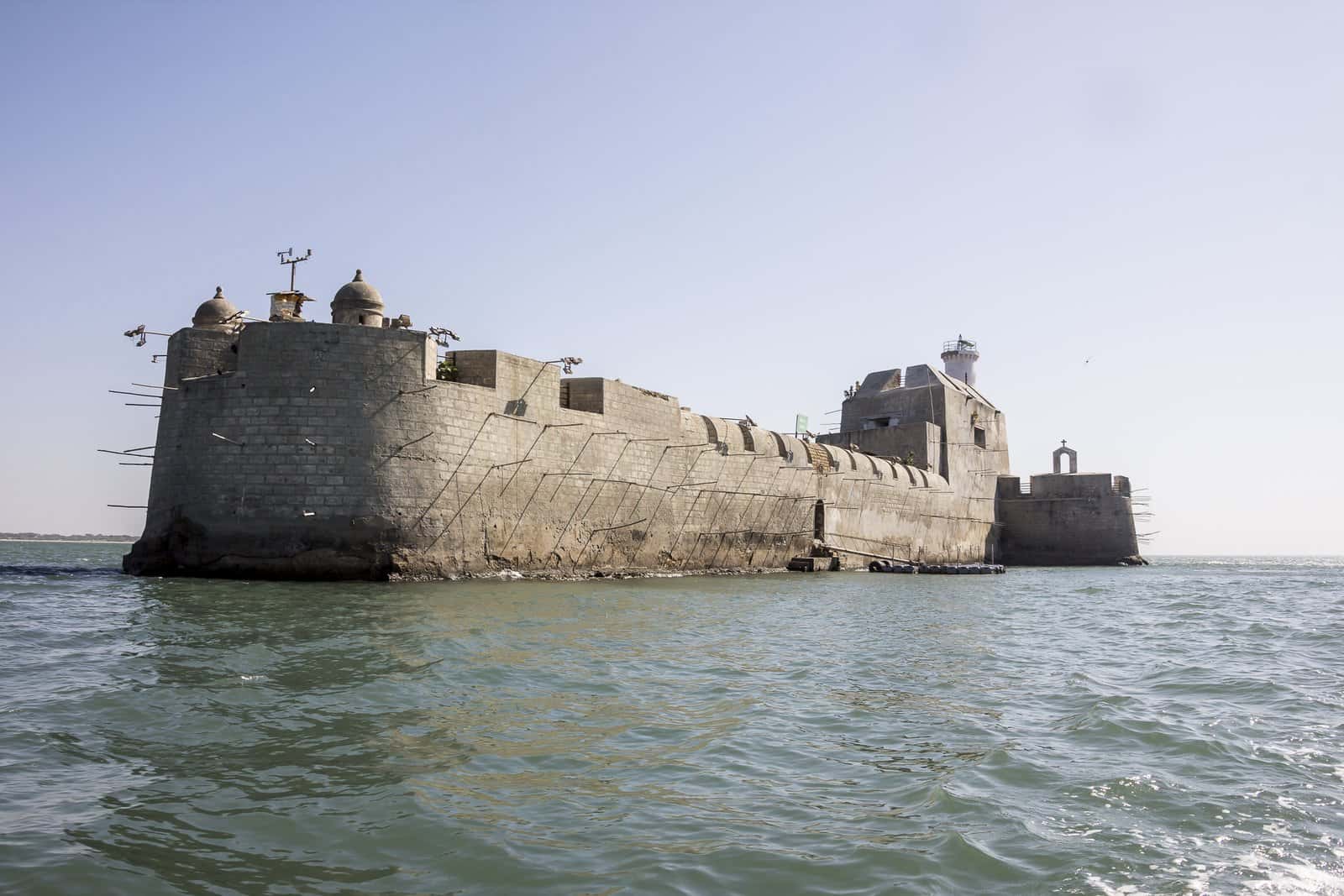
- The Fort of St Jerome (Nani Daman fort)The smaller fort across the river on the north bank, built by the Portuguese in the early 17th century, holding the Church of Our Lady of the Sea, still used for Sunday mass. Entry is free and it is open through the day, best at sunset for the view over the river mouth to Moti Daman.
- The Daman LighthouseStanding near Moti Daman, the lighthouse gives the classic view of both forts and the meeting of the Daman Ganga river and the Arabian Sea. The grounds are free to wander and the area is at its best in the evening; climbing the tower itself is usually restricted.
Daman is split by the Daman Ganga river into two halves that confuse first-timers. Moti Daman, or Big Daman, is the old walled Portuguese quarter on the south bank, quiet, historic and where the main fort and churches sit. Nani Daman, or Little Daman, is the busier commercial and hotel side on the north bank, near the beaches, the market and most of the bars. The two forts face each other across the river mouth, and the lighthouse gives the view of both. Knowing which bank you are on makes the whole town easy to navigate.
Signature experiences in Daman
Beyond the forts, these are the things people remember: the fort walk, the sunset over the river mouth, the seafront promenade and a slow evening. Set your expectations right and Daman is a pleasant, gentle break.
- Walk the ramparts of Moti Daman fortThe single best thing to do in Daman. Stroll the walls past the 10 bastions and the carved cannons, dip into the Bom Jesus cathedral and the other churches, and take in the Arabian Sea view. Give it a slow morning; it is free and it is what actually makes the trip worthwhile.
- Sunset at the river mouth and lighthouseAs the light goes gold, the view from near the lighthouse over both forts and the meeting of river and sea is the loveliest free experience in town. Walk out in the late afternoon, watch the fishing boats come in, and stay for the colour.
- The Devka seafront in the eveningDevka Beach has a promenade, gardens, a musical fountain and food stalls, and it comes alive in the cool of evening with families and street snacks. Come for the stroll and the sunset rather than a swim, and it is a gentle, pleasant way to end a day.
- A stroll along Jampore BeachJampore is wide and lined with casuarina trees, good for a long walk, a sunset and a camel or horse ride, with watersports at the lighthouse end. Read the safety section first: the water is tidal and muddy and not for real swimming, so keep it to the sand.
- Watersports, if the sea is calmSpeedboat, jet-ski, banana-boat and parasailing rides run at Devka and Jampore in season. They are cheap and fun, but they depend on the tide and the weather, so ask about conditions and agree the price before you climb aboard.
- Mirasol Lake Garden and a slow paceMirasol Lake Garden has a small lake, boating and a toy train that families enjoy, and there are quiet colonial lanes to wander in Moti Daman. Daman rewards a slow pace more than a packed schedule, so leave time to simply amble.
If you do only one thing in Daman, make it the Moti Daman fort walk in the morning and the river-mouth sunset in the evening. The forts and the Portuguese churches are the genuine article, four centuries of history you can walk through for free, and the light at either end of the day over the two forts and the sea is what people remember long after the beaches and the bars fade. Set your expectations on the heritage and the sunsets, not on a swimming holiday, and Daman is a quietly rewarding stop.
Where to stay in Daman, and how many nights
Stay in Nani Daman near the beaches and the buzz, or on the quieter Moti Daman side for calm and heritage. One to two nights is the sweet spot.
- Nani Daman and Devka: the busy sideThe north bank near the taxi stand and along Devka has most of the hotels, resorts, restaurants and bars, and is closest to the beaches and watersports. Convenient and lively, but noisier at weekends. Best for first-timers who want everything on the doorstep, and for the beach resorts.
- Moti Daman: the quiet, historic sideThe old walled south bank is calmer, with the fort, the churches and colonial lanes. Fewer hotels and less nightlife, but a gentler base for couples, seniors and anyone who came for the heritage rather than the bars. Easy to reach the beaches by a short auto ride.
- How many nightsOne full day covers Moti Daman fort, the churches, the lighthouse and Nani Daman fort; a second day adds Devka and Jampore beaches, the Mirasol garden and a slow seafront evening. One night is enough for a quick heritage stop, two nights makes a proper relaxed weekend.
- Room budgetsSimple family hotels near the Nani Daman taxi stand have been reported from roughly 1,000 rupees a night off-season, with beach resorts at Devka and Jampore in the mid-range. Weekends and holidays cost more because of the drive-in crowd, so book ahead and expect Friday and Saturday to be dearer.
Because Daman is a wet island beside dry Gujarat, Friday and Saturday nights draw a large weekend crowd from Gujarat and Mumbai, so rooms are pricier and scarcer then and the Nani Daman bar areas get busy. If you want calm and value, come midweek; if your dates fall on a weekend, book well ahead and consider the quieter Moti Daman side.
Daman costs and a realistic daily budget
Daman is easy on the wallet. The forts and churches are free, transport is cheap, and the main costs are your room, food, drinks and watersports.
- The free and near-free thingsThe Fort of Moti Daman, the Bom Jesus cathedral, the other churches, the Fort of St Jerome and the lighthouse grounds are all free to enter, which is unusual and welcome. Devka Beach has had a small entry fee reported of about 5 rupees for adults and 3 rupees for children aged 3 to 12; reconfirm on arrival.
- Getting around is cheapAutorickshaws handle the short hops, with fares reported from about 40 rupees between Moti Daman and the beaches. The town is small, so a day of local running about costs very little, and a two-day visit needs no long transfers.
- Rooms and foodSimple hotels start from roughly 1,000 rupees a night off-season, mid-range beach resorts cost more, and all rise on weekends. Seafood and Portuguese-influenced dishes are a highlight, and because alcohol is cheap here, a meal with a drink costs far less than across the border in Gujarat.
- Watersports and ridesBeach rides and watersports are negotiable and quoted high to visitors, so agree the price and the length before you start. A short camel or horse ride and the boat rides are inexpensive, but settle the number first to avoid any friction.
The sights that matter in Daman, the forts and the churches, are free, so your spending is mostly on your room, food, drinks and any watersports. The single habit that keeps things smooth is to agree every negotiable price, a beach ride, a boat trip, an auto fare out of town, before it begins, since quotes to visitors start high and come down without drama. Book weekends ahead, come midweek if you can, and Daman is one of the cheapest coastal breaks on this stretch of the map.
Practical logistics: getting around, money, food and drink
The small things that make a Daman day smooth, from autos and ATMs to the food, the languages and the cheap, legal alcohol.
- Getting around townDaman is small and split by the river. Autorickshaws are the workhorse, cheap and everywhere, and cover the hops between Moti Daman, Nani Daman and the beaches; fares from about 40 rupees for the short runs. Many visitors also self-drive or hire a car for the day, which makes the two banks and the beaches easy.
- Food and drinkThe food leans coastal and Portuguese-influenced, with good seafood, and this being a union territory, alcohol is legal, widely sold and cheap, unlike neighbouring Gujarat. Enjoy it responsibly and keep clear of the rowdier weekend bar areas if you are travelling with family.
- Money and ATMsThere are bank ATMs in Nani Daman and the main market, and cards and UPI work in bigger hotels and restaurants, but the beach rides, autos and small stalls run on cash, so carry enough for the day.
- Language and connectivityGujarati, Hindi and English are all widely understood, and English is easy in the tourist trade. Mobile coverage in town is generally fine for calls, data and maps, so getting around and staying in touch is straightforward.
Safety, the tidal beaches, and drinking sensibly
Daman is an easy, low-crime town, but the tidal beaches and the weekend drinking scene are the two things to handle with a little care.
- The beaches are not for swimmingThis is the honest, important one. Jampore and Devka are tidal beaches where the water is often muddy or brown and repeatedly described by visitors as not fit for real swimming. Enjoy the sand, the sunset and the rides, but do not treat this as a swimming holiday, and never wade out on a falling or low tide when mudflats and channels appear.
- Drink sensibly, avoid the rowdy sceneAlcohol is cheap and legal here, which is much of the weekend draw, and the Nani Daman bar areas can get loud and rowdy on Friday and Saturday nights, sometimes with groups who have come only to drink. If you want a calm evening, or you are with family, choose weekdays or the quieter Moti Daman side and steer clear of the busiest bar strips late at night.
- General safetyDaman is a small, generally safe town with low serious crime. Take the usual care with your belongings in busy market and beach areas, keep an eye on children near the water and the promenade traffic, and women travellers report it as manageable with normal precautions, though the weekend drinking crowd is a reason many prefer weekdays.
- Heat, water and healthDrink bottled or filtered water, take the usual care with street food, and in the hot months carry sun protection and water for the open forts and beaches. The humidity is high year round, so pace yourself and keep hydrated.
The one real hazard in Daman is the sea, not the town. These are tidal, muddy beaches with a large tidal range, so the water pulls a long way out and the exposed flats can hide soft mud and channels. Stay on the firm sand, do not swim out, keep children close to the shore, and treat the beaches as places for a walk, a ride and a sunset rather than a bathe. Handle the tide sensibly and Daman is a gentle, safe break.
Daman for every kind of traveller, and on access
Daman suits different visitors in different ways. Here is what it offers you, and the one tip that matters for each, including how a senior does it comfortably.
- Families with childrenEasy and inexpensive, with beaches for a play in the sand, camel and horse rides, watersports, the Mirasol garden and its toy train, and a water park nearby. Keep little ones on the firm sand and away from the tide, and choose a weekday to skip the rowdier weekend bar crowd.
- CouplesA quiet, cheap coastal break with colonial atmosphere: the fort ramparts, the churches, the river-mouth sunset and a seafood dinner with a drink. Stay on the calmer Moti Daman side and give it an overnight so you catch both a sunset and a slow morning.
- Senior travellers and on accessibilityVery doable with planning. The fort ramparts and the Devka promenade are largely flat and easy to stroll, autos are cheap for the short hops so you need not walk far, and staying on the quiet Moti Daman side keeps evenings calm. Do the walking in the cool of morning or evening and avoid the busy weekend bar areas.
- History and heritage loversThis is who Daman really rewards. Two Portuguese forts, baroque churches, carved cannons, a Dominican monastery and four centuries of colonial history you can walk through for free. Come for the forts and the churches, read the history first, and the town makes complete sense.
- Weekenders from Gujarat and MumbaiThe classic Daman visitor: an easy drive or Vapi-train hop for a beach-and-seafood break with a legal drink. Book ahead for weekends, when rooms cost more and fill up, and pace the drinking so the trip stays wholesome.
- PhotographersThe fort ramparts and cannons, the two forts across the river mouth from the lighthouse, the baroque church interiors and the fishing boats at sunset are the shots. The golden hour over the river and sea is the standout, so plan around it.
A suggested Daman itinerary
How to shape one or two unhurried days so you get the forts at the right hours and the seafront at its best light.
- Day one, morningStart early at the Fort of Moti Daman while it is cool, walk the ramparts and the bastions, and step into the Bom Jesus cathedral and the other churches. This is the heart of the visit, so give it a slow couple of hours before the day heats up.
- Day one, afternoon and eveningCross to Nani Daman for the Fort of St Jerome and the Church of Our Lady of the Sea, then head to the lighthouse for the late-afternoon view over both forts. End with sunset and a stroll on the Devka seafront and a seafood dinner.
- Day two, if you have itSpend a relaxed morning at Jampore Beach for a walk, a camel ride or watersports if the tide is right, then the Mirasol lake garden or a slow amble through the Moti Daman lanes. A second day turns a quick stop into a proper unwinding weekend.
- The one-day versionIf you only have a day, do Moti Daman fort and its churches in the morning, the lighthouse and Nani Daman fort at midday, and a Devka sunset in the evening. You will see the best of the heritage, though you will miss the slow beach morning.
Daman is small, so many travellers combine it with more of the region. It pairs naturally with its sister island Diu further down the Gujarat coast, with Silvassa and Dadra and Nagar Haveli inland, or with a wider Gujarat trip taking in Surat and beyond. On a Mumbai-coast circuit it slots in as an easy heritage-and-seafood overnight. Plan the forts for the mornings and the seafront for the evenings, and Daman fits neatly into a bigger loop.
The real questions travellers ask about Daman
Straight answers to the questions that come up again and again on traveller forums, so you arrive already knowing the score.
- Is Daman worth visiting?Yes, if you come for the right thing. The Portuguese forts, the baroque churches and the river-mouth sunsets are genuinely worth the trip, and it is a cheap, easy break. It is not worth it if you expect a Goa-style swimming beach, so set your expectations on heritage and calm.
- Can you swim at the beaches?Not really. Jampore and Devka are tidal beaches where the water is often muddy or brown and widely described as not fit for real swimming. Enjoy the sand, the sunset and the rides, but do not plan a bathing holiday, and never wade out on a low tide.
- Is one day enough or should I stay two?One full day covers the forts, the churches and the lighthouse. Two days lets you add the beaches, the Mirasol garden and a slow seafront evening, which turns a quick heritage stop into a relaxed weekend. Two is the comfortable choice if you can spare it.
- Is Daman like Goa, and how does it compare to Diu?Daman shares Goa's Portuguese heritage and cheap drinks but is much smaller, quieter and without the swimming beaches or big party scene. Diu, its sister island further down the coast, has cleaner beaches and a similar fort-and-church charm, so many travellers pair the two.
- How do I get there from Mumbai?Take a fast train to Vapi, about 3 hours from Mumbai, then a taxi or auto the last 12 km, roughly 20 to 30 minutes. By road it is about 170 km up the coast, an easy self-drive that many weekenders do directly.
- Which side should I stay on?Stay in Nani Daman for the beaches, hotels, restaurants and buzz, or the quieter Moti Daman side for heritage and calm evenings. Families and first-timers usually pick Nani Daman; couples and older travellers often prefer Moti Daman.
Planning Daman from abroad
Daman is a little-visited Portuguese-India enclave, an easy heritage stop off the Mumbai coast. A little preparation on what it is, and is not, makes it a rewarding side trip.
- Know what Daman isDaman is a former Portuguese enclave, held for over four centuries until 1961, so it is a place of forts, baroque churches and colonial streets, the quiet counterpoint to Goa. Come for the heritage and the calm, not for a swimming beach, and it is a genuinely interesting, uncrowded corner of India.
- The beaches are tidal, not for swimmingThis is the one expectation to reset. The beaches here are muddy and tidal and not for real bathing. Enjoy them for a walk and a sunset, and if you want a swim on this coast, look to Diu or further afield. Knowing this in advance saves the only common disappointment.
- Pair it with Mumbai and the coastFly into Mumbai, then reach Daman by a fast train to Vapi and the short drive in. It slots neatly onto a Mumbai, Daman, Diu and Gujarat heritage loop, an easy overnight of forts, churches and seafood between the bigger stops.
- Gentle and senior-friendly with planningThe fort ramparts and the seafront promenade are largely flat and easy, autos are cheap for the short hops, and the quiet Moti Daman side keeps evenings calm. For parents and grandparents on a wider India trip, Daman is one of the easier, gentler stops.
The Portuguese-India story, money and timing for foreign visitors
The history that makes Daman make sense, plus the practical basics an overseas traveller needs: cash, a SIM, and how many days to give it on a wider India trip.
- Read the history firstThe Portuguese took Daman in 1559 and held it, with Diu and Goa, for over four centuries until India incorporated it in December 1961. That is why the forts, the baroque churches and the street layout look the way they do. Read this before you go and every monument suddenly has meaning.
- Carry cash, cards for bigger placesCards and UPI work in bigger hotels and restaurants, but autos, beach rides and small stalls are cash places. Draw cash at the Nani Daman and main-market ATMs and keep small notes for the short hops and tips.
- Get a SIM in MumbaiPick up an Indian tourist SIM or an eSIM when you land in Mumbai rather than hunting for one in a small town. Coverage in Daman itself is fine for maps, calls and messaging.
- How long to give itOn a wider India trip, one to two nights in Daman is the right weight: enough for the forts, the churches and a sunset, without slowing the itinerary. October to February is the comfortable window; avoid the June to September monsoon.
Most overseas visitors know Goa as Portuguese India, but Daman is the quieter, almost unvisited version of the same story: the same forts, the same baroque churches, the same four centuries of history, without the crowds or the party scene. If you are interested in the colonial layers of India and want somewhere calm and genuine off the tourist trail, Daman is an unusually rewarding overnight. Give it a day or two between Mumbai and Diu, and it becomes one of the more memorable, uncrowded chapters of a Gujarat-coast trip.
How a Portuguese enclave held out for four centuries
Daman takes its name from the Daman Ganga river that splits it in two, and the Portuguese knew it as Damao. The Portuguese conquered it in 1559, and over the next two decades built the great walled fort of Moti Daman, finished in 1581, with its ten bastions, its carved cannons and, within the walls, the baroque Cathedral of Bom Jesus and a Dominican monastery. Across the river they raised the smaller Fort of St Jerome in Nani Daman, guarding the river mouth where the Daman Ganga meets the Arabian Sea. For more than four hundred years Daman, with Diu and Goa, remained a Portuguese possession ruled from Goa, long after the rest of India had passed to the British and then to independence. Only in December 1961, in the swift military action known as Operation Vijay, was Daman finally incorporated into the Republic of India. That long isolation is why the town still wears its Portuguese face today, in the forts, the churches and the quiet colonial lanes of Moti Daman.
Planning a Daman trip?
Our Daman & Diu * travel experts plan your full journey for you: route, hotels, darshan timings and transport. You get a free day-by-day plan and an exact quote on WhatsApp, usually within a few hours. No payment is needed to get your plan.