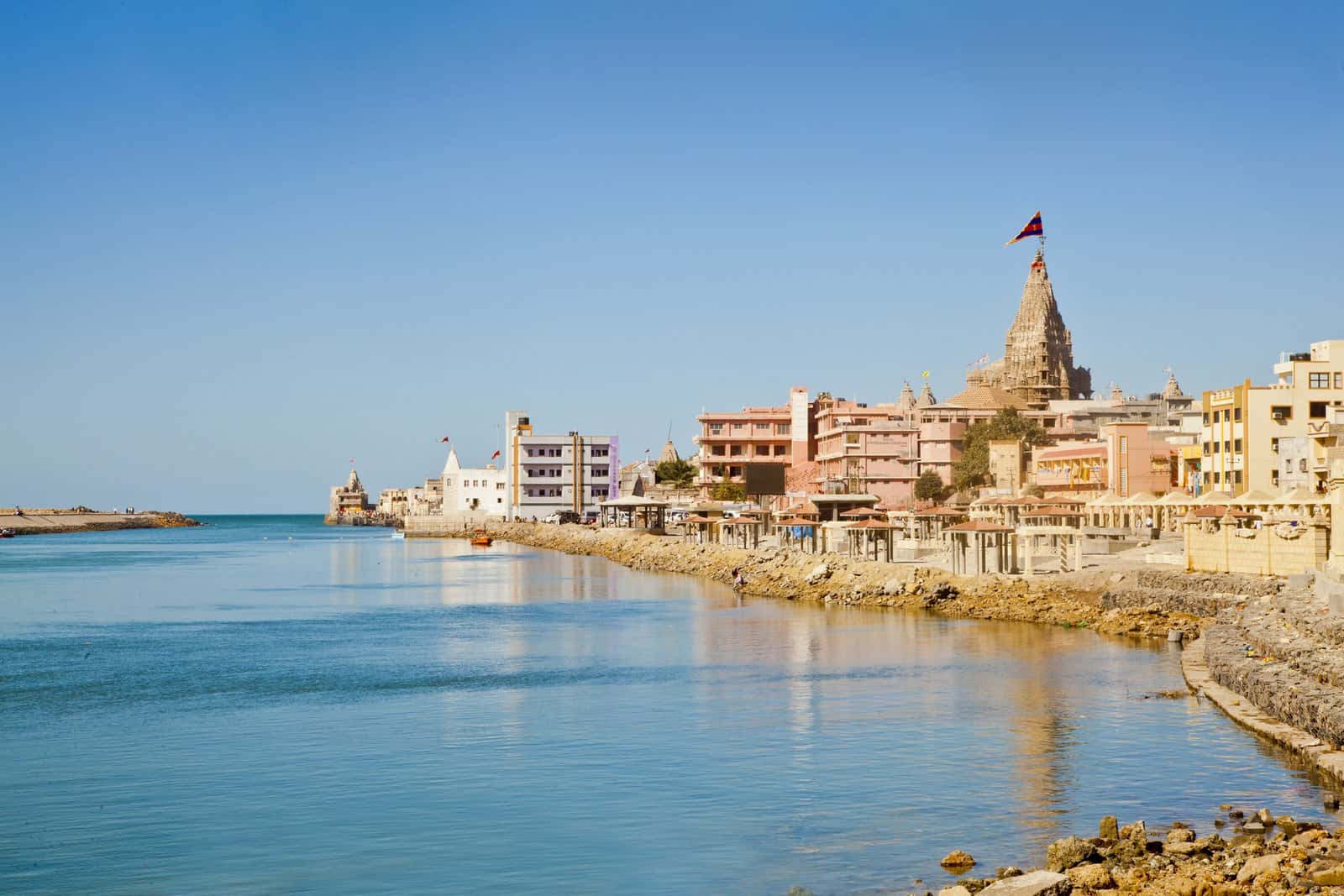
Dwarka Travel Guide
The best months are October to March , when the Saurashtra coast is cool and dry. One thing to fix first: the Dwarkadhish temple closes in the afternoon, so plan darshan for the...
When to visit Dwarka, and the midday temple rule
The best months are October to March, when the Saurashtra coast is cool and dry. One thing to fix first: the Dwarkadhish temple closes in the afternoon, so plan darshan for the morning or the evening.
- November to February: cool and clearThe most comfortable time on the coast, pleasant by day and cool in the early mornings. Ideal for an unhurried morning darshan and an evening aarti, and for the drive out to Nageshwar Jyotirlinga and Bet Dwarka by the new bridge.
- October and March: warm but fineStill good for the pilgrimage circuit, with slightly fewer crowds. By late March the afternoons begin to warm up noticeably on the Arabian Sea coast, so do the open ghats and the Sudama Setu early in the day.
- April to June: hot and humid, best avoidedHigh summer on the Saurashtra coast is hot and sticky, tiring for queueing and for the open Gomti Ghat. If you must come then, keep the middle of the day for rest and tackle the temples at the morning and evening slots.
- Plan around the midday closureThe Dwarkadhish temple opens roughly 6 am to about 1 pm, then closes for Anosar and internal rituals before reopening about 5 pm to 9:30 pm. Come for the morning Mangla aarti around 6 am, or the evening Sandhya aarti around 7 pm to 8 pm, and reconfirm the day's exact timings on dwarkadhish.org, which shift with the season and festivals.
Do not arrive at Dwarkadhish in the early afternoon. The temple is closed roughly 1 pm to 5 pm for rest and internal rituals, which catches many day-trippers out. Janmashtami, Krishna's birthday around August or September, is spectacular but very crowded with full hotels, and Holi and Kartik Purnima are busy too, so for a calm darshan choose an ordinary winter week and reconfirm timings if you travel during a festival.
How to reach Dwarka
Dwarka sits at the far western tip of the Saurashtra peninsula. It has its own railway station and good roads; the airport you choose depends on where you start.
- By train to Dwarka stationDwarka has its own station (DWK) on the Western Railway line between Ahmedabad and Okha, with regular trains and buses from across Gujarat and beyond. For many pilgrims the train is the simplest direct way in, and the station is a short ride from the temple core.
- By air, then roadThere are no regular scheduled flights to Dwarka itself. Per the district administration, the nearest airports are Porbandar (around 95 to 110 km) and Jamnagar (around 110 to 137 km); the newer Rajkot (Hirasar) airport is about 230 to 265 km away. From any of them you continue by car, which we arrange with an experienced driver.
- By road within GujaratDwarka is well linked by good Saurashtra highways. Somnath, the great Jyotirlinga on the coast, is about 230 km away (roughly 4 to 5 hours), which is why the classic circuit pairs Dwarka with Somnath, often via Porbandar; Jamnagar is about 137 km.
- Getting around once you arriveThe temple core is walkable, and auto-rickshaws cover the short hops to Gomti Ghat and the Rukmini temple. For Nageshwar Jyotirlinga and Bet Dwarka, hire a car or auto for a half to full day, typically about 2,000 to 3,500 rupees, agreed before you set off.
Fly into Ahmedabad or Mumbai, then continue by domestic flight to Porbandar, Jamnagar or Rajkot (Hirasar) and drive, or take a train to Dwarka. There are no direct international flights to Dwarka.
Fly into Ahmedabad, well connected from the Gulf, then a short domestic hop to a Saurashtra airport and a drive, or a train onward to Dwarka. We can plan the whole connection for you.
Dwarka is reachable by direct train (DWK station) and by road from across Gujarat. Most pilgrimage trips combine it with Somnath and Nageshwar Jyotirlinga in one circuit.
Dwarkadhish, Nageshwar and the holy sites
Dwarka is the Dwarkadhish temple (the Jagat Mandir), the Nageshwar Jyotirlinga nearby, the Rukmini temple, Gomti Ghat, and the island of Bet Dwarka. Here is how they fit together and the rules that matter.
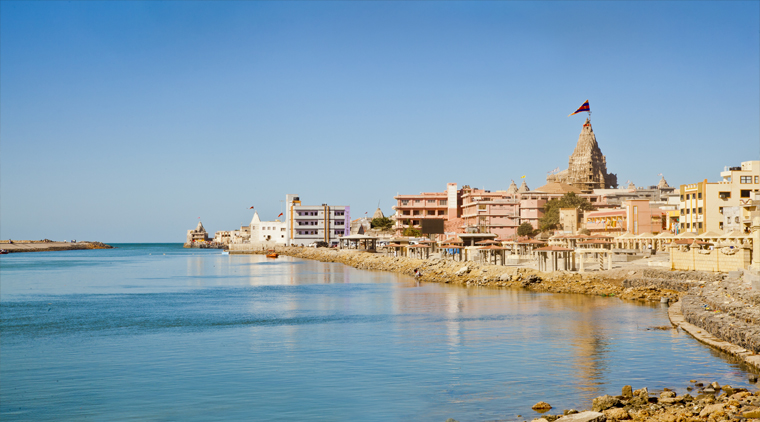
- Dwarkadhish temple (the Jagat Mandir)The heart of Dwarka, dedicated to Lord Krishna as king of the city, with a towering carved spire above the Gomti and the daily flag-changing ceremony at the top. Darshan is roughly 6 am to about 1 pm and about 5 pm to 9:30 pm, closed in the afternoon. Mobiles and cameras are not allowed inside, so use the paid lockers nearby, and keep shoulders and knees covered.
- Nageshwar JyotirlingaOne of the twelve Jyotirlingas of Lord Shiva, marked by a tall Shiva statue you can see from the road, about 15 to 18 km from the main temple (around a 25 to 35 minute drive). It opens roughly 6 am to about 12:30 pm and about 5 pm to 9:30 pm, so it slots neatly into the same morning or evening.
- Rukmini Devi temple and Gomti GhatThe Rukmini temple, dedicated to Krishna's chief consort, sits about 2 km from the main temple and carries its own gentle legend of separation. Below the Dwarkadhish steps, Gomti Ghat is where the Gomti river meets the Arabian Sea; many pilgrims take a holy dip and walk the Sudama Setu footbridge over the creek.
- Bet Dwarka, by the new bridgeThe island linked to Krishna and his friend Sudama, about 30 km north near Okha. Since February 2024 you reach it by driving across the Sudarshan Setu, a cable-stayed signature bridge, rather than only by boat. See the next section for how this changed the trip.
Dwarka is one of the four Char Dham fixed by Adi Shankaracharya (with Badrinath, Puri and Rameshwaram, one for each direction, each with a Matha) and also one of the seven Sapta Puri holy cities, counted among the Moksha Puris. With the Nageshwar Jyotirlinga next door and Somnath, the first Jyotirlinga, a half-day on, a single trip can cover a Char Dham, a Sapta Puri and two Jyotirlingas, which is why so many roots and pilgrimage trips anchor here.
Bet Dwarka and the new Sudarshan Setu bridge
For decades you could only reach Bet Dwarka island by boat from Okha. Since February 2024 the Sudarshan Setu signature bridge connects it by road, which changes how you plan the trip.
- What the bridge isThe Sudarshan Setu, inaugurated on 25 February 2024, is a cable-stayed bridge of about 2.32 km between Okha on the mainland and Bet Dwarka island, described as India's longest cable-stayed bridge. Its footpath carries verses from the Bhagavad Gita and images of Krishna, and is topped with solar panels.
- How you reach Bet Dwarka nowYou can simply drive across the bridge to the island, where boats from the Okha jetty used to be the only way over. There is no toll to use the bridge, with paid parking on the island side; from there you walk or take a local auto to the temple.
- What to do on the islandVisit the Bet Dwarka temple linked to Krishna and Sudama, with its own legend of the friends' reunion, and enjoy the sea views. The crossing itself, with the Gulf of Kutch on both sides, has become a sight in its own right, and many travellers stop on the bridge for the view.
- If you still want the boatBoats from Okha may still run for short joyrides or local trips, but for reaching the temple the bridge is now the simple, all-day option that does not depend on the tide. If anyone presses you onto a boat claiming the bridge is closed, treat it with caution and confirm with your driver or hotel.
Bet Dwarka is about 30 km north of the main town near Okha, an easy half-day add-on. Many pilgrims combine Dwarkadhish in the morning, Nageshwar Jyotirlinga on the way, and Bet Dwarka by the bridge, all in one full day. Tell us if you want it and we will pace the day to the temple timings and the heat.
Signature experiences in Dwarka
Beyond the main darshan, these are the moments people remember, and how to arrange them.
- Morning Mangla aarti at DwarkadhishArrive for the early Mangla aarti around 6 am, before the day's crowds, when the temple is at its most atmospheric. Leave your phone and camera in the lockers and go in unburdened, and watch the flag-changing ceremony at the spire if the timing falls right.
- Evening Sandhya aarti and Gomti GhatReturn for the evening Sandhya aarti around 7 pm to 8 pm, then walk down to Gomti Ghat where the river meets the sea. A quiet dip and the lamps on the water make a memorable close to the day, and the Sudama Setu footbridge nearby gives the classic view back to the spire.
- The Dwarka, Nageshwar and Bet Dwarka loopIn one unhurried day you can see Dwarkadhish, drive to Nageshwar Jyotirlinga, and cross the Sudarshan Setu to Bet Dwarka. Sequence it around the temple timings and you will not feel rushed; start early and keep the hot afternoon for the drive.
- Extend to SomnathThe first Jyotirlinga at Somnath is about 230 km away (roughly 4 to 5 hours), with its famous evening sound-and-light show on the temple wall. The Dwarka to Somnath drive is the classic Gujarat pilgrimage, often broken at Porbandar, the birthplace of Mahatma Gandhi.
- Walk the Sudama SetuThe pedestrian Sudama Setu over the Gomti creek gives lovely views back to the Jagat Mandir spire and out to the sea, a gentle and photogenic short walk near the main temple for a small fee.
If you do only one thing slowly, make it the Mangla aarti at dawn. The temple before the crowds, the conch and the bells, and the cool sea air off the Gomti are what pilgrims remember long after the loop to Nageshwar and Bet Dwarka fades. Stay the night, set an early alarm, and let the first darshan of the day be unhurried.
Where to stay in Dwarka, and how many nights
Stay in the temple core to walk to the morning aarti, or in a quieter mid-range or beach-side hotel for space. Two nights is the sweet spot for the full circuit.
- Temple-core lanes: walk to the aartiThe lanes around Dwarkadhish put you within a short walk of the morning Mangla aarti and the Gomti Ghat, which is the whole point for a pilgrim. Rooms here are simpler and can be noisy, but the convenience of stepping out at dawn is hard to beat.
- Trust guesthouses and dharamshalasPilgrim guesthouses run by temple trusts and community organisations are clean, cheap and central, and a long-standing way to stay in Dwarka. They book out around festivals, so reserve ahead if you travel near Janmashtami.
- Mid-range and beach-side hotelsA handful of mid-range and better hotels sit on the edge of town and toward the coast, with more space and quiet but a short ride to the temple. Good for families and seniors who want comfort over being in the thick of it.
- Room budgets and how many nightsClean budget rooms run from about 800 to 1,800 rupees, mid-range about 2,000 to 4,500 rupees, and the better hotels about 5,000 to 12,000 rupees, all rising sharply around Janmashtami. Two nights is the sweet spot: day one for Dwarkadhish, Gomti Ghat and Rukmini temple, day two for Nageshwar and Bet Dwarka, with a third for Somnath.
Around Janmashtami, Krishna's birthday in August or September, and to a lesser extent at Holi and Kartik Purnima, Dwarka's rooms fill and prices climb. If your dates fall on a festival, book well ahead, and remember the crowds make a calm darshan much harder. For peace, an ordinary winter week is the better choice.
Dwarka costs and a realistic daily budget
Dwarka is gentle on the wallet, and the temples are free. Here is what the main things cost, so you can plan and avoid being overcharged.
- A rough daily budgetExcluding your room and long-distance transport, plan on about 1,000 to 1,800 rupees a day as a budget pilgrim, about 2,500 to 4,000 rupees mid-range, and about 5,000 rupees and up for a comfortable day with a hired car for the Nageshwar and Bet Dwarka loop.
- The free and fixed thingsDarshan at Dwarkadhish, Nageshwar Jyotirlinga and the other temples is free, and there is no paid VIP darshan to buy. The cloakroom lockers for phones and cameras cost about 10 to 30 rupees an item, and the Sudama Setu footbridge charges a small fee. There is no toll on the Sudarshan Setu bridge to Bet Dwarka, only paid parking.
- The negotiable thingsA car or auto for the Nageshwar and Bet Dwarka loop is typically about 2,000 to 3,500 rupees for a half to full day, agreed before you start. Prasad, flowers and souvenirs are quoted high near the temple, so settle the price first and lean on your driver or hotel for fair rates.
- Cash and cardsHotels and bigger shops take cards or UPI, but the temple-lane vendors, autos and small eateries run on cash. There are bank ATMs in town, so carry enough cash for the day, including small notes for the lockers, the footbridge and tips.
Almost everything sacred in Dwarka is free: the darshan, the aarti, the Gomti dip. The only real costs are your room, your food, the car for the Nageshwar and Bet Dwarka loop, and a few small fees for lockers and the footbridge. Anyone charging you for a priority darshan is selling something that does not exist, so the single habit that saves money here is to refuse the VIP-darshan pitch and agree car and shopping prices in advance.
Practical logistics: food, the dry-state rule, money and rules
The small things that make a Dwarka day smooth, from the vegetarian food and the dry-state rule to the temple lockers, money and dress code.
- Vegetarian food, and the dry-state ruleDwarka is a temple town with excellent vegetarian Gujarati food, simple thalis, kathiyawadi dishes and lots of sweets. Gujarat is also a dry (prohibition) state: alcohol is not sold openly, and you should not carry liquor in without a permit (see the overseas section for how a tourist applies).
- Phones, cameras and lockersMobiles and cameras are not allowed inside the Dwarkadhish temple. Use the paid cloakroom lockers nearby, about 10 to 30 rupees an item, rather than risk being turned back at security. The same modest dress code, shoulders and knees covered, applies at all the temples.
- Money, ATMs and connectivityCarry cash for the temple lanes, autos and small eateries, drawn at the town ATMs, while hotels and bigger shops take cards and UPI. Mobile coverage in town is generally fine for calls, maps and data.
- Getting between the sitesThe temple core is walkable; autos cover Gomti Ghat and the Rukmini temple. For Nageshwar Jyotirlinga and Bet Dwarka, take a hired car or auto for the loop and plan it around the midday closure and the heat. Start early and you can do the loop comfortably.
Safety, the VIP-darshan scam, and staying well
Dwarka is a calm, welcoming pilgrimage town, but a few touts and the busy festival crowds are worth knowing about. A little awareness keeps the visit happy.
- There is no paid VIP darshanThe Dwarkadhish temple trust has officially stated there is no paid VIP or priority darshan in Dwarka. Fake apps and websites (a Hari Om app and a Gharmandir app were reported in 2025) and agents at the gate offering quick darshan for a fee are frauds. Queue normally and ignore anyone selling a shortcut.
- Boat and shop touts near OkhaNear Okha and the ghats some touts oversell boat rides or steer you to particular shops for a commission. With the Sudarshan Setu bridge open you rarely need a boat to reach Bet Dwarka, so agree any price first and lean on your driver or hotel.
- Crowds, queues and festivalsAround Janmashtami and other festivals the queues are long and the crowds dense, which is tiring for the elderly and small children. Go very early, keep your group together, and skip the peak festival days if a calm darshan matters more than the spectacle.
- Heat, water and healthDrink bottled or filtered water, take the usual care with street food, and in the warmer months carry sun protection and water for the open Gomti Ghat and the Sudama Setu. The coast is humid, so pace the midday hours and keep the temple visits to the cooler morning and evening.
Dwarka is gentle for seniors with a little planning. The Dwarkadhish temple has steps and the festival queues are long, so do the early-morning slot, use the lockers for phones, and spread Dwarka, Nageshwar and Bet Dwarka over two unhurried days. The new bridge to Bet Dwarka removes the old boat scramble, a real comfort for older legs, and a hired car for the loop saves the walking and the heat.
Dwarka for every kind of traveller, and on access
Dwarka rewards very different visitors in different ways. Here is what it offers you, and the one tip that matters for each, including how a senior visits comfortably.
- Families with childrenAn easy, meaningful pilgrimage with the bonus of the seaside, Gomti Ghat and the dramatic Sudarshan Setu drive to Bet Dwarka, which children love. Carry water and plan around the midday closure so nobody melts down at a locked gate.
- Senior pilgrims and on accessibilityVery doable with gentle pacing. The Dwarkadhish temple has steps, so go early before the crowds, take the morning slot, and spread Dwarka, Nageshwar and Bet Dwarka over two unhurried days rather than one rushed one. The bridge to Bet Dwarka removes the old boat scramble, and a hired car for the loop saves the legs and the heat.
- CouplesA quiet, soulful coastal town away from the usual tourist trail. The evening aarti, a walk on the Sudama Setu and the sunset over the Arabian Sea make for a peaceful, reflective break together.
- Budget and solo travellersReach Dwarka cheaply by direct train to DWK station and stay near the temple within walking distance of the morning aarti. Vegetarian Gujarati thalis are inexpensive and excellent, and there is no paid darshan to worry about.
- PhotographersThe Jagat Mandir spire from the Sudama Setu, the cable-stayed Sudarshan Setu over the Gulf of Kutch, and the sea at Gomti Ghat are the standout frames. Remember cameras are barred inside the main temple, so shoot the exteriors, the ghats and the bridge.
- NRI and overseas familiesDwarka anchors a roots pilgrimage as a Char Dham and a Sapta Puri. Carry your OCI card and passport, sort the liquor permit only if you want a drink, and pace the circuit gently for older relatives. See the two overseas sections below for the full steer.
A suggested Dwarka itinerary
How to shape one to three days so you catch the morning aarti, work around the midday closure, and pace the loop to Nageshwar, Bet Dwarka and on to Somnath.
- Day one: Dwarka townStart with the morning Mangla aarti at Dwarkadhish around 6 am, then a dip at Gomti Ghat and a walk over the Sudama Setu. Rest through the midday closure, visit the Rukmini temple in the late afternoon, and return for the evening Sandhya aarti around 7 pm to 8 pm.
- Day two: Nageshwar and Bet DwarkaDrive out early to Nageshwar Jyotirlinga, about 15 to 18 km away, then continue to Okha and cross the Sudarshan Setu to Bet Dwarka. Back in town for a second evening aarti if you wish. This is the comfortable two-night plan most pilgrims use.
- Day three, if you have it: SomnathDrive on to Somnath, about 230 km and 4 to 5 hours, often via Porbandar, for the first Jyotirlinga and its evening sound-and-light show. This makes the classic Saurashtra pilgrimage of Dwarka, Nageshwar and Somnath in one trip.
- The one-day versionIf you have only a day, do the morning darshan, then the Nageshwar and Bet Dwarka loop, and an evening aarti, but you will miss the calm. Forum travellers are clear that one day is tight; a night in Dwarka makes all the difference.
The single thing that breaks a tight Dwarka plan is arriving at Dwarkadhish during its afternoon closing, roughly 1 pm to 5 pm. Build your day so the temple falls in the morning or the evening, keep the hot middle of the day for the drive to Nageshwar and Bet Dwarka or for rest, and you will never find yourself standing at a shut gate with the clock running.
The real questions travellers ask about Dwarka
Straight answers to the questions that come up again and again on traveller and pilgrim forums, so you arrive already knowing the score.
- How many days do I need, and can I do it in one?Two nights is the comfortable plan: day one for Dwarka town, day two for Nageshwar and Bet Dwarka, a third if you add Somnath. You can compress the temple and Bet Dwarka into a single day, but forum travellers agree it is tight and you lose the calm.
- Is the temple really closed in the afternoon?Yes. Dwarkadhish opens roughly 6 am to about 1 pm, closes about 1 pm to 5 pm for Anosar and internal rituals, and reopens about 5 pm to 9:30 pm. Plan darshan for the morning or evening, and reconfirm the day's timings on dwarkadhish.org.
- Boat or bridge to Bet Dwarka?Since February 2024 you drive across the Sudarshan Setu bridge from Okha, with no toll. Boats may still run for joyrides, but the bridge is the reliable, all-day way to the temple, so do not let a tout convince you the boat is the only option.
- Is there a paid VIP darshan?No. The temple trust has stated there is no paid VIP or priority darshan, and the apps and agents charging for it are frauds. Queue normally and ignore the pitch.
- Can I get a drink, and what about food?Gujarat is a dry state, so no alcohol is sold openly; a tourist can apply for a liquor permit online if they want a drink. The vegetarian Gujarati food is a highlight, so lean into the thalis and sweets.
- How do I get from Dwarka to Somnath?By road, about 230 km and 4 to 5 hours, often via Porbandar. It is the standard second half of a Gujarat pilgrimage, pairing the western Char Dham with the first Jyotirlinga.
Planning Dwarka from abroad
Dwarka is the western seat of Adi Shankaracharya's Char Dham and a Sapta Puri, the natural anchor of a roots pilgrimage. A little planning, and a few documents, make it smoother.
- Why Dwarka anchors a roots pilgrimageDwarka is one of the four Char Dham defined by Adi Shankaracharya and one of the seven Sapta Puri, with the Nageshwar Jyotirlinga a short drive away and Somnath, the first Jyotirlinga, a half-day on. For many overseas Hindu families it is the most meaningful single stop in Gujarat.
- Carry your OCI card and passportIf you hold an OCI (Overseas Citizen of India) card, carry the physical card with the linked passport; you will want photo ID for hotels and travel. There is no compulsory paid VIP darshan at Dwarkadhish, so ignore any agent or app charging for one.
- Know the temple rules before you goMobiles and cameras are not allowed inside Dwarkadhish, so plan to use the lockers, and keep shoulders and knees covered. The temple closes in the afternoon, roughly 1 pm to 5 pm, so build the day around the morning and evening darshan.
- Reach Dwarka through AhmedabadFly into Ahmedabad or Mumbai, then a domestic hop to Porbandar, Jamnagar or Rajkot (Hirasar) and a drive, or a direct train to Dwarka station. There are no direct international flights to Dwarka, so we plan the connection for you.
- Gentle and senior-friendly with planningFor parents and grandparents, do the morning darshan, use lockers for phones, and spread Dwarka, Nageshwar and Bet Dwarka over two days. The new Sudarshan Setu bridge means Bet Dwarka no longer needs a boat. Just remember the midday temple closure.
The Gujarat liquor permit, money and timing for foreign visitors
The practical basics an overseas traveller needs for a temple town in a dry state: the liquor permit, cash and cards, and how many days to give Dwarka on a wider India trip.
- The Gujarat liquor permit, if you want a drinkGujarat is a dry (prohibition) state. If you want alcohol, a foreign tourist or out-of-state visitor can apply online through the state home department e-permit portal (eps.gpeonline.co.in), generally within about 4 days of arriving; the visitor permit is usually valid about 7 days and extendable, for a small or nominal fee. Never carry liquor into the state without a permit, as penalties are real.
- Carry cash, expect small feesCards and UPI work in hotels and bigger shops, but the temple lanes, autos and small eateries are cash places. Draw cash at the town ATMs and keep small notes for the lockers (about 10 to 30 rupees), the Sudama Setu footbridge and tips.
- Get a SIM at the airportPick up an Indian tourist SIM or an eSIM when you land in Ahmedabad or Mumbai rather than hunting for one in a small temple town. Coverage in Dwarka itself is fine for maps, calls and getting around.
- How long to give DwarkaOn a Gujarat or Saurashtra trip, two nights in Dwarka is the right weight: day one for the town and the aarti, day two for Nageshwar and Bet Dwarka, with a third day if you continue to Somnath. October to March is the comfortable window; avoid the April to June heat and the Janmashtami crush unless the festival is the point.
Dwarka is an unusually meaningful introduction to Gujarat for an overseas family: a Char Dham, a Sapta Puri and a Moksha Puri in one small, walkable coastal town, with a Jyotirlinga next door. Slot it with Somnath, give it two nights, sort the OCI card and (only if you want a drink) the liquor permit in advance, and let the dawn aarti be the heart of the trip. Many returning families say Dwarka is the stop that stays with them.
Why Dwarka is called the gateway, and the city beneath the sea
Dwarka means the gateway, from dwar, a door, and in tradition it is read as the gateway to moksha, salvation, which is why the town is counted among the Moksha Puris and the four Char Dham of Adi Shankaracharya. The story goes that Lord Krishna, leaving Mathura, raised a golden city on this far western shore and ruled it as Dwarkadhish, the lord of Dwarka. When Krishna departed the earth, the legend says, the sea reclaimed his city, and the present coastal town stands where pilgrims have come for centuries to be near it. Indian marine archaeologists have carried out underwater surveys in the waters off Dwarka, and the question of what lies beneath remains a matter of ongoing study rather than settled fact. What is certain is the living devotion of the Jagat Mandir above the Gomti, where the flag at the spire is changed by hand several times a day and the conch still calls the faithful to the dawn aarti.
Planning a Dwarka trip?
Our Gujarat travel experts plan your full journey for you: route, hotels, darshan timings and transport. You get a free day-by-day plan and an exact quote on WhatsApp, usually within a few hours. No payment is needed to get your plan.
Tour packages that visit Dwarka
Every journey below is private, hand-crafted and fully customizable. Tell us your dates and we tailor the itinerary, the pace and the priests or guides around you.
 18D / 17N5.0
12 Jyotirlinga Tour Package
- Darshan of Somnath Jyotirlinga
- Mallikarjuna Jyotirlinga with Bhramaramba Shaktipeeth
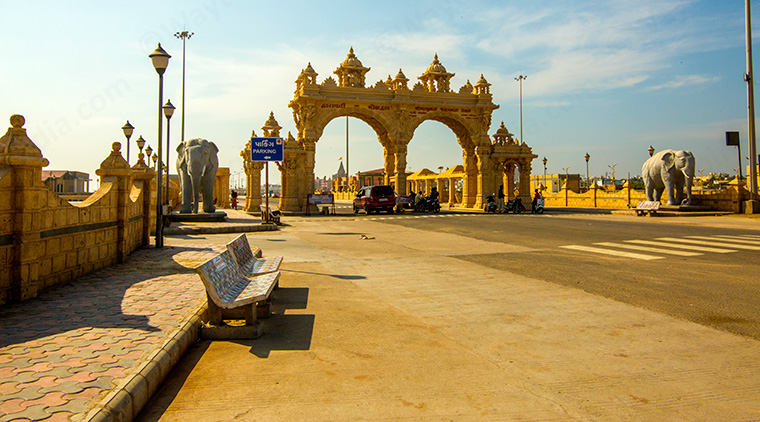 5D / 4N
Dwarka Somnath Package From Delhi
- Visit Lakhota lake and museum at Jamnagar.
- Visit Somanth and Nageshwar Jyotirlinga.
Nageshwar Somnath Jyotirlinga Tour Package
- Visit Sabarmati Ashram
- Visit Lakhota Palace
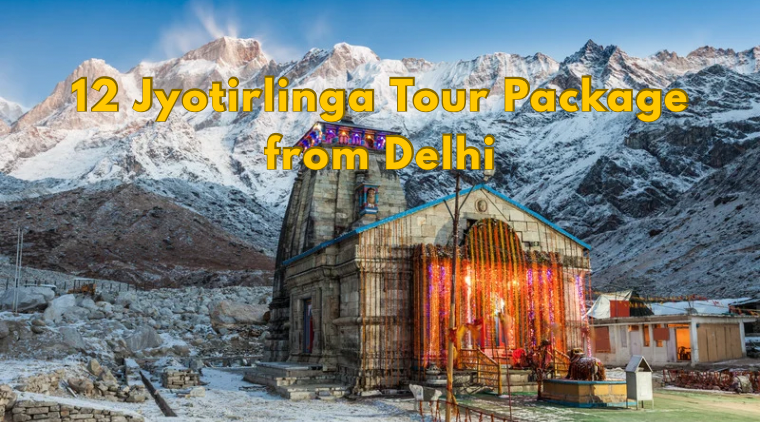 19D / 18N
12 Jyotirlinga Tour Package from Delhi
- All Jyotirlinga darshans
- Ganga Aarti experiences
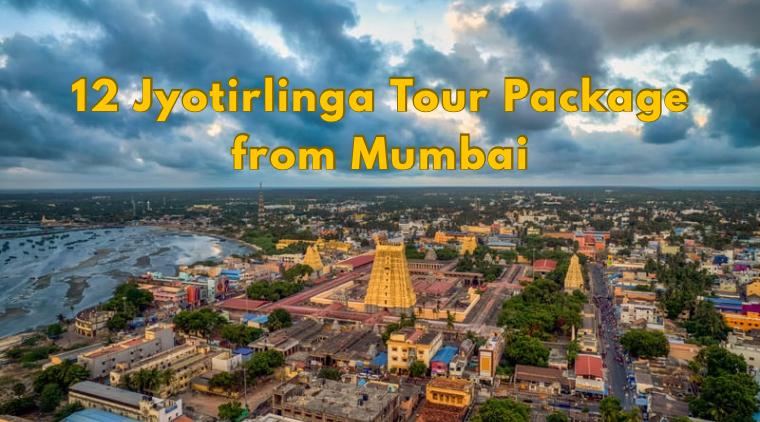 18D / 17N
12 Jyotirlinga Tour Package from Mumbai
- Transparent and Customizable Pricing
- Smart, Time-Saving Logistics
Char Dham Yatra In India
- Puri
- Dwarka
 8D / 7N
Best of Gujarat Tour Package
- Visit Enjoy sightseeing at Ahmedabad.
- Visit Sasangir, the land of Asiatic Lions.
 6D / 5N
Gujarat Holiday Packages
- Visit Somnath and Nageshwar Jyotirlinga.
- Visit Dwarkadheesh Temple and Bhet Dwarka.