Saputara Travel Guide
Saputara turns the usual hill-station rule on its head: the monsoon (about July to September) is the peak and festival season, while winter (about October to February) is the...
When to visit Saputara, and why monsoon is the peak
Saputara turns the usual hill-station rule on its head: the monsoon (about July to September) is the peak and festival season, while winter (about October to February) is the cool, clear, comfortable window. Decide which experience you want before you book.
- Monsoon, about July to September: the signature seasonThis is when Saputara is at its best and busiest. The Sahyadri hills turn deep green, the waterfalls run full, mist drifts over the lake, and Gujarat Tourism stages the month-long Monsoon Festival around Saputara Lake. Expect rain, crowds on weekends and a slow, slippery ghat road, and expect it to be worth it.
- Winter, about October to February: cool and clearThe other peak. Comfortable days, cool nights and clear views from the sunrise and sunset points, with the biggest footfall around December and January. Carry a light layer for the evenings. This is the calmer, drier alternative to the monsoon spectacle.
- Summer, about March to June: the time to skipWarmer and the least rewarding window, though still cooler than the Gujarat plains below. The waterfalls are low and the greenery has faded. If you come now, use it as a quiet escape from the heat rather than for the classic Saputara scenery.
- Festival or calm, decide firstThe Monsoon Festival is a wonderful spectacle but the town is crowded and rooms are dear and scarce, while a winter weekday is gentle and uncluttered. Both are lovely in different ways, so choose the experience you want before you book flights or rooms.
The Saputara Monsoon Festival is an annual Gujarat Tourism event held around the lake, and in 2025 it ran from 26 July 2025 to 17 August 2025. As of mid-2026 the 2026 dates were not yet published on the official page, so treat late July to mid-August as expected, not confirmed, and reconfirm the current dates on gujarattourism.com before you book. Beware pages that quote a fixed festival date as fact, because old dates are copied across the web every year.
How to reach Saputara
Saputara has no airport or railway of its own. Most visitors drive in from Surat, Mumbai or Nashik, or take a train to Bilimora and continue by road over the hills.
- By road, the usual way inPer Gujarat Tourism, Saputara is about 164 km from Surat, about 250 km from Mumbai, about 309 km from Vadodara and about 409 km from Ahmedabad. Nashik in Maharashtra is the nearest large city at roughly 80 km. State transport buses and private coaches run from Waghai and the bigger cities, and a hired car is the most comfortable option.
- By train, via Bilimora or WaghaiThe nearest railway station is Waghai, about 51 km away, on the historic Bilimora to Waghai narrow gauge line. For most travellers coming from Surat, Ahmedabad or Mumbai, Bilimora is the more convenient railhead, with bus and taxi links onward to Saputara. There is no train into Saputara itself.
- By airGujarat Tourism lists Vadodara, about 309 km away, as the nearest airport. Surat airport at roughly 164 km is closer for many and worth checking, though it has fewer flights, and Mumbai is the reliable big-airport gateway for wide domestic and international connections. There are no flights into Saputara.
- The scenic versus the quick routeGujarat Tourism notes that the national highway is quicker but the state highway offers a stunningly scenic drive up through the Dang forests. In heavy monsoon rain the final ghat climb can be slow and slippery, so allow extra time on your arrival and departure days.
Fly into Mumbai, the nearest major international gateway, then drive up to Saputara, about 250 km, or break the journey with a night in Surat or Nashik. Saputara has no international flights of its own.
Fly into Mumbai or Surat, then continue by road. Saputara sits naturally on a south Gujarat and Nashik loop, an easy add-on to a wider western India trip.
Take a train to Bilimora and continue by bus or taxi over the hills, or simply drive from Surat, Mumbai or Nashik. The Waghai narrow gauge line is a charming last leg for railway enthusiasts.
The lake, the viewpoints and the ropeway
Saputara is its lake, a ring of hilltop viewpoints for sunrise and sunset, and the short ropeway up to the Governor's Hill. Most of it is free or costs only a few rupees.
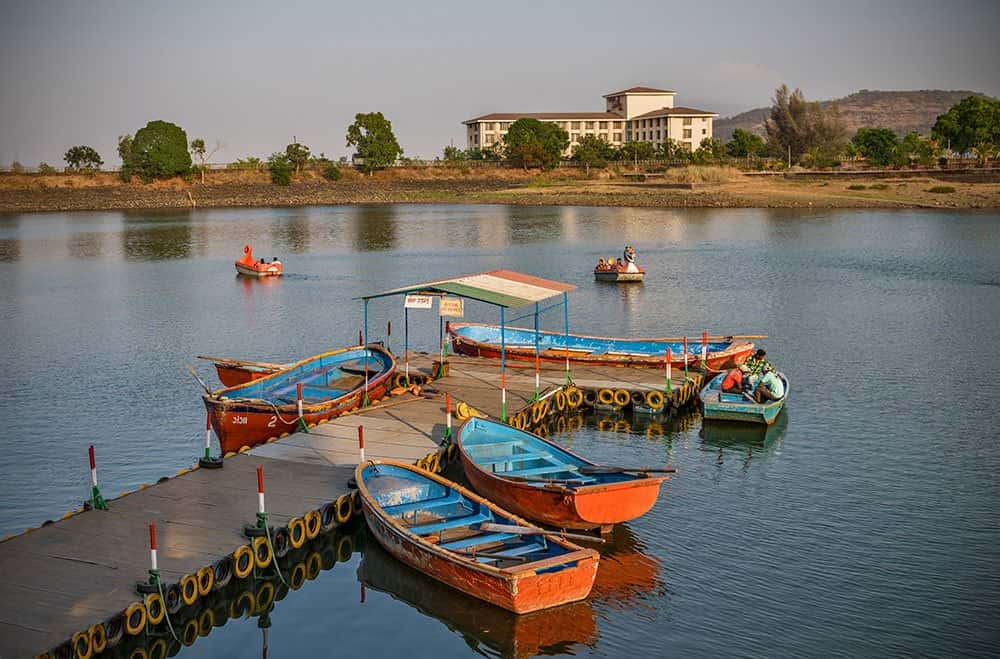
- Saputara LakeThe heart of the town, a calm hill lake ringed by gardens where the Monsoon Festival is staged. It is the focus of an evening stroll, the boat house and the lakeside gardens, and the natural place to base a first visit. Lovely in soft light and mist during the rains.
- Sunrise Point and Sunset PointThe two classic viewpoints over the valleys and the Sahyadri ridges. Sunrise Point, sometimes called Valley View, charges only a nominal few rupees; the sunset viewpoint area near Governor's Hill is reached by road or the ropeway. Go early for sunrise and allow the mist to lift.
- The ropeway to Governor's HillA short aerial ride up to the Governor's Hill and sunset viewpoint, more a quick lift than a long cable car. It saves the climb and is the easy way up for seniors and families. See the costs section for the fare picture, and expect it to run in day and evening sessions when enough passengers gather.
- Table Point, Echo Point and the gardensTable Point (Table Land) is a flat hilltop for a walk and rides, Echo Point does what its name promises, and the Step Garden, Rose Garden and Lake Garden are gentle, mostly free strolls near the lake. Together they fill an easy half day of pottering.
Saputara is Gujarat's only hill station, in the Dang district of south Gujarat, close to the Maharashtra border near Nashik. Some blog and listing pages wrongly place it in Maharashtra; the Maharashtra line and Hatgadh Fort are only a few kilometres away, which is where the confusion comes from, but the town, the rules and the gateways are firmly Gujarat's.
Signature experiences in Saputara
Beyond the viewpoints, these are the experiences people remember, from boating on the lake to chasing the monsoon waterfalls, and how to arrange them without the tourist-trap version.
- Boating on Saputara LakeThe town's central activity: paddle boats, row boats and motor boats from the lakeside boat house, best in the cool of the late afternoon. Reported rates run roughly 25 to 210 rupees depending on the boat and duration, but published prices vary, so check the board at the boat house before you step in.
- The monsoon waterfalls, Gira Falls above allGira Falls near Waghai, about 49 km away, is a broad curtain of water at its spectacular best in and just after the monsoon, roughly July into October, and a trickle in the dry months. There is no reported entry fee, only local parking, and a short walk to the viewpoint. Time it to the rains and it is the highlight of the trip.
- Sunrise and the ropeway at either end of the dayCatch sunrise from Sunrise Point when the mist lifts off the valleys, and take the ropeway or drive up to the Governor's Hill for sunset. Both are gentle, both are cheap, and both are what people remember longer than the rides and the bazaar.
- Adventure add-ons and the festival programmeIn season, and especially during the Monsoon Festival, you may find paragliding, zip-lining, zorbing, horse and camel rides at Table Point and craft workshops around the lake. These are seasonal and weather-dependent, so ask locally about what is running and agree the price before you commit.
- A slow lakeside eveningThe loveliest free thing in Saputara is simply the lake at dusk: a walk around the water, the gardens, and the hills going dark. During the festival the lakeside comes alive with folk performances and food stalls. Give yourself an unhurried evening here and the town opens up.
If you do only one thing slowly, chase the monsoon. The full-flow waterfalls, the green hills and the mist over the lake are why Saputara exists as a hill station, and they only come together in and just after the rains, roughly July into October. Give the falls and a lakeside evening an unhurried day, and Saputara rewards you in a way a dry-season dash never will.
The Dang tribal culture, the museum and Artist Village
Saputara sits in the Dang, one of Gujarat's most heavily tribal districts, and its Adivasi culture is the real character of the place. This is the part almost every other page reduces to a single line.
- Who the Dang people areThe Dang district is home to Adivasi communities including the Bhil, Gamit, Kunbi and Warli, whose villages, farming and forest life shape the whole region. Their festivals, music and dance, seen at their liveliest during Holi and the Monsoon Festival, are the beating heart of Saputara, not a sideshow to the viewpoints.
- The Saputara Tribal MuseumA small, worthwhile museum of Dang material culture, tools, costume, ornaments, instruments and daily life. Reported entry is about 5 rupees for Indian visitors and about 50 rupees for foreign visitors, with hours in the region of 10 am to 5 pm. State museums often close one day a week, so reconfirm the current day and hours before a special trip.
- Artist Village and Warli artThe artists' village near town is where you can see tribal and Warli-style craft being made and buy directly from the makers. Warli painting, the white-on-earth folk art of this belt, is the souvenir to take home, and buying at the source keeps the money with the community.
- The folk dances to watch forDuring the Monsoon Festival, Gujarat Tourism brings hundreds of folk artists to the lakeside, with Dangi folk dance alongside troupes from across India. Even outside the festival, ask your hotel about any village performance or Holi-time celebration, which is when the Dang culture is most alive.
Where to stay in Saputara, and how many nights
Stay near the lake to be in the middle of the walking, the boating and the festival, or take a hilltop resort for the views and the space. One to two nights is the sweet spot.
- Near the lake: in the thick of itThe lakeside and town core keep you within walking distance of the boat house, the gardens and the festival, which matters most in the monsoon when you would rather not drive far. Best for first-timers, seniors and families who want to step straight into the scene.
- Hilltop resorts: views and spaceResorts on the higher ground, including Gujarat Tourism's own Toran Hill Resort, trade a short drive into town for valley views, gardens and quiet. Better for couples and anyone who wants to slow down, and the natural choice if you are self-driving.
- How many nightsOne full day and night covers the lake, a viewpoint or two, the ropeway and the tribal museum. Add a second night to reach Gira Falls, the gardens and a slower pace, which is what turns a tick-the-box stop into a proper break. Half a day only scratches the surface.
- Room budgetsBudget rooms run roughly 700 to 1,500 rupees, mid-range about 2,000 to 4,000 rupees, and premium resorts about 5,000 rupees and up per night. Rates rise on peak monsoon and winter weekends and during the festival, so book well ahead for those dates. Gujarat Tourism's Toran property is bookable on booking.gujarattourism.com.
During the Monsoon Festival and on the busiest winter weekends, rooms are scarce and sold well in advance at higher prices. If your dates fall on the festival or a long weekend, book early, or be ready to stay a little further out and drive in for the day.
Saputara costs and a realistic daily budget
Saputara is gentle on the wallet: most viewpoints are free or a few rupees, and the ropeway and boating are cheap. Here is the honest fare picture, so you can plan and avoid being overcharged.
- A rough daily budgetExcluding your room and the long drive in, plan on roughly 1,500 to 2,500 rupees per person for a comfortable day, because most attractions are free or nominal and the main costs are food, a guided activity and local transport. A tighter day is very doable, since the lake, the viewpoints and the gardens cost little or nothing.
- The ropeway and boating fares, honestlyOnline prices disagree, so treat these as indicative and confirm at the counter. The ropeway is reported across a wide band of about 50 to 110 rupees per person, with figures such as 50, 71, 77 and 80 rupees quoted on different pages, and lake boating runs roughly 25 to 210 rupees depending on the boat and duration. Gujarat Tourism does not publish these figures, which is why so many pages quote different numbers.
- The small entry feesThe tribal museum reports about 5 rupees for Indian visitors and about 50 rupees for foreign visitors, and small charges of only a few rupees apply at a couple of the viewpoints and gardens. These are the kind of nominal fees that change slowly, but reconfirm at the gate.
- Cash is king, carry enoughATMs in Saputara are limited and can run dry, and many small vendors, ride operators and the boat house prefer cash. Draw what you need before you come up the hill, keep small notes for rides and tips, and do not rely on finding a working machine in town.
Gujarat Tourism publishes Saputara's distances and festival dates but not its ropeway or boating prices, and the private and local operators change them without notice, so travel pages copy old and contradictory figures. We give you a hedged range and tell you to confirm at the counter rather than a single number that is likely wrong. The good news is that everything here is cheap, so the fare is rarely the thing that decides your day.
Practical logistics: the dry-state rule, cash, transport and food
The small things that make a Saputara day smooth, from Gujarat's alcohol prohibition and the tourist permit to cash, getting around and what to eat.
- Gujarat is a dry stateAlcohol is not sold openly anywhere in Gujarat, including Saputara. A visitor from outside the state or from abroad who is at least about 21 can obtain a temporary tourist liquor permit through the official prohibition and excise e-permit portal at eps.gujarat.gov.in, which Gujarat Tourism links as Liquor Permit. Apply through the official portal, not through touts.
- Getting around townSaputara is compact but spread over hills, so a car or a hired taxi is the easiest way to link the viewpoints, and the ropeway covers the climb to Governor's Hill. There is no dense auto-rickshaw network, so arrange a taxi through your hotel for the day if you have not driven up.
- Money and ATMsCarry cash. ATMs are limited and can be empty, and the boat house, ride operators and small eateries often take only cash. Draw what you need in Surat, Nashik or before the ghat climb, and keep small notes handy.
- Food, language and the plains-veg defaultThe food is largely Gujarati vegetarian, hearty and good, with local Dang dishes such as bajri rotlo and bhakri worth trying. Gujarati, Hindi and English are all widely understood in the tourist trade, so communicating is easy.
Safety, the monsoon roads, and staying well
Saputara is a gentle, low-hassle place with little of the tout pressure of the big pilgrim towns. The real cautions are the monsoon roads, the waterfalls in spate, and ordinary hill-station care.
- The ghat road in the rainThe climb into Saputara is a winding ghat road that turns slow and slippery in heavy monsoon rain, with occasional landslip and poor visibility in mist. Drive gently, avoid night driving on the ghat, allow extra time on arrival and departure days, and check conditions locally before setting off in a downpour.
- Waterfalls and slippery rocksThe monsoon falls are beautiful and can be dangerous. Rocks near Gira Falls and the streams are slippery and water levels rise fast, so keep well back from the edge, do not wade or swim in fast water, and keep a close eye on children near any waterfall or the lake.
- Weather, leeches and the usual careCarry a light rain layer and grippy footwear in the monsoon, and a warm layer for cool winter nights. Leeches can turn up on wet forest walks, so long socks and a little salt help. Take the usual care with water and street food, and carry any personal medication, as pharmacies here are basic.
- A low-hassle, family-friendly townSaputara has little of the aggressive touting of the big tourist and pilgrim centres, and it is generally relaxed and safe for families and solo travellers with standard precautions. Agree any activity price before you start, and prefer daylight for the drives and the waterfalls.
The single thing that catches visitors out is the ghat road in heavy rain: a drive that is a couple of hours in the dry can take much longer in a downpour, with slow traffic, mist and slippery bends. Start early, keep the driving to daylight, and build a buffer into your arrival and departure so a wet ghat does not cost you a flight or a train.
Saputara for every kind of traveller, and on access
Saputara suits families, couples, seniors and weekenders in different ways. Here is what it offers you, and the one tip that matters for each, including how a senior visits comfortably.
- Families with childrenOne of Saputara's strongest suits: boating, the ropeway, Table Point rides, gardens and easy walks, all close together and cheap. Keep children well back from the waterfalls and the lake edge, and visit the festival grounds early in the day when it is less crowded.
- Couples and honeymoonersGreen, misty and calm, especially in the monsoon: lakeside evenings, sunrise from the viewpoints and a quiet hilltop resort. An overnight rather than a day trip lets you catch both sunrise and sunset and slow right down.
- Senior travellers and on accessibilityVery doable with planning. Stay near the lake to limit walking, use the ropeway rather than any steep climb to Governor's Hill, keep the viewpoints that need a trek for a fitter day, and avoid the ghat road in heavy rain. Move at an easy pace and Saputara is one of the gentler hill stations to enjoy.
- Weekenders from Mumbai, Surat and NashikThe classic use of Saputara is a two-night weekend escape from the western cities, closest of all from Nashik at roughly 80 km. Leave early to beat the ghat traffic, book ahead for peak weekends, and you have a clean green break within an easy drive.
- PhotographersMonsoon is the season: mist over the lake, full waterfalls and deep green ridges, plus folk performers during the festival. Protect your gear from the rain, shoot the viewpoints at first light before the cloud closes in, and ask before photographing tribal performers.
- Backpackers and budget travellersCheap once you are here, with nominal entry fees and cheap boating, though it is quieter and less of a traveller-scene than the big hill stations. Reach it by bus via Waghai or by train to Bilimora, and lean on the free viewpoints and gardens.
A suggested Saputara itinerary
How to shape one or two unhurried days so you catch the lake, the viewpoints at the right light, and the monsoon waterfalls if you have a second day.
- Day one, morningStart early at Sunrise Point while the mist lifts off the valleys, then come down for boating on Saputara Lake and a wander through the lakeside gardens before the day warms and the weekend crowds build.
- Day one, afternoon and eveningVisit the Saputara Tribal Museum and Artist Village, then take the ropeway up to Governor's Hill for sunset or settle by the lake. In festival season, spend the evening at the lakeside programme of folk performances and food stalls.
- Day two, if you have itDrive out to Gira Falls near Waghai, at their best in and just after the monsoon, and pair it with Table Point, Echo Point or a nearby viewpoint on the way back. A second night is what lets you reach the falls without rushing the town.
- The half-day versionPassing through, you can see the lake, one viewpoint and a quick boat ride in two or three hours, though you will miss the waterfalls and the light at either end of the day, which are the best of Saputara.
Saputara rewards an early start and a slow evening: the viewpoints are clearest at first light before the monsoon cloud closes in, and the lake is loveliest at dusk. Keep the middle of a wet day for the museum, a cafe or a rest, and plan any waterfall trip for a morning so a downpour or a slow ghat road does not strand you after dark.
The real questions travellers ask about Saputara
Straight answers to the questions that come up again and again on traveller forums, so you arrive already knowing the score.
- Is Saputara worth it, or overrated next to Mount Abu and Mahabaleshwar?Saputara is smaller and quieter than Mount Abu or Mahabaleshwar, and honest travellers do call it low-key. Come in the monsoon for the green, the waterfalls and the festival, or in winter for clear cool weather, and it rewards you. Come in dry, hot summer expecting a big hill station and you may be underwhelmed.
- Is one day enough or should I stay two nights?One full day and night covers the lake, a viewpoint, the ropeway and the tribal museum. Stay two nights if you want to reach Gira Falls, the gardens and a slower pace, which is the difference between ticking Saputara off and actually enjoying it.
- Monsoon or winter?Monsoon, about July to September, is the signature season for green hills, full waterfalls and the festival, with rain and crowds as the trade-off. Winter, about October to February, is cool, clear and comfortable. Pick monsoon for the spectacle and winter for the calm.
- Can I get alcohol, or is it a dry area?Gujarat is a dry state, so alcohol is not sold openly in Saputara. A visitor from outside the state or from abroad can apply for a temporary tourist liquor permit through the official e-permit portal at eps.gujarat.gov.in. Do not plan on buying a drink over the counter without one.
- How do I reach Saputara from Mumbai, Surat or Ahmedabad?By road it is about 250 km from Mumbai, about 164 km from Surat and about 409 km from Ahmedabad, per Gujarat Tourism, with Nashik the nearest big city at roughly 80 km. By train, go to Bilimora and continue by road, or take the Waghai narrow gauge for the last leg.
- How is the ghat road, especially in the monsoon?It is a winding ghat that is fine in the dry but slow and slippery in heavy rain, with mist and the odd landslip. Drive in daylight, go gently, and allow extra time on your arrival and departure days so a wet ghat does not cost you a connection.
Planning Saputara from abroad
Saputara is a gentle, green, monsoon-lush counterpoint to Gujarat's deserts and cities, and it pairs naturally with a Mumbai or south Gujarat trip. A little preparation makes the dry-state rule and the small-town practicalities easy.
- Know that Gujarat is a dry stateAlcohol is not sold openly anywhere in Gujarat. As a foreign visitor or an NRI from outside the state, you can apply for a temporary tourist liquor permit through the official e-permit portal at eps.gujarat.gov.in, which Gujarat Tourism links as Liquor Permit. It is a straightforward official process, not a black-market one, so use the portal and carry the permit.
- Carry cash, expect limited ATMsSaputara is a small hill town with few and sometimes empty ATMs, and cash is preferred for boating, rides and small eateries. Draw enough in Mumbai, Surat or Nashik before you come up, and keep small notes. Cards work at the bigger hotels but not much beyond them.
- Fit it to a wider tripFly into Mumbai, the nearest big international gateway at about 250 km, and add Saputara to a south Gujarat or Nashik loop. It is the green, calm, tribal-culture chapter between the cities and the coast, and one or two nights is the right weight on a bigger India itinerary.
- Come in the monsoon if you canFor an overseas visitor, Saputara at its best is a revelation: mist, full waterfalls and a festival that most foreign travellers never hear about. It is greener and gentler than the classic Rajasthan and Gujarat images, and if your dates allow the July to September window, it is worth timing for.
The liquor permit, money and timing for foreign visitors
The practical basics an overseas traveller needs for a dry-state hill town: the tourist liquor permit, cash, connectivity and how many days to give it on a wider India trip.
- The tourist liquor permit, step by stepGujarat's prohibition allows a visitor from outside the state, including foreign tourists, who is at least about 21, to hold a temporary liquor permit. Apply through the official e-permit portal at eps.gujarat.gov.in, the same link Gujarat Tourism carries as Liquor Permit. Terms, limits and validity are set by the excise department, so read the current rules on the portal rather than relying on a blog.
- Money and cardsDraw cash before you reach Saputara, because ATMs in the hills are limited and small vendors run on cash. Cards and UPI work at the larger hotels and in the cities you pass through, but treat the hill town itself as a cash place.
- SIM and connectivityPick up an Indian tourist SIM or an eSIM when you land in Mumbai rather than hunting for one in a small town. Mobile coverage in Saputara is generally fine for maps and calls, though it can be patchy on the forest drives and at the remoter waterfalls.
- How long to give itOne to two nights is the right weight on a bigger India trip: enough for the lake, the viewpoints, the tribal museum and, with a second day, Gira Falls, without slowing the whole itinerary. Come in the monsoon for the spectacle and in winter for the clear, comfortable weather.
Saputara is an unusually gentle, green corner of India for a first visit: a small, low-hassle hill town with little of the touting of the big centres, a real tribal culture, and its finest face in the monsoon that few foreign travellers ever plan for. Slot it after Mumbai or into a south Gujarat loop, give it a night or two, and let it be the calm, misty chapter of the trip. The one thing to sort in advance is the liquor permit, and the one habit to keep is carrying cash.
Why it is called the Abode of Serpents
Saputara means the Abode of Serpents in Gujarati, and Gujarat Tourism traces the name to the winding Sarpanganga river that coils through the hills below the town like a snake. The Dang district's Adivasi communities have long held serpents sacred, and to this day snake worship features in the local Holi celebrations, when villagers gather to honour the serpent deity by the river. The wider Dang carries echoes of the Ramayana too, with local tradition linking these forests to the years of Rama's exile and to Shabari, the tribal devotee, remembered at Shabari Dham some distance away. No single scriptural verse fixes Saputara in the epic, so we tell it as living local tradition rather than settled scripture, which is how the Dang villagers themselves carry it.
Planning a Saputara trip?
Our Gujarat travel experts plan your full journey for you: route, hotels, darshan timings and transport. You get a free day-by-day plan and an exact quote on WhatsApp, usually within a few hours. No payment is needed to get your plan.