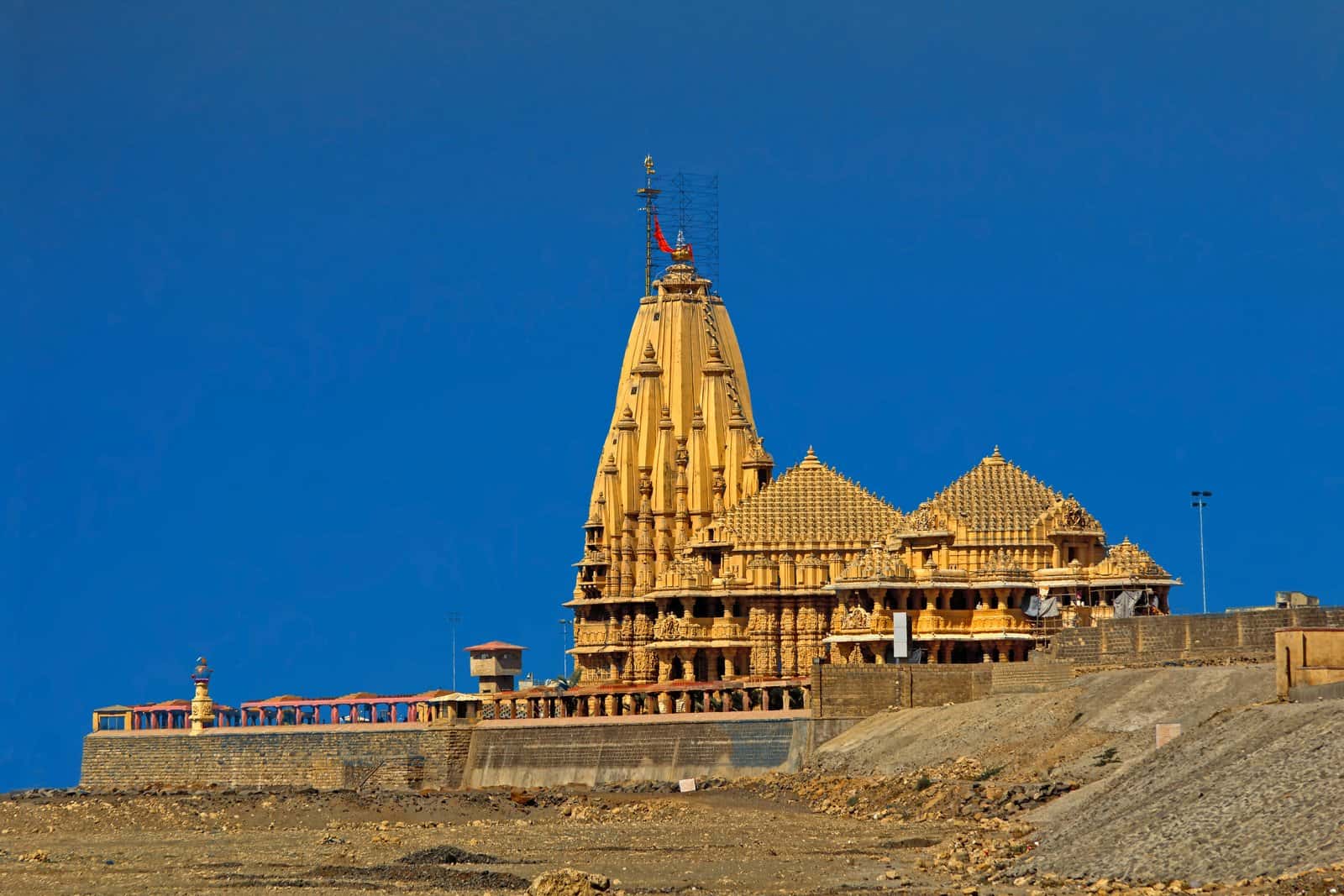
Somnath Travel Guide
The best months are October to March , cool and pleasant on the coast. The two great set-pieces are Maha Shivratri in February or March and the Kartik Purnima fair in November.
When to visit Somnath, and the festivals to plan around
The best months are October to March, cool and pleasant on the coast. The two great set-pieces are Maha Shivratri in February or March and the Kartik Purnima fair in November.
- October to March: the comfortable windowWinter on the Saurashtra coast is mild and pleasant, roughly between about 10 and 28 degrees Celsius, which is the easy time for the open temple courtyard, the beach and the evening Light and Sound show. This is peak pilgrim season, so rooms and the trust guest houses fill quickly around weekends and festivals.
- April to June: hot and dryHigh summer on the coast is hot and dry, often climbing well above the high thirties. Darshan is still possible, but keep the middle of the day for rest and do the temple early or late, and carry water and sun protection for the open courtyard.
- July to September: the monsoonThe coast gets heavy monsoon rain that can disrupt sightseeing and the open ground around the temple. Importantly, the open-air Light and Sound show does not run in the rainy season, so if that evening show is a priority, avoid the monsoon months.
- Festivals worth timing or avoidingMaha Shivratri, in about February or March, brings an all-night vigil and is the most charged night of the year here. The Kartik Purnima fair around November is run by the Shree Somnath Trust as a five-day fair. Both are wonderful but crowded, so book far ahead or come on a quiet winter weekday if you prefer calm.
The Jay Somnath Light and Sound show is the signature evening experience, but it is held outdoors against the temple and the Shree Somnath Trust states it runs every evening except in the monsoon or rainy season. If you are coming mainly for that show, plan for the October to June window rather than July to September, and even then check on the day, since a wet evening can cancel it.
How to reach Somnath
Somnath has its own small railway station and is an easy drive across Saurashtra. The nearest airports are Diu and Rajkot, with Ahmedabad the big gateway.
- By train: Somnath station or VeravalSomnath has its own railway station about 0.5 km from the temple, and Veraval, the larger railhead, is about 7 km away, both per the Shree Somnath Trust. Many trains run to Veraval, so check whether your train terminates at Somnath or at Veraval and arrange the short hop accordingly.
- By airThe Shree Somnath Trust names Diu at about 85 km, Rajkot at about 200 km and Ahmedabad at about 390 km as the air gateways. Keshod airport is closer at about 55 km and has been revived under the UDAN scheme with daily Ahmedabad flights and some Mumbai connections by carriers such as IndiGo, Akasa Air and Air India Express, but the schedule is small and can change, so reconfirm the current route before you rely on it.
- By road across SaurashtraSomnath sits in Prabhas Patan and is well linked by road. From Rajkot it is roughly 195 to 200 km by the Gondal, Junagadh and Keshod route, and the drive pairs naturally with Sasan Gir and Diu. We can arrange a car with an experienced driver for the Saurashtra loop.
- From AhmedabadAhmedabad, about 390 km away, is the main gateway for most travellers, by overnight train to Veraval or Somnath, by flight to Diu or Rajkot and a drive, or by a long day on the road. It is the usual start and end point for a Gujarat circuit.
Fly into Ahmedabad or Mumbai, then continue to Diu or Rajkot by a short domestic flight, or take a train to Veraval or Somnath. Somnath has no international flights of its own.
Fly into Ahmedabad, the main gateway, then drive or train across Saurashtra to Somnath, pairing it with Diu, Sasan Gir and Dwarka on a single coastal loop.
Take a train to Somnath or Veraval, or fly to Diu, Rajkot or Ahmedabad and drive. The overnight trains from Ahmedabad and Mumbai are a popular and comfortable way in.
The Jyotirlinga, the sea-shore temple and the gate rules
Somnath is the first of the twelve Jyotirlingas, rebuilt many times on the Arabian Sea shore. A few firm entry rules are worth knowing before you reach the gate.
- The Somnath Jyotirlinga templeThe main shrine, the first of the twelve Jyotirlingas, stands rebuilt in honey-coloured stone on the sea shore. Entry is free, and the Shree Somnath Trust states that a person with faith in Hinduism may offer prayer. Darshan runs about 6:00 am to 10:00 pm, with aarti at about 7:00 am, 12:00 noon and 7:00 pm.
- The strict no-electronics ruleThis is the rule that catches most first-timers: all phones, cameras, smartwatches, laptops, tablets and even calculators are strictly prohibited inside, and must be left in the free lockers at the Cloak Room. Photography inside is strictly prohibited too, so leave the gadgets in the car or the locker before you join the queue.
- Bhalka Tirth and Triveni SangamAbout 5 km away, Bhalka Tirth marks where a hunter's arrow is believed to have struck Lord Krishna's foot before he left for his heavenly abode, and the nearby Triveni Sangam Ghat marks the meeting of three rivers with the sea. Both sit within the 20 km circle of shrines the trust lists around Somnath.
- The Banastambha arrow pillarOn the sea-facing side stands the Banastambha, an arrow pillar said by tradition to point due south with no land in its path until Antarctica. Treat this as a much-loved tradition rather than a proven dated inscription, and enjoy the view of the open Arabian Sea while you are there.
Somnath is a deeply revered temple. Footwear must be removed and left at the free shoe house near the Cloak Room, dress modestly with shoulders and knees covered, and avoid mini skirts and disrespectful dress, which the trust does not permit. Smoking is banned anywhere in the temple vicinity, and the town and temple zone are vegetarian and alcohol-free.
Signature experiences in Somnath
Beyond darshan, these are the experiences people remember, and how to arrange them honestly, from the evening Light and Sound show to the trust's Tirth Darshan bus.
- The Jay Somnath Light and Sound showThe signature evening experience: an outdoor Light and Sound show against the lit temple and the sound of the waves, narrating the shrine's long history of destruction and rebuilding. It runs about 8:00 pm to 9:00 pm every evening except in the monsoon, and the ticket is inexpensive, commonly about 25 rupees for an adult and about 15 rupees for a child, reconfirmed at the counter.
- The evening aarti at the shrineThe 7:00 pm aarti, with the sea behind the temple, is the emotional heart of a visit. Arrive a little early, leave your gadgets in the Cloak Room locker first, and stand quietly; on a clear winter evening you can pair it with the Light and Sound show straight after.
- The Tirth Darshan bus to nearby shrinesThe Shree Somnath Trust runs a Tirth Darshan bus from the temple main gate at about 8:30 am and about 3:30 pm at a nominal charge. For a pilgrim without a car, this is the simplest way to reach Bhalka Tirth, Triveni Sangam Ghat and the other shrines within the 20 km circle in one organised loop.
- Sunset and the sea shoreSomnath is one of the few major Jyotirlingas right on the sea, so the open shore by the temple at sunset is a quiet pleasure in its own right. Somnath beach is close by for a gentle stroll, though it is a pilgrim shore rather than a resort beach, so keep expectations modest and dress respectfully.
- Prabhas Patan and the older templesSomnath sits in the ancient town of Prabhas Patan, layered with older temples and a long history. A slow walk around the temple precinct and the nearby shrines rewards anyone interested in how often this site has been destroyed and rebuilt over the centuries.
- Day trips into SaurashtraUse Somnath as a base for a day out: Diu and its Portuguese fort and beaches are about 2 hours away, and the Asiatic lion sanctuary at Sasan Gir is within roughly 65 to 120 km depending on the route. Both turn a one-night darshan stop into a proper Saurashtra trip.
If you do only one thing slowly, make it the evening: the 7:00 pm aarti with the sea behind the shrine, then the Light and Sound show straight after on a clear night. Together they tell the story of the temple far better than any plaque, and they are what most visitors remember long after the darshan queue fades. Leave the gadgets in the locker and simply be present for it.
Where to stay in Somnath, and how many nights
Stay near the temple for the aarti and the show, or at the trust's own guest houses for a simple pilgrim base. One to two nights is the sweet spot.
- The trust guest housesThe Shree Somnath Trust runs its own guest houses, Sagar Darshan Atithi Gruh, Lilavati Atithi Bhavan and Maheshwari Atithi Bhavan, bookable online through somnath.org. Each has a Bhojanalay restaurant serving Gujarati thali and vegetarian fare, so a pilgrim can stay and eat at the temple itself, which is the simplest and often the best-value option.
- Hotels near the templeA cluster of private hotels and dharamshalas sits within walking distance of the temple, handy for the early aarti and the evening show. They run from simple to mid-range, and prices rise sharply around Maha Shivratri, the Kartik Purnima fair and winter weekends.
- Veraval as an alternative baseVeraval, about 7 km away, is the larger town with more hotels and the bigger railhead. Base there if Somnath itself is full, especially during festivals, and commute the short hop to the temple, though staying near the shrine is nicer if you can.
- How many nightsOne full day and a night is enough for the temple, an aarti, the Light and Sound show and Bhalka Tirth and Triveni Sangam on the trust bus. Add a second night if you want to pair Somnath with Diu or a Gir safari, which turns a darshan stop into a real Saurashtra break.
Around Maha Shivratri and the five-day Kartik Purnima fair, rooms and the trust guest houses fill weeks in advance and prices climb. If your dates fall on a festival, book the trust guest house online early through somnath.org, or base yourself in Veraval and commute the short distance to the temple.
Somnath costs and a realistic daily budget
Somnath is gentle on the wallet: the temple is free, the show is a few rupees, and the trust guest houses keep stays affordable. Here is what to plan for.
- The free and near-free thingsEntrance to the temple is free of cost, darshan is free, and the free Cloak Room lockers and shoe house cost nothing. The Light and Sound show is inexpensive, commonly about 25 rupees for an adult and about 15 rupees for a child, and the Tirth Darshan bus is a nominal charge, so the core experience is very cheap.
- Stay and foodThe trust guest houses and simple hotels keep costs low, and the Bhojanalay restaurants serve a good-value vegetarian thali. Plan a modest daily budget for a pilgrim stay; mid-range hotels and a car for day trips to Diu or Gir add to it, and festival dates push room rates well up.
- Special poojas, if you want oneDarshan itself needs no ticket, but the trust offers paid poojas, abhishekams and special sevas across a wide range, some of which need booking ahead through somnath.org. If you want a specific ritual rather than a simple darshan, arrange it in advance through the official portal rather than through touts.
- Cash and cardsCarry cash for the bus, the show ticket, small eateries and offerings, as not everything takes cards or UPI. There are bank ATMs in Somnath and Veraval, and the trust accepts donations by cash, cheque or online, so keep small notes handy for the day.
If you want a special pooja, abhishekam or seva at Somnath, book it through the official Shree Somnath Trust portal at somnath.org and ask for a receipt for any donation. Avoid agents and touts outside the gate who offer to fast-track a ritual for a fee, since the trust handles bookings directly and a simple darshan needs no ticket at all.
Practical logistics: the gate rules, food, money and getting around
The small things that make a Somnath day smooth, from the electronics ban and the cloak room to ATMs, the vegetarian rule and local transport.
- Plan around the electronics banPhones, cameras, smartwatches, laptops, tablets and calculators are all banned inside the temple and go in the free Cloak Room lockers. Carry as little as possible to the gate, decide who holds the car key, and remember photography inside is prohibited, so buy any souvenir photo at the counter.
- Vegetarian and dryThe temple town is vegetarian and alcohol-free, and the trust Bhojanalays and local eateries serve excellent Gujarati vegetarian food. Plan meals around that, and save any non-vegetarian meal for Diu, which is a separate union territory with different rules, on a day trip.
- Getting aroundThe temple precinct is walkable, and auto-rickshaws and taxis handle the short hops to Veraval, Bhalka Tirth and Triveni Sangam. For the nearby shrines without a car, the trust's Tirth Darshan bus at about 8:30 am and about 3:30 pm is the easy option.
- Money, SIM and languageBank ATMs are in Somnath and Veraval; carry cash for the bus, the show and small vendors. Mobile coverage is generally fine for calls, maps and data. Gujarati and Hindi are the local languages, and basic English is understood in the pilgrim and hotel trade.
Safety, touts, and staying well
Somnath is a calm, well-run pilgrim town, but a little awareness around touts, the heat and the gate rules keeps the visit smooth.
- Pooja and guide toutsOutside the gate you may be offered a fast-track pooja, a guide or a photo for a fee. A simple darshan is free and needs no ticket, and special poojas are booked through the official trust portal, so a polite no is enough. Agree any genuine guide or auto fare before you start.
- Mind the gate rules to avoid delaysThe most common hiccup is reaching the gate with a bag full of gadgets and having to queue twice for the Cloak Room. Sort your phone, camera and smartwatch into the locker first, keep valuables minimal, and the entry is quick and smooth.
- Heat, sun and the seaThe open temple courtyard and shore give little shade, so in the warmer months carry water, a hat and sun protection, and do darshan early or late. The sea here is for the view and the aarti backdrop, not for swimming, and the shore can have strong currents, so do not wade in.
- Food and waterDrink bottled or filtered water, and the trust Bhojanalays and busy local eateries are the safer bets for food. Standard travel-stomach precautions are all that is usually needed, and a basic medical kit is wise on a road trip across Saurashtra.
Somnath is a busy, family-oriented pilgrim town and generally calm for solo and women travellers with standard precautions. Dress modestly for the temple, keep to well-lit areas after dark, and be firm with the gate touts. The main friction is sales pressure rather than any safety concern, so a polite, clear no goes a long way.
Somnath for every kind of traveller, and on access
Somnath suits very different visitors. Here is what it offers you, and the one tip that matters for each, including the trust facilities that make it easy for seniors.
- Senior travellers and on accessibilityOne of the easier Jyotirlingas for an older pilgrim. The Shree Somnath Trust provides wheelchairs and a golf cart at the main gate and a lift inside the temple premises. Stay near the temple to limit walking, do darshan outside peak festival crush, and use the trust bus rather than walking to the nearby shrines.
- Families with childrenEasy and welcoming, with the sea shore, the evening Light and Sound show and the open courtyard. Remember the electronics ban means no phones for the children inside, so plan the cloak room, and keep little ones close in the festival crowds.
- Couples and quiet travellersThe sea-shore setting, the sunset and the evening aarti and show make for a calm, reflective stop. An overnight rather than a rushed darshan lets you catch the temple at dusk and the show after, which is when Somnath is at its most atmospheric.
- First-time pilgrimsSomnath is a gentle, well-organised introduction to a major Jyotirlinga: free entry, clear trust facilities, and a compact precinct. Read the gate rules first, leave the gadgets behind, and the rest is straightforward.
- Solo travellersComfortable and busy, with the trust guest houses and the bus making it easy without a car. It pairs well with Diu and Gir for anyone building a longer Saurashtra trip alone, and the pilgrim crowd makes it an easy, sociable stop.
- Wildlife and beach add-onsFor travellers who want more than darshan, Somnath sits within reach of the Asiatic lions at Sasan Gir and the beaches of Diu, so a pilgrim base doubles as a springboard into the best of coastal Saurashtra.
A suggested Somnath itinerary
How to shape one or two days so you catch the temple, the aarti, the Light and Sound show and the nearby shrines without backtracking.
- Day one, morningReach the temple for an early darshan, leaving phones and cameras in the free Cloak Room lockers first. Catch the morning aarti at about 7:00 am if you can, then take the trust Tirth Darshan bus at about 8:30 am to Bhalka Tirth and Triveni Sangam Ghat.
- Day one, eveningRest through the heat of the day, then return for the 7:00 pm aarti with the sea behind the shrine, and stay on for the Jay Somnath Light and Sound show at about 8:00 pm to 9:00 pm if it is not the monsoon. This evening pairing is the highlight of a Somnath visit.
- Day two, if you have itUse the second day for a trip into Saurashtra: Diu and its fort and beaches about 2 hours away, or a Gir safari for the Asiatic lions within roughly 65 to 120 km. Either turns a darshan stop into a proper coastal break and is the reason to give Somnath two nights.
- On a larger Gujarat loopSomnath slots onto the classic Saurashtra circuit with Dwarka and Nageshwar, about 230 km away, and Sasan Gir and Diu in between. Allow one night at Somnath itself within a longer loop that usually starts and ends at Ahmedabad.
The single thing that shapes a Somnath day is the evening: aim to be at the temple for the 7:00 pm aarti and the Light and Sound show straight after. Remember the show does not run in the monsoon, so if you are visiting July to September, build the day around the aarti and the morning shrines instead, and you will not be left waiting for a show that is off for the season.
The real questions travellers ask about Somnath
Straight answers to the questions that come up again and again on traveller forums, so you arrive already knowing the score.
- Are phones and cameras allowed inside?No. All phones, cameras, smartwatches and other gadgets are strictly prohibited inside the temple and must go in the free Cloak Room lockers. Photography inside is prohibited too, so plan to leave everything behind at the gate and buy any photo at the souvenir counter.
- Can non-Hindus or foreigners enter?The Shree Somnath Trust states that a person who has faith in Hinduism may offer prayer. In practice respectful visitors are generally welcome to enter and observe; if in doubt, ask the temple administration on arrival, dress modestly, and follow the gate rules like everyone else.
- Is one day enough?One full day and a night covers the temple, an aarti, the Light and Sound show and the nearby shrines on the trust bus. Stay a second night only if you want to add Diu or a Gir safari, which is well worth it if you have the time.
- Is the railway station the same as Veraval?Not quite. Somnath has its own station about 0.5 km from the temple, while Veraval is the larger railhead about 7 km away. Check which one your train terminates at, since many services run to Veraval and you then take a short auto or taxi to the temple.
- What is the dress code, and can I wear shorts?Dress modestly with shoulders and knees covered. Sarees, dhotis, trousers and t-shirts are fine; mini skirts and disrespectful dress are not permitted, so avoid very short shorts. Footwear comes off at the free shoe house before you enter.
- How do I pair Somnath with Diu and Gir?Diu is about 2 hours by road and good for a beach and fort day, and Sasan Gir for the Asiatic lions is within roughly 65 to 120 km depending on the route. A two-night Somnath base lets you do darshan plus one of these comfortably, or both on a longer loop.
Planning Somnath from abroad
Somnath is a coastal Shiva shrine on the Arabian Sea and the spiritual anchor of a Gujarat trip. A little preparation makes the gate rules and the logistics easy to handle.
- Know the gate rules before you goThe big surprise for first-timers is that all phones, cameras and smartwatches are banned inside and go in free Cloak Room lockers, footwear comes off, and modest dress is required. The Shree Somnath Trust states that a person with faith in Hinduism may offer prayer; respectful visitors are generally welcome to enter and observe, so dress well and follow the rules.
- It is a vegetarian, dry townThe temple town is vegetarian and alcohol-free. Eat the excellent Gujarati vegetarian food at the trust Bhojanalays and local eateries, and if you want a different meal or a drink, plan it for Diu, a separate union territory with different rules, on a day trip.
- Pair it with the Gujarat coastFly into Ahmedabad, then loop the Saurashtra coast: Somnath for the Jyotirlinga, Sasan Gir for the Asiatic lions, Diu for the beaches and fort, and Dwarka with its own Nageshwar Jyotirlinga about 230 km away. Somnath is the spiritual centre of that circuit.
- Senior-friendly with the trust facilitiesFor older travellers and parents, Somnath is one of the easier Jyotirlingas: the trust provides wheelchairs and a golf cart at the main gate and a lift inside, and the precinct is compact. Stay near the temple and use the trust bus for the nearby shrines.
Money, connectivity and timing for foreign visitors
The practical basics an overseas traveller needs for a coastal pilgrim town: cash, cards, a SIM, and how many days to give Somnath on a wider Gujarat trip.
- Carry cash, keep small notesCards and UPI work in bigger hotels, but the Light and Sound show, the Tirth Darshan bus, small eateries and offerings are cash places. Draw cash at ATMs in Somnath or Veraval and keep small notes for the bus and the show, which cost only a few rupees each.
- Get a SIM at the airportPick up an Indian tourist SIM or an eSIM when you land in Ahmedabad or Mumbai rather than hunting for one in a small town. Coverage in Somnath itself is fine for maps, calls and booking, though remember your phone stays in the locker inside the temple.
- How long to give itOn a Gujarat trip, one to two nights in Somnath is the right weight: one night for the temple, the aarti and the show, a second if you are adding Diu or a Gir safari. It is the spiritual pause between the lions of Gir and the temples of Dwarka.
- Time your visit to your comfortOctober to March is the comfortable window. If you want the all-night charge of Maha Shivratri or the Kartik Purnima fair, plan around them and book far ahead; if you want the Light and Sound show, avoid the monsoon, when it does not run.
Somnath is an unusually well-organised introduction to a major Indian temple: free entry, clear rules, the trust's own guest houses and a sea-shore setting. Slot it after Sasan Gir or Diu, give it a night or two, leave the gadgets in the locker, and let the evening aarti and the Light and Sound show be the chapter you remember. Many overseas visitors find the coastal calm of Somnath the gentle heart of a Saurashtra trip.
The temple that was destroyed and rebuilt, again and again
Somnath is called the Shrine Eternal for the simplest of reasons: it has been destroyed and rebuilt more times than almost any temple on earth, and it still stands on the Arabian Sea shore. Tradition holds that it was first built in gold by Soma, the moon god, who did penance here to be freed from a curse, then in silver, in sandalwood and in stone by later hands, and that Bhagvan Shri Krishna took his last journey from this sacred soil at nearby Bhalka Tirth. Sacked repeatedly across the centuries, it was rebuilt each time by devotees, and the present temple was raised after independence in the form you see today. On the sea-facing side stands the Banastambha, an arrow pillar said by tradition to point due south with no land in its path until Antarctica. That last detail is a much-repeated tradition rather than a verified dated inscription, so enjoy it as folklore; the deeper, documented truth, that this is a shrine which faith rebuilt every single time it fell, needs no embellishment.
Planning a Somnath trip?
Our Gujarat travel experts plan your full journey for you: route, hotels, darshan timings and transport. You get a free day-by-day plan and an exact quote on WhatsApp, usually within a few hours. No payment is needed to get your plan.