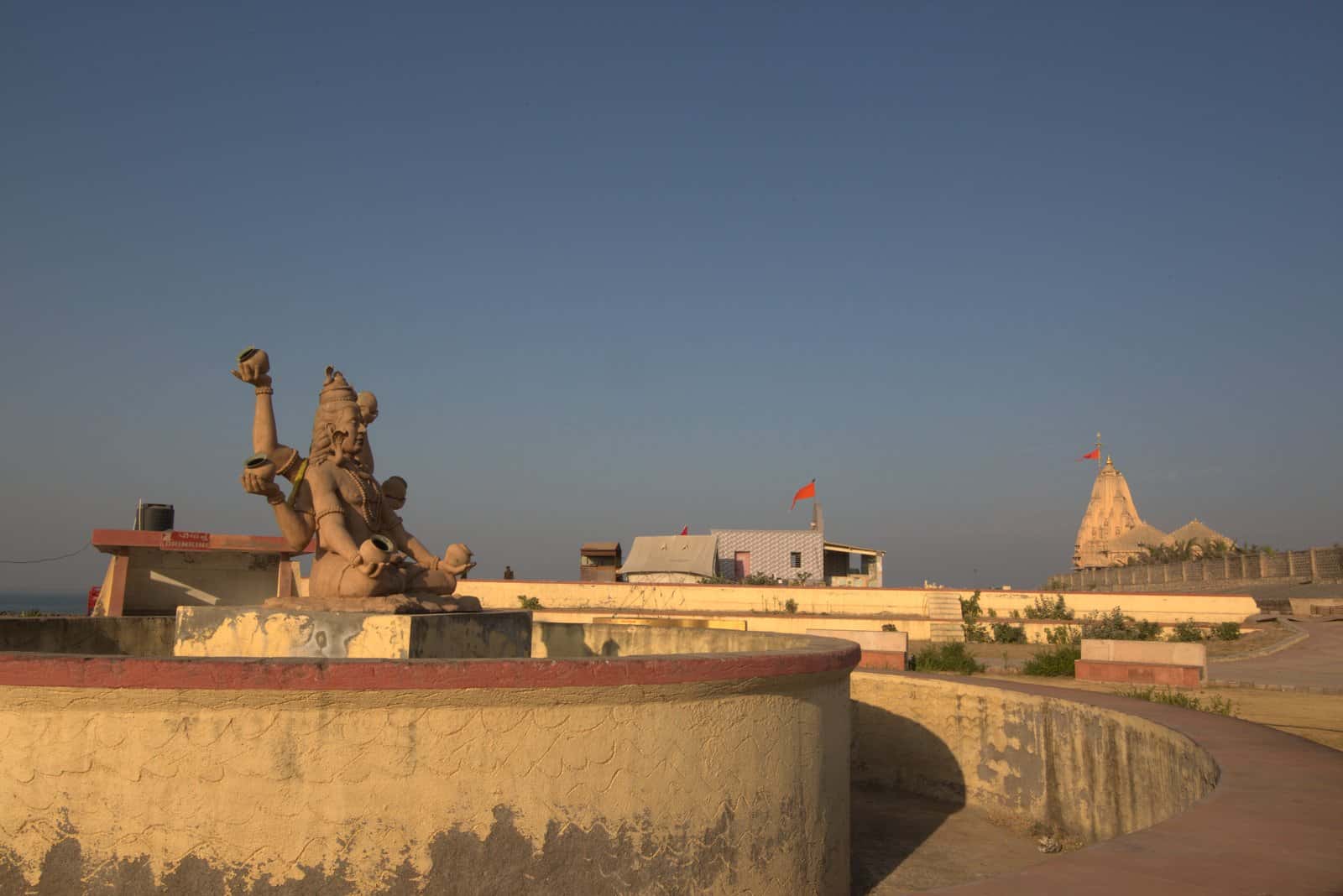
Veraval Travel Guide
The best months are November to February , cool and pleasant on the Arabian Sea coast. The monsoon is dramatic but the light-and-sound show often pauses, so plan around it.
When to visit Veraval and Somnath
The best months are November to February, cool and pleasant on the Arabian Sea coast. The monsoon is dramatic but the light-and-sound show often pauses, so plan around it.
- November to February: cool and clearThe most comfortable window, mild by day and pleasant in the evening for the aarti and the beach walk, though sea-coast nights can turn cool, so carry a light layer. This is peak pilgrim season, so the temple and the guest houses are at their busiest, and Kartik Purnima in November brings a five-day fair.
- October and March: warm but fineStill good for the temple and the coast, with a little more heat and humidity than midwinter and fewer crowds outside the festival dates. By late March the afternoons begin to warm up quickly, so do the beach and the outlying temples earlier in the day.
- April to June: hot and humidHigh summer on the Saurashtra coast is hot and sticky, tiring for the open beach and the drive to Gir or Diu. If you must come then, keep the middle of the day for rest and do the temple in the cool of morning or after the evening aarti.
- Monsoon, June to September: green but check the showThe rains bring dramatic seas and a green Saurashtra, and the temple is atmospheric in the wet, but the Somnath light-and-sound show is often suspended in the monsoon, so do not plan a trip around it in these months. Roads to Gir and Diu can be slow after heavy rain.
The Somnath Trust lists Shravan month, Mahashivratri, Golokdham Utsav, the five-day Kartik Purnima Fair and the temple's Sthapana Divas among its major events. Mahashivratri, usually in February or March, and Kartik Purnima in November are the biggest, when the temple is thronged and beautifully lit but rooms are scarce and dear. If you want the spectacle, book early; if you want calm darshan, come on an ordinary winter weekday and you will have the mornings to yourself.
How to reach Veraval and Somnath
Most pilgrims arrive by train at Somnath or Veraval station, or drive in on the Saurashtra circuit. The nearest airport is small, so Rajkot or Ahmedabad is the reliable air gateway.
- By train, the usual way inGir Somnath has two stations: Somnath, only about 0.5 km from the temple, and Veraval Junction, about 7 km away, both on the Western Railway network with express and daily services from Ahmedabad and beyond. For the temple, aim for Somnath station or a taxi from Veraval; the Somnath Express is the best-known service on the route.
- By airThe nearest airport is Diu at about 85 to 90 km, roughly 2 to 3 hours by road. For wider connections, Rajkot is about 200 km and Ahmedabad about 390 km, both with far more flights, so most travellers fly into Rajkot or Ahmedabad and drive or train down. Keshod airstrip is closer at about 50 km but has only limited and changeable flights.
- By road on the Saurashtra loopGir Somnath is well linked by National and State Highways, and Gujarat State Transport buses connect it to the major towns. Somnath is an easy stop between Sasan Gir at about 65 km, Diu at about 85 to 90 km, Junagadh at about 90 km and Dwarka at about 230 km, and we can arrange a car with an experienced driver for the circuit.
- From Diu, a common day tripDiu to Somnath is about 85 km, roughly 3 hours each way via the coastal highway, and many travellers do it as a long day trip or an overnight. If you are basing on the beaches of Diu, a car for the day is the simplest way to fit in the temple, Bhalka Tirth and Triveni Sangam.
Fly into Ahmedabad or Mumbai, then take a domestic flight to Rajkot or Diu, or a train to Somnath. Somnath has no international flights of its own, so plan a domestic hop or a Saurashtra road loop.
Fly into Ahmedabad, the main Gujarat gateway, then drive or train down to Somnath. It sits easily on a Dwarka, Somnath, Gir and Diu circuit through Saurashtra.
Take a train to Somnath or Veraval, well served from Ahmedabad, or drive the Saurashtra loop. Somnath station, half a kilometre from the temple, is the simplest way in by rail.
The Somnath temple, the coast, and the temple rules
The reason most people come is the Somnath Jyotirlinga at Prabhas Patan. A few strict entry rules are worth knowing before you arrive at the gate.
- Somnath Jyotirlinga templeThe first of the twelve Jyotirlingas of Lord Shiva, rebuilt many times over the centuries and standing today on the Arabian Sea shore at Prabhas Patan. Darshan runs about 6:00 am to 10:00 pm and entry is free. Come for one of the three daily aartis at about 7:00 am, 12:00 noon or 7:00 pm, and read the rules below before you go through security.
- Somnath Beach and the sunsetThe beach beside the temple is lovely at sunset and good for a walk or a short camel or horse ride, with the temple silhouetted against the sea. Do not plan to swim here: strong currents, tides and high waves make this stretch of coast unsafe for bathing, so keep it a walking-and-photos beach.
- Bhalka Tirth and Triveni SangamAbout 4 to 5 km from the temple, Bhalka Tirth marks where legend says the hunter Jara's arrow struck Lord Krishna, and nearby Triveni Sangam is the confluence of the Hiran, Kapila and Saraswati rivers where pilgrims take a holy dip. Both are best in the quiet early morning, and the free Tirth Darshan bus from the temple gate links them cheaply.
- Prabhas Patan Museum and the Junagadh gateThe small Prabhas Patan Archaeological Museum near the temple keeps carved stones and fragments from Somnath's earlier destroyed versions, a quiet ten-minute stop for history lovers, and the old Junagadh gate and the town's other shrines round out a slow half-day. The Somnath Trust also runs a heritage walk for those who want the deeper story.
This is the rule that catches the most first-timers. Mobiles, cameras, smartwatches, laptops, tablets and all electronic gadgets are strictly prohibited inside Somnath temple, and photography inside is strictly prohibited. Deposit everything in the free cloak-room lockers near the main gate before you go through security, remove your footwear at the free shoe house, and dress modestly: sarees, dhotis, trousers, t-shirts and skirts are fine, but mini skirts and disrespectful dress are not permitted, and smoking is banned in the temple vicinity. All of this is per the Shree Somnath Trust.
Signature experiences in Somnath and Veraval
Beyond the darshan, these are the experiences people remember, and how to arrange them without the overhyped version.
- The evening aarti at SomnathThe evening aarti at about 7:00 pm, with the sea behind the temple and the crowd swelling as the light fades, is the emotional heart of a visit. Arrive with time to deposit your phone and clear security, find a spot in the sabha mandap, and stay for the moment the lamps rise. It is free, and it is what people remember long after the trip.
- The Jay Somnath light-and-sound showAfter the evening aarti, the light-and-sound show called Jay Somnath plays on the temple and the sea from about 8:00 pm to 9:00 pm, telling the story of the temple's many destructions and rebuildings. It runs every evening except in the monsoon, and the ticket is a nominal charge of roughly 25 to 50 rupees for an adult, paid at the counter.
- The free Tirth Darshan busThe Somnath Trust runs a Tirth Darshan bus from the temple main gate to the nearby temples at a nominal charge, leaving at about 8:30 am and about 3:30 pm. It is the cheapest and easiest way to link Bhalka Tirth, Triveni Sangam Ghat and the other sites within about 20 km without hiring a car for the morning.
- Sunset and the fishing harbour at VeravalVeraval is one of India's largest fishing ports, and the harbour full of wooden dhows and returning boats is a genuine working-town sight for those who like real, unpolished places. It is industrial rather than pretty, so treat it as a short, curious detour rather than a highlight, and keep to the public edges of the harbour.
- A holy dip at Triveni SangamPilgrims come to Triveni Sangam to bathe where the Hiran meets the sea, especially at dawn. Even if you do not bathe, the early-morning ghat with its rituals and its birds is a quiet, atmospheric counterpoint to the busy temple, and it pairs naturally with an early Bhalka Tirth visit.
- The Saurashtra day tripsSomnath is the anchor for the region's big draws: the Asiatic lions of Sasan Gir about 65 km away, the Portuguese fort and beaches of Diu about 85 to 90 km, and Junagadh with Girnar about 90 km. Most travellers build one or two of these into the trip, which is what turns a darshan into a proper Saurashtra journey.
If you do only one thing slowly, make it the evening: the aarti at about 7:00 pm with the sea behind the temple, then the light-and-sound show at about 8:00 pm on ordinary dry-season evenings. Give yourself the full stretch from late afternoon on the beach through the aarti to the show, and Somnath opens up in a way a quick daytime darshan never allows. Both the aarti and the sunset are free, and the show is a nominal ticket.
Where to stay in Somnath and Veraval, and how many nights
Stay near the Somnath temple to be walking distance from the aarti, or use a resort on the coast for space. One night is enough for the temple, two if you add Gir or Diu.
- Near Somnath temple: in the thick of itThe lanes around the temple at Prabhas Patan are full of pilgrim hotels, dharamshalas and the Trust's own guest houses, all walking distance from the aarti and the beach. This is where most visitors stay, convenient and atmospheric, though rooms can be simple and the area busy around festival dates. Book the Trust guest houses online through somnath.org.
- The Somnath Trust guest housesThe Shree Somnath Trust runs Sagar Darshan, Lilavati and Maheshwari atithi bhavans that can be booked online, each with a bhojanalay serving Gujarati thali and other cuisine, and baby-cradle facilities for infants. They are clean, central, good value and popular, so book well ahead in season.
- Coastal resorts and hotelsA cluster of mid-range and higher hotels and resorts near the temple and the beach, including well-known chains, offer more comfort, pools and sea views for couples and families who want to slow down. Veraval town itself is industrial, so stay near the temple rather than in Veraval unless you have a specific reason.
- How many nightsOne night is enough to cover the temple, an aarti, the light show and the beach comfortably. Add a second night if you want Bhalka Tirth and Triveni Sangam unhurried, or to fold in a Gir lion safari or a Diu day. On a wider Saurashtra loop, Somnath is usually a one-night stop between Gir or Diu and Dwarka.
Around Mahashivratri and the Kartik Purnima Fair, rooms near the temple and the Trust guest houses are scarce and sold months in advance at higher prices. If your dates fall on a major festival, book well ahead, or base a little further out and drive in for the aarti. On an ordinary winter weekday you can usually find a room close to the temple without much trouble.
Somnath and Veraval costs and a realistic daily budget
Somnath is gentle on the wallet: the temple is free and the big cost is your room and the car for the Saurashtra day trips. Here is what to plan for.
- A rough daily budgetExcluding your room and long-distance transport, plan on about 800 to 1,500 rupees a day as a budget pilgrim, about 2,000 to 3,500 rupees mid-range, and about 4,000 rupees and up for a comfortable day with a hired car for the outlying temples, meals in hotel restaurants and a little shopping.
- The free and near-free thingsThe temple, the darshan and the evening aarti are free. The Jay Somnath light-and-sound show is a nominal ticket of roughly 25 to 50 rupees for an adult, the Tirth Darshan bus to the nearby temples is a nominal charge from the Trust, and the beach walk and the harbour cost nothing. Somnath is an unusually cheap major pilgrimage in that sense.
- Rooms and the carYour two real costs are the room and the transport. Trust guest houses and pilgrim hotels are good value outside festivals, and the biggest single expense is usually the car for the Gir, Diu or Junagadh day trips, which we can arrange with a driver who knows the circuit. Agree the car rate and the route before you set off.
- Cash and cardsHotels and bigger shops take cards and UPI, and there are bank ATMs in Veraval and near the temple, but keep cash for the show ticket, the Tirth Darshan bus, prasad, small eateries and tips. This is a small town, so do not rely on cards for everything.
Unlike a beach resort or a hill station, the sightseeing in Somnath is almost free, so the trip is cheap if you keep it to the temple and the coast. The budget rises only when you add the Saurashtra day trips: a Gir lion safari has its own permit and vehicle costs, and a car for a Diu or Junagadh day is the main outlay. Decide which day trips you want before you book, and the whole trip stays comfortably affordable.
Practical logistics: food, money, SIM and getting around
The small things that make a Somnath day smooth, from the vegetarian temple-town food to ATMs, the two stations and getting between them.
- Food: vegetarian by the templeThe temple area at Prabhas Patan is vegetarian, and the Trust guest houses and local eateries serve good Gujarati thali; the town of Veraval, being a fishing port, does have non-vegetarian and seafood options, so where you eat depends on where you base. For most pilgrims the vegetarian thali near the temple is the natural choice.
- The two stations, and getting between themRemember Somnath station is about 0.5 km from the temple and Veraval Junction about 7 km away. If your train comes into Veraval, take an auto-rickshaw or taxi the short hop to Somnath; autos and shared transport handle the local runs and the outlying temples if you do not use the Tirth Darshan bus.
- Money and ATMsBank ATMs are in Veraval and near the temple. Carry cash for the light-show ticket, the Tirth Darshan bus, prasad and small eateries, as not everyone takes cards or UPI in a town this size, and draw enough for your day trips before you leave for Gir or Diu.
- SIM, signal and languageMobile coverage in Somnath and Veraval is generally fine for calls, maps and data. Gujarati and Hindi are the local languages, with English understood in hotels and the pilgrim trade, so communicating is easy. Remember your phone must go into the cloak room before you enter the temple itself.
Safety, the beach, and staying well
Somnath and Veraval are gentle, low-crime places, but the sea is the real hazard and the heat needs respect. A little awareness keeps the visit happy.
- Do not swim at Somnath BeachThis is the one real safety point. Swimming is strongly discouraged at Somnath Beach because of strong currents, tides and high waves; it is a beach for walks, camel rides and sunset photos, not for bathing. Keep children back from the water line, and do not wade out even when the sea looks calm.
- Temple crowds and your belongingsThe temple is busy at aarti times and heaving on festival days. Your phone and valuables go in the free cloak-room lockers anyway, but keep your locker token and your cash safe, move with the crowd rather than against it, and keep small children close in the crush at Mahashivratri and Kartik Purnima.
- Heat, sun and waterThe coast is hot and humid outside midwinter. Carry water and sun protection for the beach and the outlying temples, drink bottled or filtered water, take the usual care with street food, and do the open-air sights early or late rather than in the midday sun.
- Getting around after darkThe temple area is well lit and busy into the evening for the aarti and the show, and generally feels safe. Use a hotel-arranged or app-based taxi for the run back to Veraval station late at night rather than walking unlit stretches, and agree auto fares before you set off.
Somnath and Veraval are pilgrim and working-town places with low reported crime, and most solo women find them straightforward with standard precautions. The temple area is busy and well lit around the aarti and the light show, so evenings feel comfortable. Dress modestly for the temple, keep to the busier lanes after dark, use arranged transport for the late run to Veraval station, and it is one of the easier Saurashtra stops to travel alone.
Somnath for every kind of traveller, and on access
Somnath suits very different visitors in different ways. Here is what it offers you, and the one tip that matters for each, including how a senior visits comfortably.
- CouplesQuiet and atmospheric rather than romantic in a resort sense: the sea behind the temple, the evening aarti and the light show, and the beach at sunset. An overnight rather than a rushed darshan lets you enjoy the evening properly, and a coastal resort near the beach adds comfort.
- Families with childrenEasy and rewarding, with the temple, the beach camel rides and the Gir lions and Diu beaches within a day. Keep children back from the water at Somnath Beach, remember phones go into the cloak room, and visit at aarti time early rather than in the festival crush.
- Senior travellers and on accessibilityOne of the more accessible major Jyotirlingas. The Somnath Trust provides free wheelchairs and a golf cart at the main gate and a lift inside the temple premises, so an older pilgrim can reach the darshan without the long walk or the steps. Stay near the temple to keep distances short, and use the Tirth Darshan bus rather than walking to the outlying sites.
- Backpackers and budget travellersCheap and simple: the temple is free, the Trust guest houses and pilgrim hotels are good value, and the town connects by bus and train across Saurashtra. It works well as a low-cost anchor for a Gir, Diu and Dwarka loop done on public transport.
- Solo female travellersGenerally straightforward with standard precautions, in a busy pilgrim setting that feels comfortable around the aarti and the show. Dress modestly for the temple, keep to the busier lanes after dark, and use arranged transport for the late run to Veraval station.
- PhotographersThe temple against the sea at sunset, the beach and the working fishing harbour at Veraval, and the dawn rituals at Triveni Sangam are the frames worth chasing. Remember photography is strictly prohibited inside the temple itself, so your camera stays in the cloak room for the darshan.
A suggested Somnath and Veraval itinerary
How to shape one or two days so you catch the temple at aarti time and fit the outlying sites and a Saurashtra day trip without rushing.
- Day one, morningArrive and settle near the temple, then take the free Tirth Darshan bus at about 8:30 am to Bhalka Tirth and Triveni Sangam while the light is soft and the ghats are quiet. Back for a late breakfast and a rest through the warm middle of the day.
- Day one, eveningWalk the beach at sunset, then deposit your phone and clear security in good time for the aarti at about 7:00 pm, the highlight of the day. Stay on for the Jay Somnath light-and-sound show at about 8:00 pm on a dry-season evening, then a Gujarati thali near the temple.
- Day two, a Saurashtra day tripGive the second day to one big draw: a morning Gir lion safari about 65 km away, a Diu beach-and-fort day about 85 to 90 km, or Junagadh and Girnar about 90 km. Book a car with a driver who knows the circuit, and be back for a second aarti if the temple has pulled you in.
- The half-day versionIf Somnath is only a passing stop on a Dwarka-to-Diu drive, you can do the temple, a quick beach walk and the Prabhas Patan museum in two or three hours, though you will miss the aarti and the light show that make the evening special. Aim to be there by about 7:00 pm if you possibly can.
The single thing that shapes a good Somnath plan is the evening aarti at about 7:00 pm and the light-and-sound show from about 8:00 pm that follows it on dry-season evenings. Do the outlying temples and any day trip earlier, keep the late afternoon and evening for the beach, the aarti and the show, and remember the show is suspended in the monsoon. Plan your arrival so you are not still on the road at around 7:00 pm on your one temple evening.
The real questions travellers ask about Somnath and Veraval
Straight answers to the questions that come up again and again on traveller forums, so you arrive already knowing the score.
- Veraval or Somnath as a base?Stay near the Somnath temple at Prabhas Patan, not in Veraval town. Veraval is an industrial fishing port about 6 to 7 km away, useful mainly for its junction railway station; the pilgrim hotels, Trust guest houses, the beach and the aarti are all at Somnath. Book Somnath station if you can, or take the short auto hop from Veraval Junction.
- Is one day enough?One day and an overnight covers the temple, an aarti, the light show, the beach and the outlying temples comfortably. Add a second night only if you want a Gir lion safari, a Diu day or an unhurried pace. Half a day in transit lets you see the temple and the beach but misses the evening magic.
- Can I take my phone into the temple?No. Mobiles, cameras, smartwatches and all gadgets are strictly prohibited inside Somnath temple, and photography inside is banned. Deposit everything in the free cloak-room lockers near the main gate before security. Plan for this so you are not caught out at the gate with a phone and nowhere to leave it.
- Can I swim at Somnath Beach?No, swimming is strongly discouraged. The currents, tides and waves off Somnath Beach are dangerous, so it is a walking, camel-ride and sunset beach, not a bathing one. For a swim on this trip, the beaches of Diu about 85 to 90 km away are the safer, gentler option.
- How do I combine Somnath with Gir and Diu?Somnath sits between Sasan Gir at about 65 km and Diu at about 85 to 90 km, so a classic loop is Gir for the lions, Somnath for the temple and Diu for the beaches, one to two nights each. A car with a driver who knows the circuit is the easiest way to link them; trains and buses also connect the main towns.
- When exactly is the aarti and the light show?Aarti is at about 7:00 am, 12:00 noon and 7:00 pm, and darshan runs about 6:00 am to 10:00 pm, all free, per the Somnath Trust. The Jay Somnath light-and-sound show runs about 8:00 pm to 9:00 pm every evening except in the monsoon, for a nominal ticket of roughly 25 to 50 rupees for an adult. Reconfirm at the counter, as timings shift with the season.
Planning Somnath from abroad
Somnath is the emotional high point of a Saurashtra trip and pairs naturally with Dwarka, Gir and Diu. A little preparation makes the temple rules and the logistics easy to handle.
- Know the strict temple rules firstMobiles, cameras and all gadgets are strictly prohibited inside Somnath temple, with free cloak-room lockers at the gate, and photography inside is banned. Dress modestly, remove footwear at the free shoe house, and do not smoke in the temple vicinity. Knowing this before you arrive turns the darshan from a scramble into a calm experience.
- Veraval and Somnath are two placesThe temple is at Somnath, Prabhas Patan; Veraval is the working port town about 6 to 7 km away with the junction station. Stay near the temple, and book Somnath station, only half a kilometre from the temple, if you can. This one distinction saves overseas visitors the most confusion.
- Pair it with Dwarka, Gir and DiuFly into Ahmedabad, then loop Dwarka, Somnath, Gir and Diu through Saurashtra, or fly on to Rajkot or Diu to shorten the road. Somnath is the spiritual centre of the circuit, an easy stop between the lions of Gir and the beaches of Diu.
- Gentle and senior-friendly with planningThe Somnath Trust provides free wheelchairs, a golf cart and a temple lift, which makes it kinder for older parents and grandparents than many Jyotirlingas. Stay near the temple, use the Tirth Darshan bus for the outlying sites, and choose an ordinary winter weekday over a festival if comfort matters.
Money, connectivity and timing for foreign visitors
The practical basics an overseas traveller needs for a small pilgrimage-and-port town: cash, cards, a SIM, and how many days to give it on a wider Gujarat trip.
- Carry cash, but cards work in hotelsHotels and bigger shops take cards and UPI, and there are bank ATMs in Veraval and near the temple, but keep cash for the light-show ticket, the Tirth Darshan bus, prasad, autos and small eateries. Draw enough for your Gir or Diu day trips before you leave the town, as ATMs thin out on the road.
- Get a SIM at the airportPick up an Indian tourist SIM or an eSIM when you land in Ahmedabad or Mumbai rather than hunting for one in a small town. Coverage in Somnath and Veraval is fine for maps, calls and ride-hailing, though remember your phone must go into the cloak room before you enter the temple.
- How long to give it on a bigger tripOn a Saurashtra or wider Gujarat itinerary, one night in Somnath is the right weight for the temple, an aarti and the light show, with a second night only if you fold in Gir or Diu. It is a stop on a loop, not a standalone destination, so plan it between Dwarka and the Gir-Diu coast.
- Time your visit to your comfortNovember to February is the comfortable window on the coast. Avoid the hot, humid pre-monsoon of April to June, and remember the light-and-sound show is often suspended in the monsoon from June to September, so a winter visit gives you the full evening experience.
Somnath is an easy, moving introduction to India's temple tradition: a free darshan, a sea-side aarti and a light show that tells a thousand years of destruction and rebuilding, all in a compact, walkable town. Slot it into a Saurashtra loop with Dwarka, Gir and Diu, give it a night, and let the evening aarti be the memory you carry home. The strict no-phone rule feels odd at first but leaves you fully present, which many overseas visitors say is the point.
The temple that was destroyed and rebuilt, again and again
Somnath is called the eternal shrine, the first of the twelve Jyotirlingas of Lord Shiva, and its story is one of endurance. In legend the moon god Soma built the first temple in gold to be freed of a curse, and it was raised again in silver and in sandalwood by other divine hands before being built in stone. Over the centuries the temple was plundered and pulled down many times and rebuilt each time by devotees who would not let it stay in ruins; the present temple was completed in 1951 after India's independence, championed by Sardar Vallabhbhai Patel. Nearby at Bhalka Tirth, tradition holds that the hunter Jara's arrow struck the resting Lord Krishna's foot, and from Prabhas Patan Krishna is said to have left for his heavenly abode. The many-times-destroyed, many-times-rebuilt temple on the Arabian Sea is why Somnath stands for faith that refuses to be erased.
Planning a Veraval trip?
Our Gujarat travel experts plan your full journey for you: route, hotels, darshan timings and transport. You get a free day-by-day plan and an exact quote on WhatsApp, usually within a few hours. No payment is needed to get your plan.