Panchkula Travel Guide
The comfortable window is October to March , cool and clear on the plains and pleasant up in Morni. Summer is hot, the monsoon greens the hills, and the two Mansa Devi melas and...
When to visit Panchkula
The comfortable window is October to March, cool and clear on the plains and pleasant up in Morni. Summer is hot, the monsoon greens the hills, and the two Mansa Devi melas and the Pinjore Mango Mela are the events to plan around.
- October to March: the sweet spotThis is the season most travellers should aim for. Days are mild and clear, evenings are cold enough for a layer, and both the town gardens and the Morni road are at their most pleasant. It also lines up with the Cactus Garden's March show, so plant lovers get a bonus.
- April to June: hot on the plainsHigh summer on the Haryana plain is fierce and tiring for the open gardens and the temple steps. If you must come then, keep the middle of the day for rest, do the gardens early, and remember Morni is a few degrees cooler if you want to escape the heat.
- July to September: green but wetThe monsoon turns the Shivaliks lush and the Tikkar lakes full, which is beautiful, but the Morni hill road can be slow or slippery after heavy rain. Watch the forecast, avoid the hill drive during a downpour, and enjoy the greenery from the safer stretches.
- The two big temple melasMansa Devi holds grand Navratra melas twice a year, in Chaitra around March to April and in Ashwin around September to October. They are joyous but very crowded. Come during them for the atmosphere, or dodge them by a week or two if you prefer a calm darshan.
If you love mangoes, time a summer visit around the Pinjore Mango Mela, usually held in June or July, when well over 3,000 entries of mangoes from growers across several states are shown in the gardens along with a crafts bazaar and food stalls. It is hot at that time of year, so do the garden in the cooler evening hours when the terraces are lit, and keep water handy. As the dates shift a little each year, reconfirm them on the Haryana Tourism calendar before you build a trip around the festival.
How to reach Panchkula
Panchkula shares its gateways with the rest of the Chandigarh tricity. You fly into Chandigarh, arrive by train at Chandigarh Junction, or drive up from Delhi, and the town is an easy hop from all three.
- By air, through ChandigarhThere is no airport in Panchkula. You fly into Chandigarh's Shaheed Bhagat Singh International Airport at Mohali, about 25 km away and roughly 45 minutes to an hour by road with an app cab or pre-paid taxi. It has wide domestic links and some international flights, and it serves the whole tricity.
- By train, via Chandigarh JunctionChandigarh Junction, the main railhead for the tricity, is about 12 to 15 km from central Panchkula and is well connected to Delhi, Amritsar and beyond by fast daytime trains. Panchkula also has the smaller Chandi Mandir station on the Kalka line for local services.
- From Delhi by roadDelhi is about 250 km away, roughly 4.5 to 5 hours by car on a good expressway, which makes Panchkula a comfortable long-weekend drive. Many travellers instead take a fast morning train to Chandigarh and pick up a car there for the local sights.
- Getting around townPanchkula is a planned town of numbered sectors like Chandigarh, so it is easy to navigate. Auto-rickshaws and app cabs handle short hops, and for Morni, Pinjore and Kalka a hired car for the day is the simplest and most comfortable option, which we are happy to arrange.
Fly into Delhi, the main international gateway, then take a short domestic flight or a fast train to Chandigarh, about 25 km from Panchkula. Some carriers also route through Delhi to Chandigarh directly.
Fly into Delhi, then connect onward to Chandigarh by air, rail or road. Panchkula sits at the northern end of that run, on the edge of the Shivalik hills.
Fly or take a fast train to Chandigarh, or drive up from Delhi in about 4.5 to 5 hours. From Chandigarh, Panchkula is a short 12 to 15 km hop across the tricity.
The temple, the cactus garden, the Mughal garden and the hills
Panchkula's four big draws are very different: a major Shakti temple, Asia's largest cactus garden, a 17th-century Mughal garden at Pinjore and Haryana's only hill station at Morni. Knowing the timings and rules of each saves a wasted trip.
- Mata Mansa Devi templeThe most visited shrine in the district, on the Shivalik foothills near Bilaspur village, with the present temple built by Maharaja Gopal Singh of Manimajra between about 1811 and 1815. Darshan runs roughly about 5 am to 9 pm in winter, with earlier and longer hours in summer and during Navratri. The area is a meat-free holy zone, so dress modestly, remove footwear where asked, and buy prasad only from the official counter inside.
- National Cactus and Succulent Botanical GardenIn Sector 5, this is, by the district administration's own account, Asia's largest outdoor landscaped cacti and succulent garden, about seven acres with over 2,500 species, and entry is only about 10 rupees. It runs in two shifts with a long lunch break, so read the logistics section for the exact hours before you set out.
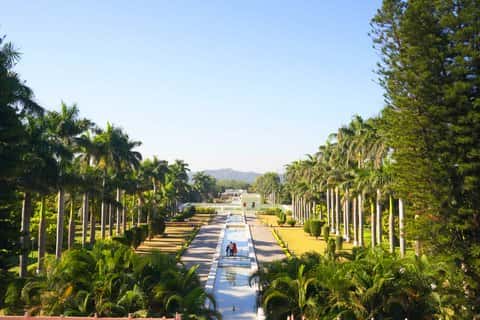
- Pinjore (Yadavindra) GardensA seven-terrace Mughal-style garden from the 17th century, near Kalka, first laid out in the Aurangzeb era and later restored by the Patiala royal family. It is loveliest in the evening when the terraces, water channels and fountains are lit. Entry is small, commonly quoted at about 25 to 30 rupees per adult.
- Morni Hills and the Tikkar TalsHaryana's only hill station, about 45 km and 1.5 to 2 hours away, at about 1,220 metres or roughly 4,000 feet, with twin lakes, an old lakeside temple and fort ruins. The road is steep and curved, so drive it in daylight. It is the natural half-day or overnight escape from the tricity heat.
On the banks of the Ghaggar in the Shivaliks, Nada Sahib is a revered Sikh shrine marking the spot where Guru Gobind Singh is believed to have halted after the Battle of Bhangani in 1688. It welcomes visitors every day and serves langar to all. Cover your head, remove your footwear, and if your timing is right, sit for the simple, generous community meal. It pairs naturally with the Mansa Devi visit, as both sit on the same hilly northern edge of the town.
Signature experiences around Panchkula
Beyond ticking off the sights, these are the experiences people remember, and how to arrange them without the tourist-trap version or a wasted trip.
- Morning darshan at Mansa DeviCome early, before the heat and the crowds, for a calm darshan of the goddess. The hilltop setting catches the morning light beautifully over the Shivaliks. Keep your visit simple and unhurried, take the packed dry-fruit prasad from the official counter, and you will feel why this is the emotional heart of the town for locals.
- A slow hour in the Cactus GardenEven if you are not a botanist, the sheer scale is a surprise: thousands of species, some so large they need scaffolding to stand. Go in the cooler morning shift, wander the greenhouses, and if you visit in March you will catch the annual cactus show with rare specimens on special display.
- Pinjore Gardens after darkThe Mughal terraces are pretty by day but magical in the evening, when the water channels and fountains are lit and families spread out on the lawns. Time your visit for late afternoon into dusk, walk down through the seven terraces to the lowest pool, and let the lights come on around you.
- The Morni drive and Tikkar TaalThe winding climb to Morni is an experience in itself, best driven slowly in daylight. At Tikkar Taal you can walk the lakeside boardwalk and take a paddle boat, reported at around 200 rupees per person for about 30 minutes, though this is a traveller-quoted rate, so confirm it at the counter.
- The Kalka to Shimla toy trainFrom Kalka, about 20 km away, you can board the UNESCO World Heritage narrow-gauge toy train that climbs 96 km up to Shimla through tunnels and pine forest. Even a short leg is a joy. Book ahead in season, as seats on the heritage services go quickly.
- Langar and quiet at Nada SahibThe gurudwara by the Ghaggar is a peaceful stop away from the sightseeing rush. Sit for a while, listen to the kirtan, and share the langar. It is a gentle, wholesome hour that many visitors say is the calmest part of their Panchkula day.
If you do only one thing slowly, make it Pinjore Gardens at dusk. Arrive in the late afternoon, walk the full drop of the seven terraces while the light softens, and stay long enough to see the fountains and pathways light up. Rushed at midday in the heat, Pinjore is just a garden. Given an unhurried evening, it becomes the memory you carry home from Panchkula, and it costs only the small entry fee to do it right.
Where to stay in Panchkula, and for how long
Stay in Panchkula itself for space and calm, or in central Chandigarh for more choice and nightlife. One to two days covers the town comfortably, or add a Morni night to slow down.
- Panchkula's own sectors: quiet and greenPanchkula has comfortable hotels and guesthouses across its numbered sectors, close to the Cactus Garden and the temple and calmer than the city centre. Good for families and anyone who wants a restful base, and handy for an early start to Morni or the Kalka train.
- Central Chandigarh: more choiceIf you want more hotels, restaurants and evening life, base in Chandigarh's Sector 17 or 22 area and treat Panchkula as a short 12 to 15 km hop for the sights. This suits first-timers who want the tricity on their doorstep.
- A Morni night for the hillsTo slow right down, spend a night up in Morni at Haryana Tourism's Mountain Quail resort or a hillside stay near the Tikkar lakes. Waking to the Shivalik quiet is a different trip from a day drive, and it is the calmest option for couples.
- Room budgetsOff-season, simple rooms run from about 1,200 to 2,500 rupees, comfortable mid-range hotels about 3,000 to 6,000 rupees, and heritage or upmarket stays about 7,000 to 15,000 rupees. Prices climb around the Mansa Devi melas and long weekends, so book ahead then.
One full day is enough to cover the Cactus Garden, Mansa Devi and Pinjore at a relaxed pace, with an evening at the lit gardens. Give it two days and you can add Morni and the Tikkar lakes without rushing, or push on to the Kalka toy train. Panchkula also works beautifully as a two to three day base for the wider tricity and a Himachal add-on, so match the nights to how much of the region you want to fold in.
Panchkula costs and a realistic daily budget
Panchkula is easy on the wallet. The temple and gardens cost very little, and the main expense is your room and a car for the hill and out-of-town sights.
- A rough daily budgetExcluding your room and long-distance transport, plan on about 1,500 to 2,500 rupees a day as a budget traveller, and about 3,000 to 6,000 rupees for a comfortable day with a car, meals out and the paid attractions. The sights themselves are cheap, so most of your money goes on transport and food.
- The near-free attractionsThe Cactus Garden is only about 10 rupees to enter and Pinjore Gardens about 25 to 30 rupees per adult. Mansa Devi and Nada Sahib have no entry fee. This is one of the most affordable clusters of sights in North India, so the value is excellent.
- The bigger costsA hired car for a day out to Morni, Pinjore and Kalka is the main expense after your room, and it is worth it for the comfort and the flexibility on the hill road. Paddle boating at Tikkar is reported at around 200 rupees per person; agree it at the counter first.
- Cash and cardsCafes, bigger hotels and shops take cards and UPI, but temple prasad counters, small eateries, ticket windows and the boating counter run on cash. There are plenty of bank ATMs across the Panchkula sectors, so draw enough for the day and keep small notes handy.
Practical logistics: timings, temple etiquette, SIM and getting around
The small things that make a Panchkula day smooth, from the Cactus Garden's two-shift hours to temple etiquette, ATMs and local transport.
- The Cactus Garden's two-shift timingsThis trips up many visitors. The garden runs about 9 am to 1 pm and again about 3 pm to 7 pm from April to September, and about 9 am to 1 pm and about 2 pm to 6 pm from October to March. It is closed for that long lunch break in between, so do not arrive at midday, and check the day's hours before you go.
- Temple etiquette at Mansa DeviCover shoulders and knees, remove footwear at the entrance, and keep phones quiet in the sanctum. The complex is a declared holy zone where meat sale is banned nearby, and reuse of offered coconut, prasad and flowers is prohibited, so take prasad only from the official counter.
- Getting aroundThe numbered-sector layout makes Panchkula easy to navigate by auto-rickshaw or app cab for local hops. For Morni, Pinjore and Kalka, hire a car with a driver for the day; it is far more comfortable than piecing together buses, especially on the hill road.
- Money, SIM and languageATMs are plentiful across the sectors, mobile coverage is good in town and patchier up in Morni, and Hindi and Punjabi are the main languages with English widely understood. Pick up any tourist SIM at Chandigarh airport rather than hunting for one later.
Safety, the hill road, and staying well
Panchkula is a calm, low-hassle town with little of the tout pressure of bigger tourist cities. The main things to respect are the Morni road, the summer heat and ordinary big-town care.
- The Morni hill roadThe single real safety point is the drive up to Morni: it is steep with sharp curves and shared by buses and trucks. Drive it in daylight, keep your speed down, use your horn on blind bends, and avoid it during or just after heavy monsoon rain when it can be slippery or blocked.
- Heat and healthSummer on the plains is genuinely hot, so carry water and sun protection for the open gardens and the temple steps, and keep the middle of the day for rest. Drink bottled or filtered water, take the usual care with street food, and enjoy the langar and dhaba meals with confidence.
- Crowds at the melasDuring the two Mansa Devi Navratra melas the temple is packed. Keep children close, hold onto valuables in the crush, and go early in the day. If you prefer calm, simply visit a week or two away from the festival dates.
- Ordinary town sensePanchkula is not a scam-heavy tourist trap, but standard care applies: agree taxi and boating prices before you commit, keep an eye on belongings in busy spots, and prefer app cabs at night. Solo and women travellers generally find the tricity relaxed and easy.
Fuel up before you leave town, as options thin out on the hill. Carry water, keep your phone charged for maps even though signal drops in patches, and do not attempt the climb after dark or in a downpour if you can avoid it. If you are not a confident hill driver, hire a local driver who knows the curves; it costs little and turns the most demanding part of a Panchkula trip into the most relaxing.
Panchkula for every kind of traveller, and on access
Panchkula suits families, seniors, couples and nature lovers in different ways. Here is what it offers you and the one tip that matters for each, including how an older traveller does it comfortably.
- Families with childrenAn easy, low-stress destination: the Cactus Garden and the lit fountains at Pinjore are simple wins, and a paddle boat at Tikkar keeps children happy. Distances are short, food is familiar, and nothing is too demanding, so a relaxed one or two days works well.
- Senior travellers and on accessibilityVery doable with planning. Visit the temple and gardens in the cool of morning, use a hired car rather than climbing on the hill road, and choose a Panchkula-sector hotel to keep walking short. Skip the crush of the peak mela days if calm matters, and let the driver handle the Morni curves.
- CouplesQuietly romantic in an understated way: Pinjore's lit terraces at dusk, a Morni night with Shivalik views, and unhurried mornings. An overnight in Morni rather than a day drive lets you catch both a sunset and a still, misty dawn in the hills.
- Nature and plant loversThe Cactus Garden is a genuine specialist draw, especially during the March show, and Morni's birdlife and forest trails reward a slow half-day. Bring binoculars for the Tikkar lakes and the Shivalik slopes, where quails, doves and the occasional jungle creature turn up.
- Bikers and weekend ridersThe Panchkula to Morni road is a favourite ride, but it is steep and curved, so ride within your limits, watch for trucks, and do it in daylight. The payoff is a cool hill loop within easy reach of the city.
- Pilgrims and devoteesMansa Devi and Nada Sahib together make a meaningful half-day of darshan and langar. Come early, follow the etiquette, and take prasad only from the official counter. The two shrines sit close on the same hilly edge of town.
A suggested Panchkula itinerary
How to shape one or two unhurried days so you catch the gardens at the right hours, the temple in the calm of morning, and the hills without a rushed drive.
- Day one, morningStart early with darshan at Mansa Devi while it is cool and calm, then drop down to the Cactus Garden in its morning shift, before the lunch closure, for an hour among the greenhouses. Break for an early lunch back in the sectors.
- Day one, afternoon and eveningRest through the hottest part of the day, then drive out to Pinjore Gardens for the late afternoon, walking the seven terraces as the light softens and staying for the fountains and lights to come on at dusk. It is the loveliest way to end the first day.
- Day two: the hillsGive the second day to Morni. Drive up in the morning light, walk the Tikkar lake boardwalk, take a paddle boat, and have a slow lunch on the ridge before heading down well before dark. This is the day that turns a tick-list stop into a proper little break.
- The Himachal add-onIf you have more time, drive the short hop to Kalka and board the toy train up to Shimla, or continue by road into Himachal. Panchkula is a natural launch pad, so many travellers use it as the calm first night before the hills.
The one thing that breaks a tight Panchkula plan is arriving at the Cactus Garden during its long midday closure. It shuts for lunch between roughly about 1 pm and 3 pm in summer and about 1 pm and 2 pm in winter. Build your day so the garden falls in the morning or the later afternoon shift, keep the hot middle of the day for a meal or a rest, and you will never find yourself at a locked gate with the clock running.
The real questions travellers ask about Panchkula
Straight answers to the questions that come up again and again on traveller forums, so you arrive already knowing the score.
- Is Panchkula worth visiting on its own?Yes, for a relaxed day or two. It will not fill a week, but the mix of a major temple, Asia's largest cactus garden, a Mughal garden and Haryana's only hill station is genuinely varied and very affordable. Treat it as a calm counterpoint to busier North India stops.
- Can I do it as a day trip from Chandigarh?Easily. Panchkula is only 12 to 15 km from central Chandigarh, so you can base in the city and cover Mansa Devi, the Cactus Garden and Pinjore in a comfortable day. Add a second day if you want Morni or the Kalka train too.
- Are the Cactus Garden hours really split?Yes, and this catches people out. It opens about 9 am to 1 pm and again about 3 pm to 7 pm in summer, and about 9 am to 1 pm and about 2 pm to 6 pm in winter, closed for lunch in between. Go in the morning or later afternoon, not at midday.
- Is the Morni road safe?It is fine if you respect it: steep with sharp curves and shared by buses and trucks, so drive slowly in daylight and avoid it in heavy rain. If you are not a confident hill driver, hire a local driver. The road itself is a scenic part of the trip.
- When are the Mansa Devi melas?The two big Navratra melas fall in Chaitra, around March to April, and in Ashwin or Sharad, around September to October. They are vivid but very crowded. Come for the atmosphere or dodge them by a week or two for a quiet darshan, and always confirm the dates for the year.
- Can I take the toy train to Shimla from here?Yes. Kalka, about 20 km from Panchkula, is the start of the UNESCO Kalka to Shimla toy train, a 96 km narrow-gauge climb into Himachal. Book heritage services ahead in season, as seats fill quickly, and even a short leg is memorable.
Planning Panchkula from abroad
Panchkula is a calm, green, planned town that makes an easy stop for NRI families visiting the tricity and a gentle launch pad for a Himachal trip. A little preparation on temple etiquette and the tricity layout makes it effortless.
- You fly into Chandigarh, not PanchkulaThere are no flights to Panchkula. Come through Delhi, then a short domestic flight or fast train to Chandigarh, about 25 km from Panchkula. The tricity of Chandigarh, Mohali and Panchkula shares this one airport and railhead, so plan your arrival around Chandigarh.
- Temple etiquette at Mansa DeviAt the temple, cover shoulders and knees, remove footwear at the entrance, and take prasad only from the official counter, as the complex is a declared holy zone with a ban on meat sale nearby. A quiet, respectful morning darshan is the way locals do it, and it is very welcoming to visitors.
- A soft first stop in North IndiaPanchkula is unusually gentle for a first taste of the region: clean, walkable sectors, little tout pressure, familiar food, and short distances. It suits NRI families visiting relatives and anyone who wants a calm start before the intensity of bigger cities.
- Use it as a Himachal launch padKalka, the start of the UNESCO Kalka to Shimla toy train, is only about 20 km away, so many overseas visitors spend a settled night or two in Panchkula before heading up into the hills. It is a comfortable, unhurried way to begin a mountain leg.
Money, connectivity and timing for foreign visitors
The practical basics an overseas traveller needs for the tricity: cash and cards, a SIM, and how many days to give Panchkula on a wider North India trip.
- Cards work, but carry cash tooHotels, cafes and bigger shops take cards and UPI, but temple prasad counters, small eateries, ticket windows and the Tikkar boating counter are cash places. Draw from the plentiful ATMs across the Panchkula sectors and keep small notes for entry fees and tips.
- Get a SIM at the airportPick up an Indian tourist SIM or an eSIM when you land in Delhi or Chandigarh, rather than hunting for one later. Coverage in Panchkula town is good for maps, calls and ride-hailing, though it thins out on the higher stretches of the Morni road.
- How long to give itOn a wider North India trip, one to two days in Panchkula and the tricity is the right weight: enough for the temple, the gardens and a Morni drive, without slowing the whole itinerary. Add a night if you plan to take the toy train up to Shimla.
- Time your visit to your comfortOctober to March is the comfortable window for an overseas visitor. Avoid the peak summer heat of April to June for the open gardens and temple steps, and if you want the greenery of the monsoon, keep the Morni hill drive for a dry, clear day.
Panchkula is an unusually easy introduction to North India: a planned town of clean, numbered sectors, short distances, little hassle, and a genuinely varied set of sights for very little money. Slot it beside Chandigarh, give it a day or two, and let it be the calm, green chapter before you head into the hills or on to busier cities. Many NRI families who come to see relatives end up treating it as the restful base they return to each trip.
Why it is called Panchkula, and the tunnel of Mansa Devi
The name Panchkula is most often explained locally as panch kula, the five channels or canals that once carried water from a hill spring across the land, and the town grew up around that old idea of five waterways. It is a folk explanation carried in local tradition rather than a single documented fact, so we give it as the story people tell, not as settled history. The town's older soul sits up on the Shivalik foothills at Mata Mansa Devi, the wish-fulfilling goddess whose present temple was raised by Maharaja Gopal Singh of Manimajra in the early nineteenth century. Tradition holds that the king had a long underground passage cut from his fort at Manimajra to the shrine, some three kilometres, so that he and his queen could come for darshan unseen each day. The tunnel belongs to legend more than to proven record, but it is the story that binds the ruling house of Manimajra to the goddess, and it is why, for the people of the tricity, Panchkula is not just a planned grid of sectors but the town at the feet of Mansa Devi.
Planning a Panchkula trip?
Our Haryana travel experts plan your full journey for you: route, hotels, darshan timings and transport. You get a free day-by-day plan and an exact quote on WhatsApp, usually within a few hours. No payment is needed to get your plan.
Tour packages that visit Panchkula
Every journey below is private, hand-crafted and fully customizable. Tell us your dates and we tailor the itinerary, the pace and the priests or guides around you.