Panipat Travel Guide
Panipat is a working textile city about 90 km north of Delhi whose fame rests on three battles that changed India . Be honest with yourself first: this is a rewarding half-day to...
What Panipat is, whether it is worth it, and when to visit
Panipat is a working textile city about 90 km north of Delhi whose fame rests on three battles that changed India. Be honest with yourself first: this is a rewarding half-day to one-day history-and-shopping stop, not a resort destination.
- Set the right expectationPanipat is a busy industrial and textile city, not a heritage town frozen in time. The monuments are scattered across a working city, and there is no preserved battlefield to walk. Come for the history and the textiles, give it a focused half day, and it rewards you; come expecting a curated heritage precinct and you will be let down.
- Who it suitsIt is a genuine morning out for anyone who cares about Indian history, since three decisive battles were fought here. It also suits textile and home-furnishing buyers, and travellers who want an easy add-on to a Delhi trip or a stop on the way to Chandigarh or Amritsar.
- Best time: October to MarchThe cool, dry months of about October to March are far the most comfortable for the open-air monuments and the drive up from Delhi. April to June on the Haryana plains is very hot and dusty, and the monsoon can make the town messy, so aim for winter.
- The honest verdictIf you have half a day and an interest in the battles that shaped India, Panipat is worth it. If your time is tight and history is not your thing, you can skip it. Many visitors get the most from it by pairing it with Karnal or Kurukshetra to fill a fuller day.
Panipat sits on the flat, open corridor between the Punjab and Delhi, the natural line of march for any army coming down from the north-west towards the capital. That is why the same plains saw the decisive clash three times over more than two centuries: about 21 April 1526, about 5 November 1556 and 14 January 1761. Understanding that geography is half the reason the town is worth a visit at all.
The three battles of Panipat, and what survives to see
The whole reason to come is the history. Here are the three battles, cleanly separated with their dates and outcomes, and the honest truth about what physically survives today.
- First Battle, about 21 April 1526Babur, coming down from Kabul, defeated the Delhi Sultan Ibrahim Lodhi and founded Mughal rule in India, using field guns and cavalry against a much larger army. The grave of Ibrahim Lodhi and the Kabuli Bagh Mosque, which Babur built to mark the victory, both survive from this battle.
- Second Battle, about 5 November 1556The forces of the young Akbar, led by Bairam Khan, defeated Hemu, also known as Samrat Hem Chandra Vikramaditya, a Hindu general who had briefly taken Delhi. Hemu's story is told inside the Panipat Museum; his samadhi memorial in the town is in poor condition.
- Third Battle, 14 January 1761Ahmad Shah Abdali (Durrani), invading from Afghanistan, defeated the Marathas under Sadashiv Rao Bhau in one of the bloodiest single days in Indian history, with tens of thousands killed. The Kala Amb memorial marks where the Maratha command stood.
- What actually survivesBe clear about this before you go: there is no battlefield to walk. What remains is a set of monuments and memorials scattered across the town, chiefly the museum, Kabuli Bagh, Ibrahim Lodhi's grave and the Kala Amb pillar. The history is carried by these markers and by the museum, not by any preserved field.
Because the monuments themselves are modest and spread out, the visit makes far more sense if you start at the Panipat Museum and read the accounts of the three battles there, then go out to see Kabuli Bagh, the Lodhi grave and Kala Amb with that context in your head. Done the other way round, the scattered sites can feel underwhelming; done museum-first, they come alive.
How to reach Panipat from Delhi
Panipat is an easy hop north of Delhi, about 90 km up NH44, and is best done as a day trip by car or a morning train into Panipat Junction.
- By road on NH44Panipat is about 90 km north of Delhi on National Highway 44, the old Grand Trunk Road, roughly a 2 to 2.5 hour drive in normal traffic. A car with a driver is the smoothest way to do it, since it lets you link the scattered monuments in one morning and drive back the same day.
- By train to Panipat JunctionPanipat Junction is well served by trains on the busy Delhi to Ambala and Amritsar line. Fast daytime services cover the roughly 88 to 90 km from Delhi in about 1 to 1.5 hours. Book on IRCTC a little ahead in the busy winter season and you can be there by mid-morning.
- As a stop on a longer routePanipat sits directly on the road and rail line between Delhi and Chandigarh, Kurukshetra and Amritsar, so it slots naturally as a two to three hour break on a longer northbound journey rather than a special trip of its own.
- There is no airportPanipat has no airport. Delhi is the nearest air gateway at about 90 km, and everyone arrives by road or rail from there. Do not plan on flying in.
Fly into Delhi, the main international gateway, then reach Panipat by car up NH44 in about 2 to 2.5 hours, or by a morning train into Panipat Junction. Panipat has no international flights or airport of its own.
Fly into Delhi, then drive or take a train the roughly 90 km north. Panipat fits easily as a half-day add-on to a Delhi stay or a stop on the way to Chandigarh and Amritsar.
Take a train to Panipat Junction on the Delhi to Ambala line, or drive up NH44 from Delhi. It is a comfortable day trip from Delhi and an easy break on any northbound road journey.
The Panipat Museum and the town's monuments
The Panipat Museum anchors the visit, and a handful of monuments carry the history. Here is what each one is, and the practical rules worth knowing before you go.
- Panipat MuseumSet up by the Battle of Panipat Memorial Society under the Government of Haryana, this is the sight to start with. It displays arms and armour, coins, pottery, and miniatures from the Babur-Nama and Akbar-Nama, with accounts of all three battles. It typically opens about 10 am to 5 pm and is closed on Mondays and national holidays, so plan your day around that.
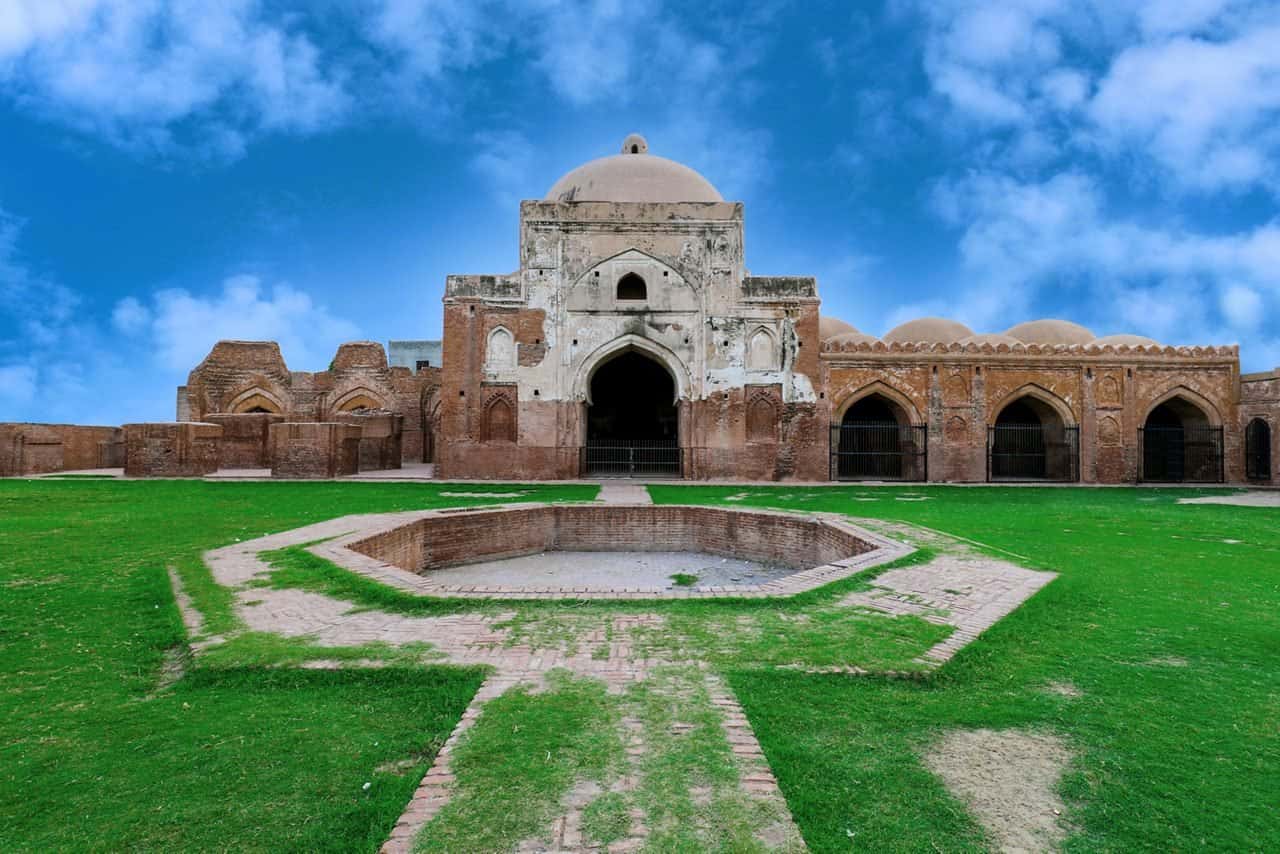
- Kabuli Bagh MosqueBuilt by Babur in about 1526 to 1527 to mark his victory in the first battle, this is one of the earliest Mughal monuments in India, protected by the Government of India and free to enter. Look for the masonry platform, the Chabutra-i-Fateh Mubarak, that Humayun added, bearing an inscription dated 1527 AD.
- Grave of Ibrahim Lodhi and Kala AmbIbrahim Lodhi, the Sultan defeated in 1526, is buried near the Tehsil office under a plain platform with a short Urdu inscription. Kala Amb, about 8 km out, marks where the Marathas made their stand in 1761; the old black mango tree is gone, and a brick pillar within an iron fence stands in a memorial park, generally open with no entry fee.
- Bu Ali Shah Qalandar dargah, Salar Gunj Gate and Devi TempleThe tomb of the thirteenth-century Sufi saint Bu Ali Shah Qalandar is the town's main living shrine, busiest on Thursdays. The old Salar Gunj Gate stands in the city centre, and the Devi Temple by a tank, with a nearby Shiva temple linked to a Maratha who stayed on after the battles, rounds out the cluster.
The single mistake that wrecks a Panipat plan is turning up on a Monday, when the Panipat Museum is closed, along with national holidays. Since the museum is the sight that makes the scattered monuments make sense, do not come on a Monday. Aim to be at the museum in the morning, about 10 am when it opens, and confirm the small entry fee and current hours at the counter before you rely on them.
How to spend your time in Panipat
Beyond ticking off monuments, these are the things that make a Panipat visit worthwhile, and how to arrange them without wasting the morning.
- Read the battles at the museumThe best single experience is not a monument at all but the hour or two you spend in the Panipat Museum getting the three battles straight. The miniatures, the weapons and the accounts of Babur, Hemu, the Marathas and Abdali turn a scatter of markers into a story you carry out into the town.
- Stand at Kala AmbKala Amb, where the Maratha command stood in 1761, is quiet and modest, but for anyone who knows the story of that terrible January day it is the most moving spot in Panipat. Go with the history fresh in your mind from the museum and it lands.
- See the birth of Mughal architectureKabuli Bagh, built by Babur in the 1520s, is one of the earliest Mughal buildings in India, the first note of a style that would later reach the Taj Mahal. It is worth a slow look for that reason alone, even though it is far plainer than what came after.
- Sit a while at the dargahThe Bu Ali Shah Qalandar tomb is the town's living heart, where people of every faith come to pray, especially on Thursdays. Dress modestly, cover your head, and it offers a calm, human contrast to the battle sites.
- Browse the textile marketsPanipat is India's textile city, and browsing the markets for durries, blankets, bedsheets and home furnishings is a genuine local experience, though it is a working wholesale and export town, not a boutique bazaar, so set your expectations that way.
- Pair it with Karnal or KurukshetraIf half a day in Panipat feels short, drive on to Karnal or the temple town of Kurukshetra, both close by on NH44, to round out a fuller and more varied day.
If you do only one thing in Panipat, make it the museum, and give it a proper hour or two rather than a quick lap. The monuments outside are modest and spread out, and it is the museum that carries the weight of the history. A visitor who reads the three battles carefully there leaves understanding why this ordinary-looking town matters so much; one who skips it can find the scattered markers underwhelming.
Where to stay in Panipat, and whether you need to
Most people do Panipat as a day trip and do not stay the night. If you do want to stay or break a journey, there are city hotels and two Haryana Tourism properties.
- Most visitors do not stayBecause Panipat is a half-day stop and only about 90 km from Delhi, the honest advice is that most travellers do it as a day trip and sleep in Delhi, Chandigarh or Karnal. You rarely need a night here unless you are shopping the textile markets seriously or breaking a long drive.
- Haryana Tourism's own propertiesFor a reliable, no-surprises option, Haryana Tourism runs the Skylark Tourist Complex in Panipat and the Blue Jay Tourist Resort at Samalkha in Panipat district on NH44. They are practical places to eat or stay and to break a Delhi to Chandigarh drive.
- City hotels and highway stopsThe city has plenty of business-class and budget hotels, many near Panipat Junction and along the highway, serving the town's large industrial trade. They are functional rather than characterful, which is fine for a night on the way through.
- Break the journey, do not build a tripThe smart use of a Panipat overnight is as a comfortable break on a longer northbound route, or as a base for a day of textile buying, rather than as a destination you plan a whole trip around.
What a Panipat visit costs
Panipat is cheap to visit: the sights charge little or nothing, and the main cost is your transport up from Delhi. Here is what to budget.
- The sights cost almost nothingThe Panipat Museum charges only a nominal fee, commonly reported at about 10 to 20 rupees for an Indian adult with a lower rate for children and a higher rate for foreign nationals, so confirm the current rate at the counter. Kabuli Bagh and Kala Amb are free, and the dargah asks only for a voluntary offering.
- Transport is the main costThe real cost of a Panipat day is the drive up from Delhi. A full-day car with driver from Delhi typically runs into a few thousand rupees depending on the vehicle; a train ticket into Panipat Junction is far cheaper, from a couple of hundred rupees, but then you need local autos to link the sites.
- Getting around townWithin Panipat, autos and app or local cabs handle the hops between the scattered monuments. Keep some cash for autos, small entry fees and the market, since not every small vendor takes cards or UPI.
- Textile shoppingIf you shop the markets, durries, blankets and home furnishings are the good value here, and prices are keen because it is a wholesale and export town; bargain gently and buy in the bigger shops or wholesale outlets for the best range.
Unlike most heritage stops, at Panipat the entry fees are trivial, a small museum ticket and free monuments, so do not fret over them. The one figure worth planning around is your transport: decide up front whether you are hiring a car for the day from Delhi, which is comfortable but costs a few thousand rupees, or taking the cheaper train and using local autos on the ground. That choice, not the ticket prices, sets the cost of your day.
Practical logistics: getting around, food, money and language
The small things that make a Panipat day smooth, from linking the scattered sites to food, cash and the local languages.
- Getting around a spread-out townThe monuments are scattered across a working industrial city, not a compact old quarter, so you will move between them by auto, cycle-rickshaw or cab. Hiring a car with driver, either from Delhi or from Panipat Junction, is the smoothest way to link the museum, Kabuli Bagh, the Lodhi grave and Kala Amb in one morning.
- Food and refreshmentPanipat has good, plain North Indian and Haryanvi food, with dhabas along NH44 and restaurants and malls in town. It is not a tourist food scene, so eat where the locals do; the highway dhabas on the GT Road are a classic stop on the drive up from Delhi.
- Money and ATMsBank ATMs are easy to find in this prosperous town, and cards and UPI work in hotels, malls and bigger shops. Carry some cash for autos, the small museum fee and market stalls.
- LanguageHindi and Haryanvi are the everyday languages, and Hindi will get you everywhere. English is understood in hotels and by younger people and traders, but less so with autos and at the smaller sites, so a few words of Hindi help.
Safety, health and holy-site etiquette in Panipat
Panipat is a normal, safe Indian city with no special dangers, but a few sensible habits around traffic, heat and the shrine keep the visit smooth.
- General safetyPanipat is a busy, ordinary industrial city with no particular danger for visitors. Take the usual city precautions: agree auto fares before you set off, keep valuables close in crowds and markets, and take care crossing the heavy traffic on the main roads and NH44.
- Heat, dust and waterThe Haryana plains are hot and dusty from April to June, so if you must visit then, carry water and sun protection and see the open-air monuments early. Drink bottled or filtered water and take the usual care with street food, as you would anywhere in the region.
- Etiquette at the dargah and templesAt the Bu Ali Shah Qalandar tomb and the Devi Temple, dress modestly, cover your head where expected, remove shoes as asked, and be quiet and respectful; these are living places of worship, busiest on Thursdays at the dargah, not just monuments.
- Women travellersPanipat is generally fine for women travellers with standard city precautions. As anywhere in the region, dress conservatively away from the big-city norm, prefer daytime for the scattered sites, and use booked cabs or a hired car rather than flagging down transport after dark.
Because most people visit Panipat as a day trip, the one practical safety habit is to plan your return before you lose the light. If you are driving, leave time for the traffic back into Delhi; if you are on the train, note your return service and reach Panipat Junction with a margin. The town itself is safe, but the scattered sites and the highway are far easier to handle in daylight.
Panipat for every kind of traveller, and on access
Panipat suits some visitors far more than others. Here is what it offers you, and the one tip that matters for each, including how a senior does it comfortably.
- History buffsThis is your town. Three decisive battles, the birth of Mughal rule, the fall of Hemu and the Maratha catastrophe of 1761 all played out here. Read up first, start at the museum, and Panipat rewards you more than any listicle suggests.
- Families with childrenEasy as a half-day history outing, especially for school-age children learning about the Mughals and Marathas. The museum brings the battles alive; keep the day short and pair it with a meal at a GT Road dhaba to keep everyone happy.
- Senior travellers and on accessibilityVery doable with planning. The museum is the low-effort core; hire a car with driver so you are not walking between scattered sites or negotiating autos, visit in the cool morning, and skip Kala Amb if walking is tiring. Come in winter, not the summer heat.
- Textile and home-furnishing buyersA serious destination in its own right. Give the markets a proper half or full day, head for the wholesale outlets and bigger stores, and consider an overnight at a Haryana Tourism property or a city hotel if you are buying in quantity.
- Weekend day-trippers from DelhiAn easy morning out up NH44. Leave Delhi early, do the museum and the town-centre cluster before lunch, add Kala Amb or a market browse, and be back in Delhi by evening, or drive on to Karnal or Kurukshetra.
- Students and school tripsOne of the best short history field trips near Delhi, since the museum lays out the three battles clearly. It works as a focused half-day with a teacher-led walk through the museum and a stop at Kala Amb.
A suggested Panipat itinerary and how long you need
How to shape a half day or a full day so you see the history in the right order and do not waste the morning crossing a spread-out town.
- The half-day planLeave Delhi early, reach Panipat mid-morning, and start at the museum about 10 am when it opens, giving it an hour or two. Then loop the town-centre cluster: Kabuli Bagh, the grave of Ibrahim Lodhi and the Bu Ali Shah Qalandar dargah. That is a satisfying half day for most visitors.
- The full-day planAdd Kala Amb, about 8 km out, after the town cluster, then either browse the textile markets or drive on to Karnal or Kurukshetra for the afternoon. A full day lets Panipat breathe and links it to more varied sights nearby.
- The museum-only versionIf you are just passing through on NH44, the museum alone is worth one to two hours and gives you the whole story of the three battles. It is the single stop that justifies pulling off the highway.
- How long overallHalf a day covers the essentials, a full day is comfortable and can fold in shopping or a nearby town, and only serious textile buyers need an overnight. There is no case for building a multi-day trip around Panipat alone.
The single thing that breaks a Panipat plan is arriving on a Monday, or a national holiday, when the Panipat Museum is closed. Since the museum is the stop that makes the scattered monuments make sense, a Monday visit leaves you looking at modest markers without the story behind them. Plan your day trip for a Tuesday to Sunday, aim to be at the museum when it opens about 10 am, and the rest of the loop falls into place.
The real questions travellers ask about Panipat
Straight answers to the questions that come up again and again on Quora and TripAdvisor, so you arrive knowing exactly what to expect.
- Is it worth visiting?For anyone interested in Indian history, yes, as a half-day stop: three battles that changed the country were fought here. If history does not draw you and your time is tight, it is honestly skippable. Real visitors often note there is not a lot to see, which is true if you skip the museum and the context.
- How long do I need?Half a day covers the museum and the town-centre monuments. A full day adds Kala Amb, the textile markets or a nearby town. Only serious textile buyers need an overnight. One to two hours is enough for the museum alone if you are just passing through.
- Is there a battlefield to see?No. There is no preserved battlefield to walk. What survives is monuments and memorials scattered across a working town, so the history lives in the museum and the markers rather than in any field.
- Is the museum closed on Mondays?Yes, the Panipat Museum is closed on Mondays and national holidays, and typically opens about 10 am to 5 pm. Since it is the anchor of the visit, do not come on a Monday, and confirm the hours and the small entry fee at the counter.
- Is it worth a day trip from Delhi?Yes, if you like history. It is about 90 km up NH44, roughly 2 to 2.5 hours by car or about 1 to 1.5 hours by fast train into Panipat Junction. Leave early, do the sights before and after lunch, and be back the same day.
- Can I combine it with Kurukshetra or Karnal?Easily. Both lie close by on NH44 north of Panipat, so a common plan is Panipat in the morning and Karnal or the temple town of Kurukshetra in the afternoon, making a fuller and more varied day out of Delhi.
Planning Panipat from abroad
For a history-minded overseas or NRI visitor, Panipat is an easy, rewarding half-day out of Delhi, as long as you arrive with the right expectations about what the town is.
- Know what you are visitingPanipat is a working industrial and textile city famous for three battles that shaped Indian history, not a preserved heritage town. The monuments are scattered and modest, and the museum carries the story. Come for the history with that expectation and it is genuinely rewarding.
- Do it as a day trip from DelhiFly into Delhi, then reach Panipat by car up NH44 in about 2 to 2.5 hours or by a morning train into Panipat Junction in about 1 to 1.5 hours. It is an easy half-day add-on to a Delhi stay and needs no overnight for most visitors.
- Slot it into a north India routePanipat sits directly on the Delhi to Chandigarh and Amritsar corridor, so it works well as a two to three hour history break on a longer northbound trip rather than a special journey. Pair it with Kurukshetra or Karnal for a fuller day.
- Mind the museum daysThe Panipat Museum, the anchor of the visit, is closed on Mondays and national holidays and opens about 10 am to 5 pm. Plan a Tuesday-to-Sunday visit, and remember foreign nationals may pay a slightly higher entry fee, which is still small; confirm it at the counter.
Why Panipat matters, and the basics for foreign visitors
A short brief on why these plains matter so much in Indian history, plus the money, language and timing basics an overseas visitor needs for a small historical town.
- Why the town mattersThree times across more than two centuries, the fate of northern India was decided on these plains: Babur founding Mughal rule in 1526, Akbar's regime securing it against Hemu in 1556, and Abdali shattering Maratha power in 1761. Few single places carry so much turning-point history, which is why it is a serious stop for anyone reading India's past.
- Carry cash, cards work in townCards and UPI work in hotels, malls and bigger shops, but carry some cash for autos, the small museum fee and market stalls. ATMs are easy to find in this prosperous city.
- Language and getting aroundHindi and Haryanvi are the local languages and Hindi will get you everywhere; English is patchy with autos and at the smaller sites. Hiring a car with driver for the day removes the friction of linking the scattered monuments.
- Time it for winterOctober to March is the comfortable window for the open-air sights and the drive. Avoid April to June, when the plains are very hot and dusty, and the monsoon months, which can make the town messy.
For an overseas visitor, the right way to think of Panipat is as a meaningful half-day pilgrimage into Indian history, slotted between Delhi and the north, rather than a holiday destination in itself. Arrive having read the three battles, start at the museum, see the monuments with that context, and you will understand why an unremarkable-looking Haryana city holds such a large place in the story of India.
Why one ordinary town holds three turning points
Panipat lies on the flat, open corridor between the Punjab and Delhi, the natural line of march for any army coming down from the north-west towards the throne of Hindustan. That geography, more than any legend, is why the same plain saw the decisive battle three times. On about 21 April 1526 Babur defeated Ibrahim Lodhi and founded the Mughal empire. On about 5 November 1556 the young Akbar's forces broke Hemu and secured that empire. On 14 January 1761 Ahmad Shah Abdali destroyed the Maratha army under Sadashiv Rao Bhau in a single catastrophic day that changed the balance of power in India. No preserved battlefield survives to walk; what remains is the museum, Babur's Kabuli Bagh mosque, Ibrahim Lodhi's grave and the lonely Kala Amb pillar. The keepsake of Panipat is not a monument but a fact: that three of the hinges of Indian history turned on one unremarkable stretch of Haryana plain.
Planning a Panipat trip?
Our Haryana travel experts plan your full journey for you: route, hotels, darshan timings and transport. You get a free day-by-day plan and an exact quote on WhatsApp, usually within a few hours. No payment is needed to get your plan.