Billing Travel Guide
Flying runs roughly mid-September to end June , with October to November the finest window. The monsoon is officially closed, so plan around the calendar, not around hope.
When to visit Bir Billing, and when the sky is closed
Flying runs roughly mid-September to end June, with October to November the finest window. The monsoon is officially closed, so plan around the calendar, not around hope.
- October to November: the prime windowPost-monsoon skies are clear, the thermals are strong and predictable, and on a good day you can see the snow line of the Dhauladhar. This is when competitions are held and when the flying is at its best, so slots fill fast and it pays to book ahead.
- March to May: the reliable second windowMild weather, building thermals and moderate crowds make spring the other dependable season. Days are warm and the valley is green, and it is a good time to pair flying with a trek before the monsoon arrives.
- December to February: cold and only for the braveWinter flying happens on clear days, with snow on the peaks for a spectacular view, but the air is cold, the thermals are weak and many commercial operators wind down. Treat deep-winter flying as weather-dependent and confirm before you travel up.
- The monsoon: officially shutFlying is officially closed for the monsoon, commonly stated as about 1 July to about 15 September, when rain and unstable air make it unsafe. Come for the green tea gardens and monasteries if you like, but do not plan a flight in this window.
The exact reopening date after the monsoon shifts a little year to year, and different operators quote about 14 or 15 September. Treat mid-September to end June as the working season and the roughly 1 July to 15 September monsoon window as closed, but reconfirm the current opening with a licensed operator or Himachal Tourism before you lock flights, buses or rooms. Flying is always weather-dependent on the day, so build in a buffer rather than betting on one tight morning slot.
How to reach Bir Billing
Bir has no airport and only a slow toy-train halt of its own. Most travellers come by road from Delhi, or via Pathankot railhead or Gaggal airport, then up the mountain road to Billing.
- The railheads: Pathankot and the Ahju toy trainThe nearest broad-gauge railway station is Pathankot, about 140 to 145 km away, roughly 3 to 4 hours by taxi. The tiny Ahju halt about 3 km from Bir sits on the slow narrow-gauge Kangra Valley toy-train line and is lovely but very slow, so most travellers use Pathankot or come by road.
- The airports: Gaggal, then ChandigarhGaggal, also called Kangra or Dharamshala airport, is the nearest at about 65 to 70 km, roughly 2 to 3 hours by road, with limited and changeable flights to Delhi and a few metros. Chandigarh, about 5 to 6 hours away, is the larger and more reliable fallback. There are no flights into Bir itself.
- From Delhi by overnight busThe usual approach is an overnight Volvo or AC bus, about 490 to 500 km and roughly 12 to 14 hours from ISBT Kashmiri Gate or Majnu Ka Tila, costing very roughly about 1,000 to 1,800 rupees a seat depending on operator and season. Book about a week ahead in the March to June and October peaks.
- The last leg up to BillingBir is the landing ground and the base you stay in; Billing, the take-off, is about 14 km and 45 minutes to an hour higher up a single rough road cut into the rock in 1962. Shared jeeps run flyers up to the launch, and that ride is part of the experience, so leave time for it.
Fly into Delhi, then either take a short domestic hop to Gaggal (Kangra) and drive about 2 to 3 hours, or take the overnight bus, or hire a car. Bir pairs naturally with Dharamsala and McLeod Ganj on a Himalayan loop.
Fly into Delhi or Chandigarh, then drive up through the Kangra valley. Allow the best part of a day from Chandigarh; it is the more reliable airport when Gaggal's limited flights do not suit.
Take the overnight Volvo from Delhi, or a train to Pathankot and a taxi over, or fly to Gaggal. The Delhi bus is the workhorse route for weekenders.
The launch, the monasteries, and the tea gardens
Bir is a Tibetan hill village as much as a flying site. Beyond the Billing launch, the monasteries, the Deer Park Institute and the tea gardens give the place its calm, unhurried soul.
- The Billing take-off and the Bir landing groundBilling at about 2,400 m is the launch, with a grandstand view over the Kangra valley; the landing ground at Bir, around 1,400 m in the Chowgan meadow, is where you touch down and where spectators gather to watch canopies drift in. Even non-flyers ride up to Billing for the view.
- Chokling Monastery and the Tibetan colonyIn the Tibetan colony founded by refugees in the early 1960s, Chokling Monastery has a large stupa and a grand statue of Padmasambhava, and the surrounding lanes are full of prayer flags, handicraft shops and Tibetan kitchens. It is the cultural heart of Bir.
- Palpung Sherab Ling MonasteryAbout 7 km from Bir, set in forest, Sherab Ling is the seat of the Tai Situ Rinpoche and one of the most serene spots in the area. There is a mostly level forest walk up from lower Bir, which is a lovely half-day in itself.
- The Deer Park Institute and the tea gardensThe Deer Park Institute runs public courses on Buddhist philosophy, meditation and the classical Indian traditions. All around, the Chowgan tea estate and the Bir tea factory offer gentle walks and a tour of how the leaf is made, a quiet counterpoint to the adrenaline of the launch.
The monasteries are working places of worship, not photo backdrops. Dress modestly, remove shoes where asked, walk clockwise around stupas, keep your voice down during prayers, and ask before photographing monks or ceremonies. The Tibetan community here is warm and welcoming, and a little courtesy is repaid many times over.
Signature experiences in Bir Billing
The tandem flight is the headline, but the tea walk, the monasteries and the Rajgundha trek are what turn a morning stop into a proper Himalayan few days.
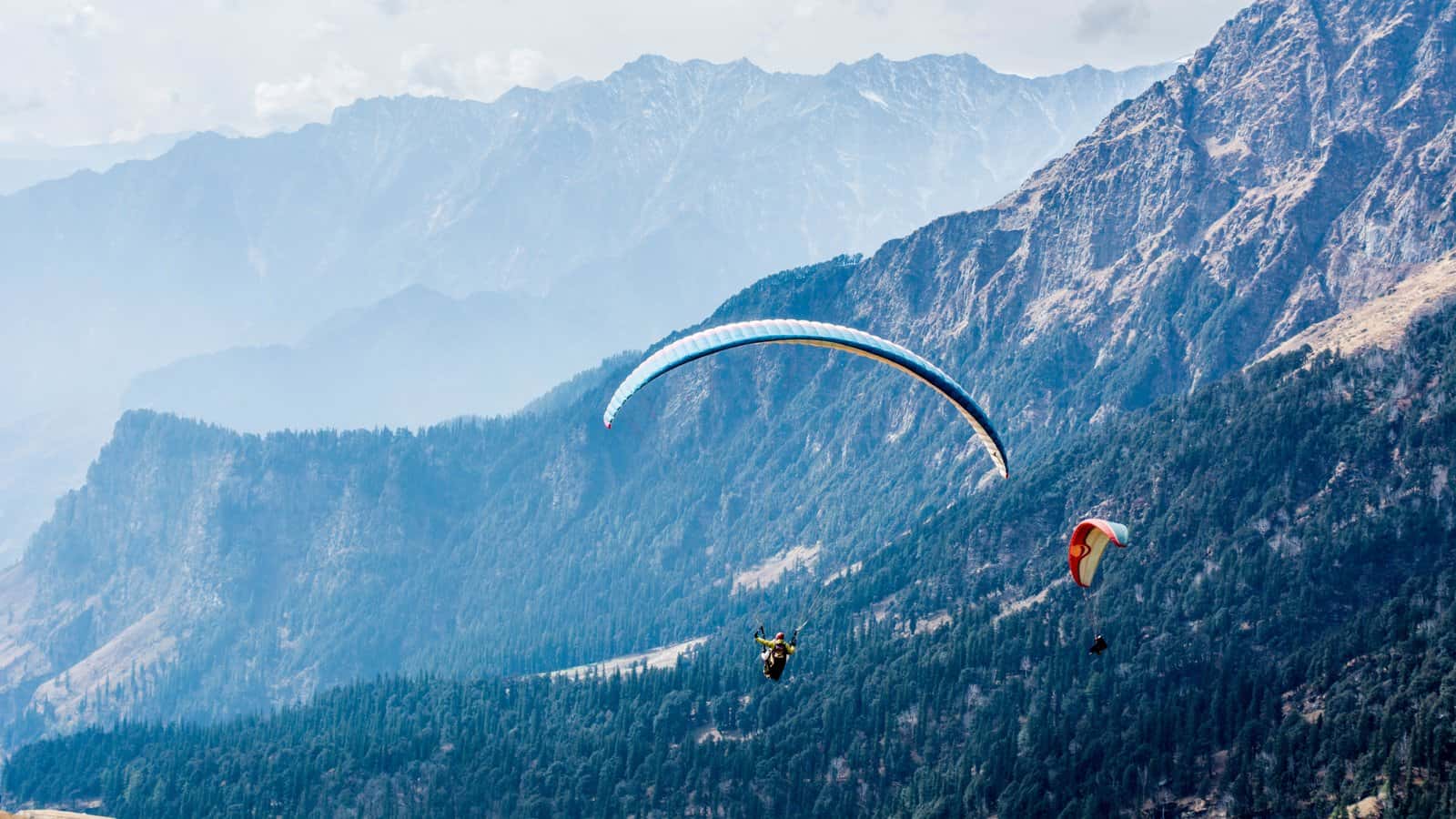
- The tandem paragliding flightThe signature experience: a certified pilot flies the wing while you sit strapped in front, launching from Billing and landing at Bir. A standard flight is about 15 to 30 minutes and commonly costs about 3,000 to 3,500 rupees; a longer high-thermal flight of about 30 to 60 minutes runs about 4,500 to 6,500 rupees. Read the safety section before you book.
- The forest walk to Sherab LingA mostly level walk through pine and tea from lower Bir up to the Sherab Ling monastery is the loveliest gentle half-day here, and a fine thing to do on a no-fly day or when the wind is wrong. Quiet, green and almost entirely yours outside weekends.
- The Chowgan tea walk and factory tourStroll the sloping Chowgan tea gardens and tour the Bir tea factory to see how the leaf is picked, withered and rolled, then buy a packet at source. It is a calm, cheap and genuinely interesting couple of hours that most flying-only visitors miss.
- The Rajgundha and Barot valley trekThe classic multi-day trek from Bir is the Rajgundha and Barot circuit, commonly a 2 to 3 day, 2 night trip through shepherd country with simple homestays and camps. A guided camping night at Rajgundha is often about 1,500 rupees plus tax per person with dinner and breakfast. It is the best way to see the mountains beyond the launch.
- A meditation or philosophy courseThe Deer Park Institute runs public courses and short workshops on Buddhist philosophy and meditation, and several monasteries welcome quiet visitors. Even a single sitting is a different, slower way to spend a Bir afternoon.
- The cafe scene and Tibetan foodBir has grown a relaxed cafe culture, with good coffee, Tibetan momos and thukpa, and a steady crowd of backpackers and remote workers. Linger over a slow breakfast while you wait for the flying window to open.
If the weather gives you a clear morning, take the flight early: the air is smoother, the light on the Dhauladhar is at its best, and you are far less likely to feel queasy than in the choppy thermals of midday. Then spend the calmer afternoon slowly, on the tea walk or at a monastery, and let Bir be more than a single adrenaline hit. The people who give it two unhurried days are the ones who leave planning to return.
Where to stay in Bir, and how many nights
You stay in Bir, not up at Billing. Choose the colony and landing-ground side for cafes and convenience, or a quieter homestay in the tea and forest edge. One to two nights suits most.
- Around the landing ground and the colonyStaying near the Chowgan landing ground and the Tibetan colony puts you in walking reach of the cafes, the jeep pick-up for Billing and the monasteries. It is the convenient, sociable choice for a first visit and for flyers who want to be near the action.
- The quieter tea-and-forest edgeHomestays and small guesthouses set back in the tea gardens and pine give you calm, views and birdsong, at the cost of a short walk or drive into the cafe cluster. Better for couples, writers and anyone here to slow down.
- How many nightsOne full day and night covers a flight plus a monastery or tea walk; a second night lets you add a longer flight, start a trek, or simply keep a buffer for weather. In the flying season, two nights is wiser than one, since a single tight morning slot can be lost to wind.
- Room budgetsBudget homestays and guesthouses around Bir commonly run about 800 to 1,500 rupees a night for a double, with mid-range and boutique stays climbing well above that. Rates and availability tighten in the October and spring peaks, so book ahead then.
A common first-timer mix-up is trying to stay up at Billing. Billing is the take-off point, a bare launch site on a ridge with almost nothing to sleep in; Bir, down in the valley, is where the village, the cafes, the monasteries and the homestays are. Base yourself in Bir and ride up to Billing for your flight. If you want a mountain night higher up, that is what the Rajgundha and Barot trek is for.
Bir Billing costs and a realistic daily budget
Bir is gentle on the wallet once you are there. Here is what the flight, the room, the food and the trek cost, so you can plan and read a quote correctly.
- The paragliding flightA standard tandem of about 15 to 30 minutes commonly runs about 3,000 to 3,500 rupees, and a long high-thermal flight of about 30 to 60 minutes about 4,500 to 6,500 rupees. A GoPro photo-and-video package is usually about 500 to 1,000 rupees extra unless bundled, so confirm whether video is included before you launch.
- Rooms and foodBudget homestays run about 800 to 1,500 rupees a night for a double, and Bir's cafes are cheap by hill-station standards. A backpacker can get by on a modest daily budget once the flight is paid for, while a comfortable day with cafes, a jeep ride and a long flight costs more but still less than a resort hill station.
- The trekA guided camping night at Rajgundha is often about 1,500 rupees plus tax per person with dinner and breakfast, and a full 2 to 3 day Rajgundha and Barot trip with transport, stays, food and a guide is commonly quoted in the several-thousand-rupee range per person. Ask exactly what is included before you commit.
- Getting thereThe Delhi overnight bus is very roughly about 1,000 to 1,800 rupees a seat depending on operator and season; a Pathankot taxi transfer or a Gaggal flight costs more. Budget the journey separately from your on-the-ground days, since transport is the biggest single line for most trips.
The Himachal authorities set a minimum tandem rate, widely reported at about 3,000 rupees per person for a standard flight, precisely to stop unlicensed operators undercutting on safety. So a quote well below 3,000 rupees is not a bargain, it is a red flag: the cheapest wings are often the ones cutting corners on licences and kit. Pay the fair rate, confirm the flight length and whether video is included, and treat any hard-sell discount with suspicion.
Practical logistics: money, SIM, power and getting around
The small things that make a Bir day smooth, from cash and ATMs to the 220V power, the local jeeps and the polythene ban.
- Cash, cards and ATMsBir has a few ATMs but they can run dry in peak season or on a long weekend, so carry enough cash from Pathankot, Gaggal or Baijnath to cover your flight, jeeps and small cafes. Bigger operators and some cafes take UPI or cards, but the small vendors and jeep drivers run on cash.
- SIM, signal and powerMobile coverage in Bir is generally fine for calls, maps and data, though it thins on the trek and up at Billing. Standard voltage across Himachal Pradesh is 220V, so most travellers need only a plug adapter, not a converter. Carry a power bank for long flying-day waits and treks.
- Getting aroundBir itself is walkable, and shared jeeps handle the run up to the Billing launch. For the monasteries, tea gardens and Baijnath temple nearby you can hire a taxi or auto for a half day. There is no need for your own vehicle unless you are combining Bir with a wider Himachal drive.
- Pack for the mountain and respect the banEven in the flying season, mornings and the ride up to Billing are cold, so carry a warm layer and a windcheater. Himachal Pradesh enforces a plastic and polythene ban, so bring a reusable bottle and bag, and do not litter the tea gardens or trails.
Paragliding safety, checking your pilot, and staying well
Bir is a world-class flying site, but it has a real accident record. A few honest checks, done before you leave the ground, are what keep the experience joyful rather than reckless.
- Know the real recordLocal reporting has recorded about 14 pilots killed in roughly 30 accidents over about five years at Bir Billing. Paragliding here is not risk-free, and the honest response is not to avoid it but to fly with a properly licensed pilot in good conditions, and to refuse the cheapest, most rushed operators.
- Check the licence and the kitPilots are meant to hold a valid licence registered with the Himachal Pradesh Tourism Department, with periodic medical checks. As a passenger you are entitled to ask to see that licence, and to look over the harness buckles and canopy before you fly. A good pilot welcomes the question; anyone who bristles at it is a reason to walk away.
- Fly in the right conditionsFly early morning when the air is smoother, and accept that a flight can be postponed or cancelled for wind, cloud or rain. Do not push a marginal-weather flight, and be wary of any operator flying outside daylight or approved hours. The mountain will still be there tomorrow.
- Altitude, motion sickness and healthBilling sits at about 2,400 m, so the launch is cool and the air thinner than the plains; take it slowly on the ride up. If you are prone to motion sickness, fly early, eat lightly beforehand, and tell your pilot. Carry any personal medication, as Bir is a small village with limited medical facilities and the nearest hospitals are down the valley.
Check that your travel insurance actually covers adventure sports and paragliding, as many standard policies exclude them, and confirm whether the operator carries its own cover. The bottom line is simple and worth repeating: the fair, government-minimum-rate flight with a licensed pilot in good morning air is a wonderful, reasonable thing to do; the cut-price, hard-sell flight in marginal weather is where the accident record comes from. Choose the first, every time, and Bir rewards you.
Bir Billing for every kind of traveller, and on access
Bir suits very different visitors, and the honest word on whether the flight suits a child, a nervous flyer or an older traveller matters more here than the usual persona notes.
- CouplesA lovely mix of adrenaline and calm: fly in the morning, walk the tea gardens or a monastery in the afternoon, and settle into a cafe as the light goes. An overnight rather than a day trip lets you catch a clear-weather flight without rushing.
- Families with childrenTandem flights typically accept passengers roughly from about 30 kg upward and children fly with a certified pilot, but weigh it honestly for a nervous or very young child and never let anyone pressure a scared kid into the harness. The tea walk, the monasteries and the landing-ground spectacle are easy, happy family time even without flying.
- Senior travellers and on accessibilityVery doable with planning. The tandem flight needs no fitness, but the jeep ride up to Billing is rough and the launch is at altitude, so take it slowly and skip it if a heart or back condition makes it unwise. The monasteries, the level Sherab Ling walk and the tea gardens are gentle, and staying near the colony limits how far you walk.
- Backpackers and digital nomadsBir has become a genuine long-stay hub, with cheap homestays, good cafes, workable wifi and a friendly crowd. Easy to reach on the Delhi bus, cheap to live in, and a fine place to slow down for a week between flights, treks and coffee.
- Solo female travellersBir is generally relaxed and well used to independent travellers, including solo women, with the usual friction being sales pressure at the launch rather than anything worse. Standard precautions apply: choose a reputable operator, keep to lit lanes after dark, and trust your read of a pilot or a lift.
- Nervous first-time flyersYou are strapped in front of a pilot who does all the work, and the launch is a few running steps rather than a jump; most anxious flyers relax within a minute. Fly early for smoother air, ask for a shorter flight, and tell your pilot you are nervous so they keep it gentle.
A suggested Bir Billing itinerary
How to shape one or two days around the weather so you catch a clear-morning flight and still see the Bir that has nothing to do with paragliding.
- Day one, morningRide up to Billing early for the smoothest air and the best light, take your tandem flight, and land back at the Chowgan ground in Bir. Keep the morning free rather than booking a rigid slot, since wind can push the window.
- Day one, afternoon and eveningOnce you are down, slow the pace: walk the Chowgan tea gardens or up to Sherab Ling, visit Chokling Monastery in the colony, and end in a cafe over momos and coffee. This is the half of Bir the flying-only crowd never sees.
- Day two, if you have itAdd a longer high-thermal flight if the weather holds, or start the Rajgundha and Barot trek, or take a course at the Deer Park Institute. A second night also gives you a weather buffer, which in flying season is worth a lot.
- Pairing Bir with the wider Kangra loopBir sits neatly with Baijnath's ancient Shiva temple nearby, and with Palampur, Dharamsala and McLeod Ganj a couple of hours on. Many travellers do Bir as the adventure chapter of a longer Kangra and Dhauladhar loop.
The single thing that breaks a tight Bir plan is treating the flight like a fixed appointment. Paragliding is entirely weather-dependent: a clear morning can turn windy by eleven, and a cancelled slot may only be reflyable the next day. Keep your flight in the early morning, keep a buffer day if you are here in the flying season, and never schedule the flight for the same afternoon your bus leaves. Plan around the sky and you will fly; plan around the clock and you may not.
The real questions travellers ask about Bir Billing
Straight answers to the questions that come up again and again on traveller forums, so you arrive already knowing the score.
- Is the paragliding actually safe?It is a real adventure sport with a real accident record, about 14 pilot deaths in five years, so it is not risk-free. Flown with a licensed pilot in good morning air at the fair rate, it is a reasonable, joyful thing to do. The risk climbs with cut-price operators and marginal weather, which is exactly what to avoid.
- How much should the flight cost?About 3,000 to 3,500 rupees for a standard 15 to 30 minute flight, and about 4,500 to 6,500 rupees for a long one, with video usually about 500 to 1,000 rupees extra. The government minimum is about 3,000 rupees, so a much cheaper quote is a warning sign, not a deal.
- Can a child or a nervous person do it?Tandem flights need no experience and a certified pilot does everything, so nervous first-timers usually relax fast. Children can fly with a pilot subject to a rough minimum weight around 30 kg, but never push a frightened child. Tell your pilot you are anxious and ask for a gentle, shorter flight.
- Will I feel motion sick, and how long is the flight?A standard flight is about 10 to 35 minutes. Some people feel queasy in the choppy thermals of midday, so fly early when the air is smooth, eat lightly beforehand, and tell your pilot, who can fly a steadier line.
- Is Bir worth it if I do not fly?Yes. The Tibetan monasteries, the Deer Park Institute, the Chowgan tea gardens and factory, the forest walk to Sherab Ling and the Rajgundha trek make Bir a proper little hill village. Plenty of visitors come for the calm and never leave the ground.
- Do I need to book in advance?In the October and spring peaks, pre-book your flight and your room, as slots and beds fill. Off-peak you can often arrange a flight on the day with a reputable operator, but flying is always subject to the weather on the morning.
Planning Bir Billing from abroad
Bir is a world-class flying site and a gentle Tibetan village, and it pairs naturally with Dharamsala. A little preparation on getting there, checking a pilot and the mountain weather makes it easy.
- It is remote, so plan the approachBir has no big airport of its own. Fly into Delhi, then take a short domestic hop to Gaggal (Kangra) and drive about 2 to 3 hours, or use Chandigarh, or the overnight bus. Give the journey a proper half to full day rather than assuming a quick transfer.
- How to fly safely as a visitorYou may not know the local operators, so lean on the simple checks: pay the fair, government-minimum rate of about 3,000 rupees rather than the cheapest quote, ask to see the pilot's Himachal Tourism licence, and fly in calm morning air. Confirm your travel insurance covers paragliding, as many policies exclude it.
- Pair it with DharamsalaBir sits an easy couple of hours from Palampur, Dharamsala and McLeod Ganj, the home of the Tibetan government in exile. A natural loop is Amritsar or Delhi, then Dharamsala and McLeod Ganj, then Bir for the flight and the calm, before heading back.
- Dress and time it for the mountainOctober to November and March to May are the comfortable flying windows; the monsoon is closed and deep winter is cold and thin on flights. Even in season the launch at about 2,400 m is chilly in the morning, so carry a warm layer and sun protection for the valley.
Money, connectivity and timing for foreign visitors
The practical basics an overseas traveller needs for a small Himalayan village: cash, cards, a SIM, and how many days to give Bir on a wider India trip.
- Carry cash, do not rely on Bir's ATMsCards and UPI work with bigger operators and some cafes, but jeep drivers, small eateries and the trek run on cash, and Bir's few ATMs can run dry in peak season. Draw cash before you arrive, at Pathankot, Gaggal or a larger town, and keep small notes.
- Get a SIM at the airportPick up an Indian tourist SIM or an eSIM when you land in Delhi or Chandigarh rather than hunting for one in a small village. Coverage in Bir is fine for maps, calls and booking a flight, though it thins on the trek and up at Billing.
- How long to give it on a bigger tripOn a Himalayan loop, two nights in Bir is the right weight: one for the flight and the monasteries, one as a weather buffer or for a trek start. If you also want the Rajgundha and Barot trek, add its 2 to 3 days on top.
- Time your visit to the flying seasonIf flying is the point, come in October to November or March to May, avoid the monsoon closure entirely, and treat deep winter as unreliable for commercial flights. If you mostly want the calm and the monasteries, the shoulder weeks are quiet and lovely.
Bir is an unusually gentle slice of the Himalayas: small, walkable, Tibetan in flavour and far calmer than a big city, with a genuine adventure at its heart. Slot it after Dharamsala, give it two nights, and let it be the chapter where you either fly over the Kangra valley or simply drink tea while others do. Many overseas visitors say the mix of adrenaline and monastery calm is the part of the trip they remember most.
Why the 14 km from Bir to Billing feels like a small pilgrimage
There is only one way up to the launch, and it is a road that should not really exist. The roughly 14 km track from Bir up to the Billing take-off, climbing from about 1,400 m to about 2,400 m, was cut out of the sheer rock face of the Dhauladhar foothills in 1962, and for a long time it could be covered only on foot or by jeep. Even today the ride up is slow, rough and a little thrilling, past tea gardens and pine and the odd shepherd, until the valley suddenly opens out below the ridge. By the time you stand at Billing, harness on, the Kangra valley spread out and the snow line ahead, the flight feels less like a purchased thrill and more like the last step of a small pilgrimage the mountain made you earn. That is the thing the price lists never mention, and the thing flyers remember.
Planning a Billing trip?
Our Himachal Pradesh travel experts plan your full journey for you: route, hotels, darshan timings and transport. You get a free day-by-day plan and an exact quote on WhatsApp, usually within a few hours. No payment is needed to get your plan.