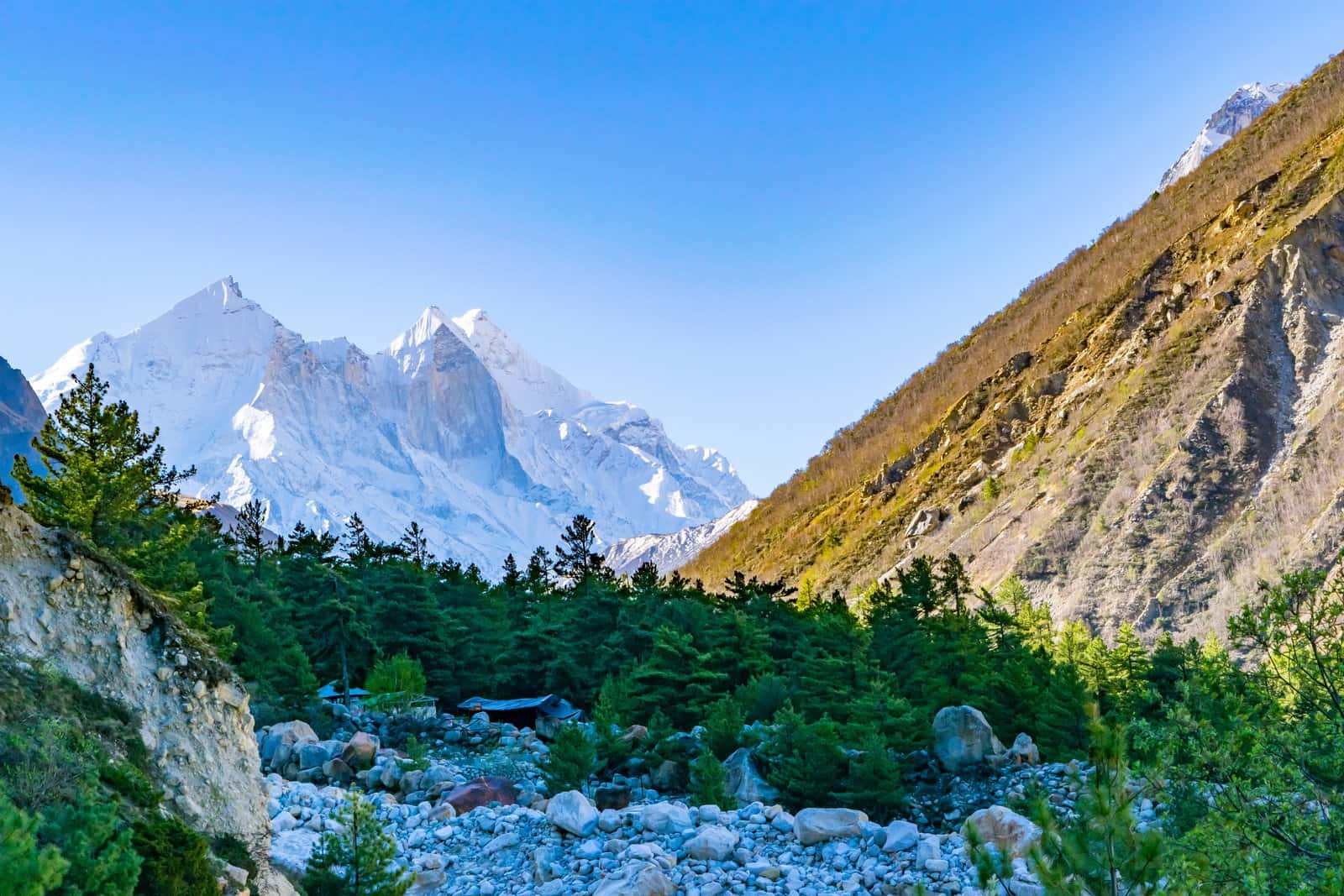
Gushaini Village Travel Guide
The kind months are spring to early summer and the clear weeks after the monsoon . Winter is beautiful but cold, with snow and a closed Jalori Pass, so plan around what you want.
When to visit Gushaini and the Tirthan Valley
The kind months are spring to early summer and the clear weeks after the monsoon. Winter is beautiful but cold, with snow and a closed Jalori Pass, so plan around what you want.
- March to June: green, and fishing opensSpring warms the valley, the forests turn green and the Tirthan river runs clear. This is the loveliest stretch for riverside homestays, easy walks and trout angling once the season opens. Days are pleasant and nights stay cool, so carry a light layer even in June.
- July and August: monsoon, and slipsThe monsoon brings heavy green and heavier risk. The last narrow road can slip, small landslides close stretches for a while, and leeches come out on the damp trails. If you come now, keep your plans flexible and do not chase high treks in the rain.
- September to November: the clearest airAfter the rain the valley is at its cleanest and calmest, with sharp mountain views and thinning crowds. This is a fine window for the Serolsar Lake walk and the park ecozone trails before the cold sets in.
- December to February: snow and quietWinter is cold and can bring snow to Gushaini, and Jalori Pass road closes in heavy snow, commonly from about late December to March. Some homestays shut for the season. Come for the silence and the fireside, not for the high treks, and reach the valley only by the Aut and Banjar road.
Gushaini is not a one-season place. If you want to fish and walk in easy green, come in spring or early summer. If you want the sharpest Himalayan views, come after the monsoon in October or November. If you want deep quiet and do not mind the cold and a closed Jalori Pass, come in winter. What you must not do is arrive in the monsoon expecting to trek high, or in deep winter expecting the pass and every homestay to be open.
How to reach Gushaini and Tirthan Valley
Gushaini has no airport or railway of its own. Almost everyone comes off the Mandi to Kullu highway at Aut, then drives up the Tirthan road through Banjar.
- The Aut turn-off, the gatewayEveryone enters the valley at the Aut tunnel on the Mandi to Kullu highway. From Aut you turn towards Banjar and Jibhi and follow the Tirthan river up. Gushaini is about 30 km from Aut, roughly 1 to 1.5 hours on a road that narrows towards the end.
- By overnight bus from DelhiThe simplest way from Delhi is an overnight HRTC or HPTDC Volvo bus from ISBT Kashmere Gate to Aut, about 1,300 to 1,800 rupees, or an ordinary bus about 700 to 900 rupees, around 12 hours. From Aut take a local bus, about 40 to 50 rupees, to Banjar, then a taxi, about 800 to 1,200 rupees, on to Gushaini.
- Nearest airport and railheadsBhuntar, the Kullu-Manali airport, is about 50 km away, roughly 2 hours by road, but flights are limited and change often, so treat Chandigarh and Delhi as your reliable air gateways. The nearest narrow-gauge railhead is Joginder Nagar, about 160 km away; the practical broad-gauge railheads are Chandigarh, about 300 km away, and the Kiratpur and Ambala side.
- By car from Kullu or ManaliIf you are already in Kullu, Gushaini is about 60 km away by road through Bhuntar and Aut. A car with a steady driver is the easiest way in, since the last stretch above Banjar is narrow and slow. We can arrange a car and a driver who knows the Tirthan road.
Fly into Delhi, the main international gateway, then take an overnight bus or a private car to Aut and up the Tirthan road, or fly Delhi to Bhuntar if a suitable flight exists and drive the last stretch.
Fly into Delhi or Chandigarh, then drive up through Mandi and Aut. Gushaini sits off the main Kullu highway, so the road leg is a scenic half-day from Chandigarh.
Take an overnight Volvo to Aut from Delhi or Chandigarh, or drive. From Kullu or Manali it is a short road trip down to Aut and up the Tirthan valley to Gushaini.
The park, the river, and the sights around Gushaini
Gushaini is the Tirthan river, the gateway to a UNESCO park, and a handful of forest walks and old villages. The big draw is nature, not monuments.
- The Great Himalayan National ParkThe Great Himalayan National Park is a UNESCO World Heritage Site inscribed in 2014, with a core zone of about 905 sq km and elevations from about 1,500 m to about 6,000 m. Gushaini is a main road-head for the Tirthan side. Most visitors walk the free ecozone trails near the river; the park interior needs a permit and a guide, covered in the experiences and overseas sections below.
- The Tirthan riverThe clear, cold Tirthan is the heart of the valley, good for sitting by, careful paddling in the shallows, and trout angling in season. Many homestays sit right on the bank, and the sound of the river is half the reason people come.
- Serolsar Lake and Jalori PassDrive up to Jalori Pass, at about 3,120 m, then walk about 5 km through forest to Serolsar Lake, with the small Budhi Nagin temple on its shore. Raghupur Fort is a short walk the other way from the pass, with wide ridge views.
- Chhoie waterfall and Chehni KothiChhoie waterfall near Nagini is a short, easy forest walk. Chehni Kothi near Jibhi is a tall old tower-fort worth the climb through the village, and the Jibhi and Tirthan-side waterfalls make gentle half-day add-ons.
Do not come to Gushaini for a list of monuments to tick. Come for the river, the forest walks, a night under clear stars, and the slow rhythm of a small Himalayan village. The best hours here are spent by the water, on a quiet trail, or on a homestay terrace with tea, not rushing between attractions. Plan light, walk gently, and let the valley set the pace.
Signature experiences in Gushaini and Tirthan
These are the experiences people remember, and how to arrange them honestly, from trout angling to a walk into the UNESCO park.
- Trout angling on the TirthanThe Tirthan is a designated trout water, and Himachal Tourism lists the Largi to Nagni stretch, about 20 km, for angling. You need a rod-and-line licence from the state Fisheries Department, whose office is in the Banjar and Larji area, commonly around 100 to 300 rupees a day. Reconfirm the current fee locally, fish catch-and-release, and remember there is a closed spawning season.
- A walk into the park ecozoneThe GHNP ecozone trails near the river are free and need no permit or guide, and they give you a real taste of the forest and birdlife without a hard trek. This is the easy, honest way to feel the park in a day, and it suits families and first-timers well.
- A guided core-zone trekFor the park interior you need a permit from the range office at Shairopa and, for multi-day routes, a registered guide, arranged through the park or a local ecotourism society. These are proper Himalayan treks with camping, best for fit walkers with a few days to spare.
- The Serolsar Lake walkDrive to Jalori Pass and walk about 5 km through old forest to Serolsar Lake. It is an easy to moderate day walk, magical in clear weather, and one of the gentlest ways to reach a high forest lake in this part of Himachal.
- River crossing and village trailsSome homestays reach across the river by a hand-pulled trolley or a small footbridge, a small thrill in itself. Short walks to nearby hamlets, orchards and small waterfalls fill an unhurried day beautifully.
- Slow homestay living and stargazingHalf the point of Gushaini is doing very little: a book by the river, a home-cooked Himachali meal, and a clear night sky far from city lights. Ask your host about the local dham thali and the day's fresh trout if the season is open.
The single most useful thing to understand here is that the ecozone day trails are free and open to all, while only the park interior needs a permit and a guide. Many visitors are happy with the ecozone walks, the river and the Serolsar Lake day trip and never need a core-zone permit at all. Decide honestly how much real trekking you want before you book a guided expedition, and you will neither over-pay nor under-prepare.
Where to stay in Gushaini, and how long
Gushaini is homestays and small riverside guest houses, with no big hotels. Two to three nights is the sweet spot for a real feel of the valley.
- Riverside homestays and campsThe signature Gushaini stay is a homestay or small guest house on the Tirthan bank, some reached by a hand-pulled trolley across the river. You get home food, a terrace over the water and a host who knows the trails. This is the reason to come, so pick a riverside room if you can.
- No big hotels, so book aheadThere are no large hotels or resorts in Gushaini. In spring and autumn the best riverside homestays fill early, so reserve ahead rather than arriving and hunting for a room, especially on weekends and holidays.
- Room budgetsBudget homestays run about 800 to 1,500 rupees a night, comfortable riverside cottages about 2,000 to 4,000 rupees, and premium riverside stays about 5,000 rupees and up, usually with meals included or offered. Prices ease in the quiet months and firm up in peak spring and autumn weekends.
- How many nightsTwo nights lets you settle in, walk the ecozone, and do the Serolsar Lake day trip. Three nights adds fishing, a slower pace, or a longer trek. A single night barely does the drive justice, so give the valley at least two.
Some Gushaini homestays close for the deep winter, and heating in a riverside room can be basic. If you are coming between December and February, confirm directly that your homestay is open and warm, ask about hot water and blankets, and remember that Jalori Pass may be closed by snow, so build your plan around the valley floor rather than the high trails.
Gushaini costs and a realistic daily budget
Gushaini is gentle on the wallet if you keep it simple. Here is what the main things cost so you can plan and carry the right cash.
- A rough daily budgetA budget traveller in a simple homestay with home food can manage on about 1,500 to 2,000 rupees a day beyond travel. A comfortable mid-range day with a riverside cottage and a guide for a walk runs higher, and a fishing or multi-day trek day adds the licence or guide cost on top.
- The fixed-ish costsA trout angling licence is commonly around 100 to 300 rupees a day, and a core-zone park permit is commonly about 100 rupees for Indians and about 400 rupees for foreigners a day, plus a camera fee, though the park asks you to confirm the latest fees on the spot. A guide for a core-zone trek is a separate day rate agreed in advance.
- Getting here and aroundThe Delhi to Aut bus is about 1,300 to 1,800 rupees by Volvo or about 700 to 900 rupees ordinary, and the Aut to Gushaini taxi is about 800 to 1,200 rupees. Within the valley, short taxi hops and shared jeeps are the way to reach Jalori Pass and Jibhi.
- Carry cashThis is a cash economy. Homestays, small eateries, guides and licences mostly want cash, card machines are rare, and ATMs are limited, so draw enough at Banjar or before you leave the highway and keep small notes for local transport and tips.
Agree every rate before it begins, whether that is a taxi to Jalori Pass, a guide for a trek, or a fishing day, and carry more cash than you think you need. There is no big hotel to bail you out with a card machine, and the nearest reliable ATM is at Banjar. A little planning with cash turns a remote valley from a worry into an easy, cheap and honest place to travel.
Practical logistics: network, food, money and getting around
The small things that make a Gushaini day work, from the patchy mobile signal to food, cash and how you move around the valley.
- Mobile signal and internetSignal is patchy. BSNL is generally the most reliable in Gushaini, while Jio and Airtel work in parts of the village and fade towards the park and the higher hamlets. Treat this as a place to switch off, tell people at home you may be offline, and download your maps and bookings before you arrive.
- Food and waterHome-cooked Himachali food at your homestay is the highlight, often a simple dham thali, with fresh trout when the season allows. Small dhabas at Banjar and Jibhi cover the basics. Drink filtered or boiled water your host provides and carry a bottle for walks.
- Getting around the valleyGushaini itself is walkable, and short taxi hops or shared jeeps handle the runs to Banjar, Jibhi and up to Jalori Pass. There is no dense local bus network up the side valley, so plan transport with your homestay a day ahead.
- Money and suppliesCarry cash, as ATMs are limited and the nearest reliable ones are at Banjar. Stock any special medicines, toiletries or gear before you leave the highway, because the village shops are small and basic.
Safety, the river, the treks and staying well
Gushaini is friendly and low on crime, but the real risks are natural: the cold river, the mountain trails, the weather and the road. A little care keeps the trip happy.
- Respect the riverThe Tirthan is clear and inviting but cold and fast in places, with slippery rocks. Paddle only in the shallow, calm stretches your host points out, keep a close eye on children, and never try to cross or swim in fast water. Most valley mishaps involve the river, not people.
- Trek within your fitnessThe ecozone and Serolsar walks are moderate, but core-zone treks are strenuous and high, so match the route to your fitness, go with a registered guide for the interior, and turn back in bad weather. Carry layers, water and basic first aid even on a day walk.
- Weather, monsoon and the roadThe last narrow road can slip in heavy rain, and small landslides close stretches during the monsoon, while snow closes Jalori Pass in winter. Leave buffer time, do not drive the mountain road at night if you can help it, and keep plans flexible in the rains.
- Health basicsThere is no big hospital in the valley, so carry your regular medicines and a small kit, and note the nearest clinics are down at Banjar and the bigger hospitals at Kullu. Guard against leeches on damp monsoon trails, and take altitude gently on Jalori Pass and above.
Gushaini is one of the gentler, safer corners of Himachal, well used to independent travellers, and homestay hosts look out for their guests. The honest risks are natural rather than social: the cold river, the weather and the remote roads. Tell your host your walking plans for the day, do not push a trek in bad weather, and keep some cash and a charged power bank for the network gaps, and a solo or first trip here is calm and rewarding.
Gushaini for every kind of traveller, and on access
Gushaini suits very different visitors in different ways. Here is what it offers you and the one tip that matters for each, including how a senior enjoys it comfortably.
- CouplesQuiet, green and romantic: a riverside room, a slow walk and clear night skies. Two nights lets you catch both an unhurried day by the river and the Serolsar Lake trip without rushing.
- Families with childrenEasy and wholesome, with the shallow river edges, gentle forest walks and homestay life. Keep children well away from fast water, choose the ecozone walks over hard treks, and pick a homestay with a safe garden or bank.
- Senior travellers and on accessibilityVery doable if you keep it gentle. Choose a homestay with easy access rather than a steep trolley crossing, stick to the valley-floor river walks, drive up to Jalori Pass for the view without the long trek, and avoid the deep-winter cold. The terrain is natural and uneven, so take walks slowly.
- Solo travellers and backpackersA calm, friendly base to slow down, read and walk, reachable by the overnight bus to Aut. Homestay hosts are welcoming, costs are low, and the network gaps are a feature, not a bug, for a real digital detox.
- AnglersThe Tirthan is a designated trout water, so bring or hire tackle, get your Fisheries Department licence, fish catch-and-release, and plan around the closed spawning season. A homestay host who fishes is worth their weight in gold.
- Birdwatchers and nature loversThe GHNP ecozone and the forests around Jalori Pass are rich in Himalayan birds and quiet wildlife. Go early and slow, carry binoculars, and a local guide will more than double what you see.
A suggested Gushaini and Tirthan itinerary
How to shape two or three unhurried days so you get the river, the park ecozone and the Serolsar Lake walk without rushing the mountain roads.
- Day one: arrive and settle by the riverReach Gushaini off the Aut road, settle into a riverside homestay, and spend the afternoon slowly: a short ecozone walk, time by the water, and a home-cooked dinner. After an overnight bus, an easy first day is the right call.
- Day two: Jalori Pass and Serolsar LakeDrive up to Jalori Pass, at about 3,120 m, and walk about 5 km through forest to Serolsar Lake, with a stop at the Budhi Nagin temple. Back down for the evening at your homestay, tired and happy.
- Day three: fishing, a waterfall or a longer trekWith a third day, go trout fishing with a Fisheries Department licence, walk to Chhoie waterfall or Chehni Kothi near Jibhi, or start a guided core-zone trek if you have the fitness and the days. Or simply do nothing by the river, which the valley does best.
- The short versionIf you only have two days, do the river and the ecozone on day one and Jalori Pass with Serolsar Lake on day two. A single night is too little for the long drive in, so aim for at least two.
The mistake most first-timers make is cramming Jalori Pass, Serolsar Lake, fishing, a core-zone trek and three villages into two days on slow mountain roads. Pick two or three things you really want, leave the rest for a return trip, and keep the middle of each day loose. Gushaini rewards a light plan and punishes a packed one, because half its magic is the time you spend doing nothing by the river.
The real questions travellers ask about Gushaini and Tirthan
Straight answers to the questions that come up again and again on traveller forums, so you arrive already knowing the score.
- How many days do I need?Two nights is the honest minimum for the river, the ecozone and the Serolsar Lake trip, and three lets you add fishing, a waterfall or a longer trek. A single night barely repays the long drive in, so plan at least two.
- Do I need a park permit, and how much?Only for the park interior. The ecozone day trails near Gushaini are free and need no permit. For the core zone you get a permit at the Shairopa range office, commonly about 100 rupees for Indians and about 400 rupees for foreigners a day plus a camera fee, and the park asks you to confirm the latest fees on the spot.
- Is there mobile network and internet?It is patchy. BSNL is usually the most reliable in Gushaini, while Jio and Airtel work in parts of the village and fade towards the park. Treat Gushaini as a place to be partly offline, and download maps and bookings in advance.
- Can I go trout fishing, and how?Yes, the Tirthan is a designated trout water. Get a rod-and-line licence from the Fisheries Department in the Banjar and Larji area, commonly around 100 to 300 rupees a day, fish catch-and-release, and plan around the closed spawning season.
- Is it worth it after Manali or Shimla?If you want quiet, green nature over busy hill-station bazaars, yes. Gushaini is slower, greener and far less crowded than Manali or Shimla, and travellers who like homestays and walks usually rate it a highlight rather than a detour.
- Can I visit in winter?You can, for the snow and the silence, but come only by the Aut and Banjar road, expect Jalori Pass to be closed in heavy snow from about late December to March, and confirm your homestay is open and heated before you book.
Planning Gushaini and the park from abroad
Gushaini is the calm, green counterpoint to Manali and Shimla, and an easy add-on to a Himachal trip. A little preparation makes the permit, the guide and the remoteness simple to handle.
- Know the ecozone is free, the core zone is notYou can walk the ecozone trails near Gushaini freely, with no permit and no guide. Only the park interior needs a permit from the Shairopa range office and, for multi-day treks, a registered guide. For foreigners the core-zone permit is commonly about 400 rupees a day plus a camera fee, but the park asks you to confirm current fees on arrival.
- Arrange a guide for the interior properlyFor a real core-zone trek, arrange a registered guide and porters through the park or a local ecotourism society rather than turning up cold. They handle the permit, the route and the camping, and hiring locally is also how the park funds its conservation and its villages.
- Pair it with a wider Himachal tripFly into Delhi, then reach Gushaini by overnight bus or car via Aut, and pair it with Jibhi, Manali or the Kullu valley. Gushaini is the slow, green pause between the busier hill stations, and many overseas visitors say it is the part they remember most.
- Expect a remote village, and enjoy itThere are no big hotels, card machines are rare and the mobile signal is patchy, so carry cash, download maps in advance and travel with a relaxed mindset. This is a Himalayan village, not a resort town, and that is exactly its charm.
Money, connectivity and timing for foreign visitors
The practical basics an overseas traveller needs for a remote Himalayan village: cash, a SIM that works, and how many days to give it on a wider India trip.
- Carry cash, expect no card machinesHomestays, guides, licences and small eateries run on cash, card machines are rare and ATMs are limited, with the nearest reliable ones at Banjar. Draw plenty of cash in Delhi, Chandigarh or Kullu before you head up the valley, and keep small notes for transport and tips.
- Get a SIM in the city, and pick BSNL if you canBuy an Indian tourist SIM or an eSIM when you land in Delhi rather than hunting for one in a small town. BSNL is generally the most reliable network in Gushaini, while Jio and Airtel are patchy, so plan to be partly offline and download maps and bookings in advance.
- How long to give it on a bigger tripOn a Himachal trip, two to three nights in Gushaini is the right weight: enough for the river, the ecozone and the Serolsar Lake walk, or a short trek, without slowing your whole itinerary. Add a night if you want a proper core-zone trek.
- Time your visit to your comfortMarch to June and September to November are the comfortable windows for walking and fishing. Avoid the monsoon of July and August for the high trails and the slip-prone road, and come in winter only for the snow and quiet, when Jalori Pass may be closed.
Gushaini is an unusually gentle, wholesome corner of India to build into a first trip: small, green, safe and slow, with warm homestay hosts and honest nature rather than crowds and hustle. Slot it after the busier hill stations, give it two or three nights, carry cash and a relaxed attitude to the patchy signal, and let it be the quiet chapter of your Himachal journey. Many overseas visitors say it ends up being their favourite.
Budhi Nagin, and the lake that keeps itself clean
Above Gushaini, past Jalori Pass, a forest lake called Serolsar lies still and dark under tall deodars. Local Himachali tradition holds it as the abode of Budhi Nagin, revered as the mother of dozens of Nag devtas, the serpent deities of these hills, whose small temple sits quietly on the shore. The story that every guide tells is that no fallen leaf is ever allowed to float on the water: birds, the villagers say, lift each leaf away, so the surface stays clear, as if nature itself keeps the goddess's lake clean. Whether you take the legend as faith or as a lovely way to explain a strangely leaf-free lake, it is the kind of story that stays with you long after the walk down. It is living local tradition, carried by the villages of the Tirthan and Banjar valleys, rather than a single written scripture, and that is part of why it feels so alive.
Planning a Gushaini Village trip?
Our Himachal Pradesh travel experts plan your full journey for you: route, hotels, darshan timings and transport. You get a free day-by-day plan and an exact quote on WhatsApp, usually within a few hours. No payment is needed to get your plan.