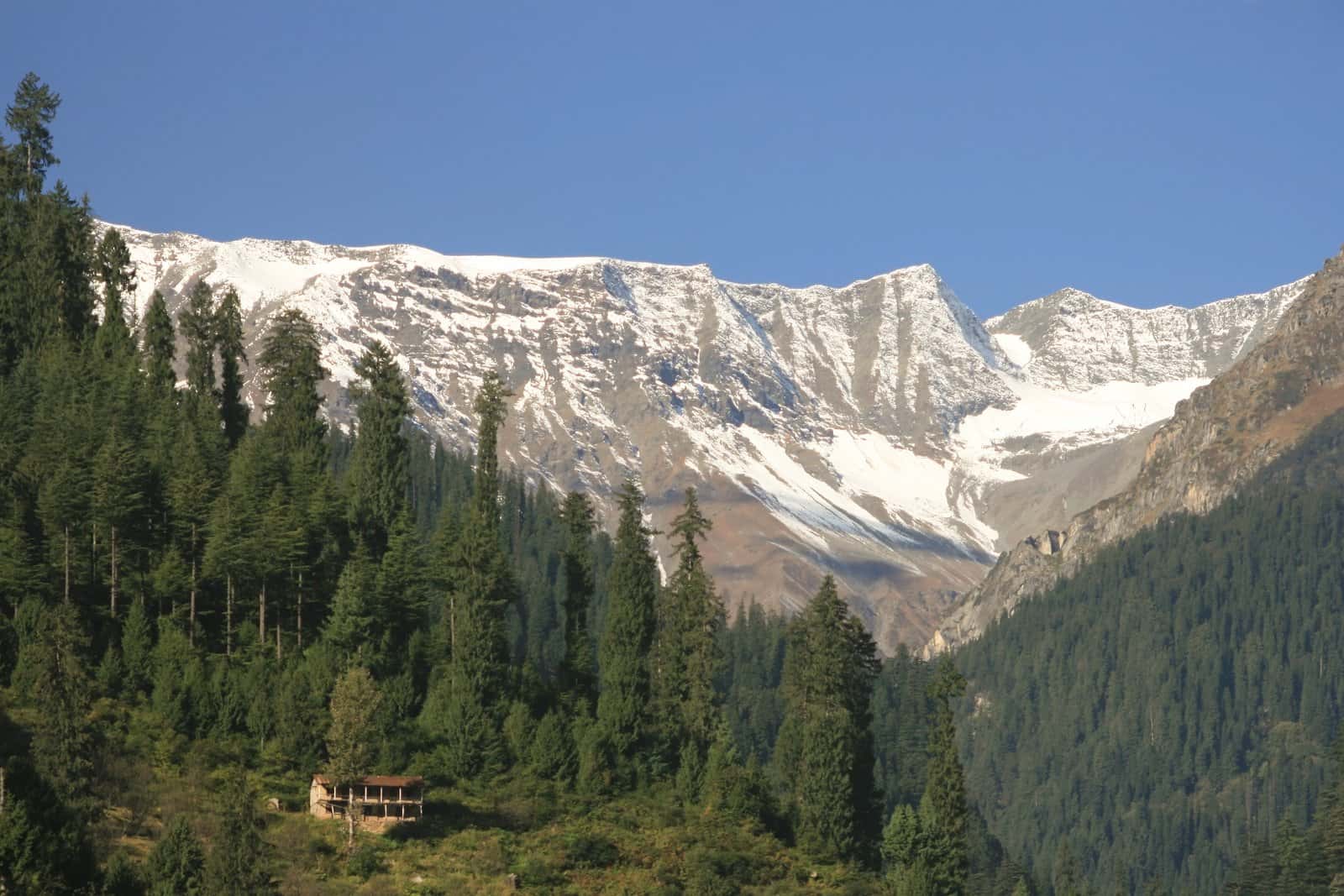
Kotgarh Travel Guide
The two magic windows are the apple blossom around April to May and the harvest from late July to mid or late September . December to February brings snow, and the July to...
When to visit Kotgarh, the blossom, the harvest and the monsoon to avoid
The two magic windows are the apple blossom around April to May and the harvest from late July to mid or late September. December to February brings snow, and the July to September monsoon is the season to plan around for landslides.
- March to June: blossom and clear daysThe gentlest time to come. The apple orchards break into white-and-pink blossom around April and into May, the days are warm and the light is clear over the Satluj valley. Carry a light layer, as the evenings stay cool at this height even in early summer. This is the easiest season for the church, the orchard walks and the drive up to Narkanda and Hatu Peak.
- Late July to late September: the harvestThe other reason to time a visit. The apple harvest runs roughly from late July to mid or late September, peaking around August and September, when the whole valley is busy picking and packing and the roadside stalls are heavy with fruit. Note this overlaps the monsoon, so pick the clearer late-August and September weeks and keep your plans flexible.
- October and November: crisp autumnAfter the harvest the air turns crisp and clear and the crowds thin, which many regulars think is the loveliest time of all. Nights get cold quickly, so pack proper warm clothes. It is a fine window for slow orchard afternoons, the heritage and the big autumn views from the ridges.
- December to February: snow and hard coldSnow falls at these heights, more reliably up at Narkanda and Hatu Peak than in Kotgarh village itself, and nights are genuinely cold. Roads can be icy, so drive carefully or hire a local driver. Come for the snow and the quiet, pack for real cold, and keep your schedule flexible around fresh snowfall.
From about July to September the hill roads into the Kotgarh belt, including the winding stretch beyond Narkanda, are prone to landslides and long closures after heavy rain. The harvest falls partly in this window, so if you come to see the picking, build in buffer days, watch local advisories, and never rush a wet mountain road after dark. Mist also hides the very valley views you came for, so the clearer late-August and September weeks are the safer bet if you want both the harvest and the scenery.
How to reach Kotgarh
Kotgarh has no airport or railway of its own. Almost everyone comes up from Shimla, about 77 to 82 km away over the old Hindustan-Tibet Road, and the reliable air gateway is Chandigarh rather than Shimla.
- Via Shimla and Narkanda, the natural routeKotgarh is about 77 to 82 km from Shimla by road, roughly 2.5 to 3 hours over winding hill roads on the old Hindustan-Tibet Road, passing Narkanda about 15 to 17 km before Kotgarh. Almost every visitor reaches Shimla first, then drives or takes a taxi up. A one-way taxi from Shimla typically runs about 2,500 to 4,000 rupees as an estimate, so it is worth arranging a car for your whole stay.
- The airport reality: Chandigarh, not ShimlaShimla's own Jubbarhatti airport has only limited, seasonal flights, so do not count on it. The reliable air gateway is Chandigarh, from where you drive up to Shimla and on to Kotgarh, a long day on the road in total. Plan a proper travel day for the journey up rather than hoping to fly close.
- The toy train to Shimla, then the roadThe nearest railhead is Shimla, reached on the UNESCO Kalka-Shimla narrow-gauge toy train from Kalka, a lovely ride in its own right. Book it ahead on IRCTC in season, then take a taxi or a bus the 77 to 82 km up to Kotgarh. There is no train anywhere near Kotgarh itself.
- By bus and from DelhiHimachal Road Transport Corporation buses run from Shimla towards Rampur and the Kinnaur road and can drop you near Narkanda and the Kotgarh turn, though they are slow and you will still want local transport for the orchard roads. From Delhi, most travellers drive or take a Volvo coach to Shimla, break the journey there, and head up the next day.
Fly into Delhi, the main international gateway, then reach Shimla by road via Chandigarh, or take the train to Kalka and the toy train up. From Shimla it is a 77 to 82 km drive up to Kotgarh. There are no international flights anywhere close.
Fly into Delhi or Chandigarh, then drive up to Shimla and on to Kotgarh. Chandigarh is the practical air gateway for the whole apple-country belt, and the drive up is a scenic day on the old Hindustan-Tibet Road.
Take the train to Kalka and the heritage toy train up to Shimla, or drive from Delhi and Chandigarh, then continue by taxi or bus through Narkanda to Kotgarh and Thanedar.
St Mary's Church, the orchards, and the Stokes apple heritage
Kotgarh is a quiet scatter of orchards, viewpoints and one truly special sight: St Mary's Church of 1872. The famous Stokes apple heritage sits partly here and partly at neighbouring Thanedar, so it helps to know which is where.
- St Mary's Church, the heart of KotgarhThe stand-out sight in Kotgarh village is St Mary's Church, a small wooden church built in 1872 by the Church Missionary Society, following a mission school started here in 1843. Inside are stained-glass windows and benches carved from local deodar cedar, and a plaque records that it was created in 1872 for the Christian community of Kotgarh. Behind it, a small terraced cemetery holds the graves of missionaries, soldiers and early settlers among deodar trees and wild roses.
- The apple orchards themselvesThe orchards are the reason the valley is called the Apple Bowl of India, first planted with American apples by Satyanand Stokes in 1916. In spring they blossom white and pink, and by late summer they hang heavy with fruit. Many homestays sit inside working orchards, so you can walk among the trees, but always ask your host first, as these are somebody's living.
- The Stokes heritage, Kotgarh and ThanedarThe Stokes story belongs to this whole belt. He settled near his wife's village in the Kotgarh area from 1912 and planted the first American apples here in 1916, while his estate, Barobagh, and his old home, Harmony Hall, are at neighbouring Thanedar, about 3 to 6 km away. Treat Thanedar as the estate half of the story and Kotgarh as the church-and-mission half.
- Viewpoints over the Satluj valleyKotgarh sits high above the left bank of the Satluj on the old Hindustan-Tibet Road, so the reward everywhere is the long view down the U-shaped valley and across to the ranges. There is no single ticketed viewpoint here; the pleasure is the orchard lanes, the church terrace and the drive itself, best in the clear morning and evening light.
Guides and blogs constantly blur the two, so hold this simple split. Kotgarh is the older mission village, and its signature is St Mary's Church of 1872 and the wider Stokes story that began here. Thanedar, about 3 to 6 km on, is where the Stokes estate stands, Barobagh with Harmony Hall, along with the small Tani Jubbar lake nearby. Both are lovely and most people see them in one loop, but knowing which sight sits where saves a lot of wrong turns on the narrow orchard roads.
Signature experiences in and around Kotgarh
Beyond the church and the orchards, these are the slow pleasures people remember: the blossom or harvest, the Stokes trail to Thanedar, the drive up to Hatu Peak, and the little Tani Jubbar lake.
- Walk the orchards in blossom or harvestThis is the heart of a Kotgarh visit. Come around April to May for the white-and-pink blossom, or from late July to mid or late September for the harvest, when the valley is busy picking and packing and the fruit is everywhere. Ask your homestay host before wandering into the trees, and buy a box of orchard-fresh apples straight from the source in season.
- The Stokes heritage trail to ThanedarTrace the apple story from St Mary's Church and the old mission at Kotgarh to the Stokes estate at Thanedar, about 3 to 6 km on, where Barobagh and Harmony Hall stand among the orchards Stokes planted. It is a short, gentle heritage loop that makes sense of why these hills became the apple bowl of India, and it is far more rewarding once you know the man behind it.
- Drive up to Narkanda and Hatu PeakNarkanda, about 15 to 17 km back towards Shimla at around 2,708 metres, is the higher hill station and winter ski point of the area. Above it, Hatu Peak at about 3,400 metres, crowned by the Hatu Mata temple, is one of the highest peaks in this part of Shimla district and the big viewpoint of the trip, reached by road and a short walk. Go on a clear morning for the Himalayan panorama.
- Tani Jubbar lake, a quiet add-onThe small oval Tani Jubbar lake, with its Nag Devta temple, sits on the Thanedar side about 12 km from Narkanda and makes an easy, calm add-on to a Kotgarh and Thanedar day. It is prettiest in the clear spring and autumn months rather than the misty monsoon, and it is a gentle spot for a slow hour rather than a headline sight.
- Just slow down among the treesThe quietest pleasure at Kotgarh is doing very little: a book on an orchard terrace, a slow home-cooked meal, and the light changing on the deodars and the far ranges. Many people come precisely for this deep calm, so do not over-schedule your days. The place rewards stillness more than a checklist.
If you do one thing slowly in Kotgarh, make it an orchard-and-heritage morning: the church and its cemetery early, then a wander through the apple trees with your host's blessing, and the Stokes trail to Thanedar before the light gets high. The viewpoints and Hatu Peak are there when you want a bigger outing, but the reason to come all this way is the slow apple-country heritage, and that only opens up for a traveller who gives it unhurried time rather than a tick-box hour.
Where to stay in Kotgarh, and how many nights
Kotgarh and Thanedar are orchard homestays and small cottages rather than a hotel town, so where you stay is really which orchard you choose. Two nights is the sweet spot to unwind.
- Orchard homestays and small cottagesAlmost all of Kotgarh and Thanedar's character is in homestays and small cottages set inside working apple orchards, many with valley-view terraces and home-cooked Himachali meals. This is the reason to come rather than stay in Shimla town. Pick a place that serves food, since eating options outside your stay are very limited.
- Kotgarh or Thanedar as a baseBase in Kotgarh to be near St Mary's Church and the older mission village, or in Thanedar to be among the Stokes estate orchards and close to Tani Jubbar lake. They are only about 3 to 6 km apart, so either works for seeing both, and the choice is really about which orchard and host you like the look of.
- How many nightsOne night is enough for a taste: the church, an orchard walk and the Stokes trail. Two nights is the sweet spot, adding the drive up to Narkanda and Hatu Peak and a slow orchard day. Longer suits a proper unwind, a workation, or a visit timed to the blossom or harvest when you will want to linger.
- Room budgetsSimple homestay rooms run from about 1,500 to 3,000 rupees and mid-range orchard cottages about 3,000 to 6,000 rupees as current estimates, often with meals included. Rates rise on blossom and harvest weekends and around holidays, and there is little on-the-spot availability, so book ahead and reconfirm the price and what it covers.
Kotgarh rewards travellers who want quiet, orchards and heritage, and it frustrates those who want shops, cafes and an evening buzz on their doorstep, because there is almost no market or restaurant strip. Homestays are few and fill fast on blossom and harvest weekends, so book well in advance and confirm meals are included. If your group wants nightlife and easy dinners out, base in Shimla or Narkanda and day-trip into Kotgarh instead.
Kotgarh costs and a realistic daily budget
Kotgarh is gentle on the wallet once you are there, but the drive and the car are the real costs. Here is what the main things run to, so you can plan.
- Transport is the biggest costBecause you need a car, transport is where the money goes. A one-way taxi from Shimla is about 2,500 to 4,000 rupees as an estimate, and a full day of local sightseeing to Narkanda, Hatu Peak and Thanedar by hired car costs more again. Sharing a car for your whole stay, or hiring a driver from Shimla, usually works out cheaper and simpler than one-off taxis.
- Rooms and mealsYour homestay is the next line: from about 1,500 to 3,000 rupees for a simple room up to about 3,000 to 6,000 rupees for a mid-range orchard cottage, often with meals included. Because standalone eateries are scarce, most meals are at your stay, so choose a host who cooks and factor those meals into your budget rather than expecting cheap street food.
- The cheap pleasuresThe best things here cost little or nothing: St Mary's Church, the orchard walks, the viewpoints and the Stokes trail are all free, and a box of orchard-fresh apples in season is a few hundred rupees straight from the grower. This is a place where the spending is on getting there and sleeping, not on tickets.
- Cash and cardsHomestays may take UPI or bank transfer, but keep cash for taxis, apples, temple offerings and small stalls, as card machines are rare on the orchard roads. Draw cash in Shimla or Narkanda before you head deep into the belt, as ATMs in Kotgarh itself are few and can be out of service.
In most hill trips your room is the swing cost, but at Kotgarh it is transport, because everything is spread along orchard roads and you move by car for all of it. A one-way Shimla taxi of about 2,500 to 4,000 rupees becomes real money once you add the Narkanda, Hatu Peak and Thanedar running around. The simple fix is to hire one car and driver for your whole stay, agree the daily rate in advance, and let that single number cover the drive up, the sights and the trip back.
Practical logistics: car, food, money and connectivity
The small things that make a Kotgarh stay smooth, from the you-need-a-car reality to where you eat, money and mobile signal on the orchard roads.
- You need a car or a taxiThere is no proper market or food street, buses are slow and infrequent, and the sights are strung along winding orchard roads, so a private car or a pre-arranged taxi makes the trip work. This one fact shapes the whole visit, so sort transport before you plan anything else, ideally a car and driver for your entire stay.
- Food and suppliesEat mostly at your homestay, and stock any snacks, medicines or baby supplies in Shimla or Narkanda before you head up, as shops in Kotgarh are thin. The home cooking at good orchard stays, rajma, siddu, local dals and just-picked apples, is a real highlight, so lean into it rather than hunting for variety.
- Money, ATMs and signalDraw cash in Shimla or Narkanda, as ATMs in Kotgarh are few and unreliable. Mobile coverage is generally workable near the villages and the main road but drops in the deeper orchards and on the higher drives, so download offline maps and tell your host roughly when to expect you.
- Respect the orchards and the communityThis is a devout, close-knit orchard community. The local language is Mahasu Pahari, with Hindi and some English understood. Dress modestly at St Mary's Church and the temples, ask before photographing people or stepping into private orchards, and treat the deep quiet as the point of the place rather than something to fill.
Safety, mountain roads, and staying well
Kotgarh is calm and low-crime, and the real risks are the long mountain roads, the cold, the steep orchard slopes and the monsoon rather than any scam.
- Mountain roads and winter drivingThe roads to Kotgarh are long, narrow, steep and winding, and can be icy in winter or slick and landslide-prone in the monsoon. Use a local driver who knows the hill, avoid driving tired mountain roads after dark, and keep to sensible speeds. This is the single biggest safety point of a Kotgarh trip, far more than anything on the ground.
- Altitude, cold and sunAt about 1,900 metres in Kotgarh, and higher again at Narkanda and Hatu Peak, the sun is strong by day and the nights are cold, especially December to February. Carry proper warm layers, sun protection for the exposed walks and viewpoints, and take the first day gently if you have come straight up from the plains. Keep any regular medicines with you, as pharmacies are back in Shimla or Narkanda.
- Steep orchard slopes and walksThe orchard terraces and trails are steep and uneven, and can be slippery after rain. Wear grippy shoes, walk carefully, and take the higher ridge walks and Hatu Peak in good weather with plenty of daylight. There are no crowds or touts to worry about here, but a twisted ankle far from a pharmacy is the more likely mishap.
- General safety and healthKotgarh is a quiet, low-crime area with none of the tout pressure of the big tourist spots, and solo, family and senior travellers generally find it very relaxed. Drink boiled or bottled water, carry a basic first-aid kit given how far medical help is, and keep a charged phone with offline maps for the drives.
Travellers often ask whether a December or January visit is safe, and it is, with sensible planning. The cold is real and roads up at Narkanda and Hatu Peak can be snowy or icy, so use a local driver rather than self-driving on snow, carry proper winter clothing, and keep your plans flexible around fresh snowfall, which can briefly close hill roads. Kotgarh in winter is calm, quiet and beautiful, and the main risk is the drive rather than anything at the orchards.
Kotgarh for every kind of traveller, and on access
Kotgarh suits some travellers beautifully and others not at all. Here is what it offers you, and the one tip that matters for each, including who should base in Shimla or Narkanda instead.
- CouplesKotgarh is made for couples who want calm: orchard-view terraces, quiet heritage walks, home-cooked dinners and cool starry nights. An overnight or two lets you catch both a slow sunset and a still morning among the trees, which a day trip from Shimla never gives you.
- Families with childrenGood for a calm family break, with orchards to wander, apples to pick in season and the story of Stokes to bring the place alive for older children. Keep in mind there is little to do at night and few shops, so bring games and snacks, and add the Hatu Peak drive when the children want a bigger outing.
- Senior travellers and on accessibilityDoable with planning, but the terrain is steep and the drive is long, so choose a homestay with easy access and ground-floor rooms, and hire a car and driver for the whole stay. Enjoy the church, the gentler orchard lanes and the viewpoints you can reach by road, and skip the steepest ridge walks. Break the journey in Shimla rather than doing it all in one tiring push.
- Nature and heritage loversThis is the real draw: the blossom and harvest, deodar forest, big Satluj-valley views, and the genuine Stokes and St Mary's Church heritage. Spring for blossom, autumn for the harvest and clear light. Read a little about Satyanand Stokes before you come and the whole valley reads differently.
- Photographers and slow travellersSunrise and sunset over the orchards and the valley, the wooden church and its cemetery, and the harvest colour are the frames here. Go early for the best light and the fewest people, ask before photographing people at prayer or work, and give yourself unhurried days, as this is slow-travel country.
- Who should base in Shimla or Narkanda insteadBackpackers, teenagers and anyone wanting shops, cafes, nightlife and an easy walk to dinner will find Kotgarh too still and too remote. If that is your group, base in Shimla town or in Narkanda for the ski slope and more rooms, and treat Kotgarh and Thanedar as a heritage day trip.
A suggested Kotgarh itinerary
How to shape one or two unhurried days so you catch the church, the orchards and the best light, and fit in Narkanda, Hatu Peak and Thanedar without wasting time on the road.
- Day one, morningArrive and settle into your orchard homestay, then visit St Mary's Church and its terraced cemetery while the morning light is soft. Take a slow walk through the orchards near your stay, with your host's blessing, and buy a box of apples if it is harvest time.
- Day one, afternoon and eveningIn the afternoon follow the Stokes trail the short 3 to 6 km to Thanedar to see the estate orchards at Barobagh and Harmony Hall, and pause at Tani Jubbar lake if you have time. Head back for a home-cooked dinner and an early, quiet night, which is what evenings here are for.
- Day two, if you have itGive day two to the bigger outing: drive up to Narkanda, about 15 to 17 km, and on to Hatu Peak at about 3,400 metres for the Hatu Mata temple and the Himalayan panorama, best on a clear morning. Leave the last afternoon free for the orchards, which is what most people wish they had done more of.
- The day-trip version from Shimla or NarkandaIf you are based in Shimla or Narkanda, you can drive up for a long day covering St Mary's Church, an orchard walk and the Stokes trail to Thanedar. You will miss the orchard mornings and evenings that make Kotgarh special, but it is a rewarding heritage add to a wider Shimla trip.
The single thing that breaks a tight Kotgarh plan is underestimating the road: it is 77 to 82 km of winding hill driving from Shimla, and the sights are spread further along orchard lanes and up to Hatu Peak. Build your days so the long drives fall in daylight, never rush the mountain roads after dark, and keep Hatu Peak for a clear morning. Pair the fixed heritage of the church with the flexible orchard time, so a slow start or a weather change never leaves your day stranded.
The real questions travellers ask about Kotgarh
Straight answers to the questions that come up again and again on traveller forums, so you arrive already knowing the score.
- Kotgarh or Thanedar as a base?Base in Kotgarh for St Mary's Church and the older mission village, or in Thanedar for the Stokes estate orchards and Tani Jubbar lake. They are only about 3 to 6 km apart, so either lets you see both easily. The choice comes down to which orchard homestay and host you prefer, not to any big difference in what you can do.
- Is Kotgarh worth the long drive?If you want deep quiet, apple-country heritage and big valley views, yes. If you want shops, nightlife and lots to tick off, probably not. It is a slow, remote place that rewards travellers who come for the orchards, the church and the Stokes story rather than a packed sightseeing list.
- Do I really need a car?Yes, in practice. There is no walkable market or food street, buses are slow and infrequent, and the sights are spread along orchard roads and up to Narkanda and Hatu Peak, so a private car or a pre-arranged taxi makes the trip work. A one-way taxi from Shimla is about 2,500 to 4,000 rupees, and hiring a car for the whole stay is usually the smart move.
- When exactly is the apple blossom and harvest?The blossom is around April and into May, when the orchards turn white and pink, and the harvest runs roughly late July to mid or late September, peaking in August and September. Those are the two windows to time a visit to, though the harvest overlaps the monsoon, so favour the clearer late-August and September weeks.
- Can I visit St Mary's Church and the Stokes heritage?Yes. St Mary's Church of 1872 is in Kotgarh village, with Sunday services still held; out of service hours, ask the caretaker or a local before going in, as it is a living parish church. The Stokes estate, Barobagh and Harmony Hall, is at neighbouring Thanedar among the orchards, an easy short hop away.
- Is there snow in December and January?Usually some, and more reliably up at Narkanda and Hatu Peak than in Kotgarh village itself, which sits a little lower. January and February are the coldest and snowiest, though snow is never guaranteed in any given week, so come for the calm and the chance of snow rather than a promise of it, and plan for icy roads.
Planning Kotgarh from abroad
Kotgarh is the slow, orchard-and-heritage counterpoint to busy Shimla, and its American-Quaker Stokes story makes it uniquely interesting for overseas and NRI travellers. A little preparation on transport makes it easy.
- Fly to Delhi or Chandigarh, then drive upThere are no international flights anywhere near Kotgarh. Fly into Delhi, the main gateway, or Chandigarh, then drive up to Shimla and on the 77 to 82 km to Kotgarh. Shimla's own airport is limited and seasonal, so do not rely on it, and plan a proper travel day for the scenic drive up the old Hindustan-Tibet Road.
- The Stokes story will fascinate youThis is the rare Indian village shaped by an American. Samuel Stokes from Philadelphia settled here, planted the first American apples in 1916, joined India's freedom struggle as the only American in the Congress committee, and became Satyananda. Read a little before you come, visit St Mary's Church and the Thanedar estate, and the whole valley reads as living history.
- Plan for a car and few eateriesKotgarh has almost no market or restaurant strip, so you will eat mostly at your homestay and move around by hired car or taxi. Arrange a driver for your stay through your homestay or from Shimla, and stock any snacks and medicines in Shimla or Narkanda before you head deep into the orchards.
- Pair it with Shimla's Raj heritageKotgarh works best as the quiet, orchard half of a Shimla trip: the UNESCO toy train, the colonial Mall and the Viceregal Lodge in Shimla, then up through Narkanda to the apple country and its church-and-Stokes heritage. It is the soulful, restful chapter of a Himalayan-foothills week.
Money, connectivity and timing for foreign visitors
The practical basics an overseas traveller needs for a remote orchard village: cash, cards, a SIM, and how many days to give it on a wider India trip.
- Carry cash, drawn in Shimla or NarkandaHomestays may take UPI or bank transfer, but taxis, apples, temple offerings and small stalls run on cash, and ATMs in Kotgarh are few and unreliable. Draw enough cash in Shimla or Narkanda before you head up, and keep small notes handy for the orchard roads.
- Get a SIM on arrivalPick up an Indian tourist SIM or an eSIM when you land in Delhi or Chandigarh rather than hunting for one in a small hill village. Coverage near the Kotgarh villages and the main road is generally workable for maps and calls but drops in the deeper orchards and on the higher drives, so download offline maps.
- How long to give it on a bigger tripOn a Himalayan-foothills trip, two nights at Kotgarh is the right weight: enough for the church, the orchards, the Stokes trail to Thanedar and the Hatu Peak drive, paired with a few nights in Shimla for the heritage and the toy train. Add a night if you want to slow right down for the blossom or harvest.
- Time your visit to your comfortMarch to June is the comfortable window, with blossom in spring; September to November brings the harvest and crisp clear light; December to February brings snow and hard cold; and July to September is the monsoon to be wary of for landslides. Choose your season for the weather you want, then book homestays well ahead.
Kotgarh is an unusually rewarding, gentle corner of the Indian hills: small, green, deeply quiet, and carrying a true story that links Philadelphia to a Himalayan apple valley. Slot it as the restful, heritage chapter after Shimla's toy train and Mall Road, give it a night or two, and let the orchards, the wooden church and the Stokes trail do their work. Many overseas visitors say this slow apple country ends up being the part of a Himachal trip they remember most warmly.
How an American Quaker turned these hills into the apple bowl of India
Kotgarh's quiet orchards hold one of the most remarkable stories in the Indian hills. Samuel Evans Stokes, born into a Quaker family in Philadelphia in 1882, came to India in 1904 to work with lepers, was drawn to Indian spiritual life, and in 1912 married a local Christian girl and settled near her village in the Kotgarh area. In 1916 he planted the Stark Delicious apple, a new American strain suited to these heights, and it is widely recorded as the first American apple cultivation in India. The bumper crops that followed, and his help getting fruit to market, turned the whole belt into what is now called the apple bowl of India. Stokes went further than farming: he joined the freedom struggle, became the only American member of the All India Congress Committee, was jailed for sedition in 1921, and in 1932 embraced Hinduism, taking the name Satyananda. He died in 1946, on the eve of independence. His estate, Barobagh, and his old home, Harmony Hall, stand at neighbouring Thanedar, while Kotgarh keeps the older mission heart of the story in St Mary's Church of 1872. The precise plot where the very first tree stood is remembered differently in local accounts, so we tell that detail as tradition, but the living proof is the sea of apple trees around you every spring and autumn.
Planning a Kotgarh trip?
Our Himachal Pradesh travel experts plan your full journey for you: route, hotels, darshan timings and transport. You get a free day-by-day plan and an exact quote on WhatsApp, usually within a few hours. No payment is needed to get your plan.