Mashobra Travel Guide
The pleasant months are March to June , with apple blossom in spring, and December to February brings the snow. The one season to plan around is the July to September monsoon...
When to visit Mashobra, the snow, and the monsoon to avoid
The pleasant months are March to June, with apple blossom in spring, and December to February brings the snow. The one season to plan around is the July to September monsoon, when landslides can block the hill roads.
- March to June: the sweet spotWarm, clear days and cool evenings, with the apple orchards in blossom through March and April. This is the easiest time for the Craignano walk, the Shali Tibba ridge and long orchard afternoons. Carry a light layer for the evenings, which stay cool even in summer at this height.
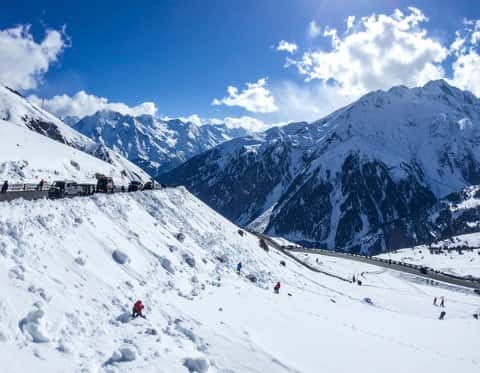
- December to February: snow countrySnow usually arrives from late December, and because Mashobra sits a little higher than Shimla town it tends to hold its snow a bit better and stay quieter. Nights are genuinely cold, roads can be icy, so drive carefully or hire a local driver, and pack proper warm clothing.
- July to September: the monsoon to plan aroundThe hill monsoon brings heavy rain, mist that hides the very views you came for, and a real risk of landslides on the roads up from the plains. If you must come then, keep your plans flexible and do not drive tired hill roads at night.
- Snow or quiet, decide firstIf you want snow, aim for January and early February and accept cold and the odd icy road. If you want calm orchards and easy walking, come in spring or autumn. Both are lovely at Mashobra, so choose the experience before you book.
From about July to September the roads into the Shimla hills, including the approach to Mashobra, are prone to landslides and long closures after heavy rain. Travellers regularly report delays and diversions on these routes in the wet months. If your dates fall in the monsoon, build in buffer days, keep an eye on local advisories, and never rush a wet mountain road after dark. The views are also frequently lost to cloud, so the trade-off is rarely worth it unless you specifically love the green, misty hills.
How to reach Mashobra
Mashobra has no airport or railway of its own. Almost everyone comes through Shimla, about 12 km away, and the reliable air gateway is Chandigarh rather than Shimla.
- Via Shimla, the natural baseMashobra is about 10 to 13 km northeast of Shimla, roughly a 30 minute drive over the Dhalli road. Almost every visitor reaches Shimla first, then drives or takes a taxi up to Mashobra. A one-way taxi from Shimla typically runs about 900 to 1,300 rupees, and it is worth arranging a car for your whole stay.
- The airport reality: Chandigarh, not ShimlaShimla's own Jubbarhatti airport, about 30 to 35 km from Mashobra, has only limited, seasonal flights, so do not count on it. The reliable air gateway is Chandigarh, about 115 to 125 km and roughly 3.5 to 4 hours by road, from where you drive up to Shimla and on to Mashobra.
- The toy train to Shimla, then a taxiThe nearest railhead is Shimla, about 12 to 13 km away, reached on the UNESCO Kalka-Shimla narrow-gauge toy train from Kalka. Book that ride ahead on IRCTC in season, then take a taxi the last short hop up to Mashobra. There is no train into Mashobra itself.
- From Delhi by roadDelhi is the main long-distance gateway, about 350 to 370 km and a long day of 7 to 8 hours by road, usually broken at Chandigarh. Many travellers drive or take a Volvo coach to Shimla, then transfer up to Mashobra for the quiet.
Fly into Delhi, the main international gateway, then reach Shimla by road via Chandigarh, or take the train to Kalka and the toy train up. From Shimla it is a short drive to Mashobra. There are no international flights nearby.
Fly into Delhi or Chandigarh, then drive up to Shimla, about 3.5 to 4 hours from Chandigarh, and on the short hop to Mashobra. Chandigarh is the practical air gateway for the whole Shimla region.
Take the train to Kalka and the heritage toy train up to Shimla, or drive from Delhi and Chandigarh, then transfer the last 12 km or so to Mashobra by taxi.
Craignano, the Presidential Retreat, and the orchards
Mashobra is orchards, forest and a scatter of quiet sights: the Craignano nature park, the newly public Presidential Retreat at Chharabra, and the walking country of Shali Tibba and the reserve forest.
- Craignano nature parkA little Italian-countess villa turned nature park about 2 to 3 km above Mashobra, on a green hillside at around 7,700 feet, with lawns, flowers and long views. Entry is about 50 rupees and it is open roughly 10 am to 5:30 pm daily. There is no shop or cafe inside, and a refundable deposit of about 100 rupees is taken for a jute bag to carry your bottles and food in and out.
- The Presidential Retreat at ChharabraRashtrapati Niwas Mashobra, the President's summer retreat at Chharabra, opened to the public on 23 April 2023. Entry is about 50 rupees for Indian nationals and about 250 for foreign nationals, it runs Tuesday to Sunday roughly 10 am to 5 pm with last entry about 3 pm, and it is closed on Mondays and gazetted holidays and whenever the President is in residence. Book ahead on the official Rashtrapati Bhavan visit portal.
- Shali Tibba and the reserve forestAbove Mashobra the Shali Tibba ridge, crowned by the Shali Mata temple, gives a sweeping view over Kufri, Fagu and the Shimla hills, and the Mashobra Reserve Forest about 4 km away is prime birdwatching country. The trails are steep and best done with a local guide; there is no formal ticket, but check locally before going deep into the forest.
- The Seepur meadow and templesThe Seepur, or Sipur, meadow near Mashobra holds the local Shiv and Hanuman temples and hosts the village Sipi Fair around May. Out of festival time it is simply a quiet, pretty walk. Treat the temples and any fair respectfully, as this is a living local shrine, not a staged attraction.
For years the Presidential Retreat at Chharabra was firmly off-limits, and many travel pages still say so. That changed on 23 April 2023, when Rashtrapati Niwas Mashobra was opened to the public with guided access. It is now one of the most rewarding half-days near Mashobra, but it keeps government rules: closed Mondays and holidays, closed during Presidential stays, and best booked in advance on the official portal. Always reconfirm the current timing and any closure before you set out, as access can be suspended at short notice.
Signature experiences in and around Mashobra
Beyond the sights, these are the slow pleasures people remember: orchard walks, a round at Naldehra, the Shali ridge, and a day trip to the Tattapani hot springs.
- Walk the apple orchardsMashobra is apple country, first planted in the 1880s. Blossom covers the slopes in March and April, and the harvest runs roughly July to October with the peak around August and September, when roadside apples and fresh juice appear. Many homestays sit inside working orchards, so ask your host before wandering among the trees.
- A round at Naldehra golfAbout 12 to 13 km away, Naldehra has one of India's oldest golf courses, laid out in 1905 on a breezy hilltop and open roughly 8 am to 6 pm. Casual green fees are not published consistently and change, so confirm the current rate with the Naldehra Golf Club or HPTDC. Even non-golfers enjoy the walk and the deodar-ringed setting.
- The Craignano and Shali Tibba walksCraignano makes a gentle half-day for its lawns and views, while the Shali Tibba ridge is a steeper trek to the Shali Mata temple and a 360 degree panorama. Go early, wear proper shoes, and take a local guide for the higher trail, as the forest paths are easy to lose.
- Tattapani hot springs and rafting, as a day tripTattapani, about 60 to 65 km away on the Sutlej, has hot springs and river rafting. Rafting is best in about April to June and September to November and should be avoided in the July to August monsoon high water; the hot springs are most enjoyable in the cold months. It is a full day out, so start early.
- Just slow down with the viewThe quietest pleasure at Mashobra is doing very little: a book on a sunny orchard terrace, a slow breakfast with the valley falling away below, and the light changing on the deodars. Many people come precisely for this, so do not over-schedule your days.
- A meal at Wildflower HallEven if you are not staying, the Oberoi's Wildflower Hall at Chharabra, about 3 to 4 km away, is a memorable place for a fine lunch or high tea with a grand mountain view. It is a stay and a dining stop rather than a ticketed sight, so book a table ahead in season.
If you do one thing slowly in Mashobra, make it an orchard-and-view morning: a long breakfast, a wander through the apple trees with your host's blessing, and the Craignano lawns before the day-trippers arrive. The forts and Mall Road of Shimla are twenty minutes away when you want bustle, but the reason to base yourself up here is the stillness, and that only rewards a traveller who gives it unhurried time rather than a tick-box hour.
Where to stay in Mashobra, and how many nights
Mashobra is resorts and orchard homestays rather than a town, so where you stay is really which property you choose. Two nights is the sweet spot to unwind.
- Orchard homestays and boutique resortsMost of Mashobra's character is in the homestays and small resorts set among the apple orchards and deodars, many with valley-view terraces. This is the reason to come rather than stay in Shimla town. Pick a property with its own kitchen, since eating options outside your hotel are very limited.
- Luxury at ChharabraFor a splurge, Wildflower Hall by Oberoi at Chharabra is the landmark five-star of the area, on the old Kitchener estate at around 8,250 feet. There are other upper-end resorts and spas around Mashobra too. Rates are high and seasonal, so treat any quote as an estimate and book directly.
- How many nightsOne night is enough to see Craignano and the Presidential Retreat and get a taste of the calm. Two nights is the sweet spot: one day for the sights and a golf round or Tattapani trip, and one slow day for the orchards and the view. Longer suits a workation or a proper unwind.
- Room budgetsSimple homestays and budget rooms run from about 800 to 2,000 rupees, mid-range resorts about 2,500 to 6,000 rupees, and luxury such as Wildflower Hall well into the tens of thousands of rupees a night. All are estimates from current listings, rise around New Year and peak season, and should be confirmed at booking.
Mashobra rewards travellers who want quiet, views and orchards, and it frustrates those who want a lively Mall Road evening on their doorstep. Because there is almost no market or food street within walking distance, an evening here means your hotel's restaurant or a drive back into Shimla. If your group includes teenagers or anyone who will want shops, cafes and a buzz at night, base in Shimla town and day-trip up to Mashobra instead.
Mashobra costs and a realistic daily budget
Mashobra can be gentle or grand on the wallet depending on your stay, but the fixed costs are small. Here is what the main things cost so you can plan.
- The fixed-price thingsThe two ticketed sights are cheap: Craignano is about 50 rupees entry with a refundable jute-bag deposit of about 100 rupees, and the Presidential Retreat is about 50 rupees for Indians and about 250 for foreign nationals. These are the rare set prices in an otherwise resort-and-taxi economy.
- Transport is the real costBecause you need a car, transport is where the money goes: a one-way taxi from Shimla is about 900 to 1,300 rupees, and a full day of local sightseeing by hired car costs more again. Sharing a car for your whole stay, or hiring a driver from Shimla, usually works out cheaper than one-off taxis.
- Rooms and mealsYour room is the biggest line: from about 800 to 2,000 rupees for a homestay up to the tens of thousands at Wildflower Hall. With so few standalone eateries, most meals are at your hotel, so factor in restaurant prices rather than cheap street food when you budget.
- Cash and cardsResorts and bigger hotels take cards and UPI, but keep some cash for taxis, small orchard-side stalls, temple offerings and the Craignano and Retreat tickets. Draw cash in Shimla before you head up, as ATMs in Mashobra itself are few.
In most hill towns your room is the swing cost, but at Mashobra it is transport that quietly adds up, because there is no walkable market and you move by car for everything. A one-way Shimla taxi of about 900 to 1,300 rupees becomes real money once you make several trips a day. The simple fix is to hire one car and driver for your whole stay, agree the daily rate in advance, and let that cover the sights, the golf run and the Tattapani day trip in one clean number.
Practical logistics: transport, food, money and the green tax
The small things that make a Mashobra stay smooth, from the you-need-a-car reality to food, ATMs and the Shimla green tax for outside vehicles.
- You need a car or a taxiThere is no proper market or food street within walking distance and only a handful of restaurants, most inside hotels. Arrange your own car or a pre-arranged taxi to move around, since local buses are infrequent and the slopes are steep. This one fact shapes the whole trip, so plan transport before you plan anything else.
- Food and suppliesEat mostly at your hotel and stock any snacks, medicines or baby supplies in Shimla before you head up, as options in Mashobra are thin. The Himachali home cooking at good homestays, rajma, siddu and local apples, is a highlight, so lean into it rather than hunting for variety.
- Money, ATMs and signalDraw cash in Shimla, as ATMs in Mashobra are few. Mobile coverage is generally fine near the resorts and along the main road but can drop in the deeper forest and on the ridge walks, so download offline maps before you set out.
- The Shimla green tax for outside vehiclesNon-Himachal-registered vehicles may face a Shimla green tax on entering the area, proposed at roughly 50 rupees for a two-wheeler, 200 for a small car, 300 for an SUV and 500 for a bus or truck, though the scheme and rates were still being finalised in 2025 to 2026. Treat these as indicative and reconfirm before you drive up, and keep small cash for it.
Safety, mountain roads, and staying well
Mashobra is calm and low-crime, and the real risks are the mountain roads, the cold, the steep trails and the odd monkey rather than any scam.
- Mountain roads and winter drivingThe roads up to Mashobra are narrow, steep and winding, and can be icy in winter or slick and landslide-prone in the monsoon. Use a local driver who knows the hill, avoid driving tired mountain roads after dark, and keep to sensible speeds. This is the single biggest safety point at Mashobra.
- Altitude, cold and sunAt around 7,700 feet the sun is strong by day and the nights are cold, especially December to February. Carry proper warm layers, sun protection for the exposed walks, and take the first day gently if you have come straight up from the plains. Keep any regular medicines with you, as pharmacies are back in Shimla.
- Steep trails and wildlifeThe Shali Tibba and forest trails are steep and easy to lose, so go with a guide, wear grippy shoes and start early. Monkeys and langurs are about near the resorts and can snatch food and loose items, so do not feed them and keep bags closed. Deeper forest is home to shy wildlife, another reason to walk with someone local.
- General safetyMashobra is a quiet, low-crime area with none of the tout pressure of the bigger tourist spots, and solo and family travellers generally find it very relaxed. Standard care with valuables and a charged phone with offline maps is all that is really needed.
Travellers regularly ask whether a January visit is safe, and it is, with sensible planning. The cold is real and roads can be icy, so use a local driver rather than self-driving on snow, carry proper winter clothing, and keep your plans flexible around fresh snowfall, which can briefly close hill roads. Mashobra in January is calm, snowy and beautiful, and the main risk is the drive rather than anything on the ground.
Mashobra for every kind of traveller, and on access
Mashobra suits some travellers beautifully and others not at all. Here is what it offers you, and the one tip that matters for each, including who should stay in Shimla instead.
- CouplesMashobra is made for couples: orchard-view terraces, quiet walks, cosy fires in winter and a fine dinner at Wildflower Hall. An overnight or two lets you catch both a slow sunset and a still morning, which a day trip from Shimla never gives you.
- Families with childrenGood for younger children who enjoy orchards, snow play and Craignano's lawns, and for a calm family break. Keep in mind there is little to do at night and few shops, so bring games and snacks, and day-trip into Shimla or Kufri when the children want more action.
- Senior travellers and on accessibilityDoable with planning, but choose a resort with easy access and a lift or ground-floor rooms, as the terrain is steep. Enjoy Craignano and the Retreat, which have gentler ground, and skip the steep Shali Tibba trek. A private car for the whole stay saves a lot of tiring walking on the slopes.
- Nature lovers and photographersThis is the draw: apple blossom and harvest, deodar forest, birdlife in the reserve forest, and big ridge views from Shali Tibba. Spring for blossom, autumn for the harvest and clear light, and winter for snow. Go early for the best light and the fewest people.
- Workations and slow travellersMashobra is excellent for a quiet stay of several days, with orchard calm and enough signal near the resorts for work. Check the property's wifi speed before booking, and keep offline maps for the trail walks where coverage drops.
- Who should stay in Shimla insteadBackpackers, teenagers and anyone wanting shops, cafes, nightlife and an easy walk to dinner will find Mashobra too still. If that is your group, base in Shimla town for the Mall Road buzz and treat Mashobra as a half-day trip up the hill.
A suggested Mashobra itinerary
How to shape one or two unhurried days so you catch the sights, the orchards and the best light without wasting time on the road.
- Day one, morningSettle in, then drive up to Craignano for its lawns and views before the day-trippers arrive, allowing for the refundable jute-bag deposit and the fact there is no cafe inside. Keep the rest of the morning slow with an orchard walk near your stay.
- Day one, afternoon and eveningIn the afternoon visit the Presidential Retreat at Chharabra if it is a Tuesday to Sunday and not a holiday, having booked ahead, then wind down with tea or an early dinner at your resort or a table at Wildflower Hall. Evenings here are for the fire and the view, not the town.
- Day two, if you have itGive day two to one bigger outing: a round or a walk at Naldehra, the steep Shali Tibba ridge with a guide, or a full-day trip to the Tattapani hot springs and rafting in season. Leave the last afternoon free for the orchards, which is what most people wish they had done more of.
- The half-day version from ShimlaIf you are based in Shimla, you can drive up for a half-day loop of Craignano and, on the right day, the Presidential Retreat, in about three to four hours including the road. You will miss the orchard mornings and evenings, but it is an easy add to a Shimla trip.
The single thing that breaks a tight Mashobra plan is arriving at the Presidential Retreat on a Monday or a gazetted holiday, or during a Presidential stay, when it is closed. Build your visit for Tuesday to Sunday, book the slot in advance on the official portal, and reconfirm the day before, since access can be suspended at short notice. Pair it with Craignano, which is open daily, so your sightseeing day never hangs on one shut gate.
The real questions travellers ask about Mashobra
Straight answers to the questions that come up again and again on traveller forums, so you arrive already knowing the score.
- Mashobra or Shimla town as a base?Stay in Mashobra for orchards, quiet and views, and stay in Shimla town for the Mall Road buzz, easy dinners and shops on foot. Since they are only about 12 km apart, many travellers do a night or two of calm at Mashobra and the rest in Shimla, getting the best of both.
- Is Mashobra too quiet?For nature lovers and couples the quiet is the point; for teenagers and party-seekers it can feel too still. There is no nightlife and few shops, so honestly weigh who is in your group. If you want stillness, it is a joy; if you want a scene, base in Shimla and day-trip up.
- Do I really need a car?Yes, in practice. There is no walkable market or food street, buses are infrequent, and the sights are spread out, so a private car or a pre-arranged taxi makes the trip work. A one-way taxi from Shimla is about 900 to 1,300 rupees, and hiring a car for the whole stay is usually the smart move.
- Can I visit the Presidential Retreat now?Yes. Rashtrapati Niwas Mashobra at Chharabra opened to the public on 23 April 2023. It runs Tuesday to Sunday, about 10 am to 5 pm with last entry around 3 pm, entry is about 50 rupees for Indians and about 250 for foreign nationals, and it closes on Mondays, holidays and during Presidential stays, so book ahead and reconfirm.
- Is there snow in December and January?Usually yes from late December, and Mashobra tends to hold snow a little better than Shimla town because it sits slightly higher. January and early February are the most reliable, though snow is never guaranteed in any given week, so come for the calm and the chance of snow rather than a promise of it.
- How does it compare with Kufri, Chail and Naldehra?Kufri is the busy snow-and-viewpoint stop about 11 to 12 km away, Naldehra is the golf-and-forest spot about 12 to 13 km off, and Chail is a quieter palace-and-cricket-ground retreat further round. Mashobra is the orchard-and-forest calm between them, and all four sit comfortably on one Shimla loop.
Planning Mashobra from abroad
Mashobra is the calm, orchard-and-forest counterpoint to busy Shimla and pairs naturally with a Shimla heritage trip. A little preparation on transport and the Retreat ticket makes it easy.
- Fly to Delhi or Chandigarh, then drive upThere are no international flights near Mashobra. Fly into Delhi, the main gateway, or Chandigarh, then drive up to Shimla, about 3.5 to 4 hours from Chandigarh, and on the short hop to Mashobra. Shimla's own airport is limited and seasonal, so do not rely on it.
- Book the Presidential Retreat in advanceForeign nationals pay about 250 rupees to visit Rashtrapati Niwas Mashobra, which opened to the public in April 2023. Book online on the official Rashtrapati Bhavan visit portal, carry your passport for ID, and check it is not a Monday, a holiday or a Presidential-stay closure before you plan your day.
- Plan for a car and few eateriesMashobra has almost no market or food street, so you will eat mostly at your hotel and move around by hired car or taxi. Arrange a driver for your stay through your hotel or from Shimla, and stock any snacks and medicines in Shimla before you head up.
- Pair it with Shimla's Raj heritageMashobra works best as the quiet half of a Shimla trip: the UNESCO toy train, the colonial Mall and the Viceregal Lodge in Shimla, then the orchards, Craignano and the Retreat up at Mashobra. It is the soulful, restful chapter of a Himalayan-foothills week.
Money, connectivity and timing for foreign visitors
The practical basics an overseas traveller needs for a small orchard town: cash, cards, a SIM, and how many days to give it on a wider India trip.
- Carry cash, drawn in ShimlaResorts and bigger hotels take cards and UPI, but taxis, small stalls, temple offerings and the Craignano and Retreat tickets run on cash, and ATMs in Mashobra are few. Draw enough cash in Shimla or Chandigarh before you head up, and keep small notes handy.
- Get a SIM on arrivalPick up an Indian tourist SIM or an eSIM when you land in Delhi or Chandigarh rather than hunting for one in a small hill town. Coverage near the Mashobra resorts is generally fine for maps and calls but drops on the ridge and forest walks, so download offline maps.
- How long to give it on a bigger tripOn a Himalayan-foothills trip, two nights at Mashobra is the right weight: enough for Craignano, the Retreat and a slow orchard day, paired with a few nights in Shimla for the heritage and the toy train. Add a day if you want Naldehra golf or the Tattapani springs.
- Time your visit to your comfortMarch to June is the comfortable window, with blossom in spring; December to February brings snow and real cold; and July to September is the monsoon to avoid for landslides and lost views. Choose your season for the weather you want, then book well ahead in snow and peak times.
Mashobra is an unusually gentle introduction to the Indian hills: small, green, quiet, and easy to pair with Shimla's colonial heritage just down the road. Slot it as the restful chapter after the toy train and the Mall Road, give it a night or two, and let the orchards and the big ridge views do their work. Many overseas visitors say the calm of Mashobra ends up being the part of a Himachal trip they remember most warmly.
How a British tailor turned these slopes into apple country
Mashobra's calm hides a small piece of history that shaped the whole Shimla belt. In the 1880s, as Shimla served as the summer capital of British India, apple growing was introduced to these slopes; local accounts credit early orchards near here to European settlers of the Raj era, and the wider Himachal apple story is famously tied to Samuel Stokes, the American who planted commercial apples in nearby Kotgarh in the early twentieth century. The high, cool ridges around Mashobra proved ideal, and today the town is ringed by working orchards that blossom in spring and are heavy with fruit by late summer. Above them, at Chharabra, the British built a hill retreat that became the President's summer residence after independence and, since 23 April 2023, opens its doors to ordinary visitors for the first time. The exact attribution of the very first Mashobra orchard varies between local histories, so we tell it as tradition rather than a single documented fact, but the living proof is all around you every autumn.
Planning a Mashobra trip?
Our Himachal Pradesh travel experts plan your full journey for you: route, hotels, darshan timings and transport. You get a free day-by-day plan and an exact quote on WhatsApp, usually within a few hours. No payment is needed to get your plan.