Shimla Travel Guide
The pleasant months are March to June , and December to February brings the snow. The one season to plan around is the July to September monsoon, when landslides and mist can...
When to visit Shimla, the snow, and the monsoon to avoid
The pleasant months are March to June, and December to February brings the snow. The one season to plan around is the July to September monsoon, when landslides and mist can spoil the trip.
- March to June: pleasant and greenThe most comfortable season, warm days and cool evenings, ideal for the Mall, the toy train and day trips to Kufri and Naldehra. It is also the busiest and dearest stretch, so book your rooms and the Shivalik Deluxe well ahead, and expect peak-season traffic on the approach roads in May and June.
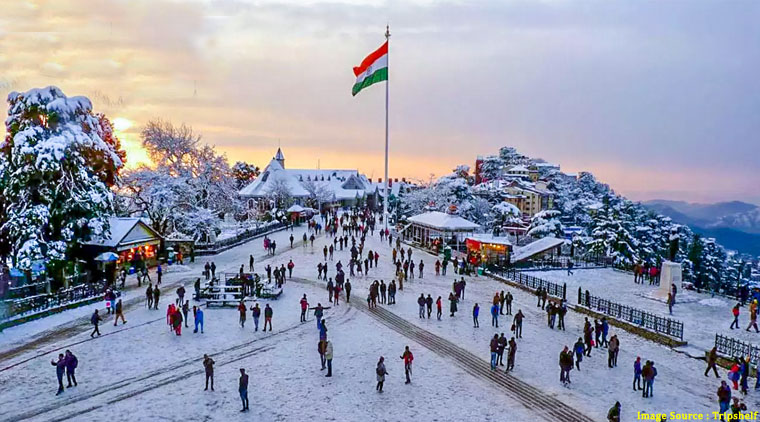
- December to February: the snow windowCold, with a real chance of snowfall and snow play. The honest detail most pages skip is that Shimla town does not snow on demand, but Kufri, Narkanda and Mashobra nearby almost always whiten first, so head out to them for the snow. Mid-December to late January is the safest bet for it. Pack proper warm layers and keep your plans flexible in case a heavy spell blocks a road for a day.
- September to October: clear and calmerA quietly excellent window that travellers on the forums rate highly: the monsoon has cleared, the skies are washed clean, the crowds have thinned, and the air is crisp. If you want the views without the May and June chaos, this is the underrated choice.
- Pack for the hillsEven in summer the evenings are cool, so carry a light jacket. A small squashable day pack and a basic medical kit help, and good walking shoes matter because Shimla is all slopes and steps, with the Mall, Jakhoo and the lanes off the Ridge all involving real climbing.
The monsoon brings heavy rain, frequent landslides on the hill roads, and mist that hides the very views you came for. Himachal sees genuine disruption in these months, with roads to Shimla and the toy-train line both liable to closures after heavy rain. Unless you have a specific reason, plan Shimla for spring, early summer, the autumn window or the winter snow instead, and if you must travel in the rains, build slack into the itinerary.
How to reach Shimla
Most people reach Shimla through Chandigarh, then drive up or, best of all, take the famous toy train from Kalka.
- Fly to Chandigarh, not ShimlaShimla's own Jubbarhatti airport, about 22 km out, has only limited and seasonal flights, so the reliable gateway is Chandigarh airport, about 115 to 120 km and roughly 3.5 to 4 hours by road. We arrange a car with an experienced hill driver from there, which also saves you wrestling with the green tax and parking on arrival.
- By the Kalka-Shimla toy trainTake a fast train to Kalka, then ride the UNESCO toy train up to Shimla in about 5 to 6 hours. It is the most beautiful way to arrive, and many visitors ride it one way and drive the other. See the dedicated toy-train section below for which class to choose, the valley-side seat and how to book it ahead.
- By road from DelhiAbout 342 to 350 km and 7 to 8 hours by car from Delhi via Chandigarh, on a good highway for most of the way before the climb. Many visitors break the drive at Chandigarh, or take the train to Kalka and the toy train on from there to skip the last winding stretch.
- Pairing Shimla with ManaliShimla sits naturally on the classic Himachal circuit with Manali, about 250 km on and a long mountain drive of 7 hours or more, so most packages do Shimla first, then Manali. Give the road its due time, as the hill driving is slow.
Fly into Delhi, the main international gateway, then continue to Shimla by road via Chandigarh, or take a train to Kalka and the toy train on up. There are no direct long-haul flights to the hills, so build a day for the transfer.
Fly into Delhi, or to Chandigarh on some routes, then continue by road or rail. Chandigarh is the practical air gateway for the Shimla hills, about 3.5 to 4 hours below the town.
Shimla is an easy road and rail trip from Delhi, Chandigarh and across the north. Take a train to Kalka and the toy train up for the classic arrival, or drive from Chandigarh, and pair it with Manali on the Himachal loop.
The Ridge, the Lodge, the temple, and what you pay
Shimla is the traffic-free Ridge and Mall first, then the colonial Viceregal Lodge, the hilltop Hanuman temple, and the snow point at Kufri. Most of it is free or costs very little.
- The Ridge and Mall RoadThe traffic-free heart of Shimla, free to wander, lined with Christ Church (one of the oldest churches in North India), Scandal Point, the old Gaiety Theatre and Lakkar Bazaar. The Ridge in the evening, with its open mountain views, is the best free experience in town. Private and commercial vehicles are not allowed up here, so you walk it.
- Viceregal LodgeThe grand British seat of power, now the Indian Institute of Advanced Study, charges about 100 rupees for Indian nationals, about 50 for Indian children aged 5 to 12 and senior citizens above 60, and about 500 for foreign nationals. It is open about 9:30 am to 5 pm and closed on Mondays and national holidays, with a 30-minute guided tour of the historic interior. Photography is not allowed inside the main building.
- Jakhoo Temple and the Hanuman statueOn the highest hill in town at about 8,000 feet, crowned by the 108-foot Hanuman statue visible across Shimla. The temple and the forest walk up are free; the ropeway is about 252 rupees one way and about 467 rupees return for an adult, plus 5 percent GST, running daily about 9:30 am to sunset. Mind the monkeys, as the experiences and safety sections explain.
- Kufri and the nearby pointsKufri, about 16 km out, is the popular snow and viewpoint spot, but it is crowded and touristy and the touts are pushy. Quieter Naldehra and its old golf course, Mashobra, Chail with its palace and high cricket ground, and Fagu are lovely half-day alternatives with a driver.
The Ridge, the Mall and Jakhoo temple are free, and the Viceregal Lodge costs very little. The real planning is around the toy train (book ahead), the season (avoid the monsoon) and the green tax and parking for an outside vehicle, rather than ticket prices. For the toy train in full, see the next section.
The Kalka-Shimla toy train, and how to ride it well
The narrow-gauge railway from Kalka up to Shimla is a UNESCO World Heritage line and the most magical way to reach the hills. It is also the thing people most often fail to book in time, so here is how to do it properly.
- The journeyThe line climbs about 96 km from Kalka to Shimla through 102 tunnels and over 800 bridges, in roughly 5 to 6 hours, winding through pine forest and Himalayan valleys. It opened on 9 November 1903 and has been a UNESCO World Heritage railway since 8 July 2008 as part of the Mountain Railways of India. The ride itself is the experience, not just the way up.
- Which train to takeThe Shivalik Deluxe is the premium service, with cushioned seats, big windows and only a few carriages, so it is the most comfortable and the first to sell out. The Himalayan Queen and the Kalka-Shimla Express are the main alternatives, and the ordinary passenger trains are the cheapest and slowest. The Rail Motor Car is a quirky small-group option when it runs.
- Take the valley-side seatTravellers who have done it again and again say the valley side, the right-hand side in the direction of travel from Kalka up to Shimla, gives the best views. There is usually no pantry car, so carry your own snacks and water, and if you only want a taste of it, the Kandaghat to Shimla stretch is the most scenic part of the line.
- The faresFares run from about 70 rupees on the ordinary passenger service to roughly 500 to 600 rupees and up for the premium Shivalik Deluxe, depending on the class, the day and current revisions. It is remarkable value for one of the world's great train rides, but confirm the live fare and class on IRCTC when you book.
- Book ahead on IRCTCBook on the IRCTC site (irctc.co.in) or the Rail Connect app, ideally the day your dates open, since the Shivalik Deluxe in particular sells out and the general advance-reservation window is now 60 days. We can arrange your tickets as part of the trip so you are not caught out in season.
- Make a plan BIf the train is full or a section is disrupted, the road from Kalka or Chandigarh is the easy backup, so you still reach Shimla comfortably. In the monsoon especially, keep a road option in hand, as the line can close after heavy rain.
The premium Shivalik Deluxe has few seats and books up fast, especially in the spring and summer season and at weekends, well before the day of travel. If riding the toy train in comfort matters to you, tell us early and we will lock in the tickets the day the 60-day window opens, or you can do it yourself on IRCTC at the same moment.
Signature experiences in Shimla
Beyond the views, these are the experiences people remember, and how to arrange them without the tourist-trap version.
- Ride the toy train upThe Kalka-Shimla UNESCO railway is the signature Shimla experience. Book the Shivalik Deluxe ahead if you can, take the valley-side seat, carry your own snacks, and let the tunnels and valleys unfold over the morning. It is worth doing even if you only ride it one way.
- An evening on the Ridge and MallThe traffic-free Ridge at sunset, a slow walk along the Mall, a coffee at the historic Indian Coffee House, and a browse through Lakkar Bazaar for its carved woodwork. The gentle, classic Shimla evening, and it costs nothing but your coffee.
- Walk or ride up to JakhooClimb the forest path or take the ropeway to the Hanuman temple at the top of town for the giant statue and the panorama over the hills. Leave your glasses in your bag and carry nothing loose in your hands, because the monkeys here are bold and quick, as the safety section warns.
- A colonial heritage strollShimla was the summer capital of British India from 1864, and the Viceregal Lodge, Christ Church, the Gaiety Theatre and the old Mall tell that story beautifully. A guided heritage walk brings the Raj-era town alive and is the most rewarding way to read the buildings, especially for history-lovers and the diaspora.
- A quiet day at Naldehra or ChailSwap the Kufri crowds for the pine calm of Naldehra and its old golf course, or the palace and the high cricket ground at Chail. A lovely, uncrowded half-day with a driver, and far gentler than the costume-photo scrum at Kufri.
- Snow and a short trekIn winter, Kufri and Narkanda are the places for snow play and beginner skiing from about December to March, weather permitting. In the green months, the walk to Chadwick Falls or out along the Glen gives you a taste of the deodar forest without leaving town for long.
If you do only one thing slowly, make it the toy train and the first evening on the Ridge. The slow climb through the tunnels and the open, traffic-free Ridge at dusk are what people remember long after the day trips fade. Give the train an unhurried morning and the Ridge an unhurried evening, and Shimla opens up in a way a quick photo stop never allows.
Where to stay in Shimla, and how many nights
Stay near the Mall and Ridge to be in the heart of it on foot, or out at Mashobra, Chail or Naldehra for pine calm and views. Two nights is the sweet spot, three with day trips.
- Mall and Ridge: in the heart of itWalking distance to the Ridge, Christ Church, the cafes and Lakkar Bazaar, which is the classic, atmospheric choice. The catch is that most of these hotels have no parking of their own, the lanes are steep, and you carry bags up from the Cart Road or use the lift. Best for those who want to step straight onto the Mall and do not mind the climb.
- Mashobra, Chail and Naldehra: pine calmQuieter resorts and heritage properties on the ridges around Shimla, with forest, views and space, but you need a car for the town. Better for couples, families and anyone who wants to slow down, and the natural choice for a honeymoon or a longer, calmer stay.
- How many nightsTwo nights and one full day covers the Ridge, the Mall, Jakhoo, the Viceregal Lodge and the heritage walk comfortably. Add a third night for Kufri or a quiet day at Naldehra or Chail, and remember that the toy train itself eats most of an arrival or departure day. Forum regulars suggest four to five nights if you want to fold in Manali or the wider hills.
- The Oberoi Cecil and heritage staysShimla has genuine heritage hotels, the colonial-era Oberoi Cecil among them, that turn the Raj-summer-capital story into where you sleep. They sit at the premium end, but for an anniversary, a honeymoon or an NRI heritage trip they are part of the experience rather than just a bed.
In the May and June peak, over long weekends, and during a forecast snow spell in December and January, the good central rooms sell out and prices climb steeply. If your dates fall on any of these, book well ahead, and if you want a hotel right on the Mall, confirm in writing how you reach it and where the car parks, since central parking is genuinely scarce.
Shimla costs and a realistic daily budget
Shimla is gentle on the wallet for sightseeing, since the best of it is free, but rooms, the car and the toy train are where the money goes. Here is what the main things cost.
- The fixed-price thingsThe Viceregal Lodge is about 100 rupees for Indians, about 50 for Indian children and seniors, and about 500 for foreign nationals. The Jakhoo ropeway is about 252 rupees one way and about 467 return for an adult, plus 5 percent GST. The HPTDC lift between Cart Road and the Mall is about 20 rupees per ride. The Ridge, the Mall and Jakhoo temple itself are free.
- The toy train and the carToy-train fares run from about 70 rupees on the ordinary service to roughly 500 to 600 rupees and up for the Shivalik Deluxe. A car with a hill driver from Chandigarh and for local sightseeing is the bigger line item, and it is the comfortable way to handle the slopes, the day trips and the parking. Confirm the live fares when you book.
- The green tax for outside vehiclesIf you drive in with a non-Himachal-registered vehicle, Shimla charges a green tax of about 50 rupees for a two-wheeler, about 200 for a small car, about 300 for an SUV and about 500 for a truck or bus. Himachal-registered vehicles, including most local taxis and our hired cars, are exempt, so it rarely affects a packaged trip.
- Cash and cardsATMs are easy to find on and around the Mall, and cards and UPI are widely accepted in hotels, restaurants and bigger shops. Carry some cash for the toy-train snacks, the ponies and small bazaar buys, but you do not need to travel with large sums.
The sightseeing in Shimla is almost free, so your budget is really the room, the car and the toy train, not the entry tickets. Spend on a comfortable central or heritage stay and a good driver for the slopes and day trips, agree the pony and photo prices at Kufri before you start, and the rest of Shimla costs very little.
Practical logistics: vehicles, parking, walking and the lift
The small things that make a Shimla day smooth, from the vehicle-free Mall and the parking crunch to the lift that saves the climb and the local transport.
- The Mall is vehicle-free, so you walkPrivate and commercial vehicles are not allowed on the upper Mall and the Ridge, so cars drop you on Cart Road and you walk or take the lift up. This is what makes the Mall so pleasant, but it also means a central hotel involves carrying bags up a slope, so pack light and plan for it.
- Parking is genuinely scarceCentral Shimla has very little parking and the lanes are steep and one-way in places. Most Mall-area hotels have no parking of their own, so outside vehicles use the Cart Road and lift-area car parks. A local taxi or our hired car with a driver who knows the parking saves a lot of circling.
- The HPTDC lift saves the climbThe Himachal Tourism lift connects Cart Road with the Mall and Ridge for a small fee of about 20 rupees per ride, and it is the easy way up and down for anyone who finds the slopes hard, especially seniors and families with small children. Use it rather than the steep stepped shortcuts.
- Getting around and the day tripsLocal taxis cover the run to Kufri, Naldehra, Chail and Mashobra, and a hired car with a driver is the comfortable way to do the day trips on the hill roads. In town, the core sights around the Ridge are best done on foot, slowly, given the climbs.
Safety, the Jakhoo monkeys, the touts, and hill driving
Shimla is an easy, gentle hill town, but the Jakhoo monkeys, the Kufri touts and the winding mountain roads are the three things to be ready for.
- The Jakhoo monkeys, and how to handle themThe monkeys around Jakhoo Temple are notorious for snatching glasses, phones, caps and food in a flash, sometimes to barter them back for a snack. Remove your glasses and put them away, carry nothing loose in your hands, hold bags close, and hire one of the sticks for rent at the bottom of the climb to keep them at a distance. Do not tease or feed them.
- The Kufri pony and costume-photo toutsAt Kufri the pony rides up to the viewpoint and the dress-up costume photos are pushed hard and overcharged, and the quoted price often climbs once you are committed. Agree the full price and exactly what it covers before you start, take a photo of the agreement if you can, or simply skip Kufri for quieter Naldehra or Mashobra.
- Hill driving and the monsoonThe roads to Shimla and on to Manali are winding and slow, and in the July to September monsoon landslides and blocked sections are a real risk. Use an experienced hill driver, do not rush the timings, keep a road backup if the toy train is disrupted, and reconfirm road status in the rains before a long transfer.
- Altitude, cold and healthShimla sits at around 7,200 feet, which is mild but enough that the climbs feel harder than at sea level, so take the slopes slowly. Carry warm layers even in summer evenings, sun protection for the bright high-altitude light, and a small medical kit, and drink bottled or filtered water and take the usual care with street food.
Shimla is generally a safe, family-friendly hill town, and solo travellers including women usually find it comfortable with standard precautions, since the persistent friction is the touts and the monkeys rather than crime. Keep to the busy Mall and Ridge after dark, agree prices first, watch children closely near the Jakhoo monkeys and on the steep edges, and the visit stays happy.
Shimla for every kind of traveller, and on access
Shimla rewards very different visitors in different ways. Here is what it offers you, and the one tip that matters for each, including how a senior visits comfortably.
- Couples and honeymoonersThe toy train, the misty Ridge in the evening and a cosy heritage hotel make Shimla a classic honeymoon. Pair it with Manali for the full Himachal romance, ride the train by day for the views, and consider a quiet stay at Mashobra or Chail over the busy Mall.
- Families with childrenThe toy train is a thrill for children, and the snow around Kufri and Narkanda in winter is the highlight. Keep little ones close from the monkeys at Jakhoo, use the lift rather than the steep climbs, and agree any pony or photo price up front at Kufri.
- Senior travellers and on accessibilityVery doable with planning, but be honest that Shimla is steep. The Ridge is flat and traffic-free, and the HPTDC lift saves the climb between Cart Road and the Mall for about 20 rupees. Take the toy train rather than the winding drive, stay close to the Mall or in a level resort outside, and keep the days unhurried. The Viceregal Lodge has a gentle approach and the senior fee.
- Backpackers and budget travellersAlmost everything that matters is free or cheap: the Ridge, the Mall, Jakhoo temple and the heritage buildings cost little or nothing, and the ordinary toy-train fare is tiny. The lanes off the Mall have simple rooms and good cheap food within walking distance of the Ridge.
- Friends and young groupsGreat for the Mall cafes, a heritage walk, the snow in winter and the adventure on the Manali leg. Shimla itself is gentle and early-to-bed, so plan an evening on the Ridge and save the late nights for the Manali stretch of the trip.
- PhotographersThe toy train through the tunnels from the valley-side seat, the Ridge at sunset, the Viceregal Lodge from the south-west corner of the lawn, and fresh snow at Kufri all shoot beautifully. Clear mornings after a rain spell, or a fresh winter snowfall, give the cleanest light, and remember photography is barred inside the Lodge.
A suggested Shimla itinerary
How to shape two or three unhurried days so you ride the toy train, walk the heritage Mall, climb Jakhoo and still have a calm day trip.
- Day one: arrive by toy trainRide the Kalka-Shimla toy train up in the morning, taking the valley-side seat, and reach Shimla by early afternoon. Check in, then spend the first evening slowly on the Ridge and the Mall, with a coffee and a browse through Lakkar Bazaar as the lights come on.
- Day two: heritage and JakhooStart at the Viceregal Lodge for the morning guided tour (remember it is closed on Mondays), then do a colonial heritage walk past Christ Church and the Gaiety Theatre. After lunch, climb or take the ropeway up to Jakhoo for the Hanuman statue and the view, glasses safely away from the monkeys.
- Day three: a day trip, then onTake a half-day drive to quiet Naldehra and its golf course or to Chail, or out to Kufri and Fagu for the snow in winter, agreeing any pony or photo price first. Then drive on to Manali or back down to Chandigarh, or ride the toy train back for a second helping of the line.
- The short versionIf you only have a long weekend, do the toy train up, one full day for the Ridge, the Lodge and Jakhoo, and the drive back, and skip the day trips. Two nights is the realistic minimum given that the train or drive eats most of an arrival and a departure day.
The single thing that breaks a tight Shimla plan is arriving at the Viceregal Lodge on a Monday or a national holiday, when it is closed, or after the last guided tour at around 4:30 pm. Build your heritage morning on a Tuesday-to-Sunday day and arrive by mid-afternoon at the latest, and you will not find yourself at a shut gate with the day gone.
The real questions travellers ask about Shimla
Straight answers to the questions that come up again and again on TripAdvisor, IndiaMike and Reddit, so you arrive already knowing the score.
- Is the toy train worth it, and which seat?Yes, for most people it is a highlight, not just transport: the slow climb through 102 tunnels and the valley views are the thing. Take the valley-side seat, the right-hand side going up, book the comfortable Shivalik Deluxe ahead, and carry your own snacks. If five to six hours feels long, ride part of it from Kandaghat, the most scenic stretch.
- How many days do I need?Two nights and a full day for Shimla itself, three if you want a day trip to Kufri, Naldehra or Chail. Forum regulars suggest four to five nights if you fold in Manali or want to escape the main tourist spots into the quieter villages.
- Is Shimla overrated or too crowded?In the May and June peak the Mall and the approach roads get genuinely crowded, and some travellers find the town busy. The honest answer from the forums is that the heritage walk, the toy train and the early mornings are the real reward, and stepping out to Naldehra, Mashobra or Chail escapes the crush. Manage the timing and it is well worth it.
- Will I actually see snow?Not guaranteed in Shimla town itself, but very likely at Kufri, Narkanda and Mashobra nearby from mid-December to late January. Plan a winter trip for the snow but treat heavy snowfall as a bonus, keep your road plans flexible, and head out to the higher points for the snow play.
- Do I pay a green tax to drive in, and where do I park?Non-Himachal-registered vehicles pay a green tax of about 50 rupees for a two-wheeler up to about 500 for a bus on entering Shimla; HP-registered vehicles, including most local taxis and our cars, are exempt. Parking near the Mall is scarce, so use the Cart Road and lift-area car parks and reach the vehicle-free Mall on foot or by the lift.
- Shimla or Manali, or both?Shimla is the heritage hill town, the toy train and the colonial Mall; Manali is for snow, trekking and the gateway to the high passes. On the forums Manali edges it for raw scenery and Shimla for character. With four to seven days you can do both on the classic circuit, Shimla first.
Planning Shimla from abroad
Shimla was the summer capital of British India, and the UNESCO toy train and the colonial Mall make it a uniquely rewarding heritage trip. A little planning makes the hills easy and comfortable.
- Route through Delhi and ChandigarhFly into Delhi, then reach Shimla by road via Chandigarh, about 7 to 8 hours from Delhi, or take a train to Kalka and the toy train on up. Shimla's own airport has only limited, seasonal flights, so do not plan to fly straight in, and give a full day for the transfer either way.
- Ride the heritage toy trainThe Kalka-Shimla UNESCO railway, opened in 1903, is the heart of the trip, and the Shivalik Deluxe is the comfortable way to do it. Book ahead, since it sells out and the window is 60 days, take the valley-side seat, and we can arrange the tickets as part of your itinerary.
- Walk the Raj-era townShimla was the summer seat of the British Raj from 1864, and the Viceregal Lodge, Christ Church, the Gaiety Theatre and the old Mall tell that story. A guided heritage walk is the rewarding way to see it, especially for the diaspora and history-lovers, and a colonial-era heritage hotel makes the stay part of the story.
- Gentle and senior-friendly with planningFor parents and grandparents, the traffic-free Ridge and the HPTDC lift that saves the steep climb make Shimla manageable, and the toy train spares the winding drive. We pace the days so an older traveller is comfortable, use the senior entry fees, and just plan around the monsoon.
Money, connectivity and timing for foreign visitors
The practical basics an overseas traveller needs for a hill town: cash and cards, a SIM, the entry fees that differ for foreign nationals, and how many days to give Shimla on a wider India trip.
- Cards work, but carry some cashCards and UPI are widely accepted in hotels, restaurants and bigger shops, and ATMs are easy to find on the Mall. Carry some cash for the toy-train snacks, the ponies, the lift and small bazaar buys, but you do not need to travel with large sums in Shimla.
- Get a SIM in DelhiPick up an Indian tourist SIM or an eSIM when you land in Delhi rather than hunting for one in the hills, since signal in the mountains can be patchy on the road. Coverage in Shimla town itself is generally fine for maps, calls and bookings.
- The foreign-national entry feesA few sights charge foreign nationals more: the Viceregal Lodge is about 500 rupees for a foreign national against about 100 for an Indian. The Jakhoo ropeway and the toy train are the same for everyone. None of it is expensive by international standards, but carry your passport, as it is sometimes asked for.
- How long to give it on a bigger tripOn a north India trip, two to three nights in Shimla is the right weight, or four to seven if you add Manali on the Himachal loop. It pairs naturally after Delhi, Agra and the Golden Triangle, as the cool, green, heritage counterpoint to the plains.
Shimla is an unusually rewarding hill stop for an overseas first-timer: cool air after the plains, a walkable traffic-free Mall, a heritage railway and a Raj-era story that the diaspora and history-lovers find especially moving. Slot it after the Golden Triangle, give it two or three nights, ride the toy train at least one way, and let it be the green, gentle chapter of the trip.
Why a small hill town ran the British Raj each summer
Every summer from 1864, when Viceroy Sir John Lawrence formally made Shimla the summer capital of British India, the entire imperial government climbed out of the heat of the plains and reassembled here on the ridge. Secretariats, the army headquarters, the post and telegraph offices, the clerks and their families all moved up, and for half the year a small Himalayan town quietly governed a fifth of humanity. The Viceregal Lodge, completed in 1888, was its seat of power, and the buildings of the Mall, Christ Church and the Gaiety Theatre still read like an English town transplanted to the deodar forest. The crowning feat was the Kalka-Shimla Railway, built between 1898 and 1903 and opened on 9 November 1903 to connect the summer capital to the rest of India by rail, climbing through 102 tunnels in the process. It became a UNESCO World Heritage line on 8 July 2008. A much-loved local story holds that the long Barog tunnel is named for the British engineer who, the tale goes, miscalculated its alignment and took his own life, and that a sadhu named Bhalku then guided the work; the broad history is well documented, but those personal legends are tradition retold locally rather than firmly verified, so enjoy them as the colour they are.
Planning a Shimla trip?
Our Himachal Pradesh travel experts plan your full journey for you: route, hotels, darshan timings and transport. You get a free day-by-day plan and an exact quote on WhatsApp, usually within a few hours. No payment is needed to get your plan.
Tour packages that visit Shimla
Every journey below is private, hand-crafted and fully customizable. Tell us your dates and we tailor the itinerary, the pace and the priests or guides around you.
 7D / 6N
Kullu Manali Tour Package from Hyderabad
- Visit Chail Palace
- Visit Chail Gurdwara
 8D / 7N
Kullu Manali Tour Package from Chennai
- Visit Jakhoo Hill
- Ride on Shimla-Kalka Railways
 10D / 9N
Himachal Tour Package
- Scenic and beautiful places of Shimla
- Rohtang Pass
 8D / 7N
Kullu Manali Tour Package from Ahmedabad
- Visit Chadwick Falls
- View Scandal Point
 7D / 6N
Himachal Tour Package for Couple
- Kufri
- Rohtang Pass
 7D / 6N
Himachal Holiday Tour Package
- Sightseeing of Shimla
- Visit scenic Kufri and Fagu
Kullu Manali Tour Package from Pune
- Visit Chail Palace
- Visit Buddhist Monasteries
 7D / 6N
Kullu Manali Tour Package from Delhi
- Visit Jakhoo Hill and Temple
- Visit Solang Valley
 5D / 4N
Manali Tour Package for Couples from Delhi
- The Mall Road
- The Lakkar Bazaar