Shoghi Travel Guide
The kind months are March to June and September to November , pleasant and green. Winter brings the odd snowfall, and the July to August monsoon can shut the highway.
When to visit Shoghi, and when to stay away
The kind months are March to June and September to November, pleasant and green. Winter brings the odd snowfall, and the July to August monsoon can shut the highway.
- March to June: clear and greenThis is the most comfortable window, with days around 15 to 27 degrees Celsius, clear skies and the forest at its greenest. It is the classic Himachal summer escape from the plains, so it is also the busiest and dearest, especially in May and June. Come early in the day for the temples and the nature walks before the light gets sharp.
- September to November: calm after the rainOnce the monsoon clears, the air is washed and the crowds thin. Days stay mild while the nights turn cool, so carry a warm layer. This is a lovely, quiet time for a forest stay, and the orchards are at their prettiest as the fruit season winds down.
- December to February: cold, with a chance of snowWinter is chilly and can drop near freezing, with fog on some mornings and occasional snowfall that turns Shoghi frosty white. If you love snow it is magical, but pack proper woollens, expect cold nights, and know that a heavy fall can briefly block roads. Check the forecast before you drive up.
- July to August: monsoon, and best avoidedThe hills are lush but the rain is heavy, and the Chandigarh to Shimla highway sees landslides and roadblocks in these months. If you must travel then, keep your plans loose, allow extra time, and do not attempt tight connections. This is the one season we would steer most travellers away from.
In July and August the Chandigarh to Shimla road is prone to landslides and slow-downs after heavy rain, and a slip can add hours or close the highway for a while. Locals live with it, but a visitor on a tight schedule can lose a day. If your dates fall in the monsoon, build in buffer time, avoid night driving in the rain, and keep a flexible plan rather than a fixed one.
How to reach Shoghi
Shoghi is a roadside suburb on the Chandigarh to Shimla highway. Most people drive up from Chandigarh, or ride the toy train and finish the short hop by road.
- From Chandigarh by roadChandigarh, about 104 to 115 km away, is the practical gateway. Its airport and railway station have wide connections, and from there it is a scenic hill drive of roughly 3 to 4 hours up to Shoghi, which sits right on the highway just before Shimla. We can arrange a car with an experienced hill driver.
- From DelhiDelhi is about 350 km away, a long day by road. Most travellers either drive with a break at Chandigarh, or take a train or flight to Chandigarh or Kalka and continue up the hill. There is no direct fast route that skips the mountain climb, so plan a relaxed pace.
- By the Kalka-Shimla toy trainThe famous narrow-gauge toy train climbs from Kalka to Shimla and passes through Shoghi. It is a beautiful ride, though slow, and not every service stops at Shoghi station, so check the IRCTC timetable. Many visitors ride it for the experience and cover the last stretch to their stay by taxi.
- From Shimla, the short hopIf you are already in Shimla, Shoghi is only about 13 km back down the highway, roughly 20 to 30 minutes by road. A taxi is about 500 to 800 rupees one way, and frequent buses and shared taxis on the Shimla to Chandigarh route pass through for much less.
Fly into Delhi, then take a short domestic flight or train to Chandigarh and drive up to Shoghi. There are no international flights to the hills, and Shimla's small airport has only limited services.
Fly into Delhi or Chandigarh, then continue by road up the Chandigarh to Shimla highway. Shoghi sits on the highway about 13 km before Shimla, so it is an easy drop-off on the way up.
Drive or take a train or bus to Chandigarh or Kalka, then head up by road or ride the Kalka-Shimla toy train. Buses on the Chandigarh and Shimla route stop at or near Shoghi.
Tara Devi temple, the little shrines, and honest expectations
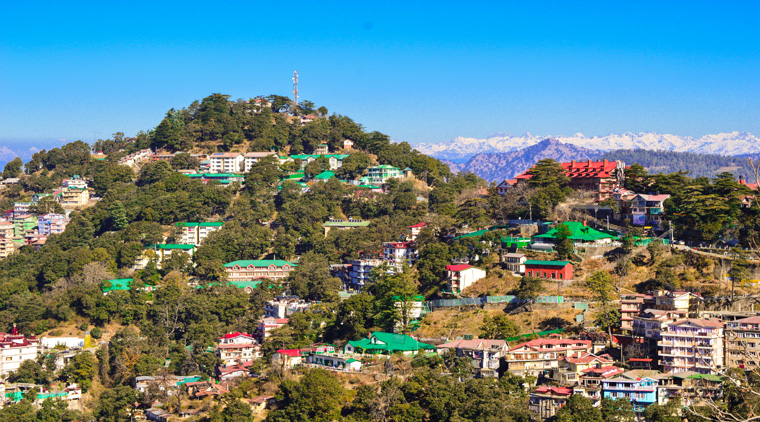
Shoghi's sights are small and gentle: the hilltop Tara Devi temple, a few forest shrines, and the heritage toy-train line. Set your expectations right and you will enjoy it.
- Tara Devi TempleThe main draw, a hilltop shrine to Goddess Tara, a form of Durga, at about 1,851 m, ringed by deodar forest with wide valley views. It is about 6.6 km from Shoghi and about 11 km from Shimla on the highway. It generally opens roughly 7 am to 6:30 pm, with aarti around 8 am, about noon and around 5 pm, though hours shift with the season, so reconfirm locally.
- The forest shrines around ShoghiShoghi is known locally as a region of temples. Besides Tara Devi there is a Hanuman mandir and a Kali Mata temple in the hills nearby, and Kamna Devi temple on Prospect Hill toward Shimla. These are simple, quiet places of worship, not grand monuments, and that calm is the point.
- Shoghi railway station and the toy trainThe UNESCO-listed Kalka-Shimla Railway runs right past Shoghi, and the little station is a pleasant short walk or drive from most stays. Watching the toy train curve through the pines is a simple joy. Remember that not every service stops here, so time it against the timetable.
- Set your expectations honestlyShoghi has no Mall Road, no big bazaar and no headline monument of its own. Some day-trippers come and feel there is nothing to do. If you arrive wanting sightseeing, base in Shimla. If you come for forest air, orchard views and calm, Shoghi is exactly right.
Many pages list the Viceregal Lodge, Jakhoo temple and the Mall Road under Shoghi. Be clear that those are in Shimla, about 13 km and 20 to 30 minutes away, not in Shoghi itself. What is genuinely in and around Shoghi is the forest, the small temples, the orchards and the toy-train line. Treat Shoghi as your calm base and Shimla, Kufri and Chail as easy day trips, and the trip makes perfect sense.
Gentle experiences that suit Shoghi
Shoghi rewards slow travel: forest walks, birdwatching, orchard mornings, the toy train, and easy drives to the sights of Shimla and beyond.
- Walk in the deodar and pine forestThe finest free experience here is simply walking under the tall deodar and pine, with the valley opening between the trees. Trails run from many resorts and from the road toward the small temples. Go in the cool of the morning, wear proper shoes on the slopes, and let the quiet do its work.
- Birdwatching and orchard morningsShoghi is a gentle spot for birds, with Himalayan bulbuls, barbets, woodpeckers and more in the wooded hills. In season the apple and stone-fruit orchards are lovely, and some homestays let you wander them. Carry binoculars if you have them, and keep early mornings free.
- Ride the Kalka-Shimla toy trainEven a short stretch of the narrow-gauge line is memorable, curving through tunnels and over bridges with the hills falling away. You can join at Shoghi if your train stops, or ride a longer leg from Kalka or Solan. Book ahead on IRCTC in season, as the scenic classes fill fast.
- Trek up to Tara DeviFit walkers can trek up to the Tara Devi temple through the forest rather than drive, a moderate climb of an hour or two depending on where you start. It is steep in places, so carry water and start early. The valley view from the top is the reward.
- Day trips into the bigger sightsUse Shoghi as a base and drive out: Shimla's Mall Road and Ridge, Kufri for the views and the pony rides, Chail for the palace and the high cricket ground, Naldehra for the golf course and Tattapani for the Sutlej and its warm sulphur springs. Most are within about an hour or two.
- Do very little, on purposeThe honest truth is that many people come to Shoghi to slow down. A book on a sunny balcony, orchard air, a slow lunch and an early night is a perfectly good day here. If that sounds dull, base in Shimla; if it sounds like a holiday, you will love it.
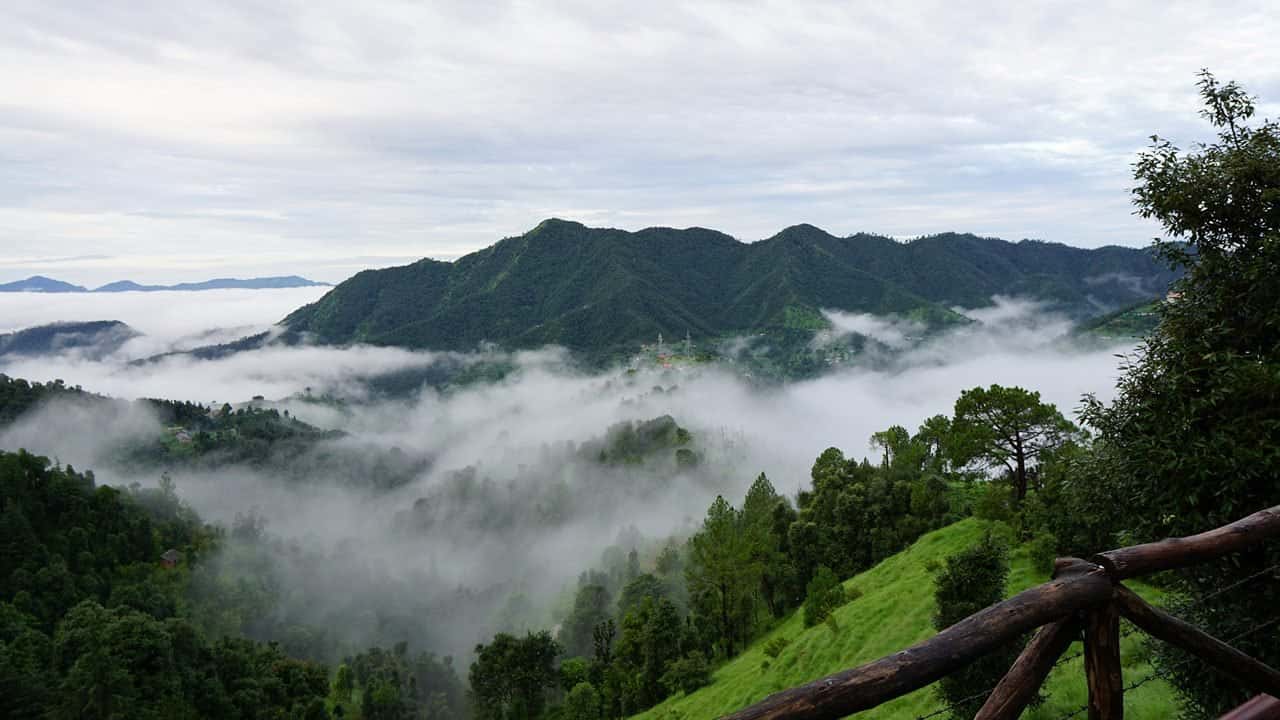
If you do only one thing slowly in Shoghi, make it a forest morning. Step out early, walk under the deodars while the mist lifts, listen to the birds, and let the plains fall out of your head. The toy train and the day trips are lovely, but the calm green mornings are what people remember about Shoghi long after the drive home.
Where to stay in Shoghi, and the Shoghi-or-Shimla question
Shoghi is mostly forest resorts and homestays, not town hotels. Stay here for calm, or in Shimla for sights and shopping. One to two nights suits most trips.
- Forest resorts on the ridgesThe signature Shoghi stay is a resort tucked into the pines off the highway, with valley views, a garden and a quiet restaurant. These suit couples, families and anyone who wants to switch off, but you will need a car or taxi for meals out and for reaching Shimla, since there is little within walking distance.
- Homestays and small guesthousesSimple homestays and guesthouses, often family run and sometimes in the orchards, are the warm, affordable choice. You get home-cooked Himachali food and local advice, in exchange for basic rooms. They are ideal for slow, low-key stays and for travellers on a budget.
- Stay in Shoghi, or in Shimla?Stay in Shoghi if you want calm, green and quiet and are happy to drive 20 to 30 minutes for the sights. Stay in Shimla if you want the Mall Road, restaurants and attractions on your doorstep and do not mind the crowds and the traffic. Many people split the difference: a night or two in each.
- Room budgetsBudget rooms and homestays run about 1,000 to 2,500 rupees, mid-range resorts about 3,000 to 6,000 rupees, and premium four to five star properties about 6,000 to 15,000 rupees. Prices rise on weekends and peak in May, June and around the New Year, so book ahead for those dates.
One to two nights is the sweet spot. A single night is enough to breathe the forest air, see Tara Devi and ride or watch the toy train. A second night lets you add a relaxed Shimla day, a drive to Kufri or Chail, and a proper orchard morning without rushing. Beyond two nights, most people fold Shoghi into a wider Himachal loop that also takes in Shimla, Kufri and perhaps Chail or Naldehra.
Shoghi costs and a realistic daily budget
Shoghi is gentle on the wallet outside peak weekends. Here is what the main things cost, hedged and sourced, so you can plan and avoid being overcharged.
- A rough daily budgetExcluding your room and long-distance transport, plan on about 1,000 to 1,800 rupees a day as a backpacker, about 2,500 to 4,000 rupees mid-range, and about 5,000 rupees and up for a comfortable day with good meals, a drive out and a temple visit. Shoghi has few paid attractions, so most spend goes on stay, food and transport.
- Getting around costsA private taxi from Shimla to Shoghi is about 500 to 800 rupees one way, and hiring a car for a half-day of local sightseeing costs more. Buses on the Shimla to Chandigarh route through Shoghi are cheap, and a toy-train seat starts from about 65 rupees in second seating, rising to about 300 to 550 rupees in first class.
- Rooms and foodRooms range from about 1,000 rupees for a simple homestay to about 15,000 rupees for a premium resort. Meals are reasonable, with homestay thalis and simple Himachali food the best value; resort restaurants cost more. Carry snacks and water for walks, as shops are few.
- What is freeThe best of Shoghi costs nothing: the forest walks, the birdwatching, the orchard views and watching the toy train pass. Temple entry is free, as is the atmosphere that brought you here. Budget mainly for your stay, your meals and your transport, and Shoghi stays affordable.
Agree taxi and car fares before you set off, especially for day trips to Kufri, Chail or Tattapani, since hill drivers quote by the trip and rates are negotiable. Ask your homestay or resort for the going rate first, settle it in advance, and you avoid the only real friction here. For the toy train, book on IRCTC rather than paying a premium to an agent.
Practical logistics: food, money, SIM and getting around
The small things that make a Shoghi stay smooth, from where to eat and draw cash to how you get around a place with no real market.
- Food and suppliesMost meals happen at your homestay or resort, as Shoghi has only a few small eateries and shops along the highway. The local Himachali food is simple and good. Stock up on snacks, water and any medicines in Shimla or Chandigarh before you come up, since choice here is limited.
- Getting aroundThere is no local transport network within Shoghi to speak of, so you rely on your own car, hired taxis, or the buses passing on the highway. Plan a car for day trips. Walking is fine for the forest and the nearby temples, but distances to Shimla and the sights need a vehicle.
- Money and ATMsCarry cash. Shoghi has limited ATMs, so draw money in Shimla or Chandigarh. Cards and UPI work at bigger resorts, but homestays, small eateries and taxis often prefer cash, so keep small notes for food, tips and short rides.
- SIM, signal and languageMobile coverage along the highway and in most stays is generally fine for calls and data, though it can dip inside deep forest and dead spots. Hindi and Pahari are the local languages, and English is understood at resorts and in the tourist trade, so communicating is easy.
Safety, mountain roads, and staying well
Shoghi is a calm, low-crime place. The real risks are the hill roads, the monsoon, the cold and the altitude walks, not scams.
- The hill roads and monsoonThe main safety point is the drive. Hill roads are winding, and in the July to August monsoon the Chandigarh to Shimla highway sees landslides and roadblocks. Avoid night driving in rain or fog, use an experienced hill driver, keep to daylight for long stretches, and allow buffer time so you are never rushing on a wet mountain road.
- Cold, sun and altitudeWinter nights drop near freezing, so pack proper woollens and check the forecast for snow. In summer the hill sun is stronger than it feels, so carry sun protection and water for walks. The climbs to Tara Devi and through the forest are moderate but steep in places, so take them slowly and rest if you feel breathless.
- Health and suppliesShoghi is a small place with limited medical facilities; Shimla, about 13 km away, has the nearest proper hospitals. Carry any regular medicines with you, a small first-aid kit, and enough for a couple of extra days in case weather delays you. Drink bottled or filtered water and take normal care with food.
- Crime and scamsShoghi is quiet and generally very safe, with little of the tout pressure of busier tourist towns. The usual sensible precautions apply, agree taxi and day-trip fares in advance, keep valuables secure, and use registered taxis and licensed stays. Solo and women travellers generally find it calm and easy.
Two weather windows need real care. In the July to August monsoon, landslides can close or slow the Chandigarh to Shimla highway with little warning, so travel by day, keep plans flexible and do not push through heavy rain at night. In deep winter, a snowfall can make the slopes slippery and briefly block roads, so carry warm clothing, check the forecast, and let an experienced local driver handle the wheel rather than driving unfamiliar hill roads yourself.
Shoghi for every kind of traveller, and on access
Shoghi suits some travellers beautifully and others not at all. Here is the honest note for each, including how a senior visits comfortably.
- CouplesOne of Shoghi's best fits: quiet forest resorts, valley views, orchard walks and no crowds. Perfect for a calm, romantic break, with Shimla close by for an evening out when you want a change of pace.
- Families with childrenGood for a relaxed family stay with space to run and a toy-train ride the kids will love, though there are few organised attractions in Shoghi itself. Plan day trips to Kufri and Chail for activities, and keep little ones away from road edges and steep slopes.
- Senior travellers and on accessibilityVery doable with planning. Choose a resort with easy access rather than one down a steep path, keep walks gentle, use a car for the sights, and enjoy the calm and clean air. The temple climbs are optional, as you can drive most of the way to Tara Devi. Avoid deep winter if cold is hard on you.
- Quiet getaways and workationsExcellent for anyone who wants to switch off or work remotely in the pines, as long as you confirm the internet speed with your stay first. The lack of a busy market is a feature here, not a flaw.
- Nature lovers and birdwatchersA gentle pleasure: deodar and pine forest, birds like bulbuls, barbets and woodpeckers, and orchard air. Bring binoculars, walk in the early morning, and pair Shoghi with the wider Shimla hills for more trails.
- Sightseers and party travellersHonestly, not for you. If you want monuments, shopping, nightlife or a packed itinerary, base in Shimla instead and treat Shoghi as, at most, a quiet lunch stop. Shoghi rewards slowing down, not ticking off sights.
A suggested Shoghi itinerary
How to shape one or two unhurried days in Shoghi, and how to fold it into a wider Shimla and Himachal loop.
- Day one, morningArrive and settle into your forest stay, then take a gentle walk through the deodars while the air is cool. Head up to the Tara Devi temple for the valley view and the aarti, remembering the hours shift with the season, then a relaxed lunch back at your stay.
- Day one, afternoon and eveningStroll to Shoghi railway station to watch the toy train pass through the pines, or ride a short leg if your timetable allows. Spend the evening slowly, a book on the balcony, orchard air and an early dinner. This is Shoghi at its best.
- Day two, if you have itDrive into Shimla for the Mall Road and the Ridge, or head to Kufri for the views, or Chail for the palace and cricket ground. Come back to Shoghi's calm for the night rather than sleeping in busy Shimla. A second morning walk in the forest sends you home rested.
- Fold it into a bigger loopOn a wider Himachal trip, give Shoghi a night as the quiet counterpoint to Shimla, then continue to Kufri, Chail, Naldehra or on toward Kufri and the higher hills. It works well as either the first calm night up from Chandigarh or the last slow night before you drive down.
The mistake is treating Shoghi like a sightseeing town and leaving disappointed. The plan that works is to sleep in Shoghi for calm and green, and drive out for the sights, so you get the best of both. Base here, keep the mornings and evenings slow and unstructured, and use the middle of the day for a temple, a toy-train ride or a run into Shimla, Kufri or Chail.
Day trips from Shoghi
Shoghi's real strength is its position. Within about an hour or two you can reach Shimla, Kufri, Chail, Naldehra, Mashobra and Tattapani.
- Shimla, about 13 kmThe Mall Road, the Ridge, Christ Church, the Viceregal Lodge and Jakhoo temple are all in Shimla, about 20 to 30 minutes up the highway. Go in for a half-day of walking and shopping, then retreat to Shoghi's quiet for the night.
- Kufri and MashobraKufri, beyond Shimla, is known for its views, pony rides and winter activity, though it gets crowded in season. Mashobra nearby is greener and calmer, with orchards and forest walks. Both make an easy day out from Shoghi with a car.
- Chail and KandaghatChail, once the summer capital of the Patiala royals, has a palace hotel and the world's highest cricket ground set in cool deodar forest. Kandaghat, on the way, is a quiet spot with valley views. Together they make a relaxed drive south of Shoghi.
- Naldehra and TattapaniNaldehra has a scenic old golf course among the cedars, and Tattapani, further out on the Sutlej, is known for river activity and its warm sulphur springs. These are longer drives, so start early and confirm road conditions, especially after rain.
Do not try to see everything. From Shoghi, one or two day trips over a two to three night stay is plenty. Couples and quiet-seekers can pair Shimla with Mashobra or Naldehra; families with active children will get more from Kufri and Chail; nature lovers should keep to the greener Mashobra and Naldehra side. Whatever you choose, keep the drives to daylight and agree the taxi fare before you leave.
The real questions travellers ask about Shoghi
Straight answers to the questions that come up again and again on travel forums, so you arrive already knowing the score.
- Is Shoghi worth it, or is there nothing to do?Both are true, depending on what you want. If you came for sights, shopping and activity, you will find little in Shoghi itself and should base in Shimla. If you came for forest calm, orchard air and quiet nights with day trips on tap, Shoghi is genuinely worth it. Decide what kind of holiday you want first.
- Shoghi or Shimla for the stay?Shoghi for peace and green, Shimla for the Mall Road and the buzz. They are only about 13 km apart, roughly 20 to 30 minutes, so many people stay in Shoghi and drive into Shimla for the day, getting the best of both.
- Does the toy train stop at Shoghi?Shoghi has its own station on the Kalka-Shimla line, but not every train halts there, so check the IRCTC timetable. Many visitors watch the train pass or ride a longer leg from Kalka or Solan, then finish the last hop by road.
- How much does the toy train cost?Fares are modest and vary by class: second seating from about 65 rupees, first class about 300 to 550 rupees, and the Vistadome glass coach about 130 to 630 rupees. Book on IRCTC, and reconfirm current fares, as they change with season and demand.
- Is it safe to drive up in the monsoon?It can be done, but the Chandigarh to Shimla highway is prone to landslides and roadblocks in July and August. Travel by day, keep plans flexible, use an experienced driver, and never push through heavy night rain on the hill road.
- How do I get to the Tara Devi temple from Shoghi?It is about 6.6 km away on the highway toward Shimla. Take a taxi or drive most of the way up the hill, or trek up through the forest if you are fit, an hour or two of moderate climbing. It usually opens roughly 7 am to 6:30 pm, but reconfirm the hours locally.
Planning Shoghi from abroad
Shoghi is the calm, green counterpoint to crowded Shimla, ideal for NRI families and older parents. A little preparation makes the base-not-sights nature of it easy to enjoy.
- Understand what Shoghi isShoghi is a small forest suburb, not a sightseeing town. If your family wants clean air, quiet and green rather than monuments and shopping, it is a lovely choice, with Shimla only about 13 km away for the sights. Come expecting calm, and it delivers; come expecting a resort strip, and you will be puzzled.
- Pair it with Shimla and the toy trainFly into Delhi, then reach Chandigarh by a short flight or train, and drive up the hill. Base in Shoghi, ride or watch the UNESCO-listed Kalka-Shimla toy train, and drive into Shimla and Kufri for the classic hill-station sights. It is an easy, gentle introduction to the Himalayan foothills.
- Gentle and senior-friendly with planningFor NRI travellers bringing older parents, Shoghi is kinder than busy Shimla: quiet, clean and slow. Choose a stay with easy access, keep walks gentle, drive rather than climb to the temple, and avoid deep winter if the cold is hard. The calm and the mountain air are the whole point.
- Set the right paceGive Shoghi one or two nights within a wider Himachal trip rather than making it the whole holiday. It works best as the restful chapter between Shimla, Kufri and Chail, where the family slows down, breathes the forest, and enjoys home-cooked food away from the crowds.
Money, connectivity and timing for foreign visitors
The practical basics an overseas traveller needs for a small hill suburb: cash, cards, a SIM, and how many days to give it on a wider India trip.
- Carry cash, draw it in the cityShoghi has limited ATMs, so draw cash in Chandigarh or Shimla before you come up. Bigger resorts take cards and UPI, but homestays, small eateries and taxis often want cash, so keep small notes for food, tips and short rides.
- Get a SIM at the airportPick up an Indian tourist SIM or an eSIM when you land in Delhi rather than hunting for one in the hills. Coverage in Shoghi is generally fine for maps, calls and ride-hailing, though it can dip in deep forest, so download offline maps for the drives.
- How long to give it on a bigger tripOn a first Himachal trip, one to two nights in Shoghi is the right weight, enough to rest, see Tara Devi and ride the toy train, without slowing the whole itinerary. Slot it beside Shimla and Kufri, and continue to Chail, Naldehra or the higher hills.
- Time your visit to your comfortMarch to June and September to November are the comfortable windows. Come in winter only if you want the cold and the chance of snow, and be ready for near-freezing nights. Avoid the July to August monsoon, when the hill roads are at their most difficult.
Shoghi is an unusually gentle introduction to the hills: small, green, quiet and only a short drive from the classic Shimla sights. Slot it after Chandigarh, give it a night or two, and let it be the slow, restful chapter of a Himachal trip. Many overseas and NRI visitors find the calm forest mornings, rather than any single sight, are what they remember most warmly.
Why Shoghi is called a region of temples
Shoghi is remembered less for any monument than for its shrines in the forest, and the one that gives the place its quiet fame is the Tara Devi temple on the hill above. Tara, whose Sanskrit name means star, is worshipped here as a form of the goddess Durga, and her temple sits among the deodars at about 1,851 m, looking out over the valleys toward Shimla. Local tradition holds that the deity was brought to these hills long ago by a ruling family who carried her image up the mountain and built her a home where the forest was deepest and the view widest. Around her have gathered the smaller shrines of Hanuman, Kali and Kamna Devi, until Shoghi came to be known, in the words of its own people, as a region of temples. No grand legend is reliably fixed to a single verse here, and we will not invent one; what endures instead is the plain, honest character of the place, a scatter of quiet shrines in a pine forest where a traveller comes to slow down.
Planning a Shoghi trip?
Our Himachal Pradesh travel experts plan your full journey for you: route, hotels, darshan timings and transport. You get a free day-by-day plan and an exact quote on WhatsApp, usually within a few hours. No payment is needed to get your plan.
Tour packages that visit Shoghi
Every journey below is private, hand-crafted and fully customizable. Tell us your dates and we tailor the itinerary, the pace and the priests or guides around you.