Igatpuri Travel Guide
Igatpuri has two different faces: the monsoon spectacle of June to September and the clear trekking winter of October to February . Decide which Igatpuri you want first, because...
When to visit Igatpuri, and the season truth nobody tells you
Igatpuri has two different faces: the monsoon spectacle of June to September and the clear trekking winter of October to February. Decide which Igatpuri you want first, because they are not the same trip.
- June to September: the season Igatpuri is famous forThis is when the hills turn deep green, mist rolls over the valleys and every fold of the ghats carries a waterfall. Camel Valley and Vihigaon are at full flow, and the drive itself becomes the sight. The trade-off is real: trails are slippery, weekend crowds pour in from Mumbai, and villa prices peak on Saturdays.
- October to February: clear skies and the best trekkingJust after the rains the land stays green into November, and the cool, dry months are the right time for Kalsubai at sunrise, Tringalwadi fort and long valley walks. Days are pleasant, nights get genuinely cold on the plateau, so carry a warm layer. If you want photographs with visibility instead of mist, come now.
- March to May: the honest noSummer afternoons are hot, the hills turn brown and the waterfalls dry up. Blogs that promise a year-round hill station are not being straight with you. Come in these months only for a quiet resort break or a meditation course, keep activity to early morning and evening, and rest through midday like the locals do.
- Weekdays beat weekends, all yearIgatpuri is Mumbai's and Nashik's weekend lung. On monsoon Saturdays the waterfalls, viewpoints and the old highway all crowd up, and stays cost the most. If you can take a Friday off, you get the same valleys at their quiet best and noticeably cheaper rooms.
The Thal Ghat belt around Igatpuri takes some of the heaviest rain in Maharashtra, and that is exactly why it is beautiful from June to September. But the same rain makes rock lips slick at the waterfalls and turns Kalsubai's iron ladders slippery, which is why trek operators themselves steer beginners to October to February. A simple rule keeps the trip happy: waterfalls and valley drives in the monsoon, summit treks after it.
How to reach Igatpuri: two railheads and a new expressway
Igatpuri is one of the easiest Western Ghats towns to reach: a major rail stop about 132 km from Mumbai, plus the Samruddhi Mahamarg expressway whose final ghat stretch opened in June 2025.
- By express train to Igatpuri (IGP)Igatpuri is a major halt on Central Railway's Mumbai-Nashik line, about 132 km from Mumbai CSMT with around 19 direct trains, including Vande Bharat and Jan Shatabdi services; the fastest take about 2.5 hours. Book on IRCTC. The station sits at the edge of town, hotels are a short auto or taxi ride away, and the Dhamma Giri campus is about 4 km from the station.
- The Kasara local-train route for budget travellersMumbai's suburban locals run all the way to Kasara at the foot of the ghat, 14 km by rail below Igatpuri. From outside Kasara station, shared jeeps and taxis climb the old ghat road, about 15 to 20 km, up to Igatpuri and Vihigaon. It is the cheapest way in from Mumbai; just agree the fare per seat before you board, as quotes to visitors start high.
- By road: the expressway or the old highwaySince 5 June 2025 the final 76 km Igatpuri to Amane stretch of the 701 km Samruddhi Mahamarg is open, including a roughly 7.8 km tunnel through the ghat, so the tolled expressway run from Thane's edge to the Igatpuri interchange takes roughly 2 to 2.5 hours in normal traffic. The older NH160 Mumbai-Nashik highway takes about 2.5 to 3.5 hours and crawls badly on monsoon weekends, though its dhabas and ghat views are part of the fun.
- By airMumbai's international airport is the real gateway, about a 3 hour drive or a train ride away. Nashik's Ozar airport lies about 24 km beyond Nashik city, roughly an hour and a half from Igatpuri, and has only limited flights, so check current routes before relying on it. There are no flights into Igatpuri itself.
Fly into Mumbai, then take a morning express from CSMT or a hired car up the Samruddhi expressway. Igatpuri makes a gentle 2 to 3 day Western Ghats pause before Nashik, Shirdi or the Ajanta-Ellora circuit.
Fly into Mumbai; Nashik's Ozar airport occasionally works if a flight lines up, but Mumbai plus a 2 to 2.5 hour drive is the dependable plan. A car with driver booked for the whole weekend is the comfortable choice.
Take any Mumbai-Nashik line express to Igatpuri station, or drive the Samruddhi Mahamarg from Mumbai or Nagpur side. From Pune it is about a 4 to 5 hour drive via the Mumbai bypass or Sangamner side, so start early.
Camel Valley, Ghatandevi, forts and waterfalls: the real sights
Igatpuri's sights are valleys, water and stone: a camel-shaped valley with a 1,000 ft monsoon waterfall, the goddess who guards the ghat, a trade-route fort and a film-famous falls in the forest.
- Camel Valley and its 1,000 ft monsoon waterfallAbout 4 to 5 km from town, this valley is named for its camel-like shape, and in the rains a waterfall plunges roughly 1,000 ft into it. You view it from the rim rather than climb into it; go in the morning before the mist closes in, and hold on to hats and phones, because the wind at the edge is serious.
- Bhatsa River Valley and the Ghatandevi templeAt the head of the Kasara ghat, the Bhatsa valley opens out in green folds sprinkled with seasonal falls. Beside it stands the temple of Ghatandevi, the goddess regarded as the protector of the ghat, with the Harihar, Durvar Utvad and Trimak peaks rising behind. A short, easy darshan here connects you to why this pass mattered for centuries.
- Tringalwadi FortAbout 10 km out (the base village is around 7 km, then a 3 km climb of 1.5 to 3 hours), this fort at about 3,000 ft guarded the old Thal Ghat trade route. At its foot is a Jain cave with a carved Rishabhanatha idol pointing to roots around the 10th century, while the official Incredible India page credits the fort's construction to the Nizam Shahi era in 1594; the record is honestly mixed, and both layers are worth seeing.
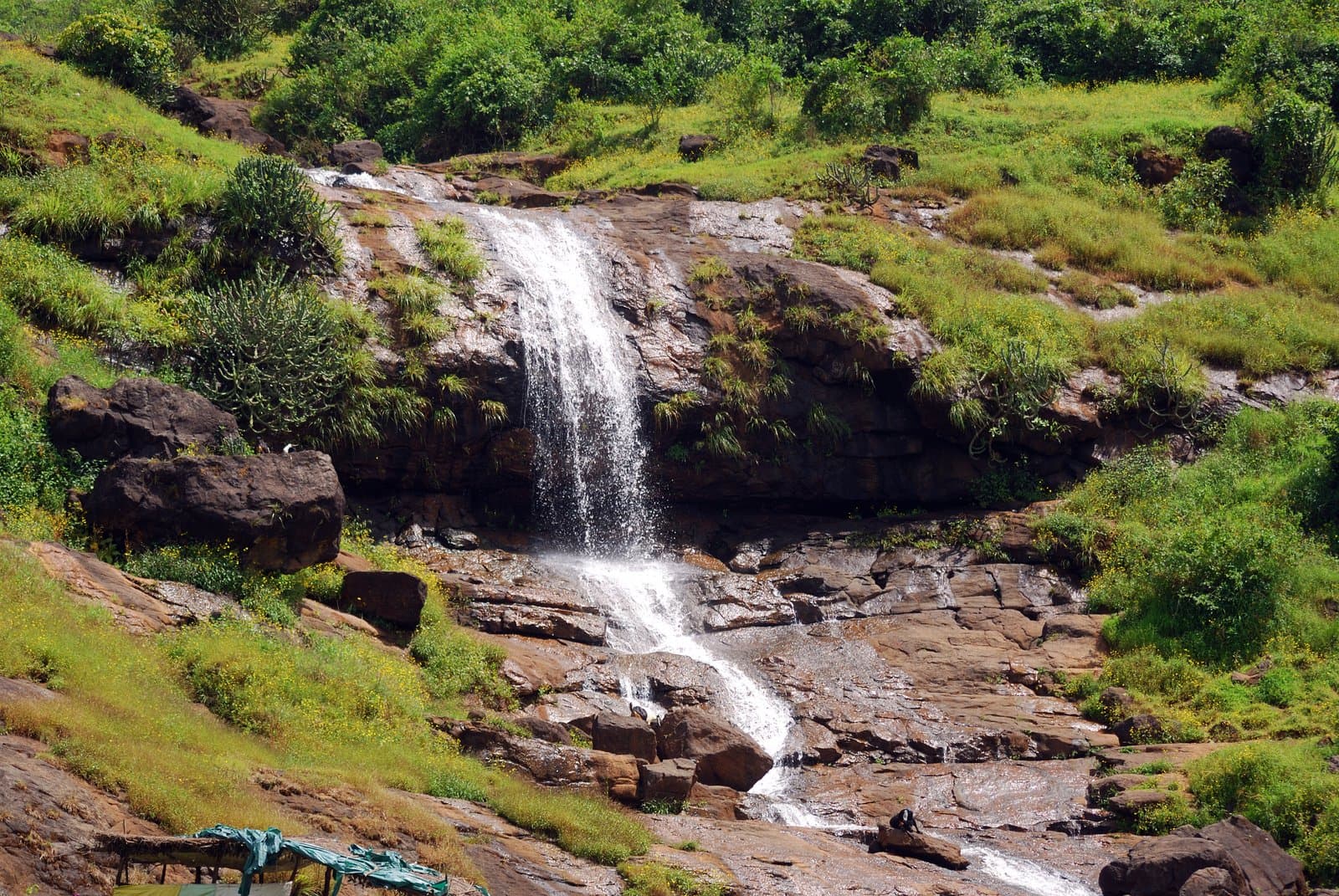
- Vihigaon (Ashoka) waterfallA roughly 120 ft forest waterfall near Vihigaon village, about 13 km from both Igatpuri and Kasara stations, famous from film shoots and at its best from July to September. The village panchayat collects a small entry and parking fee, commonly about 15 to 50 rupees a head. Note that TripAdvisor files this falls under Amravati district; that is wrong. The falls actually stands in Vihigaon village of Shahapur taluka in Thane district, just below the Kasara ghat on Igatpuri's doorstep.
- Bhavali Dam and Vaitarna DamBhavali Dam, a short drive from town, is the easy waterside stop with greenery on both sides of the approach road. Vaitarna Dam, about 45 km west, rewards a longer outing with a big reservoir where kayaking and boating are on offer in season. Both suit families and seniors who want beauty without a climb.
The golden pagoda of the Vipassana academy and the ornate Myanmar Gate at its entrance are Igatpuri's signature skyline, and the gate area is a popular photo stop. But be clear before you plan: the campus beyond the gate is not open to casual visitors. Read the Vipassana section below for the official rules, so the gate remains a pleasure and not a disappointment.
Signature experiences: Kalsubai, rappelling and the Bhandardara loop
Beyond the viewpoints, Igatpuri is a base for real adventure: the state's highest summit at sunrise, waterfall rappelling, and a day loop of lakes and a thousand-year-old Shiva temple.
- Kalsubai at sunrise, the top of MaharashtraKalsubai, 1,646 m, is the state's highest peak, above Bari village about 33 km from Igatpuri on a rough road. The round trip is about 13 km with roughly 3 to 4 hours up, and the last stretch climbs steep iron ladders bolted to the rock. Start pre-dawn for the sunrise sea of clouds, and go with a group; Mumbai operators run departures for roughly 500 to 1,600 rupees including transport.
- Waterfall rappelling at VihigaonIn the monsoon, trained operators run rappelling down the roughly 120 ft Vihigaon falls with helmets, harnesses and instructors, at about 1,000 to 1,200 rupees per person. It takes most people around 30 minutes and needs no prior experience, only a calm head. Book a named operator in advance rather than paying whoever waves at the parking lot.
- Tringalwadi for first-time trekkersIf Kalsubai sounds like too much, Tringalwadi fort is the gentle start: a short drive, a climb of about 1.5 to 3 hours at an easy pace, the Jain cave at the base and wide views of the Sahyadris from the top. In the rains carry a stick and good shoes, since the rock steps get slick.
- The Bhandardara day loopDrive about 43 km (roughly an hour) to Bhandardara for Wilson Dam, built between 1910 and 1926, and the calm sweep of Arthur Lake. Continue about 17 km to Ratanwadi for darshan at Amruteshwar, a roughly 1,200-year-old Hemadpanthi Shiva temple attributed to the 9th-century Shilahara rulers, carved and quiet by the Pravara river. It is the most soulful day trip from Igatpuri.
- Sandhan Valley, the Valley of ShadowsAbout 25 km beyond Bhandardara, behind Samrad village, a canyon drops so narrow and deep that sunlight barely reaches the floor. The full descent is a guided adventure with rope sections, best from October to May and never in heavy rain, when the canyon can flood. Even the viewpoint walk at the rim is worth the drive if you skip the descent.
- The monsoon drive and dhaba stopsThe old ghat road and the lanes toward Bhavali turn into a slow parade of waterfalls in the rains. Do it unhurried: chai and hot misal pav or vada pav at a highway dhaba, windows down, and stops only where the shoulder is wide and safe. The drive is the experience, not the distance covered.
You will see the Alang-Madan-Kulang (AMK) trek marketed from Igatpuri as a thrill. It is widely considered the toughest trek in this region, with exposed rock patches and rope sections. Attempt it only with an experienced organizer, in the dry months, and with a genuine fitness base. For everyone else, Kalsubai and Tringalwadi give the glory without the gamble.
The Vipassana truth: how Dhamma Giri actually works
Igatpuri is home to Dhamma Giri, one of the world's largest meditation centres. Here is how to actually attend a course, and the official rule most travel pages hide: casual visitors are not allowed inside.
- What Dhamma Giri isDhamma Giri, the Hill of Dhamma, held its first course in 1976 and grew into one of the world's largest Vipassana centres, teaching in the tradition of Sayagyi U Ba Khin as taught by S.N. Goenka. Its golden pagoda, a Myanmar-style replica of Yangon's Shwedagon, holds 350 individual meditation cells, and the campus sits about 4 km from Igatpuri railway station.
- How to attend a courseYou learn Vipassana only by sitting a full 10-day residential course. Apply online through the official schedule at schedule.vridhamma.org well in advance, as seats fill fast; you must be above 18 and in reasonable health. There is no charge for the course, food or stay. The teaching runs purely on donations, and donations are accepted only from students who have completed a prior 10-day course.
- What the 10 days ask of youStudents follow a code of discipline: noble silence for most of the course, no phones, no reading or writing, simple vegetarian meals and a timetable that starts before dawn. You commit to staying the full 10 days. It is demanding and, by lakhs of students' testimony, life-changing. Go in only when you can give it the full commitment.
- If you are not taking a courseEnjoy the Myanmar Gate and the pagoda view from outside, and be courteous with gate staff. Near the gate the centre also keeps a visitor gallery and the Buddha Park of stone engravings, where you can watch short films about the teaching and learn Mini Anapana, a small introductory practice. For questions about courses, the office keeps visiting hours of about 10 am to 5 pm, and application queries are handled online and by phone. Please do not try to talk your way into the campus; the quiet inside is exactly what the students came for.
Most Igatpuri listicles put the Vipassana academy in their top three attractions, as if you can stroll the campus. The centre's own website states that only confirmed students and dhamma servers may enter the premises, and visitors are not allowed inside. Plan it either as a real 10-day course booked ahead online, or as a respectful photo stop at the gate. Anything in between ends in disappointment.
Where to stay in Igatpuri, and how many nights
Igatpuri's stay scene splits into private pool villas for groups, mid-range resorts around town and the highway, and simple lodges near the station. Two nights is the sweet spot.
- Private villas: the group favouriteIgatpuri has become Maharashtra's villa country: private pool homes with valley views, listed at roughly 9,000 to 35,000 rupees a night depending on size and season, and a few flagship villas list even higher. They suit families and friend groups who want to cook, swim and stay in. Check the exact location before booking, since some sit 20 to 30 minutes from town on village roads.
- Resorts and hotels: the easy middleMid-range resorts around the town, the lake side and the old highway run roughly 4,000 to 10,000 rupees a night with restaurants and activities on site. They are the low-effort choice for couples and parents, and the sensible one in the monsoon when you want hot food without a drive.
- Budget lodges near the stationSimple hotels and lodges around town and the station area list at roughly 1,500 to 3,000 rupees a night. Standards are basic but honest, and for trekkers who leave before dawn and return muddy, they are all you need. Look at recent reviews for cleanliness, and confirm hot water in winter.
- How many nightsTwo nights is right: one day for the town-side valleys, waterfalls and Ghatandevi, one for Kalsubai or the Bhandardara loop. A single night works for a monsoon taster. Add a third night if you want Sandhan Valley or a slow villa day. Day trips from Mumbai are possible but you will spend more hours in traffic than in the hills on a weekend.
Good villas and resorts fill up fast for July and August weekends and for every long weekend, and Saturday prices run well above midweek. Book two to four weeks ahead for a monsoon Saturday, or flip the plan: come Sunday to Tuesday for the same green at a gentler price.
Igatpuri costs and a realistic budget
Igatpuri is gentle on the wallet if you avoid Saturday surges. Here are the sourced numbers for stays, activities and the day-to-day, so you can plan without guesswork.
- Stay bands at a glanceBudget lodges run roughly 1,500 to 3,000 rupees a night, mid-range resorts roughly 4,000 to 10,000 rupees, and private pool villas roughly 9,000 to 35,000 rupees, with prices dipping midweek and off season. These are OTA-listed bands that move with demand, so treat them as planning anchors, not quotes.
- Activity prices, sourcedVihigaon waterfall entry is a small village fee, commonly about 15 to 50 rupees a head plus parking. Waterfall rappelling is about 1,000 to 1,200 rupees per person with equipment. Group Kalsubai treks from Mumbai cost roughly 500 to 1,600 rupees including transport. Tringalwadi and the viewpoints cost nothing beyond your ride.
- Getting around is the real line itemThe train in costs only a few hundred rupees, but valleys and trek bases are spread out, so a hired car or jeep for the day is the main spend. Agree the full-day price, route and waiting time before you leave, in writing on WhatsApp if possible. Shared jeeps from Kasara are the cheap alternative; fix the per-seat fare before boarding.
- A rough daily figureAs our honest estimate from the component prices above: excluding your room, about 1,500 to 3,000 rupees a day per person covers meals, local hops and one paid activity. A dhaba thali or misal breakfast is cheap, resort dining is not, and the gap between those two choices is the biggest lever in your budget.
Three leaks catch first-timers: booking a Saturday villa last minute at peak monsoon, paying tout prices for parking and guiding at the waterfalls, and taking an unfixed taxi fare for the Bhandardara loop. All three close the same way: book ahead, pay the official village fee only, and agree every fare before the wheels move.
Practical logistics: getting around, food, cash and network
Igatpuri is a small railway town serving big countryside. The small preparations below, cash, offline maps, rain kit, make the difference between a smooth weekend and a soggy one.
- Getting aroundThere is no town bus network worth planning around. Autos cluster at the station for short hops, and hotels arrange cars for the valley circuits. Roads to trek bases are rough; the 33 km to Bari for Kalsubai is slow going, so pad your timings. If you drive yourself, fuel up in town before heading to the valleys.
- Food, the local wayEat Maharashtrian here: misal pav for breakfast, vada pav on the road, varan bhaat and kothimbir wadi at simple thali places, a dab of fiery mirchi thecha if you dare, and a glass of masala milk to end the evening. Highway dhabas on the Mumbai-Nashik road do honest versions. Villas need groceries or a pre-arranged cook, so plan that before Friday night.
- Cash and paymentsUPI works in town and at resorts, but village entry fees, shared jeeps, parking and small dhabas often want cash. Carry small notes; there are ATMs in town, but do not count on finding one working at a trailhead on a Sunday.
- Network and mapsMobile signal is fine in town and patchy in the folds of the valleys, at Sandhan and on trek trails. Download offline maps and your bookings before you leave the highway, and tell your hotel where you are headed if you go out for a full day.
- The monsoon kitA rain jacket beats an umbrella in ghat wind. Add shoes with real grip, a spare set of clothes in the car, a dry-bag or zip pouch for your phone, and salt or spray for leeches on green-season trails. Keep one full change dry for the ride home; wet cotton in an air-conditioned car is how colds start.
Safety at waterfalls, on treks and on the ghat roads
Igatpuri is a friendly, family place. The risks here are natural, not human: fast water, slick rock, wet ladders and foggy roads. All of them are manageable with a few firm rules.
- Waterfall rules that are not optionalFlows can rise suddenly when it rains upstream, even if the sky above you is clear. Stay behind rope lines and villagers' warnings, keep off wet rock lips at the top of any falls, never swim alone in plunge pools, and keep children within arm's reach. The tragic incidents you read about in monsoon news almost all break one of these rules.
- Kalsubai careThe iron ladders near the summit are safe when dry and treacherous when streaming with rain. Beginners should pick October to February, start before dawn with a group, and keep three points of contact on the ladders. If a thunderstorm builds, turn around; the summit temple will still be there next season.
- Ghat roads in rain and fogMonsoon fog on the old ghat road can cut visibility to a few car lengths. Use fog lamps, avoid overtaking on curves, and do not drive the ghat late at night in heavy rain. On the expressway, watch speed limits and keep fuel topped up; the tunnel section has no shoulder stops for sightseeing, so take photos elsewhere.
- Health basicsIgatpuri town has pharmacies and small clinics, but the nearest big hospitals are in Nashik, about 45 km away, so carry your regular medicines and a basic first-aid kit. Drink bottled or filtered water, go easy on roadside food if you have a sensitive stomach, and carry ORS in the trekking pack.
- Solo travellers and familiesThe town, resorts and main viewpoints feel safe and family-oriented. Sensible habits still apply: avoid isolated waterfall spots late in the evening, prefer organized groups for treks, and keep your hotel informed of full-day plans. Solo women report standard-precaution comfort here, with the friction being crowds, not harassment.
Ghatandevi's temple, Amruteshwar at Ratanwadi and the meditation campus are living places of faith, not photo props. Dress modestly, remove shoes where asked, keep voices low, and skip reels inside temple courtyards. Igatpuri rewards the traveller who moves through it gently.
Igatpuri for every kind of traveller, including no-trek visitors
Trekkers get summits, families get waterfalls and lakes, and seniors get valley views and darshan without a single ladder. Here is the one steer that matters for each of you.
- CouplesTake a villa or resort with a valley view, do the monsoon drive slowly, and keep one evening free for chai and pakoras as the mist comes in. The Bhandardara loop with Amruteshwar darshan makes a lovely, unhurried day for two.
- Families with childrenCamel Valley's rim viewpoint, Bhavali Dam and Vihigaon falls (from the safe viewing areas) delight kids without hard walking. Keep children away from wet rock edges, carry snacks and a full change of clothes, and aim for weekday visits so the viewpoints are calm.
- Senior travellers and accessibilityIgatpuri works beautifully with zero trekking: Ghatandevi darshan, the Camel Valley and Bhatsa viewpoints, Bhavali's waterside and the Myanmar Gate are all car-plus-short-walk stops. Choose October to February for dry, sure footing, stay at a resort with lift or ground-floor rooms, and keep the Bhandardara loop for a comfortable seated day tour.
- Trekkers and backpackersThis is your base: Kalsubai for the summit badge, Tringalwadi for a warm-up, Sandhan for canyon drama and AMK if you have truly earned it. The Kasara local plus shared jeep keeps costs down, and budget lodges near the station suit dawn starts.
- Solo female travellersOrganized group treks from Mumbai are well run and sociable, resorts and the town feel safe, and the crowds at weekend waterfalls are families, not trouble. Standard precautions apply: daylight for remote spots, a live location shared with someone, and firm bargaining with jeep and taxi operators.
- PhotographersMonsoon gives you mist, waterfalls and greens that need no filter; winter gives you the sunrise cloud sea from Kalsubai and sharp long views. Trains grinding up the 1-in-37 ghat make a rare railway subject; shoot only from public, safe vantage points, never from the tracks.
- Meditators and seekersIf the pull is inward, plan the 10-day Vipassana course properly: apply online months ahead, arrive a day early via Igatpuri station, and treat the rest of this page as your before-and-after logistics. Many students add a quiet night in town after the course to land gently.
A two-day Igatpuri itinerary that actually fits the roads
The distances between valleys and trek bases eat time on rough roads. This plan sequences the classic sights so you spend the day in the hills, not in reversing plans.
- Day one: the town-side circuitArrive by a morning train or an early drive. Start at Camel Valley's rim while the air is clear, move to the Bhatsa valley viewpoints, and take darshan at Ghatandevi before lunch. After a dhaba lunch, idle at Bhavali Dam, then end at the Myanmar Gate for the pagoda skyline in the soft evening light.
- Day two: pick one big thingChoose a single anchor: a pre-dawn start for Kalsubai's sunrise if you trek, or Vihigaon falls with rappelling if you want thrill without a summit, or the Bhandardara loop with Wilson Dam, Arthur Lake and Amruteshwar darshan if you want beauty and calm. Doing two anchors in one day fails on these roads; pick one and enjoy it fully.
- The third day, if you have itAdd Sandhan Valley's rim or guided descent from the Bhandardara side, or simply give a villa morning to the pool and the view. If you are headed onward, Trimbakeshwar's Jyotirlinga darshan, about 58 km north, slots perfectly between Igatpuri and Nashik.
- The half-day versionDriving the Mumbai-Nashik route with two spare hours? Swing off at Igatpuri for Ghatandevi darshan and the Camel Valley viewpoint, add a misal stop, and rejoin the highway. In the monsoon even this small taste is worth the detour.
In the green season, mornings are usually clearer and the heaviest bursts come later; do open viewpoints and waterfalls early and keep afternoons for dams, chai and covered plans. And hold your plan loosely: when the mist erases a viewpoint, the dhaba beside it is serving hot bhajiyas, and that is not a lesser Igatpuri.
The real questions travellers ask about Igatpuri
Straight answers to the questions that fill the TripAdvisor, IndiaMike and Reddit threads, so you arrive already knowing the score.
- Is Igatpuri worth visiting outside the monsoon?Yes, from October to February, when treks, sunrises and long views are at their best. The honest exception is April to May, when the hills are brown and hot; visit then only for a quiet resort or a meditation course.
- Igatpuri or Lonavala?Lonavala is closer to Pune, more commercial and busier; Igatpuri is quieter, greener at peak monsoon, and has bigger treks plus the Vipassana campus. From Mumbai both are easy; from Pune, Lonavala wins on distance. If crowds tire you, Igatpuri is the better weekend.
- Can I do Igatpuri without a car?Yes. Express train to Igatpuri or a local to Kasara plus a shared jeep gets you in cheaply, and hotels arrange day cars for the valleys. What you cannot do without wheels is the Bhandardara loop, so budget one hired-car day if that is on your list.
- Can I walk into the Vipassana academy?No. The official site is explicit that only confirmed students and servers enter the premises. Photograph the Myanmar Gate from outside, or apply online for the free 10-day course and experience it properly.
- Igatpuri or Bhandardara as the base?Igatpuri has the railway station, more hotels and villas, and the town-side waterfalls; Bhandardara has lakeside camping and sits closer to Kalsubai and Sandhan. For first-timers and anyone on the train, base at Igatpuri and day-trip to Bhandardara.
- Is one day enough?A day trip from Mumbai shows you Camel Valley, Ghatandevi and one waterfall, but weekend traffic can eat half of it. Two nights is the sweet spot; even one night beats a rushed day.
- Is the monsoon dangerous here?It is intense, and that is the draw. It is safe when you follow the simple rules: viewpoints early, no wet rock edges, no solo swimming, group treks only, and slow driving in fog. Thousands of families do exactly this every green weekend.
Planning Igatpuri from abroad: what it is, and what it is not
Igatpuri is a rustic railway hill town with world-class nature and the world's largest Vipassana campus, not a polished resort town. Set that expectation and it will delight you.
- Know what you are coming forCome for the monsoon spectacle, the treks, the quiet lakes and the meditation tradition. Do not expect boutique cafes, nightlife or manicured promenades; the charm here is dhabas, valleys and mist. NRIs who grew up on Mumbai monsoons often find this the most nostalgic stop of the whole trip.
- The meditation-first tripIf Dhamma Giri is your reason, apply for the free 10-day course online months ahead, fly into Mumbai, and take a morning express to Igatpuri station; the campus is about 4 km from there. Carry your passport for registration, arrive the day before the course starts, and keep a buffer night in Mumbai on the way out.
- Pair it with the sacred circuitIgatpuri slots naturally into a Maharashtra darshan loop: Trimbakeshwar Jyotirlinga about 58 km north, Nashik's temples and riverfront just beyond, and Shirdi within an easy onward drive. A car with a driver for three to four days covers the whole arc gently, with Igatpuri as the green pause.
- Comfort planningBook a resort or serviced villa rather than a budget lodge, confirm air-conditioning in summer and hot water in winter, and keep travel insurance if you plan rappelling or Kalsubai. October to February gives overseas visitors the friendliest weather; July to August gives the drama, with rain gear as the price of admission.
Money, connectivity and booking tactics for foreign visitors
The practical basics for a small ghat town: cash for the villages, a SIM from the airport, and bookings made before you leave the city.
- Cards work at resorts, cash runs the villagesYour resort or villa will take cards, but village entry fees, shared jeeps, dhabas and parking want cash, often exact change. Draw rupees in Mumbai or in Igatpuri town, keep small notes, and treat trailhead ATMs as nonexistent.
- Get your SIM or eSIM at the airportPick up an Indian tourist SIM or eSIM when you land in Mumbai rather than hunting in a small town. Signal is good in Igatpuri town and patchy in the valleys, so download offline maps, tickets and bookings before you leave the highway.
- Book transport like a localReserve train seats on IRCTC as soon as your dates fix, especially for weekend services. For road, a car with driver booked for the whole stay costs less friction than ride-hailing, which is unreliable outside town. Agree full-day taxi prices in advance, in writing on WhatsApp.
- Timing on a bigger India tripTwo nights of Igatpuri between Mumbai and the Nashik-Shirdi circuit is the natural weight. If you are chasing the monsoon deliberately, add a buffer day before any onward flight, since ghat-road delays and flight cutoffs do not negotiate.
Igatpuri is an unusual first-trip stop, and that is its gift: no monuments queue, no tout economy, just working India at the top of a railway ghat with staggering nature around it. If your India plan is all palaces and forts, one green pause here, misal for breakfast and mist over the Bhatsa valley, may end up the memory that lasts longest.
Ghatandevi, the 1865 railway, and why Igatpuri exists
Long before tourists came for the mist, the Thal Ghat was a trade climb between the Konkan coast and the Deccan plateau, and travellers prayed at the shrine of Ghatandevi, the goddess held to be the protector of the ghat, before making the pass beneath the peaks of Harihar, Durvar Utvad and Trimak. Then, on 1 January 1865, the Great Indian Peninsula Railway opened the Thull Ghat incline to a small station it spelled Egutpoora, conquering a gradient of 1 in 37 that remains the steepest on India's mainline railways. Banker engines still couple up at Kasara today to push trains up the same climb. The railway made Igatpuri: a town of loco crews and signal lamps at the top of the great gradient, cool and rain-washed above the plains. And in 1976 a second kind of traveller began arriving, when the first Vipassana course was held on the hill that became Dhamma Giri. Goddess, gradient and stillness: that is the whole town in three words.
Planning a Igatpuri trip?
Our Maharashtra travel experts plan your full journey for you: route, hotels, darshan timings and transport. You get a free day-by-day plan and an exact quote on WhatsApp, usually within a few hours. No payment is needed to get your plan.