Amarnath Travel Guide
The Yatra runs only in high summer, roughly July to August , on dates the Shri Amarnathji Shrine Board announces every year. Within that window, going early gives you the best...
When the Amarnath Yatra happens, and when to go within it
The Yatra runs only in high summer, roughly July to August, on dates the Shri Amarnathji Shrine Board announces every year. Within that window, going early gives you the best chance of a full ice lingam.
- A short summer-only windowThe cave is under snow most of the year and opens only in the warm months. The pilgrimage is held across roughly July and August, and for Yatra 2026 the Shrine Board's own site gives the dates as about 3 July to 28 August 2026, traditionally ending on Raksha Bandhan. The exact dates change every year, so treat any date you read elsewhere as needing a check.
- Go early for the lingamThe ice lingam is largest early in the season and now often melts within the first couple of weeks. If seeing a full lingam matters to you, aim for the opening days rather than late August, when it may have shrunk to a fraction of its height or melted away.
- Weather is unpredictable even in summerRain, cold and sudden drops in temperature are normal on the track, and temperatures can fall below 5 degrees Celsius. Carry woollens, a raincoat and waterproof shoes whatever the calendar says, and watch the live weather updates the Shrine Board links on its site.
- Book and register well aheadBecause the season is short and daily numbers are capped, advance registration and rooms in Srinagar, Pahalgam or Sonamarg fill early. Plan a few months out, and if you want the helicopter in a year it runs, book it as soon as slots open.
The Yatra dates are announced annually by the Shri Amarnathji Shrine Board and are not fixed year to year, so never trust a copied date. For 2026 the board's site states about 3 July to 28 August. Separately, the natural ice lingam is fragile and now frequently melts early: in 2025 it fell from about 12 to 15 feet to roughly 1.5 to 2 feet within about two weeks of opening, and most late-season pilgrims that year did not see a full lingam. Reconfirm the current dates on jksasb.nic.in, and if the lingam is your priority, go in the first days of the season.
How to reach the Amarnath base camps
There is no airport or railway at the cave. You fly or train to Kashmir, reach Srinagar, then drive to one of two base camps: Baltal near Sonamarg or Nunwan near Pahalgam.
- Fly to SrinagarSrinagar is the nearest airport, with daily flights from Delhi and Jammu and some services from Chandigarh and Leh. From Srinagar it is a road journey of about 95 km to Baltal or about 90 to 96 km to the Pahalgam side, a few hours each, so most pilgrims spend a night in Srinagar, Pahalgam or Sonamarg first.
- Train to Jammu TawiJammu Tawi is the nearest major railhead, well connected to Delhi, Mumbai and most Indian cities. From Jammu it is a long day by road up the national highway to Srinagar and on to the base camps, so many pilgrims break the journey overnight.
- The two base campsBaltal base camp near Sonamarg (Ganderbal district) is the start of the short, steep route; Nunwan base camp near Pahalgam (Anantnag district) is the start of the longer, gentler route via Chandanwari. Your route choice decides which base camp you head for, so read the route section before you book transport.
- Getting between the piecesTaxis and buses run from the Tourist Reception Centres in Jammu and Srinagar, and we can arrange a car with an experienced local driver for the base-camp legs. Roads can be slow in Yatra season with heavy pilgrim and security traffic, so allow buffer time.
Fly into Delhi, the main international gateway, then take a domestic flight to Srinagar and drive to your base camp. Overseas and NRI pilgrims must register through the dedicated NRI and Foreign National route on the Shrine Board site (see the overseas section).
Fly into Delhi, then connect to Srinagar. Give yourself a night in Srinagar to rest and sort your RFID card before heading up to Baltal or Pahalgam.
Fly to Srinagar, or take a train to Jammu Tawi and drive up. Both funnel you through Srinagar and then out to the Baltal or Nunwan base camp; register in advance and carry your permit and RFID card.
The two routes to the cave, and how to choose
Everything turns on your route. Baltal is short and steep and can be done in a day; Pahalgam is long and gradual over several days and suits first-timers and older pilgrims.
- The Baltal route: short and steepFrom Baltal base camp the cave is only about 14 to 16 km one way, but the climb is sharp and exposed. A fit pilgrim can reach the cave and return in a single long day. It is the quick option, but the steepness and speed of ascent make altitude sickness more likely, so it suits experienced, well-acclimatised trekkers rather than first-timers.
- The Pahalgam route: long and gradualFrom Nunwan near Pahalgam the traditional route climbs through Chandanwari, Sheshnag and Panchtarni, about 32 km from Chandanwari and roughly 46 to 48 km overall, spread over three to five days. The slower ascent means better acclimatisation and it passes the most beautiful scenery, which is why it is the usual advice for first-timers, families and older pilgrims.
- The staging points on the Pahalgam trekChandanwari (about 2,900 m) is the roadhead and start of the walk; Sheshnag (about 3,570 m) is a striking high lake; Panchtarni (about 3,650 m) is the last camp before the cave, from where it is a final roughly 6 km to the shrine. Nights are spent in tents at these camps, so build the days around them.
- Ponies, palkis and portersOn either route you can hire a pony to ride, a palki (palanquin carried by porters) if you cannot walk, or a porter to carry your bag. Always pay by the Shrine Board's government-notified rate board and use only registered, numbered providers; agree the service and price before you set off.
If you are fit, experienced at altitude and short on time, take Baltal and do it in a day. If it is your first high-altitude trek, you are travelling with older parents, or you want the safer, more scenic climb, take Pahalgam and give it the three to five days it needs. When in doubt, choose Pahalgam: the gradual ascent is the single biggest thing you can do to reduce the altitude risk that causes most emergencies on this Yatra.
The holy cave, the ice lingam and the darshan
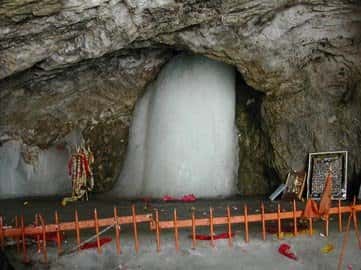
The goal is the darshan of the natural ice lingam in the cave at about 3,880 m. It is a swayambhu formation that waxes and wanes, so what you see depends heavily on when you go.
- What the lingam isThe central ice formation is a swayambhu (self-formed) stalagmite of frozen snowmelt, revered as a symbol of Lord Shiva. In a good early season it can rise many feet, with two smaller ice forms beside it traditionally seen as Parvati and Ganesh. Tradition holds it grows and shrinks with the phases of the moon.
- Whether you will see itBe realistic: warmer summers mean the lingam now often melts early. In 2025 it shrank from about 12 to 15 feet to roughly 1.5 to 2 feet within about two weeks, and most later pilgrims that year saw little or no lingam. The darshan of the cave and the journey remain deeply meaningful either way, but if the full lingam matters to you, go in the first days of the season.
- Rules inside the caveFlash cameras, incense sticks and dhoop are not allowed inside the holy cave, and you cannot stay overnight at the cave. After darshan, pilgrims return to Panchtarni or their base camp for the night, so plan the day to reach the cave and get back down safely before dark.
- The final approachFrom Panchtarni it is a last roughly 6 km to the cave, on foot or by pony. Take a holy dip in the icy Amarnath stream if you wish, keep to the marked path, and follow the instructions of the security and medical staff, especially in bad weather.
Many first-timers arrive fixed on seeing a towering lingam and are disappointed by a melted one. Reframe it: the Amarnath Yatra is revered as much for the arduous journey and the cave itself, where in legend Shiva revealed the secret of immortality, as for the size of the ice on any given day. Go early if you can, but hold the darshan lightly, and the pilgrimage rewards you regardless of what the ice is doing.
What the journey feels like: langars, lakes and valleys
The Yatra is more than the cave. The free langars, the high lakes, and the valley bases at Pahalgam and Sonamarg are the memories pilgrims carry home.
- The free langarsVolunteer-run langars line both routes and serve hot vegetarian food, soups, juices and dry fruit free of charge, day and night. They are one of the most moving parts of the Yatra, a river of hospitality up the mountain. Eat lightly though, as heavy meals at altitude sit badly and can worsen how you feel.
- Sheshnag and PanchtarniOn the Pahalgam route the high blue lake of Sheshnag and the wide meadow of Panchtarni are beautiful staging camps. Panchtarni, where a stream splits into channels, carries its own legend of the five elements; both are worth the pause and the photographs on the way up.
- Pahalgam either side of the trekIf you route through Pahalgam, keep time for Betaab Valley and Aru Valley nearby, some of the loveliest scenery in Kashmir and a gentle counterpoint to the hard climb. Many pilgrims add a night here before or after the Yatra.
- Sonamarg near BaltalOn the Baltal side, Sonamarg (the meadow of gold) and the Thajiwas glacier are close by. A short stop here on the way in or out gives the Baltal route, which is otherwise all business, its scenic reward.
Kashmir is famous for saffron, almonds, apricots, dry fruit and pashmina. On the way back down through Pahalgam, Sonamarg or Srinagar, pick up authentic saffron and dry fruit from a reputable shop rather than from touts on the track. It makes a fitting prasad-and-gift run to close the pilgrimage, and supports the valley you have just travelled through.
Where to stay: valley bases and tents on the track
You sleep in a valley town before and after, and in tents or Shrine Board huts on the trek itself. Nothing on the mountain is luxurious, so set expectations accordingly.
- Before and after: Srinagar, Pahalgam, SonamargBase yourself in Srinagar (houseboats and hotels), Pahalgam or Sonamarg for the nights either side of the trek. These are comfortable and a good place to rest, acclimatise a little to the valley altitude, and collect your RFID card before heading up.
- On the trek: tents and hutsOn the Pahalgam route you sleep in tents at Chandanwari, Sheshnag and Panchtarni; Baltal and Panchtarni also have Shrine Board huts and camps. Tents are usually shared, often for six or more people, and basic. Book ahead in season, as beds are limited and demand is high.
- Langar sheltersSome langars offer basic overnight shelter along the route. It is rough and communal, fine in a pinch, but plan a proper tent or hut for a real night's sleep before the cave push, since rest matters a lot at altitude.
- No stay at the caveYou cannot stay overnight at the cave itself. Plan your route so you reach the shrine and get back to Panchtarni or your base camp for the night, and do not attempt to linger up top as the weather turns.
Yatra-season beds in Srinagar, Pahalgam and Sonamarg, and tents on the track, are limited and go fast because the season is short and daily numbers are capped. Reserve months ahead, and set your expectations for the mountain nights honestly: shared tents, cold, and simple facilities. The comfort is in the valley either side, not on the climb, and a warm sleeping layer makes the tent nights far more bearable.
Amarnath Yatra costs and the official rates
Beyond travel to Kashmir, your main costs are registration, ponies or palkis, tents, and (in a year it runs) the helicopter. The Shrine Board fixes several rates, which protects you from overcharging.
- RegistrationThe advance registration fee is small, about 150 to 220 rupees per pilgrim depending on the year, paid online or at a designated bank branch. Confirm the current figure on the Shrine Board site, as it has changed between seasons.
- Ponies, palkis and portersFrom Panchtarni to the cave and back, a pony runs about 3,000 to 4,000 rupees and a palki about 5,000 to 7,000 rupees, based on the WayToIndia tour. The Shrine Board publishes government-notified rates for pony, porter and palki each year, so pay by the official rate board and use only registered providers.
- Helicopter, when it runsIn a normal year, published fares were roughly about 2,800 rupees one way and about 5,500 rupees return from Baltal to Panchtarni, and about 4,600 rupees one way and about 9,600 rupees return from Pahalgam. In 2026 helicopters did not run at all, so never budget on the helicopter without checking the board's current notices.
- Tents, food and the restTents on the track are modest and shared; langar food is free, which keeps eating costs near zero on the mountain. Budget for warm clothing, a walking stick, medicines and buffer cash, and remember cards and UPI are unreliable up high, so carry enough cash.
The single habit that prevents overcharging on the Yatra is to pay ponies, palkis and porters by the government-notified rate board that the Shrine Board publishes and posts along the route, and to use only registered, numbered providers. Agree the service and the rate before you set off, refuse unregistered touts, and the one real cost trap on the pilgrimage, being overcharged on the final stretch when you are tired and at altitude, simply disappears.
Practical logistics: registration, RFID, SIM and packing
The paperwork is not optional. Registration, a Compulsory Health Certificate and an RFID card decide whether you are allowed on the track. Here is the drill, plus what to carry.
- Register and get your permitRegister in advance at jksasb.nic.in, on the Shri Amarnathji Yatra app, or at a designated bank branch, with your ID and photographs. Registration is mandatory, and no one is allowed past the control gates at Domail (Baltal) or Chandanwari (Pahalgam) without a valid Yatra permit.
- The Compulsory Health CertificateYou must upload or submit a Compulsory Health Certificate on the board's format, issued by an authorised doctor within the dates the board specifies (for 2026, on or after 8 April 2026). The list of authorised doctors and institutions is published on the Shrine Board site. This is a real fitness screen, not a formality.
- Collect and wear your RFID cardEvery registered pilgrim must collect an RFID card in Jammu or Kashmir before starting, carrying Aadhaar details, and wear it around the neck throughout for safety and tracking. No RFID card, no Yatra, so build a buffer day to collect it.
- SIM, signal and packingMobile signal is patchy on the track; BSNL offers special pilgrim SIMs and satellite phones sit at camps for emergencies. Pack warm woollens for sub-5-degree cold, a raincoat, waterproof trekking shoes with laces (not slippers), a walking stick, torch, and altitude, digestion and painkiller medicines in a waterproof bag.
In recent years the administration has been strict that pilgrims travel only on their registered date and not before, because daily numbers are capped at about 15,000 under Supreme Court directions and tatkal (on-spot) slots are very limited. Do your advance registration, collect your RFID card, and arrive in Kashmir to match your slot, or you may be held back. Turning up early without registration is the most common way pilgrims get stuck at the base camp.
Safety and health: altitude, weather and staying well
This is a serious high-altitude trek, not a temple walk. Altitude sickness causes most emergencies, the weather is fickle, and the age and health bars exist for good reason.
- Altitude sickness is the real dangerThe cave is at about 3,880 m and altitude sickness is the single biggest cause of medical emergencies here. Watch for headache, nausea, breathlessness, dizziness and poor sleep, and never ignore them, as untreated high-altitude illness can turn fatal within hours. Climb slowly, prefer the gradual Pahalgam route, hydrate, and descend at once if symptoms worsen.
- Prepare your body in advanceStart walking about 4 to 5 km a day at least a month before, and get a genuine fitness and heart check. Those with serious heart, lung, blood-pressure or similar conditions are advised not to go, and the Compulsory Health Certificate is meant to catch this. Avoid alcohol, smoking and caffeine before and during the Yatra.
- Respect the age and health barFor 2026 the Shrine Board bars persons below 13 and above 70, and women beyond six weeks of pregnancy. This is enforced, and it is there because the altitude and cold are genuinely risky for these groups. The exact age bar can change year to year, so reconfirm it on jksasb.nic.in; if you fall outside the limits, honour it.
- Weather, path and securityWeather can change fast; heed warning signs, do not take shortcuts, and follow the security and medical staff. Free medical camps sit along the route. On the wider security picture, the Yatra runs under heavy protection and pilgrims are asked to follow official advisories, register properly, and keep to the marked, guarded track.
Be honest with yourself. If you have a serious heart, lung or blood-pressure condition, if you are outside the age limits, if you are pregnant beyond six weeks, or if you cannot walk several kilometres at altitude in cold and rain, this pilgrimage is not safe for you, and the darshan is not worth your life. The Shrine Board's Compulsory Health Certificate and age bar exist precisely to protect you. There is no shame in choosing not to go, or in turning back on the mountain if your body says stop.
The Yatra for every kind of pilgrim, honestly
The Amarnath Yatra suits different pilgrims very differently, and for some it is not advisable at all. Here is the honest note for each, including how a fit senior can still do it.
- First-time trekkersTake the Pahalgam route for its gradual ascent and better acclimatisation, build in the full three to five days, and prepare your fitness for a month beforehand. Do not start with the steep Baltal route as your first high-altitude trek.
- Senior pilgrims (within the age limit)A fit senior within the age limit (up to 70 for 2026) can do the gentler Pahalgam route, using a pony to ride and porters for bags, taking it slowly over several days. Get a thorough health check first, respect the CHC, and turn back without hesitation if the altitude bites. Those above the year's age bar are not permitted, so reconfirm the current limit on jksasb.nic.in before you plan.
- Families with childrenChildren below 13 are not allowed, so this is not a young-family trip. For families with older teenagers, the Pahalgam route with ponies and a relaxed schedule is the sensible way, keeping everyone hydrated and warm and never pushing a tired child up at altitude.
- Fit young trekkersIf you are fit and acclimatised, the Baltal route in a single long day is a strong challenge with a big reward. Still register, carry the CHC and RFID, watch for altitude symptoms in yourself and others, and help fellow pilgrims who are struggling.
- Women pilgrimsThe Yatra is well travelled by women and generally managed with standard precautions; the age and pregnancy limits apply. Dress warmly and practically (the board advises trousers and kurta over sarees for the trek), keep to the busier stretches, and use the many langars and camps along the way.
- Those who should reconsiderIf you have a serious heart, lung or blood-pressure condition, are outside the age limits, or cannot manage sustained walking at altitude in cold, this is genuinely not for you. A darshan is never worth a life, and the honest choice may be to not go.
How many days to allow, and a route-by-route plan
Allow more time than the trek alone, for the valley nights, the RFID collection and weather buffers. Here is a realistic plan for each route.
- Baltal route: about 3 to 4 days totalDay one, reach Srinagar and on to Baltal or Sonamarg, collecting your RFID card. Day two, the steep 14 to 16 km climb to the cave and back to Baltal (a very long day for fit pilgrims). Add a day either side for travel, rest and weather, so plan about three to four days in Kashmir.
- Pahalgam route: about 5 to 7 days totalAllow a day to reach Pahalgam and sort the permit, then the classic Chandanwari to Sheshnag to Panchtarni to cave trek over three to five days with tent nights, and a day back to Srinagar. Roughly five to seven days in Kashmir, which also lets you enjoy the valley.
- Helicopter (in a year it runs)When helicopters operate, a short two to three day plan is possible: fly Baltal or Pahalgam to Panchtarni, walk or pony the last 6 km to the cave and back, and fly out. In 2026 this was not available, so never build a tight plan around the helicopter without confirming it runs.
- Add the valley either sideWhichever route you pick, a night in Pahalgam for Betaab and Aru valleys, or in Sonamarg for the Thajiwas glacier, turns a hard pilgrimage into a fuller Kashmir trip and helps you acclimatise and recover.
The one planning mistake that ruins Amarnath trips is leaving no slack. Weather can shut the track for a day, the daily cap can push your slot, and the RFID collection takes time. Add at least one buffer day in your Kashmir schedule, keep your onward flight flexible if you can, and you will trek in better weather and without the panic that makes altitude decisions worse.
The real questions pilgrims ask about Amarnath
Straight answers to the questions that come up again and again on traveller forums, so you arrive already knowing the score.
- Which route is easier, Baltal or Pahalgam?Baltal is shorter (about 14 to 16 km) but steep and hard on the body in one day; Pahalgam is longer (about 46 to 48 km) but gradual over several days and easier to acclimatise on. For most first-timers and older pilgrims, Pahalgam is the easier and safer choice despite the extra distance.
- How fit do I need to be?Fit enough to walk several kilometres a day at altitude in cold and rain. Start training a month ahead with 4 to 5 km daily walks, get a real health check, and be honest: this is a Himalayan trek, and the CHC and age bar are there because it is physically demanding.
- Is the helicopter available this year?Not guaranteed. Helicopter services are decided year to year, and in 2026 the whole Yatra area was declared a No Flying Zone so no helicopters ran at all. Always check the Shrine Board's current notices before you budget or plan around a helicopter.
- Will I actually see the ice lingam?Maybe not a full one. The lingam often melts within the first weeks; in 2025 it went from about 12 to 15 feet to roughly 1.5 to 2 feet in about two weeks. Go early in the season for the best chance, and hold the darshan lightly, as the journey and the cave are the heart of it.
- How many days should I plan?About three to four days in Kashmir for the Baltal route, or five to seven for the Pahalgam route with tent nights, plus buffer days for weather and your registered slot. Add a valley night at Pahalgam or Sonamarg to acclimatise and recover.
- Is it safe right now?The Yatra runs under heavy security and strict registration, and pilgrims are asked to follow official advisories and keep to the guarded track. The bigger day-to-day danger for most pilgrims is altitude and weather, not security, so prepare your body and respect the mountain.
Planning the Amarnath Yatra from abroad
Overseas and NRI pilgrims register through a dedicated route on the Shrine Board site and must clear the same health and altitude bar. A little preparation makes the paperwork and the trek manageable.
- Use the NRI and Foreign National routeThe Shrine Board publishes a separate application form and procedure for NRI, ex-India and Foreign National pilgrims on jksasb.nic.in, distinct from the standard bank-branch registration. Start there early, as the process and documents differ and take time to arrange from abroad.
- The health certificate still appliesYou need the same Compulsory Health Certificate on the board's format, from an authorised doctor within the specified dates. If you are getting it done abroad, check the board's requirements carefully so it is accepted, and be honest about your fitness for a trek at about 3,880 m.
- Acclimatise and prepareIf you live at low altitude, the thin air will hit harder. Arrive a little early, spend a night or two in the Kashmir valley, prefer the gradual Pahalgam route, and train your fitness for weeks beforehand. Altitude sickness does not care how determined you are.
- Slot it into a Kashmir tripFly into Delhi, then Srinagar, and pair the Yatra with a few gentle valley days in Pahalgam, Sonamarg or on a Srinagar houseboat to rest and recover. We can help arrange the ground logistics, permits guidance, transport and stays end to end.
For an overseas devotee, the Amarnath Yatra is one of India's most powerful pilgrimages, but it is also a genuine high-altitude trek in an unpredictable climate, not a temple visit. Give it the respect it deserves: register through the NRI route in good time, get a proper health certificate, train, acclimatise in the valley, and choose the gentler Pahalgam route. Prepared, it is deeply rewarding; underprepared, the altitude turns it dangerous fast.
Money, connectivity and timing for overseas pilgrims
The practical basics an overseas pilgrim needs for a remote Himalayan pilgrimage: cash, a SIM, and how the short season shapes when you can go.
- Carry cash, do not rely on cardsCards and UPI are unreliable on the track and at the base camps, and ponies, palkis and small vendors want cash. Draw enough rupees in Srinagar or your home city before heading up, keep small notes for the mountain, and always pay ponies and palkis by the government rate board.
- Get an Indian SIM, expect patchy signalPick up an Indian tourist SIM in Delhi or Srinagar; note that in Kashmir some prepaid tourist SIMs have connectivity limits, so ask locally. BSNL runs special pilgrim SIMs and satellite phones sit at camps for emergencies, but expect long stretches with no signal on the trek.
- Time it to the short seasonThe Yatra runs only in high summer, about July to August, on dates announced yearly by the Shrine Board (about 3 July to 28 August for 2026). Go early in the window for a fuller lingam and better weather odds, and confirm the current dates before you book international flights.
- Leave slack in your itineraryWeather closures and the daily pilgrim cap can shift your timing, so keep your onward flights flexible and add buffer days. Overseas pilgrims who plan tightly around a fixed darshan date are the ones most likely to be disappointed by a shut track or a missed slot.
More than almost any pilgrimage, Amarnath's specifics change year to year: the exact dates, whether helicopters run, the registration fee, and the daily cap are all set annually by the Shrine Board and the administration. Before you book international flights, open jksasb.nic.in and confirm the current year's dates, registration process, health certificate window and helicopter status, rather than trusting an operator page or an old article. It is the single most important thing an overseas pilgrim can do.
The cave where Shiva told the secret of immortality
Tradition holds that it was in this cave that Lord Shiva chose to reveal the Amar Katha, the secret of immortality and of creation, to Goddess Parvati. To keep the secret, the story goes, Shiva shed his companions one by one on the way up: his bull Nandi at Pahalgam, the moon from his hair at Chandanwari, his serpents at Sheshnag, and the five elements at Panchtarni, whose name means five streams, before entering the cave alone with Parvati. A pair of pigeons is said to have overheard the immortal secret and so became deathless themselves, and pilgrims still speak of glimpsing a pair of white pigeons near the cave. Whether you take the tale as history or as faith, it is why the sacred stops on the trek carry the names they do, and why the natural ice lingam here is revered as a swayambhu form of Shiva rather than an idol made by hands. No single scriptural verse is universally cited for the details; the account is drawn from regional tradition and the Shri Amarnathji Shrine Board's own telling.
Planning a Amarnath trip?
Our Jammu And Kashmir travel experts plan your full journey for you: route, hotels, darshan timings and transport. You get a free day-by-day plan and an exact quote on WhatsApp, usually within a few hours. No payment is needed to get your plan.