Katra Travel Guide
The shrine is open year round , day and night, but the comfortable windows are March to April and October to November . Decide early whether you want the Navratri energy or the...
When to visit Katra for the Vaishno Devi yatra
The shrine is open year round, day and night, but the comfortable windows are March to April and October to November. Decide early whether you want the Navratri energy or the quieter, cooler months.
- March to April and October to November: the sweet spotMild days and cool evenings make the climb pleasant, and the views over the Trikuta hills are at their clearest. October to November overlaps Navratri and the festival season, so it is also the most crowded and most expensive time of the year, with hotel rates spiking around the navratras.
- May to June: warm and busyDays are warm at the base and the school holidays bring heavy footfall, though the higher reaches near the Bhawan stay cool. If you come in summer, climb in the evening or before dawn to dodge the daytime heat on the open stretches.
- July to September: monsoon cautionHeavy rain makes the paths slippery and muddy and brings a real landslide risk on the Katra approach roads, so crowds thin but you trade comfort for weather. Carry a light rain layer and watch official advisories before you set out.
- December to February: cold and quietThe lower town is cold and there is snow near the Bhawan, where official figures show winter lows around minus 2 degrees Celsius. February in particular is uncrowded and budget-friendly, but pack serious warm layers and check for weather suspensions of the helicopter.
If your dates fall in Navratri, usually in the first half of October and again in spring, expect the heaviest crowds of the year, long darshan queues and hotel prices that climb sharply. The darshan itself runs round the clock, so a quieter approach is to climb overnight or on a weekday outside the festival weeks. The shrine never closes for the season, so there is no wrong month, only a trade between the festival atmosphere and a calmer, cheaper, cooler visit. Check the Shrine Board site for any crowd or weather notices before you travel.
How to reach Katra
Most pilgrims arrive at Katra by train (station code SVDK) or fly into Jammu airport and drive the short hop. A new rail link now carries trains on through Katra into the Kashmir Valley.
- By train to Katra (SVDK)Shri Mata Vaishno Devi Katra station, code SVDK, is the railhead right in town and a terminus on the Jammu line. A Vande Bharat Express links New Delhi with Katra, and other express trains run from across north India. Book on IRCTC ahead in season, as Katra trains fill fast around festivals. Confirm current timings and running days on IRCTC before you travel.
- By air via JammuJammu airport at Satwari, code IXJ, is the nearest airport at about 45 to 50 km, roughly 1.5 to 2 hours by road. Taxis and buses wait outside. Srinagar airport is the other option at about 115 km and is now rail-connected too, useful if you are combining Katra with the Kashmir Valley.
- By road from JammuJammu to Katra is about 48 to 50 km and roughly 2 hours by car on the national highway, with frequent buses and shared taxis from Jammu Tawi station and the airport. We can arrange a private car with an experienced driver for the door-to-door hop.
- The new train on into KashmirThe Udhampur to Srinagar to Baramulla rail link, commissioned in 2025, now lets trains run through Katra into the Kashmir Valley, so a pilgrimage to the shrine can flow straight on to Srinagar by rail. It is one of the most dramatic train rides in India, crossing the record-breaking Chenab and Anji Khad bridges.
Fly into Delhi, the main international gateway, then take the Vande Bharat or another express train to Katra, or connect to a domestic flight into Jammu and drive the short hop. There are no international flights into Katra or Jammu.
Fly into Delhi, then connect by train to Katra or by domestic flight to Jammu and drive about 2 hours. Many NRI families pair the yatra with a wider Kashmir trip on the new rail line.
Take a train straight to Katra (SVDK) from Delhi and much of north India, or fly to Jammu and drive. The Katra railhead is the simplest way in, and the Vande Bharat from New Delhi is the fastest single train.
The Vaishno Devi yatra: registration, the trek and the Bhawan
The heart of a Katra trip is the climb to the Holy Cave Bhawan on the Trikuta hills. The one thing to get right before anything else is the free, mandatory Yatra Registration.
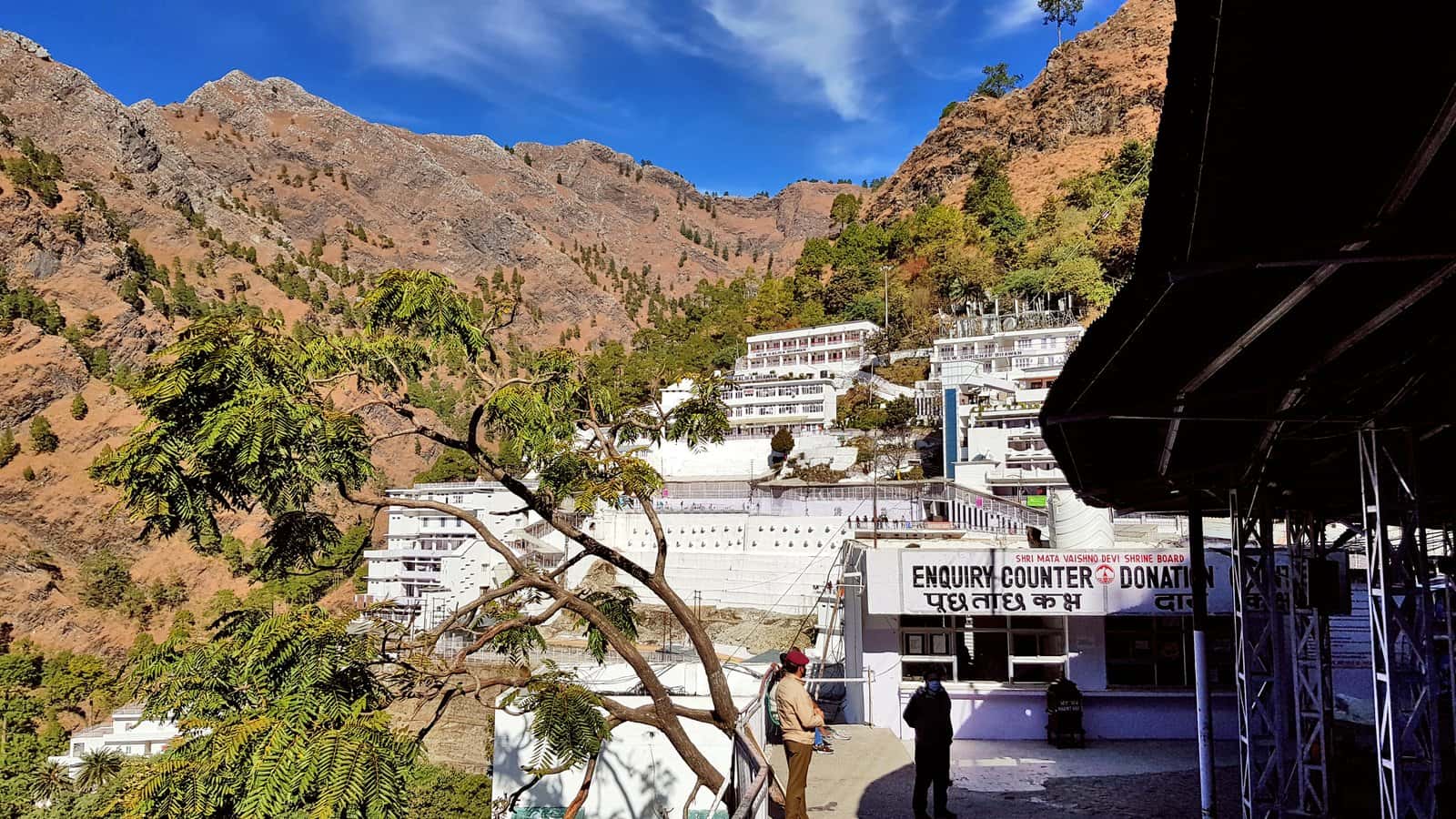
- Register first, it is free and mandatoryEvery pilgrim must obtain a free Yatra Parchi or RFID-based Yatra Access Card before starting. You can get it at the Yatra Registration Counter near the General Bus Stand in Katra, which runs round the clock, or online at the Shrine Board portal online.maavaishnodevi.org. Without it you are turned back at the Banganga check post, so this is the first thing to do on arrival.
- The route, in orderFrom Katra the climb passes Banganga at 1 km, Charan Paduka at 2.5 km, Adhkuwari at 6 km, Himkoti at 8.5 km and Sanji Chhat at 9.5 km, reaching the Bhawan at about 13 km, so the walk from the Banganga check post is roughly 12 km. The whole track is paved, lit and patrolled at night, with food stalls, water points and shelter sheds along the way.
- The Holy Cave BhawanThe Bhawan sits at about 5,200 ft, roughly 1,585 m. At the Bhawan you collect a group number at the Yatra slip check post and join the darshan queue for the Holy Cave, where the Goddess is revered in the form of three natural rock pindis. Free cloak rooms hold your belongings, since almost nothing may be carried inside the cave.
- Bhairavnath after the caveTradition holds that the yatra is completed only with darshan at the Bhairavnath temple above the Bhawan, and this is done after the Holy Cave, not before. An aerial ropeway now connects the Bhawan to the Bhairon temple, sparing the steep extra climb to Bhairon Ghati at about 14.5 km from Katra.
There are two ways up. The traditional Banganga route is the historic pilgrim path. The newer Tarakote Marg is a wider, gentler track favoured by walkers and used by the battery cars, joining the old route higher up near Adhkuwari. Ponies and palkis run on the traditional track, while the battery car runs on the newer alignment between Adhkuwari and the Bhawan. Pick the traditional route for the classic pilgrim feel and the shrines along it, or the Tarakote Marg for an easier gradient and less pony traffic underfoot.
Walk, pony, palki, battery car or helicopter
You do not have to walk the whole way. Here are the five honest ways to reach the Bhawan, what each suits, and the one catch with the helicopter.
- On footThe classic way, free, on the traditional track or the gentler Tarakote Marg. An average walker takes about 6 to 8 hours up the roughly 12 km from Banganga, with breaks. Many climb in the cool of the evening or before dawn. Wear broken-in shoes and pace yourself on the steep early stretches.
- Pony, pithoo or palkiPonies and horses carry adults, a pithoo is a porter who carries a child or an unwell person on his back, and a palki is a palanquin carried by four bearers for those who cannot ride or walk. Hire only at the Shrine Board's registered contractor offices at Katra, Adhkuwari or Bhawan, at the government rates posted on signboards, and note the registration number of the person you engage.
- Battery car on the newer trackA battery-operated electric vehicle runs between Adhkuwari and the Bhawan, available at Inderprasth near Adhkuwari and at Manokamana Bhawan, with priority for the elderly, the sick and the differently abled. A recent fare is about 450 rupees per person up to the Bhawan and about 300 rupees coming down, but reconfirm the rate at the counter.
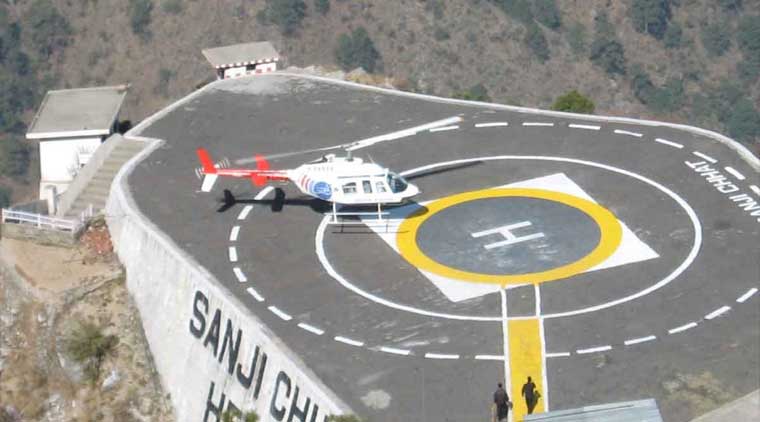
- Helicopter from Katra to Sanji ChhatThe helicopter takes only about 8 minutes from Katra to Sanji Chhat and saves the long climb. Book it ONLY on the official portal online.maavaishnodevi.org, as no agent is authorised. A recent one-way fare is about 2,320 rupees per adult, around 4,640 rupees return, but confirm the live fare on the portal.
This is the catch travellers miss. The helicopter lands at Sanji Chhat, which is still about 2.5 km short of the Holy Cave Bhawan. From there you walk downhill to the Bhawan, take a battery car or hire a pony, and you do the same in reverse on the way back. So the helicopter shortens the yatra greatly but does not remove the last stretch on foot or wheels. Seats are limited and released on the official portal, and the popular same-day slots sell out within minutes, so book as early as the portal allows and treat any agent offering guaranteed seats with caution.
Where to stay in Katra and up the track
Stay in Katra town at the base for choice and comfort, or in Shrine Board rooms at Adhkuwari, Sanji Chhat or the Bhawan to break the climb. One to two nights is the usual length.
- Katra town, the base campKatra has the widest range of private hotels and lodges, from budget rooms to comfortable mid-range stays, all within reach of the registration counter and the start of the trek. It is where most pilgrims sleep before and after the climb, and where you leave your phone, camera and heavy luggage in a cloak room before setting off.
- Shrine Board rooms on the trackThe Board runs good-value guest houses at Adhkuwari, Sanji Chhat and the Bhawan, handy if you want to break the climb or rest before darshan. Sample official tariffs run from a double at the Bhawan complex at about 2,400 rupees and simpler doubles at Adhkuwari from about 800 rupees, down to dormitory beds from about 150 rupees. Book early, as these fill fast.
- Where to book the official roomsShrine Board accommodation is booked at the guest-house receptions, at the Enquiry and Reservation counter at Niharika Complex near the Katra bus stand, or online through the Board's portal. A double AC room at Niharika in Katra is about 2,200 rupees. Weekdays and advance booking give you the best chance of a room in season.
- How many nightsMost pilgrims give the trip two to three days including travel: arrive and register, climb and complete darshan over a long day or an overnight, and travel back. One night in Katra is the minimum for a same-day-style yatra; a second night, in town or up at the Bhawan, makes the climb far less rushed for families and seniors.
During Navratri and the peak festival weeks, both private Katra hotels and the Shrine Board guest houses are booked out far in advance at several times the normal rate. If your dates fall in those weeks, reserve well ahead, or plan a weekday climb outside the festival to find rooms and shorter queues. Off-peak, you can often walk in and find a room, but in season do not leave it to chance.
Vaishno Devi costs and a realistic budget
The yatra can be done very cheaply on foot or made comfortable with a helicopter and good rooms. Here is what the main things cost, with the free items flagged so no one overcharges you.
- The free thingsYatra Registration and the RFID slip are free. Darshan is free. The Shrine Board cloak rooms are free, and blankets and basic food are available cheaply en route. The only people who charge for registration or a slip are touts, so never pay for it.
- The fixed-channel thingsThe helicopter is about 2,320 rupees one way and around 4,640 rupees return per adult, the battery car about 450 rupees up and 300 rupees down, and the Bhawan to Bhairon ropeway about 100 rupees, all booked on the official portal or at official counters. Treat these as recent figures and confirm the live rate before you pay.
- The negotiable thingsPonies, pithoos and palkis run at government-approved rates posted on Shrine Board signboards, so check the board and note the registration number rather than accepting an off-book quote. Private taxis from Jammu and Katra hotels are also worth agreeing in advance.
- A rough trip budgetOn foot with a dormitory bed and the bhojanalayas, a frugal pilgrim can complete the yatra for very little beyond travel. A mid-range trip with a Katra hotel, a pony or battery car and meals is moderate; adding the helicopter both ways is the biggest single cost. Cash is useful for the track, though ATMs and card payment exist in Katra.
The single habit that protects your wallet at Vaishno Devi is to use the official channels and refuse to pay for anything that is free. Registration, darshan and the cloak rooms cost nothing; the helicopter, rooms and ropeway are sold only through the Shrine Board portal and counters; and ponies and palkis have rates posted on boards. Anyone selling you a registration slip, a guaranteed helicopter seat through an agent, or a pony at a mystery price is to be politely declined. Book the official way and the trip's only real friction disappears.
Practical logistics: phones, cloak rooms and prohibited items
A few rules shape what you carry up the track. The big ones: no phones or cameras on the route, free cloak rooms for everything else, and a strictly vegetarian, no-alcohol path.
- Phones and cameras stay behindMobile phones, cameras and other electronic equipment are not allowed on the yatra track for security reasons, so make safekeeping arrangements in Katra before you start. Many hotels and the official cloak rooms will hold them. Plan to be offline for the climb, which most pilgrims find adds to it rather than detracts.
- Free cloak roomsShrine Board cloak rooms are absolutely free and run round the clock at the guest houses and the Bhawan. One near the main queue complex takes shoes, belts and small items, and another at Sridhar Bhawan takes full luggage. Inside the Holy Cave only cash and selected offerings are allowed, with coconuts deposited in the waiting hall against a token.
- A vegetarian, no-alcohol pathLiquor, intoxicants, non-vegetarian food, smoking and tobacco are prohibited on the route. The bhojanalayas serve good, clean vegetarian food, so plan to eat along the way rather than carry much. Blankets and food are available en route, so you can travel light.
- Medical and water pointsThere are medical posts, water points and shelter sheds along the track, run by the Shrine Board. Carry any personal medication and a small first-aid kit, drink water regularly on the climb, and use the rest points, especially if you are walking through the heat of the day.
Safety, health and the climb at altitude
Katra is a well-run, heavily patrolled pilgrimage, so the real risks are physical: the long climb, the weather and pacing yourself. A little preparation keeps everyone well.
- Pace the climb and hydrateThe roughly 12 km climb gains real height to about 5,200 ft at the Bhawan, so go steadily, rest at the shelter sheds, and drink water often. The cool of the evening or early morning is far kinder than the midday heat in summer. If anyone in your group tires, switch to a pony, pithoo or battery car rather than push on.
- Weather and the seasonsWinter brings cold and snow near the Bhawan, with official lows around minus 2 degrees Celsius, so carry serious warm layers in December to February. The monsoon from about July to September makes paths slippery and raises a landslide risk on the approach roads, so watch advisories. The helicopter is weather-dependent and can be suspended at short notice.
- Touts and the official channelViolent crime is not the concern here; the friction is sales pressure. People may offer to sell you a registration slip, a guaranteed helicopter seat or a pony at an inflated price. Registration is free, the helicopter is portal-only, and pony rates are posted on boards, so decline politely and use the official channels.
- Elderly pilgrims and childrenSeniors and children do this yatra all the time, but plan their climb: use the battery car or helicopter, give priority to the gentler Tarakote Marg, climb in the cool hours, and break the trip with a night up the track. Keep medication, warm layers and water to hand, and do not rush the descent, which is harder on tired knees than the climb.
Vaishno Devi is one of the safer major pilgrimages to do alone or as a woman, because the track is paved, brightly lit, busy through the night and patrolled by the Shrine Board and police. Pilgrims of every kind walk it at all hours. Standard sense still applies: keep your RFID slip and cash secure, stay on the lit main track rather than shortcuts, and join the steady flow of pilgrims rather than walking long stretches alone in the small hours. Most solo and women pilgrims report the climb as welcoming and well-supervised throughout.
Vaishno Devi for every kind of pilgrim, and on access
The yatra suits very different visitors in different ways. Here is what it offers you and the one tip that matters for each, including exactly how an elderly or unfit devotee reaches the Bhawan.
- Senior travellers and on accessibilityVery doable with planning. Use the helicopter to Sanji Chhat or the battery car from Adhkuwari, both of which give priority to the elderly and unwell, and take the gentler Tarakote Marg for any walking. Break the climb with a night up the track, climb in the cool hours, and keep medication and water to hand. The descent tires knees more than the climb, so plan a ride down too.
- Families with childrenA classic family pilgrimage. A pithoo can carry a small child, ponies suit older children, and the battery car and helicopter shorten the day. Pace an overnight rather than a single exhausting push, and keep little ones close in the crowded Bhawan queues.
- First-time pilgrimsGet the registration done the moment you reach Katra, leave your phone and camera in a cloak room, and decide your climbing method before you start. The track is well marked and supported the whole way, so a first-timer of average fitness can do it comfortably with breaks.
- Budget pilgrimsThis can be a very cheap pilgrimage: free registration and darshan, dormitory beds from about 150 rupees, cheap bhojanalaya meals and the climb on foot. Skip the helicopter, walk the Tarakote Marg, and your main cost is just getting to Katra.
- The less fitYou do not have to be fit to reach the Goddess. Between the helicopter, the battery car, ponies, pithoos and palkis, there is a way up for almost anyone. Choose your combination in advance, and remember the helicopter still leaves a short stretch from Sanji Chhat to cover by battery car or pony.
- Solo and women pilgrimsWell suited to solo travel thanks to the lit, busy, patrolled track. Keep your RFID slip and cash secure, stay on the main route, and join the steady flow of pilgrims through the night rather than walking long empty stretches alone.
A suggested Vaishno Devi itinerary
How to shape two or three days so the climb is unhurried, the darshan unrushed, and the descent kind on your knees.
- Day one: arrive and registerReach Katra by train or via Jammu, check into your hotel, and get the free Yatra Registration done at once at the counter near the General Bus Stand or online. Rest, eat well, and leave your phone and camera in a cloak room. If you are flying up, book the helicopter slot on the official portal in advance.
- The climb: overnight or pre-dawnStart the climb in the cool of the evening or before dawn to avoid the heat and the worst crowds. Walk the roughly 12 km over about 6 to 8 hours with breaks, or take a pony, battery car or helicopter. Reach the Bhawan, collect your group number, and complete darshan at the Holy Cave.
- Bhairavnath, then descendAfter the Holy Cave, complete the yatra with darshan at Bhairavnath, using the Bhawan to Bhairon ropeway to save the steep extra climb. Then descend, ideally by a ride if your knees are tired, and rest a second night in Katra rather than travelling on the same exhausted day.
- Add Kashmir by the new trainIf you have more days, the 2025 rail link lets you continue from Katra into the Kashmir Valley by train, crossing the record-breaking Chenab and Anji Khad bridges. Pilgrimage and hill-station holiday now join up neatly on a single rail network.
The most common mistake is arriving, registering, climbing, doing darshan and travelling home all in one exhausting stretch. The climb up and the descent are both long, and the descent is harder on the knees than people expect. Give the trip at least two nights, break the climb if you are walking, and use a ride for at least one direction if you are not very fit. A pilgrimage done at a calm pace is remembered warmly; one rushed in a single day is remembered only as exhausting.
The real questions pilgrims ask about Vaishno Devi
Straight answers to the questions that come up again and again on traveller forums, so you arrive already knowing the score.
- How long does the trek take?An average walker takes about 6 to 8 hours to climb the roughly 12 km from Banganga to the Bhawan, with breaks, and a bit less coming down. Fit walkers do it faster, families and seniors slower. Treat this as typical rather than a rule, and start in the cool hours.
- Battery car, pony or walk?Walk for the classic pilgrim experience and the lowest cost. Take a pony or palki if you cannot walk the distance. Use the battery car between Adhkuwari and the Bhawan if you are elderly or unwell, since it gives them priority. Many people walk up and ride down, or vice versa.
- Is the helicopter worth it?Yes if time or fitness is short. It cuts the long climb to an 8 minute flight from Katra to Sanji Chhat, about 2,320 rupees one way. The catch is that Sanji Chhat is still about 2.5 km from the Bhawan, so you finish on foot, by battery car or by pony. Book only on the official portal.
- Same-day return or overnight?A fit pilgrim with a helicopter can do darshan and return the same day, but it is tight, especially if you also visit Bhairavnath. Most people are happier with a night in Katra or up the track. If you fly, note the gap the operator gives you between drop and pickup.
- How do I register and where does my luggage go?Registration is free and mandatory: get the RFID slip at the counter near the General Bus Stand or online, since you cannot pass Banganga without it. Phones and cameras are banned on the track, so leave them and your luggage in the free Shrine Board cloak rooms or at your hotel.
- Can elderly parents or children do it?Yes, this is a family pilgrimage done by all ages. Use the helicopter, battery car, ponies, pithoos or palki, take the gentler Tarakote Marg, climb in the cool hours, and break the trip with a night up the track. Pace the descent, which is the harder part for tired legs.
Planning the Vaishno Devi yatra from abroad
Vaishno Devi is the most doable major Hindu pilgrimage for a returning NRI family or a first-time foreign visitor. A little preparation on registration and the official booking channel makes it easy.
- Register free, online or on arrivalThe Yatra Registration and RFID slip are free and mandatory, and you cannot pass the Banganga check post without one. You can register online at the Shrine Board portal before you fly, or at the counter near the Katra bus stand on arrival. No one should ever charge you for it.
- Book the helicopter and rooms the official wayThe helicopter to Sanji Chhat, the Shrine Board rooms and the Bhairon ropeway are sold only through the official portal online.maavaishnodevi.org and official counters, and the Board warns that no agent is authorised for helicopter seats. Book directly and treat agents offering guaranteed seats with caution.
- Plan the climb for your family's fitnessIf parents or grandparents are travelling, plan their route in advance: helicopter to Sanji Chhat, then a battery car or pony to the Bhawan, or the gentler Tarakote Marg on foot. Climb in the cool hours, break the trip with a night up the track, and the yatra becomes comfortable for three generations together.
- Pair it with Kashmir by trainSince the 2025 rail link, you can continue from Katra into the Kashmir Valley by train over the record-breaking Chenab and Anji Khad bridges. For an NRI family, that joins the pilgrimage and a Kashmir holiday into one memorable rail journey.
Money, phones and timing for foreign visitors
The practical basics an overseas pilgrim needs for Katra: cash, cards, the phone ban on the track, and how many days to give the yatra on a wider India trip.
- Carry cash for the trackCards and UPI work in Katra hotels and shops and at ATMs in town, but the climb itself runs largely on cash for snacks, tips and any pony or palki. Draw cash in Katra, keep small notes, and remember the helicopter, rooms and ropeway are paid online through the official portal.
- Plan around the phone banMobile phones and cameras are not allowed on the track, so you will be offline during the climb. Download anything you need beforehand, tell family you will be out of contact for the climb, and leave devices in a Katra cloak room or hotel safe. Most pilgrims find the disconnection part of the experience.
- How long to give itGive the yatra two to three days including travel from Delhi or Jammu: arrive and register, climb and complete darshan, and travel back unhurried. With the helicopter a very fit visitor can compress it, but a night either side makes it far gentler, especially with parents along.
- Time it to your comfortMarch to April and October to November are the comfortable windows, with October to November the most crowded around Navratri. Avoid the July to September monsoon for landslide risk, and pack serious warm layers if you come in the December to February cold and snow.
Vaishno Devi is an unusually well-organised introduction to a major Indian pilgrimage: the registration is free and systematic, the track is paved, lit and patrolled through the night, and there is a way up for every level of fitness. Slot it into a north India trip after Delhi, give it two to three days, and let the new rail link carry you on into Kashmir if you want hills and houseboats after the shrine. Many overseas and NRI visitors say the calm, communal night climb stays with them long after the trip.
Why a devotee named Sridhar is remembered at Vaishno Devi
The Shrine Board's own tradition tells of Pandit Sridhar, a devout but poor brahmin of a village near Katra, who one day hosted a bhandara, a feast for all comers, at the urging of a young girl who appeared at his prayers. When the fierce ascetic Bhairavnath demanded meat and wine that a sacred vegetarian feast could not serve, the girl vanished into the Trikuta hills. Sridhar followed and, after long penance, was led to the cave where the Goddess revealed herself as Vaishnavi, the divine Shakti. Bhairavnath pursued her to the cave mouth, where he was beheaded, and in his dying repentance the Goddess granted that no pilgrimage to her would be complete without also taking his darshan above the Bhawan, which is why pilgrims climb to Bhairavnath after the Holy Cave to this day. The story is devotional tradition retold by the Shrine Board rather than a single dated scripture, and it is the thread that ties the cave, the climb and the Bhairon temple together.
Planning a Katra trip?
Our Jammu And Kashmir travel experts plan your full journey for you: route, hotels, darshan timings and transport. You get a free day-by-day plan and an exact quote on WhatsApp, usually within a few hours. No payment is needed to get your plan.
Tour packages that visit Katra
Every journey below is private, hand-crafted and fully customizable. Tell us your dates and we tailor the itinerary, the pace and the priests or guides around you.