Jharkhand | India travel tipsParasnath Hill Travel Guide
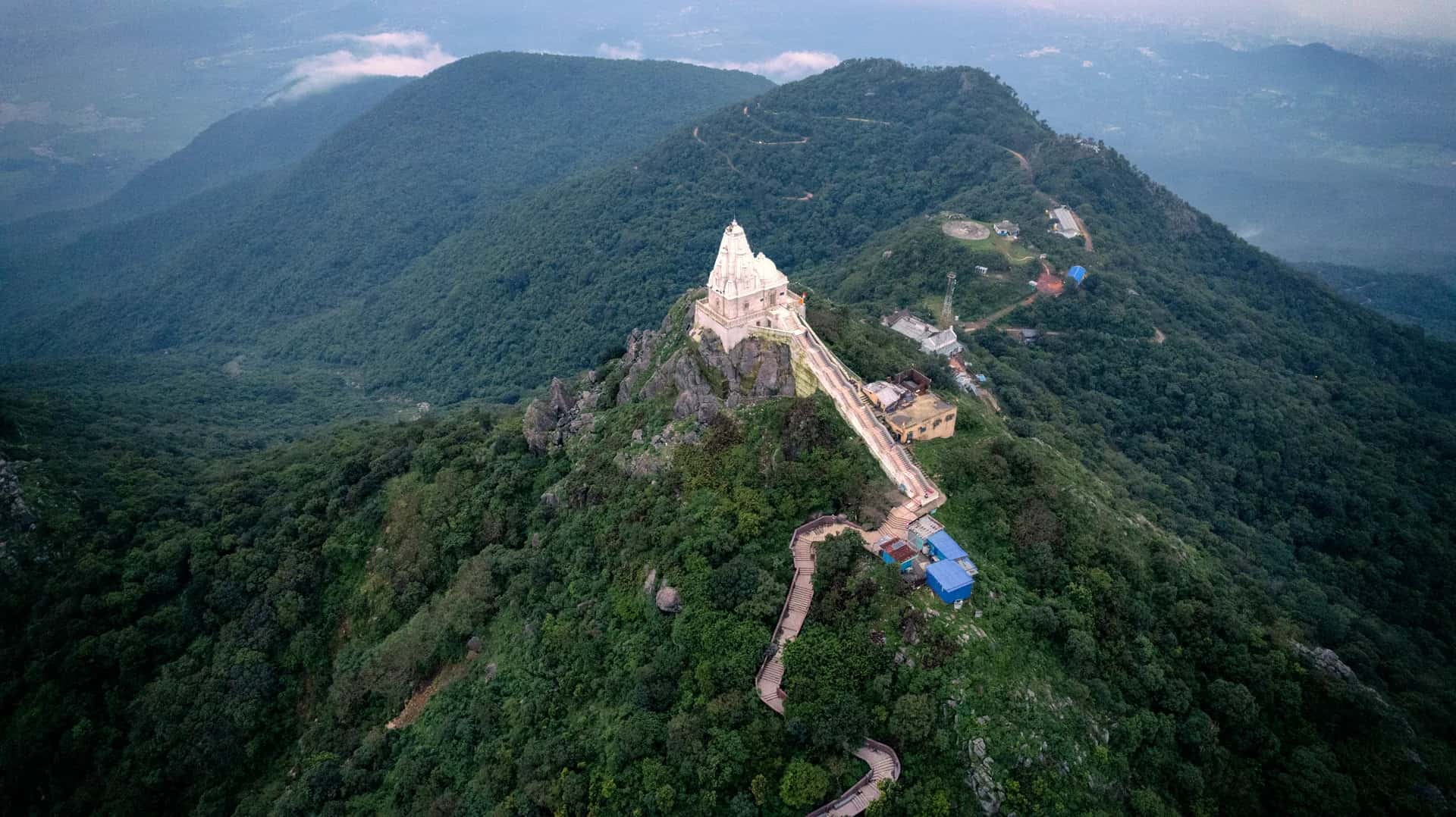
Parasnath Hill in Giridih, Jharkhand is the highest peak in the state and the holiest tirth in Jainism. Tradition holds that twenty of the twenty four Tirthankaras attained moksha on this ridge, whose sacred crown is Sammed Shikharji. This is your honest guide to the climb, the tonks, the base town of Madhuban, and how to reach it.
GIRIDIH, JHARKHANDHIGHEST PEAK IN JHARKHAND20 OF 24 TIRTHANKARASA TREK, NOT STEPS
01WHY THIS HILL
The holiest tirth in Jainism, and one myth to clear first
Parasnath Hill is the highest peak in Jharkhand, named after Bhagwan Parshvanatha, the twenty third Tirthankara. Both the Digambar and the Shwetambar sects hold it above every other tirth.
- Twenty of twenty fourTradition holds that twenty of the twenty four Tirthankaras, along with many other monks, attained moksha on this ridge. That is why it is called Sammed Shikhar, the peak of concentration, and why one climb here is spoken of as the merit of many lifetimes.
- Jharkhand, not UttarakhandPlease note this clearly, because search results often get it wrong. Parasnath Hill is in Giridih district of Jharkhand, in eastern India. It has no connection with Uttarakhand.
- Cared for across centuriesThe oldest Jain texts name Shikharji as a tirth going back more than two thousand years. In 1583 the Mughal emperor Akbar gave its care to the Jain community to stop the killing of animals on it, and in 1825 the places of moksha of the twenty Tirthankaras were formally consecrated.
The base townYou start from Madhuban, at the foot of the hill, where the dharamshalas, the bhojanshalas and the first temples are.
02SEASON
When to visit Parasnath Hill
Come October to March, and ideally November to February, when the days are cool and the climb is comfortable. Avoid the June to September monsoon.
- October to March is rightWinter days on the hill are cool and pleasant, often around 8 to 22 degrees, and the early mornings on top are cold and misty. Carry a warm layer even if the plains are hot.
- Avoid monsoon and peak summerFrom June to September the paved track turns slippery and the streams run full, so the climb is not safe for elders. Summer at the base can climb past 40 degrees.
03HOW TO REACH
Trains, airports and roads to Madhuban
The nearest railway station is Parasnath at Isri Bazar, about 20 to 25 km from Madhuban, on the busy Grand Chord line. The nearest airport is Deoghar, then Ranchi and Kolkata.
- By trainParasnath station sits on the Howrah to Gaya to Delhi Grand Chord, so a large number of long distance trains stop here, including many towards Kolkata, Patna and Delhi. From the station take a taxi or a shared jeep for the 20 to 25 km up to Madhuban, about forty five minutes to an hour on the ghat road.
- By roadMadhuban is about 50 to 60 km from Dhanbad, about 40 km from Bokaro, about 80 km from Hazaribagh, about 100 to 165 km from Ranchi, and about 330 km from Kolkata. No vehicle goes up the sacred hill; cars and jeeps come only up to Madhuban.
By airDeoghar (DGH) is the nearest airport, about a three hour drive. Durgapur, Ranchi and Kolkata are the other options for longer connections. Confirm your train timings on the IRCTC portal before you travel.
04FROM ABROAD
For NRI and OCI pilgrims coming from abroad
Fly into Kolkata, the large international gateway about 330 km away, or Ranchi, then continue by train or road to Madhuban.
- Plan a winter visit homeMany families settled abroad do this yatra during a winter visit home, which suits both the season and the school holidays. Build in a rest day, and arrange a doli on the hill so grandparents can complete the darshan in comfort.
- Keep it simple at the baseMadhuban is a pilgrimage town, so expect clean and simple dharamshala stays rather than luxury hotels. Book ahead, because rooms fill up between November and February.
05ON THE RIDGE
The tonks, the Jal Mandir and the summit
More than thirty marble tonks stand along the ridge, about twenty of them the principal Tirthankara shrines, each holding the charan, the sacred footprints.
- Parshvanatha tonk at the summitThe highest and holiest point is Suvarnabhadra kuta, where Bhagwan Parshvanatha attained moksha. You will know it by its chatra, the umbrella that sets his footprints apart from the others.
- The Jal MandirIt sits lower on the ridge among natural water bodies and is counted as tonk twenty. Pilgrims go from tonk to tonk offering their vandana.
- Bhomiyaji at the baseAt Madhuban stands the Bhomiyaji temple, where the yatra traditionally begins, along with the Digambar and Shwetambar temples and kothis of the town.
06THE CLIMB
The vandana, told honestly: a trek, not steps
The vandana is a trek on a paved track, not a short flight of steps. Covering the full round of the tonks is close to 27 km, roughly eight to ten hours for a fit adult who starts before dawn.
- How many steps, reallyThere is no staircase to count. It is a long hill walk on a paved track, with some stepped stretches along the way. Start before dawn from Madhuban, cross the Gandharva Nala stream, above which the ridge is at its most sacred, and plan to be back by early afternoon.
- Two ways upThe usual Madhuban route is about a 9 km ascent; the Isri Bazar side is shorter to climb. The complete outer parikrama of the hill is longer, about 54 to 57 km.
- Doli for those who need itA doli or palki carried by trained doliwallahs is available at Madhuban, in a two carrier and a four carrier style. Confirm the current rate at the base.
On the sacred hillCarry no leather, no alcohol and no non vegetarian food onto the hill. Keep silence and cleanliness on the track, and let the doliwallahs and fellow yatris pass with courtesy.
07WHERE TO STAY
Madhuban dharamshalas and pure Jain food
Most pilgrims stay in a dharamshala or kothi at Madhuban run by a Jain trust, and eat pure Jain food cooked without onion, garlic or root vegetables.
- Book rooms earlyThere are many dharamshalas and kothis, including Bhomiyaji, Gunayatan and the various sect kothis. Rooms fill up fast in winter and on festival days, so book ahead and confirm the current tariff and process with the trust.
- Pure Jain bhojanshalasThe bhojanshalas serve simple sattvik meals without onion, garlic or root vegetables. If you keep ayambil or a fast, tell them a day before. Eat a proper meal before the climb and another after you come down.
08PRACTICAL
What to carry, mobile network, ropeway and helicopter
Carry water, glucose, a cap, soft worn shoes and a warm layer. There is no ropeway; a seasonal helicopter has run in some years but is limited and not guaranteed.
- What to carryCarry water and some glucose or dry fruit, a cap, a walking stick if you use one, and your personal medicines. Wear soft worn shoes, not new ones. Keep small cash for the doli and offerings, and carry your wrappers back down.
- No ropeway; helicopter is not guaranteedThere is no ropeway on the hill. A seasonal helicopter service has run in some years through private operators, but it is limited and not always available, so confirm the current status before you count on it. For almost every pilgrim the vandana is done on foot or by doli.
- Mobile network is weak on topThe network on the upper ridge is weak and patchy, so tell your family your plan before you start and do not depend on your phone on the climb.
- Elders and childrenFor elders and for anyone who cannot walk the full climb, book a doli in advance at Madhuban. Young children usually travel on a doli. Everyone should start early, drink water often, and keep a slow, steady pace.
- Stay safe on the trackAvoid the monsoon, when the track is slippery. Rest at the tonks, do not rush the descent, and turn back if the weather closes in. Carry your own water and glucose for the long hours on foot.
10NEARBY
The Bihar Panch Tirth, and how many days to plan
Plan two to three days for the hill and Madhuban, or about six to seven days to add the nearby Bihar tirths of Pawapuri, Rajgir, Nalanda and Champapuri.
Pawapuri (half day)
Where Bhagwan Mahavira attained nirvana; its Jal Mandir stands in a lotus lake.
Rajgir and Nalanda (one day)
Rajgir, ringed by five hills, is tied to Mahavira's sermons; Nalanda nearby holds the ancient ruins and the Kundalpur shrine.
Champapuri (half day)
Near Bhagalpur, the tirth of Bhagwan Vasupujya, the twelfth Tirthankara. Giridih town and Usri Falls are closer by.
The full yatra, arrangedFor Shikharji plus the Bihar tirths with pure Jain food, dharamshala stays and doli help for elders, see our Sammed Shikharji Panch Tirth Yatra, which starts from Kolkata and also from Ranchi or Patna.
- Is it in Jharkhand or Uttarakhand?Jharkhand, in Giridih district. It is a common mix up online. Parasnath Hill is the highest peak in Jharkhand and has no connection with Uttarakhand.
- How many steps are there?There is no staircase to count. The vandana is a trek on a paved track with some stepped stretches, close to 27 km for the full round of the tonks, about eight to ten hours. Book a doli if the full walk is too much.
- Can non-Jains visit?Yes. People of all faiths are welcome to climb and take darshan, as long as you respect the rules of the hill: no leather, no alcohol, no non vegetarian food, and quiet, clean conduct.
- Is there a helicopter or ropeway?There is no ropeway. A seasonal helicopter has run in some years through private operators but is limited and not always available; confirm the current status before you count on it.
- What is the height of Parasnath Hill?About 1,350 to 1,365 metres above sea level, roughly 4,430 to 4,480 feet, or about 1.35 km. It is the highest peak in Jharkhand, rising from the Chota Nagpur plateau.
- Can I have the whole yatra arranged?Yes. Our Sammed Shikharji Panch Tirth Yatra covers Shikharji and the Bihar tirths with pure Jain food, dharamshala stays, doli help for elders and a Jain aware tour manager, from Kolkata and also from Ranchi or Patna.
ॐ
CARRY IT HOMEOne ridge, twenty liberations
Sammed Shikhar, the peak of concentration
You climb the same paved track that generations of your family and monks going back two thousand years have climbed before you, tonk to tonk, up to the chatra of Parshvanatha at the summit. Walk it slowly, keep it clean, and let the doliwallahs and fellow yatris pass with courtesy. That is how the hill is meant to be met, and that is what you carry home.