Badami Travel Guide
The comfortable window is October to February , cool enough to climb the caves and the fort. Summer is fierce desert-plateau heat, and the monsoon is green but can flood the...
When to visit Badami, and the season to plan around
The comfortable window is October to February, cool enough to climb the caves and the fort. Summer is fierce desert-plateau heat, and the monsoon is green but can flood the river sites.
- October to February: cool and clearThe most comfortable months, with daytime temperatures roughly 15 to 30 degrees Celsius. The light on the rust-red sandstone is at its best, and the climbs to the caves and the fort are far easier than in the heat. This is when the Chalukya Utsava and the Pattadakal dance festival usually fall, around January and February, so check the Karnataka Tourism calendar if you want to pair your visit with one.
- March to May: hot, and best avoidedHigh summer on the Deccan plateau is harsh, with temperatures that can climb toward 40 degrees. The open cliffs and the exposed fort give little shade, so if you must come then, do the caves at opening time, rest through the middle of the day, and carry plenty of water.
- June to September: green but watch the riverThe monsoon turns the countryside lush and the crowds thin out, which some travellers love. The trade-off is that the Malaprabha river can flood around Aihole and Pattadakal, and the cave steps get slippery, so keep your plans flexible and check conditions locally before setting out.
- Time of day matters as much as seasonWhatever the month, the early morning, roughly 7 to 9 am, and the late afternoon, around 4 to 6 pm, give the kindest light for photos and the coolest air for the climbs. Plan the caves and the fort for those windows and keep the harsh midday for a meal or a rest.
If comfort and clear light matter to you, aim for about November to February and you will have the easiest climbs and the best photographs. The monsoon has its own beauty but carries a real flooding risk at the riverside sites of Aihole and Pattadakal, so build in slack if you come then. Summer is the one season to genuinely avoid unless you are happy starting at dawn and hiding from the midday sun.
How to reach Badami
Badami has a small railway station of its own but no airport. Most travellers come through Hubballi, or arrive on the Hampi and Goa circuit by road.
- By train, via Badami or HubballiBadami has its own station, code BDM, about 5 km from the cave-temple area, but only a limited set of trains stop there. The bigger and far better connected junction is Hubballi (Hubli), about 105 to 110 km away, roughly 2 to 3 hours by road, from where trains run to most of South India.
- By air, via Hubballi or BelagaviThe nearest airport is Hubballi at about 105 to 110 km, roughly 2 to 3 hours by road, with a growing set of domestic flights. Belagavi (Belgaum) airport is the alternative at about 150 km, roughly 3 to 4 hours away. There are no flights into Badami itself, so plan a road transfer from whichever airport you use.
- On the Hampi and Goa circuitMany travellers reach Badami by road as part of a wider Karnataka loop. On the WayToIndia Karnataka circuit, Badami sits about 134 km from Hospet (the base for Hampi), roughly 3 to 4 hours, and about 254 km on from Badami to Goa, so it slots naturally between the ruins of Hampi and the beaches of Goa.
- From BangaloreBangalore is a long haul of roughly 450 to 500 km, so most people fly or train to Hubballi and drive the last leg, or build Badami into a multi-day Karnataka heritage trip rather than attempting it as a quick out-and-back. We can arrange a car with an experienced driver for the road sections.
Fly into Bengaluru or Goa, then reach Badami via a domestic hop or drive to Hubballi and a road transfer, or fold it into a Hampi-Badami-Goa loop. Badami has no international flights of its own.
Fly into Bengaluru or Goa, both well connected, then continue to Badami by domestic flight to Hubballi plus road, or by car on the heritage circuit. Allow a road transfer of 2 to 4 hours from the nearest airport.
Take a train to Hubballi and drive about 2 to 3 hours, or come by road from Hampi (about 134 km from Hospet) or Goa. The small Badami station also takes a few direct trains if the timing suits.
Getting around Badami and the circuit
This is the practical thing most pages miss: there are no app-based or tourist taxis in Badami. The circuit runs on hired auto-rickshaws, a car your hotel arranges, or one summoned from Hubballi.
- No tourist taxis - plan for autosDo not assume you can flag a cab in Badami, because you largely cannot. The realistic options are to hire an auto-rickshaw for the day, have your hotel arrange a car, or summon a taxi from Hubballi in advance. Sort this out before you arrive, especially in peak season, so you are not stranded at the station.
- Badami to Pattadakal and AiholePattadakal is about 22 km from Badami and Aihole about 35 km, with Pattadakal roughly on the way. Local buses run but are infrequent and awkwardly timed, so most independent travellers hire an auto or a car for the half day or full day. Shared autos cover some short hops cheaply, but they will not get you efficiently around the whole circuit.
- The cave-gate auto arrangementAt the caves themselves, the approach road can be closed to private cars from about 10 am. A common arrangement is to park near the main road and take a hired auto up to the cave gate, the lake and the Bhutanatha temple. One recent visitor paid about 400 rupees for an auto covering all three, with parking free when using the auto, so agree the price first.
- Within Badami townThe town itself is small and the cave area, the lake and the bazaar are close together, so short auto hops or a gentle walk handle most of it. Keep small notes handy, as autos and small shops run on cash.
Because Badami has no waiting tourist taxis, the single best thing you can do is fix your car or auto in advance, through your hotel or a Hubballi operator. Travellers who turn up expecting to hail a cab end up negotiating from a weak position or missing sites because the buses did not line up. A car or auto booked ahead for the circuit removes nearly all the friction of a Badami trip.
The cave temples, the lake and the fort
Badami is its four rock-cut caves above Agastya Lake, the Bhutanatha temple on the water, and the fort on the cliff above. A few facts about the caves are worth knowing before you climb.
- The four cave templesCut into the cliff in stages, the four caves run from Shaivite Cave 1, with its famous 18-armed Nataraja shown in 81 dance poses, up through Vishnu's Cave 2, to the grand Cave 3, the largest, which carries an Old Kannada inscription dated to about 578 to 579 CE and is India's oldest firmly dated Hindu cave temple. Cave 4 is Jain, with Mahavira and the Tirthankaras. Entry is ticketed, covered in the costs section.
- Agastya Lake and the Bhutanatha templeBelow the caves lies the man-made Agastya Lake, and on its far edge the active Bhutanatha temple group, its base from about the 7th century with later 11th-century additions. The lakeside walk and the temple cluster are the most photogenic corner of Badami, and they add about an hour to a cave visit. It is still a living temple, so dress modestly and remove shoes where asked.
- Badami Fort on the cliffThe fort sits on the northern cliff above the caves and the lake, reached by a separate, steeper climb. The reward is the widest view over the town, the lake and the southern caves, and a scatter of old structures along the ridge. It is a rougher walk than the caves, so save it for the cooler hours and wear proper shoes.
- The Archaeological Museum and BanashankariThe small ASI Archaeological Museum near the lake is worth a look if it is open, with sculpture from the area, and the Banashankari temple about 6 km away is an active local shrine. Neither is essential, but they round out a slower visit. Check museum opening locally, as it keeps shorter hours and a weekly closed day.
The Badami caves reward a slow eye. In Cave 1, find the Nataraja and the half-male, half-female Ardhanarishvara; in Cave 3, the towering Vishnu on the serpent Ananta and the fierce Narasimha. These are not background scenery, they are some of the earliest and finest Deccan sculpture anywhere. Giving each cave fifteen unhurried minutes turns a quick climb into the highlight of a Karnataka trip.
Signature experiences across the Chalukyan circuit
Beyond Badami's own cliff, the experiences people remember are reading the three sites as one story and catching the cliffs at the right light.
- Climb the caves at opening timeBe at the cave gate when it opens, around 9 am, for the soft light, the cool air and the caves to yourself before the tour groups and the heat arrive. The roughly 190 to 200 steps in total feel easy in the morning and hard by midday, so this is the single best timing decision you can make.
- Walk Agastya Lake and the Bhutanatha templeAfter the caves, drop down to the lake and walk round to the Bhutanatha temple on the water's edge. The view back up at the rust-red cliffs and the caves is the classic Badami photograph, and the temple cluster is calm and atmospheric, especially in the late afternoon.
- See Pattadakal, the perfected temple townAbout 22 km away, Pattadakal is the UNESCO World Heritage Site of the circuit, a tight cluster of temples on the Malaprabha where the Chalukyas combined northern and southern styles. The Virupaksha and Mallikarjuna temples are the showpieces, and the apsidal forms reward a slow walk with a guide if you can find one.
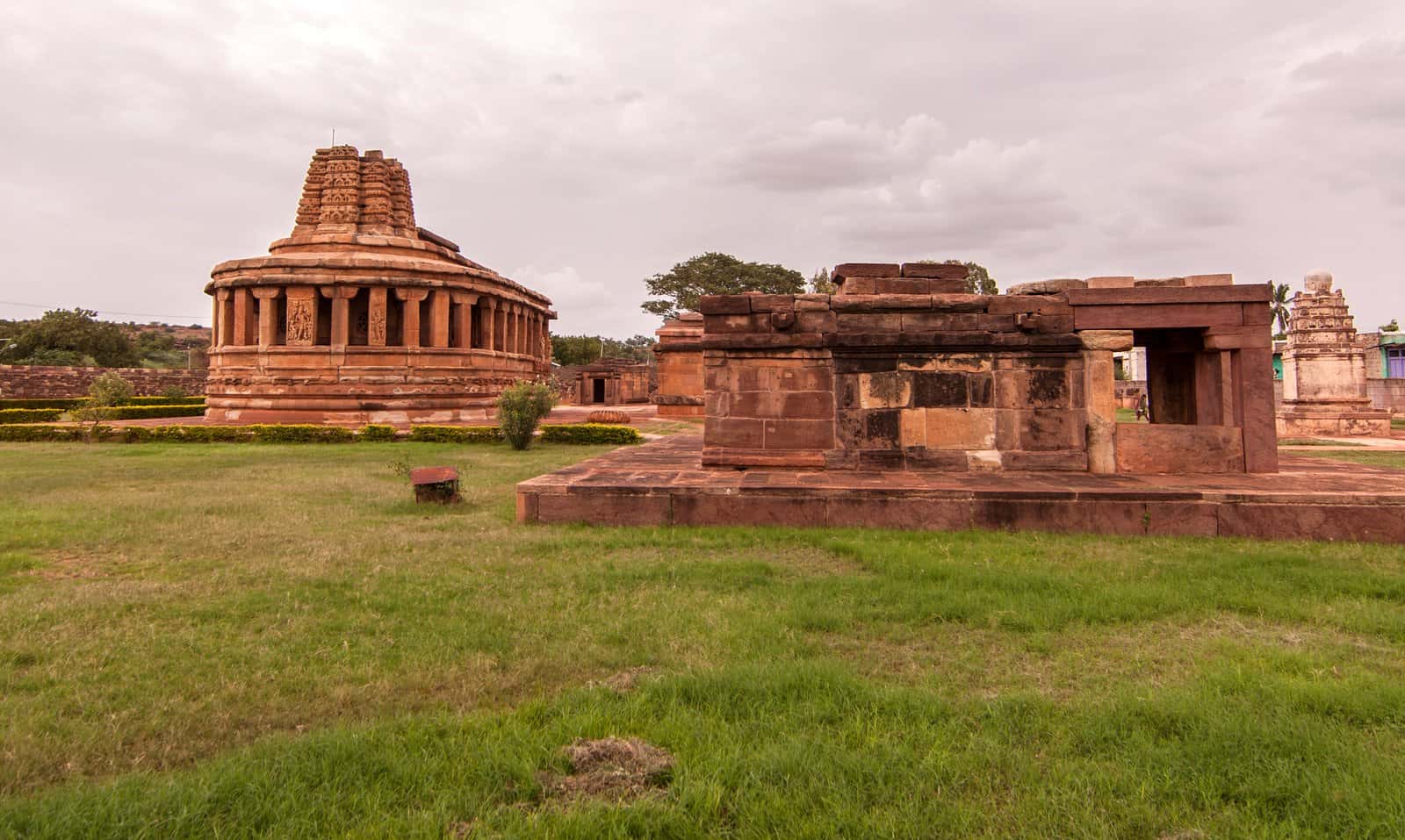
- Explore Aihole, the cradle of temple architectureAbout 35 km away, Aihole is where the early architects experimented, leaving over a hundred temples in different forms. The Durga temple, with its unusual apsidal plan that echoes a Buddhist prayer hall, is the one not to miss. Aihole feels rawer and quieter than Pattadakal, which is part of its charm.
- Catch the fort view at sunsetIf your legs are willing, the climb to Badami Fort in the late afternoon gives the broadest sunset view over the town and the lake. It is steeper and rougher than the caves, so judge it honestly and carry water, but on a clear evening it is the finest vantage point in Badami.
- Time a festival if you canAround January and February the region hosts the Chalukya Utsava and the Pattadakal dance festival, when classical performances are staged against the temples. Dates shift year to year, so check the Karnataka Tourism calendar, but catching one turns a heritage visit into something more memorable.
Read the three sites in order and the whole circuit clicks into place: Aihole is the experiment, where the Chalukyas tried out forms; Pattadakal is the perfection, where they refined and combined them; and Badami is the rock-cut innovation, carved straight into the cliff. Hold that one sentence in your head as you go, and a confusing cluster of similar-sounding names becomes a single, readable story of how Indian temple architecture grew up.
Where to stay in Badami, and how many nights
Badami town is the sensible base for the whole circuit. Pattadakal and Aihole have only basic lodges, so stay in Badami and day-trip out. One to two nights is the sweet spot.
- Stay in Badami townBadami has the practical cluster of places to stay close to the caves, from mid-range hotels such as Hotel Badami Court and the government KSTDC Mayura Chalukya to budget lodges in the bazaar. It is not a luxury destination, so set expectations for clean and functional rather than plush, and you will be comfortable.
- Skip staying at Aihole or PattadakalBoth have only very basic lodges and little choice of food, so they are day-trip destinations, not places to base yourself. Keep your room in Badami and head out to them with your hired auto or car, which is what almost every traveller does.
- How many nightsOne night, with an early start, is enough to cover the Badami caves, the lake and a fast loop of Pattadakal and Aihole. Two nights is much better and is the honest recommendation: it lets you give a half day each to the three UNESCO-grade sites and to the fort, rather than racing the clock.
- Food and practicalitiesExpect simple, good South Indian and North Indian vegetarian-friendly food at the hotels and a few town restaurants rather than a wide dining scene. Carry cash, as cards and UPI are not reliable everywhere, and stock water and snacks for the day out on the circuit.
Most travellers do not visit Badami alone, and it works best as one hub on a wider loop. It pairs naturally with Hampi about 134 km away at Hospet, and the road runs on to Goa about 254 km further, so a common shape is Hampi, then Badami for a night or two, then Goa. Base yourself in Badami town for the heritage, and let the bigger trip carry you in and out.
Badami costs and a realistic daily budget
Badami is gentle on the wallet. Here is what the entries, the transport and the day cost, so you can plan and avoid being overcharged on the auto.
- The cave temple entry feeEntry to the Badami cave temples is about 25 rupees for Indian nationals paying cash, or about 20 rupees if you use the QR e-ticket at the counter, and about 300 rupees for foreign nationals, with children under 15 free, per the ASI counter. These are among the few fixed prices in town, so they make a useful anchor. Pattadakal carries its own modest ASI ticket; Aihole's Durga temple complex is ticketed while the scattered temples around it are largely free.
- Transport is the main costThe biggest spend on a Badami day is the auto or car for the circuit, not the entries. A hired auto for the caves, lake and Bhutanatha temple can be around 400 rupees, while a half or full day covering Pattadakal and Aihole costs more and is best negotiated up front. A car arranged through your hotel or from Hubballi costs more again but saves the haggling.
- A rough daily budgetExcluding your room and long-distance transport, plan on roughly 1,000 to 1,500 rupees a day as a budget traveller, about 2,500 to 4,000 rupees mid-range with a hired car and meals, and more if you take a private guide and a comfortable vehicle for the whole circuit. It is an inexpensive destination by Indian standards once your transport is fixed.
- Cash is kingCarry enough cash for the day. The ticket counters, the autos, the small eateries and the bazaar all run on cash, and the nearest ATM can be a short ride away. Cards and UPI work at the bigger hotels but not reliably elsewhere, so do not rely on them out on the circuit.
The one place travellers feel overcharged in Badami is the auto-rickshaw, because there is no meter and rates are quoted high to visitors. Settle the full price, the exact stops and roughly how long you have at each before you start, whether that is the about 400 rupee caves-lake-temple loop or a longer Pattadakal and Aihole run. A figure agreed in advance turns the town's only real friction into a non-event.
Practical logistics: cash, water, the climb and language
The small things that make a Badami day smooth, from carrying cash and water to pacing the climb and handling the language.
- Carry cash and waterBadami runs on cash for tickets, autos and small eateries, and the ATM is not always close, so draw money before you head out. The caves and fort are exposed, so carry water and refill where you can; there are basic drinking-water points and washrooms at the caves.
- Pace the climbThe caves are about 190 to 200 steps in total and the fort is steeper still. There is no lift and little shade, so take the steps slowly, especially in the heat, and do not feel you must do the fort if the caves have already tired you. Good shoes and an early start make all the difference.
- Language and guidesKannada is the local language, with Hindi and English understood at hotels and by some auto drivers. Official guides are not always easy to find at the caves, so if you want the history brought to life, arrange a guide through your hotel or operator in advance rather than hoping to find one on the spot.
- Dress and respect the sitesThe Bhutanatha and Banashankari temples are active places of worship, so dress modestly, cover shoulders and knees, and remove shoes where asked. At the ASI caves and at Pattadakal, do not climb on or touch the carvings, and follow the site rules, which are there to protect some very old stone.
Safety, the monkeys, and staying well
Badami is a calm, low-crime heritage town. The real day-to-day hazards are the monkeys at the caves, the heat, and the steps, not crime.
- The monkeys, and how to handle themMonkeys are a genuine nuisance at the caves and around the lake. They snatch water bottles, food and loose bags, so keep food out of sight, hold your bags closed, and do not tease, feed or stare them down. If one approaches, do not tug back on a grabbed bottle, just let it go. This is the most consistent on-ground complaint from recent visitors, and a little caution prevents it.
- Heat, water and the climbThe bigger health risk than crime is the sun and the steps. In the warmer months the open cliffs and fort get very hot, so climb early, carry and drink water, and use a hat and sunscreen. Take the roughly 200 steps at the caves steadily, and know that you can stop at Cave 1 if the heat or the climb is too much.
- General safety and petty theftBadami is a small town with low crime, and most visits are entirely trouble-free. Apply the usual precautions: watch your belongings in crowds, keep cash and documents secure, and be a little firmer when negotiating autos, where the only friction is the price, not your safety.
- Food and water hygieneStick to bottled or filtered water, take the usual care with street food, and favour busy, freshly cooked eateries. The town's food is simple but generally fine, and a basic kit of rehydration salts and your usual remedies covers the small risk of an upset stomach on the road.
Badami is generally regarded as a safe, low-key stop, and solo women travellers report it as manageable with standard precautions. It is a quiet heritage town rather than a party destination, so dress modestly at the temples, keep to daylight for the more isolated parts of the fort and the outlying temples, and arrange your transport through your hotel. The main friction is auto pricing, not personal safety.
Badami for every kind of traveller, and on access
Badami suits different visitors in different ways. Here is what it offers you and the one tip that matters for each, including exactly how far a senior can comfortably go.
- History loversThis is Badami's core audience and it does not disappoint: India's oldest dated Hindu cave temple, the early Chalukyan capital, and the experimental-to-perfected arc across Aihole and Pattadakal. Give it two days and a guide, and it is one of the most rewarding heritage stops in the south.
- PhotographersThe rust-red cliffs over Agastya Lake, the cave interiors, the apsidal Durga temple at Aihole and the fort panorama are all strong frames. Shoot the cliffs in early morning or late afternoon light, ask before photographing people at worship, and respect any no-tripod or no-flash rules inside the caves.
- Senior travellers and on accessibilityBe realistic about the climbs. The caves are about 190 to 200 steps with no lift, but they are cut in stages, so a less-mobile traveller can comfortably reach Cave 1, see the Nataraja, and turn back at that level while others go higher. The fort is steeper and best skipped if the caves are already enough. Stay in Badami town to keep transfers short.
- Families with childrenOlder children who can manage the steps usually enjoy the caves, the monkeys (from a safe distance) and the lake. Keep little ones close around the monkeys and the unfenced cliff edges, carry water and snacks, and break the day so the climbs fall in the cooler hours.
- Backpackers and budget travellersBadami is cheap and easy on a Hampi-to-Goa overland route, with budget lodges in town and a hired auto for the circuit. Buses connect it to Hospet and Hubballi, and a night or two here is a satisfying, low-cost heritage break between the bigger stops.
- Solo female travellersA quiet, manageable stop with standard precautions. Dress modestly at the temples, keep to daylight for the isolated outlying ruins and the fort, and book your transport through your hotel. The main thing to manage is auto pricing, not safety.
A suggested Badami itinerary
How to shape one rushed day or two unhurried ones so you catch the caves at good light and give Aihole and Pattadakal their due.
- Day one, morningBe at the Badami caves for opening, around 9 am, and climb all four while the light is soft and the air cool, giving each cave fifteen unhurried minutes. Drop down to Agastya Lake and the Bhutanatha temple for the classic view back at the cliffs, keeping an eye on the monkeys and your water bottle.
- Day one, afternoonAfter a midday meal and a rest from the heat, take your hired auto or car out to Pattadakal, about 22 km, for the perfected temple town, then push on to Aihole, about 35 km, for the experimental temples and the apsidal Durga temple. If you only have one day, this is the squeeze that just about works.
- Day two, if you have itWith a second day, split the circuit so each site gets a half day: Pattadakal and the museum in the cool morning, Aihole in the afternoon, and the climb to Badami Fort for the sunset view over the town and lake. This is the version travellers who have been more than once recommend.
- The one-day-from-elsewhere versionBadami, Aihole and Pattadakal can be done as a long day trip from Hampi or Hubballi if you start very early and have a car, but it is a hard, transport-heavy day. Staying a night in Badami turns the same circuit from a marathon into a pleasure.
The single thing that breaks a Badami plan is a late start. The caves are best and coolest at opening, the approach road can close to cars from about 10 am, and the heat builds fast on the open cliffs. Be at the cave gate by around 9 am, fix your auto or car the night before, and the rest of the circuit falls into place. Drift past mid-morning and you are climbing in the heat and chasing the clock to Aihole.
The real questions travellers ask about Badami
Straight answers to the questions that come up again and again on traveller forums, so you arrive already knowing the score.
- One day or two?One early-start day with your own transport can cover all three sites at a fast pace. Two days is the honest recommendation, giving a half day each to Badami, Pattadakal and Aihole so you read the architecture rather than tick it off. If you only have a day, accept that it will be a full one.
- How do I get to Aihole and Pattadakal?There are no tourist taxis waiting in Badami, so the practical answer is a hired auto-rickshaw for the day, a car arranged by your hotel, or one summoned from Hubballi. Buses exist but are infrequent and awkwardly timed. Pattadakal is about 22 km and Aihole about 35 km, with Pattadakal roughly on the way.
- Are the caves free, and what does it cost?They are not free. Entry is about 25 rupees for Indians paying cash, or about 20 rupees by QR e-ticket, and about 300 rupees for foreigners, with under-15s free, per the ASI counter. Pages that call the caves free are simply wrong, so budget the small ticket.
- Can my elderly parents manage the climb?Partly. The caves are about 190 to 200 steps with no lift, but cut in stages, so a less-mobile visitor can comfortably reach Cave 1, see the Nataraja, and turn back while others climb higher. The fort is steeper and best skipped for them. Plan around Cave 1 as the realistic stopping point.
- Is Badami worth it, or just for history buffs?It rewards anyone who likes old stone and dramatic settings, not only specialists. The rust-red cliffs over the lake are genuinely beautiful, and the three-site story of how temple architecture grew up is satisfying even if you arrive knowing nothing. If ruins and carvings leave you cold, it may feel quiet, but most visitors are glad they came.
- Are the monkeys really a problem?Yes, at the caves and lake they will grab water bottles, food and loose bags. Keep food out of sight, hold bags closed, and let go of anything a monkey grabs rather than tugging. Handled calmly, they are a manageable nuisance rather than a danger.
Planning Badami from abroad
Badami is the quiet, deep-history counterpoint to Hampi and Goa, and it pairs naturally with both. A little preparation on transport and cash makes a remote heritage town easy.
- Slot it between Hampi and GoaMost overseas visitors reach Badami as one stop on a southern loop. Fly into Bengaluru or Goa, do the ruins of Hampi, then take Badami for a night or two, about 134 km from Hospet, and continue to Goa about 254 km on. It is the calm, historical chapter between Hampi's scale and Goa's beaches.
- Know there are no tourist taxisUnlike a big city, Badami has no app cabs or waiting tourist taxis. Arrange a car or auto through your hotel or a Hubballi operator before you arrive, so you can move smoothly around the caves, Pattadakal and Aihole. This is the single most important piece of preparation.
- Carry cash and pace the heatTickets, autos and small eateries are cash places, so draw enough before you set out, and time the caves and fort for the cooler morning and late afternoon. The roughly 200 steps at the caves are manageable but exposed, so water, a hat and an early start matter.
- Set expectations for a small townBadami is a working heritage town, not a polished resort destination. Hotels are clean and functional rather than luxurious, dining is simple, and that low-key character is part of the appeal. Come for the carvings and the cliffs, and the modest comforts feel right rather than disappointing.
Money, connectivity and timing for foreign visitors
The practical basics an overseas traveller needs for a small Deccan heritage town: cash, a SIM, the entry fees, and how many days to give it on a wider trip.
- Carry cash, expect to bargain on autosCards and UPI work at the bigger hotels but not reliably at ticket counters, autos and small eateries, which are cash. Draw cash before you arrive or at a town ATM, keep small notes for the autos, and agree the auto fare in advance, since rates are quoted high to visitors.
- Get a SIM at the airportPick up an Indian tourist SIM or an eSIM when you land in Bengaluru or Goa rather than hunting for one in a small town. Coverage in Badami is generally fine for maps and calls, which helps when arranging transport and finding your hotel.
- Budget the small entry feesForeign nationals pay about 300 rupees at the Badami caves, with Pattadakal carrying its own modest ASI ticket and Aihole's Durga complex ticketed. None of these is expensive, but carry the cash, as the counters do not reliably take cards.
- How long to give it on a bigger tripOn a southern India trip, one to two nights in Badami is the right weight between Hampi and Goa: enough for the caves, the lake and the Aihole-Pattadakal circuit, without slowing the whole itinerary. Two nights if you want to read the architecture slowly, one if you are moving fast.
Badami is an unusually deep and uncrowded introduction to early Indian temple art, and it makes Hampi richer by showing where that architecture began. Slot it after Hampi, give it a night or two, fix your transport ahead, and let it be the quiet, scholarly chapter before the beaches of Goa. Many overseas visitors say the rust-red cliffs over Agastya Lake end up being the image they remember most from Karnataka.
Vatapi, and India's oldest dated Hindu cave temple
Badami was once Vatapi, capital of the early Chalukyas from roughly 540 to 757 CE, founded as a stronghold by Pulakeshin I in a natural amphitheatre of sandstone cliffs. Into those cliffs the Chalukyas carved four cave temples, and in the grandest of them, Cave 3, a mason cut an inscription in Old Kannada dated to about 578 to 579 CE, recording its dedication by the ruler Mangalesha. That single line of stone makes Cave 3 India's oldest firmly dated Hindu cave temple, the fixed point from which the long story of Deccan temple architecture can be measured. Stand inside it, with the giant Vishnu reclining on the serpent Ananta and the town and Agastya Lake spread out below, and you are looking at the moment Indian temple art put a date to itself. The fuller arc runs across three sites, experimental Aihole, perfected Pattadakal and rock-cut Badami, together carried on the UNESCO tentative list as the evolution of temple architecture.
Planning a Badami trip?
Our Karnataka travel experts plan your full journey for you: route, hotels, darshan timings and transport. You get a free day-by-day plan and an exact quote on WhatsApp, usually within a few hours. No payment is needed to get your plan.
Tour packages that visit Badami
Every journey below is private, hand-crafted and fully customizable. Tell us your dates and we tailor the itinerary, the pace and the priests or guides around you.