Mangalore Travel Guide
The comfortable window is October to February , cooler and drier. Mangalore is among the wettest cities in India, so the southwest monsoon from June to September is the season to...
When to visit Mangalore, and the monsoon you plan around
The comfortable window is October to February, cooler and drier. Mangalore is among the wettest cities in India, so the southwest monsoon from June to September is the season to plan around rather than into.
- October to February: the easy windowThis is the season most visitors should aim for. The rain has gone, the humidity eases, and the sea is calmer for beach sunsets and temple days. January and February are the driest and most pleasant, so if you have a choice, come then.
- March to May: hot and humidThe pre-monsoon months are sticky and tiring on the coast, though the sea breeze takes the edge off near the shore. Do your temples and sightseeing in the cooler morning and keep the afternoon for shade and a long lunch.
- June to September: the great monsoonMangalore is among the wettest urban centres in India, getting roughly 95 percent of its rain in these months. It is green and dramatic, but heavy and relentless, and the sea is dangerous and officially closed to bathers, so this is a season for the curious, not for a classic beach holiday.
- Decide by what you wantWant beaches, ferries and easy days out to Udupi and Dharmasthala, come October to February. Want the lush Western Ghats and waterfalls and you do not mind getting wet, the monsoon is spectacular, but accept that the coast itself is off-limits for swimming and some ferries pause.
Mangalore receives an enormous amount of rain, often cited at about 3,800 millimetres a year though sources vary between roughly 3,500 and 4,000, almost all of it from May to September. The single wettest day on record dropped about 330 millimetres, on 22 June 2003. On the gentler side, the temperature here has never reached 40 degrees Celsius, so it is humid rather than scorching. Plan a monsoon trip around the rain, with indoor sights like the chapel and the temples, and treat the beaches as places to watch the sea, not enter it.
How to reach Mangalore, and the two stations to know
Mangalore has its own international airport at Bajpe and two railway stations that catch people out. From Bengaluru you can fly, take an overnight bus, or drive the Western Ghats.
- By air, into BajpeMangalore International Airport (IXE) is at Bajpe, about 13 km northeast of the centre, a hilltop tabletop airport. It has domestic flights from Bengaluru, Mumbai, Delhi, Chennai and Hyderabad and direct Gulf links to Dubai, Abu Dhabi, Doha and more. Routes change, so check current flights, and use the 24-hour prepaid taxi counter in arrivals.
- The two stations, MAQ and MAJNMangalore Central (code MAQ) is in town at Hampankatta and handles many Southern Railway services. Mangalore Junction (code MAJN) is at Padil to the south, and almost all Konkan Railway trains to and from Goa, Mumbai and the north use MAJN, not Central. Check which station your train uses before you book or alight.
- From Bengaluru by train, bus or roadTrains to Bengaluru run via the Hassan line, roughly 413 km, taking about 8 to 9 hours. KSRTC buses cover about 352 to 355 km in roughly 7 to 7.5 hours, mostly overnight, with fares from about 480 rupees rising for Volvo and AC sleeper classes. By car it is a scenic Ghats drive, best done in daylight.
- Up and down the coastThe Konkan line links Mangalore to Goa, Mumbai and Gujarat, with a Vande Bharat to Madgaon in Goa and the Matsyagandha and West Coast Expresses up the coast. Kerala is an easy run south. Confirm timings and fares on IRCTC, as services and stops change.
Fly direct into Mangalore (IXE) from Dubai, Abu Dhabi, Doha, Bahrain, Dammam or Muscat. With a large Gulf diaspora, these routes are well used, which makes Mangalore an unusually soft landing for an NRI or first-time visitor.
Fly into a hub like Bengaluru, Mumbai or Delhi, then take a short domestic hop to Mangalore (IXE), or come up the coast by Konkan train. There are no direct long-haul flights into Mangalore itself.
Fly or take an overnight KSRTC bus or a train from Bengaluru, or ride the Konkan Railway from Goa and Mumbai into Mangalore Junction (MAJN). The coastal train is the most scenic way in.
The temples, the chapel, and the old port
Mangalore is its temples, a remarkable painted chapel, and the relics of a Tipu-era port. A few timings and rules are worth knowing before you set out.
- St Aloysius Chapel and its frescoesThe plain exterior hides ceilings and walls painted single-handedly by the Italian Jesuit Antonio Moscheni, covering about 829 square metres, which is why it is called the Sistine Chapel of India. Entry is free, but photography and videography are strictly not allowed inside. It opens only in daytime hours and is never opened after 6 pm, so plan a daytime visit.
- Kadri Manjunatha TempleSet on a low hill above the Kadri tanks, this Shiva temple holds a bronze Lokeshwara idol whose inscription dates to 968 CE, one of the oldest and finest South Indian bronzes by scholarly account. Dress modestly, remove shoes, and visit in the temple's morning or evening darshan hours.
- Mangaladevi and Kudroli templesMangaladevi Temple in Bolar is the shrine that gives the city its name, believed to date to the 9th century. Kudroli Gokarnanatheshwara Temple, consecrated by the reformer Narayana Guru in 1912, is open about 6 am to 2 pm and 4:30 pm to 9 pm and is the home of the famous Mangaluru Dasara.
- Sultan Battery and the old portSultan Battery is a squat black-laterite watchtower built in the era of Tipu Sultan to guard the river mouth, a short, atmospheric stop on the Gurupura's north bank. From the jetty nearby a small ferry crosses to Tannirbhavi Beach, a classic local outing on a calm day.
These are living places of worship. Cover shoulders and knees, remove shoes where asked, and keep your voice down. Photography is often restricted and inside St Aloysius Chapel it is strictly forbidden, so put the camera away. At the bigger pilgrimage temples on your day trips, like Dharmasthala, the dress code is enforced and shorts are not allowed, so dress for it before you go.
Signature experiences in Mangalore
Beyond the temple round, these are the things people remember: sunsets you watch but do not swim in, a river ferry, a Dasara procession, and a long lunch on the Tulu coast.
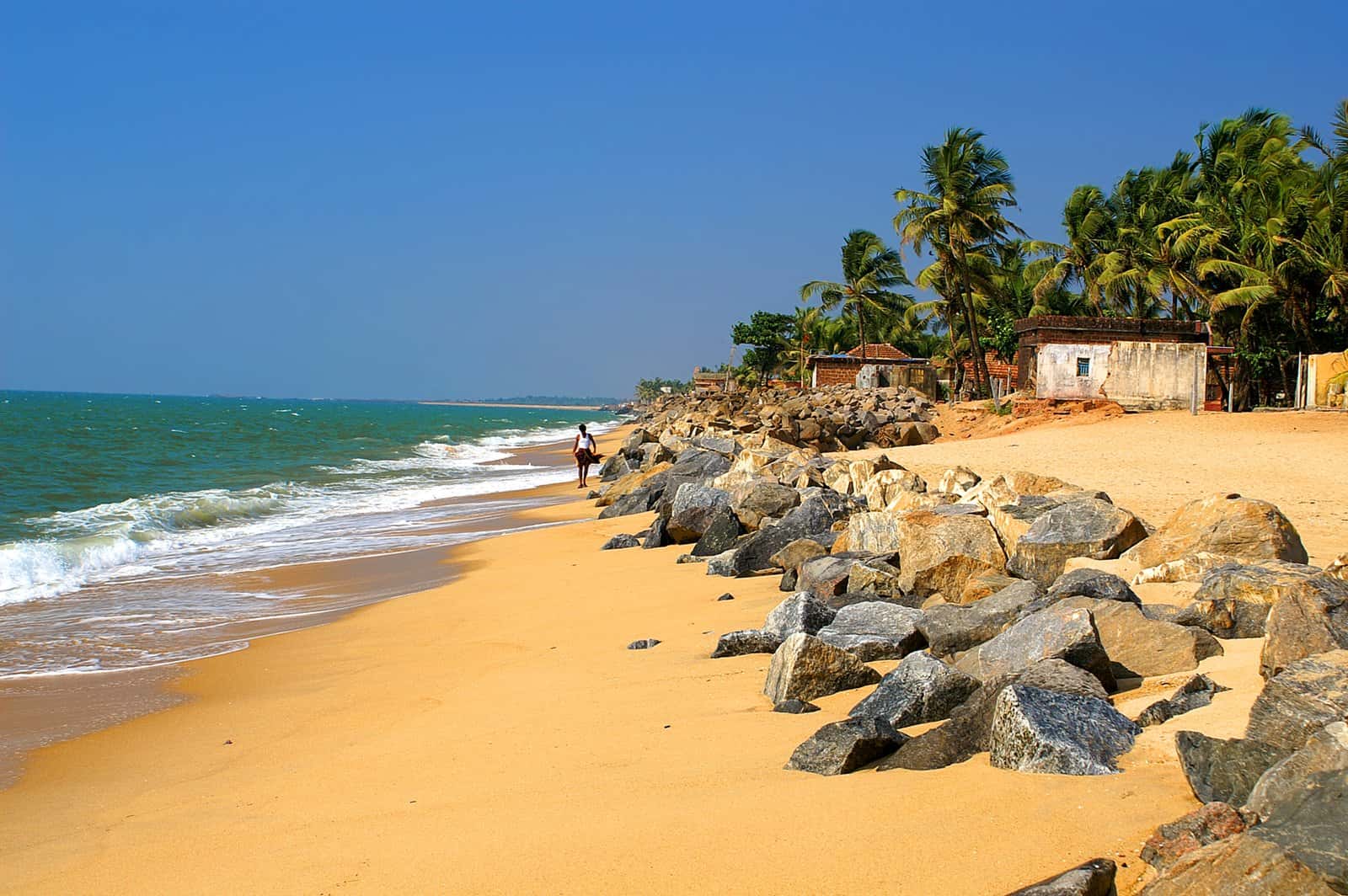
- Sunset at Panambur or TannirbhaviThe beaches here are for the light, not the water. Panambur, about 9 km north, is the liveliest with food stalls, camel rides and trained lifeguards; Tannirbhavi is quieter and reached by ferry. Walk, watch the sun go down over the Arabian Sea, and read the safety section before you think about wading in.
- The ferry across to TannirbhaviFrom the jetty near Sultan Battery a small passenger ferry crosses the Gurupura river to Tannirbhavi in about 5 to 10 minutes for a small fare of around 15 rupees one way. It is an informal local service that pauses in rough weather, so check it is running before you rely on it.
- Mangaluru Dasara at KudroliIf you visit during Navaratri, the Kudroli temple's nine-night festival and its grand Shobha Yathra procession, known internationally as Mangaluru Dasara, are the spectacle of the year. Expect crowds, lights and music, and book a room well ahead.
- Eat your way down the Tulu coastThe single best experience in Mangalore is its food. Have neer dosa with a coconut chutney, a fiery ghee roast, kori rotti where chicken curry meets crisp rice wafers, and a towering Gadbad ice cream to finish. This is one of India's great regional cuisines, and it is reason enough to come.
- A day trip to Udupi or DharmasthalaMangalore is the natural base for the coastal temple circuit. Udupi's Sri Krishna Matha is about 60 km north, Dharmasthala about 75 km east with its free meals, and Kukke Subramanya about 105 km east. Any of these makes a satisfying day out and back.
- Wander the old commercial heartHampankatta and the lanes around it are the working centre of the city, full of bakeries, ice cream parlours and old trading houses. It is not a manicured tourist quarter, but a real coastal city going about its day, which is part of the charm.
If you do only one thing slowly in Mangalore, make it a proper coastal meal. Sit down for a thali or a seafood spread, order the neer dosa and the ghee roast, and finish with a Gadbad. The temples and the chapel are wonderful, but the food is what most visitors talk about long after they leave, and it is the truest window into the Tulu coast you will get.
Where to stay in Mangalore, and how many nights
Stay in the city centre for everything on your doorstep, or out by the beach for sea air and calm. Two nights suits the city; add more if you are using it as a base for the coast.
- City centre, around HampankattaThe commercial heart near Mangalore Central station puts the chapel, the restaurants, the bakeries and the bus stand within reach, with the widest choice of business and mid-range hotels. Best for a short stay, for pilgrims doing day trips, and for anyone who wants to walk to dinner.
- By the beach and the seaProperties out towards Panambur, Tannirbhavi and the northern shore trade the buzz of the centre for sea air, quiet and sunset views, but you will need a cab into town. Better for couples and families who want to slow down, and for a more resort-style stay.
- How many nightsTwo nights is enough to see the city itself, the chapel, the main temples and a beach sunset, without rushing. Add a third or fourth night if you want to use Mangalore as a base for Udupi, Dharmasthala and Kukke Subramanya, taking one day trip at a time.
- Near the airportIf you have an early Gulf flight or a late arrival, a hotel near Bajpe saves the 13 km transfer at an awkward hour. It is otherwise too far out to be a sightseeing base, so use it only when the flight time demands it.
Rooms in Mangalore tighten sharply around Navaratri and the Mangaluru Dasara at Kudroli, and again through the coastal wedding season in the cooler months, when family events fill the better hotels. If your dates fall on the festival or a long weekend, book well ahead, and consider a beachside property if the centre is full.
Mangalore costs and a realistic daily budget
Mangalore is an affordable coastal city, with food the great value. Here is what the main things cost so you can plan and avoid being overcharged.
- Getting in and aroundAn airport taxi into the city typically runs about 400 to 650 rupees, which is approximate as there is no published tariff, so confirm at the prepaid counter. A KSRTC bus from Bengaluru starts from about 480 rupees, and the Tannirbhavi ferry is a token fare of around 15 rupees one way.
- Where the value isFood is the bargain here: a generous Mangalorean thali or a plate of neer dosa costs little, and even a seafood spread at a well-known restaurant is gentle on the wallet by big-city standards. The temples and the chapel are free to enter, so your sightseeing budget goes mostly on transport and meals.
- Cabs, autos and appsAuto-rickshaws and metered cabs cover the city; app cabs work but can be patchy, so a hotel-arranged car is the smooth option for day trips to Udupi, Dharmasthala or Kukke. Agree a rate for a full-day car before you set off, as out-of-town trips are quoted as a package.
- Cash and cardsCards and UPI are widely accepted in hotels, restaurants and bigger shops, and ATMs are easy to find. Keep some cash for the ferry, autos, temple offerings and small eateries. Carrying too much cash on a sightseeing day is unnecessary here.
The one move that keeps a Mangalore trip cheap and friction-free is to fix the price of any out-of-town car before the day begins. Day trips to Udupi, Dharmasthala and Kukke Subramanya are sold as full-day packages, and a rate agreed in advance, with the route and the waiting time spelled out, removes the only common money argument. In the city itself, prefer the prepaid airport counter and the meter, and you will rarely be overcharged.
Practical logistics: stations, getting around, money and language
The small things that make a Mangalore day smooth, from picking the right railway station to autos, app cabs, ATMs and the languages you will hear.
- Pick the right stationRemember the two stations: Mangalore Central (MAQ) in town for many Southern Railway trains, and Mangalore Junction (MAJN) at Padil for almost all Konkan trains to Goa and Mumbai. Check your ticket so you board and alight at the right one, as they are a fair distance apart.
- Getting around the cityThe centre is compact enough to walk in parts, but the sights are spread out, so you will use autos and cabs. App cabs operate but can be inconsistent; a metered auto or a car booked through your hotel is the reliable choice, especially for the beaches and day trips.
- Money and connectivityATMs are plentiful and cards and UPI work in most places, so you need only modest cash for autos, the ferry and small eateries. Mobile coverage is good across the city for maps and ride-hailing, and a tourist SIM picked up on arrival keeps you connected.
- The languages you will hearTulu is the most spoken language here, at about 39 percent of residents, with Konkani and Beary also common; Kannada is the official language and is only the third most spoken. English is widely understood in this education and healthcare hub, so communicating is easy for visitors.
Safety, the sea, and staying well
Mangalore is a relaxed, easy city, but the sea is the real hazard. Knowing the beaches are not for swimming, and that the monsoon ban is serious, keeps a trip happy.
- The sea is not for casual swimmingThis is the most important thing to know. Panambur, Tannirbhavi and Someshwara all have hidden rocks, strong currents and undertow, and people drown here every year. Enjoy the beaches for walks and sunsets, paddle only at the very edge where lifeguards allow it, and never swim out, however calm it looks.
- The monsoon sea-entry ban is realDuring the southwest monsoon the Dakshina Kannada administration bans sea entry outright, typically from about 1 June to 31 August, with red ropes, danger signs, lifeguards and fines. It is enforced after repeated drownings, so respect it completely and treat the beaches as viewpoints in those months.
- Panambur is lifeguarded but not Blue FlagPanambur has trained lifeguards and is one of the cleaner city beaches, but it is not a Blue Flag beach, despite claims you may read. Karnataka's two Blue Flag beaches are Padubidri and Kasarkod further up the coast. Stick to the patrolled stretch and follow the lifeguards.
- Heat, humidity and waterOutside the monsoon it is hot and humid, so drink plenty of water, pace temple visits for the cooler hours, and use sun protection at the open beaches. Drink bottled or filtered water and take the usual care with street food, though the cooked Mangalorean fare is generally a safe delight.
Do not swim in the sea at Mangalore. The beaches are beautiful for sunsets and walks, but the water hides rocks and currents that catch even strong swimmers, and during the monsoon, roughly June to August, sea entry is banned outright by the district. Lifeguards, red ropes and fines back that ban up. Keep children well back from the waterline, paddle only at the edge where lifeguards permit it, and you will have a wonderful time on the shore without becoming a statistic.
The Tulu coast food trail
Mangalorean food is one of the reasons to come. Here is what to order, where the famous dishes come from, and how to eat well whether you want vegetarian or seafood.
- Neer dosa and the rice classicsNeer dosa, a soft, lacy rice crepe whose name means water dosa, is the everyday star, eaten with coconut chutney, a curry or jaggery. Pundi, steamed rice dumplings, and patrode, spiced colocasia-leaf rolls, are the home-style dishes worth seeking out in a local restaurant.
- Kori rotti and the ghee roastKori rotti is the signature non-vegetarian dish, a fiery chicken curry poured over crisp wafer-thin rice rotti that softens as you eat. The Mangalorean and Kundapura ghee roast, a dish that traces up the coast to Kundapur, is rich, tangy and unmissable, whether chicken or paneer.
- Seafood, fresh off the coastThis is a fishing coast, so the fish and prawn curries, the tawa-fried fish and the surmai and pomfret are excellent. Ask for the catch of the day, and try the Mangalorean fish curry with its red, coconut-rich gravy, which is quite different from what you get inland.
- Gadbad and the sweet finishFinish with a Gadbad, the layered ice cream sundae created at Ideal Ice Cream, the parlour founded in 1975 at Hampankatta, and now copied all along the coast. It is a riot of fruit, jelly and ice cream, and a Mangalore institution in its own right.
Mangalore feeds everyone well. The Udupi vegetarian tradition runs deep, so a vegetarian thali, neer dosa, pundi and patrode are easy to find and superb, while the coastal non-vegetarian kitchen does kori rotti, ghee roast and seafood as well as anywhere in India. Many restaurants serve both sides of the menu, so a mixed group is never a problem here, which makes the city an easy and rewarding place to eat.
Mangalore for every kind of traveller, and on access
Mangalore suits very different visitors in different ways. Here is what it offers you and the one tip that matters for each, including how a senior visits comfortably.
- Families with childrenEasy and varied, with beaches for sunsets, the ferry to Tannirbhavi, ice cream and camel rides at Panambur. Keep children well back from the water given the currents, and stick to the lifeguarded stretches. The food is child-friendly once you steer them away from the chilli.
- CouplesSlower and softer than a hill or fort trip: beach sunsets, a quiet beachside hotel, long coastal meals and easy day trips. An evening on the northern shore and a Gadbad afterwards is the simple Mangalore date that works.
- Senior travellers and on accessibilityVery doable with planning. Stay central to cut transfers, visit temples in the cooler morning, use a hotel car rather than autos for comfort, and treat the beaches as places to sit and watch rather than clamber about. The humidity is the main challenge, so pace the day and keep water handy.
- Solo female travellersGenerally calm and manageable with standard precautions. It is a working city rather than a tourist hotspot, so dress as locals do, prefer cabs after dark, and you should find it an easy coastal stop to travel alone, with friendly people and good transport.
- Food loversThis is your city. Build the trip around the Tulu kitchen, neer dosa, kori rotti, ghee roast, seafood and Gadbad, and use the famous old restaurants and ice cream parlours as your map. Few Indian cities reward an eater as well for as little.
- PilgrimsMangalore is the ideal base for the coastal temple circuit, with the city's own Kadri, Mangaladevi and Kudroli temples and day trips to Udupi, Dharmasthala and Kukke Subramanya. Mind the dress codes, especially the no-shorts rule at Dharmasthala, and start early to beat the queues.
A suggested Mangalore itinerary
How to shape two to four unhurried days so you see the city, eat well, and use Mangalore as a base for the coastal temple circuit.
- Day one, the cityStart with St Aloysius Chapel in its daytime hours, then the Kadri Manjunatha and Mangaladevi temples in the cooler part of the day. Have a long Mangalorean lunch, rest through the heat, then take in a beach sunset at Panambur or the ferry to Tannirbhavi, ending with a Gadbad.
- Day two, temples and coastVisit the Kudroli temple in the morning, browse the old commercial heart and the bakeries, and keep the afternoon for Sultan Battery and the river. If you are here for Navaratri, build the day around the Mangaluru Dasara at Kudroli instead.
- Day three, a day tripUse Mangalore as a base. Drive to Udupi, about 60 km, for the Sri Krishna Matha and a famous Udupi meal, or to Dharmasthala, about 75 km, for the temple and its free annadana. Either is a comfortable day out and back with an early start.
- Day four, deeper into the circuitWith a fourth day, add Kukke Subramanya, about 105 km, the great Naga Dosha temple, which pairs well with Dharmasthala on a single loop, or simply slow down with another beach evening and a final seafood feast before you fly out.
Two timing facts shape a tight Mangalore plan. St Aloysius Chapel opens only in daytime hours and is never opened after 6 pm, so slot it into a morning or early afternoon, not the end of the day. And the temple day trips to Udupi, Dharmasthala and Kukke reward an early start, both to beat the queues and to be back before the coastal evening, so set the alarm and let the slower beach hours fall in the late afternoon.
The real questions travellers ask about Mangalore
Straight answers to the questions that come up again and again on traveller forums, so you arrive already knowing the score.
- Is Mangalore worth it, and better than Mysore?They are different trips. Mysore is palaces and grandeur inland; Mangalore is coast, temples and the best food on the Karnataka shore, and the gateway to the temple circuit. For beaches, seafood and a base for Udupi and Dharmasthala, Mangalore wins; for a single heritage hit, Mysore. Many travellers do both.
- How many days, and can I use it as a base?Two nights covers the city. Stay three or four and Mangalore becomes a comfortable base for day trips to Udupi, Dharmasthala and Kukke Subramanya, which is exactly how the savvy coastal traveller uses it rather than rushing between towns.
- Are the beaches safe for swimming?No, not for real swimming. Panambur, Tannirbhavi and Someshwara have rocks and strong currents, and during the monsoon the sea is closed to bathers outright. Enjoy them for walks and sunsets, paddle only where lifeguards allow, and never swim out.
- Is the monsoon a good time to come?Only if you want the green, dramatic, very wet Western Ghats and you accept the coast is off-limits for swimming. For beaches and easy day trips, come October to February. Mid-August is firmly monsoon, so expect heavy rain and a closed sea.
- Are Uber and Ola reliable here?They operate but can be patchy, with longer waits and cancellations at busy times. For sightseeing and day trips, a metered auto or a car arranged through your hotel is the more dependable choice, especially out to the beaches and the temple towns.
- Where do I eat the real Mangalorean food?Seek out the long-running local restaurants and ice cream parlours rather than hotel buffets. Order neer dosa, kori rotti, a ghee roast and the catch of the day, and finish with a Gadbad at the place that invented it. Locals are happy to point you to their favourite.
Planning Mangalore from abroad
Mangalore is an unusually soft landing for an overseas or Gulf-NRI visitor, with direct Gulf flights and an easy pace. A little preparation on the sea, the temples and transfers makes it effortless.
- Fly in direct from the GulfMangalore has direct flights from Dubai, Abu Dhabi, Doha, Bahrain, Dammam and Muscat into IXE at Bajpe, well used by the large local diaspora. That makes it one of the simplest coastal cities in India to reach from the Middle East, with a 24-hour prepaid taxi counter for the 13 km hop into town.
- Know the sea is not for swimmingThe beaches are for sunsets, not swimming, with rocks and currents year round and an outright ban during the monsoon. This catches visitors used to safe resort beaches, so enjoy the shore and keep children back from the water, paddling only where lifeguards permit.
- Respect the temple dress codesOn the day trips, especially Dharmasthala, dress is enforced and shorts are not allowed for men. Carry trousers or a long skirt, cover shoulders, and remove shoes where asked. Inside St Aloysius Chapel, no photography at all, which surprises many first-timers.
- Pair it with the coast and the GhatsUse Mangalore as a base and loop in Udupi, Dharmasthala and Kukke Subramanya, or run up the Konkan coast to Goa or inland to Coorg and Chikmagalur. It is the comfortable hub of a wider South India coastal trip rather than a one-stop destination.
Money, connectivity and timing for foreign visitors
The practical basics an overseas traveller needs for a coastal city: cash and cards, a SIM, and how many days to give Mangalore on a wider India trip.
- Cards work, but carry some cashCards and UPI are accepted in hotels, restaurants and bigger shops, and ATMs are everywhere, so you need only modest cash for autos, the Tannirbhavi ferry, temple offerings and small eateries. Keep small notes handy for the day-to-day.
- Get a SIM on arrivalPick up an Indian tourist SIM or an eSIM at the airport when you land rather than hunting for one later. Coverage in the city is good for maps, calls and ride-hailing, which makes navigating the spread-out sights and the day trips much easier.
- How long to give it on a bigger tripOn a wider South India trip, two to four nights in Mangalore is the right weight: two for the city, more if you want to base here for Udupi, Dharmasthala and Kukke. It slots neatly between a Goa or Konkan leg and the Coorg and Chikmagalur hills inland.
- Time it to the weatherOctober to February is the comfortable window for an overseas visitor, dry and cooler. Avoid the June to September monsoon unless you specifically want the dramatic rains, as the heavy weather and the closed sea blunt a classic coastal holiday.
Mangalore is a gentle, real-city introduction to coastal South India: not a resort bubble, but a friendly, food-loving port where Tulu, Konkani, Beary and Kannada all mingle and English is widely understood. Give it two to four nights, use it as a base for the temple circuit, eat everything, treat the sea with respect, and you will leave with a far richer sense of the coast than a Goa-only trip ever gives.
Why the city is called Mangaluru
The city takes its name from the goddess Mangaladevi, whose temple stands in the Bolar quarter. In the local tradition a princess from the Malabar coast became a disciple of the yogi Matsyendranath, who is said to have given her the name Mangaladevi; when she died here, a temple was raised in her honour, and the settlement around it grew into Mangaluru, the town of Mangala. The shrine is believed to date to around the 9th century, founded under the Alupa king Kundavarman, and it remains the heart of the city's Navaratri, ending in a grand chariot procession on Vijayadashami. No single ancient verse fixes the story, which survives in temple histories and local tradition, but the link between the goddess, her temple and the city's name is held across the coast.
Planning a Mangalore trip?
Our Karnataka travel experts plan your full journey for you: route, hotels, darshan timings and transport. You get a free day-by-day plan and an exact quote on WhatsApp, usually within a few hours. No payment is needed to get your plan.
Tour packages that visit Mangalore
Every journey below is private, hand-crafted and fully customizable. Tell us your dates and we tailor the itinerary, the pace and the priests or guides around you.
 7D / 6N
Coastal Karnataka Tour
- Visit the Vidhana Soudha
- Gommateshvara Bahubali statue
 11D / 10N
Best of Karnataka Tour
- Enjoy sightseeing in Bangalore.
- Visit Shivanasamudra Falls.