Murudeshwar Travel Guide
The comfortable months are October to February , dry on the coast and the window when Netrani diving runs. The monsoon is heavy and rough, and the sea is closed to diving.
When to visit Murudeshwar, and the diving season to plan around
The comfortable months are October to February, dry on the coast and the window when Netrani diving runs. The monsoon is heavy and rough, and the sea is closed to diving.
- October to February: cool, dry and the diving seasonThis is the best stretch on the coast, pleasant by day and comfortable in the evening, with calmer, clearer seas. It is also the season Netrani diving runs, so if the underwater trip matters, aim for these months and reconfirm the season with the operator before you book.
- March to May: hot and humidPre-monsoon on the Karnataka coast is hot and sticky, tiring for the open temple complex and the Gopura. The statue and the lift are still worth it, but keep the middle of the day for shade and do the complex early or late.
- June to September: monsoon, green but roughThe southwest monsoon brings heavy rain and a dramatic, green coast, but the sea turns rough and Netrani diving is normally closed. The beach is dangerous in these months, so come for the temple and the scenery, not the water.
- Weekends and festival days are crowdedMurudeshwar is a busy pilgrimage stop and fills up on Saturdays, Sundays and holidays, when the lift queue and the parking crush are at their worst. A weekday visit is calmer and you will move through the temple and the Gopura much faster.
If your visit is built around scuba diving or snorkelling at Netrani Island, do not come in the monsoon, roughly June to September, when the activity is normally closed because the sea is too rough. The clear-water diving season runs about October or November to February. Treat the exact opening and closing as weather-dependent and reconfirm the current season directly with a Netrani operator before you book flights or rooms, because rough-sea cancellations happen even in season.
How to reach Murudeshwar
Murudeshwar has its own Konkan Railway station, which is the easiest way in. The nearest airports are Mangaluru and Hubballi, both a couple of hours away by road.
- By train on the Konkan RailwayMurudeshwar has its own station on the Konkan Railway, about kilometre 596 on the Roha to Mangalore line and roughly 2 km east of the temple, a short auto-rickshaw hop. Trains connect it to Mangaluru, Madgaon in Goa, Karwar, Mumbai and beyond, so rail is the simplest and most scenic way to arrive.
- Nearest airportsThere is no airport at Murudeshwar. Mangaluru airport is about 135 to 165 km south, roughly 2 to 3 hours by road, and Hubballi airport is about 165 to 200 km inland, roughly 3 hours. Most flyers land at Mangaluru and then drive or take a Konkan Railway train up the coast.
- By road on NH-66Murudeshwar sits on National Highway 66, the coastal Mumbai to Kochi route, so buses and taxis run frequently. From Bengaluru it is a long drive of roughly 8 to 10 hours or an overnight bus, and many visitors arrive on a Coastal Karnataka loop by car with a driver, which we can arrange.
- Pairing it on the coastGokarna is about 60 to 80 km north, roughly 1.5 to 2 hours, and Udupi about 90 to 100 km south, roughly 2 to 2.5 hours. The classic plan threads Gokarna, Murudeshwar and Udupi together, often with Jog Falls inland, rather than treating Murudeshwar as a standalone trip.
Fly into a major Indian hub such as Mumbai or Bengaluru, then connect to Mangaluru by air and drive up the coast, or join the Konkan Railway. Murudeshwar has no international flights of its own.
Fly into Mangaluru directly where routes allow, or via Mumbai or Bengaluru, then drive about 2 to 3 hours north along NH-66 or take a Konkan Railway train to Murudeshwar.
Take a Konkan Railway train straight to Murudeshwar station, the easiest option, or fly to Mangaluru or Hubballi and drive. From Goa it is an easy coastal drive or train down NH-66.
The Shiva statue, the Raja Gopura and the temple
Murudeshwar is its giant seaside Shiva statue, the 20-storey Raja Gopura with a lift to the top, and the temple on Kanduka Hill. A few rules are worth knowing first.
- The giant Shiva statueThe seated Shiva on Kanduka Hill, about 123 feet or roughly 37 metres tall, is the image everyone comes for, designed to catch the sun and visible from far out at sea. It is locally promoted as the second tallest Shiva statue in the world; by encyclopedic counts it now ranks around third, but it is unmistakably one of the tallest anywhere, and the setting by the Arabian Sea is the real draw.
- The Raja Gopura and its liftThe 20-storey Raja Gopura, built in 2008, is unusual for having a working lift that carries you up to about the 18th floor, where the Arabian Sea spreads on three sides and you look down on the statue and the temple. The lift fee is only a small token charge, reported at about 10 to 30 rupees, which you reconfirm at the counter.
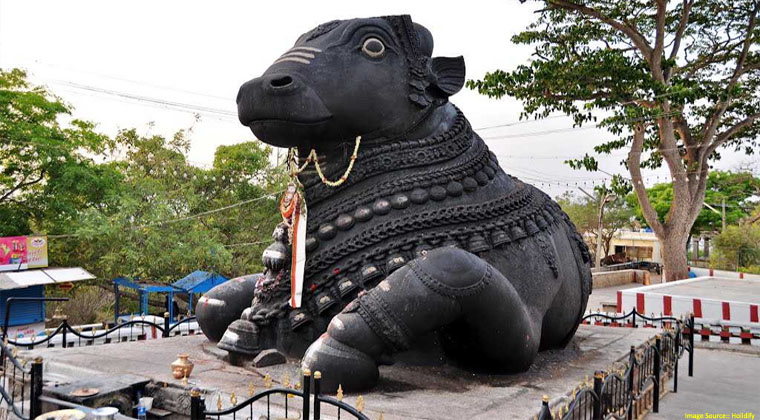
- The Murudeshwara Temple and complexThe temple itself is on the hill, with the main Mridesa Linga in a sanctum whose inner entry is restricted, and a complex dotted with large mythological sculptures, a Nandi and life-size concrete elephants. There is an enforced dress code, so dress modestly with shoulders and knees covered.
- The hilltop and sea viewsBecause the hill juts into the sea on three sides, the views from the complex and the Gopura over the coast are the quiet highlight, especially in soft morning or late-afternoon light. Give yourself time to walk the headland rather than only photographing the statue and leaving.
Murudeshwara is an active temple, not just a photo stop. There is an enforced dress code, so cover shoulders and knees, remove footwear where asked, and keep noise down near the sanctum, whose inner entry is restricted to ritual access. The temple usually closes for a couple of hours in the early afternoon, commonly cited as roughly 1 pm to 3 pm, so time your visit to the morning or the evening, covered in the next sections.
Signature experiences in Murudeshwar
Beyond the statue, the experiences people remember are the Gopura lift, the Netrani dive and a quiet hour on the headland, and how to arrange each one honestly.
- Ride the Gopura lift for the viewThe lift up the 20-storey Raja Gopura to about the 18th floor is the experience that surprises people: a small charge, reported at about 10 to 30 rupees, buys a view down over the giant statue and the sea on three sides. Go early or late to beat the queue, and pause at the top rather than rushing the photo.
- Dive or snorkel at Netrani IslandA boat trip out to Netrani, roughly 19 km offshore, is the coast's signature underwater experience, with clear water, coral and reef fish. A guided beginner dive needs no certification, and snorkelling suits those who would rather stay near the surface. It runs only in the calm season, about October or November to February.
- Watch the statue at sunrise or sunsetThe statue is designed to catch the light, so the most rewarding free experience is simply being on the headland as the sun rises or sets and the figure glows against the sea. Many visitors say this, not the photo from the car park, is what stays with them.
- Walk the sculpture complexThe complex around the statue is laid out with large tableaux from Hindu mythology, a Sun Chariot, the Geetopadesham scene and the Ravana and Ganesha story that names the town. It is a slow, easy wander and good for families and photographers.
- Time on the beach, within the limitsThe beach beside the temple is a fine place to sit and watch the boats, but the sea here is not a safe free-swim spot. Stay within any marked or roped limits and follow the lifeguards; read the safety section before you go near the water.
- Add Jog Falls or the coastal loopMany travellers pair Murudeshwar with Jog Falls inland, spectacular in and just after the monsoon, and with Gokarna and Udupi along the coast, turning a single stop into a two to four day coastal trip.
If you can only do one thing properly, make it the Gopura lift at a quiet hour with the light low, or the Netrani boat in season. The lift gives the view that no ground-level photo matches, and the dive is the only one of its kind on this coast. Both reward a little planning: go on a weekday for the lift to dodge the queue, and book the Netrani trip ahead in the November to February peak, because in-season slots fill and rough-sea days still get cancelled.
Netrani Island scuba diving and snorkelling, the honest guide
Netrani Island offshore is the main diving site on the Karnataka coast. Here is the season, the monsoon closure, the no-certification beginner option and a hedged price, so you plan it right.
- Where it is and how the day worksNetrani, also called Pigeon Island, lies offshore, commonly given as about 10 nautical miles or roughly 19 km from Murudeshwar, reached by boat. Operators typically run morning departures, the crossing takes time, and a beginner dive session underwater is short, often around 30 to 40 minutes, so treat it as a half-day trip, not a quick stop.
- The season and the monsoon closureDiving is a fair-weather, seasonal activity. It is normally closed during the southwest monsoon, roughly June to September, when the sea is too rough, and runs in the clear-water season, about October or November to February. Even in season, individual days are cancelled when the sea is rough, so keep your plan flexible.
- Beginners and non-swimmersA Discover Scuba Dive needs no certification and no swimming skill: a PADI or SSI instructor holds you one-on-one and takes you down to about 12 metres. There is usually a short medical self-check first, and if you flag any condition you may need a doctor's clearance. Snorkelling is the gentler alternative if you would rather stay at the surface.
- What it costs, roughlyA beginner Netrani dive is commonly priced from around 3,500 to 4,500 rupees per person, sometimes with cheaper promotional slots advertised lower. Confirm the current price, exactly what it includes, the boat timing and the cancellation policy directly with the operator when you book, as offers and conditions change.
In the November to February peak the dive slots fill, so book a week or two ahead, and outside the obvious months confirm with the operator that the season is open before you travel. Diving is weather-dependent: a rough-sea day can cancel even a confirmed booking, so build a spare day into a diving-focused trip and never treat the dive as guaranteed. Choose an operator who runs proper PADI or SSI dives with a medical check, not whoever is cheapest at the jetty.
Murudeshwar Beach, and why the sea here needs respect
The beach beside the temple is beautiful but not a safe free-swim spot. Strong currents have killed swimmers, so this section is about enjoying it within the limits.
- A beautiful setting, a tricky seaThe beach below the statue, with the temple on the headland, is one of the prettiest on the coast to sit and watch. The water, though, has uneven seabeds and strong currents that funnel through gaps, and it looks far calmer than it is, especially to visitors used to lakes or pools.
- Stay within the limits and follow the guardsAuthorities have restricted bathing and have been installing safety ropes and dividers after fatal incidents. Stay landward of any rope or marker, follow the lifeguards and home guards, and do not wade out, particularly at high tide when the pull is strongest.
- Watersports, where offeredWhen conditions and rules allow, operators run speed-boat rides, jet skis and parasailing from the beach. These are run from boats with crews rather than free swimming, which is the safer way to enjoy the water here; agree the price before you start.
- Children and non-swimmersKeep children close and out of the water beyond ankle depth, and do not let non-swimmers enter on their own. The danger here is the current, not the depth at the edge, so even a confident pool swimmer can be caught out.
Murudeshwar Beach is not a casual swimming beach. After a fatal incident on about 10 December in which four students were swept away by strong waves, authorities banned or restricted tourist bathing and began fitting safety ropes along the shore. Treat the sea here as a viewing beach: enjoy the setting, take a boat ride if you want the water, but do not swim out, and follow every lifeguard instruction. This is the single most important thing to know before you reach the sand.
Where to stay in Murudeshwar, and how many nights
Stay near the temple and beach to be in the thick of it, or use Murudeshwar as one night on a coastal loop. Half a day to one day covers the town itself.
- Near the temple and beachHotels close to the temple and the seafront put you within walking distance of the statue, the Gopura and the beach viewpoint, and some have sea-facing rooms looking toward the headland. This is the easiest base for a short visit and for an early start to a Netrani boat.
- Town and highway optionsThere are simpler lodges and mid-range hotels back toward the railway station and along NH-66, useful if seafront places are full or pricey, with a short auto-rickshaw hop to the temple. Budgets here are reasonable outside peak weekends.
- How many nightsMurudeshwar itself is a half-day to one-day stop: the temple, the Gopura lift, the statue complex and the beach view. One night is plenty if you only want the town. Add a separate morning for a Netrani trip, and a second base if you are doing the wider coastal loop.
- Use it as a coastal-loop nightMany travellers spend one night in Murudeshwar between Gokarna and Udupi, breaking the coastal drive at the statue. If diving matters, plan your Murudeshwar night around an in-season morning boat and keep the rest of the loop flexible.
Seafront rooms near the temple are limited and fill up on weekends, long holidays and through the October to February season, when both pilgrims and divers are about. If your dates fall on a weekend or a festival, book ahead, and consider arriving on a weekday when the town, the lift queue and the parking are all calmer.
Murudeshwar costs and a realistic budget
Murudeshwar is gentle on the wallet apart from the Netrani dive. Here is what the main things cost so you can plan and avoid being overcharged.
- The fixed and near-free thingsThe temple and the statue complex are free to enter. The Gopura lift is only a small token charge, reported at about 10 to 30 rupees per person, which you reconfirm at the counter. These are the cheap anchors of a Murudeshwar day.
- The big-ticket experienceThe Netrani scuba dive is the one real cost: a beginner dive is commonly from around 3,500 to 4,500 rupees per person, sometimes cheaper on promotions. Snorkelling and boat rides cost less. Confirm the exact price and inclusions with the operator when you book.
- Getting around and small costsAn auto-rickshaw from the railway station to the temple is a short, cheap hop, agreed before you set off. Beach watersports such as a speed-boat or jet-ski ride are negotiable, so settle the price first. Meals at local eateries are inexpensive.
- Cash and cardsBigger hotels take cards or UPI, but autos, boats, small eateries and the dive operators may prefer cash, and ATMs are limited in a small town. Carry enough cash for the day, especially if you plan a dive or a beach ride.
Almost everything in Murudeshwar is cheap or free except the Netrani dive, so build your budget around that one figure, commonly around 3,500 to 4,500 rupees per person for a beginner dive, and reconfirm it directly with the operator. Carry enough cash to cover the dive, the autos and a beach ride, because card and UPI acceptance is patchy outside the larger hotels and the nearest ATMs can run dry on busy weekends.
Practical logistics: getting around, money, food and signal
The small things that make a Murudeshwar day smooth, from the station hop to cash, food and connectivity.
- Getting around townMurudeshwar is small and the temple, statue and beach are walkable together. The main short ride you need is the auto-rickshaw between the railway station, about 2 km east, and the temple. For the wider coast you will want a car with a driver or the train.
- Food and the local kitchenCoastal Karnataka food is a highlight: rice, seafood near the coast, and the famous Udupi-style vegetarian fare nearby. Hotels and small eateries around the temple cover most needs; vegetarian food is easy to find, as you would expect at a pilgrimage town.
- Money and ATMsCarry cash. ATMs exist but are limited, and autos, boats, small eateries and dive operators may not take cards or UPI. Draw what you need before a busy weekend, when machines can run out.
- SIM, signal and languageMobile coverage in town is generally fine for calls, maps and booking. Kannada is the local language, with Konkani and Tulu also spoken on the coast, and Hindi and English get you by in the tourist and hotel trade.
Safety and health: the sea, the dive and the basics
Murudeshwar is an easy, welcoming stop, but the sea and the dive are where care matters most. A little awareness keeps the visit happy.
- The sea is the real riskThe most important safety point is the water: strong, uneven currents off Murudeshwar Beach have swept away and killed swimmers, leading to a bathing ban and safety ropes. Treat it as a viewing beach, stay within marked limits, follow the guards, and do not wade out, especially at high tide.
- Dive with a proper operatorFor Netrani, choose an operator running PADI or SSI dives with a medical self-check and one-on-one instruction, not the cheapest boat at the jetty. Be honest on the medical form, do not dive with a cold or after drinking, and never fly within the recommended window after diving.
- Heat, sun and feetThe open temple complex and the Gopura mean sun and hot stone underfoot, since you go barefoot in temple areas. Carry water and sun protection, do the complex early or late in the warmer months, and use the lift rather than long climbs if the heat is tiring.
- Crowds, traffic and the usual careWeekends and festival days bring big crowds and a parking crush on the single approach road, so keep groups together and mind children near traffic. Take the usual precautions with valuables in queues, and drink bottled or filtered water.
Do not free-swim at Murudeshwar Beach. The currents here have been fatal, which is why bathing has been banned or restricted and safety ropes put up. Enjoy the beach as a place to sit and photograph, take a crewed boat ride if you want the water, and keep children and non-swimmers well back from the waves. The temple, the statue and the Gopura are the safe heart of the visit; the open sea is the one thing to respect.
Murudeshwar for every kind of traveller, and on access
Murudeshwar suits very different visitors. Here is what it offers each, and the one tip that matters, including how a senior visits the Gopura comfortably.
- Families with childrenEasy and visual: the giant statue, the sculpture complex and the lift all delight children. The one rule is the water, so keep little ones well back from the sea and within any roped limits, and visit the temple early to beat the weekend crowds.
- CouplesQuiet and scenic if you time it right: the headland at sunrise or sunset and a calm weekday visit are lovely. Pair it with Gokarna's beaches for a slower coastal couple of days rather than treating Murudeshwar as a rushed photo stop.
- Senior travellers and on accessibilityVery doable thanks to the Gopura lift, which spares the climb and gives the best view sitting down. Visit on a weekday to avoid the crush, do the complex in the cool of morning or evening, and arrange an auto or car for the short hops rather than long walks in the heat. The complex has steps and barefoot temple areas, so take them slowly.
- Divers and watersports fansMurudeshwar is the base for Netrani, the coast's one real dive site, in season from about October or November to February. Even a non-swimmer can try a guided beginner dive. Book ahead in peak season and keep a spare day for weather.
- Solo and budget travellersAn easy, friendly stop on the Konkan Railway, cheap to reach and to eat, and simple to slot between Gokarna and Udupi. The town is small and walkable, so a solo traveller can see the highlights in a half day.
- PhotographersThe statue against the sea, the view down from the Gopura, and the sculpture complex are the shots. Go at first or last light, ask before photographing people at worship, and respect the restricted sanctum, where photography is not appropriate.
A suggested Murudeshwar itinerary
How to shape a half day, a full day with a dive, or a coastal loop with Gokarna and Udupi, so you catch the temple at the right hours and the sea in season.
- The half-day versionIf you are passing through on the coast, arrive in the morning before the temple's midday closing, see the statue and the complex, ride the Gopura lift, and take in the beach view from a safe distance. Two to three hours covers the essentials, though you miss the best light.
- One full day with the headlandDo the temple and the lift in the morning, rest through the midday heat and the temple closing, then return to the headland for sunset over the statue and the sea. An overnight lets you catch both the soft morning and evening light that a quick stop never allows.
- One day plus a Netrani morningIn season, give the Netrani dive or snorkel its own morning, since the boat and dive together make a half day, then keep the afternoon and evening for the temple, the lift and the headland. Book the dive ahead and keep a spare slot for rough seas.
- The coastal loop, two to four daysThe classic plan threads Gokarna, about 1.5 to 2 hours north, Murudeshwar, and Udupi, about 2 to 2.5 hours south, often adding Jog Falls inland. Two to four days lets you give each place a proper morning and evening rather than racing the highway.
The thing that breaks a tight Murudeshwar plan is arriving at the temple during its early-afternoon closing, commonly cited as roughly 1 pm to 3 pm. Build your day so the temple and the Gopura fall in the morning or the evening, keep the hot midday for a meal or a rest, and reserve the low-light hours for the headland, where the statue is at its best. Reconfirm the current timings locally, as they shift with festivals and seasons.
The real questions travellers ask about Murudeshwar
Straight answers to the questions that come up again and again on traveller forums, so you arrive already knowing the score.
- Is it really the second tallest Shiva statue?It is widely promoted that way, and at about 123 feet or roughly 37 metres it is genuinely one of the tallest. Honestly, though, by encyclopedic counts it now ranks around third, after the Statue of Belief and the Kailashnath Mahadev statue, which were finished later. The setting by the sea is what makes it special, ranking aside.
- How long do I need, and should I add Gokarna and Udupi?Murudeshwar itself is a half day to a day. To make a trip of it, combine it with Gokarna, about 1.5 to 2 hours north, and Udupi, about 2 to 2.5 hours south, often with Jog Falls, over two to four days. That coastal loop is the usual and most rewarding plan.
- How much is the Gopura lift, and when does it run?The lift up the Raja Gopura is a small token charge, reported at about 10 to 30 rupees per person, and generally runs daily with a midday break, broadly morning and again from mid-afternoon into the evening. Reconfirm the fee and hours at the counter, as both are changeable.
- Can I dive at Netrani if I cannot swim?Yes, a beginner Discover Scuba Dive needs no swimming skill: an instructor holds you one-on-one down to about 12 metres after a short medical check. It runs only in the calm season, about October or November to February, and costs commonly from around 3,500 to 4,500 rupees per person.
- Is the beach safe to swim?No, not as a free swim. Strong currents off Murudeshwar Beach have killed swimmers, and bathing has been banned or restricted with safety ropes. Enjoy the beach as a viewing spot, take a crewed boat ride for the water, and follow every lifeguard instruction.
- Is it crowded, and which day is best?Weekends, holidays and festival days are very crowded, with long lift queues and a parking crush on the single approach road. A weekday visit, ideally in the October to February season, is far calmer and faster through the temple and the Gopura.
Planning Murudeshwar from abroad
Murudeshwar is the giant-statue-by-the-sea stop on the Konkan coast and pairs naturally with a Goa to Mangalore run. A little preparation makes the temple rules, the diving season and the beach safety easy to handle.
- Know the temple dress code firstMurudeshwara is an active temple with an enforced dress code. Cover shoulders and knees, expect to go barefoot in temple areas, and respect the restricted inner sanctum. Dressing modestly from the start saves being turned back at the entrance, which catches some first-time visitors out.
- Time your trip to the diving seasonIf Netrani diving or snorkelling is part of the draw, come about October or November to February and avoid the monsoon, roughly June to September, when the activity is closed and the sea is rough. Confirm the season with the operator before you book international flights.
- Treat the beach as a viewing beachThe sea here has strong, fatal currents and bathing has been restricted. Enjoy the setting and a crewed boat ride if you want the water, but do not swim out. This is the one safety point worth knowing before you arrive, especially if you are used to gentler beaches.
- Slot it on a coastal routeFly into Mangaluru, or come down the coast from Goa, and thread Gokarna, Murudeshwar and Udupi by car or the scenic Konkan Railway. Murudeshwar is a striking, easy half-day to one-day stop on that route rather than a destination in itself.
Money, connectivity and timing for foreign visitors
The practical basics an overseas traveller needs for a small coastal temple town: cash, cards, a SIM, and how many days to give it on a wider South India trip.
- Carry cash, expect patchy cardsBigger hotels take cards or UPI, but autos, boats, small eateries and the dive operators often want cash, and ATMs in a small town are limited and can run dry on busy weekends. Draw cash in Mangaluru or Goa before you arrive and keep small notes for autos and the lift.
- Get a SIM at the airportPick up an Indian tourist SIM or an eSIM when you land at Mangaluru or your arrival hub rather than hunting for one in a small town. Coverage in Murudeshwar itself is fine for maps, calls and booking a dive.
- How long to give it on a bigger tripOn a coastal South India trip, Murudeshwar is a half-day to one-day highlight, best slotted between Gokarna and Udupi over a two to four day loop, plus a separate morning if you want the Netrani dive in season. It does not need a long stay of its own.
- Time your visit to the seasonOctober to February is the comfortable, dry window and the diving season. The monsoon, June to September, is green but rough with diving closed and the sea dangerous, and March to May is hot and humid, so plan the trip for the cooler, calmer months.
Murudeshwar is an easy, photogenic introduction to the Konkan coast: a giant statue on a headland, a lift with a sea view, a temple with clear rules, and a famous dive offshore. Slot it between Goa or Gokarna and Udupi or Mangaluru, give it a morning and an evening for the light, and let the Konkan Railway do the scenic legs. Keep the sea at arm's length and the rest of the visit is relaxed and rewarding.
How a thrown-away cloth gave Kanduka Hill its god
Murudeshwar shares its origin with Gokarna, in the Ramayana story of the Atma-Linga, the soul of Shiva. The demon king Ravana won the Atma-Linga from Shiva on one condition, that it must never touch the ground before he reached Lanka, or it would root there forever. As Ravana neared Gokarna, Vishnu dimmed the sun to fake dusk so the devout king would stop for his evening prayers, and Ganesha, disguised as a boy, offered to hold the Linga, then set it on the ground while Ravana was away. Unable to lift it again, Ravana in fury tore off and flung away the coverings of the Linga. The case, the lid and finally the cloth that wrapped it landed at different places along this coast; the cloth is said to have fallen on Kanduka Hill, and the spot took the name Mrideshwar, later softened to Murudeshwar. To this day the temple on the sea-girt hill is held to stand where that cloth came to rest, which is why the town belongs to the same sacred chain as Gokarna.
Planning a Murudeshwar trip?
Our Karnataka travel experts plan your full journey for you: route, hotels, darshan timings and transport. You get a free day-by-day plan and an exact quote on WhatsApp, usually within a few hours. No payment is needed to get your plan.
Tour packages that visit Murudeshwar
Every journey below is private, hand-crafted and fully customizable. Tell us your dates and we tailor the itinerary, the pace and the priests or guides around you.