Nersa Travel Guide
Come in the cool, clear months of about November to March for comfortable birding, or in the June to September monsoon for roaring waterfalls and deep green forest, as long as...
When to visit Nersa, and the monsoon question
Come in the cool, clear months of about November to March for comfortable birding, or in the June to September monsoon for roaring waterfalls and deep green forest, as long as you accept leeches, mud and the odd landslide risk.
- November to March: the easy, clear windowThis is the most comfortable time and the season Karnataka Tourism gives for birding in the Bhimgad and Belagavi Ghats. Days are mild, the trails are dry and firm, and the forest is full of resident and wintering birds. Nights in the forest stay cool, with local winter temperatures around 13 to 20 C, so carry a light jacket even now.
- June to September: the green, wild monsoonThe rains turn the whole Mahadayi valley a vivid green and fill the waterfalls, and this is when many nature lovers most want to come. It is beautiful, but it is also when leeches are out, trails are slippery, and the ghat roads can flood or slip. Come prepared and flexible, and check conditions before you set off.
- April and May: hot and quietLate spring is warmer, with area temperatures reaching around 35 C by day, and the forest is drier and less dramatic. It is the least rewarding time for scenery, though the village stays quiet and cool under the trees, and birding is still possible in the early morning.
- Decide the experience you want firstPick your season around the trip you want. Choose the winter months for easy walking, clear birding and firm trails, or choose the monsoon for the full waterfall-and-mist drama if you do not mind getting wet and muddy. Both are honest choices, so decide before you book your rooms and your guide.
The monsoon is what makes Nersa and the Chorla Ghat famous, and it is genuinely stunning from about June to September. It is also the hardest time to travel. The ghat roads into and around the village are prone to landslides and flooding, some forest access closes or becomes unsafe in heavy rain, and leeches are a constant on wet trails. If you come in the rains, keep your plan loose, never push a flooded or slipping road after dark, and confirm with your homestay and the forest office that the walks and falls you want are open before you set out.
How to reach Nersa
Nersa has no railway station, no airport and no reliable public transport of its own. Almost everyone comes through Belagavi or Khanapur and drives the last winding stretch by taxi or private car.
- Via Belagavi, the main gatewayBelagavi city, about 40 km away, is the practical hub. It has the nearest airport and a major railway station, and it is where most visitors hire a taxi or start a self-drive into the Ghats. Plan for a slow last stretch on narrow, winding forest road rather than a quick highway hop.
- Via Khanapur, the nearest small townKhanapur, the taluk town, is the closest place with a railway station and basic services, and is a common jumping-off point. Destination experts on the Belagavi travel forum advise taking a cab from Khanapur or Belagavi rather than relying on shared transport, which is sparse and unreliable this deep in the forest.
- Nearest airportsBelagavi (Sambra) airport, roughly 50 to 60 km away, is the closest and has a limited set of domestic flights, so check current routes before you rely on it. Goa's Dabolim and the newer Mopa airport are the alternative, but they mean a longer, winding drive over the ghats. Confirm your transfer in advance, as taxis are not simply waiting at the village.
- By your own carA private car is the most flexible way in and out, and lets you reach the forest edges and the drive-to viewpoints. The roads are narrow, twisting Ghats roads and can be rough in patches, so a higher-clearance vehicle and an unhurried, daylight drive are wise, especially in the monsoon.
Fly into a major Indian hub such as Mumbai or Bengaluru, then connect to Belagavi by a short domestic flight or reach Goa and drive over the ghats. From Belagavi it is a pre-arranged taxi or self-drive into Nersa. There are no international flights anywhere near the village.
Fly into Goa, Mumbai or Bengaluru, then continue to Belagavi by air, rail or road, and arrange a car for the final forest stretch. Goa is the easiest international entry if you also want a beach half to the trip.
Take a train to Belagavi or Khanapur, or drive from Belagavi, Goa or the Konkan. The Belagavi railhead is the simplest arrival, after which you hire a taxi for the last winding drive into Nersa.
The village, the sanctuary, the falls and the Ghats
Nersa is not a place of monuments; it is a base in the forest. The rewards are the village and its birds close at hand, and Bhimgad, Vajrapoha, Jamboti and Chorla Ghat within a walk, a trek or a drive.
- The village and its forest, at handThe simplest pleasure is the village itself and the forest around it: waking to jungle fowl, walking the paths with a local guide, and the birds and bats the area is known for, including the Ceylon frogmouth and the paradise flycatcher. This is the part you can do on foot, straight from your homestay.
- Bhimgad Wildlife Sanctuary, a guided outingNear Jamboti in the same taluk, Bhimgad was notified as a sanctuary in December 2011 and protects about 190 sq km of Western Ghats forest. Its Barapede caves are the only known breeding site in the world of the Wroughton's free-tailed bat. Access is by forest-department rules from about sunrise to sunset, best arranged with a guide, not a casual drop-in.
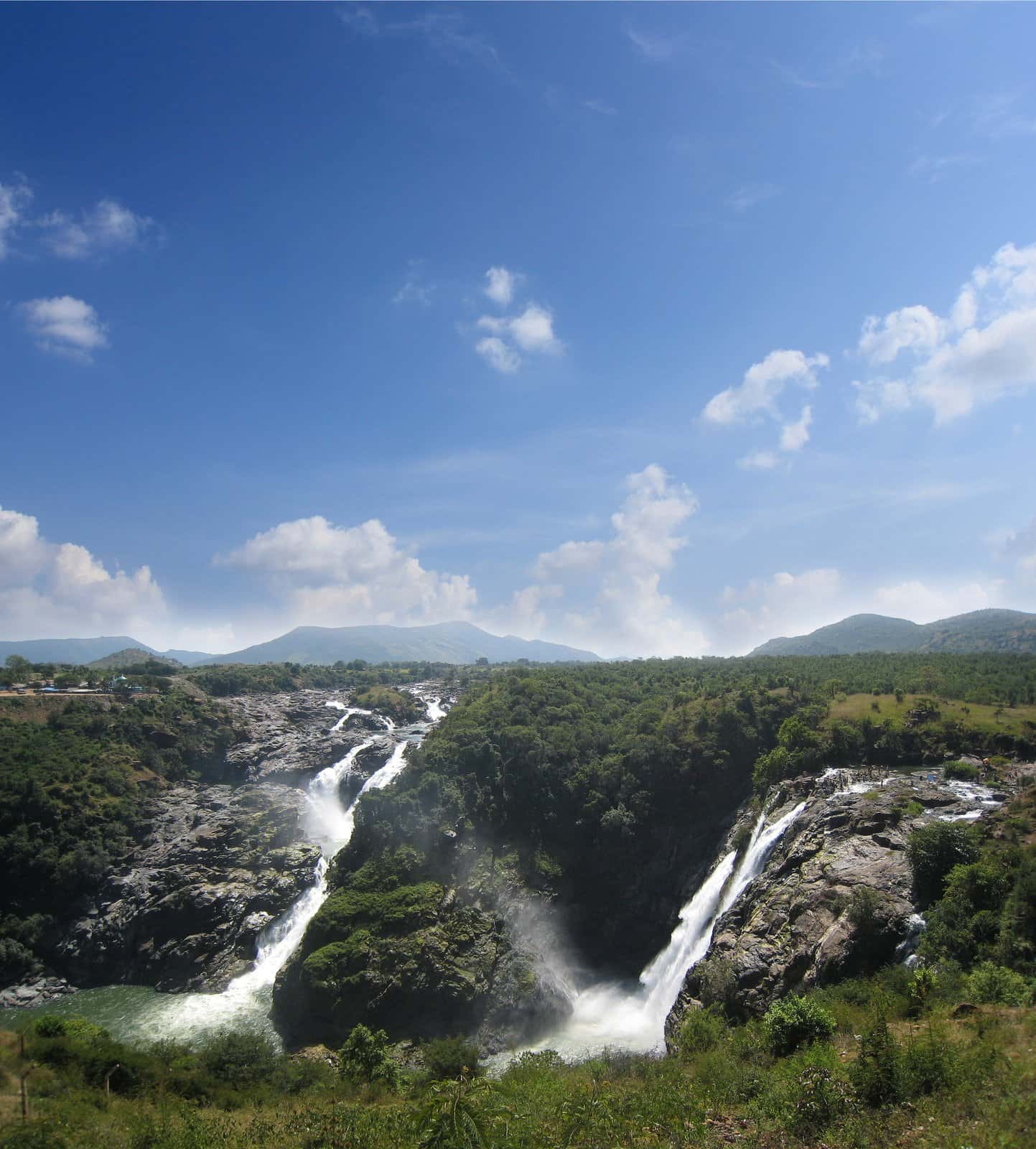
- Vajrapoha falls, a steep trekThe roughly 150 ft Vajrapoha falls, where the young Mhadei river drops through the forest, is a highlight, but it is a serious guided trek deep into the woods rather than a roadside viewpoint. It is commonly reached on a long walk from the Kankumbi or Jamboti side, so treat it as a full day with a guide and forest permission.
- Chorla Ghat and Jamboti, a driveFor big Ghats views, the Chorla Ghat, where Karnataka, Goa and Maharashtra meet, and the Jamboti forest and viewpoints are a drive away and stunning in the mist. They pair naturally with a Nersa stay, especially in the monsoon, but plan them as a separate outing rather than something you stroll to.
The single most useful thing to understand before you come is that Nersa's attractions are spread across three different efforts. The village birding and forest paths are a walk from your door. Bhimgad, the bat caves and Vajrapoha falls are guided treks that need forest permission and a local who knows the way. Chorla Ghat, Jamboti and Belagavi are drives. Plan each in its own slot, arrange the guide and permissions ahead, and you will never stand at the wrong end of the forest wondering why the waterfall is not around the corner.
Signature experiences at Nersa
These are the experiences people travel this far for, and how to arrange them honestly, with the guide, the season and the permission each one needs.
- Birdwatching with a guideThis is the headline experience. The forests around Nersa and Bhimgad hold Western Ghats specialities and the sanctuary is known for species like the Malabar trogon, grey-headed bulbul and hornbills. Go out at first light with a local guide who knows the calls and the paths, and give it more than one morning to do it justice.
- Nature walks and forest treksBeyond birding, the pleasure here is simply walking the forest with someone who can read it, learning the trees, the streams and the tracks. Difficulty ranges from gentle village loops to the long, steep trek to Vajrapoha falls, so match the walk to your fitness and always take a guide into the deeper forest.
- The bat caves and the Mhadei springsThe area is famous for its bats, including the threatened Wroughton's free-tailed bat that breeds in the Barapede caves, and for the springs where the Mhadei river is born. Some cave visits are possible with a guide, but treat these as sensitive wildlife sites, keep your distance, use no flash, and follow whatever the forest staff ask.
- Farm and village lifeAt a working farm-stay like The Hermitage, part of the experience is the slow rhythm of rural life: home-cooked meals, walks with your hosts, and meeting the local community without any staged tourist show. Come curious and unhurried, and this quiet immersion is as memorable as the wildlife.
- The monsoon waterfalls, in seasonIn the June to September rains the streams and falls are at full roar and the whole valley glistens. If you visit then, the waterfall treks and the Chorla drives are unforgettable, but they are also wet, leech-prone and weather-dependent, so keep the plan flexible and safety first.
- Stargazing and quietWith almost no light pollution and, in some cottages, no electricity at all, the nights here are dark and full of stars and forest sound. Sitting out after dinner listening to owls and insects, with the Milky Way overhead, is a simple experience that city travellers rarely forget.
Everything worthwhile here depends on a good local guide and, for the deeper forest, on forest-department permission. Do not arrive hoping to find both on the day. Ask your homestay to line up a guide before you come, tell them which treks and which caves you hope to do, and let them sort the permissions and timings. With that one bit of planning done, Nersa opens up; without it, you may spend your days looking at the forest from the edge rather than walking into it.
Where to stay in Nersa, and how many nights
Nersa is homestay and farm-stay country, with no hotels of its own. Stay in the village at a place like The Hermitage for the full forest immersion, or base at a comfortable Belagavi or Chorla resort and visit by day.
- The Hermitage, the village classicThe best-known stay is The Hermitage, a long-running working eco-farm about 45 km from Belagavi, run by hosts David and Morvarid Fernandez. Rooms are simple rural cottages, the Gota, the Kadaba and a raised bamboo Machan, with home-cooked meals and guided walks. It is characterful and immersive rather than luxurious, and part of its charm is how little it tries to be a hotel.
- Expect rural simplicity, not resort comfortBe honest with yourself about comfort. Some cottages here are not electrified, water may be heated the traditional way, and bathrooms are basic if clean. That is the point for many guests, but if you need air-conditioning, a lift, reliable power or room service, this is not the place, and you would be happier basing elsewhere and visiting the forest by day.
- Budget and fallback optionsThere is little in the way of budget hotels in the village itself, so if a homestay is full or beyond your budget, the nearest lodging with more choice is in Khanapur or Belagavi. Chorla Ghat, a drive away, also has nature resorts. Book any village homestay well ahead, as capacity is tiny and fills fast in peak season.
- How many nightsGive Nersa two to three nights. Local destination experts are clear that a single day is impractical because the birding, caves and falls all involve walking and trekking. Two nights lets you settle in and do the main walks; a third adds a waterfall trek or a Chorla and Jamboti drive without rushing.
Because the village runs on a handful of small homestays with patchy connectivity, do not assume anything from an old listing. Contact your chosen stay directly, confirm that they are open for your dates, reconfirm the current tariff and what it includes, and check whether power, hot water and meals are as you expect. A widely copied online figure of from about 2500 rupees per person with meals for The Hermitage is several years old, so use it only as a rough guide and get today's price from the hosts.
Nersa costs and a realistic budget
Nersa can be gentle on the wallet, but the honest costs are the homestay, the car and the guide, not tickets and attractions. Here is how to think about a budget in a place with almost no fixed prices online.
- The homestay is your main costYour biggest line item is the farm-stay or homestay, usually charged per person and often including meals. A figure of from about 2500 rupees per person with meals has been quoted for The Hermitage in the past, but it is several years old, so budget generously and confirm the current rate directly, as small homestay tariffs change and vary by cottage and season.
- Transport, the hidden expenseWith no public transport into the village, the car is the cost people underestimate. A taxi from Belagavi or Khanapur, or a self-drive with fuel, plus any day trips to Chorla or Jamboti, can add up, so factor a vehicle into the budget from the start rather than as an afterthought.
- Guides and forest accessGood birding and the forest treks need a local guide, and some areas carry forest-department fees or permissions. These are usually modest but are not always advertised, so ask your homestay what a guided walk and any sanctuary entry will cost when you arrange them, and keep some cash aside for it.
- Carry cash, expect few extrasThere is little to spend money on in the village beyond your stay, meals and guiding, and there is not much by way of shops or card machines. Carry enough cash from Belagavi or Khanapur for the whole visit, including a buffer, because ATMs and reliable digital payments are not something to count on this deep in the forest.
The mistake first-timers make is budgeting Nersa like a city break, per ticket and per meal. Here the real numbers are the room, the car and the guide, and almost everything else is either free, like the forest and the birds, or small, like a cave permission. Get a firm, current price for your homestay and your transport before you come, keep cash for guiding and fees, and the trip is easy to plan even though hardly any prices are posted online.
Practical logistics: signal, cash, food and roads
The small things that make a Nersa stay smooth: patchy mobile signal, a cash-only village, home-cooked food, and narrow forest roads that reward slow, careful driving.
- Mobile signal and connectivityDo not expect strong signal or fast data in the forest. Coverage is patchy and varies by network and spot, and some cottages have no power to charge devices. Download your maps offline before you arrive, tell family you may be out of contact, and treat the disconnection as part of the appeal rather than a fault.
- Cash, not cardsNersa runs on cash. There are no reliable ATMs or card machines in the village, so withdraw what you need in Belagavi or Khanapur, carry small notes for guides, fees and tips, and keep a buffer for the unexpected. Settling homestay bills in cash is normal here.
- Food and waterMeals are mostly home-cooked at your stay, simple, fresh and often local; the Hermitage kitchen, for instance, serves both vegetarian and non-vegetarian food. There are few if any restaurants in the village, so plan to eat where you sleep, mention any dietary needs when you book, and stick to safe drinking water.
- Roads and drivingThe way in is a narrow, winding Ghats road that can be rough and, in the rains, slippery or blocked. Drive slowly, in daylight where you can, keep an eye out for wildlife and oncoming vehicles on blind bends, and do not push a flooded or landslide-prone stretch. A higher-clearance vehicle helps in the monsoon.
Safety, leeches, wildlife and the rains
Nersa is a safe, gentle place socially, but it is real forest. The things to prepare for are leeches, slippery monsoon trails, landslide-prone roads and respectful distance from wildlife.
- Leeches in the wet monthsOn damp trails, especially from about June to September, leeches are a constant. They are harmless but unpleasant. Wear closed shoes and leech socks, tuck trousers in, carry salt or a repellent, and check yourself after walks. Do not let them put you off, but do come prepared, as first-timers are often caught out.
- Monsoon roads and landslidesThe ghat roads into and around Nersa can flood, slip or be blocked by landslides in heavy rain. Never push a submerged or crumbling stretch, travel in daylight in the rains, keep your plans flexible, and heed local advice and any official closure. A day lost to weather is far better than a night stuck on a broken road.
- Wildlife, at a respectful distanceThis is a tiger corridor and home to leopards, gaur, sloth bears, elephants and king cobras, though sightings of the big animals are rare and chance. Walk with a guide, make normal noise on the trail, do not wander into the forest alone or after dark, watch your footing for snakes, and treat every animal and cave with distance and respect.
- Health and the basicsMedical facilities in the village are minimal, with the nearest proper hospitals in Belagavi. Carry a small first-aid kit, any personal medicines, insect protection and rain gear, and travel with basic insurance. Drink safe water, take the usual care with the terrain, and tell your hosts of any condition before you head into the forest.
Nersa is socially safe and welcoming, and solo travellers, including women, generally find the village and the homestays comfortable with normal precautions. The real risks here are natural, not human: getting lost or hurt in the forest, a fall on a wet trail, a road cut by rain. The answer is simple. Always take a local guide into the deeper forest, never trek alone or after dark, keep someone informed of your plan, and let the weather, not your schedule, have the final say.
Nersa for every kind of traveller, honestly
Nersa suits some travellers beautifully and others not at all. Here is who will love it, who should think twice, and the one tip that matters for each.
- Birdwatchers and naturalistsThis is your place. Western Ghats specialities, a protected sanctuary next door, bats and river springs, and guides who know the forest. Come in the November to March window for the easiest birding, give it several mornings, and arrange your guide before you arrive.
- Couples seeking quietFor couples who want disconnection, dark starry nights and forest walks rather than cafes and nightlife, Nersa is romantic in a rustic way. Choose an electrified cottage if you want a little comfort, and go in for the slowness rather than fighting it.
- Families with childrenOlder children who enjoy nature and can handle basic rooms and walks will love it. For very young children, weigh the rough access, the unlit cottages, the leeches and the long treks carefully, and lean towards the drier winter months and the gentler village walks rather than the hard forest treks.
- Senior travellers and on accessBe realistic. The winding roads, the unlit rooms and the trek-based sights make Nersa demanding for those with limited mobility. Fit, adventurous seniors can enjoy the village and gentle walks, but anyone needing lifts, reliable power or easy terrain would be far happier at a comfortable Belagavi or Chorla resort, visiting the forest by day.
- Solo travellersSolo nature lovers do well here, with friendly homestays and a genuine welcome. The key is not social safety but forest safety: always take a guide into the deep woods, never trek alone, and keep your hosts informed of your plans.
- PhotographersMisty Ghats, waterfalls, rare birds and dark skies are a rich subject, especially in the monsoon and the golden early light. Protect your gear from the wet, carry it yourself on the treks, and respect wildlife with distance and no flash, particularly around the bat caves.
A suggested Nersa itinerary
How to shape two or three unhurried days so you get the birding, a waterfall trek and the Ghats without exhausting yourself or fighting the weather.
- Day one: arrive and settleDrive in from Belagavi or Khanapur in daylight, settle into your homestay, and take a gentle guided walk around the village and its forest edges in the late afternoon. Meet your hosts, plan the next days' guide and permissions over dinner, and get an early night for a dawn start.
- Day two: birding and the forestHead out at first light for the main birding walk with your guide, when the forest is most alive. Rest through the warm middle of the day, then take a second, easier walk or a short drive to a viewpoint in the softer evening light. This is the heart of a Nersa visit.
- Day three: a waterfall trek or a Ghats driveWith permission and a guide arranged, give a full day to the steep trek toward Vajrapoha falls, or, if you prefer a gentler day, drive out to Chorla Ghat and the Jamboti forest and viewpoints. Either makes a strong finish before you head back out through Belagavi.
- The short versionIf you truly only have a day and a night, keep it to the village walks, the birding and one short drive, and accept that the caves and the falls need more time. A single day cannot do Nersa justice, so come back for the treks when you can give it two to three days.
The one thing that breaks a tight Nersa itinerary is treating it like a fixed schedule. Roads slip in the rain, forest access can close, and a guide may steer you to a different trail on the day. Build in a spare half-day, keep the hard treks for the driest, clearest weather, and be ready to swap a waterfall trek for a Chorla drive if the forest is unsafe. Plan loosely and the forest rewards you; plan rigidly and it will not bend to your clock.
The real questions travellers ask about Nersa
Straight answers to the questions that come up again and again on the Belagavi travel forum, so you arrive already knowing the score.
- Where is Nersa, and how is it different from Bhimgad and Chorla?Nersa is a village in Khanapur taluk near the Karnataka to Goa border. Bhimgad is the wildlife sanctuary near Jamboti, Vajrapoha is a waterfall deep in that forest, and Chorla Ghat is the mountain pass where three states meet. They are all part of the same landscape, but Nersa is your base and the others are treks or drives from it.
- How do I reach it with no train or bus into the village?You come to Belagavi or Khanapur by train, road or a Belagavi flight, then take a taxi or drive the last winding stretch yourself. Shared transport into the village is sparse and unreliable, so arrange your car in advance rather than hoping to find one on arrival.
- Is one day enough?No. Local experts are clear that a single day is impractical because the sights involve walking and trekking. Plan two to three days so you can bird at dawn, rest in the heat, and give the caves or the falls the time they need.
- Is there budget accommodation?Not really in the village, which runs on a few small homestays. If those are full or above your budget, the nearest wider choice of rooms is in Khanapur or Belagavi, with nature resorts also over at Chorla Ghat. Book any village stay well ahead.
- What is the road condition, and can I manage my own car?Yes, many people self-drive, but expect narrow, twisting and sometimes rough Ghats roads that get slippery and landslide-prone in the rains. Drive slowly and in daylight, and a higher-clearance vehicle helps, especially in the monsoon.
- Do I need a guide or forest permission?For the deeper forest, the bat caves and the waterfall treks, yes. Take a local guide and let your homestay arrange any forest-department permission and timings. The village walks and birding near your stay can be gentler, but a guide still makes them far richer.
Planning Nersa from abroad
Nersa is a rare, unspoilt Western Ghats forest that few foreign visitors ever reach, and it pairs naturally with a Goa or Belagavi arrival. A little preparation for its remoteness and simplicity makes all the difference.
- Understand how remote and simple it isThis is not a resort destination. Expect a small forest village with basic rural rooms, some without electricity, patchy phone signal, cash-only payments and home-cooked meals. For the right traveller that is the whole appeal, but go in knowing it, so the simplicity feels like the reward it is rather than a surprise.
- Pair it with Goa or a Karnataka loopNersa sits close to the Goa border, so many overseas visitors combine it with a Goa beach stay, driving over the ghats, or fold it into a wider Karnataka nature trip through Belagavi and Dandeli. Fly into Goa, Mumbai or Bengaluru, reach Belagavi, and arrange a car for the forest stretch.
- Arrange guides and transfers aheadBecause taxis do not simply wait at the village and guides are local, set up your airport transfer, your homestay and your forest guide by email or phone before you travel. Confirm dates, prices and what is included directly with your hosts, as old online listings can be well out of date.
- Come for the forest, not the comfortsThe payoff for the effort is a genuine, protected Western Ghats forest with rare birds and bats, the springs of a river that becomes Goa's Mandovi, and a quiet almost no international traveller sees. If you value that over easy comfort, few places in India reward you more.
Be honest about what you want. If you dream of walking a wild Western Ghats forest, waking to jungle birds and sleeping under real stars, and you do not mind rough roads, simple rooms and being off grid, Nersa is a treasure most visitors never find. If you want comfort, connectivity and easy sightseeing, base at a good hotel in Belagavi or a resort at Chorla Ghat and visit the forest by day instead. Either way, plan the logistics in advance, because this is the kind of place that rewards the prepared and frustrates the casual.
Money, connectivity and timing for foreign visitors
The practical basics an overseas traveller needs for a remote forest village: cash over cards, a SIM sorted early, and how many days to give it on a wider India trip.
- Carry cash from the cityNersa is cash-only in practice, with no reliable ATMs or card machines in the village. Withdraw enough rupees in Belagavi, Goa or wherever you land to cover your whole stay, guiding and transport, plus a buffer, and keep small notes for guides and tips.
- Get a SIM before you arriveBuy an Indian tourist SIM or an eSIM at your arrival airport rather than hoping to find one near the village. Even then, expect patchy coverage in the forest, so download offline maps and any translations in advance and treat the village as largely off grid.
- How long to give it on a bigger tripOn a wider India or Goa trip, two to three nights in Nersa is the right weight: enough for the birding and one trek or drive, without stranding the rest of your itinerary in a place that is slow to reach. Slot it after a Goa or Belagavi leg.
- Time your visit to your comfortFor the easiest conditions come in the November to March dry season, when trails are firm and birding is at its best. Choose the June to September monsoon only if you actively want the green, wet, waterfall drama and can handle leeches, mud and weather delays.
Nersa works best as the wild, quiet chapter of a bigger southwest India trip rather than a stand-alone destination flown in for. Combine it with Goa's coast or a Karnataka nature circuit, give it two to three unhurried days, and let it be the part where you disconnect completely. Sort your cash, your SIM and your forest guide before you arrive, and this remote village becomes one of the most memorable stops of the journey precisely because so few outsiders ever make it here.
Where Goa's great river begins
The forests around Nersa hold a quiet secret that most travellers to the coast never learn. Somewhere in the Bhimgad woods, from a cluster of about thirty springs, a small river is born. It is the Mhadei, or Mahadayi. It gathers its first streams here, drops in a shining veil over the roughly 150 ft Vajrapoha falls, where local lore says the evening sun on the spray gives it the glitter of vajra, a diamond, and then flows on and westward until, in Goa, it becomes the Mandovi, the broad river that Panaji sits upon and that carries the state's boats and its name in song. To stand in this remote Karnataka forest and know that the water at your feet will one day be Goa's great river is the keepsake of a Nersa visit: proof that the wildest, least-visited places are often where the things we love downstream quietly begin.
Planning a Nersa trip?
Our Karnataka travel experts plan your full journey for you: route, hotels, darshan timings and transport. You get a free day-by-day plan and an exact quote on WhatsApp, usually within a few hours. No payment is needed to get your plan.