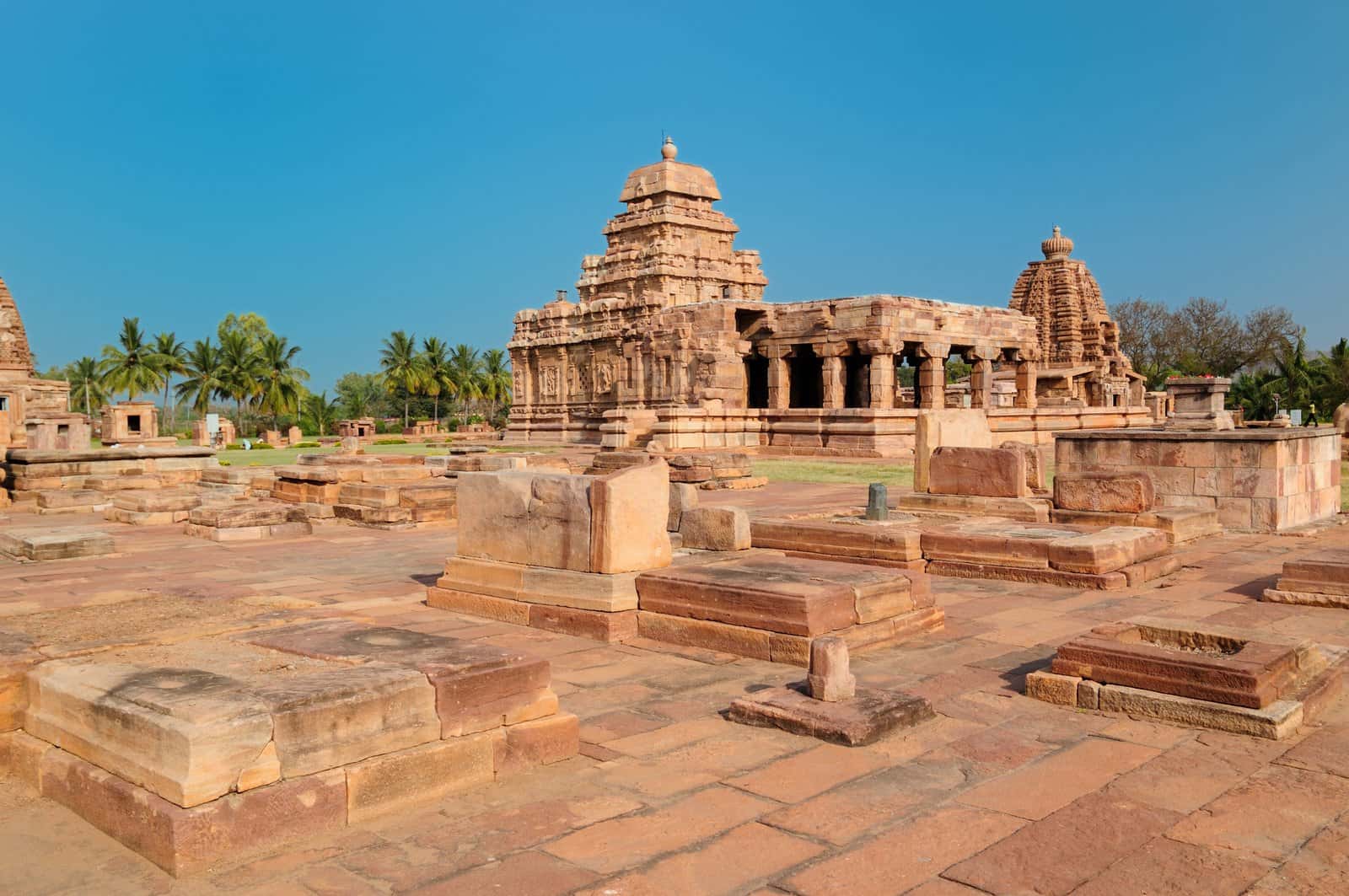
Pattadakal Travel Guide
The comfortable months are October to February , when the open, shadeless temple lawns are cool enough to enjoy. The great set-piece is the Chalukya Dance Festival in January...
When to visit Pattadakal, and the heat to plan around
The comfortable months are October to February, when the open, shadeless temple lawns are cool enough to enjoy. The great set-piece is the Chalukya Dance Festival in January. Summer here is fierce interior-Karnataka heat.
- October to February: cool and clearThe most comfortable window, pleasant by day and cool at night. The sites sit on open lawns with almost no shade, so these are the months when you can actually linger over the temples rather than hurry through the glare. January also brings the classical dance festival in the temple courtyards.
- March to June: fierce and shadelessHigh summer on the northern Karnataka plateau is harsh, and the unshaded temple lawns become hard going by late morning. If you must come then, be at the gates when they open, carry water and sun cover, and keep the middle of the day for a meal in Badami.
- June to September: green but stickyThe monsoon greens the Malaprabha valley and thins the crowds, but afternoons are humid and showers are unpredictable. The stone can be slippery and the light flat, so this is a trade-off rather than a first choice.
- Festival or quiet, decide firstThe January dance festival is a wonderful spectacle in a heritage setting, but rooms in Badami are scarcer then. A normal cool-season weekday is gentler and lets you have the temples almost to yourself in the early morning. Choose the experience you want before you book.
The Pattadakal Chalukya Dance Festival is timed by the Government of Karnataka and in 2026 is scheduled for about 14 to 20 January, with classical dancers performing in the temple courtyards. Those dates shift year to year, though, and are announced afresh each season, so treat about 14 to 20 January 2026 as expected rather than fixed and reconfirm the official dates on the Karnataka Tourism events calendar before you book flights or Badami rooms. Beware pages that quote a hard date as fact, since old festival dates are copied across the web every year.
How to reach Pattadakal
Pattadakal has no airport or railway of its own. Almost everyone comes through Badami, the little town about 20 km away that is the base for the whole Chalukya circuit.
- Via Badami, the nearest railhead and baseBadami is the nearest railway station and the town you sleep in, about 20 to 22 km from Pattadakal and roughly 30 to 40 minutes by road. It sits on the Hubballi to Solapur line, and from Badami frequent local buses and shared autos run out to Pattadakal and Aihole.
- Nearest airports: Hubballi and BelagaviHubballi (Hubli) airport is the closest useful airport at about 100 to 130 km, with flights from Bengaluru and Mumbai; Belagavi is a further option about 150 to 165 km away. From either you drive to Badami and use it as your base. There are no flights into Pattadakal itself.
- By train via Gadag or BadamiSmall Badami station handles the closest arrivals, but the bigger junction is Gadag, well connected to Hubballi, Bengaluru, Hospet and beyond. Many travellers train to Hubballi or Gadag, then drive the last stretch to Badami.
- By road on the heritage loopPattadakal pairs naturally with Hampi, about 140 km away, and with Bijapur (Vijayapura) to the north. A car with a driver is the easiest way to link Badami, Aihole and Pattadakal, and we can arrange one on a wider Karnataka itinerary.
Fly into Bengaluru or Mumbai, then take a domestic flight to Hubballi and drive to Badami, or train to Hubballi or Gadag. Pattadakal has no international flights of its own and sits deep in interior Karnataka.
Fly into Bengaluru or Mumbai, connect to Hubballi, then drive to Badami. The Chalukya circuit slots onto a wider Hampi and Karnataka heritage loop.
Train to Badami, Gadag or Hubballi, or drive from Hampi or Bijapur. Badami is the base, and the short hops to Pattadakal and Aihole are by local bus, shared auto or hired car.
The temples of Pattadakal, and how to read them
Pattadakal is nine Hindu temples and one Jain sanctuary on the Malaprabha river, and it rewards you far more once you understand it as a lesson in two rival architectural styles meeting in one place.
- Virupaksha Temple, the masterpieceThe grandest temple in the group, built around 740 CE by Queen Lokamahadevi to mark her husband King Vikramaditya II's victory over the Pallavas of the south. It is a fully southern Dravida-style temple with a stepped pyramidal tower and a monolithic Nandi pavilion facing it, and it later inspired the great Kailasa temple at Ellora.
- Mallikarjuna and SangameshwaraMallikarjuna, built by Vikramaditya's second queen, stands beside Virupaksha as its near-twin in the Dravida style. Sangameshwara is the oldest temple in the group, begun under an earlier king, and shows the Dravida vimana in an earlier, sturdier form.
- Papanatha and the Nagara templesPapanatha, set a little apart, is the largest of the northern Nagara-style temples, with a curvilinear shikhara tower and superb carved panels of the Ramayana and Mahabharata. Kashi Vishwanatha and Galaganatha nearby are further examples of the northern style set against their southern neighbours.
- The Jain temple and the whole ensembleA Jain sanctuary of a slightly later period completes the group. Walking the compact lawns you can see the two great traditions of Indian temple building, Nagara and Dravida, standing side by side, which is exactly why Pattadakal is a World Heritage Site.
Look at the towers. The northern Nagara temples (Kashi Vishwanatha, Galaganatha, Papanatha) have a curved, beehive-shaped shikhara that sweeps up to a point. The southern Dravida temples (Virupaksha, Mallikarjuna, Sangameshwara) have a stepped, pyramidal vimana that rises in clear tiers. Pattadakal is the one place the Chalukyas set these two rival styles side by side and began fusing them into what art historians call the Vesara style. Once you can tell a curved shikhara from a stepped vimana, the whole site reads like an open-air textbook, which no photo can give you and which is worth a guide.
Signature experiences around Pattadakal
Pattadakal is one stop on a three-site Chalukya circuit. These are the experiences people remember, and how to sequence them for light and heat.
- Read the temples with a guide at PattadakalThe single best thing to do here is walk the temple group slowly with a licensed guide who can show you the Nagara and Dravida styles and the carved epics on Papanatha. Signage is thin, so a guide, typically a few hundred rupees for a small group agreed at the gate, transforms the visit.
- The Badami cave temples and lakeBadami's four rock-cut cave temples, carved into a red sandstone cliff above the Agastya lake with the Bhutanatha shrines across the water, are the dramatic set-piece of the circuit. Give them a full morning, and climb early before the stone heats up.
- Aihole, the cradle of Chalukya architectureAihole, about 35 km from Badami, is where the Chalukyas experimented before Pattadakal, with the Durga temple and its unusual apsidal plan and dozens of early shrines. It pairs naturally with Pattadakal in a single day.
- The Chalukya Dance Festival, if your dates matchIf you visit in mid-January you may catch the classical dance festival, with Bharatanatyam, Kuchipudi, Kathak, Odissi and more performed against the floodlit temples. It is a rare chance to see the monuments alive at night; reconfirm the dates first.
- Sunrise photography at PattadakalThe best light on the sandstone temples is early morning and late afternoon, when the carving catches long shadows. Photographers should be at the gate when it opens, both for the light and to have the lawns quiet before tour groups arrive.
- Mahakuta and Banashankari nearbyIf you have extra time from Badami, the Mahakuta temple cluster and the Banashankari temple are quiet, atmospheric detours that most circuit visitors skip, and they round out the Chalukya story.
If you do only one thing slowly, make it Pattadakal at opening time with a guide. The temples are magnificent, but their meaning, the meeting of the northern and southern styles, is invisible unless someone shows you how to look. Give it an unhurried early morning while the lawns are cool and quiet, and the site opens up in a way that a rushed midday stop between other stops never allows.
Where to stay for Pattadakal, and how many days
You sleep in Badami, not Pattadakal. Badami is the base for the whole circuit, and two days is the honest length for Badami, Aihole and Pattadakal together.
- Base yourself in BadamiPattadakal and Aihole have almost no proper accommodation, so Badami is where you stay. It has the range of budget lodges, the state-run KSTDC hotel and a handful of mid-range and heritage-style properties, and it is the natural hub, about 20 to 22 km from Pattadakal and about 35 km from Aihole.
- Book the KSTDC and better hotels aheadThe state tourism hotel and the better Badami properties fill up, especially in the cool season and around the January festival, so book ahead. Budget lodges in the town centre are plentiful and cheap but plain.
- How many daysTwo days is the right length: one day for the Badami cave temples, fort and lake, and a second day pairing Aihole and Pattadakal. Doing all three in a single day, especially as a dash from Hampi, is possible but rushed and widely regretted by anyone who cares about the temples.
- Consider Hampi or Bijapur as neighboursMany travellers pair the Chalukya circuit with Hampi, about 140 km away, or with Bijapur (Vijayapura) to the north. If you are doing a wider Karnataka heritage loop, Badami is a comfortable two-night stop in the middle of it.
A common mistake is to search for hotels in Pattadakal or Aihole and find almost nothing. Both are essentially monument sites with tiny villages and little to no visitor accommodation, so all your nights are in Badami. Plan your days as return trips from Badami, and book your Badami room before you arrive, particularly in the cool season and around the dance festival when the town fills up.
Pattadakal costs and the three-ticket reality
The single thing to know about money here is that Pattadakal, Aihole and Badami are three separate tickets. Here is what each costs and a realistic daily budget, so nothing surprises you at the gate.
- Three separate entry ticketsPattadakal is about 40 rupees for Indian and SAARC nationals and about 600 rupees for other foreign nationals. Aihole is about 25 rupees for Indians and about 300 rupees for foreigners. The Badami cave temples are about 25 to 40 rupees for Indians. Children up to about 15 generally enter free. Buying online by scanning the QR code at each gate is usually a rupee or two cheaper than a paper ticket.
- Guides and parkingA licensed guide at Pattadakal is typically a few hundred rupees for a small group, agreed at the gate before you start. Parking outside is a nominal charge of about 30 rupees. These, with the tickets, are the only fixed costs of the day.
- A rough daily budgetExcluding your Badami room and long-distance transport, plan on about 1,000 to 1,500 rupees a day as a budget traveller using local buses, about 2,500 to 4,000 rupees mid-range with a hired car and guide across the sites, and more for a fully private-car heritage day with lunch.
- Cash and cardsCarry small cash for the three gates, the guide, parking and roadside eateries; UPI works in Badami hotels and bigger shops but the sites and small vendors run on cash. There are ATMs in Badami, so draw what you need before heading out for the day.
Many arrive expecting a single World Heritage pass and find three different tickets instead, one each for Pattadakal, Aihole and Badami, at three different prices. There is no combined ticket. Keep small notes ready for each gate, or use the QR-code online ticketing that is available at the entrances, and the only common friction of the day disappears. Foreign nationals in particular should note the higher rates, about 600 rupees at Pattadakal and about 300 at Aihole, when budgeting.
Practical logistics: getting between the sites, food and facilities
The small things that make a Chalukya-circuit day smooth, from moving between Badami, Pattadakal and Aihole to where to eat and what the sites do and do not have.
- Getting between the three sitesFrequent KSRTC and local buses and shared autos run from Badami to Pattadakal (about 20 to 22 km) and on to Aihole (about 35 km). Some buses tour Badami to Aihole via Pattadakal directly. For a full day covering both, a hired car or auto from Badami is the least stressful option.
- Food and waterThere is little food at the sites themselves, so eat in Badami and carry water and snacks. The heat and the open lawns dehydrate you quickly, so a full water bottle and a hat matter more here than at most monuments.
- Facilities on siteExpect a ticket office and basic toilets but very little shade and few shops. Wear sun protection and comfortable shoes for uneven ground. There is no left-luggage to rely on, so travel light for the day.
- SIM, signal and languageMobile coverage is generally fine in Badami and at the sites for calls and maps, but this is deep-interior Karnataka, so download offline maps as a backup. Kannada is the local language, Hindi and English are understood in the tourist trade, and a guide bridges any gap at the temples.
Safety, heat and staying well at Pattadakal
Pattadakal is a calm, low-hassle heritage site with little in the way of scams. The real risks are the sun and the heat on the open lawns, plus the usual small-town precautions.
- The heat is the main hazardThe temples sit on open, shadeless lawns, and from March to June the midday sun on the sandstone is punishing. Go at opening or in the late afternoon, wear a hat and sunscreen, carry water, and take the middle of the day for a meal in Badami. This single habit prevents most bad days here.
- Uneven stone and stepsThe temple platforms and the Badami cave steps are uneven and can be slippery in the monsoon. Wear proper shoes, take the cave climb slowly, and mind your footing on worn stone, especially with children or older travellers.
- Low scam and hassle levelsUnlike busier pilgrimage towns, Pattadakal and Aihole have little touting; the main friction is unofficial guides at the gate, so ask to see a licence and agree the fee and language before you start. Monkeys at Badami can grab food, so keep snacks out of sight there.
- General health basicsDrink bottled or filtered water, take the usual care with roadside food, and carry any personal medication since pharmacies are limited outside Badami. Keep the nearest hospital, in Badami or Bagalkot, noted for peace of mind.
This is a quiet, conservative interior-Karnataka region rather than a party or backpacker circuit, and most solo travellers, including women, find it low-hassle by day. Dress modestly, prefer daytime travel between the sites, and base yourself in a known Badami hotel. The main practical point is that transport thins out after dark, so plan to be back in Badami by evening rather than moving between the villages at night.
Pattadakal for every kind of traveller, and on access
Pattadakal suits some travellers more than others. Here is what it offers you, and the one tip that matters for each, including how a senior visits comfortably.
- History and architecture loversThis is one of the great sites in India for you, the clearest single place to see Nagara and Dravida styles side by side. Hire a guide or read up first, give it a slow morning, and pair it with Aihole to see where the Chalukyas experimented.
- PhotographersThe sandstone temples are superb in the low light of early morning and late afternoon. Be at the gate when it opens for the light and the quiet, respect any restrictions, and use the floodlit dance festival for a rare night shoot.
- Families with childrenYounger children may find a temple-only site less engaging than the dramatic Badami caves and lake, so lead with Badami and keep Pattadakal short and shaded-break friendly. Older children who like history will enjoy spotting the two tower styles.
- Senior travellers and on accessibilityVery doable with planning. The Pattadakal lawns are broadly flat, which helps, but there is no shade and the ground is uneven, so go early or late, carry water, and take breaks. Skip the steep Badami cave climb if it is too much, and hire a guide so you can see the site at a gentle pace without long walking.
- Backpackers and budget travellersEasy and cheap on public transport: base in a budget Badami lodge and use local buses and shared autos to reach Pattadakal and Aihole. A rewarding, low-cost two-day heritage stop between Hampi and the north.
- Architecture studentsBring a plan of the site and identify each temple's style and date; Pattadakal and Aihole together are effectively a field course in early Indian temple evolution, from the experiments at Aihole to the mature fusion here.
A suggested Badami, Aihole and Pattadakal itinerary
How to shape two unhurried days from a Badami base so you see the temples in good light and never in the worst of the midday heat.
- Day one: BadamiStart early at the Badami cave temples before the stone heats up, then the Bhutanatha temples by the lake and the fort. Break for lunch in Badami through the hottest hours, and use the late afternoon for the archaeological museum or Mahakuta nearby.
- Day two, morning: PattadakalBe at Pattadakal when it opens, roughly about 6 am to 6 pm are the gates, and walk the temple group with a guide while the lawns are cool and quiet. Give it two to three hours to read the Nagara and Dravida styles properly.
- Day two, afternoon: AiholeDrive on to Aihole, about 20 minutes from Pattadakal, for the Durga temple and the early Chalukya shrines. This is where the experiments that led to Pattadakal began, so seeing it second makes the story click into place.
- The one-day version, honestlyIf you only have a day, do Pattadakal at opening and Aihole straight after, and accept you will skip or rush Badami. Trying to do all three in a single day from Hampi means a lot of driving and temple fatigue; two days is far more rewarding.
The thing that breaks a Chalukya-circuit day is not opening hours, since the sites are open all week roughly about 6 am to 6 pm, but the sun. The temples stand on open lawns with no shade, so build every day so the walking falls in the cool early morning or the late afternoon and the shadeless midday goes to lunch and rest in Badami. Do that and you will remember the carving and the light rather than the glare and the thirst.
The real questions travellers ask about Pattadakal
Straight answers to the questions that come up again and again on traveller forums, so you arrive already knowing the score.
- How many days do I need?Two days from a Badami base is ideal: one for the Badami caves, lake and fort, and one pairing Aihole and Pattadakal. One day is possible if you focus on Pattadakal and Aihole and skip or rush Badami, but two days is what most heritage travellers wish they had given it.
- Can I do it in a day from Hampi?You can, and many do, but it is about 140 km each way and a long, tiring day, and travellers who cram Badami, Aihole and Pattadakal into one Hampi day trip often regret the rush and the temple overload. If you love the temples, base in Badami instead.
- Where do I stay?In Badami. Pattadakal and Aihole have almost no accommodation, so all your nights are in Badami, which has budget lodges, the KSTDC hotel and a few mid-range properties. Book ahead in the cool season and around the January festival.
- Is it one ticket or three?Three separate tickets, one each for Pattadakal (about 40 rupees for Indians, about 600 for foreigners), Aihole (about 25 and about 300) and Badami (about 25 to 40 for Indians). There is no combined pass, so keep small cash or use the QR ticketing at each gate.
- Is it worth it, or only for history buffs?If you like history and architecture, Pattadakal is world-class and unmissable. If you do not, it can feel like a lot of old temples, so lead with the more dramatic Badami caves and take a guide so the meaning of the place comes alive.
- What are the timings, and is it closed any day?The Pattadakal monuments are open on all seven days of the week, roughly about 6 am to 6 pm, broadly sunrise to sunset, with no weekly closure day. Because there is no shade, aim for the early morning or the late afternoon rather than the midday heat.
Planning Pattadakal from abroad
Pattadakal is the finest open-air lesson in early Indian temple architecture anywhere, deep in interior Karnataka. A little preparation on the base town, the airports and the heat makes it straightforward.
- Know you sleep in Badami, not PattadakalPattadakal and Aihole are monument sites with almost no accommodation, so you base in Badami and make day trips out. Book a known Badami hotel before you arrive, since this is not a place to hunt for a room on the ground.
- Two airports, then a driveThere is no airport at Pattadakal. Fly via Bengaluru or Mumbai to Hubballi, about 100 to 130 km from Badami, or use Belagavi about 150 to 165 km away, then drive. Trains reach Hubballi, Gadag or small Badami station on the Hubballi to Solapur line.
- Budget for the foreign-national feesForeign visitors pay more at the gates, about 600 rupees at Pattadakal and about 300 at Aihole, versus a few tens of rupees for Indians, and Badami caves are separate again. Carry small cash or use the QR ticketing, and note there is no combined pass.
- Pair it with Hampi on a Karnataka loopThe Chalukya circuit slots naturally onto a wider heritage trip with Hampi, about 140 km away, and Bijapur to the north, or onward towards Goa. Give Badami two nights and read up on the Nagara and Dravida styles, or take a guide, so the temples mean something.
Money, connectivity and timing for foreign visitors
The practical basics an overseas traveller needs for a deep-interior heritage cluster: cash, a SIM, the heat, and how many days to give it on a wider India trip.
- Carry cash for the gatesThe three site tickets, the guide, parking and roadside food are cash or UPI, and foreign cards are little use at the gates. Draw cash at a Badami ATM before your day out, and keep small notes for each of the three entrances.
- Get a SIM at the arrival airportPick up an Indian tourist SIM or an eSIM when you land in Bengaluru or Mumbai rather than in a small interior town. Coverage in Badami and at the sites is fine for maps and calls, but download offline maps as a backup for the drives.
- Time it to the cool seasonOctober to February is the comfortable window for the shadeless sites; March to June is genuinely hard in the heat. If you want the January dance festival, plan around it and book Badami rooms well ahead, and reconfirm the festival dates officially.
- How long to give it on a bigger tripOn a wider Karnataka trip, two nights in Badami is the right weight for the Chalukya circuit, comfortably paired with three or four days at Hampi. Enough to read Pattadakal and Aihole properly and do the Badami caves without rushing.
Pattadakal is not a first-timer's easy city break; it is a rewarding detour for travellers who care about history and are happy in deep-interior India with a small-town base. Slot it after Hampi, give Badami two nights, take a guide, and treat the heat with respect, and the meeting of the northern and southern temple styles here becomes one of the most memorable things you see in the whole country. Many say it is the site that finally made Indian architecture make sense to them.
The one place where north and south India built together
For most of its history, Indian temple building split into two great traditions: the Nagara style of the north, with its curved, beehive-shaped shikhara sweeping to a point, and the Dravida style of the south, with its stepped, pyramidal vimana rising in clear tiers. At Pattadakal, in the 7th and 8th centuries, the Chalukya kings did something rare. On one small stretch of the Malaprabha river, as a royal coronation town rather than a city, they built temples in both styles side by side, southern Virupaksha and Mallikarjuna next to northern Kashi Vishwanatha and Galaganatha, and began fusing the two into a hybrid that art historians call the Vesara style. That deliberate meeting of north and south in stone is why UNESCO inscribed the Group of Monuments at Pattadakal as a World Heritage Site in 1987, under criteria (iii) and (iv). It is not the story of one temple; it is the story of a moment when the whole of India's architecture stood in one courtyard.
Planning a Pattadakal trip?
Our Karnataka travel experts plan your full journey for you: route, hotels, darshan timings and transport. You get a free day-by-day plan and an exact quote on WhatsApp, usually within a few hours. No payment is needed to get your plan.