Yellapur Travel Guide
The waterfalls run on the monsoon calendar. The best all-round window is October to November , just after the rains, when the falls are still full and the roads are easier. Come...
When to visit Yellapur, and why the season decides everything
The waterfalls run on the monsoon calendar. The best all-round window is October to November, just after the rains, when the falls are still full and the roads are easier. Come in the monsoon only if you accept leeches and rough access.
- October to November: the sweet spotRight after the southwest monsoon the falls are still strong, the forest is a deep green, the sky is clearing and the approach roads have dried enough to be comfortable. If you can pick only one window, pick these post-monsoon weeks. This is when Magod and Sathodi look their best without the hardship of the rains.
- December to February: pleasant and easyCool, dry and comfortable for the drives and the short walks, with the falls at a moderate but still lovely flow. Mornings can be misty in the Ghats, so start a little later and you will still have plenty of daylight for two or three falls.
- June to September: full falls, hard accessThe monsoon gives the most thunderous water, but the forest is thick with leeches, the rocks are slippery, and rough forest roads and the odd landslide can make the falls hard or briefly impossible to reach. Come only if you are prepared for wet, muddy, cautious travel and check local road conditions the same day.
- March to May: thinning waterThe plains heat up and the smaller streams shrink, so by late spring Sathodi and the lesser falls can be disappointing. Magod, on the larger Bedti river, holds up better than most, but this is the weakest season for a waterfall trip.
There is no perfect answer. The monsoon from about June to September gives the fullest, most dramatic waterfalls in all of Uttara Kannada, but it is also when the leeches are worst, the rocks are most slippery, and the forest roads are at their roughest, with a real chance a route is briefly cut by rain or a slip. If you want the spectacle, plan for wet-weather travel, closed shoes and a same-day check on the roads. If you want comfort and still-full falls, come in October or November instead.
How to reach Yellapur
Yellapur has no airport or railway of its own. Almost everyone comes through Hubballi (Hubli) by road, or up from the Goa and coastal Karnataka side.
- Via Hubballi (Hubli), the practical gatewayHubli is the nearest big town with an airport and a major railway station, both roughly 71 to 80 km away, about 2 hours by road. Buses run frequently from Hubli, or you can hire a taxi. For most travellers, fly or train into Hubli and drive the rest is the simplest plan.
- By trainThere is no station in Yellapur. Hubli railway station, about 71 km away, is the main railhead, and Alnavar Junction, about 60 km away, is the nearest junction. On the seaward side, the Konkan Railway stations at Ankola and Kumta are the closest railheads if you are coming up from the coast.
- By roadYellapur sits on National Highway 52 (old NH-63), the Hubballi to Ankola road, so it is an easy drive from Hubli, Dharwad, Sirsi and Dandeli. Karnataka state buses connect it well within the district. Once here you will still need a car to reach the falls, which are scattered on forest roads.
- Nearest airportsHubli Airport, about 73 to 80 km away, has flights to Bengaluru, Mumbai and other cities and is the closest. For a coastal trip, the Goa airports at Dabolim or Mopa are the other option, giving you a scenic Ghats drive in. There are no flights into Yellapur itself.
Fly into a major hub such as Mumbai or Bengaluru, then take a domestic flight to Hubli and drive about 2 hours to Yellapur. Many overseas visitors pick it up on a wider Goa and coastal Karnataka trip.
Fly into Goa or Bengaluru, then reach Yellapur by road through the Western Ghats, or via Hubli. It sits easily between Goa, Dandeli and the Karnataka coast.
Train or fly to Hubballi and drive over, or make it a road trip from Bengaluru, Goa or Mangaluru. The Ghats drive in from any direction is part of the pleasure.
The waterfalls, the viewpoint and the lake
Yellapur is really its waterfalls and forest viewpoints. Magod, Sathodi and Jenukallu Gudda are the headline three, with Kavadikere lake and a few remoter falls for those with more time.
- Magod Falls, the two-step giantAbout 16 to 19 km from town near Magod village, the Bedti river drops in two distinct leaps from a height of about 650 ft into a wooded ravine. A built walkway with handrails runs from the parking area to the viewpoint, so you can enjoy the whole spectacle without a hard climb. This is the one fall families and seniors can see easily.
- Sathodi Falls, the Mini NiagaraAbout 25 to 32 km from Yellapur toward the Ganeshgudi forest, several small streams meet near Kallaramane Ghat and drop about 15 m across a broad, curtain-like face, which earns it the Mini Niagara nickname. You can walk down to the base, where there is usually a calm pool, and the stream flows on into the Kodasalli Dam backwaters on the Kali river.
- Jenukallu Gudda, the sunset viewpointAbout 17 km from town at Magod village, the Honey-Stone Hill is a rocky outcrop with a wide panorama over the Ghats valleys, best in the last hour of light. It sits close to Magod Falls, so the two go together in one half-day. The edge is open and unrailed, so keep well back and mind children.
- Kavadikere lake and remoter fallsKavadikere, a large lake of about 62 acres roughly 20 km out with an old Durga temple on its bank, is a quiet birdwatching and picnic stop near the Magod loop. With more time and a local guide, remoter falls such as Vajra (Devkar) and, from the Sirsi side, Shivaganga reward the effort, but their roads are rough.
These are natural sites in living Western Ghats forest and plantation country, not landscaped parks. Carry your litter out, do not play loud music at the viewpoints, keep to the marked paths and walkways, and give way to villagers and their vehicles on the narrow roads. Much of this belt sits near the Kali Tiger Reserve, so treat the forest with the care a wild place deserves.
Signature experiences around Yellapur
Beyond ticking off waterfalls, these are the experiences worth slowing down for, and the effort and season each one needs.
- Stand at the Magod viewpoint after the rainsIn October the Bedti is still in full spate, and the two-step drop with the roar rising out of the ravine is the most memorable thing you will do here. Because of the railed walkway you can take it in slowly, with no scramble, which is why it suits every kind of traveller.
- Bathe in the pool below SathodiWhen the flow has eased after the monsoon, the walk down to the base of Sathodi and a dip in the calm pool is a lovely reward. Go carefully on the wet rock, keep away from the main force of the water, and never get in during heavy monsoon flow when the current is strong.
- Catch sunset from Jenukallu GuddaArrive in the last hour before dusk, find a safe spot back from the edge, and watch the layered Ghats hills fade into the haze. It is a short, easy stop that pairs perfectly with a late-afternoon visit to Magod nearby.
- Walk an areca and spice plantationYellapur is areca-nut and spice country, and a walk through a working plantation, sometimes arranged through a homestay, shows you how areca, pepper, cardamom and banana grow together. It is a gentle, green counterpoint to the drama of the falls.
- Add a Dandeli wildlife dayThe forests here run into the Kali Tiger Reserve belt around Dandeli, about an hour or so away, where you can add a river or jungle safari. Pairing Yellapur waterfalls with a Dandeli wildlife day makes a fuller two or three day Uttara Kannada trip.
- Simply drive the GhatsSome of the pleasure here is the driving itself, forest tunnels of green, plantation villages and sudden valley views. Keep your speed low, both for the hairpins and for the wildlife, and let the journey between falls be part of the day.
If you do only one thing slowly, make it Magod just after the monsoon. Give yourself an unhurried half-hour on the walkway to watch the light shift on the two-step drop, then carry on to Jenukallu Gudda for sunset. Those two, ten minutes apart, are what people remember about Yellapur long after the smaller falls blur together, and both are easy to reach and free to enjoy.
Where to stay in Yellapur, and how long to give it
The town has only a few simple lodges. Stay in Yellapur for an early start on the falls, or base at Dandeli, Sirsi or Hubli for more comfort. One full day covers the main falls.
- Yellapur town: basic but well placedThe town has a handful of simple hotels and lodges from about 800 to 1,500 rupees a night. They are plain and functional rather than smart, but staying here means you are closest to the falls for an early morning start before the light gets harsh and the day-trippers arrive.
- Homestays and plantation staysAround the town and in the surrounding areca country are homestays and plantation stays from about 1,500 to 3,500 rupees, often with home food and a plantation walk. These are the most characterful way to stay near Yellapur, but there are only a few, so book well ahead.
- Dandeli, Sirsi or Hubli as a comfortable baseFor more choice, resorts and better hotels, many travellers base at Dandeli, Sirsi or Hubli, each within an hour or two, and day-trip to the falls. This is the easy option if you want a pool, a wider dinner choice or a family-friendly resort.
- How many daysOne full day is enough to see Magod, Jenukallu Gudda, Kavadikere and Sathodi at a relaxed pace. Add a second day for a plantation walk, the remoter falls or a Dandeli wildlife safari, which turns a quick stop into a proper Western Ghats break.
Yellapur is a working forest town of about twenty thousand people, not a hill resort. Rooms are simple, dinner options in the town are limited and close early, and the real luxury is the forest, not the lodging. If you want resort comfort, base at Dandeli or Sirsi and drive in. If you want to be first at the falls at dawn, take a plain room in town and enjoy the quiet.
Yellapur costs and a realistic day budget
Yellapur is easy on the wallet. The falls are free to enter, and the main cost is the car you need to link them.
- Getting in and aroundA state bus from Hubli to Yellapur is cheap, about 100 to 150 rupees for the roughly 2 hour ride. But the falls have no public transport to them, so the real cost is a full-day taxi to link Magod, Jenukallu, Kavadikere and Sathodi, usually about 3,000 to 4,500 rupees, best agreed as a fixed day rate in advance.
- The free thingsEntry to the natural falls and the Jenukallu viewpoint is free, and so is the walk to Kavadikere lake. There may be a small parking or two-wheeler charge at some points, but there are no big ticket prices here, which keeps a Yellapur day genuinely cheap once you have your transport sorted.
- Where to stay and eatA simple town room runs about 800 to 1,500 rupees and a homestay about 1,500 to 3,500 rupees. Food is plain, hearty and inexpensive Uttara Kannada vegetarian fare, so meals cost little. Budget most of your money for the car and keep the rest for the odd tea and snack stop.
- Carry cashATMs are few and mobile signal is patchy in the forest, so draw enough cash in Hubli or Yellapur town before you head out to the falls. Small vendors, parking attendants and tea stalls all run on cash, and you do not want to be caught short deep in the Ghats.
Practical logistics: driving, fuel, food and signal
The small things that make a Yellapur day smooth, from fuelling up before the forest roads to food, water and the patchy phone signal.
- Fuel and start earlyFill your tank in Yellapur town or Hubli before you set out, as fuel stops are scarce on the forest roads. Start early so you finish the scattered falls in daylight, since the roads are unlit and lightly travelled after dark.
- Food and waterThe food here is simple, tasty Uttara Kannada vegetarian cooking. Eat a proper breakfast in town, carry water and a few snacks, because there is little to buy at the viewpoints themselves, and plan your main meal back in town.
- Signal, cash and mapsMobile coverage drops out in the forest, so download your maps offline, tell your lodge your rough plan, and carry cash. A local driver who knows the falls and the current road conditions is worth more than any app out here.
- Language and courtesyKannada is the local language, with Hindi and some English understood in the tourist and plantation trade. A smile and a few polite words go a long way in these villages, and always ask before photographing people or entering plantation land.
Safety at the falls: water, leeches and roads
Yellapur is a gentle, low-crime place, so the real risks are natural: fast water at the falls, leeches and slippery rock in the rains, and rough unlit forest roads.
- Respect the waterNever wade or swim near the lip of a high fall such as Magod, where the current and slick rock are dangerous. A dip in the calm pool below Sathodi is fine once the monsoon flow has eased, but stay away from the main force of the water and out of the river entirely in heavy rain.
- Leeches in the wet monthsFrom the monsoon into the early post-monsoon the forest floor has leeches. Wear closed shoes and long socks, carry a little salt, tobacco or a leech repellent, and check your feet and ankles after each stop. They are harmless but unpleasant, and being ready takes the worry out of the walk.
- Slippery rock and open edgesAll wet rock near the falls is slippery, and viewpoints such as Jenukallu Gudda have open, unrailed edges. Wear shoes with grip, keep well back from any drop, and hold on to children the whole time. Most accidents here come from a slip near the water, not from anything else.
- Roads, weather and daylightThe forest roads are narrow, winding and unlit, and in the monsoon they can be muddy or briefly blocked by a slip. Check the day's conditions locally, do not attempt the remoter falls in heavy rain, and plan to be back on the main road before dark.
Uttara Kannada is a calm, low-crime part of Karnataka, and the villages are welcoming. The sensible cautions are about the setting rather than people: do not go alone to a remote fall, tell someone your plan, avoid the forest roads after dark, and hire a known local driver rather than an unvetted one. With those simple steps, a Yellapur trip is one of the gentler nature outings in the state.
Yellapur for every kind of traveller, and on access
Yellapur suits nature lovers most of all, but there is a way in for families, seniors, photographers and road-trippers too, and knowing which fall fits whom makes all the difference.
- Couples and nature loversQuiet, green and uncommercial, this is a place to slow down: the roar of Magod after the rains, a sunset from Jenukallu Gudda, and a plantation homestay dinner. An overnight lets you catch the falls in the soft early light before anyone else arrives.
- Families with childrenMagod is the star for families, thanks to the railed walkway that lets everyone see the falls safely. Keep small children firmly in hand at the open Jenukallu edge and near any water, and choose the calmer post-monsoon months over the slippery rains.
- Senior travellers and on accessVery doable with the right choices. Magod's built walkway means seniors can enjoy the headline fall with little effort, while Sathodi's scramble to the pool is better skipped if walking is hard. Base in a comfortable Dandeli or Sirsi hotel, hire a car with a good driver, and keep the day short and unhurried.
- Photographers and birdwatchersThe two-step drop at Magod, the layered hills at Jenukallu sunset, and the birdlife around Kavadikere lake are the prizes. Go right after the monsoon for full water and rich green, carry a wide lens for the falls and a longer one for birds, and mind your footing on wet rock.
- Backpackers and solo travellersBuses reach the town cheaply, but the scattered falls really need shared transport or a hired vehicle. Team up with others at your lodge to split a day taxi, and use Yellapur as a green, low-cost pause on a wider Karnataka route.
- Road-trip groupsThis is prime road-trip country between Goa, Dandeli, Sirsi and the coast. With your own vehicle you can link the falls at your own pace, add a Dandeli safari, and enjoy the Ghats driving that is half the fun of the region.
A suggested Yellapur itinerary
How to shape one full day so you link the scattered falls sensibly and catch Jenukallu Gudda for sunset, with a second day if you want the forest at a slower pace.
- Day one, morningStart early from Yellapur town, fuel up, and drive out to Sathodi Falls first, while the light is soft and the day is cool, with time to walk down to the base pool. It is the furthest of the main falls, so getting it done early keeps the rest of the day relaxed.
- Day one, middayLoop back toward Magod village, stopping at Kavadikere lake for a quiet break and some birdwatching, and have a simple lunch. Keep the hot middle of the day for the easy, shaded stops rather than any hard walking.
- Day one, late afternoon and sunsetReach Magod Falls in the late afternoon and take your time on the railed walkway, then move the short distance to Jenukallu Gudda for sunset over the Ghats. End the day back in town for dinner before the roads go dark.
- Day two, if you have itGive a second day to a plantation walk, a Dandeli wildlife safari, or a rougher push to a remoter fall like Vajra with a local guide. A second day is what turns a tick-the-box waterfall run into a real Western Ghats experience.
The single thing that breaks a Yellapur plan is running out of daylight on unlit forest roads, or arriving in the wrong season to thin falls. Build the day so the furthest fall comes first and sunset finds you at Jenukallu Gudda near the main road, and time the whole trip for October to November, or the drier winter, when the falls are full and the roads are kind.
The real questions travellers ask about Yellapur
Straight answers to the questions that come up again and again on trip-planning and review sites, so you arrive knowing the score.
- Is Yellapur worth visiting?Yes, if you love waterfalls and quiet forest and you come in the right season. It is not a monument town or a nightlife stop; it is green, uncommercial and calm. Come after the monsoon for full falls, and it rewards you. Come in dry late spring expecting drama and you may be underwhelmed.
- Monsoon or after?The monsoon gives the fullest falls but the hardest access, with leeches, slippery rock and rough roads. October to November is the honest sweet spot: still-strong water, easier roads and far fewer leeches. Winter is pleasant with a gentler flow.
- Can I swim at the falls?A dip in the calm pool below Sathodi is fine once the monsoon flow has eased. Do not swim near the lip of Magod or any high fall, and stay out of the water entirely during heavy rain when the current is dangerous.
- How many falls in one day, and do I need a car?You can comfortably see Magod, Jenukallu, Kavadikere and Sathodi in one full day, but you need a car, because there is no public transport to the viewpoints. A shared or hired day taxi is the standard way to link them.
- Which fall is easiest for parents or children?Magod, without question. Its built walkway with handrails lets seniors and young children reach the viewpoint safely and with little effort. Sathodi asks for a rocky scramble, so it suits the more able-bodied.
- Where should I stay?Stay in Yellapur town for the earliest start on the falls, in a plantation homestay for character, or in Dandeli, Sirsi or Hubli for more comfort and a wider dinner choice. Book ahead either way, as good rooms near the town are few.
Planning Yellapur from abroad
Yellapur is the quiet, green side of Karnataka and pairs naturally with Goa, Gokarna and Dandeli. A little preparation on transport, season and lodging makes a small forest town easy.
- You will need a car and a driverThis is not a place you walk or bus around. Fly into Goa or Hubli via a major hub, then hire a car with a driver who knows the forest roads and the falls. It is the single most important thing to arrange, and it turns a tricky small-town trip into an easy one.
- Come for the season, not just the placeThe waterfalls run on the monsoon calendar, so time your visit for October to November for full falls and comfortable roads. Arriving in dry late spring means thin water, so the season matters more here than at a fort or a beach.
- Pair it with Goa and coastal KarnatakaYellapur fits beautifully between Goa, Gokarna, Dandeli and the Karnataka coast. Many overseas and NRI visitors add a day or two of Ghats waterfalls to a beach and temple trip, driving up through the forest for a complete change of scene.
- Expect simple, wholesome comfortsLodging is basic in the town and more comfortable at Dandeli or Sirsi, the food is plain vegetarian Uttara Kannada fare, and the pleasure is the forest, not the facilities. Come for the green calm and the falls, and the simplicity becomes part of the charm.
Money, connectivity and timing for foreign visitors
The practical basics an overseas traveller needs for a remote Ghats town: cash over cards, a SIM sorted early, patchy forest signal, and how many days to give it on a wider trip.
- Carry cash, expect few cardsThe falls, small vendors, parking attendants and tea stalls all run on cash, and ATMs are few once you leave Hubli or Yellapur town. Draw enough cash before you head into the forest, and keep small notes for parking and snacks.
- Get a SIM at the airportPick up an Indian tourist SIM or an eSIM when you land in Goa, Bengaluru or Mumbai rather than hunting for one in a small town. Even then, expect coverage to drop out in the forest, so download offline maps before you set out.
- How long to give itOn a wider Goa and Karnataka trip, one to two days in Yellapur is the right weight: one full day for the main falls, and a second if you want a plantation stay or a Dandeli safari. It is a green pause, not a whole holiday on its own.
- Time it to the waterOctober to November is the comfortable window with full falls. If you can only come in winter, the falls are gentler but the trip is still lovely and the roads are easy. Avoid dry late spring if the waterfalls are your main reason to come.
Yellapur is an unusually gentle, uncommercial corner of India: small, green, low-crime and slow. It works best as the forest chapter of a bigger Karnataka trip, slotted after Goa or Gokarna, with a car and driver arranged in advance and your days timed to the post-monsoon water. Come expecting simple comforts and wild beauty rather than polish, and it becomes the calm, memorable part of the journey.
Two rivers, two very different waterfalls
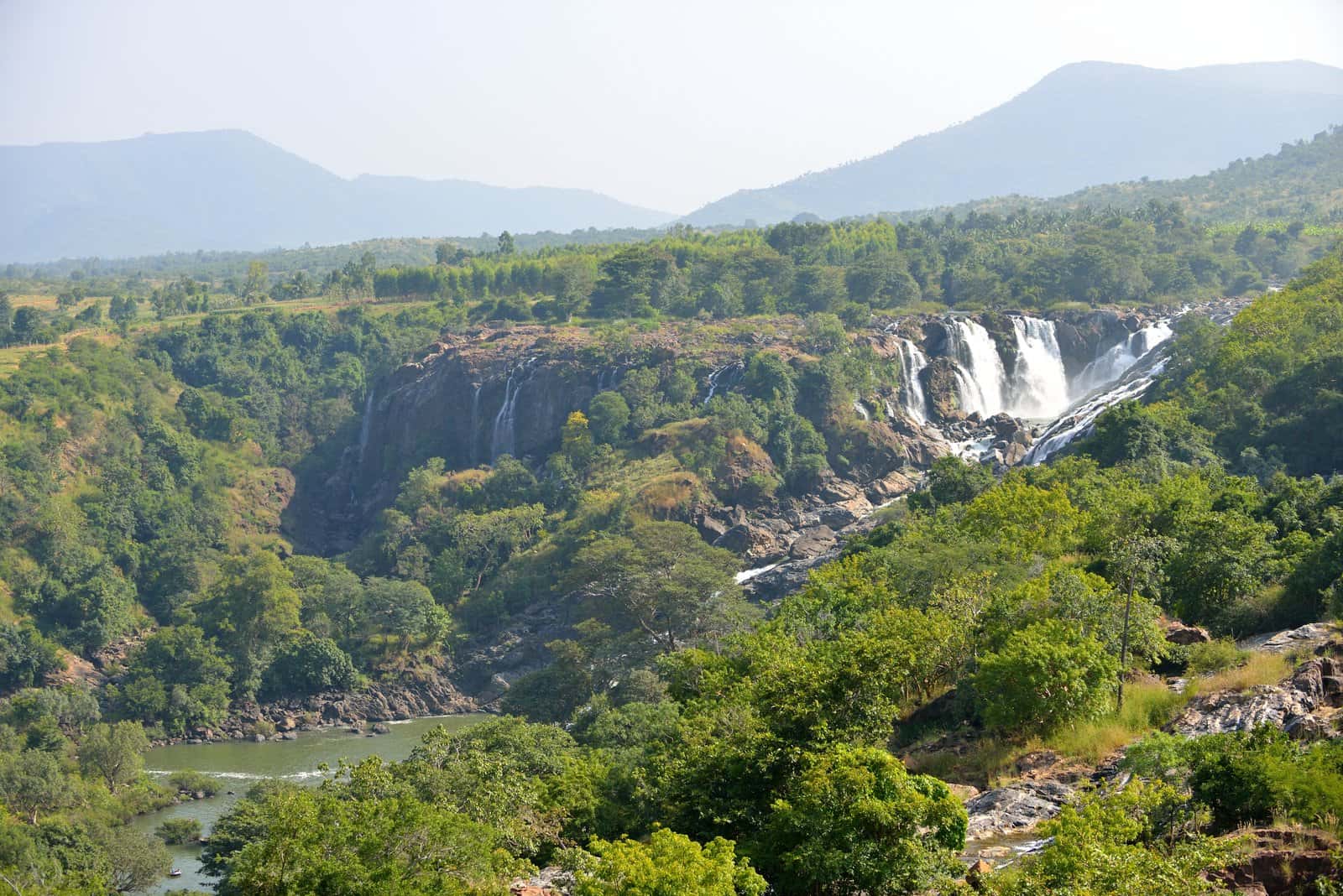
The Yellapur country is defined by its rivers as much as its forest. At Magod, the Bedti (also written Bedthi) gathers itself and leaps twice off the edge of the Ghats, falling about 650 ft in two clean steps into a ravine so wooded you hear the water before you see it. A short drive away, a scatter of nameless streams meets near the Kallaramane Ghat and spreads into the broad, gentle curtain of Sathodi, the little Niagara, before flowing on into the backwaters of the Kodasalli Dam on the Kali river. One river throws itself off a cliff; the other slides wide and easy over the rock. Stand at both in the same day, just after the monsoon, and you understand why people who love waterfalls keep coming back to this quiet taluk in North Canara.
Planning a Yellapur trip?
Our Karnataka travel experts plan your full journey for you: route, hotels, darshan timings and transport. You get a free day-by-day plan and an exact quote on WhatsApp, usually within a few hours. No payment is needed to get your plan.