Ernakulam Travel Guide
The comfortable window is October to March , dry and pleasant. The southwest monsoon from about June to September is wet but green and cheaper, and April to May is hot and humid.
When to visit Ernakulam and Kochi, and the monsoon question
The comfortable window is October to March, dry and pleasant. The southwest monsoon from about June to September is wet but green and cheaper, and April to May is hot and humid.
- October to March: the easy seasonThe dry, pleasant months, warm by day and comfortable in the evening, are the best time for the harbour crossings, the Fort Kochi walks and a day trip to the backwaters. December and January are the peak, so book rooms a little ahead, especially in Fort Kochi.
- April and May: hot and humidPre-monsoon heat on the coast is sticky and tiring, with high humidity. The sights are all still open, but plan the outdoor walking for the early morning and the late afternoon and keep the middle of the day for a cafe, a museum or a rest.
- June to September: the monsoonThe southwest monsoon brings heavy, dramatic rain. It is the lush, green, low-season time with lower room rates and the traditional Ayurveda treatment season, but boat services and outdoor plans can be disrupted, so keep the itinerary flexible and carry good rain gear.
- Onam and the festival calendarOnam, Kerala's grand harvest festival, usually falls in August or September and fills the state with feasts, flower carpets and, near Kochi, vibrant cultural events. Dates follow the Malayalam calendar and shift each year, so check the current year's dates if you want to plan around it.
Most travellers pair Kochi with Munnar in the hills and Alleppey in the backwaters, and the October to March window is best for all three at once. If you come in the monsoon, the hills can be misty and leech-prone and houseboat cruising is quieter, so weigh the lower prices and the green beauty against the disruption. Whatever the month, build a little slack into the plan, because a wet afternoon in Kochi is easily spent in a heritage cafe or a museum rather than out on the water.
How to reach Ernakulam and Kochi
Cochin International Airport at Nedumbassery is the gateway, about 25 to 30 km out. Ernakulam has two main railway stations and good road links from across South India.
- By air, via Cochin International AirportCochin International Airport (CIAL) at Nedumbassery is about 25 to 30 km from Ernakulam city, roughly 45 to 75 minutes by road depending on traffic. It has wide domestic and international connections, including Gulf routes used by Kerala's large overseas community, and is famously the world's first fully solar-powered airport.
- Airport to city transferA CIAL prepaid taxi to Ernakulam costs about 800 to 1,200 rupees with fares fixed at the counter, while Ola and Uber app cabs run about 600 to 1,000 rupees, more at surge times. The Kochi Metro does not yet reach the airport, so plan a road transfer; the nearest metro stop is Aluva, about 12 to 15 km away.
- By train, to ErnakulamErnakulam has two main stations, Ernakulam Junction (South) and Ernakulam Town (North), both well connected across India, plus Aluva on the metro line. Book on IRCTC ahead in season. From the station an auto, app cab or the metro gets you across the mainland easily.
- By roadErnakulam sits on the main South India road network with KSRTC and private buses from across Kerala and neighbouring states. It is the practical hub from which to launch the Munnar and Alleppey loop, and we can arrange a car with an experienced driver for the wider Kerala circuit.
Fly into Cochin (COK) directly where routes allow, or via a Gulf or Indian metro hub. Cochin is a full international airport, so most overseas visitors to Kerala land here rather than transiting a far-off city.
Cochin has dense direct connections to the Gulf and good links to Southeast Asia, reflecting Kerala's large expatriate community. For many NRI travellers it is a direct, easy arrival straight into the state.
Fly or take a train to Ernakulam, the rail hub, from Chennai, Bengaluru, Mumbai, Delhi and across the south. From here the metro, ferries and onward buses make the rest of a Kerala trip simple.
Mainland Ernakulam versus Fort Kochi, and how to cross
The one thing to understand before you arrive: Ernakulam is the mainland city where you sleep and shop, while the famous Fort Kochi and Mattancherry heritage sits across the harbour, reached by ferry, water metro or road.
- What is ErnakulamErnakulam is the bustling mainland heart of Kochi, the commercial city of MG Road, Marine Drive, malls, hotels, the two big railway stations and the metro. This is where most arrivals land and most onward trips begin. It is convenient and good value, but the colonial postcard scenes are not here.
- What is Fort Kochi and MattancherryAcross the harbour on a separate peninsula sit Fort Kochi, with the Chinese fishing nets, St Francis Church and the boutique streets, and Mattancherry next to it, with the Dutch Palace and Jew Town. This is the heritage core, about 15 km and roughly 30 to 40 minutes from Ernakulam by road.
- Crossing by ferry or water metroThe atmospheric way over is by boat. The cheap SWTD public ferry from Ernakulam Main Jetty to Fort Kochi costs only about 6 to 8 rupees and takes about 20 to 25 minutes; the modern air-conditioned Kochi Water Metro is about 40 rupees from High Court terminal to Fort Kochi and doubles as a harbour cruise.
- Crossing by road or metroBy car or auto it is the 15 km loop around the harbour, about 30 to 40 minutes. The Kochi Metro train is fast and cheap along the mainland but does not cross to Fort Kochi, so the last leg to the heritage peninsula is always a boat, a bus or a cab.
Most guides write Kochi, Cochin, Ernakulam and Fort Kochi as if they were one place, and travellers arrive expecting the fishing nets to be outside their Ernakulam hotel. They are not. Decide first whether you want to sleep on the mainland (convenient, better value, well connected for onward trips) or in Fort Kochi (heritage, boutique, slow), then plan your days around one easy harbour crossing rather than several. Getting this clear before you book saves the most common wasted half-day in Kochi.
Getting around: the metro, the water metro and the ferries
Kochi has three useful public networks: the elevated Kochi Metro train along the mainland, the modern electric Water Metro across the harbour, and the cheap old SWTD ferries. Here are the current fares.
- The Kochi Metro trainThe elevated KMRL line runs from Aluva to Thripunithura through Ernakulam, the fast, cheap way along the mainland. Fares are zone-based from about 10 rupees up to about 60 rupees, a single ticket is valid for roughly 120 minutes to exit, and a Kochi1 smart card gives about a 20 percent discount per ride.
- The Kochi Water MetroThe newer electric, air-conditioned ferry network charges about 20 rupees minimum to about 40 rupees maximum, with High Court terminal to Fort Kochi about 40 rupees. It is comfortable, scenic and the best-value harbour cruise in the city, though Vyttila to Fort Kochi is not direct and needs a change at High Court.
- The cheap SWTD public ferryThe old State Water Transport Department ferries from Ernakulam Main Jetty are the bargain crossing: about 6 to 8 rupees one way to Fort Kochi, around 20 to 25 minutes, roughly every 15 to 30 minutes from about 6 am to about 9 pm. Fares change, so check the counter, but this is the local's way over.
- Autos, app cabs and busesAuto-rickshaws and Ola or Uber cabs cover the rest. Insist on the meter or agree the fare first with autos. City buses are cheap but crowded, and a private car with a driver makes sense for the wider Munnar and Alleppey loop, which we can arrange.
The Kochi1 smart card works on both the Kochi Metro train and the Water Metro, so a single top-up covers most of your mainland and harbour movement and earns a small discount on the train. For a short visit, paper QR tickets at the counter or on the app are fine too. The simplest tourist plan is the metro for long mainland hops, the Water Metro or the cheap SWTD ferry to cross to Fort Kochi, and an auto or app cab for the short last mile.
The harbour heritage: nets, palace, synagogue and churches
Kochi's headline sights cluster in Fort Kochi and Mattancherry across the water: the Chinese fishing nets, the Dutch Palace, the Paradesi Synagogue and the old churches. A couple of closure days are vital to know.
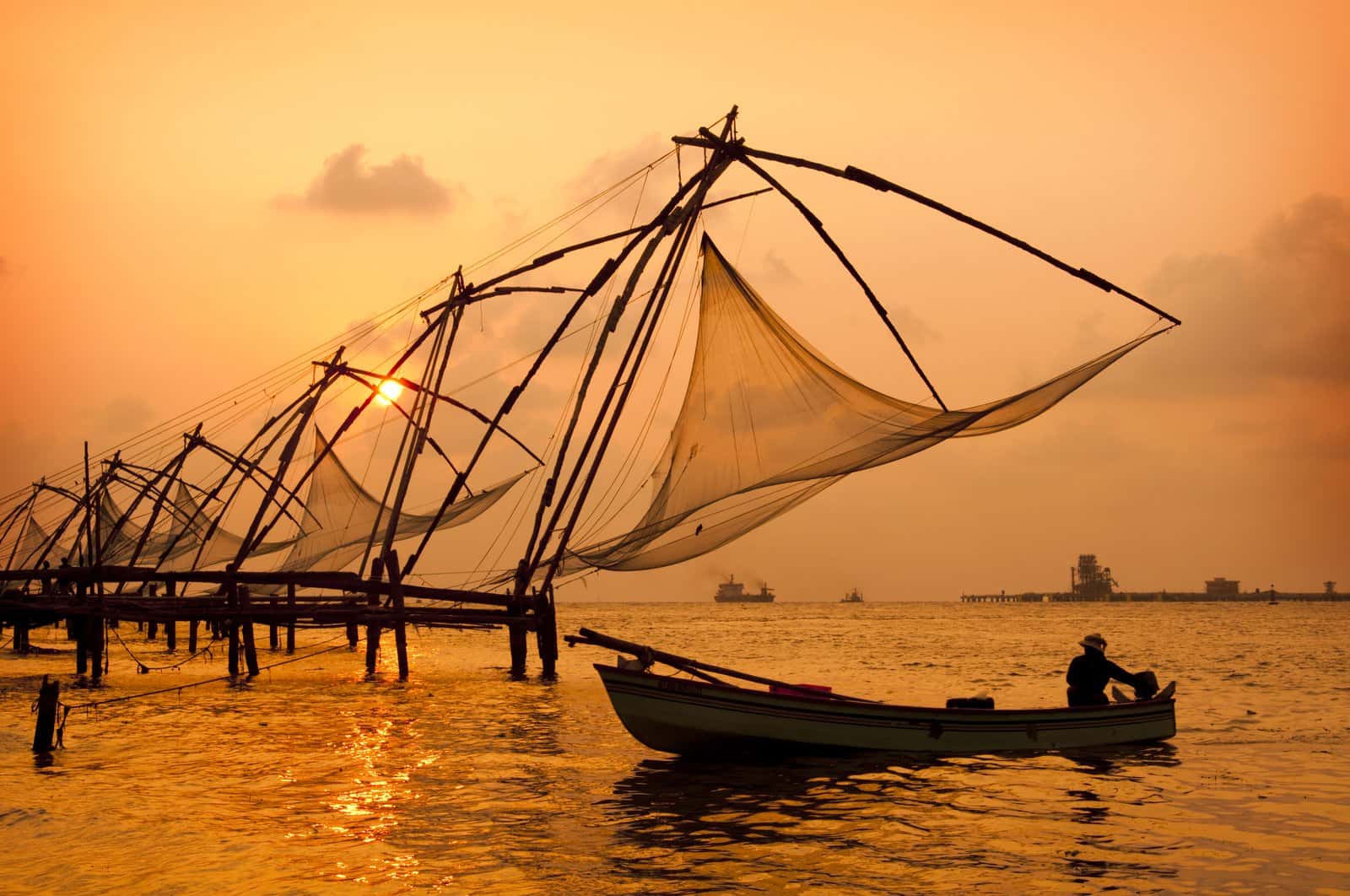
- The Chinese fishing nets, Fort KochiThe iconic cheenavala lining Vasco da Gama Square are free to view and most photogenic at sunrise and sunset. Fishermen may invite you to help lift a net and then expect a tip, so agree any payment first or simply shoot from the promenade. Nearby stalls will cook your chosen fish for a fee.
- The Mattancherry Dutch PalaceAn ASI-protected monument famous for its vivid Ramayana and Mahabharata murals. Kerala Tourism lists it open about 10 am to 5 pm and closed on Fridays; some sources still note a midday break around 1 pm to 2 pm, so reconfirm on site. The ASI entry fee is small, around 5 rupees, with children under 15 free, and photography is strictly prohibited inside the mural rooms.
- The Paradesi Synagogue, Jew TownBuilt in 1568, the oldest active synagogue in the Commonwealth, with its hand-painted Chinese floor tiles and Belgian chandeliers. It opens about 10 am to noon and about 3 pm to 5 pm and is closed on Fridays, Saturdays and Jewish holidays. Remove shoes, dress modestly, and note that photography inside is not allowed.
- St Francis Church and Santa Cruz BasilicaSt Francis Church, among the oldest European churches in India, is where Vasco da Gama was first buried before his remains were moved to Portugal. The nearby Santa Cruz Cathedral Basilica is richly painted inside. Both are an easy walk in Fort Kochi and round out the colonial story.
The two Mattancherry headliners shut on different days, which catches many visitors. The Dutch Palace is closed on Fridays, and the Paradesi Synagogue is closed on Fridays, Saturdays and Jewish holidays. So a Friday in Jew Town can find both shut, and a Saturday finds the synagogue closed. Aim your Mattancherry visit for any day other than Friday or Saturday, and you will see both without backtracking. Always reconfirm current timings, since national holidays and maintenance can vary.
Signature experiences in Kochi
Beyond the monuments, these are the experiences people remember: a Kathakali show, a Water Metro cruise, the Marine Drive sunset and a backwater day, and how to arrange them well.
- A Kathakali or Kalaripayattu showFort Kochi's small theatres stage classical Kathakali dance-drama and the martial art Kalaripayattu most evenings. A ticket is typically about 350 to 500 rupees; arrive an hour early to watch the performers apply the elaborate green and red make-up, which is half the spectacle.
- A Water Metro harbour cruiseThe cheapest, most comfortable boat experience in the city is simply riding the air-conditioned Water Metro across the harbour for about 20 to 40 rupees. It gives you the working port, the islands and the Fort Kochi skyline without paying for a tourist cruise, and it is a lovely outing for families.
- Sunset on Marine Drive, ErnakulamOn the mainland, the Marine Drive promenade along the backwater is the local evening ritual, with the Rainbow Bridge, snack carts and short pleasure-boat rides. It is free, easy and the best place to feel the everyday rhythm of Ernakulam rather than the tourist Kochi.
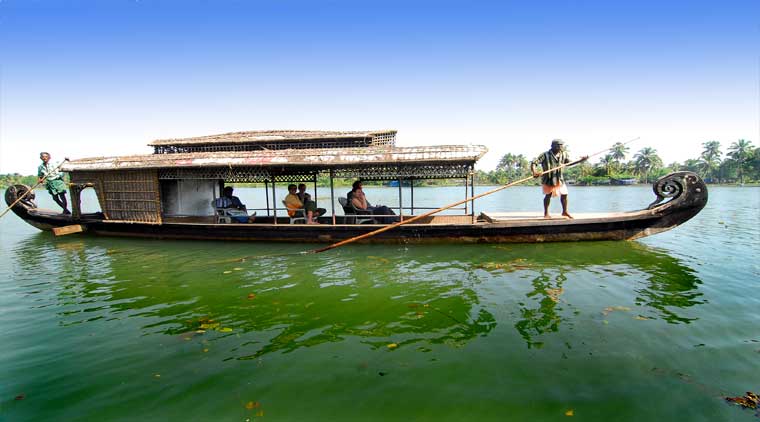
- A backwater day from KochiYou do not have to drive to Alleppey for the backwaters. Day cruises and village canoe trips run from Kochi itself, often around the islands and waterways near the city, a gentle half or full day on the water if your trip is short or you want a taster before a longer houseboat.
- Jew Town antiques and the spice marketThe lanes of Jew Town in Mattancherry are full of antique shops, spice traders and cafes, a fragrant, photogenic wander. Bargain gently, be wary of painted steel sold as bronze or copper, and enjoy the smell of cardamom and pepper that built this city's fortune.
- Cafes and street art in Fort KochiFort Kochi is a slow, walkable warren of heritage cafes, art galleries and, in season, the Kochi-Muziris Biennale art trail. The relaxed coffee-and-walking pace is part of the appeal, so leave time simply to drift through the old streets.
If you do only one thing slowly, make it the harbour crossing at the right time of day. Take the SWTD ferry or the Water Metro over to Fort Kochi in the late afternoon, watch the Chinese fishing nets work against the sunset, then walk the old streets as the cafes light up. The crossing that most people treat as mere transport is, done unhurried at golden hour, the single most memorable hour in Kochi, and it costs only a few rupees.
Where to stay: Ernakulam or Fort Kochi, and how many nights
Base on mainland Ernakulam for convenience, value and onward connections, or in Fort Kochi for heritage, homestays and the slow colonial vibe. Two to three nights suits most trips.
- Mainland Ernakulam: convenient and good valueNear MG Road and Marine Drive you get the widest choice of hotels at every budget, the metro, the railway stations and easy onward transport to Munnar and Alleppey. Better value and more practical for transit and business travellers, though it lacks the historic atmosphere of the harbour side.
- Fort Kochi: heritage and homestaysAcross the water, Fort Kochi is the boutique, homestay and heritage-hotel zone, quiet, walkable and full of colonial character, steps from the nets and the old churches. Most leisure travellers prefer to sleep here, accepting that each onward trip starts with a harbour crossing.
- How many nightsTwo to three nights is the sweet spot: one full day for Fort Kochi and Mattancherry, a second for mainland Ernakulam, a Water Metro cruise and an evening show, and a third for a backwater day or a slow pace before you head to the hills or the backwaters.
- Room budgetsBudget rooms and homestays run from about 800 to 2,000 rupees, mid-range hotels about 2,500 to 6,000 rupees, and heritage or boutique stays in Fort Kochi about 7,000 to 20,000 rupees and up. Fort Kochi heritage stays carry a premium, while Ernakulam gives more room for your money.
On traveller forums the same advice recurs: if your priority is atmosphere and you will spend most of your time among the old streets, sleep in Fort Kochi. If you want the best value, the widest hotel choice, and an easy launch for Munnar, Alleppey or an early train, sleep in Ernakulam and cross over for the sights. There is no wrong answer, only a trade-off between heritage charm and mainland convenience, so pick the one that matches how you plan to spend your days.
Kochi costs and a realistic daily budget
Kochi is gentle on the wallet by Indian city standards, and its public transport is unusually cheap. Here is what the main things cost so you can plan and avoid being overcharged.
- A rough daily budgetExcluding your room and long-distance transport, plan on about 1,200 to 2,000 rupees a day as a backpacker, about 3,000 to 5,000 rupees mid-range, and about 6,000 rupees and up for a comfortable day with sit-down meals, a show and a cab or two.
- The cheap fixed thingsPublic transport is a bargain: the SWTD ferry to Fort Kochi is about 6 to 8 rupees, the Water Metro about 20 to 40 rupees, and the Kochi Metro about 10 to 60 rupees. The Dutch Palace ASI entry is small, around 5 rupees, with children under 15 free; a Kathakali show is about 350 to 500 rupees.
- The negotiable thingsAutos quoted without a meter, Jew Town antiques, and any tip at the fishing nets are negotiable, so agree the price first. App cabs are metered and remove the haggling for longer hops, which is often worth the small premium.
- Cash and cardsCards and UPI work in hotels, restaurants and bigger shops, but the ferries, autos, small eateries and market stalls run on cash. ATMs are plentiful across Ernakulam and Fort Kochi, so carry enough small change for the boats and the autos.
The single habit that keeps Kochi cheap is to use the public boats and the metro rather than defaulting to taxis. A family can cross the harbour and back for the price of a soft drink, and the metro covers the mainland for small change. Save the app cab for the airport run and the late nights, agree any auto fare or net tip in advance, and Kochi stays one of the better-value cities in India to spend a few unhurried days.
Practical logistics: food, money, SIM and language
The small things that make a Kochi day smooth, from the seafood and the toddy shops to ATMs, connectivity and the easy English of Kerala.
- Food: seafood, Syrian-Christian and toddyKochi eats well: fresh seafood, the Kerala fish curry and appam, Syrian-Christian dishes like beef fry and the famous Malabar biryani, and the coconut-rich vegetarian sadya. The rustic toddy shops serve fiery fish curry with palm toddy. Tap water is best avoided, so stick to bottled or filtered.
- Money and ATMsATMs are everywhere across Ernakulam and Fort Kochi. Cards and UPI are widely accepted in restaurants and hotels, but keep cash for the ferries, autos and market stalls, where small notes are essential and cards are not taken.
- SIM, signal and connectivityMobile coverage and data are good across the city. Pick up a tourist SIM or eSIM on arrival at Cochin airport rather than hunting later. Wifi is common in hotels and cafes, so staying connected for maps and ride-hailing is easy.
- Language and getting helpMalayalam is the local language, but Kerala has very high literacy and English is widely spoken in the tourist trade, hotels and transport, so communicating is easy. Hindi is less universal here than in the north, so lean on English with locals.
Safety, common scams, and staying well
Kochi is one of India's calmer, safer cities, but a few tourist-zone scams and the coastal climate are worth knowing. A little awareness keeps the visit happy.
- Tourist-zone scams to knowAround Fort Kochi, Mattancherry and the fishing nets, the common ones are overpriced autos without a meter, the tip demand at the nets, painted steel sold as bronze or copper antiques, and fake premium spices or sarees. Agree fares and prices first, and buy spices from reputable shops.
- The fishing-net tip pressureAt the Chinese nets, fishermen may wave you onto a net to help haul it up, then several will expect a tip each. It can feel cutthroat. Decide in advance whether you want the photo-and-tip experience and agree a single sum, or simply enjoy the nets from the promenade for free.
- Online package and booking scamsBe cautious with too-cheap tour or houseboat packages offered through social media, which sometimes take payment without delivering. Book through established operators, confirm what is included in writing, and be wary of pressure to pay a large advance to an unknown account.
- Heat, water and healthThe coast is hot and humid for much of the year, so hydrate and pace the midday walking. Drink bottled or filtered water, take the usual care with street food, and in the monsoon watch for slippery jetties and standing water. Mosquito repellent is wise near the backwaters.
Kochi is widely regarded as one of the easier, safer Indian cities for women travelling alone, helped by Kerala's high literacy and a relaxed tourist culture in Fort Kochi. Standard precautions apply: dress modestly at religious sites, prefer app cabs or busy ferries after dark, and keep an eye on belongings in crowded markets. The friction visitors report is sales pressure and overcharging rather than threat, so being firm on price and using the well-lit, busy areas in the evening goes a long way.
Kochi for every kind of traveller, and on access
Kochi suits very different visitors in different ways. Here is what it offers you and the one tip that matters for each, including how a senior crosses to Fort Kochi comfortably.
- Couples and honeymoonersSlow and romantic: a Fort Kochi heritage stay, the harbour sunset, a Kathakali evening, and Kochi as the gentle first stop before the Munnar hills and an Alleppey houseboat. Stay in Fort Kochi for atmosphere and give yourselves an unhurried two nights.
- Families with childrenEasy and varied, with the cheap Water Metro ride as a built-in boat outing, the fishing nets, the cook-your-catch stalls and Marine Drive snacks. The flat promenades and short ferry hops suit children, and the food is gentle on young palates if you go easy on the spice.
- Senior travellers and on accessibilityVery doable with planning. Use the modern Water Metro, which has level boarding and air-conditioning, rather than the old SWTD ferry with its steps, to cross to Fort Kochi. Stay near Marine Drive in Ernakulam or central Fort Kochi to keep walking short, and avoid the midday heat. Autos and app cabs cover the gaps.
- Backpackers and budget travellersA long-loved travellers stop, with cheap homestays in Fort Kochi, the bargain ferries and metro, and an easy onward route to Varkala, Munnar and the backwaters. The public transport alone makes Kochi one of the cheapest Indian cities to get around.
- Solo female travellersOne of the easier Indian cities to travel alone, especially around Fort Kochi. Dress modestly at religious sites, use app cabs or busy ferries after dark, and be firm with overpricing. The everyday vibe is relaxed and the friction is commercial, not threatening.
- PhotographersThe Chinese nets at sunrise and sunset, Jew Town's painted lanes, the Water Metro views and the colonial facades are the classic frames. Ask before photographing fishermen or worshippers, and remember photography is not allowed inside the Dutch Palace murals or the synagogue.
A suggested Kochi itinerary
How to shape two or three days so you catch the harbour heritage, the mainland city and a backwater taste without backtracking or hitting a closed door.
- Day one: Fort Kochi and MattancherryCross by ferry or Water Metro in the morning. Do Mattancherry first, the Dutch Palace and the Paradesi Synagogue and Jew Town, on any day except Friday or Saturday, then walk to Fort Kochi for St Francis Church, the nets and the cafes, ending with the sunset on the waterfront.
- Day two: mainland ErnakulamRide the Kochi Metro along the mainland, stroll Marine Drive, browse MG Road, take a Water Metro cruise, and catch a Kathakali or Kalaripayattu show in the evening. This is the day to feel the working city rather than the heritage postcard.
- Day three, if you have itAdd a backwater day cruise or village canoe trip from Kochi, or use the day as a gentle buffer before driving to Munnar (about 3.5 to 4.5 hours) or Alleppey (about 1.5 hours) for the next chapter of a Kerala trip.
- The one-day versionIf you only have a day, give it all to the harbour heritage: cross early, do Mattancherry and Fort Kochi on foot, and watch the sunset over the nets before crossing back. You will miss the mainland and the backwaters, but you will see the soul of Kochi.
The single thing that breaks a tight Kochi plan is arriving in Mattancherry on a day the Dutch Palace (closed Fridays) or the Paradesi Synagogue (closed Fridays, Saturdays and Jewish holidays) is shut. Build your heritage day for any day other than Friday or Saturday, do the indoor sights earlier in the day, and keep the open-air nets and streets for the late afternoon light. Get the closure days right and the rest of the itinerary falls into place.
The real questions travellers ask about Kochi
Straight answers to the questions that come up again and again on traveller forums, so you arrive already knowing the score.
- Ernakulam or Fort Kochi as a base?Fort Kochi for heritage atmosphere and most leisure travellers; Ernakulam for value, the widest hotel choice, and an easy launch for onward trips or an early train. They are about 15 km and a ferry or 30 to 40 minute road loop apart, so you can stay one side and visit the other.
- How many days do I need?Two to three days is right: one for Fort Kochi and Mattancherry, one for mainland Ernakulam and a show, and a third for a backwater day or a slow pace. One day is enough only for the harbour heritage on a tight trip.
- How do I cross, and what is the ferry fare?The cheap SWTD public ferry from Ernakulam Main Jetty to Fort Kochi is about 6 to 8 rupees and 20 to 25 minutes; the modern Water Metro is about 40 rupees and air-conditioned. By road it is the 15 km, 30 to 40 minute loop around the harbour.
- Is the Dutch Palace really closed on Fridays?Yes. The Mattancherry Dutch Palace is closed on Fridays and public holidays, and the nearby Paradesi Synagogue is closed on Fridays, Saturdays and Jewish holidays, so avoid a Friday or Saturday for your Mattancherry morning.
- Is Kochi worth it on its own, or just a gateway?It is both. Kochi rewards two or three days for its layered Portuguese, Dutch, British, Jewish and Arab heritage, and it is also the natural launch pad for Munnar and Alleppey. Treat it as a destination, not only a transit stop, and it earns its place.
- Can I do the backwaters from Kochi itself?Yes. Day cruises and village canoe trips run around the islands and waterways near Kochi, so you can taste the backwaters without the drive to Alleppey, though Alleppey and Kumarakom remain the classic overnight houseboat hubs about 1.5 hours away.
Planning Kochi from abroad
Kochi is the easy, English-friendly gateway to Kerala and pairs naturally with Munnar and the backwaters. A little preparation makes the harbour geography and the airport transfer simple to handle.
- Understand the harbour geography firstKnow before you land that mainland Ernakulam is where you arrive and the heritage is across the water in Fort Kochi and Mattancherry. Decide which side to sleep on, and plan your days around one easy ferry or Water Metro crossing rather than several road loops.
- The airport transferCochin International Airport is about 25 to 30 km out, roughly 45 to 75 minutes by road, and the metro does not reach it. Use the fixed-price CIAL prepaid taxi, about 800 to 1,200 rupees, or an app cab, about 600 to 1,000 rupees, and pre-book a transfer if you arrive late.
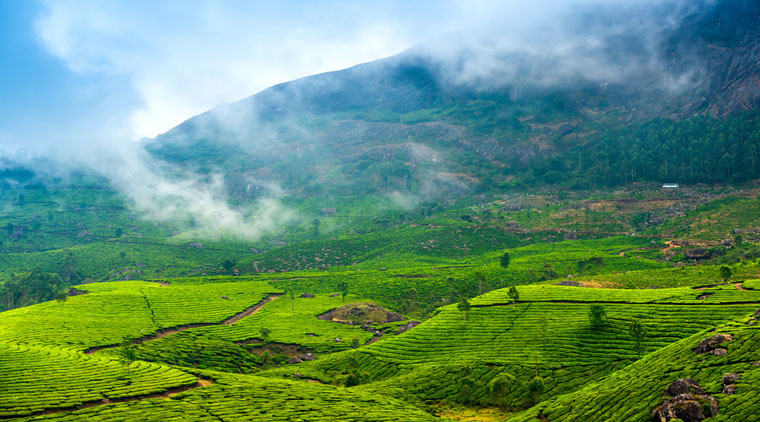
- Pair it with Munnar and the backwatersKochi is the gateway to the classic Kerala loop. Munnar's tea hills are about 3.5 to 4.5 hours away and Alleppey's houseboats about 1.5 hours, so most overseas itineraries start or finish in Kochi and thread the hills and the backwaters in between.
- Time it around the monsoonOctober to March is the comfortable, dry window for a first Kerala trip. The June to September monsoon is green, cheaper and the Ayurveda season, but wetter and more disruptive for the hills and the boats, so weigh the trade-off if your dates are flexible.
Money, connectivity and timing for foreign visitors
The practical basics an overseas traveller needs for Kochi: cash and cards, a SIM, the easy English, and how many days to give it on a wider Kerala trip.
- Cash, cards and small changeCards and UPI work in hotels, restaurants and bigger shops, but the cheap ferries, the autos and the market stalls are cash places. Draw cash at the plentiful ATMs and keep small notes, because the bargain that is a few-rupee ferry ride needs exact change, not a card.
- Get a SIM at the airportPick up an Indian tourist SIM or an eSIM when you land at Cochin airport rather than hunting in the city. Coverage is good across Kochi for maps, ride-hailing and the ticketing apps, and Kerala's strong English makes setting one up straightforward.
- English makes it easyKerala has very high literacy and English is widely spoken in the tourist trade, hotels and transport, so Kochi is an unusually easy first stop in India for an overseas visitor. Malayalam is the local language, but you will rarely struggle to be understood.
- How long on a bigger tripOn a first Kerala trip, give Kochi two to three nights at the start or end, enough for the harbour heritage and the city, then thread Munnar and Alleppey for the hills and the backwaters. It is the logical anchor of the loop rather than a place to rush through.
Kochi is an unusually gentle introduction to India: coastal, walkable in its heritage core, deeply multicultural, and easy in English. Land here, give it a couple of unhurried days to absorb the Portuguese, Dutch, British and Jewish layers, then let it launch you into the green hills of Munnar and the still backwaters of Alleppey. Many overseas visitors say arriving in Kochi rather than a big northern metro made their whole India trip feel calmer and more manageable from the first day.
Why one small harbour holds a synagogue, a Dutch palace and Chinese nets
Few places on earth pack as many cultures into one square mile as the Kochi harbour. For more than two thousand years the lagoon-sheltered port pulled in Arab, Chinese and Jewish traders chasing Kerala's pepper and cardamom, the spices that were once worth their weight in gold. Then came the Europeans in turn: the Portuguese, who built St Francis Church and first buried Vasco da Gama there in 1524; the Dutch, who gave their name to the Mattancherry Palace; and the British, who ran the port into the modern age. The Chinese fishing nets are said to have arrived with traders from the court of Kublai Khan, and the Paradesi Synagogue, raised in 1568, still stands as the oldest active synagogue in the Commonwealth of Nations. Walk from the nets to the synagogue to the palace in a single afternoon and you trace a thousand years of the world coming to Kerala's shore for the taste of its spice.
Planning a Cochin trip?
Our Kerala travel experts plan your full journey for you: route, hotels, darshan timings and transport. You get a free day-by-day plan and an exact quote on WhatsApp, usually within a few hours. No payment is needed to get your plan.
Tour packages that visit Cochin
Every journey below is private, hand-crafted and fully customizable. Tell us your dates and we tailor the itinerary, the pace and the priests or guides around you.
 6D / 5N
Kerala Honeymoon Package
- Visit Marine Drive
- Visit Dutch Palace
 9D / 8N
Kerala Trip Honeymoon Package
- Visit Varkala Beach
- Visit Janardhana Temple
Kerala Honeymoon Tour Packages
- Two nights in Munnar, so you get one full unhurried day in the tea hills
- Dawn boat cruise on Periyar Lake, the slot with the best wildlife odds
 6D / 5N
Kerala LTC Tour
- Visit KundalaLake and Mettupatty Dam
- Visit Padmanabha Swami Temple
 3D / 2N
Munnar Tour
- Visit Echo Point
- Visit Kundale Lake
 8D / 7N
Ooty Kodaikanal Munnar Tour Package
- Visit Ooty Lake & Doddabetta Peak
- Green Valley View
 3D / 2N
Kumarakom Lake Resort Package
- Visit Kumarakom
- Bird Sanctuary
 8D / 7N
Kerala Honeymoon Tour
- Visit Mattancherry Palace
- Visit Devikulam & Mattupetty Dam
 5D / 4N
Eravikulam National Park Tour
- Visit Munnar
- View Mountains and landscapes