Devikulam Travel Guide
The sweet spot is October to February , when the high ranges are wrapped in mist and the air is cold and clean. March to May is a mild escape from the plains, and the monsoon is...
When to visit Devikulam, and the mood each season brings
The sweet spot is October to February, when the high ranges are wrapped in mist and the air is cold and clean. March to May is a mild escape from the plains, and the monsoon is green but very wet.
- October to February: cool, misty and clearThis is the loveliest window. The high ranges around Devikulam sit under mist and fog, winter temperatures stay around 7 to 17 degrees, and the tea gardens look their crispest. Carry a warm layer, because the mornings and evenings are genuinely cold up here even though you are in Kerala. This is also the best light for photographs of the gum trees and the valleys.
- March to May: mild, and a gentle escapeWhile the Kerala plains and the coast turn hot and sticky, Devikulam stays mild and comfortable at its altitude, which is exactly why the high range became a retreat in the first place. Afternoons are pleasant rather than warm, the crowds are thinner than in winter, and it is a calm time to walk the tea slopes and enjoy the quiet.
- June to September: lush, green and very wetThe south-west monsoon brings heavy rain to the Western Ghats. Everything turns a deep, dripping green and the waterfalls are full, which nature lovers enjoy, but the trails are slippery, the cloud sits low over the hills, and the winding roads need extra care. Come for the misty mood with flexible plans, and do not expect long clear views.
- Decide on clear winter light or green monsoon calmDevikulam gives you two very different trips. Winter is sharp, cold and clear with the best views, while the post-monsoon and monsoon weeks are soft, green and quiet. Both are beautiful in their own way, so pick the mood you want before you book, because it shapes what you will see and the photographs you will take home.
Unlike the warm Kerala coast, Devikulam is cool and pleasant right through the year because of its altitude of about 1,800 metres. Even in the summer months the evenings turn chilly and the early mornings can be cold and foggy. A light jacket or a shawl earns its place in your bag whenever you come, and a small umbrella or a rain jacket is wise outside the driest winter weeks. This surprises many first-time visitors who expect tropical heat everywhere in Kerala.
How to reach Devikulam
Devikulam has no airport or railway of its own. Almost everyone comes through Cochin and Munnar, and there is a beautiful back route in from Tamil Nadu through Bodimettu.
- Through Munnar, the nearest hubDevikulam village sits only about 7 to 8 km from Munnar on the high-range road, roughly 20 to 30 minutes by taxi or local bus. Munnar is where the hotels, the cabs, the ATMs and the main sights are, so nearly everyone reaches Devikulam as a short hop from a Munnar base rather than heading to it directly. We can arrange a car with an experienced hill driver for the day.
- By air, then road, via CochinCochin International Airport, also called Kochi or COK, is the nearest at about 110 to 130 km, around 4 hours by road through Kothamangalam and Adimali up the ghat road. A prepaid taxi from the airport runs around 3,000 rupees. There are no flights any closer, so plan a half-day for the scenic climb into the high range with a stop or two on the way.
- By train, then roadThere is no station at Devikulam or Munnar. The nearest railheads are Aluva at about 105 to 110 km and Ernakulam at about 130 km, both well connected across India. From either it is a road journey of roughly 4 hours up into the hills. A state KSRTC bus up from Aluva costs around 70 rupees, while a taxi is quicker and easier after a long train ride.
- The scenic Tamil Nadu back routeDevikulam sits on NH-85, the Munnar to Kumily and Bodimettu road, so if you are coming from Tamil Nadu the classic scenic approach runs Madurai to Theni to Bodi to Bodimettu and down through Devikulam into Munnar. Madurai is about 135 to 175 km away depending on the route. It is a gorgeous drive up through the ghats, but it is winding, so keep it to daylight hours.
Fly into Cochin, which has nonstop flights from Dubai, Abu Dhabi, Bahrain, Kuwait, Doha and Singapore. From the airport it is about a 4 hour drive up to Munnar and Devikulam, so a private car with a hill driver is the comfortable way to finish the journey after a flight.
There are no nonstop flights to Cochin from these regions, so connect through a Gulf hub such as Dubai or Doha, or through Mumbai or Delhi, then take the short hop to Cochin and drive up into the high range. Devikulam pairs naturally with a wider Kerala loop.
Fly or take a train to Cochin, Aluva or Ernakulam, then drive up through Munnar. From Tamil Nadu, the Madurai to Bodimettu road brings you in through Devikulam itself, one of the prettiest ways into the Kerala hills.
Sita Devi Lake, the tea gardens, and the quiet town
Devikulam is its sacred lake, its rolling tea gardens and the calm of a real high-range town. One rule matters most: the lake sits on an estate and needs permission.
- Sita Devi Lake, and the permission you needThe spring-fed Sita Devi Lake is the heart of Devikulam, ringed by tea gardens and forest, and revered by devotees for its mineral-rich water. The one thing to know is that it sits inside a Tata Tea and KDHP estate, so you need prior permission from the KDHP office at KDHP House in Munnar to reach the lake. Sort this before you go, or you may be turned back at the estate gate.
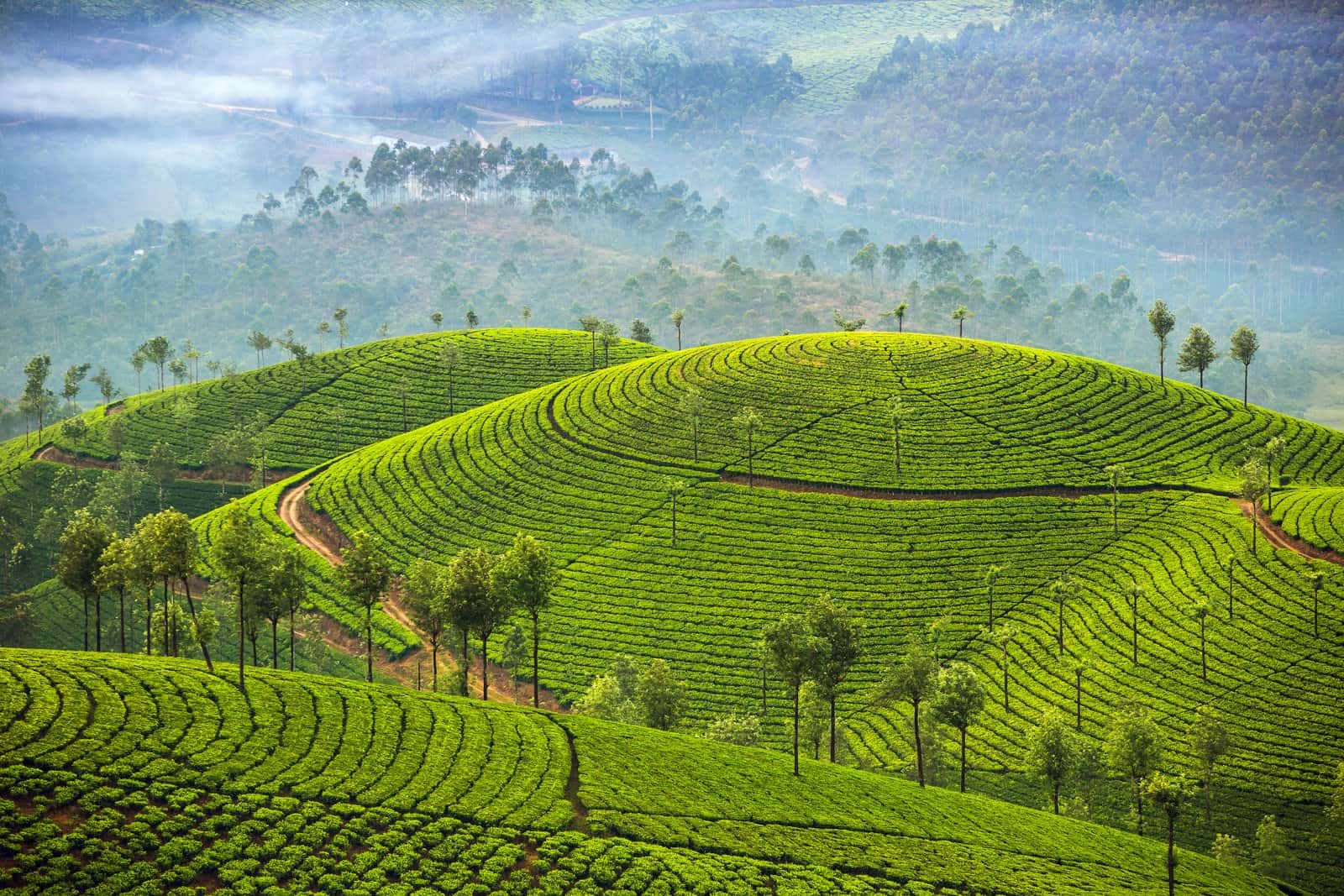
- The tea gardens and the gum treesThe slopes around Devikulam are classic Kanan Devan tea country, neat green rows rolling over the hills, dotted with tall eucalyptus and gum trees that flower in reds and blues in season. This is the picture people come for, best in the soft morning light. The tea estates are private and working, so enjoy the roadside views and any permitted estate walk rather than wandering in.
- Lockhart Gap and the nearby viewpointsA few kilometres away, the Lockhart Gap viewpoint opens over misty valleys and winding mountain roads, a fine short stop on the high-range drive. The Devikulam and Munnar road strings together several such lay-bys where the cloud drifts through the tea below you, so keep the camera handy and pull over where it is safe.
- The Ayyappan temple and the taluk townDevikulam is a genuine working taluk town, with the Taluk office, the RDO office, a post office, schools and a small market, so it feels lived-in and calm rather than touristy. The Devikulam Sri Ayyappan temple gives the place a quiet devotional note that fits the Sita Devi tradition, and a slow stroll through the town is part of the charm.
This is the single thing that catches visitors out. Sita Devi Lake is not a free public picnic spot you can drive straight to; it lies on a Tata Tea and KDHP estate and needs prior permission from the estate office at KDHP House in Munnar, both to visit and to fish. Arrange it a day ahead through your hotel or your driver, carry an ID, and treat the estate roads and the water with respect. Sort the permission first and the visit is easy; skip it and you may go all the way and be turned back.
Signature experiences in Devikulam
Devikulam is about slow, quiet pleasures: the sacred lake, a rare trout-fishing tradition, walks through tea and forest, and the mist that makes it a photographer's favourite.
- A quiet visit to the sacred lakeWith your KDHP permission in hand, a visit to Sita Devi Lake is a calm, reflective hour among tea gardens and forest, away from the crowds of Munnar. Devotees come with real reverence for the water, so keep it clean, dress modestly, and do not swim or picnic at the water's edge. The stillness and the mist are the whole point, so give it time rather than rushing a photograph.
- Trout fishing, a rare Kerala treatSita Devi Lake is one of the few places in Kerala where you can try trout fishing in cool, spring-fed water, and it is offered only with prior permission from KDHP. There is no publicly fixed fishing fee, so arrange it in advance through the estate office rather than expecting to turn up and cast. It is a gentle, unusual thing to do that most Munnar visitors never even hear about.
- Tea-country walks and gentle treksThe lush open slopes and forest trails around Devikulam are made for unhurried walking, with breathing views of tea gardens and rolling mist. Stick to permitted paths and estate walks rather than climbing into working plantations, and take a local guide for anything longer, as the terrain and the weather can turn. It is easy, restful walking rather than serious hiking for most visitors.
- Photography in the mistDevikulam is a quiet favourite for photographers: the interplay of green tea bushes, the tall flowering gum trees, deep valleys and drifting fog gives you a soft, painterly scene, especially at dawn. The early mornings before the day warms up are the magic hour, so it is worth an early start and a flask of tea while you wait for the light.
- Easy day-loops to the water and the damPair Devikulam with nearby high-range stops for an easy half-day loop: the Lockhart Gap viewpoint, the Anayirankal Dam with its reservoir and boat rides, the Chinnakanal waterfalls, and the Blossom International Park that children enjoy. None of it is strenuous, which makes Devikulam a kind, gentle outing for families and older travellers.
If you do only one thing slowly in Devikulam, make it a still morning by the tea gardens or the lake before the day warms up, when the mist hangs in the slopes and the town is barely awake. The sights around Munnar are lovely but busy; the gift of Devikulam is the quiet, so do not treat it as a quick photo stop between other places. Give it an unhurried hour or two and the calm of the high range settles in, which is exactly what most travellers remember afterwards.
Where to stay in Devikulam, honestly
Lodging in Devikulam itself is thin. There are a few estate stays and homestays, but most travellers sleep in Munnar 7 to 8 km away and visit Devikulam by day.
- The honest verdict: base in MunnarLet us be straight with you. Devikulam is a quiet taluk town, not a resort hub, so its own choice of places to sleep is limited. Most travellers base in Munnar, only 7 to 8 km away, where the range of hotels, homestays and estate resorts is far wider, and then visit Devikulam and the lake by day. This keeps your evenings easy and your options open.
- Staying in and around DevikulamIf you do want the deeper quiet, there are a handful of estate stays, homestays and a few resorts around the village and along the road, several with tea-slope and valley views. They are calm and scenic but simpler and fewer than in Munnar, so book ahead and confirm exactly where the property sits, since some are a short drive out of the village.
- Room budgetsAs a rough guide, budget rooms and homestays around here run about 1,000 to 1,500 rupees, mid-range stays about 2,000 to 4,000 rupees, and the smarter resorts about 6,000 to 10,000 rupees and up. Prices climb in the October to February peak and on long weekends, so book early for those dates and treat any lower off-season quote as a bonus.
- How long to give itFor most visitors Devikulam is a half-day from a Munnar base, comfortably folded into a 2 to 3 day Munnar trip. If you truly want to slow down and wake to the mist, one night at an estate stay near the village is a lovely, quiet indulgence, but there is no need to build a long stay around Devikulam alone.
Whether you sleep in Devikulam or in Munnar, the thing that makes a high-range stay is what you wake up to. A room that looks onto a tea slope or a misty valley, a little outside the busy centre, turns the first cup of the day into the best part of the trip, while a room over the town looks onto traffic. If the view is why you are coming, pay for the outlook and the location over a bigger room in the centre, and ask for an east-facing room to catch the dawn.
Devikulam costs and a realistic budget
Devikulam is gentle on the wallet as a day out from Munnar. Here is what the main things cost so you can plan and avoid being overcharged on the cab.
- Getting there and aroundThe main cost is transport. A prepaid taxi from Cochin airport up to the high range runs around 3,000 rupees, and a KSRTC bus from Aluva is around 70 rupees for the budget traveller. Once you are based in Munnar, a local cab for a Devikulam and nearby-sights half-day is best agreed as a fixed rate in advance, because day-trip quotes to visitors start high.
- Rooms and foodIf you stay near Devikulam, budget rooms run about 1,000 to 1,500 rupees, mid-range stays about 2,000 to 4,000 rupees, and resorts about 6,000 to 10,000 rupees and up. Kerala food is excellent and inexpensive, especially the tea-shop meals and snacks, so eating is a small part of the budget unless you dine only at resort restaurants.
- The lake, and the nearby parkThere is no fixed public ticket for Sita Devi Lake, but you do need KDHP permission, and any trout fishing is arranged with the estate rather than at a set fee. If you add the nearby Eravikulam National Park, entry is about 200 rupees for Indians and about 500 for foreign nationals, so budget for that separately and reconfirm the current fee on the official park site.
- Cash and cardsCarry cash. Devikulam is a small town, so the reliable ATMs and card machines are in Munnar; draw what you need there before you head out. Homestays, small eateries and local drivers largely run on cash, and signal can be patchy in the high tea country, so do not count on paying by card or UPI everywhere.
Almost every cost question in the high range comes down to transport, so the habit that saves money is to agree the cab rate and the sightseeing route before you set off, ideally in writing, whether that is the airport transfer or a half-day Devikulam loop from Munnar. The fixed things, like the Eravikulam entry fee, are a useful yardstick for judging whether a quote is fair. Settle the variable costs up front and the only real friction of a high-range trip disappears.
Practical logistics: permission, cash, signal and getting around
The small things that make a Devikulam day smooth, from the KDHP lake permission to cash, signal, language and the short hop from Munnar.
- Arrange the lake permission firstThe single most important bit of planning is the permission to visit Sita Devi Lake, which sits on the Tata Tea and KDHP estate. Ask your hotel or driver to help you arrange it a day ahead through the KDHP office at KDHP House in Munnar, and carry a photo ID. Do the same if you want to try the trout fishing, which is only allowed with prior permission.
- Cash, ATMs and connectivityDraw cash in Munnar before you come, as Devikulam is a small town and card machines are few. Mobile signal is fine in the towns but drops away in the high tea country and the valleys, so download offline maps and tell your hotel your plan for the day. Keep small notes handy for tea shops, tips and local rides.
- Getting around the high rangeThere is no app-cab network up here, so a car and driver hired through your Munnar hotel or with us is the easy way to link Devikulam with the nearby viewpoints and the dam. Local buses run along the main road but are slower and less frequent, and autos handle short hops. Fill fuel in Munnar, since pumps are scarce once you are out among the estates.
- Language, dress and respectMalayalam and Tamil are the everyday languages, but English is widely understood in the tourist trade, so communicating is easy. Dress modestly and be quietly respectful near Sita Devi Lake and the Ayyappan temple, as these are places of genuine devotion, and carry a warm layer whatever the month because the high-range air turns cold quickly.
Safety, the winding roads, and staying well
Devikulam is calm and welcoming, but the narrow high-range roads, the fog, the early dark and the monsoon are what catch people out. A little care keeps the day easy.
- The winding roads and the fogThe high-range roads are narrow, twisting and busy with buses and trucks, and in the monsoon and at dusk fog can cut visibility fast. Use an experienced local driver rather than self-driving if you are not used to such roads, keep the drives to daylight, and start any descent early. Hill towns go dark quickly, so aim to be back at your base before evening closes in.
- Monsoon, slippery trails and landslidesIn the June to September monsoon, and after very heavy rain at any time, the trails turn slippery and there is some risk of landslides and road delays on the ghat stretches. Treat any official advisory or closure notice as final, keep plans flexible, wear grippy shoes, and skip the steep or forest routes when it is pouring. Leeches are common in the wet grass, and a little salt or balm makes one drop off.
- Cold, sun and the waterEven in summer the evenings and dawns are cold, so carry a warm layer, and the high-altitude midday sun can still burn, so take sunscreen and water for the open slopes. Sita Devi Lake is a natural high-range water body, so admire it from the edge rather than swimming, and keep young children close near the water and the estate roads.
- Wildlife and quiet estate roadsThe surrounding forests hold gaur, sambar and, occasionally, elephants, so keep your distance from any wild animal, do not feed them, and take local advice before walking forest edges at dawn or dusk. The estate and town are safe and friendly, but as anywhere, look after your belongings and carry a torch, since lighting is limited once you leave the main road.
Devikulam is one of the calmer, safer corners of the high range, well used to families and quiet travellers, and the real risks here are the road and the weather rather than crime. Keep driving days gentle, do not push the winding roads in fog or after dark, watch your footing on wet trails, and carry warm clothes and any regular medicines, since the nearest full hospital facilities are in or beyond Munnar. Take it slowly and the visit stays as restful as the hills look.
Devikulam for every kind of traveller, and on access
Devikulam suits different visitors in different ways, mostly as a quiet counterpoint to busy Munnar. Here is the one tip that matters for each, including how a senior visits comfortably.
- Couples and honeymoonersQuiet, misty and romantic, Devikulam is the calm half of a Munnar honeymoon: a still morning by the tea gardens, a slow walk, and the drifting fog. Base in a view room near the tea slopes, arrange the lake permission ahead, and let it be the gentle, unhurried chapter away from the crowds.
- Families with childrenEasy and gentle, with short walks, the nearby Blossom International Park, the dam and boat rides, and the chance to see the tea country up close. Nothing here is strenuous, though the winding drive can be queasy, so keep snacks and a front seat ready and plan short driving stretches with breaks.
- Senior travellers and on accessibilityVery doable as a gentle half-day from Munnar. The pleasures here are short strolls, roadside viewpoints and the calm of the lake rather than hard walks, so it suits older travellers well. Manage the winding road by sitting in front, keeping drives to daylight, avoiding fog, and arranging the lake permission in advance so there is no wasted journey.
- Photographers and nature loversA quiet favourite: tea gardens in the mist, the flowering red and blue gum trees, deep valleys and the still lake, all best at dawn before the day warms up. Bring a warm layer for the early start, respect the private estates and the devotees at the lake, and you will come away with the soft, painterly high-range scenes that busier spots cannot give you.
- Pilgrims and the devotional travellerFor those who come for the Sita Devi tradition, the lake and the nearby Ayyappan temple give Devikulam a genuine devotional calm. Treat the water and the shrine with reverence, arrange the lake permission ahead, and remember the healing-water belief is a cherished tradition rather than a proven claim, to be honoured in that spirit.
- Backpackers and budget travellersReachable by KSRTC bus through Aluva and Munnar for very little, Devikulam is an easy, cheap add-on to a Munnar stay. Sleep in a Munnar homestay, ride the local bus or share a cab out, and enjoy the quiet the day-trippers miss. Just plan around the limited local transport and the early-closing evenings.
A suggested Devikulam plan
How to fold Devikulam into a Munnar trip, whether you want a gentle half-day loop or a slow night in the high range.
- The easy half-day from MunnarThe usual and best way to do Devikulam is a half-day from a Munnar base. Set out in the cool morning with your lake permission already arranged, spend a quiet hour or two at Sita Devi Lake and among the tea gardens, then loop back past the Lockhart Gap viewpoint and Anayirankal Dam. You are back in Munnar by afternoon with the day's crowds behind you.
- A slow night in the high rangeIf you want to truly switch off, book one night at an estate stay near Devikulam. Arrive in the afternoon, take a gentle walk, and enjoy the deep quiet and the mist at dawn before most travellers are even awake. This is for those who value stillness over ticking off sights, and it pairs beautifully with a couple of busier days in Munnar.
- Where it fits in a Kerala tripOn a classic Kerala loop, Devikulam is a calm morning inside your 2 to 3 days in Munnar, before you move on to Thekkady for spices and wildlife, then the Alleppey backwaters and Fort Kochi. It adds the quiet high-range note without slowing the whole itinerary, and it is easy to build in with a car and driver.
- The Tamil Nadu approachIf you are driving up from Madurai or Theni, you pass through Devikulam on the way into Munnar, so time it for a mid-morning stop as you crest the ghats. Sort the lake permission ahead, break the climb here for the views and the tea, then carry on the short distance into Munnar for the night.
The one thing that breaks a Devikulam plan is arriving at the estate gate without permission for Sita Devi Lake and being turned back after a long drive. Build the KDHP permission into your plan the day before, through your Munnar hotel or driver, and carry an ID. Keep the winding drives to daylight, start early to beat the afternoon cloud, and you will get the calm, unhurried high-range morning that Devikulam does best without any wasted journeys.
The real questions travellers ask about Devikulam
Straight answers to the questions that come up again and again, so you arrive already knowing the score and do not waste a drive.
- Is Devikulam worth it, or should I just stay in Munnar?It is worth a calm half-day if you want the quiet, misty high range without Munnar's crowds. Devikulam is not a big sight-packed town, so think of it as the peaceful counterpoint to Munnar rather than a rival destination. Stay in Munnar for the choice of hotels and food, and come out to Devikulam for the stillness.
- Do I really need permission for the lake?Yes. Sita Devi Lake sits on the Tata Tea and KDHP estate, so you need prior permission from the KDHP office at KDHP House in Munnar to reach it, and the same for any fishing. Arrange it a day ahead through your hotel or driver and carry an ID, or you may be turned back at the estate gate.
- How far is Devikulam, and why do sources disagree?Devikulam village is about 7 to 8 km from Munnar, which is the figure Kerala Tourism uses. The lake itself lies about 9 km further on, roughly 15 to 18 km from Munnar and about 2 km from the Power House waterfall, which is why some listings say 18 km. Both are correct, they just measure to different points.
- Is the trout fishing real, and can I do it?Yes, Sita Devi Lake is one of the rare places in Kerala for trout fishing, in cool spring-fed water, but only with prior KDHP permission. There is no publicly fixed fee, so arrange it through the estate office in advance rather than turning up hoping to cast. It is a gentle, unusual thing most Munnar visitors never try.
- How is Devikulam different from Munnar?Munnar is the busy hub with the national park booking, the tea museum and the crowds; Devikulam is a quiet taluk town whose draw is the sacred lake, its own tea gardens and the deep calm. Come to Devikulam for stillness and the legend, and lean on Munnar for the logistics and the big-ticket sights.
- Is the healing-water belief true, and is the Sita legend real?The story that Goddess Sita bathed here during her exile, and that the mineral-rich water heals, is a cherished devotional tradition passed down for generations, not a claim fixed to a single scripture or proven by science. Enjoy it in that spirit, with respect for the devotees, and treat the water and the shrine accordingly.
Planning Devikulam from abroad
Devikulam is the quiet, misty counterpoint to Munnar on a Kerala trip, easy and restful, and a little preparation on the lake permission and the cool weather makes it simple.
- Arrive through Cochin, base in MunnarCochin is your gateway, with nonstop flights from the Gulf and Singapore, and from the airport it is about a 4 hour drive up into the high range. Base yourself in Munnar, where the choice of stays is widest, and treat Devikulam as a calm half-day out. A private car with a hill driver is the comfortable way to do the winding roads after a long flight.
- Sort the lake permission in advanceThe one thing to arrange is permission for Sita Devi Lake, which sits on the Tata Tea and KDHP estate. Ask your hotel to help set it up a day ahead through the KDHP office in Munnar, and carry your passport as ID. This small step saves a wasted drive and is the detail most overseas visitors do not know about.
- Make it part of a Kerala loopDevikulam fits neatly into a classic Kerala circuit: two or three days around Munnar with a quiet Devikulam morning, then Thekkady for spices and wildlife, the Alleppey backwaters and historic Fort Kochi. It adds the peaceful high-range note to a first trip to India, and we can build the loop around your dates and pace.
- Pack for the cool high rangeEven in summer the Devikulam evenings and dawns are cold at about 1,800 metres, and winter nights sit around 7 to 17 degrees, so a light jacket or shawl is essential, which surprises visitors expecting tropical Kerala throughout. A small umbrella is wise outside the driest winter weeks, since mist and drizzle are part of the high-range charm.
Devikulam is an unusually gentle taste of India: cool, green, calm and easy, with short walks and a real working town rather than crowds and chaos. Slot it inside your Munnar days as the quiet chapter, arrange the lake permission ahead, and let the mist and the tea gardens slow you down. Many overseas visitors say the still, high-range mornings end up being the part of the trip they remember most warmly, precisely because they are so peaceful.
Money, connectivity and timing for foreign visitors
The practical basics an overseas traveller needs for a small high-range town: cash, a SIM, the patchy signal, and how much time to give Devikulam on a wider Kerala trip.
- Carry cash, expect patchy signalDraw cash at the ATMs in Munnar before you head out, because Devikulam is a small town with few card machines, and homestays, small eateries and drivers largely run on cash. Mobile signal is fine in the towns but weak in the high tea country and the valleys, so download offline maps and share your plan with your hotel.
- Get a SIM at the airportPick up an Indian tourist SIM or an eSIM when you land in Cochin rather than hunting for one in the hills. Coverage in Munnar town is fine for maps and calls, but it drops away out among the estates and near the lake, so do not rely on a live connection for navigation once you leave the main road.
- How long to give itDevikulam is a half-day, not a base in itself. On a wider Kerala trip, give Munnar two to three nights and slot in a quiet Devikulam morning, which is the right weight against the backwaters and Fort Kochi. Add one estate night near Devikulam only if you specifically want the deep stillness at dawn.
- Time it for the clear seasonOctober to February is the comfortable, misty-but-clear window, while June to September is the heavy monsoon with low cloud and slippery roads. Whenever you come, the tea hills are green, but the long views and the easy walking are a winter and shoulder-season thing, so plan the season to the experience you want.
Because Devikulam depends on the lake permission, the weather and the winding roads, the overseas visitors who enjoy it most keep the day flexible. Arrange the permission ahead, start early to beat the afternoon cloud, and have an easy fallback like the Lockhart Gap viewpoint or Anayirankal Dam if the mist rolls in thick. Treated as a gentle, unhurried morning rather than a fixed tour, Devikulam rewards you with exactly the calm you came to the high range to find.
Why they call it the lake of the goddess
Devikulam means the lake of the goddess, from Devi and kulam, the pond. The name comes from a devotional tradition of the high range: that Goddess Sita, the consort of Lord Rama, bathed in the waters here during the years of exile told in the Ramayana, and that her touch left the spring blessed with healing power. To this day devotees come with real reverence, and the lake is called Sita Devi Lake in her honour. It is worth telling this honestly. The story is a living tradition, passed down for generations and cherished by the pilgrims who visit, rather than a fact fixed to a single scriptural verse, and the belief that the mineral-rich water heals is part of that faith rather than a proven claim. Honoured in that spirit, standing quietly by the still, mist-wrapped water among the tea gardens, you feel exactly why the high range gave this small lake the name of a goddess.
Planning a Devikulam trip?
Our Kerala travel experts plan your full journey for you: route, hotels, darshan timings and transport. You get a free day-by-day plan and an exact quote on WhatsApp, usually within a few hours. No payment is needed to get your plan.
Tour packages that visit Devikulam
Every journey below is private, hand-crafted and fully customizable. Tell us your dates and we tailor the itinerary, the pace and the priests or guides around you.
 8D / 7N
Kerala Tour Package
- Sightseeing of Munnar
- Visit Periyar Wildlife Sanctuary
 8D / 7N
Kerala Family Packages
- Visit Chinese Fishing Nets
- Visit Bolgatty Palace
 7D / 6N
Best of Kerala
- Visit Sightseeing of Munnar
- Visit Thekkady Periyar Wildlife Sanctuary