Payyoli Travel Guide
The comfortable months are October to March , and this same window brings the Olive Ridley turtle nesting at Kolavipalam in about November to December. Decide first whether the...
When to visit Payyoli, and the turtle season to plan around
The comfortable months are October to March, and this same window brings the Olive Ridley turtle nesting at Kolavipalam in about November to December. Decide first whether the turtles and the calm coast are your reason to come.
- October to March: dry, cool and bestThis is the pleasant window on the Malabar coast, with clear light for the beach and gentle mornings for the Moorad estuary birds. The sea is at its calmest and the small-town pace is at its most enjoyable, so almost any dry-season week works well for a quiet visit.
- November to December: the turtle windowIf the Olive Ridley turtles are your reason to come, aim for these two months, when they come ashore at Kolavipalam to nest. Remember that sightings have grown rare and are never guaranteed, so treat any encounter as a lucky, respectful privilege rather than a certainty.
- June to September: the heavy monsoonThe southwest monsoon hits the coast hard, and the sea turns dangerous with strong currents. The greenery is glorious and the coast is dramatic, but this is not a swimming or boating time, so come only if you want the rain, the calm and the Ayurveda rather than the beach.
- March to May: hot and humidHigh summer on the coast is hot and sticky, tiring for long days out. If you come then, keep the middle of the day for shade and a meal, and enjoy the beach in the cool of early morning or late afternoon.
Payyoli is not a resort beach in the Kovalam or Goa sense. It is a small, real Malabar town where the beach is long, clean and mostly empty, the draw is the turtles and the slow coast, and the facilities are modest. Read it that way and the dry months from about October to March, especially the November to December turtle window, are clearly the time to come. The monsoon is for travellers who want the green and the solitude rather than the sea and the sun.
How to reach Payyoli
Payyoli has its own small railway station and sits on the coastal NH66 between Kozhikode and Vadakara. There is no airport, so most travellers come by train or by road from Kozhikode.
- By train to Payyoli station (PYOL)Payyoli has its own station on the Southern Railway coastal line, with direct trains to and from Kozhikode about 37 km away in roughly 40 minutes. Second-class fares are low, commonly about 45 rupees, and this is the cheapest and simplest way in for most travellers, so check the timetable and book ahead in season.
- Nearest airportsThere is no airport at Payyoli. The nearest is Calicut International Airport at Karipur, about 50 to 60 km south, with Kannur airport a broadly similar distance to the north. From either, hire a taxi or take a train from Kozhikode, as there is no direct flight anywhere near Payyoli itself.
- By road on the coastal NH66Payyoli sits on the coastal highway, about 40 km north of Kozhikode, roughly 12 to 15 km north of Koyilandy and about 13 km south of Vadakara. A car with a driver from Kozhikode is the easiest way to combine the beach with the nearby temple and the coast, and we can arrange one.
- Base nearby if you preferBecause Payyoli itself has limited accommodation, many travellers stay in Kozhikode or Vadakara, both well connected, and visit Payyoli and Kolavipalam for the day. This is often the smoothest plan, especially if you want a wider North Kerala coast trip.
Fly into Calicut (CCJ) or Kannur (CNN), both with strong Malabar-Gulf links, then drive about an hour up or down the coast to Payyoli. Confirm the aircraft and route at booking, as Calicut cannot take wide-body jets.
There are no direct long-haul flights to this coast, so route through a Gulf hub or Delhi or Kochi, then connect to Calicut or Kannur, or take the scenic coastal train up from Kozhikode.
Take a train to Payyoli directly on the coastal line, or to Kozhikode and drive the short hop north. Kozhikode is well connected by train and flight from Bengaluru, Chennai, Mumbai and the Kerala cities.
The beach, the Thikkodi lighthouse and Velliyamkallu
Payyoli's sights are its long clean beach, the old Thikkodi lighthouse, the offshore Velliyamkallu rock and the Moorad estuary sandbank for birds. None of them ask much of your wallet.
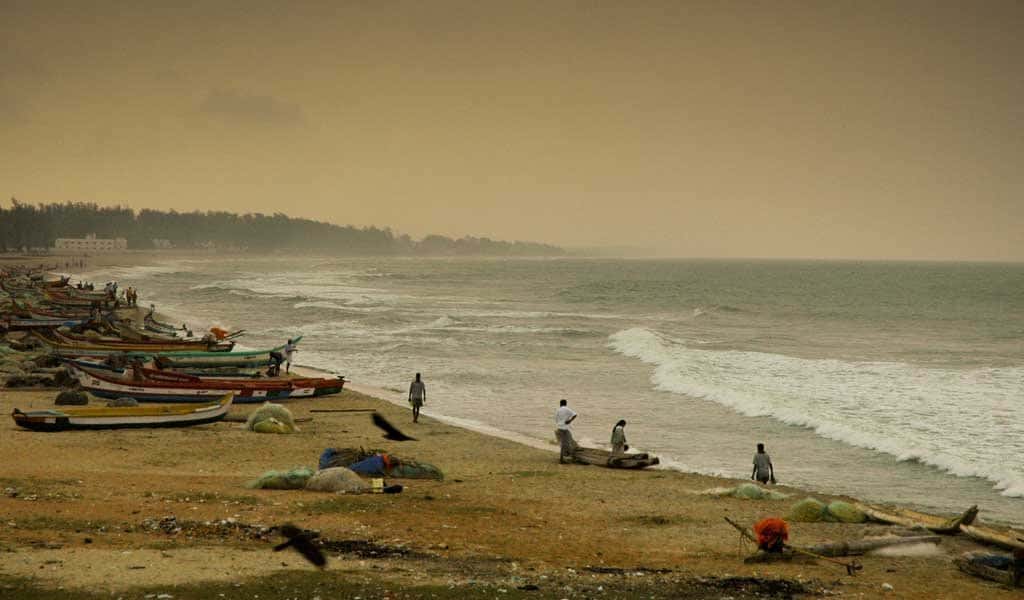
- Payyoli BeachA long stretch of silvery-golden sand with swaying palm groves and shallow water, usually quiet and clean, and lovely for a slow barefoot walk and a sunset. It is a beach to enjoy for its calm and space rather than for facilities, so carry your own water and shade, and read the safety section before you swim.
- Thikkodi lighthouseNear Koyilandy, the Thikkodi (Thikkoti) lighthouse is said to have been built following a shipwreck and has been operating since 1907, a black-and-white banded tower about 108 feet tall. There is no entry fee, though its opening hours are not officially published, so ask locally before making a special trip to climb it.
- Velliyamkallu, the offshore rockVelliyamkallu is a striking rock formation out in the sea near the lighthouse, wrapped in local legend. Some boatmen offer a ride out from Payyoli or Kolavipalam, but there is no fixed fare and trips depend entirely on the weather, so agree a price and check the sea first, and skip it in the monsoon.
- The Moorad estuary sandbankAbout 1.5 km north of Payyoli Beach, the sandbank where the Moorad river meets the sea is, in Kerala Tourism's words, a bird watcher's delight. It is a gentle, low-key spot for coastal birds and waders, best in the cool of a winter morning.
Unlike Kozhikode Beach or Kappad, Payyoli sees few tourists, so its sights are quiet, uncommercial and best enjoyed slowly. That is exactly the appeal: an empty golden beach, an old lighthouse, a mystic rock and the estuary birds, with none of the touts or the crush. Give it a relaxed half day rather than a rushed hour, and let the pace of a real Malabar town set the mood.
Kolavipalam and the Olive Ridley turtles
Just up the coast, Kolavipalam beach is a nesting ground for endangered Olive Ridley turtles, protected by a local group called Theeram. This, more than anything, is the reason to time a Payyoli trip.
- Kolavipalam, the Turtle BeachKolavipalam (Kolavi Palam) beach lies between Vadakara and Payyoli over a stretch of about 4 km, bordered by the Velliyamkallu rock. Its golden sand and shallow water are lovely in their own right, but its fame is as a nesting ground for the endangered Olive Ridley turtles, which is why it is nicknamed the Turtle Beach.
- When the turtles comeThe turtles come ashore to lay their eggs between about November and December, so a winter visit gives you the best, though never guaranteed, chance. Recent studies report a sharp fall in the number of nesting turtles, so please arrive with low expectations and a respectful heart rather than expecting a show.
- The Theeram conservation storyThe protection is run by Theeram, a nature conservation group that local fisherfolk formed in 1992 after a few village youths read about the turtles' endangered status. They collect and guard the eggs in a hatchery and release the hatchlings to the sea, work done quietly by volunteers, so a small donation or simply your good behaviour is the right way to thank them.
- How to behave on a nesting beachIf you are lucky enough to see a nesting turtle or a hatchling release, keep well back, stay quiet, and use no flash or bright torch light, which disorients the turtles. Do not touch the animals or the eggs, and follow the Theeram volunteers' guidance completely. This is conservation, not a photo opportunity.
It is important to be honest here, because the listicles are not. The Olive Ridley nesting at Kolavipalam is a fragile, declining natural event, not a scheduled attraction, and on most visits you will see the hatchery and the conservation work rather than a turtle. Come in November or December for the best chance, respect every instruction from the Theeram volunteers, and measure the trip by the beauty of the quiet coast and the cause, so you go home happy whether or not a turtle appears.
P.T. Usha's town, and the honest reality
Payyoli is proud to be the home town of P.T. Usha, the Payyoli Express and one of India's greatest athletes. Here is what that means on the ground, honestly.
- The Payyoli ExpressP.T. Usha was born in 1964 in this Kozhikode district and grew up on the Payyoli coast, where she first trained before becoming India's sprint queen. Her nickname, the Payyoli Express, ties the town's name to one of the proudest stories in Indian sport, and locals will happily tell you about her if you ask.
- The 1984 near-missAt the 1984 Los Angeles Olympics she finished fourth in the 400 m hurdles and missed the bronze medal by one hundredth of a second, still the closest an Indian woman has come to an individual Olympic track medal. It is a heartbreak Indians of a certain age remember exactly, and it is part of why the town's name carries such weight.
- The honest reality in townDo not expect a museum or an academy to tour in Payyoli itself. The Usha link is heritage and local pride, not a ticketed sight. She later founded the Usha School of Athletics elsewhere in the district as a serious training academy for young runners, not a tourist attraction, so treat a visit to Payyoli as walking the coast that shaped her, not visiting a shrine.
- For sports fansIf you are a fan, the pleasure is simply standing on the same quiet beach and coastal roads where a village girl trained her way to the edge of an Olympic medal. Pair it with the turtles and the Malabar food, and you have a warm, offbeat day that means far more than a plaque ever could.
Payyoli chicken and the Malabar food
Payyoli lends its name to a famous Malabar dish, and the wider coast is one of India's great food regions. For many travellers a good meal is as much the point as the beach.
- Payyoli chicken fryThe town gives its name to Payyoli chicken fry, or Payyoli kozhi porichathu, chicken marinated in a dry red-chilli and spice paste and fried in coconut oil, crisp and spicy outside and juicy within. Ask at local eateries and toddy shops along the coast for the real thing, as the coconut oil and the dry masala are what make it Payyoli style.
- The wider Malabar tableThis is Malabar, so beyond the chicken look for the fragrant Malabar biryani made with short-grained kaima rice, the soft rice flatbread pathiri, fresh seafood, and the black lime tea called sulaimani as a digestive. A full local meal is typically about 150 to 300 rupees, so you eat very well for very little.
- The sweets to carry homeKozhikode halwa, the thick glossy sweet sold by the slab, is the region's signature and travels well as a gift; it runs roughly about 80 to 200 rupees a kg depending on the variety. The wafer-thin coconut-oil banana chips are the other classic to take home from any Malabar trip.
- How to eat well herePayyoli itself is a small town, so the choice is homely local eateries rather than fine dining. For more variety, pair your beach day with a meal in Kozhikode or Vadakara, both of which have well-known biryani houses and seafood spots covered in our Calicut guide.
The best Payyoli chicken and Malabar meals are in unpretentious local kitchens, not tourist restaurants, because there are barely any tourist restaurants here. That is a good thing: ask your homestay host or a shopkeeper where they eat, go a little early for lunch before the fresh batches run out, and you will taste the coast at its most honest and its cheapest.
Lokanarkavu temple, Vadakara and the crafts village
Payyoli sits in a rich stretch of North Malabar, close to an ancient temple, a legend-soaked coast and a Kerala government crafts village, so a day here easily becomes two.
- Lokanarkavu Bhagavathy TempleAt Memunda near Vadakara, a short drive north of Payyoli, this ancient temple to Goddess Durga, with separate shrines for Vishnu and Lord Siva, is famed for its old murals and carvings and its ties to the Vadakkan Pattukal northern ballads. Darshan hours are commonly listed as roughly about 5:30 am to 11 am and again about 5 pm to 8 pm, so plan around the midday break and dress modestly for the shrine.
- Vadakara and its legendsVadakara, about 13 km north, is the heartland of the Vadakkan Pattukal and the legends of the warrior Thacholi Othenan and the kalaripayattu martial tradition. It is a workaday town rather than a polished sight, but for anyone drawn to Kerala's martial-arts and ballad heritage it is atmospheric ground.
- Sargaalaya crafts village, IringalThe Sargaalaya arts and crafts village at Iringal, a Kerala government initiative a short way north of Payyoli towards Vadakara, gathers craftspeople and their work in a riverside setting and is a pleasant, unhurried half-day. Check current opening days locally, as government-run sites can change their hours.
- The wider coastPayyoli sits neatly on a North Kerala coastal loop. To the south is Koyilandy and then Kozhikode with its food and history; to the north are Vadakara, Kannur and Bekal with their beaches and forts. It is easy to add a coastal night either side and make a relaxed Malabar road trip.
The one thing that breaks a tight plan here is arriving at Lokanarkavu during its long midday closing, roughly late morning to early evening, or at the Sargaalaya crafts village on a day it is shut. Neither publishes rock-solid hours online, so reconfirm locally the day before, build the temple into your morning or evening, and keep the hot middle of the day for the beach or a meal.
Where to stay in Payyoli, and how many nights
Payyoli has only modest homestays and small lodges of its own, so decide early whether to sleep on the quiet coast or base in a bigger town nearby. A night or two is plenty.
- In Payyoli: homestays and small lodgesStaying in Payyoli itself means simple homestays and a few small lodges rather than resorts, which is perfect if you want the quiet coast, home-cooked Malabar food and an early morning on an empty beach. Book ahead, as choices are few, and keep your expectations homely rather than luxurious.
- Base in Kozhikode or VadakaraFor more choice and easier logistics, many travellers stay in Kozhikode about 40 km south or Vadakara about 13 km north, both well connected, and visit Payyoli and Kolavipalam for the day. This works especially well if you are combining Payyoli with a wider North Kerala trip.
- Room budgetsAs a rough guide, budget rooms run about 1,200 to 2,500 rupees and mid-range stays about 3,000 to 6,000 rupees, all approximate and worth checking live, with prices generally lower here than in the tourist hotspots. Homestay rates often include a good home-cooked meal, which is part of the charm.
- How many nightsOne night and a full day is enough to walk the beach, see Kolavipalam and the lighthouse and eat well. Add a second night if you want the turtle season, the nearby temple and crafts village, or simply a slow pause. Many people do Payyoli as a single relaxed day trip from a coastal base.
If you are unsure, base yourself in Kozhikode for its food, history and hotels, and give Payyoli and Kolavipalam a relaxed day trip up the coast, timed for the turtle window in November or December if you can. If your heart is set on waking to an empty beach, book a Payyoli homestay a little ahead and enjoy the town at its own gentle pace. Either way, one or two nights on this coast is the right weight.
Payyoli costs and a realistic daily budget
Payyoli is gentle on the wallet, with low-key stays and cheap, excellent food. Here is what the main things cost so you can plan without being caught out.
- A rough daily budgetExcluding your room and long-distance transport, plan on about 1,000 to 1,500 rupees a day as a backpacker and about 2,500 to 4,000 rupees for a comfortable day with a car and good meals. Payyoli is cheaper than the tourist hubs, and the food in particular is a bargain.
- Getting here and aroundThe train from Kozhikode is the cheapest way in, commonly about 45 rupees in second class and up to about 265 rupees for a reserved or express seat. On the ground, autorickshaws handle short hops and a hired car with a driver is the easy way to combine the beach, the temple and the coast.
- Food, the great valueA full local Malabar meal is typically about 150 to 300 rupees, the Payyoli chicken and seafood are inexpensive at homely eateries, and Kozhikode halwa to carry home runs roughly about 80 to 200 rupees a kg. You eat very well here for very little.
- Cash and cardsBigger shops and hotels take cards or UPI, but small eateries, autos and the local market run on cash, so carry enough. There are bank ATMs in the town and in Vadakara and Koyilandy, but do not rely on card acceptance everywhere in a small coastal town.
Practical logistics: facilities, money, SIM and getting around
The small things that make a Payyoli day smooth, from the modest facilities to the liquor rules, ATMs and how to get around a small coastal town.
- Carry what you need to the beachPayyoli beach is quiet and uncommercial, so there are few shops, no resort facilities and limited shade. Carry your own drinking water, sun protection and a snack, especially in the warmer months, and do not expect changing rooms or loungers as at a resort beach.
- The Kerala liquor rulesKerala is strict on alcohol: it is sold only through state Beverages Corporation, or Bevco, shops and licensed bar hotels, you may not carry it in from other states, and there are dry days around some festivals and elections. In a small town like Payyoli, do not assume a casual drink is easy to find.
- Getting aroundThe town core and the beach are walkable, and autorickshaws cover short hops to the station and Kolavipalam. For the lighthouse, Velliyamkallu, Lokanarkavu and the wider coast, a hired car with a driver is much the simplest way to handle the distances.
- Money, SIM and languageCarry cash for the market and small eateries; ATMs are in the town and nearby Vadakara and Koyilandy. Mobile coverage is generally fine. Malayalam is the local language, but simple Hindi and English are understood in the trade, and a warm smile goes a long way in a place with few tourists.
Safety, the monsoon sea, and staying well
Payyoli is a calm, friendly town with no special hazards, but the sea deserves real respect, especially in the monsoon, and a small-town beach means looking after yourself.
- The sea and swimmingThe water at Payyoli and Kolavipalam is shallow and often calm in the dry season, which is part of the appeal, but this is not a patrolled resort beach and lifeguard cover is unreliable or absent. Swim only when the sea is clearly gentle, stay close to shore, never swim alone, and keep children within arm's reach.
- The monsoon sea is dangerousFrom about June to September the sea on the Malabar coast turns rough with strong rip currents, and every year the coast sees drownings. In the monsoon, treat the beach as a place to walk and watch the waves, not to swim or take a boat, and heed any local warnings without exception.
- Heat, water and general careIn the warmer months carry water and sun protection, as the open beach has little shade. Drink bottled or filtered water, take the usual care with new food, and carry a mosquito repellent for the estuary and evening, especially around the monsoon.
- General safety and the liquor rulesPayyoli is a low-key, safe town with none of the tout pressure of the big tourist hubs, so ordinary good sense is enough. Remember Kerala's liquor rules, that alcohol comes only from Bevco shops and bar hotels and cannot be carried in from other states, so plan accordingly.
Payyoli is generally an easy, low-pressure place for independent and solo travellers, including women, with the usual sensible precautions, and it lacks the hassle of busier beaches. Because it is quiet, prefer daylight and populated stretches of beach, tell your homestay your plans, and dress modestly at the temple and in the town. Treat the empty stretches of sand and the boat rides with the same care you would give any lonely spot.
Payyoli for every kind of traveller, and on access
Payyoli suits some travellers beautifully and others not at all. Here is what it offers you, and the one tip that matters for each, including how a senior enjoys the calm.
- CouplesQuietly romantic in an offbeat way: an empty golden beach, a slow sunset, home-cooked Malabar food and no crowds. It suits couples who want calm and each other's company rather than nightlife or a busy resort scene, so come for the peace.
- Families with childrenGentle and uncommercial, good for a slow beach day, the turtle story and the lighthouse. Mind the unpatrolled sea and keep little ones close to shore, and remember there are few facilities, so pack water, snacks and shade for the day.
- Senior travellers and on accessibilityVery doable and restful with a little planning. Stay in a homestay near the beach to limit walking, visit in the cool of morning or evening, use a hired car rather than autos for the heat and the distances, and enjoy the calm that Payyoli does so well. The soft sand is not wheelchair-friendly, so plan gentle, firm-ground spots.
- Nature and birdwatchersThis is a fine choice: the Kolavipalam turtles in season, the Moorad estuary birds at dawn, and the quiet coast. Time your trip for winter, carry binoculars, and treat the conservation work at Theeram with respect rather than as a spectacle.
- Solo female travellersGenerally relaxed and low-pressure, with little of the tout hassle of busier hubs. Prefer daylight and busier stretches of beach, keep your homestay informed of your plans, and Payyoli is one of the gentler, quieter Kerala coasts to travel alone.
- Sports fans and the nostalgicFor anyone who grew up on the legend of the Payyoli Express, simply being on P.T. Usha's home coast is the draw. Pair it with the turtles and the food for a warm, meaningful day rather than a checklist of monuments.
A suggested Payyoli itinerary
How to shape a relaxed day or two so you catch the beach at its best light, the turtles if the season allows, and the nearby temple without rushing.
- Morning: the beach and the birdsStart early with a barefoot walk on Payyoli Beach and a quiet hour at the Moorad estuary sandbank for the birds, while the light is soft and the sun is gentle. Breakfast at your homestay or a local eatery, and keep the heat of the day for shade.
- Late morning: Kolavipalam and the turtlesHead up to Kolavipalam to see the Turtle Beach and, in November or December, the Theeram hatchery and conservation work. Even out of season it is a beautiful, quiet stretch, and the story of the fisherfolk who protect the turtles is worth the trip.
- Afternoon and eveningAfter a Payyoli chicken or seafood lunch, rest through the hottest hours, then visit Lokanarkavu temple in its evening darshan window or the Thikkodi lighthouse, and end with a sunset back on the beach. This gentle rhythm is Payyoli at its best.
- A second day, if you have itWith a second day, add the Sargaalaya crafts village at Iringal, a boat out to Velliyamkallu if the sea is calm, or a run up to Vadakara for its ballads and martial heritage. Or simply do less, slowly, which is what this coast rewards most.
The single thing that shapes a Payyoli plan is the season. Come in about November or December and you get the calm dry-season coast and the best, though never guaranteed, chance of the Olive Ridley turtles at Kolavipalam. Come in the southwest monsoon, from about June to September, and the sea is dangerous and the boats do not run, so plan a rain-and-green trip instead. Build the day around a cool morning and a gentle evening, and keep the hot middle hours for a meal and a rest.
The real questions travellers ask about Payyoli
Straight answers to the questions that come up again and again on traveller forums and blogs, so you arrive already knowing the score.
- Is Payyoli worth visiting?Yes, if you want a quiet, real Malabar coast, the turtle conservation at Kolavipalam and cheap, wonderful food, and no, if you want a lively resort beach with facilities and nightlife. Set your expectations to a calm, offbeat day and Payyoli rewards you; expect Kovalam and you will be disappointed.
- When exactly are the turtles?The Olive Ridley turtles nest at Kolavipalam between about November and December, and even then sightings are rare and never guaranteed, as numbers have declined. Come in that window for the best chance, respect the Theeram volunteers, and treat the hatchery and the cause as the real reward.
- Is the beach safe for swimming?In the dry season the water is shallow and often calm, but this is not a patrolled resort beach and lifeguard cover is unreliable, so swim only when the sea is clearly gentle and stay close to shore. In the monsoon, from about June to September, the sea is dangerous and swimming is not advised at all.
- How do I get here without a car?Payyoli has its own railway station on the coastal line, with direct trains to Kozhikode about 37 km away in roughly 40 minutes, commonly about 45 rupees in second class. From the airport at Calicut or Kannur, take a taxi or train via Kozhikode.
- Should I stay in Payyoli or nearby?Stay in a Payyoli homestay if you want to wake to an empty beach, or base in Kozhikode or Vadakara for more hotels and food and visit for the day. The day-trip plan suits most travellers on a wider North Kerala trip.
- Is there anything about P.T. Usha to see?Payyoli is proud to be her home town, but there is no museum or academy to tour in the town itself. Enjoy the Payyoli Express heritage as pride and story, and the coast that shaped her, rather than expecting a dedicated attraction.
Planning Payyoli from abroad
Payyoli is the calm, real, non-touristy side of Kerala and a soulful stop on a North Malabar coast trip. A little preparation on how small it is, the sea and the liquor rules makes it easy.
- Know how small and quiet it isPayyoli is a real working town, not a tourist resort, so there is no beach strip, no nightlife and few facilities. That is exactly its charm, but come knowing you are choosing peace, an empty beach and a good cause over comfort and entertainment, and you will love it.
- Time it for the turtles and the dry seasonThe comfortable months are about October to March, and the Olive Ridley turtles nest at Kolavipalam in roughly November to December, so a winter visit gives you the calm coast and the best chance of the turtles. Avoid the southwest monsoon, from about June to September, when the sea is dangerous.
- Respect the sea and the liquor rulesThe beach is not lifeguarded like a resort, so swim only in a clearly gentle sea and stay close to shore. Kerala is also strict on alcohol, sold only through Bevco shops and bar hotels and not carried in from other states, so plan a drink around a licensed bar hotel if you want one.
- Fit it into a North Kerala loopFly into Calicut or Kannur, both with strong Gulf links, and string together Kozhikode for food and history, Payyoli and Kolavipalam for the quiet coast and turtles, and Vadakara, Kannur and Bekal further north. It is the less-crowded, more local face of Kerala.
Money, connectivity and expectations for foreign visitors
The practical basics an overseas or NRI traveller needs for a small coastal town: cash, a SIM, and an honest sense of what Payyoli is and is not.
- Carry cash and a SIMSmall eateries, autos and the market in Payyoli run on cash, so draw enough at an ATM in the town, Vadakara or Koyilandy and do not rely on cards everywhere. Pick up an Indian tourist SIM or an eSIM when you land at Calicut, Kannur or Kochi, as coverage on the coast is fine but buying a SIM is easiest at the airport.
- Set your expectations honestlyCome for an empty beach, the turtle conservation, the Payyoli chicken and the peace, not for resorts, water sports on demand or nightlife. Judged as a quiet, authentic slice of Malabar life, Payyoli is a delight; judged as a beach resort, it will let you down, so choose it for what it is.
- How long to give itOn a wider Kerala trip, half a day to a full day is the right weight for Payyoli and Kolavipalam, with a night here only if you want the empty-beach dawn. Give the food-and-history of Kozhikode and the hills of Wayanad their own days, and let Payyoli be the calm coastal pause.
- The NRI angleFor NRI travellers with Kerala roots, Payyoli is the kind of unspoilt home-coast that the bigger resorts have lost: a quiet beach, home-cooked Malabar meals, a temple in the evening and a conservation story to be proud of. It is an easy, meaningful addition to a family visit to the Malabar coast.
Payyoli is an unusually gentle, honest introduction to the real Kerala coast for an overseas or NRI visitor: no touts, no crowds, just a long clean beach, the turtles of Kolavipalam, the pride of the Payyoli Express, and food that costs little and tastes of home. Give it a slow half day or an empty-beach night, treat the sea and the conservation with respect, and let it be the calm chapter of a North Malabar trip that many travellers remember most warmly.
The hundredth of a second that a whole country remembers
Payyoli's name travels far beyond its quiet beach because of one runner. Pilavullakandi Thekkeparambil Usha, born in 1964, grew up and trained on this Payyoli coast, and the world came to call her the Payyoli Express. At the 1984 Los Angeles Olympics she reached the final of the 400 m hurdles and, in a race Indians of a certain age can still describe stride for stride, finished fourth, missing the bronze medal by one hundredth of a second, the closest an Indian woman has ever come to an individual Olympic track medal. It was a heartbreak, but it lit a fire under Indian athletics that still burns. There is no grand monument to her in Payyoli, and that is somehow fitting: the memorial is the ordinary coast itself, the same sand and roads where a village girl trained her way to the very edge of the Olympic podium, and gave a small Malabar town a name the whole country knows.
Planning a Payyoli trip?
Our Kerala travel experts plan your full journey for you: route, hotels, darshan timings and transport. You get a free day-by-day plan and an exact quote on WhatsApp, usually within a few hours. No payment is needed to get your plan.