Periyar Travel Guide
The best months are October to February , cool and dry, with December to February the sweet spot. The hot months still deliver good wildlife sightings, and the monsoon is green...
When to visit Thekkady and Periyar
The best months are October to February, cool and dry, with December to February the sweet spot. The hot months still deliver good wildlife sightings, and the monsoon is green but can disrupt treks.
- October to February: cool, dry and the peakThe most comfortable window, pleasant by day and cool at night, so carry a light layer for the early morning boat. December to February is the sweet spot, as the lake waterline recedes and wildlife gathers at the water. This is also the busiest season, so book the cruise and any treks ahead.
- March to May: hot, but good for sightingsThe plains get hot and the hills stay a little cooler, but this is quietly a good time for wildlife because animals come down to the lake to drink. Do the boat at dawn or dusk to dodge the midday heat, and keep water and sun protection with you on any walk.
- June to September: the green monsoonThe reserve is at its lushest and least crowded, heaviest around July and August. Treks and rafting can be muddy or uncomfortable, and some eco-programmes are weather dependent and may be suspended, so keep your plans flexible and confirm on the day.
- Peak or quiet, decide firstThe dry winter is the classic choice for comfort and clear boating; the shoulder and hot months are quieter and cheaper with decent sightings; the monsoon is for those who love a green, misty forest and do not mind the rain. Choose the experience you want before you book.
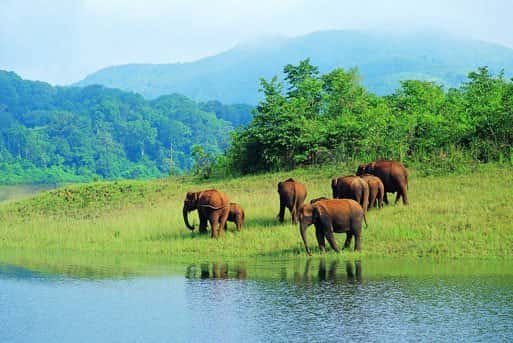
Periyar is a tiger reserve, but tigers are almost never seen here. What you will most likely see on the boat or a walk is Indian gaur or bison, sambar deer, wild boar, otters and a great many waterbirds; elephants are a matter of luck and leopards are rare. Come for the forest-on-the-water experience and the calm of the lake, not a tiger tick, and you will not be disappointed. The best chance of any sighting is the first cruise near dawn or the last near dusk, when animals come to the water and the crowds are thinnest.
How to reach Thekkady
Thekkady has no airport or railway of its own. Most people arrive by road from Cochin, from Madurai just over the state border, or on the classic Munnar to Thekkady to backwaters loop.
- By air via Cochin or MaduraiKerala Tourism lists Thekkady as about 190 km from Cochin International Airport, though road-distance figures often read lower at roughly 140 to 160 km and about 4 to 5 hours by car. Madurai airport in Tamil Nadu is about 136 to 140 km and around 3 to 3.5 hours, and is often the quicker gateway despite being in another state. There are no flights to Thekkady itself.
- By train via KottayamThe nearest convenient railhead is Kottayam, which Kerala Tourism lists as about 110 km away, roughly 3 to 3.5 hours by road. Ernakulam and Kochi are farther at about 160 to 190 km. From either you take a taxi or bus up into the hills to Kumily.
- From Munnar and the Kerala loopMost visitors reach Thekkady on the classic circuit: Munnar to Thekkady is roughly 90 to 120 km and about 3.5 hours through tea and spice country. Thekkady then pairs naturally with the Alleppey or Kumarakom backwaters, and we can arrange a car with an experienced driver for the whole loop.
- Getting to the boat and aroundYou sleep in Kumily town, about 4 to 5 km from the boat landing. Private vehicles are not allowed up to the lake, so you park in the Thekkady area and take a Forest Department shuttle bus, about a 15 minute ride costing around 60 rupees per person. Auto-rickshaws and taxis cover the short hops around Kumily.
Fly into Cochin (Kochi), the main Kerala gateway, then drive up to Thekkady, or reach it on a Munnar and backwaters loop. There are no international flights to Thekkady itself.
Fly into Cochin for the Kerala loop, or into Madurai in Tamil Nadu, which is often a quicker road approach to Thekkady at about 3 to 3.5 hours.
Take a train to Kottayam or Ernakulam and drive up into the hills, or reach Thekkady on the Munnar to Alleppey road circuit. There is no railway at Thekkady itself.
The lake, the reserve, and the boat cruise
Thekkady is the Periyar Lake, the forested reserve around it, and the spice country of Kumily. The boat cruise is the set-piece, and a few rules are worth knowing before you go.
- The Periyar Lake boat cruiseThe signature experience: a gentle cruise on the reservoir past drowned tree stumps and forested banks, watching for gaur, deer, otters and birds. The government KTDC boats run about five departures a day, roughly 07:30, 09:30, 11:15, 13:45 and 15:30, and each cruise lasts about 90 minutes, not the two hours some pages claim. The upper deck has the best view.
- Kumily, the spice townThe town where you stay, just outside the reserve, full of cardamom, pepper and clove shops, small restaurants and homestays. It is the base for the boat, the plantations and the evening cultural shows, and pleasant to wander in the cool of the evening.
- Spice and tea plantationsThe hills around Kumily are cardamom, pepper, coffee and tea country. A guided plantation walk is a lovely, low-key hour, and the drive up from the plains through the plantations is a highlight in itself. See the logistics section for the honest note on plantation shopping.
- Mangala Devi and the border countryOn clear days and with a permit, the Mangala Devi temple site on the higher ridge near the Tamil Nadu border and the border-hiking trails give big views over both states. Access depends on the Forest Department and the weather, so ask locally about current permission before planning around it.
The single thing that catches first-timers is arriving late at the wrong spot. Private vehicles are not allowed up to the boat landing; you park in the Thekkady area about 4 km away and take a Forest Department shuttle bus, about a 15 minute ride costing around 60 rupees per person. You must then report at the landing about 30 minutes before your cruise departs. Build both the shuttle and the reporting time into your plan, and reach the gate early, or you risk missing a slot you booked.
The full eco-tourism menu in Thekkady
Beyond the boat, the Forest Department runs a whole menu of guided walks, rafts and treks, each at an official price. Here is the complete list with sourced fees, so you can choose without guessing.
- Nature Walk and Green WalkA guided walk of about 2.5 to 3 hours over 4 to 5 km with a local guide, the gentlest way into the forest and good for birds and butterflies. Priced at about 350 rupees per person, with several morning and afternoon slots. A fine choice if you want the forest on foot without a hard trek.
- Bamboo RaftingA day on the lake and the shore combining rafting and trekking with armed guides, the most popular full-day adventure. Priced at about 1,800 rupees per person for a half day and about 2,400 rupees for a full day, reporting early in the morning. Good fitness helps, and it must be booked ahead in season.
- Border Hiking and Jungle ScoutBorder Hiking is a full-day trek to the higher ridges at about 1,800 rupees per person with food included. Jungle Scout is a guided night patrol with armed guards, a very different experience of the forest after dark, at about 1,200 rupees per person. Both need booking ahead and a reasonable level of fitness.
- The Periyar Tiger TrailThe flagship overnight camping trek, led by reformed poachers who now protect the forest, covering roughly 20 to 35 km. It runs about 6,000 rupees per person for one night and two days and about 8,400 rupees for two nights and three days, with only a handful of places, twice a week. Book well in advance for this one.
- Spice plantation tourA pleasant hour-long guided walk through a cardamom and pepper garden, typically about 100 to 500 rupees per person, with roughly 200 rupees common. Enjoy it for the learning, but see the safety section on where to actually buy your spices.
- Kathakali and Kalaripayattu showsIn the evenings Kumily stages Kathakali dance and the Kalaripayattu martial art at venues such as the Mudra Cultural Centre, at about 200 rupees per person, usually around 5 pm to 8 pm. Arrive a little early to watch the elaborate makeup and costuming.
- Ayurveda and a slow eveningMany Kumily stays offer Ayurvedic massage, a gentle way to end a day of walking. Pair it with a plantation walk and a cultural show and you have a full, unhurried evening off the lake.
If you do only one thing, make it the first boat cruise of the day. The dawn light on the water, the mist lifting off the forest and the best odds of seeing gaur or elephants come to drink make the early slot the one people remember. Add a nature walk or the bamboo raft if you have a second day, and let the reserve unfold at a slower pace than a single cruise allows.
Where to stay in Thekkady, and how many nights
Base yourself in Kumily town to be near everything, or in a plantation or lakeside resort for calm and views. One to two nights is the sweet spot.
- Kumily town: near everythingWalking distance to the spice shops, restaurants, cultural shows and the road to the boat. Busier and more commercial, but the most convenient base, and where most homestays and budget-to-mid stays cluster. Best for first-timers who want everything close.
- Plantation and forest-edge staysQuieter properties in the cardamom and coffee hills or near the reserve, with gardens, birdsong and cooler air, though you will need transport into town and to the boat. Better for couples, honeymooners and anyone who wants to slow down.
- How many nightsOne full day and night covers the boat cruise, a spice walk and an evening show comfortably. Add a second night for a nature walk, the bamboo raft or the Tiger Trail, or simply a slower pace. Half a day, in transit, lets you catch one cruise but little else.
- Booking in seasonRooms in Kumily fill up in the October to February peak and around long weekends and holidays, so book ahead in season. Off-season and in the monsoon you will find both space and better rates.
It helps to keep the names straight before you book. Kumily is the town where you sleep, eat and shop, with the bus stand and the homestays; Thekkady is the reserve and the Periyar Lake, and the boat landing sits about 4 to 5 km from Kumily. If a listing says Thekkady, check where it actually is, because a room deep in the plantations is lovely but means a drive to town and to the boat for every outing.
Thekkady costs and a realistic daily budget
Thekkady is gentle on the wallet if you know the real costs. Here is what the boat, the activities and the extras run to, so you can plan and avoid the stale-fare trap.
- The boat cruiseThe government KTDC boat is about 450 rupees per head including tax, plus the shuttle bus at around 60 rupees per person, plus the reserve entry, which is charged separately and is higher for foreign visitors. Book on an official portal and reconfirm the current fee, since older pages quote a stale boat fare of about 225 rupees and leave out the entry.
- The activitiesA nature walk is about 350 rupees per person, bamboo rafting about 1,800 to 2,400 rupees, border hiking about 1,800 rupees, the night patrol about 1,200 rupees, and the overnight Tiger Trail about 6,000 to 8,400 rupees. A spice plantation walk is about 100 to 500 rupees and a cultural show about 200 rupees, so a full day of experiences adds up fast if you do several.
- A rough daily budgetExcluding your room and long-distance transport, plan on about 1,500 to 2,500 rupees a day as a backpacker doing the boat and one walk, more if you add a full-day raft or trek. A comfortable mid-range day with the boat, a plantation tour, a show and meals sits higher, and the overnight treks are a separate splurge.
- Cash and cardsKumily has ATMs and larger places take cards or UPI, but the boat counter, the shuttle, small eateries and the plantations often run on cash, so carry enough for the day. Agree any driver-arranged extra or taxi fare before you set off.
The single most common costing mistake is trusting an old page that lists one low boat number, often about 225 rupees, and hiding the fact that the reserve entry is a separate charge and higher for foreign visitors. The real spend for the cruise is the boat ticket plus the shuttle plus the entry. Always reconfirm the current fees on the official KTDC boating portal or the Periyar Tiger Reserve portal before you budget, because the fees are revised from time to time and every stale blog copies the last number it saw.
Practical logistics: booking, shuttle, food and money
The small things that make a Thekkady day smooth, from which portal to book on to the shuttle bus, the ID rule, cash and getting around Kumily.
- Book the cruise on an official portalTwo official operators run boats: the government KTDC through its boating portal, and the Kerala Forest Department through the Periyar Tiger Reserve portal. Only about half the seats sell online and the rest go at the counter, so book ahead in season, and if one official site shows sold out, try the other.
- Carry ID that matches the bookingBring a photo ID, and make sure the name on the booking matches it, as the reserve checks tickets against identity. A mismatch can mean being turned away, so book in the traveller's own name and keep the confirmation handy on your phone.
- The shuttle and the reporting timePark in the Thekkady area, take the Forest Department shuttle bus, about 15 minutes and around 60 rupees per person, and report at the boat landing about 30 minutes before departure. There are no private vehicles beyond the parking area, so leave time for the shuttle and the queue.
- Food, money, SIM and languageKumily has plenty of small vegetarian and non-vegetarian restaurants and homestay kitchens, ATMs in town, and generally fine mobile coverage. Malayalam and Tamil are the local languages, but English is widely understood in the tourist trade, so getting by is easy.
Safety, the boat rules, and the commission trap
Thekkady is a gentle, well-run reserve, but the boat has firm safety rules for good reason, and the spice-plantation commission catches some visitors. A little awareness keeps the day happy.
- Life jackets are compulsory, and whyWear the life jacket the whole cruise. The rule followed a real tragedy on 30 September 2009, when the double-decker boat Jalakanyaka capsized on the reservoir and about 45 of the roughly 82 people aboard died, after the boat was overloaded and passengers rushed to one side to see bison. Capacity limits, life jackets and rescue boats were brought in afterwards, so do not stand up or crowd one side of the boat.
- The spice-plantation commission trapDrivers and guides often earn a commission on what you buy at the plantation shop, where spices can be priced well above the market. Enjoy the plantation walk for the learning, then buy your cardamom and pepper from a government cooperative or the local Kumily market rather than the shop you are steered to.
- The jeep safari, an honest noteThe private off-road jeep trips to Gavi and the plantations are polarising and vary a lot by operator, with prices quoted anywhere across a wide range. If you do one, agree the price and the route in advance and expect a scenic drive rather than a wildlife guarantee, since there is little to see beyond the scenery.
- Health, weather and wildlifeDrink bottled or filtered water, take the usual care with street food, and carry rain cover in the monsoon and sun protection in the hot months. On any walk stay with your guide, keep your distance from wildlife, and remember that elephants in particular are best watched from afar.
Thekkady is one of the gentler stops in Kerala for solo and family travellers, well organised and used to visitors. The boat is manageable with children, though very small children may find 90 minutes on the water long, and the compulsory life jackets add peace of mind. Seniors do the cruise comfortably with a hand on the steps and the shuttle sparing the walk; the guided treks are the only part that need real fitness. Standard precautions and a firm no to the commission steer are all it takes.
Thekkady for every kind of traveller, and on access
Thekkady suits very different visitors in different ways. Here is what it offers you, and the one tip that matters for each, including how a senior visits comfortably.
- Couples and honeymoonersGreen, calm and romantic: a dawn cruise, a plantation walk and a quiet forest-edge stay. Thekkady is a favourite honeymoon stop between the Munnar hills and the Alleppey backwaters, so an overnight rather than a day trip lets you slow down.
- Families with childrenEasy and enjoyable, with the boat, the elephant and spice country and the cultural shows. Very small children may find the 90 minute cruise long, so pick an early slot when it is cool, and the compulsory life jackets make the boat reassuring.
- Senior travellers and on accessibilityVery doable with a little planning. Stay in Kumily to keep distances short, use the shuttle bus rather than walking to the landing, take the boat steps slowly with a hand from the crew, and skip the harder treks in favour of a gentle nature walk. The reserve is well managed and the pace is easy.
- Wildlife and nature loversSet your expectations honestly and you will enjoy it: gaur, sambar, otters and rich birdlife are the reward, with elephants a lucky bonus. For the best chance, take the first or last cruise and add a nature walk or the bamboo raft, and consider the Tiger Trail for a deeper forest immersion.
- Solo travellersStraightforward and safe, with organised boats and treks you can join, and Kumily an easy town to base in. Book activities ahead, keep to guided groups on the treks, and you will find it one of the more relaxed stops in Kerala to travel alone.
- PhotographersThe dawn mist on the lake, the drowned tree stumps, the birds and the tea and spice hills are the draw. Take the upper deck for the boat, use the early or late slot for light, and remember that big wildlife is a matter of luck rather than a guarantee.
A suggested Thekkady itinerary
How to shape one or two unhurried days so you catch the lake at its best light and fit in the walks and the evening shows without rushing.
- Day one, morningTake the first or second boat cruise of the day, reaching the landing early via the shuttle, for the best light and the best odds of wildlife. Come back to Kumily for a late breakfast and a wander through the spice shops.
- Day one, afternoon and eveningDo a gentle plantation walk or an Ayurvedic massage through the warm afternoon, then catch a Kathakali or Kalaripayattu show in the early evening, arriving early for the makeup. A quiet dinner in Kumily rounds off the day.
- Day two, if you have itAdd a nature walk, the bamboo raft or, for the fit and organised, the overnight Tiger Trail. A second night turns a tick-the-box stop into a proper forest pause and gives you a second crack at a good sighting.
- The half-day versionOn a Munnar to backwaters drive you can stop for one boat cruise and a quick spice walk in half a day, though you will miss the calmer, deeper side of the reserve that a night in Kumily unlocks.
The single thing that breaks a tight Thekkady plan is missing the boat, either because the online seats sold out or because the shuttle and reporting time were not counted in. Book your cruise ahead on an official portal, choose the dawn slot for the best wildlife and light, and reach the parking area with enough time for the shuttle bus and the 30 minute reporting window. Build the rest of the day, the plantation walk and the evening show, around that fixed anchor, and the day flows.
The real questions travellers ask about Thekkady
Straight answers to the questions that come up again and again on traveller forums, so you arrive already knowing the score.
- How do I book the boat, and which site is official?Two official operators run boats: the government KTDC through its boating portal, and the Kerala Forest Department through the Periyar Tiger Reserve portal. Both are legitimate. Book ahead in season, since only about half the seats sell online, and reconfirm the current fee on the site you use.
- Will I actually see wildlife or tigers?You will most likely see gaur, sambar deer, otters and birds; elephants are a matter of luck and tigers are almost never seen despite the name. Take the dawn or dusk cruise for the best chance, and come for the forest and the lake rather than a big-cat sighting.
- Is one boat cruise enough, or should I stay two nights?One cruise plus a spice walk and a show fills a comfortable day and night. A second night lets you add a nature walk, the bamboo raft or the Tiger Trail and gives you another cruise, which is the honest way to improve your wildlife odds.
- Munnar or Thekkady first?Most people do Munnar first for the tea hills, then drop down to Thekkady for the forest and the lake, then on to the backwaters. Thekkady is well worth adding after Munnar, and the roughly 3.5 hour drive between them runs through lovely plantation country.
- Is the boat safe after the 2009 accident?Yes, with the rules that followed it. Capacity limits, compulsory life jackets, lifeguards and rescue boats were introduced after the 2009 tragedy. Wear your jacket, stay seated and do not crowd one side, and the cruise is calm and well managed.
- Is the spice tour a commission trap?The walk itself is genuine and interesting; the catch is the shop at the end, where drivers earn a commission and prices can run high. Take the tour for the learning, then buy your spices from a government cooperative or the Kumily market instead.
Planning Thekkady from abroad
Thekkady is the green, forested chapter of a Kerala trip and pairs naturally with Munnar and the backwaters. A little preparation makes the booking, the shuttle rule and the wildlife odds easy to handle.
- Book the boat before you arriveReserve your cruise on an official portal ahead of time, since online seats are limited and sell out in season. Choose the dawn slot for the best wildlife and light, and make sure the booking name matches your passport, as tickets are checked against ID.
- Know the fees are higher for foreignersThe reserve entry is charged separately from the boat and is higher for foreign visitors, so budget for the boat ticket, the shuttle and the entry together. Reconfirm the current foreigner rate on the official portal, since fees are revised from time to time.
- Set your wildlife expectationsThis is a serene forest-and-lake experience, not a safari with guaranteed big animals. You will likely see gaur, deer, otters and birds, with elephants a lucky bonus and tigers almost never. Come for the calm and the scenery and you will love it.
- Fit it into the Kerala loopFly into Cochin, do Munnar for the tea hills, drop to Thekkady for the forest, then the Alleppey backwaters, and you have the classic Kerala circuit. Madurai airport in Tamil Nadu is an alternative gateway if you are combining Kerala with Tamil Nadu temples.
Money, connectivity and timing for foreign visitors
The practical basics an overseas traveller needs for a hill and forest stop: cash, cards, a SIM, and how many days to give Thekkady on a wider Kerala trip.
- Carry cash for the small thingsCards and UPI work in hotels and larger restaurants, but the boat counter, the shuttle, the plantations and small eateries run on cash. Draw money at the Kumily ATMs and keep small notes for the shuttle, tips and market spice buys.
- Get a SIM in the city firstPick up an Indian tourist SIM or an eSIM when you land in Cochin or on arrival, rather than hunting for one in a hill town. Coverage in Kumily is generally fine for maps, calls and booking, though it can thin out inside the reserve.
- How long to give it on a bigger tripOn a first Kerala trip, one to two nights in Thekkady is the right weight between Munnar and the backwaters: enough for a cruise, a walk and a show, without slowing the whole itinerary. Add the second night if you want a trek or a second cruise.
- Time your visit to your comfortOctober to February is the comfortable, dry window and the peak. The hot months still give decent sightings as animals come to the water, and the monsoon is green but wet, so choose the season that suits your tolerance for heat or rain.
Thekkady is an easy, gentle introduction to India's wilder side: a well-run reserve, a calm boat cruise, spice-scented hills and a walkable town, all far calmer than a big city. Slot it after Munnar and before the backwaters, give it a night or two, and let it be the green, unhurried middle of a Kerala loop. Many overseas visitors say the dawn cruise, with the mist on the water, ends up being one of the moments they remember most warmly from the whole trip.
Why the forest stands in the water at Periyar
Periyar's drowned forest, those pale tree stumps rising from the still water, is not a natural lake at all but the making of one dam. In 1895 the British built the Mullaperiyar dam across the Periyar river, diverting its westward waters eastward to irrigate the dry plains of Tamil Nadu, and the rising reservoir swallowed a valley of forest. The trees died where they stood, and their bleached trunks still break the surface more than a century later, giving the cruise its haunting, unmistakable look. The surrounding forest was declared a reserve in 1934 and a tiger reserve in 1978, and today the same water that drowned the valley draws gaur, elephant and deer down to drink, which is why the boat, gliding past the standing dead trees, is the one image every visitor carries away from Thekkady.
Planning a Periyar trip?
Our Kerala travel experts plan your full journey for you: route, hotels, darshan timings and transport. You get a free day-by-day plan and an exact quote on WhatsApp, usually within a few hours. No payment is needed to get your plan.