Amarkantak Travel Guide
The comfortable window is broadly October to March , and many find the weeks just after the monsoon, roughly September to February , the loveliest, when the falls run full and...
When to visit Amarkantak, and the festival to plan around
The comfortable window is broadly October to March, and many find the weeks just after the monsoon, roughly September to February, the loveliest, when the falls run full and the hills are green. The set-piece is Narmada Jayanti in January.
- September to November: green and fullJust after the rains, the Kapildhara and Dugdhdhara falls are at their strongest and the Maikal hills are green and washed clean. This is many travellers' favourite window, cool and photogenic, though a late shower is still possible in September.
- December to February: cool and clearThe classic winter season, pleasant by day at about 8 to 25 degrees Celsius and genuinely cold at night at over 1,000 m, so pack real warm layers. Skies are clear, the light is lovely at Sonmuda at sunrise, and the town is at its most comfortable.
- March to June: warming, then hotMarch is still fine, but by April and May the plains heat reaches even this hill town by day, and the falls thin out. The altitude keeps it milder than the surrounding lowlands, but it is not the season for the waterfalls.
- Monsoon, July to September: beautiful but check the roadsThe forest is at its most dramatic and the falls are thunderous, but hill roads can be slippery and the long approach from Jabalpur or Bilaspur is slower, so allow extra time and drive in daylight.
Narmada Jayanti, the river's birthday and Amarkantak's biggest festival, falls in 2026 on about 25 January. The Narmada Kund and ghats are decorated and a grand evening aarti is held, and the town fills with pilgrims. It is a wonderful time to be here, but rooms are scarce and dear around the date, so book well ahead or plan a quieter week. Dates follow the Hindu calendar and shift each year, so reconfirm the 2026 date from a panchang or MP Tourism before you fix travel.
How to reach Amarkantak
Amarkantak has no airport or railway of its own. The nearest railhead is Pendra Road, just across the line in Chhattisgarh; the practical airports are Jabalpur and Raipur, both a long drive away.
- Via Pendra Road, the nearest railheadPendra Road station lies just across the state line in Chhattisgarh, about 42 to 43 km away, roughly 1 to 1.5 hours by taxi up the hill. It is the closest railway station and the one most rail travellers use, so build your train plan around Pendra Road rather than the Madhya Pradesh stations.
- Via Anuppur, the MP railheadAnuppur, the district headquarters inside Madhya Pradesh, is the next railhead at about 71 to 75 km, roughly 2 hours by road. It is useful if your train serves Anuppur but not Pendra Road; taxis run from both stations.
- Nearest airportsJabalpur (Dumna) airport is about 228 to 240 km away, roughly 5 to 6 hours by road, with flights to Delhi and Mumbai; Raipur is a similar distance at about 230 km with wider connections. Bilaspur airport is closer at about 120 km but has limited routes, so reconfirm flights before relying on it and treat Jabalpur or Raipur as the reliable gateways.
- By road and busAmarkantak is well connected by road, with buses from Anuppur, Shahdol, Bilaspur, Katni, Jabalpur, Rewa and Raipur. Many visitors hire a car with a driver from Jabalpur or Bilaspur, which we can arrange, since it makes the falls, Sonmuda and the Jain temple far easier than depending on sparse local transport.
Fly into Delhi or Mumbai, then take a domestic flight to Jabalpur or Raipur and drive up to Amarkantak, or fold it into a wider Madhya Pradesh loop with Kanha and Bandhavgarh. Amarkantak has no airport or rail of its own.
Fly into Delhi, Mumbai or Nagpur, connect to Jabalpur or Raipur, then drive about 5 to 6 hours. Amarkantak sits deep in central India, so plan a night at the gateway city each way.
Take a train to Pendra Road (Chhattisgarh) and drive the short hop up, or to Anuppur, or drive from Bilaspur, Jabalpur or Raipur. Pendra Road is the simplest rail approach.
The Narmada source, the ancient temples, and the three rivers
Amarkantak is the sacred source of the Narmada, and also of the Son and the Johila. The Narmada Udgam temple and Kund, the Kalachuri-era stone temples and the modern Jain colossus are the heart of a visit.
- Narmada Udgam temple and the KundThe most visited spot in town, the temple and the sacred tank (Kund) at the very source of the Narmada. Darshan is generally free and runs roughly 6 am to about 9 pm (some sources note a midday break), with a morning and an evening aarti in the bands of about 7 am and about 7:30 pm. No fixed hours are published by the temple board and aggregators differ on the exact split, so it is a working pilgrimage site: dress modestly, remove shoes where asked, and reconfirm the current hours locally.
- The Kalachuri-era ancient templesA cluster of old stone temples near the Kund, including Pataleshwar, whose Shiva lingam tradition links it to Adi Shankaracharya, and others such as Machhendranath and Kailash Narayan, built by Kalachuri kings and among the oldest temples in the region. Quietly overlooked by visitors who rush to the falls, they are worth an unhurried hour.
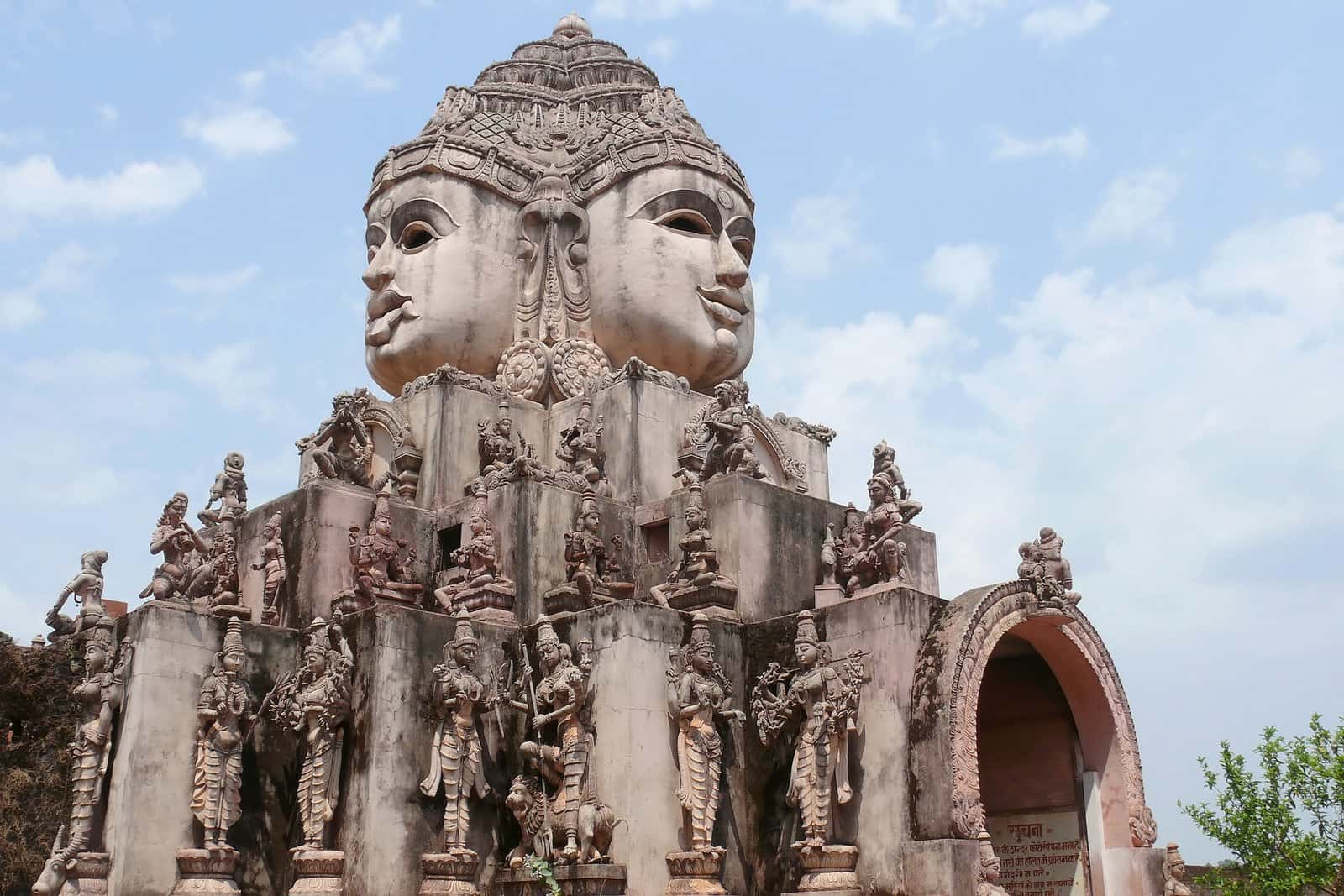
- Shri Sarvodaya Jain templeA striking modern temple in dressed sandstone, built without cement or iron, housing a single-piece Ashtadhatu (eight-metal) statue of Lord Adinath weighing about 24 tonnes, consecrated in 2006. It is a short drive from the centre and a remarkable contrast to the ancient stone shrines.
- Sonmuda and Mai ki BagiyaSonmuda, a short drive out, marks the source of the Son river with a fine view over the Maikal hills, best at sunrise. Mai ki Bagiya, a quiet grove of fruit trees and flowers tied to the Goddess Narmada, is a gentle, walkable stop near the town.
This is the detail most pages miss: Amarkantak is the source of three rivers, not one. The Narmada rises at the Udgam temple and Kund in the town, then flows west across India to the Arabian Sea; the Son rises at Sonmuda, a short drive away, and flows east; and the Johila, a tributary of the Son, also rises in the Amarkantak massif. Standing where three rivers are born, two flowing to opposite seas, is the quiet wonder of the place, and worth pausing over rather than ticking off.
Signature experiences in Amarkantak
Beyond the temples, these are the experiences people remember, and how to arrange them so you catch the falls, the sunrise and the aarti at their best.
- The evening aarti at the Narmada KundThe lamp-lit evening aarti at the source, about 7:30 pm, is the emotional heart of a visit, especially in the cool of winter. Arrive a little early, sit quietly by the Kund, and let the bells and the lamps do their work. There is also a morning aarti about 7 am.
- Kapildhara and the walk to DugdhdharaTake the flight of steps down to Kapildhara, where the young Narmada drops about 30 m, then, if your knees are willing, the rocky walk of about 1 km to the milk-white Dugdhdhara. Wear proper shoes, carry water, and allow time for the climb back up. Sadhus and small shrines line the path.
- Sunrise at Sonmuda, and the glass skywalkDrive out to Sonmuda for sunrise over the Maikal hills at the source of the Son. A modern glass skywalk has been built in the Sonmuda area for elevated forest and valley views; check locally whether it is open and its current ticket, as new attractions like this change fast.
- The Kalachuri temples and the Jain colossusGive an unhurried hour to the ancient Kalachuri-period stone temples near the Kund, then drive to the Sarvodaya Jain temple to see the 24-tonne Ashtadhatu Adinath statue. The two together, ancient and modern, are the cultural bookends of the town.
- Kabir Chabutra and a forest driveA short drive out, Kabir Chabutra marks where the mystic poet Sant Kabir is said to have meditated, a calm, simple spot. The surrounding Achanakmar-Amarkantak biosphere forest is rich and quiet, lovely to drive through slowly.
- A slow morning by the KundIf you do one thing without hurry, sit by the Narmada Kund early, before the day's pilgrims arrive, and watch the source stir. It is free, and it is the memory most people carry home from Amarkantak.
Give the source itself an unhurried early morning and the evening aarti, rather than treating the Kund as a quick photo between waterfalls. The town is small and the falls are dramatic, but what stays with travellers is the quiet of the Narmada rising at dawn and the lamps on the water at dusk. Build the day so the temple and Kund fall at either end, and Amarkantak opens up in a way a rushed circuit never allows.
Where to stay in Amarkantak, and how many nights
Accommodation is genuinely limited: the state MPT property, a handful of budget hotels and resorts, and many dharamshalas. Stay near the Narmada temple to be in the thick of it. Two to three nights is the sweet spot.
- Near the Narmada temple and KundStaying near the temple and the Kund puts the aarti, the ancient temples and the market within a short walk, which matters in a town where local transport is sparse. It is the natural base for first-timers and for pilgrims who want to be close to the source.
- The dependable optionsThe Madhya Pradesh state tourism property (MPT Holiday Homes) is the reliable standard stay, with rooms roughly about 2,299 to 2,990 rupees; there are a few budget hotels and small resorts, and numerous dharamshalas and ashrams that pilgrims use. It is not a town of many polished hotels, so set expectations accordingly.
- How many nightsTwo to three nights is right. One full day covers the Narmada Udgam temple, the Kund and the ancient temples in the centre; a second covers Kapildhara, Dugdhdhara, Sonmuda and the Jain temple; a third gives room for Kabir Chabutra, Mai ki Bagiya and a slower pace. A single night only scratches the surface.
- Book ahead, especially around festivalsWith so few rooms, book ahead in the October-to-March season and well ahead around Narmada Jayanti in January and Shivratri, when pilgrims fill the town. Arriving on spec in peak weeks can leave you with only a dharamshala bed or a long drive back down.
Unlike bigger pilgrim centres, Amarkantak has genuinely limited rooms, and the good ones fill fast in season and around festivals. Book the MPT property or a resort ahead rather than assuming you will find something on arrival, and if your dates fall on Narmada Jayanti, secure a room weeks in advance or plan to base lower down and drive up for the day.
Amarkantak costs and a realistic daily budget
Amarkantak is gentle on the wallet, but the real cost is planning around limited rooms, food and cash. Here is what the main things cost so you can budget and carry enough.
- A rough daily budgetExcluding long-distance transport, plan on about 1,200 to 2,000 rupees a day as a budget traveller eating simply, about 3,000 to 5,000 rupees mid-range with the MPT property and a hired car for the sights, and more if you take a full-time driver from Jabalpur or Bilaspur. Rooms are the main cost, with MPT Holiday Homes roughly about 2,299 to 2,990 rupees.
- The temple and the sightsDarshan at the Narmada Udgam temple is generally free, as is a walk to the falls, so the core of a visit costs little. A car with a driver for a day of the falls, Sonmuda and the Jain temple is the main sightseeing expense; agree the day rate in advance.
- Getting there is the big lineThe long drive from Jabalpur, Bilaspur or Raipur, or the train to Pendra Road plus a taxi up, is usually the largest single cost. A one-way taxi from Pendra Road up to Amarkantak is a short 42 to 43 km hop; a multi-day car from a gateway city costs more but simplifies everything.
- Carry cashATMs are few and can be empty, and card or UPI acceptance is patchy outside the bigger properties, so draw cash before you reach the hill and carry enough for rooms, food, the driver and small offerings. This is the single practical habit that keeps an Amarkantak trip smooth.
The cheapest parts of Amarkantak, the temple, the Kund and the falls, are free or nearly so, and the real budgeting is about transport and rooms, not entry tickets. Carry enough cash for two to three days up front, since the ATMs cannot be relied on, agree your car's day rate before you set off, and book the room ahead. Do those three things and the town costs little and troubles you not at all.
Practical logistics: cash, fuel, food and getting around
The small things that make an Amarkantak trip smooth, from carrying cash and fuel to how you get between the falls and the town.
- Carry cash and fill the tankATMs are few and unreliable and card acceptance is patchy, so carry enough cash for the whole visit. Fuel stations are sparse on the hill, so fill up in Anuppur, Pendra or Bilaspur before the final approach and top up when you can.
- Getting around town and to the sightsThe temple, the Kund, the ancient temples and the market are walkable, but Sonmuda, the Jain temple, Kapildhara and Kabir Chabutra are short drives apart. Local transport is sparse, so a hired car with a driver for a day is the sensible way to cover the outlying sights.
- Food is simple and limitedRestaurants are few. Many pilgrims eat at dharamshalas, ashram bhojanalayas and simple vegetarian eateries, and the MPT property has its own restaurant. Plan meals around what is open, carry some snacks and water for the falls, and do not expect a wide dining scene.
- Altitude, cold and connectivityAt over 1,000 m the nights are genuinely cold in winter, so carry warm layers. Mobile coverage is generally workable in town but can drop in the forest and at the falls, so download maps offline and tell someone your plan for the day's drive.
Safety, the falls, and staying well
Amarkantak is calm and welcoming, and the main risks are natural: slippery rocks at the falls, the cold at altitude, and the remoteness. A little care keeps the trip happy.
- The falls demand careThe steps down to Kapildhara and the rocky path to Dugdhdhara are uneven and can be slippery, especially just after the monsoon. Wear proper shoes, watch your footing near the water, do not clamber over wet rocks for a photo, and keep children close. The climb back up is the real effort, so pace it.
- Cold and altitudeWinter nights at over 1,000 m are genuinely cold, so carry warm clothing even if the day is mild. The altitude itself is modest and rarely a problem, but the temperature swing between a sunny afternoon and a clear night is large, so dress in layers.
- Remoteness and health basicsThis is a small town with limited medical facilities, so carry a basic kit and any regular medication, and note that serious care means a long drive to Bilaspur or Jabalpur. Drink bottled or filtered water, take the usual care with food, and keep your driver's number handy.
- General safetyAmarkantak is a gentle, low-crime pilgrim town with little of the tout pressure of busier sites. Standard precautions are enough: mind your belongings in festival crowds, agree prices with drivers in advance, and drive the hill roads in daylight.
Amarkantak is generally calm and safe, well used to pilgrims and families, and the friction reported by visitors is remoteness and thin facilities rather than crime or harassment. Solo and women travellers manage well with standard precautions: keep to daylight for the falls and drives, carry cash and a charged phone, and choose a room near the temple to limit late walking. The town's quiet is its character, not a warning.
Amarkantak for every kind of traveller, and on access
Amarkantak suits pilgrims, nature lovers and quiet-seekers differently. Here is what it offers you, and the one tip that matters for each, including how a senior visits comfortably.
- PilgrimsThe heart of the trip: the source of the Narmada, the Kund aarti, the ancient temples and, for many, a stage of the Narmada Parikrama. Stay near the temple, plan around the morning and evening aarti, and give the Kund an unhurried early morning.
- Families with childrenEasy and gentle, with the falls, the forest and the temples. Watch children carefully on the wet steps at Kapildhara, keep them warm on cold nights, and carry snacks and water, since food and shops are limited.
- Senior travellers and on accessibilityVery doable with planning. Stay near the Narmada temple to keep walking short, enjoy the Kund, the aarti and the ancient temples on the flat, and view Kapildhara from the top rather than attempting the steep steps down. Use a hired car for Sonmuda and the Jain temple, and carry warm clothing for the cold nights.
- Couples and quiet-seekersA calm, unhurried place for those who want forest, waterfalls and a sense of the sacred rather than nightlife. Sunrise at Sonmuda and the evening aarti are the romantic set-pieces, and the biosphere forest around the town is lovely to drive slowly.
- Nature and photography loversPost-monsoon greenery, full waterfalls, sunrise over the Maikal hills at Sonmuda and the light on the Kund reward an early start. Ask before photographing people at prayer, and respect the temple's quiet.
- Solo travellersA safe, calm place to travel alone, if remote. Sort your transport in advance, carry cash and a charged phone, keep drives and falls to daylight, and base near the temple. The main challenge is logistics, not safety.
A suggested Amarkantak itinerary
How to shape two or three unhurried days so you group the walkable centre against the outlying drives, and catch the source and the sunrise at their best.
- Day one: the source and the old templesStart early at the Narmada Udgam temple and the Kund before the pilgrims arrive, then give an unhurried hour to the Kalachuri-era ancient temples nearby and the market. Rest in the afternoon and return to the Kund for the evening aarti about 7:30 pm.
- Day two: falls, Sonmuda and the Jain templeDrive out early for sunrise at Sonmuda and the Son source, then to Kapildhara and the walk to Dugdhdhara, wearing proper shoes for the steps. In the afternoon visit the Sarvodaya Jain temple and its 24-tonne Adinath statue. A hired car makes this day easy.
- Day three, if you have itAdd Kabir Chabutra, Mai ki Bagiya and a slow drive through the biosphere forest, or simply take a second unhurried morning by the Kund. A third day turns a tick-the-box circuit into the calm pause the town does best.
- The tight two-day versionIf you have only two days, do the temple, Kund and ancient temples on arrival afternoon and evening, then the falls, Sonmuda and the Jain temple the next full day before driving out. It works, but leaves no slack for the weather or the light.
The single thing that makes an Amarkantak plan flow is to separate what is walkable, the Narmada temple, the Kund, the ancient temples and the market, from what needs a vehicle, Sonmuda, Kapildhara, the Jain temple and Kabir Chabutra. Do the centre on foot at either end of a day and batch the outlying sights into one car day. Try to zig-zag between them and you waste the day on the road instead of at the source.
The real questions travellers ask about Amarkantak
Straight answers to the questions that come up again and again on traveller forums, so you arrive already knowing the score.
- How do I reach it without my own car?Take a train to Pendra Road (Chhattisgarh), the nearest railhead at about 42 to 43 km, or to Anuppur at about 71 to 75 km, then a taxi up. From the air, fly to Jabalpur or Raipur and drive about 5 to 6 hours. Buses also run from Bilaspur, Anuppur, Shahdol and Jabalpur, but a hired car makes the outlying sights far easier.
- How many days do I need, is two enough?Two full days cover the essentials comfortably, the source and old temples on one day, the falls, Sonmuda and the Jain temple on the other. Three days lets you add Kabir Chabutra, Mai ki Bagiya and a slower pace. A single night is not enough.
- Is it worth visiting, or too small and remote?It is small and remote, and that is the point: a quiet, deeply sacred hill town at the source of the Narmada, with dramatic falls and old temples. If you want nightlife and polished hotels it will disappoint; if you want the source of a holy river, forest and calm, it rewards the journey.
- What are the temple and aarti timings?Darshan at the Narmada Udgam temple generally runs roughly 6 am to about 9 pm (some sources note a midday break), with a morning and an evening aarti in the bands of about 7 am and about 7:30 pm. The temple board publishes no fixed hours and aggregators differ on the exact split, so reconfirm locally, and plan your day so the Kund falls at either end for the aarti.
- How hard is the walk to the falls?Kapildhara means a real flight of steps down from the road and back up, and Dugdhdhara is a rocky walk of about 1 km further on. It is manageable for most with proper shoes and a steady pace, but the climb back is the effort, and seniors may prefer to view Kapildhara from the top.
- Do I need to carry cash, and is food a problem?Yes, carry cash: ATMs are few and unreliable and card acceptance is patchy. Food is simple and limited, with dharamshalas, ashram bhojanalayas and the MPT restaurant the mainstays, so carry snacks and water for the falls and do not expect a dining scene.
Planning Amarkantak from abroad
Amarkantak is the quiet, deeply-Indian source of a holy river, deep in central India. A little preparation for the remoteness, the limited stay and the long drive makes it one of the most rewarding offbeat stops in Madhya Pradesh.
- Understand how remote it isAmarkantak has no airport or railway of its own and sits a long drive from the nearest cities. Fly to Jabalpur or Raipur, then drive about 5 to 6 hours, and plan a night at the gateway city each way. This is not a quick side-trip; give it two to three nights or leave it out.
- Pair it with Kanha, Bandhavgarh or JabalpurThe town sits within a forest belt linked to the Kanha and Achanakmar tiger reserves, so it folds naturally into a wider Madhya Pradesh loop with a tiger safari, Jabalpur and the marble gorge at Bhedaghat. A car with a driver ties the whole loop together.
- Carry cash and set expectationsATMs and card acceptance are unreliable, so carry enough cash for the whole stay. Accommodation is limited and simple, food is basic and mostly vegetarian, and English is less widely spoken than in the big cities, so a driver-guide helps. Come for the source and the calm, not for comfort.
- Gentle and senior-friendly with planningFor NRI families travelling with parents, stay near the Narmada temple to keep walking short, enjoy the Kund and the aarti on the flat, view the falls from the top, and use a car for the outlying sights. It is a moving place to bring grandparents to the source of the Narmada.
Money, connectivity and timing for foreign visitors
The practical basics an overseas traveller needs for a remote hill town: cash, a SIM, and how many days to give it on a wider India trip.
- Draw cash before you reach the hillATMs in Amarkantak are few and can be empty, and cards and UPI are patchy, so draw cash in Jabalpur, Bilaspur, Raipur or Anuppur before the final climb and carry enough for rooms, food, the driver and offerings for the whole stay.
- Get a SIM at the gateway cityPick up an Indian tourist SIM or an eSIM when you land at a major airport rather than hunting for one in a small town. Coverage in Amarkantak is workable in the centre but drops in the forest and at the falls, so download offline maps.
- How long to give it on a bigger tripOn a central-India loop, two to three nights in Amarkantak is the right weight: enough for the source, the falls and a sunrise, folded between a tiger reserve and Jabalpur, without slowing the whole itinerary. It is a slow, spiritual chapter, not a fast one.
- Time your visit to your comfortThe comfortable window is October to March, with September to February lovely just after the rains when the falls are full. Winter days are pleasant at about 8 to 25 degrees Celsius but nights are cold at altitude, so pack warm layers whatever the season looks like on paper.
Amarkantak is an unusually authentic corner of India: a small, sacred hill town at the source of the Narmada, far from any tourist bubble, where the pace is the point. Slot it into a Madhya Pradesh loop with a tiger safari and Jabalpur, give it two to three nights, carry cash and warm clothes, and let it be the quiet, spiritual heart of the trip. Many overseas visitors say the dawn by the Kund is what they remember most.
Where three rivers are born, and two flow to opposite seas
Amarkantak is one of the rare places on earth where you can stand near the birthplace of three rivers at once. The Narmada rises here at the Udgam temple and the sacred Kund, then turns west and runs the length of central India to the Arabian Sea, one of the very few great Indian rivers to flow westward. The Son rises a short drive away at Sonmuda and flows east to join the Ganga, and the Johila, a tributary of the Son, also begins in the same Amarkantak massif. The town's name is read as a joining of the Sanskrit amara, immortal, and kantaka, and the poet Kalidasa is said to have called it Amarakuta. Pilgrims have walked the Narmada Parikrama, the full circuit of the river from source to sea and back, for centuries, and it begins in this quiet hill town at over 1,000 m where the Vindhya, Satpura and Maikal ranges meet. To sit by the Kund at dawn and watch the Narmada stir is to be present at a beginning.
Planning a Amarkantak trip?
Our Madhya Pradesh travel experts plan your full journey for you: route, hotels, darshan timings and transport. You get a free day-by-day plan and an exact quote on WhatsApp, usually within a few hours. No payment is needed to get your plan.