Kanha Travel Guide
Kanha is open to tourists from about 15 October to 30 June ; the core zones shut completely for the monsoon, so the season you choose decides what you can do and what you are...
When to visit Kanha, and the monsoon closure to plan around
Kanha is open to tourists from about 15 October to 30 June; the core zones shut completely for the monsoon, so the season you choose decides what you can do and what you are likely to see.
- November to February: cool, green and comfortableThe pleasant window after the monsoon, with rejuvenated forest, good birdlife and crisp air. Dawns in December and January can be near freezing in an open gypsy, so carry real warm layers. This is the easiest season for families and first-timers.
- March to June: hot, but best for tigersAs the forest dries and waterholes shrink, animals gather at water and tiger sightings improve, which is why many serious wildlife photographers prefer the heat. April to June afternoons are genuinely fierce, so keep midday for rest and do the morning round.
- The monsoon closure, July to SeptemberThe core zones close completely for the monsoon, roughly 1 July to 30 September, and the roads inside are not navigable. Only the buffer zones can run in this period, so a monsoon visit means buffer-only safaris, greener scenery and far fewer tigers.
- Decide season before you bookComfort and birds in winter, or heat and better tiger odds in late summer, are genuinely different trips. Because core permits are booked online well ahead, settle which one you want first, then book the zone and dates to match.
Per the official Madhya Pradesh Tourism and Kanha Tiger Reserve sites, the park is usually open from about 15 October to 30 June, and the core zones close for the monsoon from about 1 July to 30 September. The exact reopening date can shift a little year to year, so reconfirm it on the MP Forest portal before you book flights or lodges. Treat any page that quotes a fixed opening date as a guide, not gospel, and beware old dates copied across the web.
How to reach Kanha
Kanha has no airport or railway of its own. Almost everyone comes through Jabalpur on the Khatia side, or up from Nagpur or Raipur for the Mukki side.
- Via Jabalpur, the practical gatewayJabalpur has the nearest useful airport and a major railhead, about 160 km from the Khatia (Kisli) side, roughly 3 to 4 hours by road. It is the simplest approach for the Kanha, Kisli and Sarhi zones, and most lodges arrange the transfer.
- Via Nagpur or Raipur for MukkiNagpur is about 300 km and Raipur about 250 km, both better suited to the Mukki gate on the southern side. These are useful if Mukki zone is your priority or if your flights connect more easily through them.
- By trainGondia, about 145 km from Khatia, and Jabalpur, about 160 km from the Mukki side, are the handy railheads; from either you finish the journey by road. Book trains on IRCTC a little ahead in season.
- The drive inThe last stretch to the gates is a long, often bumpy country drive of three hours or more, so arrive the day before your first safari rather than racing in for a dawn round. There are no flights into Kanha itself.
Fly into Delhi or Mumbai, then take a domestic flight to Jabalpur (about 160 km from the Khatia side) or Nagpur, and drive in. Kanha pairs naturally with Bandhavgarh and Pench on a central-India tiger circuit.
Fly into Delhi, Mumbai or Nagpur, then connect to Jabalpur or drive from Nagpur to the Mukki side. Allow a full travel day to reach the park from any metro.
Fly or train to Jabalpur for the Khatia side, or to Nagpur or Raipur for Mukki, then drive the last 3 to 4 hours. Gondia station is the nearest railhead to Khatia.
The zones, the gates, and how the safari works
Kanha runs on four core zones reached through three gates, with separate year-round buffer zones. Knowing which zone you want shapes where you stay and what you book.
- The four core zonesKanha, Kisli, Mukki and Sarhi are the four core tourism zones. Kanha zone, with its famous meadows, is a classic for first-timers, while Mukki is widely rated for its tiger density and open views. Kisli and Sarhi are quieter. Tiger sightings come down to luck on the day, but the Kanha and Mukki zones are the usual focus.
- The three gatesThere are three entry gates: Khatia (also called Kisli gate) and Sarhi on the Jabalpur side, and Mukki on the Nagpur and Raipur side. Khatia reaches the Kanha, Kisli and Sarhi zones, while Mukki gate serves the Mukki zone. Your lodge should match the gate you most want to use.
- Core versus bufferThe core zones are the classic Kanha landscape and shut for the monsoon. The buffer zones, including Khatia, Khapa, Sijhora and the Phen sanctuary, run year round and are cheaper and quieter, with real wildlife but fewer tiger sightings. Buffer is a fine budget or monsoon option, not a like-for-like substitute for the core.
- Bamni Dadar and the meadowsBamni Dadar, the sunset point, is the highest accessible point in the tourism zone and a classic evening-safari stop for the view over the sal forest. The open meadows at Kanha and Mukki are the best places to find the hard-ground barasingha and big herds of gaur.
Safaris run in two rounds a day, a morning round from around sunrise and an afternoon round ending around sunset, with the exact gate timings shifting by season. The morning round is usually colder but fresher for sightings; the afternoon round catches the golden light and the sunset point. A full-day safari, where offered, lets you roam zones without the time limit and is worth it for a keen wildlife traveller with the budget.
How to book a Kanha safari, the official way
Core safaris are booked online only on the official MP Forest portal, and the advance windows and the ID rule catch a lot of first-timers. Get these right and the rest is easy.
- Book on the official portalCore-zone permits are sold online only, on the official MP Forest portal at forest.mponline.gov.in. Lodges and agents can book on your behalf and bundle the gypsy and guide, but the permit itself comes from this one government system, so you are never required to pay a mystery markup to ride.
- The advance windowsIndian nationals can book from about 30 days ahead and foreign nationals from about 90 days ahead. Popular zones and weekends sell out, so book as early as your window opens, especially for the cool November to February peak.
- The Tatkal (next-day) slotA limited number of Tatkal permits for the next day open at around 5 pm the day before. It is a useful backup if your dates are flexible, but never your only plan in peak season, when these go fast too.
- Carry the exact ID you booked withID proof is mandatory for every person, and the ID you upload at booking must match the one you carry to the gate exactly. Indians may use Aadhaar, passport, driving licence, voter ID or PAN; foreign nationals must use their passport. A mismatch can mean a cancelled permit at the gate with no refund.
A core gypsy safari works out to roughly 3,900 rupees for the whole jeep of up to about 6 people: the permit is about 250 rupees a seat or about 1,500 rupees for the full vehicle, gypsy hire is about 2,000 rupees, the mandatory guide fee is about 360 rupees, and the online booking and portal fee is about 260 rupees. Shared by six that is around 655 rupees a person, plus a customary tip of about 100 to 200 rupees for the driver and guide. Foreign-national permit slabs are higher, and rates change, so reconfirm the current figures on the official portal before you pay an agent.
Signature experiences in Kanha
Beyond ticking off a tiger, these are the experiences people remember from Kanha, and how to get the best of each.
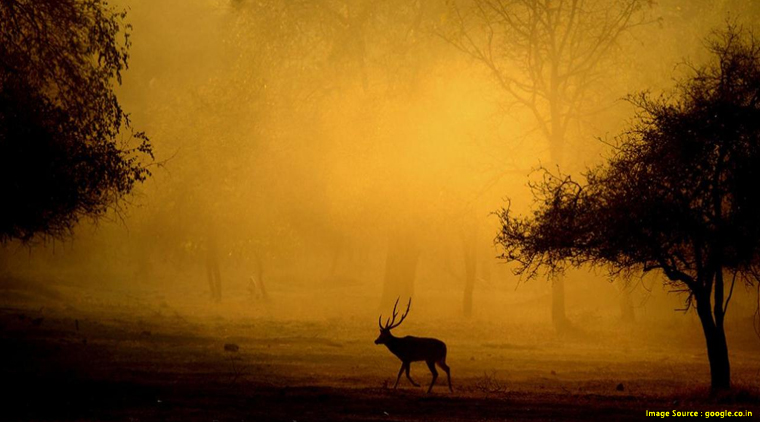
- The dawn gypsy safariThe morning round, rolling into mist over the meadows at first light, is the heart of Kanha. It is cold in winter, so wrap up, but the forest is most alert at dawn and this is your best window for predators on the move.
- Finding the barasinghaKanha is the place to see the hard-ground swamp deer, the barasingha, that exists almost nowhere else, saved here from near extinction. The Kanha and Mukki meadows are the classic spots; ask your guide, and enjoy the gaur herds and wild dog packs along the way.
- Sunset from Bamni DadarOn an evening safari, the sunset point at Bamni Dadar gives the big view over the sal forest and the meadows. It is the prettiest light of the day and a fine way to end a round even when the tigers stay hidden.
- A buffer or full-day safariA buffer-zone safari is cheaper, quieter and runs even in the monsoon, good for birds and forest if you have spare time. A full-day safari, where available, removes the time limit and lets a keen wildlife traveller roam the zones, well worth it if the budget allows.
- The Kanha MuseumNear the Khatia gate, the Forest Department museum is open through the year and makes a good resting-hour or rainy-spell stop, with a clear introduction to the reserve's wildlife, tribal culture and conservation story.
Manage your own expectations and let the forest do the rest. A tiger is never guaranteed, and the travellers who enjoy Kanha most are the ones who come for the whole wilderness, the barasingha, the gaur, the birds and the light, and treat a tiger as the bonus it is. Do several safaris rather than one, be quiet and patient, listen for alarm calls, and trust your guide. That mindset turns a lottery into a deeply rewarding few days.
Where to stay in Kanha, and how many nights
Your gate decides your base. Khatia on the Jabalpur side has the widest choice, Mukki on the south is quieter and more upmarket. Two to three nights is the sweet spot.
- Khatia (Kisli) side: most choiceThe village outside Khatia gate on the Jabalpur side has the widest range, from budget rooms to mid-range lodges, and reaches the Kanha, Kisli and Sarhi zones. Best for first-timers, families and anyone wanting options close to the gate.
- Mukki side: quieter and upmarketMukki gate on the southern side is calmer, with more boutique and premium lodges set in their own grounds, and is the base for the Mukki zone. Better if Mukki is your priority or you want seclusion, but reached from Nagpur or Raipur rather than Jabalpur.
- Match the lodge to the zoneSince each gate serves particular zones, choose your base around the zone you most want to safari. Staying at the wrong gate can mean long pre-dawn drives, so confirm with your lodge which zones it can reach before you book.
- How many nightsTwo nights gives you three or four safaris, enough for a real chance at a tiger and a feel for the forest. Three nights lets you mix zones and add a buffer or full-day safari. A single night and one safari is a gamble that often disappoints.
In the cool November to February peak the best lodges and the popular zone permits both sell out weeks ahead. Because your permit window (about 30 days for Indians, about 90 for foreigners) and your lodge booking need to line up, plan them together: pick your dates and gate, secure the lodge, then book the permits the moment your window opens. Leaving either to the last minute is how trips fall apart at Kanha.
Kanha costs and a realistic budget
Kanha is not a cheap stop once you add safaris and lodges, but the costs are knowable. Here is what the main things run, so you can plan and spot a markup.
- The safari, per jeepA single core gypsy safari is roughly 3,900 rupees for the whole jeep of up to six, which is about 655 rupees a person shared. That covers the permit, gypsy hire, guide and portal fee. Do the maths against any agent quote, because the official numbers are public.
- How many safaris to budgetPlan on about 4 to 6 safaris over two or three days for a real tiger chance. At roughly 3,900 rupees a jeep each, that is the single biggest cost of the trip after your lodge, so budget for the rounds, not just one.
- Lodges across the rangeLodges run from simple budget rooms near Khatia gate up to premium jungle lodges on the Mukki side that price like a resort. MP Tourism's own Mukki safari lodge, for instance, lists rooms in the region of about 3,590 to 4,990 rupees a night. Peak-season and luxury properties cost far more, so set your range early.
- The tip and the extrasA tip of about 100 to 200 rupees for the driver and guide per gypsy is customary and appreciated. Add transfers from Jabalpur or Nagpur, meals and any camera or full-day-safari fees, and you have the realistic total.
The single figure that protects you at Kanha is the official cost of one core gypsy safari, roughly 3,900 rupees a jeep, made up of the permit of about 250 a seat or 1,500 the vehicle, gypsy hire of about 2,000, guide of about 360 and the portal fee of about 260. Because these are public, government-set numbers, you can hold any package or agent quote up against them and see exactly what is markup and what is genuine cost. Reconfirm the current rates on the official portal, since they do change.
Practical logistics: what to carry, money and connectivity
The small things that make a Kanha day smooth, from earthy clothing and warm layers to cash, mobile signal and the long drive in.
- What to wear and carryEarthy colours, beige, brown and olive, are advised and bright colours discouraged so as not to disturb wildlife. Bring binoculars, a hat, sunglasses and sunscreen, and in winter real warm layers, a jacket, gloves and a muffler for the cold open gypsy at dawn.
- Money and ATMsCarry enough cash for tips, small purchases and any village extras, as ATMs are limited and unreliable around the gates. Lodges and bigger operators take cards or transfers, but the small economy near the park runs largely on cash.
- Signal and connectivityMobile coverage is patchy in and around the forest and can drop entirely inside the zones, which is part of the appeal. Download maps and your permits offline before you arrive, and tell people you will be off-grid during safaris.
- Plan the drive and the dawn startThe last 3 to 4 hours from Jabalpur or Nagpur are slow, so arrive the day before your first safari. Morning rounds start very early at the gate, so lay out clothes, ID and permits the night before to avoid a scramble in the dark.
Safety, park rules, and staying well
Kanha is a well-run reserve and very safe, but the rules exist for your safety and the animals'. A little care keeps the trip happy and responsible.
- Follow the park rulesStay in the gypsy, keep noise down, do not litter, never feed or try to attract animals, and do not ask the driver to chase a sighting off the tracks. The Wednesday-evening and Holi closures and the zone limits are part of how Kanha stays one of the best-run reserves in Asia.
- Cold, heat and sunWinter dawns can be near freezing in the open gypsy, so layer up; summer afternoons are very hot, so carry water and sun protection and favour the morning round. Both extremes are real, so dress for the season you booked.
- Health basicsDrink bottled or filtered water, carry any personal medication since pharmacies near the gates are basic, and pack a small kit with rehydration salts and the usual stomach and first-aid items. The nearest full hospital is back towards Jabalpur, so do not rely on finding one at the park.
- Responsible wildlife watchingResist pressure, your own or other guests', to crowd a tiger or break the rules for a photo. The best guides keep a respectful distance and read alarm calls. A quiet, patient, rule-following gypsy sees more in the long run and keeps the forest healthy for the next visitor.
Kanha is a comfortable, low-friction place to travel, including solo, because almost everything runs through your lodge and the regulated safari system rather than touts on the street. The main practical issues are remoteness and the early starts, not safety. Book a reputable lodge, share gypsies to cut cost if you are alone, keep your permits and ID in order, and you will find Kanha one of the easier wildlife trips in India to do independently.
Kanha for every kind of traveller, and on access
Kanha suits very different visitors in different ways. Here is what it offers you and the one tip that matters for each, including how a senior does the dawn safari comfortably.
- Families with childrenDoable and exciting, but the dawn starts and long, bumpy gypsy rides test younger children. Book a couple of safaris rather than a punishing schedule, choose the Khatia side for easy access, and use the Kanha Museum and lodge grounds for downtime between rounds.
- Senior travellers and on accessibilityVery doable with planning. Stay close to your chosen gate to cut the pre-dawn drive, carry serious warm layers for the cold open gypsy in winter, and consider the afternoon round, which starts in gentler warmth. The gypsy ride is bumpy, so a cushion and a steady pace help.
- Wildlife photographersLate season, March to June, gives the best tiger odds as animals gather at water, with strong light and dust. Bring a long lens, do several morning rounds, and consider a full-day safari to maximise time in the zones.
- BirdwatchersWinter and the buffer zones reward birders, with migratory species and quieter tracks. The buffer is cheaper and runs year round, so a birder can happily mix a buffer round with the core.
- First-time safari travellersThe Kanha zone meadows are a classic, gentle introduction. Keep expectations on the whole forest rather than only the tiger, do at least three or four safaris, and let the wilderness, not the lottery, be the point.
- CouplesA quiet jungle lodge on the Mukki side, slow evenings and shared dawn safaris make Kanha a peaceful, unusual escape. Choose a lodge with good grounds for the long midday gaps between rounds.
A suggested Kanha itinerary
How to shape two or three days around the morning and afternoon rounds so you give yourself a real chance and still enjoy the forest.
- Arrival dayDrive in from Jabalpur or Nagpur and settle at your lodge in the afternoon, ideally near the gate for your first zone. Sort out permits and ID, lay out warm clothes for the dawn, and have an early night before the first round.
- Day one, two roundsDo the morning round at first light in your priority zone, Kanha or Mukki, rest through the midday heat, then take an afternoon round, finishing at the Bamni Dadar sunset point if your zone allows. Two rounds in a day is the productive rhythm.
- Day two, mix it upTake a second core round in a different zone for variety, then either a buffer safari for birds and quiet or, if offered and the budget allows, a full-day safari without the time limit. By now you will have read the forest's rhythm.
- The short version and the departureWith only one night you can manage two rounds, a real but slimmer chance at a tiger. On your departure morning do a final round if your transfer allows, then make the long drive back to Jabalpur or Nagpur with time to spare for your flight.
The single thing that ruins a Kanha trip is flying in for one safari and expecting a guaranteed tiger. Sightings are luck on the day, so the fix is simple: book at least three or four rounds across two or three days, spread them over the Kanha and Mukki zones, and treat each as a chance, not a promise. Travellers who give Kanha time almost always leave happy; those who give it a single round often leave disappointed.
The real questions travellers ask about Kanha
Straight answers to the questions that come up again and again on traveller forums, so you arrive already knowing the score.
- Which zone is best for tigers?Kanha and Mukki zones are the usual focus, Mukki for its tiger density and open views, Kanha for its meadows and classic feel. Kisli and Sarhi are quieter. Honestly, sightings are luck on the day, so spreading rounds across Kanha and Mukki beats fixating on one zone.
- How many safaris should I do?For a real chance at a tiger, plan about 4 to 6 safaris across two or three days, weighted to Kanha and Mukki. One safari is a gamble; several rounds turn the odds in your favour and let you enjoy the wider wildlife.
- Is the buffer zone worth it?The buffer is cheaper, quieter, runs year round and is good for birds and forest, but tiger sightings are fewer. It is a fine budget or monsoon option or an add-on, not a substitute for the core if a tiger is your main goal.
- Kanha or Bandhavgarh?Bandhavgarh has higher tiger density and more reliable sightings; Kanha is larger and wilder, with the endemic hard-ground barasingha, big gaur herds and a real wilderness feel. For a first, sighting-focused trip many pick Bandhavgarh; for the all-round forest experience, Kanha. Doing both on one circuit is ideal.
- When is it open, and is the monsoon worth it?Open about 15 October to 30 June. The core closes about 1 July to 30 September for the monsoon, when only the greener buffer runs with far fewer tigers. Come in the dry season for the core; the monsoon suits birds and scenery, not tiger hunting.
- What ID do I need at the gate?Every person needs ID, and it must match the ID used at booking exactly. Indians can use Aadhaar, passport, driving licence, voter ID or PAN; foreigners must use their passport. A mismatch can mean a cancelled permit at the gate with no refund, so double-check before you travel.
Planning Kanha from abroad
Kanha is the original Jungle Book forest and the most rewarding all-round wilderness in central India, easy to combine with Bandhavgarh and Pench. A little preparation makes the booking rules and the remoteness simple.
- Book early on the official portalForeign nationals can book core permits from about 90 days ahead on forest.mponline.gov.in, and the popular zones go fast. Book as soon as your window opens, or have a reputable lodge or operator handle the official permit for you, and keep the confirmation.
- Carry your passport, and match the bookingForeign nationals must use the passport as ID, and the passport details must match the booking exactly. A mismatch can mean a cancelled permit at the gate with no refund, so book under your passport name and number and carry that passport on every safari.
- Pair it on a central-India circuitKanha pairs naturally with Bandhavgarh, the higher-density tiger park, and Pench, the other Jungle Book forest, on a classic central-India loop. Fly into Delhi or Mumbai, connect to Jabalpur or Nagpur, and link the parks by road over a week or so.
- Expect remoteness, plan for itThis is deep countryside: long drives, patchy mobile signal and basic facilities near the gates. Download maps and permits offline, carry cash and any medication, and let a good lodge handle transfers. The reward is genuine, uncrowded wilderness.
Costs, timing and the tiger circuit for foreign visitors
The practical basics an overseas traveller needs for a remote tiger reserve: what safaris cost, how long to give it, and how Kanha fits a wider India trip.
- Budget for several safarisA core gypsy safari is roughly 3,900 rupees a jeep shared by up to six, and foreign-national permit slabs are higher than the Indian ones, so confirm current rates on the official portal. Budget for about 4 to 6 rounds, not one, since that is what a real tiger chance takes.
- How long to give itGive Kanha two to three nights for three to five safaris. On a wider India trip, slot it after Delhi or the Golden Triangle, or build a dedicated central-India week linking Bandhavgarh and Pench for the best tiger trip in the country.
- Time it to the dry seasonOctober to March is comfortable; March to June is hot but best for tiger sightings. Avoid the monsoon, July to September, when the core is closed and only the buffer runs. Book your dry-season dates and permits as early as your 90-day window allows.
- Money, SIM and transfersPick up an Indian tourist SIM or eSIM at the airport, carry cash for tips and village extras since ATMs are scarce, and let your lodge arrange the long road transfer from Jabalpur or Nagpur rather than improvising it on arrival.
Kanha is an unusually rewarding introduction to Indian wilderness: well managed, genuinely wild and far less crowded than the famous monuments. Treat it as the slow, immersive chapter of an India trip, give it several safaris over two or three nights, pair it with Bandhavgarh for the tiger odds, and come for the whole forest, the barasingha, the gaur, the birds and the light, with the tiger as the bonus. Many overseas visitors say it is the part of India they remember most vividly.
Kanha, Mowgli's jungle and the deer that came back
Kanha is widely held to be the forest that inspired Rudyard Kipling's The Jungle Book, the sal-and-bamboo wilderness of the Maikal hills where Mowgli, Baloo and Bagheera could plausibly roam. Kipling never recorded a single map reference, so the link is one of long tradition and landscape rather than a documented fact, and Kanha shares the honour with neighbouring Pench. What is beyond doubt is Kanha's own real legend: the hard-ground barasingha, the swamp deer that survives almost nowhere else on earth, was here brought back from the very edge of extinction by a patient breeding and habitat programme, and now grazes the meadows in herds again. 'Bhoorsingh the Barasingha' became the reserve's official mascot, a living emblem of one of Asia's best-run national parks. To stand in the Kanha meadows at dawn, with swamp deer in the mist and the possibility of a tiger in the grass, is to feel why this forest fired a writer's imagination and why its conservation story matters.
Planning a Kanha trip?
Our Madhya Pradesh travel experts plan your full journey for you: route, hotels, darshan timings and transport. You get a free day-by-day plan and an exact quote on WhatsApp, usually within a few hours. No payment is needed to get your plan.
Tour packages that visit Kanha
Every journey below is private, hand-crafted and fully customizable. Tell us your dates and we tailor the itinerary, the pace and the priests or guides around you.