Orchha Travel Guide
The comfortable window is October to March , cool and clear over the Betwa. Summer on the Bundelkhand plain is fierce, and the monsoon stops the river rafting.
When to visit Orchha
The comfortable window is October to March, cool and clear over the Betwa. Summer on the Bundelkhand plain is fierce, and the monsoon stops the river rafting.
- October to March: the comfortable windowWinter is the time to come, pleasant by day for walking the fort and the riverside cenotaphs, and genuinely cool at night, so carry a layer. The light is soft for the sandstone palaces and the chhatris reflecting in the Betwa, and the river rafting is running. This is when most heritage tours route through Orchha.
- April to June: hot, and tiringHigh summer on the Bundelkhand plain is harsh, often above 40 degrees Celsius, and the open fort courtyards and the climb up Chaturbhuj are tiring in that heat. If you must come then, see the monuments early, keep the middle of the day for rest and shade, and drink plenty of water.
- July to September: green but disruptiveThe monsoon turns Orchha and the Betwa lush and atmospheric, but rain can interrupt sightseeing and the river rafting is usually suspended while the river runs high and fast. It is a quieter, cheaper time to come if you do not mind a wet afternoon, but it is not the ideal window.
- Pick winter if you canIf your dates are flexible, aim for November to February for the kindest weather, the best riverside light and the full run of experiences. Orchha is never as crowded as the big-name sites, so you do not need to chase shoulder season for space, only for comfort.
Orchha rewards an early start and a late finish more than a packed midday. The cenotaphs along the Betwa are at their best in the low gold light of sunset, when they mirror in the river, and the Ram Raja Temple comes alive at the evening aarti. Build your day so the palaces fall in the cooler morning, keep the hot middle hours for a meal or a rest, and save the riverside and the temple for the end of the day.
How to reach Orchha
Orchha has no airport and only a tiny halt station. Almost everyone arrives through Jhansi Junction, about 15 to 18 km away, then drives the short hop over the border into Madhya Pradesh.
- Jhansi Junction, the railheadJhansi in Uttar Pradesh is the practical railway gateway, about 15 to 18 km from Orchha, roughly 30 to 45 minutes by road across the state border. It is a major junction on the Delhi to Bhopal route, well served by fast trains, so most visitors reach Jhansi by rail and drive the last short hop into Orchha.
- From Delhi by trainDelhi to Jhansi is the usual long-distance leg, covered by fast services including the Shatabdi in the morning, which makes Orchha an easy add-on between Agra, Gwalior and Khajuraho. Book on IRCTC a little ahead in the winter season, then arrange a transfer onward from Jhansi.
- Orchha's own halt stationOrchha does have a small railway halt, but it sees very few and slow services, so it is not a reliable way in for most travellers. Treat Jhansi as your station and the Orchha halt as a curiosity rather than a plan.
- Nearest airportsThere is no airport at Orchha. Gwalior, roughly 120 km north, has limited flights, while Khajuraho, about 170 km east, has seasonal connections; Bhopal and Delhi are the larger, more reliable air gateways. For most overseas visitors, flying to Delhi and taking the train to Jhansi is the simplest route.
Fly into Delhi, the main international gateway, then take a fast train to Jhansi and drive the short hop to Orchha. It slots neatly onto a central India loop with Agra, Gwalior and Khajuraho.
Fly into Delhi, then reach Jhansi by train. Orchha pairs naturally with the Khajuraho temples to the east and the Agra and Gwalior heritage to the north on a single overland route.
Take a train to Jhansi from Delhi, Bhopal, Gwalior or Agra, then a taxi or auto over to Orchha. Jhansi's junction status makes it the simplest way in by rail from almost anywhere.
Jhansi to Orchha, and getting around town
The Jhansi to Orchha transfer is the one logistics question everyone has. Here are the real options and rough fares, plus how to get around a town small enough to walk.
- Auto-rickshaw: the cheap optionA private auto-rickshaw from Jhansi station to Orchha is the budget choice, roughly about 300 rupees and around 45 minutes, with shared autos cheaper still if you wait for one to fill. Fares vary by operator and by season, and quotes run high to visitors, so agree the price before you climb in.
- Taxi: faster and more comfortableA taxi covers the same hop in about 30 minutes for roughly about 600 rupees, more comfortable with luggage and worth it if you are arriving tired off an overnight train. App cabs and prepaid taxis are available at Jhansi; confirm whether the fare is one way or includes the wait.
- Getting around OrchhaOrchha itself is tiny. The fort, Ram Raja and Chaturbhuj temples, the bazaar and the cenotaphs sit within a radius of a few kilometres, and the core is best walked. Cycle rickshaws and autos handle the short stretch out to the cenotaphs or the river if you would rather not walk in the heat.
- Combining with KhajurahoMany travellers drive on from Orchha to Khajuraho, about 170 km and four to five hours by road, often pausing back at Jhansi. The classic heritage route runs Delhi to Jhansi by train, then Jhansi to Orchha to Khajuraho by road, which is exactly how the WayToIndia Jhansi Orchha Khajuraho tour is shaped.
The only friction in an Orchha visit is the negotiable transport. Auto and taxi quotes to visitors at Jhansi station start high and come down without drama, so settle the fare and whether it is one way or return before you set off. The figures here, roughly about 300 rupees by auto and about 600 rupees by taxi, are a guide rather than a fixed rate, and they move with fuel prices and season.
The fort palaces, the temples and the cenotaphs
Orchha is its Bundela fort complex, the rare Ram Raja Temple, the soaring Chaturbhuj, and the riverside cenotaphs. A combined ticket and a few rules are worth knowing first.
- Jahangir Mahal and Raja MahalThe two great palaces sit inside the fort complex across the bridge. Jahangir Mahal, built in the early 17th century to honour a visit by the Mughal emperor Jahangir, is the showpiece, a square palace of domes, arches and lattice with sweeping views; the older Raja Mahal next door holds vivid Bundela murals across its chambers. Both have steep stairs, so take them slowly.
- Ram Raja TempleThe living heart of the town and the only temple in India where Lord Rama is worshipped as a king rather than a deity. It began as a queen's palace where the Rama idol was installed, and to this day the worship runs like a royal court. Entry is free, but cameras, phones and leather are not allowed inside, so plan to leave them with your shoes.
- Chaturbhuj TempleThe huge temple beside Ram Raja was built in the late 16th century to house the Rama idol that ended up next door, so it stands as a grand, largely empty shrine. Climb its steep internal stair to the rooftop for the best high view over Orchha's domes and spires, but the steps are dark and narrow, so watch your footing.
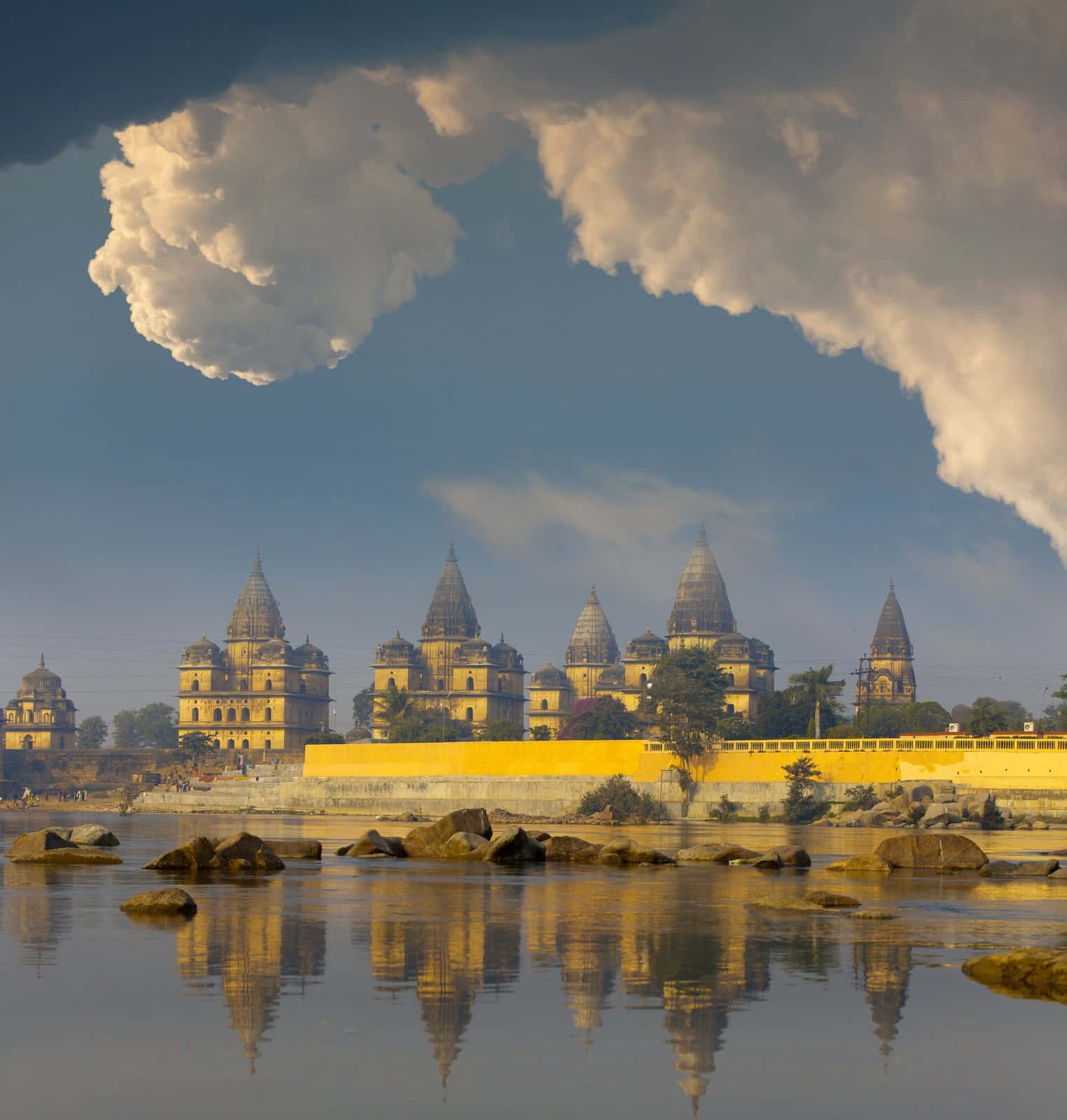
- The cenotaphs on the BetwaFourteen sandstone chhatris, memorials to the Bundela rulers, stand along Kanchan Ghat on the river. They are Orchha's signature image, reflecting in the Betwa at sunset, and they double as a roost for critically endangered long-billed vultures, so keep your voice down and do not disturb the birds.
The Archaeological Survey of India sells a single combined ticket at the counter near the entrance bridge, and it covers the main ticketed monuments together, Jahangir Mahal, Raja Mahal, the Lakshmi Narayan Temple and the Chhatris among them, rather than charging at each gate. Recent listings put the Indian fee somewhere from about 10 to 40 rupees and the foreign-national fee from about 250 to 350 rupees, with a still-camera fee of about 25 rupees, the older pages quoting the lower end and current 2026 listings the higher; ASI rates change, so treat these as approximate and reconfirm at the counter.
Signature experiences in Orchha
Beyond the monuments, these are the experiences people remember: the evening aarti, the cenotaphs at sunset, the Betwa rafting and the sound and light show.
- The evening aarti at Ram Raja TempleThe most atmospheric thing in Orchha is the evening aarti, when an armed guard presents a guard of honour and the deity is given a gun salute, worship fit for a king. Aarti runs several times a day with summer and winter timings, so check the board at the gate. Leave your camera and phone outside, stand quietly, and let it unfold.
- Sunset at the cenotaphsWalk or ride down to Kanchan Ghat in the late afternoon and watch the fourteen chhatris turn gold and mirror in the Betwa. It is the town's signature view and it is free. Cross to the far bank or the bridge for the reflection, and remember the cenotaphs shelter endangered vultures, so move gently.
- Betwa river raftingMP Tourism and local operators run gentle rafting on the Betwa from near Kanchan Ghat, a relaxed float past the cenotaphs rather than white water, costing roughly about 800 to 2000 rupees per person depending on the stretch. It is usually suspended in the monsoon when the river runs high, so confirm it is operating before you count on it.
- The sound and light show at the fortMP Tourism stages an evening sound and light show at the fort that tells four centuries of Bundela history with light and narration, run in Hindi and English on separate shows. Timings shift with the season and tickets are bought on the spot, so check the current schedule and language at the fort that day.
- Climb Chaturbhuj for the rooftop viewThe steep stair inside Chaturbhuj Temple leads to a rooftop with the finest panorama in town, the palaces, the spires and the river laid out below. The climb is dark and narrow and not for everyone, but the view at the top is the reward photographers come for.
- Slow time by the river and the bazaarOrchha is small and unhurried, so give it time. The little bazaar near the temples is good for a wander, the riverside cafes are calm, and the whole town can be walked in a morning. Its quiet is the point, a heritage town that has not been overrun.
If you do only one thing slowly, make it the end of the day: the cenotaphs at sunset, then the evening aarti at Ram Raja Temple. The riverside light and the royal worship are what people remember long after the palaces fade, and both are free. Give yourself an unhurried late afternoon and evening, and Orchha opens up in a way a quick stop on the way to Khajuraho never allows.
Where to stay in Orchha, and how many nights
Stay in Orchha itself for the riverside calm and the evening aarti, or use Jhansi only if you cannot find a room. One night is the sweet spot.
- Stay in Orchha, not JhansiSleeping in Orchha is what lets you catch the cenotaphs at sunset, the evening aarti and a calm sunrise, none of which work as a day trip from Jhansi. The town has heritage hotels, mid-range stays and guesthouses, so most travellers should base here and treat Jhansi only as the station.
- The heritage optionsMP Tourism runs the heritage hotel Sheesh Mahal inside the fort complex, a rare chance to sleep within the monument, and the Betwa Retreat near the river; there are private heritage and boutique stays too. Rooms at the in-fort property are limited, so book ahead in the winter season.
- Budget and mid-rangeOrchha has plenty of guesthouses and mid-range hotels near the temples and the bazaar, walkable to everything. They are good value outside peak winter weekends, and the town is small enough that location matters less than in a big city, since you can walk the lot.
- How many nightsOne full day and night is the sweet spot, enough for the fort palaces, the temples, the cenotaphs and an aarti without rushing. Add a second night if you want the Orchha Wildlife Sanctuary, a slower riverside pace or the rafting. Half a day, on the way to Khajuraho, only lets you skim the fort and the main temple.
The single most memorable place to stay in Orchha is the MP Tourism heritage hotel inside the fort complex, which puts you within the monument after the day visitors leave. Rooms are few and the property books up in winter, so reserve early if this is the experience you want. If it is full, the riverside MP Tourism property and the private heritage stays in town are comfortable alternatives, and everything is walkable.
Orchha costs and a realistic budget
Orchha is gentle on the wallet. Here is what the main things cost, so you can plan and avoid being overcharged on the negotiable bits.
- The fixed-price thingsThe fort combined ticket is reported across recent listings at roughly about 10 to 40 rupees for Indians and about 250 to 350 rupees for foreign nationals, with a still-camera fee of about 25 rupees, all reconfirmable at the counter, the lower figures from older pages and the higher from current 2026 listings. Ram Raja Temple is free. These are the rare prices in Orchha that are not negotiable, which makes them a useful anchor for your day.
- The transfer and getting aroundBudget roughly about 300 rupees for a private auto from Jhansi or about 600 rupees for a taxi, plus small change for cycle rickshaws or autos out to the river. The town is walkable, so beyond the airport-style arrival hop, on-the-ground transport costs are low.
- Activities and the riverThe Betwa rafting runs roughly about 800 to 2000 rupees per person depending on the stretch, and the sound and light show has a modest on-the-spot ticket. Agree the rafting price and what it includes before you set off, as with everything quoted to visitors here.
- Cash, cards and foodHotels and bigger restaurants take cards and UPI, but the bazaar, the autos and small eateries run on cash. There are ATMs in town, though it is wise to draw cash in Jhansi as a backup. Orchha is known for Bundeli food, so the simple local meals are both cheap and a highlight.
Everything except the ASI ticket and the temple is negotiable, so the single habit that keeps an Orchha visit smooth is to ask the price and agree it before anything begins, whether that is the Jhansi auto, the rafting or a guide at the fort. Quotes to visitors start high and come down without any fuss, and a sum agreed in advance turns the town's only friction into a non-event.
Practical logistics: tickets, guides, food and connectivity
The small things that make an Orchha day smooth, from the combined ticket and guides to ATMs, food and mobile signal.
- Buy the combined ticket firstStart at the ASI counter near the entrance bridge and buy the one combined ticket, which covers the main ticketed monuments together rather than charging at each gate. Keep the ticket and the stub, as you may be asked for it at the different palaces and temples within the complex.
- Guides and the camera ruleLicensed guides can be hired at the fort and bring the Bundela history to life, but agree the fee first. Remember that camera and phone use is banned inside the Ram Raja Temple, so plan to leave them with your shoes, while the palaces and the cenotaphs are fine for photos once you have the camera ticket.
- Food, money and ATMsOrchha is small but well set up for visitors, with riverside cafes, Bundeli thalis and a few ATMs in town. Carry cash for autos, the bazaar and small eateries, and draw a backstop in Jhansi, as a small town's ATMs can occasionally run dry on a busy weekend.
- SIM, signal and languageMobile coverage in town is generally fine for maps, calls and ride-hailing back to Jhansi. Hindi and Bundeli are the local languages, and English is understood in the hotels and the tourist trade, so communicating is easy enough for an overseas visitor.
Safety, etiquette and staying well
Orchha is calm and welcoming with very little hassle. A little holy-town etiquette and the usual heat-and-water care keep the visit happy.
- A calm, low-hassle townOrchha sees far fewer touts than the big-name sites, and most visitors find it relaxed and friendly. The mild friction is the negotiable transport and the occasional pushy guide or shopkeeper, handled with a firm, polite no and a price agreed in advance. Violent crime is not a notable concern, but use the usual sensible precautions after dark.
- Holy-town etiquette at the templesRam Raja Temple is a living place of worship, so dress modestly, cover shoulders and knees, remove your shoes and leather, and leave cameras and phones outside the temple as required. Stand quietly during the aarti and the gun salute, and do not photograph people at prayer without asking.
- Steep stairs and the heatThe palaces and Chaturbhuj have steep, dark internal stairs with uneven steps, so take them slowly and skip them if your knees or balance are not up to it. In the warmer months carry water and sun protection for the open fort courtyards and the riverside, and pace the day around the cooler hours.
- Water, food and the riverDrink bottled or filtered water and take the usual care with street food. The Betwa looks inviting but has currents and varying depth, so do not swim off the ghats, and only raft with an operator using life jackets. The rafting is suspended in the monsoon for good reason, so do not push the river when it is high.
The chhatris at Kanchan Ghat are not only a heritage site but a roost for the critically endangered long-billed vulture, one of very few breeding colonies left. Keep your voice down near the cenotaphs, do not climb on the structures or fly drones close to the birds, and watch from a distance. The reflection view from the far bank at sunset is just as good, and it leaves the colony undisturbed.
Orchha for every kind of traveller, and on access
Orchha suits very different visitors in different ways. Here is what it offers you, and the one tip that matters for each, including how a senior visits comfortably.
- CouplesQuiet, romantic and uncrowded: a riverside heritage hotel, the cenotaphs at sunset and the evening aarti make a slow, soulful overnight. An evening and a morning here beat a rushed day trip, and the calm is the draw.
- Families with childrenEasy and compact, with the fort to explore, a gentle river float and a small town that is simple to walk. Keep an eye on children on the steep palace and Chaturbhuj stairs, and visit the temple at a calmer hour rather than the busiest aarti.
- Senior travellers and on accessibilityVery doable with a little planning. Stay in town to keep walking short, take a cycle rickshaw or auto out to the cenotaphs, and visit in the cool of morning or evening. The palace and Chaturbhuj stairs are steep and uneven, so skip the rooftop climbs if needed, the ground-level palaces, the temple and the riverside are reward enough.
- History and architecture loversOrchha is a Bundela set piece, the palaces, the Bundela murals in Raja Mahal, the temple-fort hybrid of Lakshmi Narayan and the riverside cenotaphs in one walkable town. A licensed guide pays for itself here, and a slow day rewards the detail-minded.
- PhotographersSunrise from the Chaturbhuj rooftop, the cenotaphs mirrored in the Betwa at sunset, and the murals in Raja Mahal. Buy the camera ticket at the fort, respect the camera ban inside Ram Raja Temple, and ask before photographing worshippers.
- Solo and slow travellersA genuinely relaxed stop, low on hassle and easy to navigate alone, and a good place to slow down between the bigger sites. Use the usual sensible precautions after dark, and you will find Orchha one of the gentler heritage towns to travel solo.
A suggested Orchha itinerary
How to shape one or two unhurried days so you catch the palaces in the cool, the cenotaphs at sunset and the temple at the aarti.
- Day one, morningStart early at the ASI counter, buy the combined ticket, and explore Jahangir Mahal and Raja Mahal while the courtyards are cool, then the Lakshmi Narayan Temple for its murals. Break for a Bundeli lunch in town before the midday heat.
- Day one, afternoon and eveningRest through the hot middle of the day, then climb Chaturbhuj for the rooftop view in the softening light, walk down to the cenotaphs for sunset over the Betwa, and end at Ram Raja Temple for the evening aarti and the gun salute. If you have energy, catch the fort sound and light show.
- Day two, if you have itA second day adds the Orchha Wildlife Sanctuary along the Betwa, a gentle river raft when it is running, and a slower riverside pace. It turns a tick-the-box stop into the calm pause that Orchha does best, and it lets you see the cenotaphs at both sunset and sunrise.
- The half-day versionOn a Jhansi to Khajuraho drive you can stop for two or three hours to see the fort palaces and Ram Raja Temple, though you will miss the riverside sunset and the aarti, which are the best of Orchha. If your schedule allows only a half day, prioritise the fort and the main temple.
The thing that breaks a tight Orchha plan is doing the open fort courtyards and the steep climbs in the midday heat, then missing the riverside light. Put the palaces and Chaturbhuj in the cooler morning, keep the hot middle hours for a meal or a rest, and save the cenotaphs and the temple aarti for the end of the day, and a single day in Orchha works beautifully.
The real questions travellers ask about Orchha
Straight answers to the questions that come up again and again on traveller forums, so you arrive already knowing the score.
- Is one day enough?One full day and night covers the fort palaces, the temples, the cenotaphs and an aarti comfortably. An overnight is far better than a day trip from Jhansi, because the sunset, the evening aarti and the calm sunrise are the best of Orchha and a day trip misses all three. Two nights suits the wildlife sanctuary and a slower pace.
- Jhansi or Orchha as a base?Stay in Orchha for the riverside calm and the evening aarti. Base in Jhansi only if you cannot find a room or have a very early onward train, since the two are just 15 to 18 km apart and the transfer is quick. For the experience, Orchha wins easily.
- What does the fort ticket cover?One ASI combined ticket bought at the entrance counter covers the main ticketed monuments together, including Jahangir Mahal, Raja Mahal, the Lakshmi Narayan Temple and the cenotaphs, rather than charging at each. Reported fees run from about 10 to 40 rupees for Indians and about 250 to 350 rupees for foreigners across recent listings, plus a camera fee, but reconfirm at the counter as rates change.
- Can I take photos in Ram Raja Temple?No, cameras, phones and leather are not allowed inside the Ram Raja Temple, so leave them with your shoes. Entry is free, the worship runs like a royal court with an armed guard of honour and a gun salute at aarti, and the aarti times shift between summer and winter, so check the board at the gate.
- Is Orchha a UNESCO World Heritage Site?Not yet. Orchha is on the UNESCO tentative list as the historic ensemble of Orchha, submitted by the Archaeological Survey of India on 15 April 2019, which means it is a candidate rather than an inscribed World Heritage Site. The full nomination dossier was accepted by UNESCO in October 2024 and the bid is slated for the 2027 to 2028 cycle, so as of 2026 it is still tentative; pages that already call it a full World Heritage Site are getting ahead of the listing.
- When is the Betwa rafting open?The rafting near Kanchan Ghat usually runs in the dry months and is suspended during the monsoon when the Betwa is high and fast. It costs roughly about 800 to 2000 rupees per person depending on the stretch. Confirm it is operating on the day, as the season and the river level decide it.
Planning Orchha from abroad
Orchha is the quiet, uncrowded Bundela counterpoint to the Golden Triangle and pairs naturally with Agra, Gwalior and Khajuraho. A little preparation makes the ticket and the temple etiquette easy.
- Know the foreigner ticket and the camera ruleThe ASI combined ticket charges foreign nationals more than Indians, reported across recent listings from about 250 to 350 rupees, with a separate camera fee, reconfirmable at the counter. Inside Ram Raja Temple, cameras and phones are not allowed, so carry a little cash and be ready to leave devices outside. The palaces and cenotaphs are fine for photos.
- Respect the holy-town etiquetteRam Raja Temple is a living temple where Rama is worshipped as a king. Dress modestly, remove shoes and leather, stand quietly through the aarti and the gun salute, and ask before photographing worshippers anywhere in town. The courtesy is repaid with one of the warmest welcomes in central India.
- Pair it with Agra, Gwalior and KhajurahoFly into Delhi, take a fast train to Jhansi, and loop Orchha with Agra and Gwalior to the north and Khajuraho to the east. Orchha is the calm, soulful pause on a central India heritage route, and an easy short hop from the Jhansi railhead.
- Gentle and senior-friendly with planningStay in town to keep walking short, take a rickshaw out to the cenotaphs, and skip the steep palace and Chaturbhuj stairs if needed. Orchha is one of the easier, gentler heritage stops in India for parents and grandparents, far less crowded and frantic than the big-name sites.
Money, connectivity and timing for foreign visitors
The practical basics an overseas traveller needs for a small heritage town: cash, cards, a SIM, and how many days to give it on a wider India trip.
- Carry cash, expect to bargain on transportCards and UPI work in hotels and bigger restaurants, but the autos, the bazaar and small eateries are cash places, and the transport fares are negotiable. Draw cash in Jhansi or at an Orchha ATM, keep small notes for rickshaws and the camera fee, and agree transport prices in advance.
- Get a SIM at the airportPick up an Indian tourist SIM or an eSIM when you land in Delhi rather than hunting for one in a small town. Coverage in Orchha is fine for maps, calls and ride-hailing back to Jhansi, which is all most visitors need.
- How long to give it on a bigger tripOn a central India heritage trip, one to two nights in Orchha is the right weight between Agra, Gwalior and Khajuraho: enough for the fort, the temples, the cenotaphs and an aarti, without slowing the whole itinerary. It is the restful chapter between the marquee sites.
- Time your visit to your comfortOctober to March is the comfortable window, cool and clear. April to June is very hot, often above 40 degrees Celsius, and the July to September monsoon stops the rafting, so winter is the kindest time for an overseas visitor to see the open fort and the riverside.
Orchha is an unusually gentle introduction to heritage India: small, walkable, deeply atmospheric and far quieter than the Golden Triangle. Slot it after Agra and Gwalior on the way to Khajuraho, give it a night or two, and let it be the slow, soulful chapter on a central India loop. Many overseas visitors say the riverside cenotaphs at sunset and the royal aarti are the part of the trip they remember most warmly.
Why Orchha worships Rama as a king, and almost nowhere else does
Orchha keeps a tradition found nowhere else in India: here Lord Rama is worshipped not as a god in a shrine but as the reigning king of the town, seated in a palace. The local story tells of Queen Ganesh Kunwar, a devotee of Rama, who travelled to Ayodhya and returned with an idol of the lord on the condition that wherever it was first set down, there it would stay forever. The Chaturbhuj Temple was being built to house it, but when the queen reached Orchha the temple was not ready, so she placed the idol in her own palace. By the old condition the lord could not be moved, and so the queen's palace became the Ram Raja Temple, and the towering Chaturbhuj beside it remained the grand, empty shrine it had been built to be. To this day the worship runs like a royal court, with an armed guard of honour and a gun salute at the evening aarti, the only place where Rama is honoured as a king. The legend is preserved in Orchha's temple tradition and retold by MP Tourism; no single scriptural verse is reliably attributed to it.
Planning a Orchha trip?
Our Madhya Pradesh travel experts plan your full journey for you: route, hotels, darshan timings and transport. You get a free day-by-day plan and an exact quote on WhatsApp, usually within a few hours. No payment is needed to get your plan.
Tour packages that visit Orchha
Every journey below is private, hand-crafted and fully customizable. Tell us your dates and we tailor the itinerary, the pace and the priests or guides around you.
 4D / 3N
Jhansi Orchha Khajuraho Tour
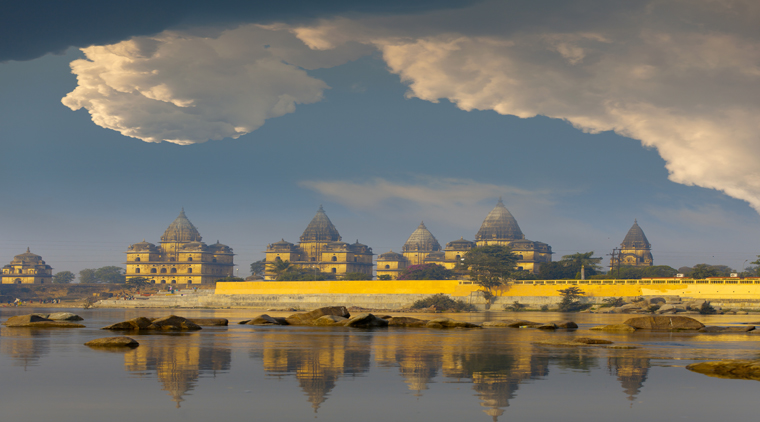
- Visit Rani Mahal
- Visit Orchha fort
 8D / 7N
North India Heritage Tour
- Visit heritage cities of India - Delhi,Jaipur,Agra,Orchha & Varanasi. Stay in Heritage Havelis at Jaipur. Experience the UNSECO world heritage sites at Khajuraho.