Chikhaldara Travel Guide
The plateau works in three distinct moods: monsoon for waterfalls , winter for cold, clear viewpoint light , and summer as the escape hatch from the furnace of the Vidarbha...
When to visit Chikhaldara, and the honest monsoon trade-off
The plateau works in three distinct moods: monsoon for waterfalls, winter for cold, clear viewpoint light, and summer as the escape hatch from the furnace of the Vidarbha plains. Pick the mood first, then the month.
- Mid-July to September: the green spectacleThe Melghat reserve's own website singles out the monsoon, mid-July to the end of September, for the best views, and it is right: the plateau turns emerald, Bhimkund and the seasonal falls run full, and mist pours over the points. The trade-off is the ghat road in rain and the pause in core-zone jeep rounds, so this is a landscape trip, not a wildlife one.
- October to February: cold, clear and the all-round bestPost-monsoon clarity and genuine cold make this the most comfortable window for viewpoints, the fort and safaris alike. December and January nights get properly cold; in December 2025 the town recorded 5 degrees Celsius with a season low of 3 degrees, so pack real warm layers, which surprises visitors expecting a mild Maharashtra hill.
- March to June: for wildlife and for escapeThe reserve says summers are good for animal sightings, as the forest thins and wildlife concentrates near water. The hill also earns its keep as a refuge: in May 2026 Amravati on the plains below hit 46.8 degrees Celsius, while the plateau stays markedly cooler. Days are warm but bearable; carry sun protection for the open points.
- Decide by purpose, not by ratingThere is no single best month here, which is what the copy-paste guides miss. Waterfalls and mist want the rains, big views and comfortable sightseeing want winter, and the best safari odds want the hot months. Choose the Chikhaldara you want before you choose the date.
The same rains that make the plateau spectacular fall on the roughly 32 km ghat climb from Paratwada, a stretch of hairpins through forest with long drops. It remains driveable with care, but allow extra time, avoid driving it after dark, and if you are not confident on wet hill roads, hire a local driver from Amravati or Paratwada rather than white-knuckling it yourself. Forum threads from self-driving families ask exactly this question, and the honest answer is: fine in the dry, respectful caution in the rain.
How to reach Chikhaldara
No airport, no railhead of its own: everyone climbs the same 32 km ghat from Paratwada. The practical gateways are Nagpur by air and Badnera or Amravati by rail.
- By air, via NagpurNagpur's Dr. Babasaheb Ambedkar International Airport, about 230 to 250 km away, is the air gateway, with daily flights from Mumbai, Delhi, Kolkata, Bengaluru, Raipur, Indore and Pune. From the airport it is a five to six hour drive via Amravati and Paratwada, so plan to leave by early afternoon to finish the ghat in daylight.
- By rail, via Badnera or AmravatiBadnera Junction, about 10 km from Amravati city and roughly 85 to 95 km from the hill, sits on the Mumbai to Nagpur and Kolkata trunk line, so long-distance trains from both directions halt there through the day. Amravati station also works. From either, a taxi does the remaining two to two and a half hours, or you can go by bus with one change.
- By bus, changing at ParatwadaMSRTC buses run Amravati to Paratwada about every 15 to 20 minutes, and an unofficial depot timetable lists around nine daily departures from Paratwada up to Chikhaldara starting at about 7:30 am and thinning by mid-afternoon. There is no dependable direct Nagpur service, so build the change at Paratwada into your plan and reconfirm the last uphill bus at the depot.
- By road from Mumbai, Pune or IndoreMumbai is about 700 km, a genuinely long haul best broken at Nashik or Akola or replaced by an overnight train to Badnera. Pune is similar in spirit: distance estimates vary widely by route, so trust your mapping app over blog figures. From Indore and central Madhya Pradesh, the approach through Betul country is shorter and overnight private buses reach Paratwada.
Fly into Mumbai or Delhi, connect to Nagpur on a domestic hop, then drive about five to six hours. Chikhaldara has no direct international access, and that remoteness is precisely why the plateau stays quiet.
Route through Mumbai or Hyderabad to Nagpur, or take the Mumbai-side rail option to Badnera Junction overnight and drive the last two hours up the ghat in morning light.
Train to Badnera or Amravati from either the Mumbai or the Nagpur-Kolkata side, then taxi or the Paratwada bus chain. Self-drivers from Nagpur should treat it as a relaxed half-day run via Amravati rather than a race.
The viewpoints, Bhimkund and Gawilgad Fort
The plateau's classic circuit is a ring of cliff-edge viewpoints over the Melghat valleys, the legend-soaked Bhimkund gorge, a British-era lake and garden, and a vast, half-forgotten fort.
- Bhimkund, the valley of the legendAlso signposted Kichakdara, this is the deep gorge where local tradition says Bhima threw the slain Keechaka and washed in the pool below, and it is the source of the town's name. In the monsoon a waterfall threads the cliff face. Come for the story and the drop; the keepsake at the end of this guide tells the legend honestly.
- Hurricane Point, Devi Point and PanchbolHurricane Point gives the big afternoon panorama over the ranges, with the under-construction skywalk visible stretching toward Goraghat. Devi Point pairs a stairway down to a small cave shrine with food stalls and pony rides, the closest the plateau comes to a fairground. Panchbol Point overlooks a convergence of valleys said to return five echoes, and the quieter Prospect, Mozari, Sunset and Malviya points reward anyone with an extra half day.
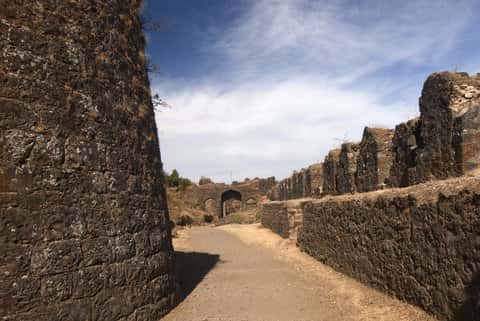
- Gawilgad FortA sprawling hill fort whose story runs from Gavli herder chiefs and Gond rulers through Bahmani-era walls to its storming by Arthur Wellesley's troops in December 1803, decades before he became the Duke of Wellington at Waterloo. Cars reach the base and the walk in is rough, open and atmospheric. The Incredible India page lists hours of about 9 am to 5 pm Monday to Saturday and about 9 am to 6 pm on Sunday; it sits inside Melghat's protected landscape, so expect forest checkpoints and keep to daylight.
- Shakkar Lake, the gardens and the museumShakkar Lake, the town's own reservoir, offers boating and an easy evening stroll; the Pandit Nehru botanical garden and the old Company-era gardens make gentle family stops; and the small tribal museum is worth twenty minutes for context on the Korku communities whose forest this is. Bir and Kalapani, two small British-built dams, round out a slow plateau loop.
The 407-metre glass skywalk between Hurricane Point and Goraghat Point, a state project reported at about 34.34 crore rupees and under construction since 2019, had still not opened as of a 2 June 2026 news report that described work in its final stage. Several travel pages already list it as an attraction; do not plan a trip around it until the state announces an opening date, and treat any page quoting skywalk ticket prices today with suspicion. We will update this guide when it opens.
The Melghat safari, booked right and expected honestly
Melghat is Maharashtra's first tiger reserve, among Project Tiger's original nine. The safari is the plateau's biggest experience, provided you book it the official way and expect a forest, not a guaranteed tiger.
- Book on the official portal, or at the town gateThe reserve's official booking site is magicalmelghat.in, run by the Melghat Tiger Reserve Conservation Foundation, covering day safaris and forest accommodation with a mobile-OTP login. Chikhaldara's own gate is Vairat, and the district site confirms safaris can also be arranged on the spot at the Nature Interpretation Centre in the heart of town. The reserve's enquiry lines are 0721-2662792 and +91 8956563016 if the portal confuses you.
- What a jeep costs, honestly hedgedThe reserve publishes no public tariff table, so treat numbers on travel blogs carefully. Third-party booking listings quote roughly 3,800 to 4,200 rupees per jeep per round depending on zone, covering vehicle, entry fees and guide for up to six visitors, which keeps the per-head cost modest for a full jeep. Reconfirm the current figure on the portal or the phone lines when you book, and budget a little over the quote.
- Timings and seasonsListings give morning rounds of roughly 6 to 11 am and evening rounds of about 3 to 7 pm, adjusted through the year, with a buffer-zone night safari of about 7:30 to 9:30 pm on offer around Harisal. Core-zone jeep rounds generally pause during the peak monsoon months, roughly July to September, while the reserve promotes that same window for landscape tourism; summers, by the reserve's own account, are the best months for sightings.
- The expectation that saves your tripMelghat's forest is dense, hilly, dry-deciduous country, and traveller reviews repeatedly describe it as difficult for sighting. Come for gaur in the bamboo, sambar at the waterholes, langur alarms, hornbills and the real chance of the once-vanished forest owlet, with a tiger as the unearned bonus. If a guaranteed tiger photograph is the entire point of your trip, a dedicated tiger park will suit you better, and it is fairer that you know that before you book.
The reserve's own things-to-do page lists full-day safaris, night machan stays, kayaking, elephant rides, trekking and rope-course adventure activities at Aamzari, Semadoh, Kolkas, Harisal and Shahnur, plus Korku tribal homestays and dance performances on request. Almost no visitor to Chikhaldara discovers this menu because almost no travel page mentions it. A machan night under a Melghat sky, booked through the same portal, is the single most memorable thing the reserve offers.
Coffee country, waterfalls and the day trips worth taking
The plateau's quieter experiences are its most distinctive: Maharashtra's only coffee country, monsoon waterfalls, a Jain temple valley across the state line, and sunrise from the highest point in Vidarbha.
- Walk Maharashtra's only coffee countryThe British planted coffee here in 1840, judging the altitude, chill and rainfall right for it, and Chikhaldara remains the state's only coffee-growing region, a fact both the state and central tourism pages carry. Plantations surround the MTDC resort area at Goraghat; ask your hotel to point you to a walkable estate, and buy local beans if you find them, since the crop is small and rarely leaves the district.
- Chase the monsoon waterfallsBetween mid-July and September the plateau's edges run with falls: the Bhimkund cascade, Pancha Dhara and a shifting cast of seasonal streams across the ghat road itself. Respect barriers and wet rock at the viewpoints, photograph from the railings, and remember the falls are the consolation prize for the paused core safaris, so a monsoon trip should be built around them.
- Sunrise at Vairat, the roof of VidarbhaVairat, at about 1,178 metres the highest point of the region, carries the Vairat Devi shrine and the biggest dawn in the district, looking out over the folded Melghat ranges. Go with your own vehicle and warm clothes in winter; it doubles as the safari gate area, so an early safari morning and a sunrise can be the same outing.
- Day trips: Muktagiri and NarnalaMuktagiri, a valley cluster of 52 Digambar Jain temples set against a waterfall, lies just across the Madhya Pradesh line about 14 km from Paratwada, and pairs naturally with your descent day. Narnala Fort, ringed by its own sanctuary and entered from Shahnur near Akot, is the more ambitious outing and one of the reserve's four tourism centres, better done as its own full day than bolted onto the plateau loop.
Chikhaldara's rarest asset is that its viewpoints are often empty. There are no queues, no ticket lines, no crowd management, because outside long weekends there is no crowd. Give the plateau one unscheduled evening: a point, the valley haze, the birds going quiet, the plains lighting up far below. Travellers on forums who call this place special are describing exactly that, and it costs nothing.
Where to stay: Chikhaldara town or inside Melghat
The real decision is not which hotel but which side of the forest gate: the small pool of simple hotels on the plateau, or the forest department's own complexes at Semadoh and Kolkas inside the reserve.
- Chikhaldara town: convenience and viewsThe plateau holds a small pool of properties, roughly 17 to 18 listed on the big OTAs, from basic lodges near the bazaar to a handful of resorts near the points. MTDC's resort sits by Goraghat Point among the coffee plantations, the classic government-run choice. Stay in town if you want the viewpoints at dawn and dusk, restaurant choice, and a base for the fort and gardens.
- Semadoh and Kolkas: sleeping inside the reserveThe forest department runs the Semadoh complex on the Sipna river, with about 10 cottages and dormitories of around 60 beds plus a small museum and cafeteria, and the quieter Kolkas centre 13 to 14 km deeper in, with about 7 cottages and an 18-bed dormitory. Book through magicalmelghat.in or the Amravati forest office. Facilities are, in the reserve's own words, comfortable and basic; nights here trade hot water certainty for real jungle sound.
- Set your comfort expectations nowThis is not a polished hill resort market. A TripAdvisor reply to a family seeking budget rooms doubted the town had much variety, and that remains fair: rooms are simple, service is homely, and the better resorts are modest by big-destination standards. Book ahead for winter weekends and holidays, when the small supply tightens fast.
- What rooms costOTA bands run from budget rooms about 1,500 to 2,500 rupees a night, mid-range about 2,500 to 5,000 rupees, and the handful of better resorts about 5,000 to 9,000 rupees, with forest-department cottages and dormitories cheaper still. Prices swing with season and weekend demand, so treat these as planning bands rather than quotes.
The best Melghat trips split the stay: two nights on the plateau for the points, the fort and the coffee walks, then one night at Semadoh or Kolkas, or on a machan, for the forest itself. The distances are short, the contrast is the whole point, and the forest-department night usually ends up the story you tell.
Chikhaldara costs and a realistic budget
This is one of Maharashtra's cheapest hill trips once you are there; the money goes on getting there and on the safari jeep. Here is how the spend actually breaks down.
- The daily numberAs a rough planning estimate, excluding your room and long-distance transport, a frugal day on the plateau runs about 1,500 to 2,500 rupees, and a mid-range day about 3,000 to 5,000 rupees once a shared safari seat, dhaba meals and local hops are counted. Viewpoints, the lake and the gardens cost little or nothing, which keeps the floor low.
- The safari is the big-ticket itemThird-party listings put a Melghat jeep at roughly 3,800 to 4,200 rupees per round, covering vehicle, entry and guide for up to six visitors, so a full jeep keeps the per-head cost modest while a couple taking the whole vehicle pays the most per person. Reconfirm current rates on magicalmelghat.in when you book; the reserve does not publish a public tariff page.
- Rooms and foodBudget rooms sit around 1,500 to 2,500 rupees, mid-range around 2,500 to 5,000 rupees, better resorts about 5,000 to 9,000 rupees, and the forest-department beds at Semadoh and Kolkas undercut all of these. Food is simple and cheap: thali dhabas, hotel dining rooms and not much else, so the eating budget stays small whether you want it to or not.
- Cash first, cards maybeTreat the plateau as a cash and UPI economy. Draw money in Amravati or Paratwada before the climb rather than relying on small-town machines, keep small notes for stalls, pony rides and boating, and expect the bigger hotels, but not the dhabas, to take cards.
Your trip cost is set by three choices made before you leave home: fly to Nagpur or take the train to Badnera, fill a safari jeep with six or ride it as two, and sleep in a resort or a forest-department cottage. Get those three right for your group and the rest of Chikhaldara is almost too cheap to budget for.
Practical logistics: fuel, cash, network and getting around
A small plateau town of a few thousand people, ringed by a tiger reserve: plan like you are going somewhere genuinely remote, because pleasantly, you are.
- Getting around the plateauThe points, the lake, the gardens and the fort base spread across several kilometres, so you need wheels: your own vehicle, a local taxi arranged through your hotel, or a day car hired from Amravati or Paratwada. There is no meaningful point-to-point local transport, and walking between viewpoints is lovely in patches but slow as a plan.
- Fuel up and cash up below the hillTop up the tank and your wallet in Amravati or Paratwada as a firm habit. Services on the plateau are limited and we could not verify current ATM or petrol availability in town from any official source, which is itself the message: arrive self-sufficient and nothing up here can inconvenience you.
- Network, food and suppliesExpect mobile data to be usable in town and unreliable in the folds of the forest, and download offline maps before the climb. Food means hotel dining rooms and honest dhabas, overwhelmingly vegetarian-friendly; carry any specific snacks, medicines or baby supplies you depend on, because the bazaar is small.
- Timing the practical dayBuild days around light: points at sunrise and sunset, the fort and gardens in between, and driving done before dark, both for the hairpins and because the forest roads belong to wildlife at night. The Gawilgad gate hours, about 9 am to 5 pm on weekdays and Saturdays and to about 6 pm on Sunday per the Incredible India listing, anchor the middle of the day nicely.
Safety on the ghat, at the edges, and after dark
Chikhaldara has none of the tourist-trap friction of the famous destinations. Its risks are physical and honest: a hairpin road, unfenced drops, a cold snap, and a forest that owns the night.
- Respect the ghat roadThe roughly 32 km climb from Paratwada is a real hill road: hairpins, forest shade, occasional cattle and monkeys, and long drops. It is entirely manageable driven patiently in daylight, which is exactly what worried self-drivers on the forums need to hear. In rain, slow down further; after dark, simply do not, both for visibility and because wildlife crosses.
- Mind the edgesThe viewpoints are cliff edges, and railings do not cover every vantage. Keep children within arm's reach at Hurricane Point, Bhimkund and Panchbol, stay behind barriers on wet monsoon rock, and resist the selfie perch beyond the fence; the drops here are serious and rescue is far away.
- Wildlife etiquette, in the jeep and outThe town borders a tiger reserve, and leopards, bears and other large animals move through the larger landscape. Do not walk unlit roads at night, keep food sealed, never feed monkeys at the points, and inside the reserve follow your guide and the wildlife rules absolutely; violations under the Wildlife Protection Act carry prosecution, and the rules exist to keep both sides of the encounter safe.
- Health, cold and preparationCarry your own first-aid basics and regular medicines; the nearest full hospitals are in Achalpur-Paratwada and Amravati, an hour or more away. Drink bottled or filtered water, treat the winter cold seriously with real layers for nights that can drop to about 3 to 5 degrees Celsius, and use sun protection at the exposed points in summer.
There is no donation racket, no aggressive touting, no fake-guide industry on this plateau; the persistent scams of the big destinations simply have not colonised it. The only pressure you may meet is a pony-ride or stall vendor at Devi Point being hopeful. Solo travellers, including women travelling alone, generally report the town itself feels calm and local; apply the standard small-town precautions after dark and the plateau is one of Maharashtra's gentler places to be.
Chikhaldara for every kind of traveller, and on access
A quiet plateau with cliff views, a legend, coffee and a tiger forest suits more people than its low profile suggests, but it suits them differently. The honest match-making, including for seniors:
- Families with childrenAn easy, unhurried hill for kids: boating on Shakkar Lake, pony rides and stalls at Devi Point, the gardens, and a jeep safari pitched as a forest adventure rather than a tiger hunt. Keep small children away from the unfenced edges, book rooms early for winter weekends, and pack for cold nights in December and January.
- CouplesThe plateau's emptiness is the romance: private sunrises at Vairat, mist through the coffee, and a machan or forest-cottage night at Semadoh or Kolkas that beats any candlelit-dinner cliche. Come off-season midweek and you may have entire viewpoints to yourselves.
- Senior travellers and on accessibilityVery doable with planning. The car reaches most viewpoints with short, mostly level walks; Gawilgad's rough approach and Devi Point's stairway are the two to skip if walking is hard. Take the ghat road in daylight with a rest stop, prefer October to February for kind weather, stay at a resort near the points to cut driving, and carry personal medicines since pharmacies are basic.
- Bikers and road-trippersThe Paratwada ghat is a rewarding, flowing climb that riders from Nagpur and Amravati do as a classic weekend run. Ride it in daylight, watch gravel on the hairpins in monsoon, fuel up in Paratwada, and add the Semadoh forest road for the full loop.
- Wildlife watchers and birdersMelghat is the connoisseur's choice: Maharashtra's first tiger reserve, gaur and sloth bear country, and one of the strongholds of the rediscovered forest owlet. Sightings are earned, not served, which keeps the jeeps few and the forest honest. Birders should carry their own binoculars and ask for the quieter zones.
- Solo travellers and photographersSafe-feeling, cheap and unhurried, though you will want your own transport. Photographers get monsoon mist, winter light off the escarpments and tribal-country textures; ask permission before photographing people in the villages, and give the fort a golden hour.
How many days, and a plan that uses them well
One night is the minimum that makes the journey worthwhile, two nights is the sweet spot, and three lets you sleep inside the forest. Day-tripping from Nagpur shortchanges everyone involved.
- Day one: arrive and catch the eveningReach by early afternoon, having fuelled and cashed up below the hill. Settle in, then spend the golden hour at Hurricane Point or Sunset Point and let the plains light come up. If you are booking your safari on the spot rather than online, call at the Nature Interpretation Centre in town before it closes for the day.
- Day two: forest morning, plateau afternoonTake the morning safari from the Vairat gate, roughly a 6 am start in the cooler months, then breakfast late and rest. In the afternoon do Bhimkund and Panchbol, the tribal museum or the gardens, and finish with a different point for sunset. This is the day the trip is remembered by.
- Day three, if you have it: the fort and the deep forestGive Gawilgad an unhurried morning within its listed hours, then either drop to Muktagiri's temple valley on your way out or drive into the reserve for a night at Semadoh or Kolkas, or on a machan booked through the portal. The forest night converts a nice weekend into the best wildlife story you own.
- The honest day-trip verdictFrom Amravati a long day trip works at a push. From Nagpur, about five to six hours each way, it does not: you would spend ten hours driving for three on the plateau. Forum askers wondering if one day is enough deserve the straight answer, which is that one night is the minimum and two are better.
Three fixed points shape every good Chikhaldara day: safaris run to gate timings, roughly 6 to 11 am and 3 to 7 pm by current listings; the fort keeps roughly 9 am to 5 pm hours; and the ghat road wants daylight at both ends of your stay. Lay those on the calendar first, then fill the gaps with points and gardens, and nothing important gets missed.
The real questions travellers ask about Chikhaldara
Straight answers to the questions asked, and often left hanging, on TripAdvisor, IndiaMike and the riding forums, so you arrive already knowing the score.
- Is Chikhaldara worth visiting?Yes, if you value quiet over polish. If you have lived among the Himalayas or the big Western Ghats stations, the altitude will not astonish you; what this plateau offers instead is emptiness, a tiger forest at the doorstep, a genuine legend and coffee country you can walk. Travellers who arrive expecting Mahabaleshwar's bustle rate it wrongly in both directions.
- Are the roads good enough for self-driving?A Nagpur family asked exactly this on TripAdvisor and got silence; here is the answer. The highways to Paratwada are ordinary flat driving, and the 32 km ghat is well-graded but genuinely a hill road. A calm driver with no hill experience will manage it fine in daylight and dry weather; in monsoon or darkness, hire local wheels instead.
- Will I see a tiger in Melghat?Probably not, and the guides will not pretend otherwise. The forest is dense and the terrain folded; reviews consistently call sighting difficult, and the reserve itself points to summer as the best chance. Melghat rewards the traveller who counts gaur, owlets and silence as wins.
- Is the skywalk open?Not as of a 2 June 2026 news report, which described the 407-metre glass bridge as in the final stage of construction. Ignore any page selling it as a current attraction, and check recent news or ask MTDC before believing an opening date.
- Town or Semadoh, and is there budget accommodation for families?Base in town for viewpoints and food choice, Semadoh or Kolkas for the forest; the ideal trip does both. Budget family rooms near the bus stand exist but are simple and few, roughly 1,500 to 2,500 rupees a night by current OTA bands, so book ahead rather than arriving hopeful on a December weekend.
- Best route from Mumbai or Pune, and can it be done in a day?By road it is about 700 km from Mumbai, technically drivable in a very long day but far kinder as an overnight train to Badnera Junction and a two-hour drive up. From Pune, distance estimates vary by route, so trust your mapping app, break the journey, or use the rail option and save your energy for the plateau.
Planning Chikhaldara from abroad, and whether you should
For an overseas visitor this is deep-cut India: a plateau town no tour bus visits, a tiger reserve most itineraries skip, and the reward is the least performed version of the country you will find.
- Who this is forChoose Chikhaldara if you have done the Golden Triangle, if you are an NRI with roots in Vidarbha showing family the region, or if your idea of a good day is an empty viewpoint and a forest that owes you nothing. Skip it on a first two-week India trip; its charm needs unhurried days and a taste for the untouristed.
- The routingFly into Mumbai or Delhi, hop to Nagpur on a domestic flight, then drive about five to six hours via Amravati and Paratwada; alternatively ride the Mumbai side overnight rail to Badnera Junction and drive up in the morning. Build a buffer day around the connection rather than chaining tight flights to a long drive.
- Set the comfort dial correctlyAccommodation is simple everywhere on this plateau, from lodge rooms to the forest department's deliberately basic cottages, and the reserve's own site says as much. There is no luxury tier, no international cuisine, no spa. Travellers who recalibrate from comfort to character before arriving have a wonderful time; those who do not, do not.
- Pair it honestlyIf a tiger photograph is the point of your India trip, most wildlife travellers choose or add a park known for frequent sightings and treat Melghat as the wild, quiet counterpoint rather than the main event. Chikhaldara pairs naturally with Nagpur, the Ajanta caves country to the south-west, or an onward central India rail journey.
Overseas visitors consistently over-plan famous India and under-plan places like this. Nobody will sell you anything at Hurricane Point. A Korku homestay or a machan night books for less than a city dinner. And when the mist opens over the Melghat valleys you will likely be the only foreign traveller watching it happen. That is a rare purchase anywhere on earth, and here it is almost free.
Money, connectivity and timing for foreign visitors
The practical basics for a remote plateau: cash strategy, a SIM that works, realistic timing on a wider India route, and the booking steps to do before you fly.
- Cash strategyGet rupees at your arrival airport and top up in Nagpur or Amravati; do not plan around finding a working ATM on the plateau. UPI dominates local payments, and foreign-card acceptance thins out fast beyond the bigger hotels, so carry enough cash for safari-day extras, dhaba meals and small purchases, in small notes.
- SIM and staying reachableBuy an Indian tourist SIM or eSIM at the airport when you land; do not wait for a small hill town. Expect usable data in Chikhaldara town and dead zones in the forest folds, download offline maps and your bookings before the climb, and warn anyone expecting daily calls that a machan night is gloriously out of coverage.
- Book the two scarce things earlyRooms on winter weekends and forest-department beds at Semadoh and Kolkas are the two bottlenecks, since supply is small. Use magicalmelghat.in for safaris and forest stays, reconfirm by phone if the portal's OTP flow fights your foreign number, and consider asking your hotel or a Nagpur travel desk to hold the safari booking for you.
- How much time on a wider routeGive it three nights inside a central India leg: two on the plateau, one in the forest. October to February suits most overseas visitors best, cold mornings included; mid-July to September is the spectacular green season if you accept paused core safaris and a slower, wetter road.
Carry your passport for hotel check-ins and keep a photo of it on your phone; a photo ID is required for safari bookings, and gate staff may check names against the booking. If you hold an OCI card, carry it alongside the passport it pairs with. None of this is onerous, but the forest bureaucracy is real and runs on matching names, so book with exactly the name in your document.
Why this plateau is named for a villain's fall
In the Mahabharata's Virata Parva, the Pandavas spend their thirteenth year of exile disguised in King Virata's court, where the queen's brother Keechaka torments Draupadi, and Bhima, strongest of the brothers, kills him for it. The epic tells that story in full but names no hill. It is local tradition, carried on the government's own district and tourism pages, that places the deed here: Bhima is said to have hurled Keechaka's body into this gorge, Keechakadara, the valley of Keechaka, and to have washed afterwards in the pool the town still calls Bhimkund. Over centuries Keechakadara softened into Chikhaldara. There is also a plainer reading, from Marathi, of chikhal for mud and dara for stream, the muddy torrent of a monsoon plateau. Stand at the Bhimkund railing in the rains, with the waterfall unspooling into the shadowed gorge, and you can hold both stories at once: a name born of mud and water, and a name born of the epic imagination that this landscape so easily invites.
Planning a Chikhaldara trip?
Our Maharashtra travel experts plan your full journey for you: route, hotels, darshan timings and transport. You get a free day-by-day plan and an exact quote on WhatsApp, usually within a few hours. No payment is needed to get your plan.