Ganpatipule Travel Guide
The comfortable months are November to February . The monsoon turns the Konkan a brilliant green but makes the sea rough and unswimmable, so come for the scenery, not the water.
When to visit Ganpatipule, and what the monsoon really does
The comfortable months are November to February. The monsoon turns the Konkan a brilliant green but makes the sea rough and unswimmable, so come for the scenery, not the water.
- November to February: dry and pleasantThe best window by far. Days are warm but not fierce, evenings are gentle, and the sea is at its calmest for walks and sunsets. This is peak season for both pilgrims and beach families, so weekends and the Diwali to New Year stretch fill up and rooms cost more, so book ahead.
- March to May: hot and humidThe coast gets sticky and the laterite of the temple pradakshina bakes by mid-morning. It is still doable if you keep the temple walk and the beach to early morning and late afternoon and rest through the middle of the day. April and May bring the famous Konkan Alphonso mangoes, which is a genuine reason to come in spring.
- June to September: the green monsoonThe Konkan is at its most dramatic, lush and waterfall-fed, and the crowds thin out. But the sea turns rough with high waves and stronger currents, swimming is out of the question, and some coastal viewpoints and back roads get slippery. Come for the green and the calm, not the water, and drive carefully.
- Decide what you want firstIf you want easy beach days and the temple in comfort, choose the November to February window. If you want green hills, low crowds and dramatic skies and you are happy to skip the sea, the monsoon is special. Both are good Ganpatipule trips, but they are very different ones.
Ganpatipule and the wider Konkan come alive for Ganesh Chaturthi in the late-monsoon weeks, when the whole coast celebrates its own god, and the temple is busiest then. Magh Chaturthi, on the fourth day of the lunar month of Magh in winter, is the other big temple occasion. Both are wonderful to witness but mean heavy crowds and scarce rooms, so book far ahead and expect queues for darshan if your visit falls on either.
How to reach Ganpatipule
Ganpatipule has no railway station and no working airport of its own. Almost everyone comes by the Konkan Railway to Ratnagiri, then a short road hop, or by the long coastal road from Mumbai or Pune.
- Via Ratnagiri, the nearest railheadRatnagiri on the Konkan Railway is the practical gateway, about 25 to 35 km from Ganpatipule, roughly 45 minutes to an hour by road. The wallet option is a frequent MSRTC bus at about 50 to 150 rupees; a negotiated local taxi or shared auto runs around 500 rupees, while a private cab pre-booked on an app or through your hotel is dearer, often about 1,500 rupees and up. Almost every rail journey to Ganpatipule ends with this short hop.
- By Konkan Railway from Mumbai or GoaRatnagiri sits on the scenic Konkan line between Mumbai and Goa. Mumbai to Ratnagiri fares run from about 170 rupees in the cheapest seated class up to around 2,000 to 2,200 rupees in higher classes; the fastest is the Mumbai to Madgaon Vande Bharat, which reaches Ratnagiri in a little over 4 hours. Reconfirm fares and timings on IRCTC, as both vary by train and class.
- By road from Mumbai or PuneMumbai is about 375 km away, a long day of roughly 7 to 9 hours via the Mumbai-Goa highway, and Pune is about 331 km, roughly 6 to 8 hours via Satara. Both are scenic but tiring drives with ghat sections, so break them if you can, and we can arrange a car with an experienced Konkan driver.
- By busMSRTC state buses and private operators such as Neeta and the MTDC service run from Mumbai and Pune to Ganpatipule via Ratnagiri, including overnight sleepers. It is the budget-friendly way in, and the overnight buses save you a daytime drive, though the road is winding so motion-sickness sufferers should plan accordingly.
Ratnagiri Airport at Mirjole has been upgraded with a terminal and night-landing, and regional flights under the UDAN scheme have been expected to begin around mid-2026, but as of this writing there is no settled scheduled commercial service. Check live schedules before you assume you can fly in, and treat the Konkan Railway to Ratnagiri as the reliable way to arrive. Pages that promise easy flights to Ratnagiri are running ahead of reality, so verify any route is actually operating before you book.
The Swayambhu Ganpati temple, the beach, and the temple rules
Ganpatipule is its rare west-facing Swayambhu Ganpati temple, its long golden beach, and the quiet Konkan sights around it. A few temple rules are worth knowing before you go.
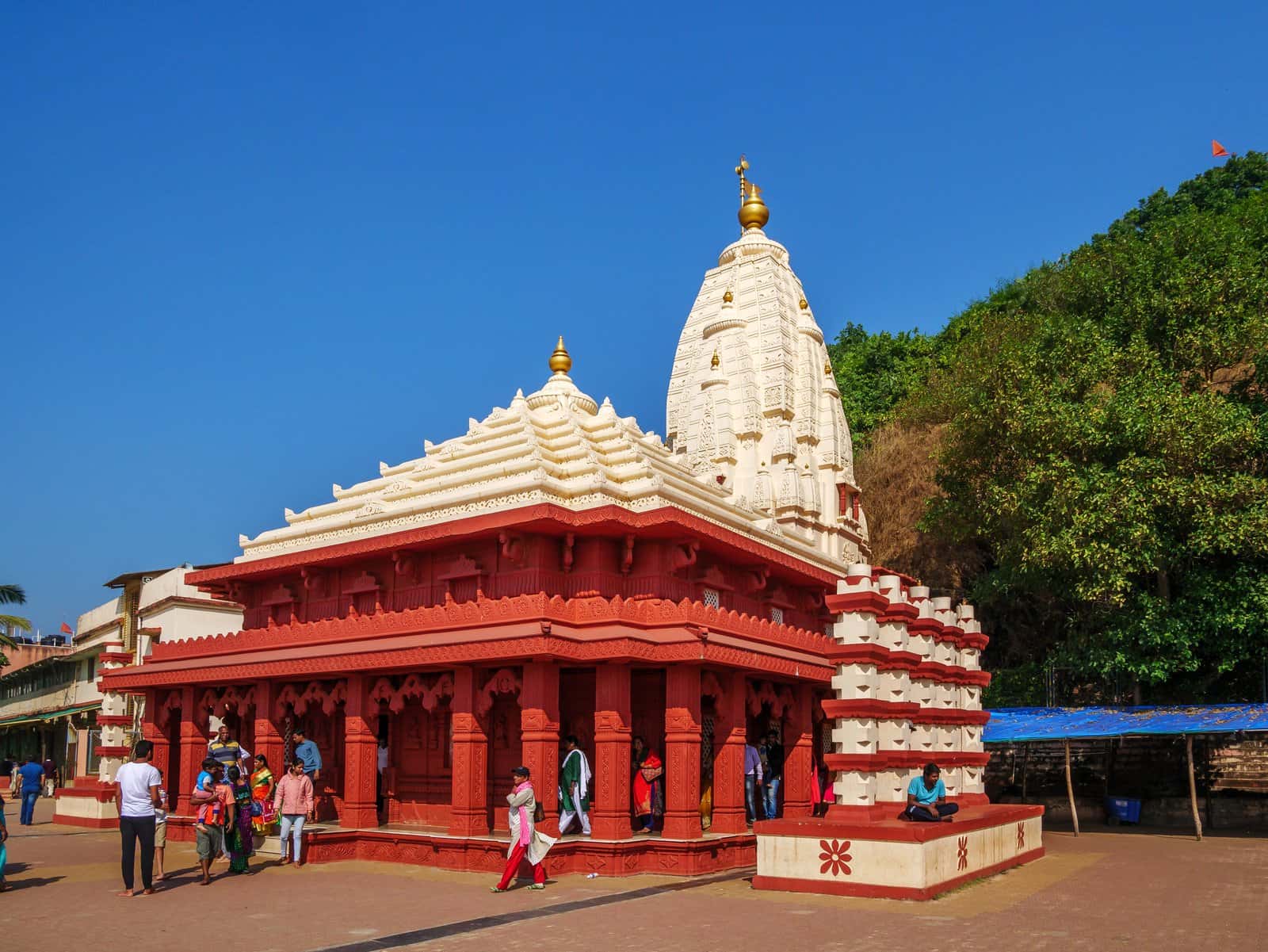
- The Swayambhu Ganpati templeThe heart of the town: a self-manifested rock idol said to be about 400 years old, unusually facing west toward the sea, set against a hill that is itself worshipped as a form of Ganesha. Entry is free and the temple is open for darshan from about 5 am to about 9 pm. Photography inside the sanctum is not allowed, shoes come off outside, and modest dress that covers shoulders and knees is expected.
- The pradakshina around the hillThe signature ritual is to walk around the whole hill, a barefoot circuit of about 1 km, rather than just the inner shrine. The path is laterite rock that gets very hot in the sun, so do it before about 9 am or after about 5 pm and carry water, especially with children or older walkers.
- Ganpatipule beachA long sweep of clean, pale-gold sand right below the temple, lovely for walks and sunsets. Read the safety section before anyone goes in the water: the sea here has strong undercurrents and very limited lifeguard cover, so it is a paddling and sunset beach, not a swimming one.
- Prachin Konkan museum, Aare Ware and JaigadThe open-air Prachin Konkan museum, about 600 m from the bus stand and usually open about 8:30 am to 6 pm for around 40 rupees with a guide, recreates traditional Konkan village life. Aare Ware, a quiet twin beach about 9 km away, is the local sunset spot. Jaigad Fort, a sea fort about 20 km north, is a free, atmospheric half-day.
Ganpatipule is a living pilgrimage temple, not a museum, so dress modestly, keep your phone away inside the sanctum, and follow the queue discipline on busy days. One warm surprise: the temple trust serves free khichdi prasad to all devotees, usually between about 12:30 pm and about 2 pm. It is a genuine free meal you can simply join, not a paid offering, and a quietly moving part of a visit. Reconfirm the exact aarti and prasad times on the official Sansthan Shreedev Ganpatipule site, as they shift a little by season.
Signature experiences in Ganpatipule
Beyond the temple and the beach, these are the experiences people remember, and how to arrange them honestly and safely.
- Sunrise darshan and the hill pradakshinaCome to the temple early, when the air is cool and the queues are short, take darshan, then walk the barefoot 1 km pradakshina around the hill before the laterite heats up. Doing it at dawn, before about 9 am, is the difference between a meditative walk and a hot, hurried one.
- Sunset on the beachThe free, unbeatable Ganpatipule experience is the sunset over the Arabian Sea from the main beach or the long sands at Aare Ware, about 9 km away. Stroll, paddle in the shallows, and let the light go gold. Just keep out of deep water, as the currents do not forgive.
- Gentle beach water sports, in the safe zoneWhen the sea is calm in season, operators offer short jet-ski, banana-boat and parasailing rides on the main beach. Use a licensed operator, wear the life jacket, and stick to the supervised stretch. These are run-in-the-shallows activities, not a green light to swim out on your own.
- The Prachin Konkan museumAn hour in the open-air museum of traditional Konkan life, about 600 m from the bus stand, usually 8:30 am to 6 pm for around 40 rupees with a guide, is a good shaded break from the beach and a real introduction to how this coast lived, with model sea forts and a tree garden.
- A half-day to Jaigad FortDrive about 20 km north to Jaigad Fort, a 16th to 17th century sea fort on a cliff at the mouth of the Shastri river, free to wander and open in daylight hours, usually from about 9 am, though listings disagree on the closing time (some show as early as about 4:30 pm), so go in the morning. The route passes the pagoda-style Jai Vinayak temple and a working lighthouse, and the creek views are the payoff.
- Konkan food and Alphonso mangoesEat the local way: Ratnagiri fish curry, kombdi vade, solkadhi and, if you come in April or May, the celebrated Ratnagiri Alphonso mangoes. Many family-run places and resort kitchens do honest Konkan thalis, and this region is the home of the Alphonso, so it is the real thing.
If you do only one thing slowly, make it the temple at dawn and the beach at dusk on the same day. The early darshan and barefoot pradakshina while the hill is still cool, and then the long sunset over the sea with the temple behind you, are what people remember of Ganpatipule long after the museum and the fort fade. Both are free, both reward an unhurried hour, and together they are the whole soul of the place.
Where to stay in Ganpatipule, and how many nights
Stay by the beach for the sea and the sunsets, or in the small temple-side cluster to be near darshan. Two nights is the sweet spot.
- Beachfront resorts, including the MTDCThe best-known stay is the Maharashtra Tourism (MTDC) beach resort right by the sand, with cottages a short walk from the water. Several private resorts and spas sit along the same stretch and toward Aare Ware. Best for families and couples who want the beach on their doorstep and a pool or garden to relax in.
- Temple-side and the Bhakt NivasClose to the temple are simpler guesthouses and family homestays, handy for early darshan and the khichdi prasad. The temple trust also runs a basic Bhakt Nivas with plain, inexpensive rooms for pilgrims, bookable through the official Sansthan site. Best for pilgrims and budget travellers who put the temple first.
- How many nightsTwo unhurried nights is the right length: one day for the temple, the pradakshina and a beach sunset, a second for the museum, Aare Ware and a half-day run to Jaigad Fort or the Keshavsut poet memorial at Malgund, 1 km away. One night works for a quick temple-and-beach stop, but the second night is what turns it into a proper Konkan break.
- Book ahead in season and on festivalsFrom November to February, and especially over Diwali, Christmas and New Year and around Ganesh and Magh Chaturthi, the good beach rooms and the MTDC cottages sell out and prices rise. Book well ahead for those dates, or shift to a weekday when it is quieter and cheaper.
Wherever you stay, remember the beach below is for walking, paddling and sunsets, not for swimming out. A beachfront room is wonderful for the light and the sound of the surf, but do not let it lull anyone, children especially, into treating the water like a hotel pool. The currents here are strong and lifeguard cover is thin, so the sea is to be admired from the sand and the shallows.
Ganpatipule costs and a realistic daily budget
Ganpatipule is gentle on the wallet outside peak weekends. Here is what the main things cost, so you can plan and avoid being overcharged.
- A rough daily budgetExcluding your room and the long-distance journey, plan on about 800 to 1,500 rupees a day as a budget traveller, about 2,000 to 3,500 rupees mid-range, and about 4,000 rupees and up for a comfortable day with a good thali, water sports and a half-day drive to Jaigad. The temple and most beach time cost nothing.
- The fixed-price thingsTemple darshan is free, and so is the beach. The Prachin Konkan museum is about 40 rupees per person with a guide, a genuinely fixed price. The Ratnagiri hop is not fixed: the MSRTC bus is about 50 to 150 rupees, a negotiated local taxi or shared auto around 500 rupees, and a pre-booked private cab often about 1,500 rupees and up, so agree the fare before you set off and use these as anchors against anyone quoting high.
- The negotiable thingsAuto and taxi hops, water-sport rides and any private sightseeing car should have the price agreed before you set off, as rates are quoted high to visitors and come down without drama. A Konkan thali at a family place is usually modest; resort restaurants cost more for the view and the comfort.
- Cash, cards and UPIResorts and bigger restaurants take cards and UPI, but the small eateries, the autos and the beach vendors run on cash. There are bank ATMs in Ganpatipule and many more in Ratnagiri, so carry enough cash for the day and top up in Ratnagiri if you are passing through.
Because the big draws, the temple, the beach and the sunsets, are free, the only place money leaks in Ganpatipule is on transport and water sports, both of which are negotiable. Agree the fare for any auto, taxi or sightseeing car and the price and length of any water-sport ride before it begins, and the town's only friction disappears. A sum settled in advance turns an awkward haggle at the end into a non-event.
Practical logistics: food, money, language and getting around
The small things that make a Ganpatipule day smooth, from the Marathi-first signage to ATMs, autos and the lack of an airport.
- Language and signageGanpatipule is a small, Marathi-speaking town with little English signage, including at the temple. Hindi is widely understood and resort and tour staff usually speak some English, so communicating is easy enough, but do not expect English boards, and a few words of Marathi or Hindi go a long way.
- Getting aroundThe temple, the beach and the museum are within a short walk or auto-ride of each other. For Aare Ware, Jaigad Fort and Malgund you need an auto, a hired car or your own vehicle, as there is no convenient local transport to them. Many visitors hire a car for a half day to cover the outlying sights.
- Money and ATMsThere are bank ATMs in Ganpatipule, with far more in Ratnagiri. Carry cash for autos, beach vendors and small eateries, as not everyone takes cards or UPI. If you are arriving via Ratnagiri, it is worth topping up cash there before the road hop.
- No airport, plan your exit tooRemember there is no working commercial airport here, so plan your departure the way you planned your arrival: the Konkan Railway from Ratnagiri, a bus, or a car. If you have an onward train from Ratnagiri, allow a clear hour for the road hop plus buffer, as the coastal road is winding.
Safety, the sea, and staying well
Ganpatipule is a calm, low-crime town, but the sea is the real hazard. The single most important thing here is to respect the water.
- Do not swim out: the sea is dangerousThis is the most important line on the page. Ganpatipule beach has strong undercurrents, uneven depth and very limited lifeguard cover, and traveller reviews and tourism advisories repeatedly warn against going in beyond the shallows. Walk, paddle ankle-deep, enjoy the sunset, but do not swim out, and watch children closely at the water's edge.
- In the monsoon, stay out of the water entirelyFrom June to September the sea is rough, with high waves, reduced visibility and stronger rip currents, and the sand shifts to create sudden drop-offs. The green hills are glorious, but the water is genuinely off limits, so admire the surf from a safe distance and keep well back on slippery rocks and viewpoints.
- Sun, heat and the pradakshinaThe barefoot temple pradakshina on laterite, and the open beach, can be punishing in the heat. Do the temple walk before about 9 am or after about 5 pm, carry water and sun protection, and pace older walkers and children. Drink bottled or filtered water and take the usual care with street food.
- General safety and scamsGanpatipule is a small, peaceful pilgrimage town with little of the touting you meet at bigger destinations. The main thing to manage is agreeing transport and water-sport prices in advance. Keep an eye on valuables on a busy festival day, and otherwise it is one of the more relaxed places on the coast.
If a swimmer is pulled out by a current, the advice on any rip-prone coast is the same: do not fight straight back against the water, as that exhausts you. Stay afloat, signal for help, and let the current carry you until it weakens, then swim back at an angle. Better still, do not get into a position where this matters: with so little lifeguard cover at Ganpatipule, prevention is the whole strategy, so keep to the shallows and keep children within arm's reach.
Ganpatipule for every kind of traveller, and on access
Ganpatipule suits very different visitors in different ways. Here is what it offers you, and the one tip that matters for each, including how a senior visits comfortably.
- Families with childrenEasy and wholesome, with the temple, the long beach and the museum. The one rule that matters: keep children out of the water beyond ankle-deep, as the currents are strong and lifeguards few. Choose a beachfront resort with a pool so the kids can swim safely there, and save the sea for sandcastles and sunsets.
- CouplesSlow, quiet and unspoilt, the calm Konkan answer to a Goa crowd: temple at dawn, sunsets at Aare Ware, Konkan thalis and long walks. An overnight rather than a day trip lets you catch both the early darshan and the evening light, which is when the place is at its most romantic.
- Senior travellers and on accessibilityVery doable with planning. The temple darshan itself is straightforward, but the barefoot 1 km hill pradakshina on hot laterite is the hard part, so do it at dawn, take it slowly, or skip the full circuit if it is too much. Stay near the beach or temple to limit walking, and the museum and sunsets are gentle and rewarding.
- PilgrimsThe reason the town exists: a rare west-facing Swayambhu Ganpati, free darshan from about 5 am, the hill pradakshina, the free midday khichdi prasad and a simple temple-trust Bhakt Nivas to stay in. Come early, follow the queue discipline on busy days, and reconfirm aarti times on the official Sansthan site.
- Solo and budget travellersSafe and friendly, easy on the wallet, and reachable by Konkan Railway to Ratnagiri and then a bus. Simple guesthouses, honest Konkan food and free beaches make it a gentle solo stop. There is little nightlife, so it suits a quiet few days rather than a party crowd.
- PhotographersThe west-facing temple at sunset, the long empty sands of Aare Ware, the green monsoon hills and the creek views from Jaigad Fort. Remember the photography ban inside the temple sanctum, ask before photographing pilgrims, and the golden hour on the beach is the easy win.
A suggested Ganpatipule itinerary
How to shape one or two unhurried days so you catch the temple in the cool hours and the sea at its best light.
- Day one, morningArrive and take early darshan at the Swayambhu Ganpati temple, then walk the barefoot 1 km hill pradakshina before about 9 am while the laterite is still cool. Join the free khichdi prasad around midday, then rest through the hot middle of the day.
- Day one, eveningWalk the main beach in the late afternoon and stay for the sunset over the sea, paddling in the shallows but staying out of deep water. Eat a Konkan thali or fresh fish curry at a family place to finish the day.
- Day twoSpend the morning at the Prachin Konkan museum, then drive about 20 km to Jaigad Fort for the creek views, passing the Jai Vinayak temple and the lighthouse. Come back for sunset at the quieter Aare Ware beach, about 9 km from town, and a final Konkan dinner.
- The one-night versionIf you only have a night, do the temple and pradakshina at dawn, the khichdi prasad at midday, and the beach at sunset, and skip the outlying sights. You will miss Jaigad and the museum, but you will still catch the soul of the place, which is the temple and the sea at either end of the day.
The single thing that spoils a tight Ganpatipule plan is leaving the barefoot hill pradakshina for the middle of the day, when the laterite path bakes and a meditative 1 km walk becomes a hot ordeal. Build your day so the temple and the pradakshina fall before about 9 am or after about 5 pm, keep the hot midday for the prasad, a meal and a rest, and you will walk the hill in comfort rather than racing it in the glare.
The real questions travellers ask about Ganpatipule
Straight answers to the questions that come up again and again on traveller forums, so you arrive already knowing the score.
- Is it safe to swim at the beach?Not really. The sea has strong undercurrents, uneven depth and very limited lifeguard cover, and reviews and advisories warn against going in beyond the shallows. Treat it as a walking, paddling and sunset beach, swim in your resort pool instead, and never enter the water during the monsoon.
- How do I get from Ratnagiri station to Ganpatipule?It is a short road hop of about 25 to 35 km, roughly 45 minutes to an hour. The cheapest way is a frequent MSRTC bus at about 50 to 150 rupees; a negotiated local taxi or shared auto runs around 500 rupees, while a private cab booked on an app or through your hotel is dearer, often about 1,500 rupees and up. Agree the fare first. If you are arriving by train, this is the last leg of almost every journey into Ganpatipule.
- Is one day enough, or should I stay two nights?One night covers the temple, the pradakshina, the khichdi prasad and a beach sunset. Two nights lets you add the museum, Aare Ware and a half-day to Jaigad Fort at a relaxed pace. For a place this calm, the second night is what turns a quick stop into a real Konkan break.
- Is Ganpatipule worth visiting in the monsoon?Yes, for the scenery, no, for the sea. The Konkan hills are at their greenest and most dramatic and the crowds thin out, but the water is rough and swimming is out of the question, and some roads and viewpoints get slippery. Come for the green and the calm, drive carefully, and stay out of the sea.
- Can I take photos inside the temple?No. Photography inside the sanctum is not allowed, and you leave your shoes outside and dress modestly. You can photograph the beach, the hill and the temple exterior freely, but keep the phone away once you are inside, and ask before photographing pilgrims at prayer.
- Is there really free prasad?Yes. The temple trust serves free khichdi prasad to all devotees, usually between about 12:30 pm and about 2 pm. It is a genuine free meal you can simply join, not a paid offering. Reconfirm the timing on the official Sansthan site, as it can shift a little by season and on festival days.
Planning Ganpatipule from abroad
Ganpatipule is the calm, authentic Konkan alternative to Goa and a genuine pilgrimage town. A little preparation makes the temple rules, the language and the sea easy to handle.
- Know it is a Marathi pilgrimage town, not a beach resort stripGanpatipule is a small, devout, Marathi-speaking town built around a temple, with little English signage and no nightlife. That is the charm: it is the unspoilt Konkan, not Goa. Eat the local Konkan food, take the temple seriously, and treat it as a quiet, cultural beach break rather than a party destination.
- Respect the temple, and do not swim the seaInside the temple, dress modestly, leave your shoes outside and keep your camera away, photography is not allowed in the sanctum. On the beach, the one thing to internalise is that the sea is for paddling and sunsets, not swimming, because the currents are strong and lifeguards few. Get both right and the rest is easy and warm.
- Reach it from Mumbai, mostly by rail or roadFly into Mumbai, then take the scenic Konkan Railway to Ratnagiri, a little over 4 hours on the fastest train, and a short taxi to Ganpatipule. There is no working airport in town, so do not plan on flying in. The road from Mumbai is a long, winding 375 km, so most overseas visitors prefer the train.
- Pair it with Goa or the Konkan coastGanpatipule sits on the Konkan line between Mumbai and Goa, so it slots neatly onto a coastal trip: a few quiet, authentic days here, then on to Goa for the beaches and the air connections. It is the soulful, uncommercial chapter of a Konkan journey, and an easy add to a wider India itinerary.
Money, connectivity and timing for foreign visitors
The practical basics an overseas traveller needs for a small Konkan town: cash, cards, a SIM, and how many days to give it on a wider India trip.
- Carry cash, expect to bargain on transportResorts and bigger restaurants take cards and UPI, but autos, beach vendors and small eateries are cash places, and transport and water-sport prices are negotiable. Draw cash at the Ganpatipule or Ratnagiri ATMs, keep small notes for autos and tips, and agree fares before you set off.
- Get a SIM in MumbaiPick up an Indian tourist SIM or an eSIM when you land in Mumbai rather than hunting for one in a small coastal town. Coverage in Ganpatipule itself is generally fine for maps, calls and booking transport, but sort connectivity in the city first so you arrive ready.
- How long to give it on a bigger tripOn a Konkan or Maharashtra trip, two nights in Ganpatipule is the right weight: enough for the temple, the pradakshina, a couple of sunsets and a fort, without slowing the whole itinerary. One night works if you are passing through between Mumbai and Goa and want the temple and a single sunset.
- Time your visit to your comfortNovember to February is the comfortable, dry window and the easiest for a first visit. The monsoon, June to September, is dramatically green and uncrowded but means a rough, unswimmable sea and slippery roads, so choose the dry season unless you specifically want the green Konkan and are happy to skip the water.
Ganpatipule is an unusually gentle introduction to coastal Maharashtra: small, walkable, deeply traditional and far calmer than a big-city beach. Slot it after Mumbai, give it a night or two, reach it by the scenic Konkan Railway, and let it be the slow, authentic chapter before Goa. Many overseas visitors say the temple at dawn and the long, empty sunset beaches end up being the part of the trip they remember most warmly.
Why the god here faces the sea, and rose from the soil
Ganpatipule takes its name from Ganpati and pule, which in Marathi tradition is read as forward or moved ahead. In local folklore the god, taking umbrage at a remark made by a village woman, moved forward from his earlier abode of Gule to Pule, and the place became Ganpati-pule. The murti in the temple is swayambhu, self-manifested, said to have sprung from the soil of the hill about 400 years ago, and it faces west toward the Arabian Sea rather than the usual east, so that the deity looks out over the water at every sunset. The hill behind the temple is itself worshipped as a form of Ganesha, which is why the great act of devotion here is to walk the pradakshina around the whole hill rather than only the shrine. These stories are living oral tradition of the Konkan coast rather than a single dated text, and we tell them as the tradition that gives the town its name and its temple their meaning.
Planning a Ganpatipule trip?
Our Maharashtra travel experts plan your full journey for you: route, hotels, darshan timings and transport. You get a free day-by-day plan and an exact quote on WhatsApp, usually within a few hours. No payment is needed to get your plan.
Tour packages that visit Ganpatipule
Every journey below is private, hand-crafted and fully customizable. Tell us your dates and we tailor the itinerary, the pace and the priests or guides around you.