Malvan Travel Guide
The window is October to March , when the sea is calm and clear for scuba and the boat to Sindhudurg Fort runs. The monsoon, roughly June to September, shuts the fort boat and...
When to visit Malvan and Tarkarli, and the monsoon to plan around
The window is October to March, when the sea is calm and clear for scuba and the boat to Sindhudurg Fort runs. The monsoon, roughly June to September, shuts the fort boat and most water sports, so time your trip with care.
- October to March: the clear-sea windowThe comfortable, calm-sea months, roughly 16 to 33 degrees Celsius, with the best underwater visibility for scuba and snorkelling and the Sindhudurg Fort boat running daily. This is when Malvan is at its best for the beach, the water sports and the fort together.
- April and May: hot and humidPre-monsoon heat builds to around 38 degrees with high humidity. The sea is still open and you can dive, but the open jetty, the fort and midday beach time are tiring, so start early and rest through the afternoon.
- June to September: the monsoon shutdownHeavy Konkan rain closes the Sindhudurg Fort boat and stops most water sports, as high tides and rough seas make the crossing and the diving unsafe. The countryside is gloriously green and quiet, but come only if you want the rain and the calm, not the sea activities.
- Weekends and peaks fill upDecember, the New Year week and the May school holidays are the busiest and dearest, and weekends draw the Mumbai and Pune crowd year round. For calm and better rates, aim for a weekday in October, November, February or early March.
The single most common ruined Malvan trip is arriving between roughly June and September expecting to dive or to take the boat to Sindhudurg Fort. The fort is closed to visitors in the rainy season because of high tides, and the scuba and water-sports operators stop for the rough sea. If your only free dates fall in the monsoon, treat Malvan as a green-season escape for the food, the countryside and the quiet, and save the fort and the diving for a return between October and March. Always reconfirm current operations with your stay before you travel.
How to reach Malvan
Malvan has no railway station of its own and only a small, limited airport. Most travellers come by the Konkan Railway to Kudal and drive the last stretch, or drive down the coast from Mumbai, Pune or Goa.
- By Konkan Railway via KudalMalvan is on the Konkan Railway corridor but has no station itself. Kudal, about 30 to 38 km away, has the most train halts and is the practical railhead, from where State Transport buses and autos run to Malvan and on to Tarkarli and Devbag. Sindhudurg Nagari station is the other option but fewer trains stop there.
- By air to Chipi or GoaSindhudurg airport, also called Chipi airport, is only about 21 km away but has only limited regional flights, recently to cities such as Bengaluru, Hyderabad and Pune, on a network that changes often and has paused routes including Mumbai before, so check current routes before relying on it. Goa's Dabolim airport, about 85 km south, is the more reliable gateway for most travellers.
- By road from Mumbai, Pune and GoaMalvan is roughly 450 km south of Mumbai and a long day's drive on the coastal and highway route, a popular self-drive run from Mumbai and Pune. From Goa it is a much shorter hop of around 2 to 3 hours, which is why many overseas visitors pair the two.
- Getting the last leg rightWhichever way you arrive, the final stretch to Tarkarli or Devbag is by taxi, auto or local bus, since the beaches sit a few km beyond Malvan town. Ask your stay to arrange a pickup from Kudal station or Chipi airport, as autos can be scarce late in the day.
Fly into Mumbai or Goa, the practical international gateways, then continue to Malvan by the Konkan Railway to Kudal or by road. Malvan pairs naturally with Goa, only 2 to 3 hours away.
Fly into Mumbai or Goa, then take the Konkan Railway south to Kudal or drive down the coast. Chipi airport near Malvan has only limited domestic links, so plan the main hop into Mumbai or Goa.
Take the Konkan Railway to Kudal and drive the last 30-odd km, or self-drive down from Mumbai or Pune. Kudal, well served by the Konkan line, is the simplest way in by rail.
Sindhudurg Fort, the beaches and the backwater
Malvan is the great Maratha sea fort, the white sand of Tarkarli, the Karli river backwater at Devbag and the Rock Garden sunset. The fort is the unmissable one, and it needs a boat.
- Sindhudurg Fort, by boat from the jettyThe Maratha sea fort built on Khurte island, reached only by a short ferry boat from the Malvan jetty, a crossing of roughly 10 to 15 minutes. Built between 1664 and 1667 under Chhatrapati Shivaji Maharaj, it spreads over about 48 acres with walls about 30 feet high, holds a rare temple where Shivaji is worshipped as a deity, and is a protected monument under the Archaeological Survey of India. It closes in the monsoon.
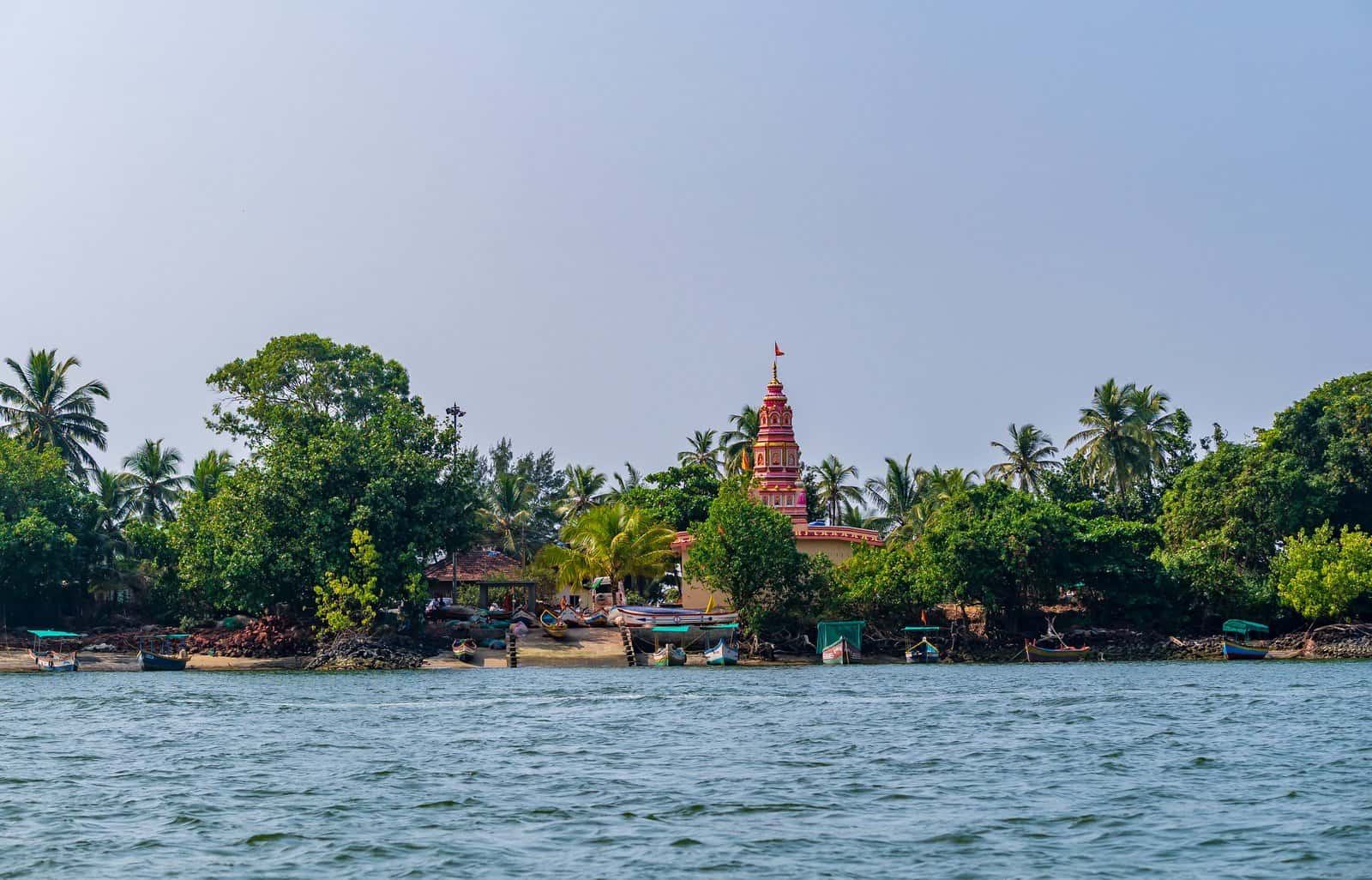
- Tarkarli and Devbag beachesTarkarli, about 6 km south of Malvan town, is the long white-sand beach with the scuba and water sports. A few km further, Devbag is where the Karli river meets the sea at the sangam, quiet and end-of-the-road, and the base for the early-morning backwater dolphin safari.
- Rock Garden and Chivla beachBetween the Malvan jetty and Chivla beach, the Rock Garden is a rocky shoreline with open seating, a favourite for families and one of the best sunset spots on the Konkan coast. Chivla beach nearby is one of the calmer stretches to dip your feet.
- Tsunami IslandA shifting sandbar island off Devbag, also called Kurte island, reachable by a short backwater boat, where the operators run jet ski, banana boat and other water sports on a calm lagoon. It appears at low tide and is part of most Devbag boat safaris.
Many first-timers expect to walk onto Sindhudurg Fort and are surprised it sits on an island offshore. You buy a boat ticket at the Malvan jetty, cross for about 10 to 15 minutes, spend an hour or more exploring the ramparts, the Shivaji temple and the freshwater wells inside, then return by boat. Carry cash for the jetty, wear footwear you can walk rough stone in, and go in the morning when the sea is calmest and the boats are running freely.
Scuba, the backwater safari and the things to do
Beyond the fort, Malvan is scuba and snorkelling at Tarkarli, the dawn dolphin safari at Devbag, water sports at Tsunami Island and a Malvani thali. Here is how to do each one well.
- Scuba diving at TarkarliA short, shallow, beginner-friendly dive with an instructor, typically about 20 to 40 minutes in the water, no experience needed. Prices run from about 1,500 rupees up to about 3,500 to 7,500 rupees for longer or boat-based dives with photos. It is not Andaman-grade reef, but it is one of the cheapest, easiest first dives on the west coast.
- The Devbag backwater dolphin safariGo at first light from Devbag for the boat safari along the Karli river, spotting dolphins near Tsunami Island, the river-meets-sea sangam and the mangrove and crocodile points. Short Tsunami Island hops cost from about 300 rupees, longer multi-point safaris about 1,200 to 1,500 rupees. Early morning gives the calmest sea and the best dolphin odds.
- Water sports at Tsunami IslandJet ski, parasailing, banana boat, bumper boat and kayaking run on the calm lagoon water off Devbag and at Tarkarli. They are often bundled into combo packages with scuba, so agree exactly which rides are included and confirm a life jacket and instructor before you get in.
- Snorkelling and the marine sanctuaryIf you do not want to dive, snorkelling over the shallow reef off Tarkarli, part of the Malvan Marine Sanctuary, is a gentle alternative, typically about 30 to 45 minutes, and good for families. Visibility is best from October to March.
- A Malvani thali, eaten properlyThe food is a highlight in its own right. Seek out a home-style lunch home in Malvan town or Tarkarli for a fresh fish thali built on surmai or bangda fry, prawn or crab curry, kombdi vade and a glass of sol kadhi, rather than a generic resort buffet.
- The Rock Garden sunsetEnd a day at the Rock Garden between the jetty and Chivla beach for the Konkan sunset over the rocks, a free and unhurried local favourite that families gather for in the evening.
If you do only one thing slowly, make it the dawn backwater safari at Devbag. Leaving before sunrise, with the Karli river glassy and the mist still on the mangroves, you drift past the sangam where river meets sea and, on a good morning, watch dolphins roll just off the boat near Tsunami Island. It is the quiet, unhurried heart of a Malvan trip in a way the jet skis and the buffet never are, and it costs a fraction of the scuba. Book it the evening before and ask for the earliest slot.
Where to stay in Malvan, and how many nights
Base in Tarkarli for the beach and scuba, in Malvan town for the jetty and market, or in Devbag for backwater calm. Two to three nights is the sweet spot.
- Tarkarli beach: sand and scubaThe most popular base, right by the white-sand beach and the water-sports and scuba operators, with resorts and homestays at every level. Best for first-timers who want the beach and the diving on their doorstep. The government MTDC Tarkarli resort sits here too.
- Malvan town: jetty, market and fortStay in town to be near the Sindhudurg Fort jetty, the fish market, the Malvani lunch homes and the Rock Garden. Handier for the fort and the food, a short drive from the beach. Good for travellers who care more about the town and the heritage than the sand.
- Devbag: end-of-the-road calmQuieter homestays and resorts out at the Karli river sangam, the natural base for the dawn dolphin safari and for couples and families who want stillness. You will drive a little further for the fort and the town.
- How many nights and what it costsTwo to three nights covers the fort, a beach and scuba day and the backwater safari. Simple homestays run from about 700 to 1,500 rupees, mid-range about 1,500 to 3,500 rupees, and MTDC or better resorts from about 3,500 rupees up, all higher on weekends and in the December and May peaks.
On long weekends, the New Year week and the May holidays, the good Tarkarli and Devbag stays sell out well ahead and prices climb steeply, because Malvan is an easy weekend run from Mumbai and Pune. If your dates fall on a holiday or a weekend, book early, and consider a weekday visit for both calm and value. Confirm whether your stay arranges scuba and the backwater safari, as a trusted in-house operator saves haggling at the beach.
Malvan costs and a realistic daily budget
Malvan is gentle on the wallet outside the peaks. Here is what the main things cost, hedged and sourced, so you can plan and avoid being overcharged.
- A rough daily budgetExcluding your room and the long journey in, plan on about 1,500 to 2,500 rupees a day as a budget traveller eating at lunch homes, and about 3,500 to 6,000 rupees for a comfortable day with one big activity, meals and local transport. A scuba dive or a full backwater safari is the day's main cost.
- The activity pricesScuba runs from about 1,500 rupees up to about 3,500 to 7,500 rupees for longer boat dives with photos. The Devbag backwater safari is about 1,200 to 1,500 rupees for a long multi-point boat, or from about 300 rupees for a short Tsunami Island hop. Confirm exactly what each package includes before you pay.
- Food and the fortA generous Malvani fish thali at a lunch home is excellent value, and the fort needs only a modest boat-and-entry charge bought in cash at the jetty. The food and the fort are where Malvan feels cheap; the water sports are where the bills add up.
- Cash is kingThe jetty boat, the beach operators, the autos and the small lunch homes largely run on cash. ATMs are in Malvan town but can be unreliable, so draw enough before you reach the beach and keep small notes for rides and tips.
Almost every water activity in Malvan is negotiable and sold as a bundle, so the single habit that saves money and stops disputes is to ask exactly what is included and agree the price before anything begins, whether that is a scuba package, a backwater safari or a string of jet-ski rides. Quotes to visitors start high and a clear, agreed inclusion list turns the only common friction into a non-event. Booking through a trusted stay rather than a beach tout is usually both safer and fairer.
Practical logistics: getting around, cash, SIM and the three hubs
The small things that make a Malvan day smooth: moving between town, Tarkarli and Devbag, carrying cash, and the connectivity to expect.
- Moving between the three hubsMalvan town, Tarkarli beach about 6 km south and Devbag a few km further are separate places, so you will use autos, a hired car or a scooter to move between them. A scooter or a car with a driver for the day is the easiest way to combine the fort, a beach and the backwater.
- Money and ATMsCarry cash. The jetty boat, the beach operators, autos and small eateries run on cash, and ATMs in Malvan town can run dry on busy weekends. Cards and UPI work at bigger resorts and some restaurants, but never rely on them at the beach.
- SIM, signal and languageMobile coverage is generally fine in Malvan, Tarkarli and along the main roads, though it thins out at remote beach ends. Marathi is the local language and the warm Malvani hospitality is genuine; Hindi and basic English are widely understood in the tourist trade.
- Fuel, repairs and timingFuel up in Malvan town before heading to Devbag, as pumps are sparse out at the beaches. Plan the fort and the dawn safari for the morning and the beach for later, since the sea and the boats are calmest early in the day.
Safety: sea currents, scuba operators and the boat
Malvan is welcoming and low-crime, but the Konkan sea deserves respect. A little care with currents, operators and the boat keeps the trip happy.
- Respect the Konkan currentsSea currents along this coast can be strong and have proved dangerous. Swim only where locals and lifeguards indicate, never go far out and never after drinking. Tarkarli's main beach and Chivla beach in Malvan town are generally the calmer, watched stretches; treat unmarked or deserted beaches with caution.
- Vet your scuba and water-sports operatorFor any dive or water sport, confirm the operator is MTDC-recognised or well established, that you get a fitted life jacket, and that a trained, certified instructor is with you in the water at all times. A reputable operator briefs you properly and never rushes a nervous first-timer in.
- The fort boat and the tidesThe Sindhudurg Fort boat runs only when the sea allows and stops in the monsoon for high tides. Go in the morning when the crossing is calmest, hold children's hands at the jetty steps and on the boat, and do not pressure boatmen to sail in rough conditions.
- Sun, water and food hygieneCarry sun protection and water for the open jetty and beaches, drink bottled or filtered water, and enjoy the fresh seafood from busy, well-run lunch homes where the turnover is high. The Malvani food is a joy; choosing a clean, popular kitchen keeps it that way.
Malvan is a small, friendly, family-oriented town and most solo travellers and first-timers find it easy and safe, with the usual sensible precautions. The real risk here is the sea, not crime: respect the currents, choose a proper operator, wear the life jacket and do not dive or swim beyond your comfort. Do that, and the gentlest part of the Konkan coast rewards you with clean beaches, a great fort and some of the best home-style seafood in India.
Malvan for every kind of traveller, and on access
Malvan suits very different visitors in different ways. Here is what it offers you and the one tip that matters for each, including how a senior visits the fort comfortably.
- Families with childrenEasy and rewarding: the calm Tarkarli and Chivla beaches, the gentle backwater safari and a fort the kids will remember. Keep little ones in life jackets for any boat or water sport, choose the calmer beaches to swim, and book the dolphin safari at first light when the sea is flat.
- CouplesQuieter and more soulful than Goa: sunrise on a Devbag boat, a Malvani dinner, and the Rock Garden sunset. Base in Devbag or a beachfront Tarkarli stay for the calm, and give it three nights to slow right down.
- Senior travellers and on accessibilityVery doable with planning. The Sindhudurg Fort boat involves jetty steps and uneven stone inside the fort, so go on a calm morning, take it slowly and accept a steadying hand at the steps. Stay near the beach to limit walking, skip the rougher water sports, and enjoy the fort, the food and the sunsets at an easy pace.
- Groups of friendsMalvan is built for a group weekend from Mumbai or Pune: scuba and water-sports combos split well across a group, and a hired car or scooters cover the three hubs. Book rooms and the boat ahead on holiday weekends.
- Solo travellersFriendly, low-crime and easy to navigate, with homestays that look after solo guests. The main caution is the sea, not safety; choose a proper operator and respect the currents, and Malvan is one of the gentler coastal stops to travel alone.
- First-time scuba diversAmong the most accessible places in India to try a first dive: shallow, short and instructor-led, with no experience needed. Pick an MTDC-recognised operator, do it on a calm morning in season, and treat it as a fun taster rather than a deep reef dive.
A suggested Malvan itinerary
How to shape two or three unhurried days so you catch the fort on a calm morning, the beach in the afternoon and the dolphins at dawn.
- Day one: the fort and the townTake the morning boat from the Malvan jetty to Sindhudurg Fort while the sea is calm, explore the ramparts and the Shivaji temple, then lunch on a Malvani thali in town. Spend the late afternoon at the Rock Garden for the Konkan sunset over the rocks.
- Day two: the beach and scubaMove to Tarkarli for a beach morning and a scuba dive or snorkel on the calm, clear water, no experience needed. Keep the afternoon for water sports at Tsunami Island or a slow walk along the white sand, and another seafood dinner.
- Day three: the dawn backwater safariRise before sunrise for the Devbag boat safari along the Karli river, the sangam and the dolphin points near Tsunami Island, then a relaxed beach morning before you leave. This third day is the one that turns a tick-the-box trip into the calm Konkan pause Malvan does best.
- The two-night versionIf you only have two nights, do the fort and town on day one and combine the beach, scuba and a shorter backwater hop on day two. You will move faster, but you can still see the headline of each.
The thing that breaks a Malvan plan is leaving the Sindhudurg Fort boat or the dolphin safari for the afternoon, when the sea is rougher, the boats sail less freely and the dolphins have moved on. Build your days so the fort and the backwater fall in the calm early hours and keep the beach, the food and the sunsets for later. Plan around the monsoon entirely, as the fort boat and the water sports simply stop from roughly June to September.
The real questions travellers ask about Malvan
Straight answers to the questions that come up again and again on traveller forums, so you arrive already knowing the score.
- Is the Tarkarli scuba worth it?For a first-timer, yes: it is a short, shallow, instructor-led fun dive and one of the cheapest in India. Be realistic, though, as travellers who have dived Andaman or Lakshadweep find the visibility and reef ordinary. Treat it as an easy, affordable taster, best in clear-water season from October to March.
- Is Malvan better than Goa?Different rather than better. Malvan is quieter, more local and more authentic, with a real Maratha sea fort and home-style Malvani food, but fewer nightlife and fewer slick resorts than Goa. If you want calm, heritage and great seafood over a party scene, Malvan wins; many overseas visitors do both, as they are only 2 to 3 hours apart.
- Are two nights enough?Two nights covers the headline, the fort and town one day, the beach and scuba the next. Three nights is better and lets you add the dawn Devbag dolphin safari and a slow beach morning without rushing. A single night forces a choice between the fort and the sea.
- Which railway station do I use?Kudal, about 30 to 38 km away, is the practical Konkan Railway railhead with the most train halts; from there take a State Transport bus or auto to Malvan, then on to Tarkarli or Devbag. Sindhudurg Nagari station is an alternative but fewer trains stop, and connectivity onward is poorer.
- When does the fort boat run and is it open in the rains?Boats run through the day in season, commonly from about 8 am to about 5 pm, weather permitting. The fort is closed to visitors in the monsoon, roughly June to September, because of high tides and rough seas, so plan a fort visit only between October and May, and reconfirm locally.
- Where do I eat a real Malvani thali?Skip the resort buffets and find a home-style lunch home in Malvan town or Tarkarli, where the fish is bought fresh that morning. A proper thali pairs surmai or bangda fry with prawn or crab curry, kombdi vade and sol kadhi; ask your homestay for their local favourite.
Planning Malvan from abroad
Malvan is the quieter, more authentic Konkan alternative to Goa, with a genuine Maratha sea fort and clean home-cooked seafood. A little preparation on the season and the cash economy makes it easy.
- Pair it with GoaMalvan sits only about 2 to 3 hours up the coast from Goa, so the easiest plan is to fly into Goa or Mumbai and add a few Malvan nights for the fort, the quieter beaches and the Malvani food. It is the calmer, more local counterpoint to a Goa beach holiday.
- Time it to the clear-sea seasonCome between October and March for calm seas, clear water for scuba and the Sindhudurg Fort boat running. Avoid the monsoon, roughly June to September, when the fort boat and water sports shut down, unless you specifically want the green, rainy Konkan countryside.
- Carry cash and expect a slower paceMalvan runs largely on cash, especially the jetty boat, the beach operators and the lunch homes, so draw enough before you reach the beach. This is a small fishing-town pace, not a resort strip, which is exactly its charm.
- Senior-friendly with planningThe fort involves a boat and uneven stone, so go on a calm morning and take it slowly, stay near the beach to limit walking, and lean on the gentle backwater safari and the food. For parents and grandparents it is one of the easier, friendlier coastal stops in India.
Access, money and timing for foreign visitors
The practical basics an overseas traveller needs for a small Konkan town: how to get in, cash and cards, and how many days to give it on a wider India trip.
- Fly to Mumbai or Goa, not MalvanChipi airport near Malvan has only limited, changeable domestic flights, so plan your main hop into Mumbai or Goa and continue by the Konkan Railway to Kudal or by road. From Goa it is a short, scenic drive of 2 to 3 hours.
- Cash, cards and a SIMBigger resorts take cards and UPI, but the boat, the beach operators and the lunch homes are cash places, so carry enough and keep small notes. Pick up an Indian tourist SIM or eSIM at the airport rather than hunting for one in a small town; coverage in Malvan is generally fine.
- How long to give itTwo to three nights is the right weight on a wider India or Goa trip, enough for the fort, a beach-and-scuba day and the dawn backwater safari without slowing the whole itinerary. Give it three if you want to truly unwind.
- Set expectations on the divingIf you are an experienced diver, come for the fort, the food and the calm rather than the reef, as the Tarkarli dive is a short, shallow taster. If it is your first dive, it is one of the easiest and cheapest places in India to try it on a calm, clear morning.
Malvan is an unusually gentle, authentic introduction to the Indian coast: a small fishing town with a great Maratha sea fort, clean beaches, a calm backwater and some of the best home-style seafood in the country, all at a slower pace than Goa. Slot it for two or three nights alongside Goa, time it to the October to March window, carry cash, and let it be the quiet, local chapter of your coastal trip. Many overseas visitors say the food and the dawn dolphins are what they remember most.
The handprint in the lime, and the temple where a king is a god
Sindhudurg, the sea fort of the Maratha king Chhatrapati Shivaji Maharaj, rises straight from the waves off Malvan. Its foundation stone was laid on 25 November 1664 and it was finished by 1667 under the chief architect Hiroji Indulkar, spread over about 48 acres of rock with walls about 30 feet high and its main gate hidden so cleverly that no enemy could find it from the sea. Local tradition holds that during the building, Shivaji's own handprint and footprint were set into the wet lime, and they are kept to this day in a shrine inside the fort. Inside too stands one of the only temples in India where Shivaji himself is worshipped as a deity, built by his son Rajaram Maharaj. The handprint and the footprint are a cherished local tradition rather than a documented historical fact, and we tell them as such; what is certain is that in 2025 the fort was inscribed on the UNESCO World Heritage List as part of the Maratha Military Landscapes of India, the recognition that a small fishing town on the Konkan coast had quietly earned for three and a half centuries.
Planning a Malvan trip?
Our Maharashtra travel experts plan your full journey for you: route, hotels, darshan timings and transport. You get a free day-by-day plan and an exact quote on WhatsApp, usually within a few hours. No payment is needed to get your plan.
Tour packages that visit Malvan
Every journey below is private, hand-crafted and fully customizable. Tell us your dates and we tailor the itinerary, the pace and the priests or guides around you.