
Shiridi Travel Guide
Shirdi is open every day of the year, but the comfortable months are October to March , and a handful of festivals bring enormous crowds. Decide first whether you want a quiet...
When to visit Shirdi, and the festivals to plan around
Shirdi is open every day of the year, but the comfortable months are October to March, and a handful of festivals bring enormous crowds. Decide first whether you want a quiet weekday darshan or the surge of a festival.
- October to March: the comfortable windowCool and pleasant by day, easy for the long stand in the darshan queue and the open walk between the shrines. This is the most comfortable stretch and the one we suggest for a first visit, especially with elderly parents or young children.
- April to June: hot on the plainHigh summer in inland Maharashtra is dry and hot, tiring for a queue that can run a couple of hours. If you come then, aim for the very early Kakad-aarti darshan or a late-evening slot and keep the middle of the day for rest.
- July to September: green but humidThe monsoon turns the surrounding farmland green and crowds ease outside festival dates, but it is humid and wet. Guru Pournima, around July, is one of the biggest festival surges of the year, so the lull does not include that week.
- Festival days: the heaviest crowdsRam Navami in spring, Guru Pournima around July, and Vijayadashami with Baba's Punyatithi around October draw vast numbers and very long queues. They are moving to witness, but if you want a calm darshan, pick an ordinary weekday instead and avoid Thursdays.
Around Ram Navami, Guru Pournima and Vijayadashami the town fills, darshan queues stretch for hours, and Sansthan rooms and aarti seats book out early. If your dates fall on a festival, reserve your darshan or aarti slot and your room on the official Shri Saibaba Sansthan Trust portal well in advance, and build extra time into your day. Festival timings can also shift, so reconfirm the daily programme on the official site before you travel rather than trusting a copied schedule.
How to reach Shirdi
Shirdi has its own airport and a railway station, and good road links from Mumbai, Pune and Nashik. Most pilgrims fly or train in, or drive as part of a Mumbai or Pune trip.
- By air, Shirdi has its own airportShirdi International Airport (code SAG) at Kakadi village is about 14 to 15 km from the Samadhi Mandir, with scheduled flights from cities such as Delhi, Hyderabad, Bengaluru, Chennai, Indore and Mumbai on carriers including IndiGo, SpiceJet, Alliance Air and Air India. Routes and frequencies change, so check current flights before you book, and arrange a taxi for the short hop into town.
- By train to Sainagar ShirdiThe new Sainagar Shirdi station (code SNSI) in town has direct trains from Mumbai and several other cities. Other railheads on the official list are Kopargaon about 22 km, Nagarsul about 50 km and Manmad Junction about 60 km away, all with onward taxis and buses to the temple.
- By road from Mumbai and PuneShirdi is about 250 km from Mumbai, roughly 5 to 6 hours by road, and about 185 to 200 km from Pune, roughly 4 to 5 hours. Nashik is closer at about 90 km, roughly 2 to 3 hours. Most packages run as a 1 to 2 night trip from Mumbai or Pune, and we can arrange a car with an experienced driver.
- By busMaharashtra State Transport and private air-conditioned buses run to Shirdi from Mumbai, Pune, Nashik, Aurangabad, Ahmednagar, Manmad and Kopargaon, among many other towns. From Mumbai, services leave through the day, mostly from the Dadar side.
Fly into Mumbai, the main international gateway, then take a domestic flight to Shirdi airport, a train to Sainagar Shirdi, or drive about 5 to 6 hours. Shirdi has no international flights of its own.
Fly into Mumbai or Pune, then connect to Shirdi by a short domestic flight, by train, or by a 4 to 6 hour drive. Shirdi pairs easily with a Mumbai, Pune or Nashik trip.
Fly direct to Shirdi from cities such as Delhi, Hyderabad, Bengaluru, Chennai and Indore, take a train to Sainagar Shirdi, or drive from Mumbai, Pune or Nashik. The town airport and station make it one of the easier shrines to reach.
The Samadhi Mandir, Dwarkamai and the sacred shrines
Shirdi is the Samadhi Mandir where Sai Baba's remains rest, Dwarkamai with its ever-burning dhuni, and the cluster of shrines Baba lived among. A short walking circuit links them all.
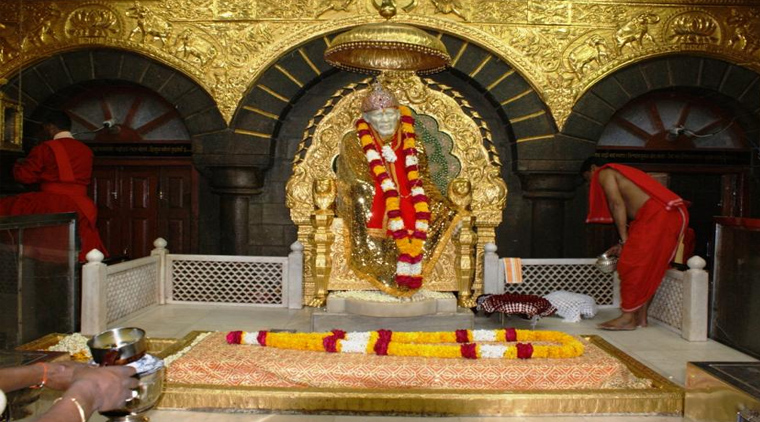
- Samadhi Mandir, the heart of ShirdiThe white marble shrine where Sai Baba's mortal remains were interred, with the statue of Baba above the samadhi. This is the main darshan, free in the general queue, and the focus of the four daily aartis. Leave your phone and bag at the cloakroom before you join the line.
- Dwarkamai and the eternal dhuniThe old mosque where Baba lived for years, home to the dhuni, the sacred fire he lit that has burned without break ever since. Devotees collect the udi (sacred ash) here. It sits a short walk from the Samadhi Mandir, inside the same complex.
- Gurusthan and ChavadiGurusthan, marked by an old neem tree, is where Baba was first seen as a young ascetic. The Chavadi, a short walk away, is where Baba slept on alternate nights and where a ceremonial palanquin procession is still held. Both are quick to visit on the shrine circuit.
- Lendi Baug and Khandoba MandirLendi Baug is the garden Baba planted and tended, a calmer green corner of the complex. The nearby Khandoba Mandir is where, by tradition, Baba was first greeted as 'Sai' on arriving in Shirdi, which makes it a meaningful first or last stop.
Most pilgrims do the Samadhi Mandir darshan first, then walk the short loop to Dwarkamai, the Gurusthan, the Chavadi and Lendi Baug, all within or beside the main complex. Give it an unhurried half day so you are not rushing the dhuni at Dwarkamai or the quiet of Lendi Baug. Phones and cameras are restricted inside the Samadhi Mandir, so plan to deposit them at the cloakroom and simply be present for that part.
Darshan and the four daily aartis, and how to book them
The rhythm of Shirdi is its darshan and four aartis. Knowing the official times and the free-versus-paid options is the single biggest thing that makes a smooth visit.
- The four daily aartisThe Sansthan's official daily programme lists the Kakad (morning) aarti about 5:15 am, the Madhyan (mid-day) aarti about 12:00 noon, the Dhoop aarti at sunset, and the Shej (night) aarti about 10:00 pm. The Samadhi Mandir opens about 4:45 am and public darshan begins about 6:25 am after the early morning aarti. Reconfirm on sai.org.in, as festival days shift these times.
- Free darshan versus the paid queueGeneral darshan of the Samadhi Mandir is free in the regular queue. The Sansthan also runs a paid priority darshan, widely reported at about 200 rupees per person, which reaches the shrine faster on Thursdays, weekends and festivals. Treat the 200 rupee figure as expected and reconfirm it on the official portal.
- Booking onlineDarshan and aarti can be booked through the official portal at online.sai.org.in or the Sansthan app. You need a government photo ID, such as Aadhaar or a passport, for each person, and bookings open up to about 60 days ahead. Aarti seats, especially the early Kakad aarti, are limited and go fast, so book early and carry the same ID you booked with.
- Special counters that shorten the waitThe Sansthan runs separate provision for senior citizens, differently-abled devotees and pregnant women, which is the kind, practical way for those travellers to avoid the longest stand. Ask staff at the queue entrance and carry age or other proof if relevant.
Copied schedules on travel blogs often get the Shirdi aarti times wrong. The figures here, Kakad about 5:15 am, Madhyan about 12:00 noon, Dhoop at sunset and Shej about 10:00 pm, with darshan from about 6:25 am, are from the Shri Saibaba Sansthan Trust daily programme on sai.org.in, and the official site is the only schedule to trust. Festival and special days change the programme, so check it again close to your visit, and book any aarti seat in advance because they are limited.
The Prasadalaya, the free meal, and where to eat
Eating at the Sansthan Prasadalaya is part of the Shirdi experience: a free vegetarian thali in one of the largest community kitchens anywhere. Here is how it works and what is free.
- The free ground-floor hallThe official Shri Saibaba Prasadalaya page describes a huge ground-floor dining hall seating about 4,500 people where the vegetarian thali is free. You take a free token from the counter, then sit down to dal, chapati, rice, two vegetables and a sweet. It is the prasad of Sainath, served so that no devotee leaves Shirdi hungry.
- The paid first-floor hallsOn the first floor are two halls of about 1,000 seats each with dining tables, where the meal is paid, currently about 50 rupees per person, with tickets from the ground-floor counter. Choose these if you would rather sit at a table; the food itself is the same prasad.
- The world's largest solar kitchenThe Sansthan describes the Prasadalaya, opened in 2009, as the world's largest solar-powered free food kitchen and Asia's largest prasadalaya, serving 60,000 or more meals on a normal day and far more on festivals. It is a genuine sight in its own right, hygienic and well run.
- The free Sansthan shuttleFree Sansthan buses connect the pilgrim accommodation to the Prasadalaya, running at regular intervals via the temple. If you are staying in a Bhakta Niwas, you can ride the free bus to eat rather than arranging your own transport.
Many first-time visitors do not realise the main Prasadalaya meal is genuinely free: just take the free token from the counter for the ground-floor hall and join the queue. It is clean, vegetarian and unlimited in spirit, and eating there is part of the pilgrimage rather than a fallback. If you prefer a seated table, pay the small first-floor charge, currently about 50 rupees. Reconfirm the current charge at the counter, as small amounts like this do change over time.
Where to stay in Shirdi, and how many nights
Stay in a Sansthan Bhakta Niwas for value and a free shuttle, or in a private hotel for comfort. One to two nights is the usual length, longer if you add the Shani Shingnapur day trip.
- Sansthan Bhakta Niwas: value and convenienceThe Trust runs large pilgrim complexes you book on sai.org.in: Sai Ashram with about 1,536 rooms, New Bhakta Niwas with about 542 rooms and a round-the-clock free shuttle to the temple, and Dwaravati with about 334 rooms. Published rates are modest, with non-AC rooms roughly 200 to 500 rupees and AC rooms roughly 600 to 900 rupees, so reconfirm current rates and availability on the official portal.
- Private hotels and resortsShirdi has a wide range of private hotels, from simple lodges near the temple to comfortable mid-range and a few upscale resorts on the outskirts. These cost more than the Sansthan rooms but add space and amenities, and are easy to combine into a tour package.
- How many nightsOne night is enough for the core darshan, the aartis you want and the shrine circuit if you plan well. A second night lets you add the Shani Shingnapur day trip without rushing, attend an early Kakad aarti calmly, and absorb the place rather than tick it off.
- Book early for festivals and ThursdaysRooms, especially the good-value Sansthan ones, fill fast around Ram Navami, Guru Pournima and Vijayadashami, and Thursdays and weekends are busier than weekdays. Reserve ahead for those dates, and treat a normal weekday as the calmest, easiest time to find a room.
For a devotee, the Sansthan Bhakta Niwas accommodation is hard to beat: it is run by the Trust, the rates are modest, and the New Bhakta Niwas has a free round-the-clock shuttle to the mandir so you are never stuck arranging transport at odd hours for an early aarti. The trade-off is that they are simple and book out fast in season, so reserve on sai.org.in as soon as your dates are fixed, and keep a private hotel as a backup if the Sansthan rooms are full.
Shirdi costs and a realistic budget
Shirdi is gentle on the wallet: the darshan and the main meal are free, and the few fixed charges are small. Here is what the main things cost so you can plan.
- What is freeGeneral darshan of the Samadhi Mandir is free, the four daily aartis can be attended in the standing crowd for free, and the main Prasadalaya thali on the ground floor is free with a token. The cloakroom and locker counters for your phone and bags are also free. The core of a Shirdi pilgrimage costs nothing.
- The small fixed chargesThe paid priority darshan is widely reported at about 200 rupees per person, the seated first-floor Prasadalaya hall is currently about 50 rupees, and Sansthan rooms run roughly 200 to 900 rupees depending on AC. Treat these as current figures to reconfirm on the official portal rather than fixed prices.
- Transport and the day tripYour biggest variable costs are getting to Shirdi (flight, train or car) and the Shani Shingnapur day trip if you add it, which is a hired car or a Sansthan or state bus. A package from Mumbai or Pune bundles the car, the driver and the hotel into one price.
- Carry some cashCards and UPI work in larger hotels and shops, but the small charges, the bazaar around the temple, and offerings run on cash. There are ATMs in town, but carry enough small notes for the day to keep things simple, especially on a busy darshan morning.
Because darshan and the main meal are free and the Sansthan rooms are inexpensive, a Shirdi pilgrimage can be done very cheaply: your real spend is transport to the town and, if you choose, the about 200 rupee priority darshan, the about 50 rupee seated meal and a private hotel. A 1 to 2 night trip from Mumbai or Pune with a car, hotel and the Shani Shingnapur day trip is where most of the cost sits, and that is exactly what a package is for.
Practical logistics: cloakroom, dress code and prohibited items
The small rules that make a Shirdi darshan smooth: what you cannot carry inside, where to leave it, what to wear, and how to handle a crowd.
- Phones and bags go to the cloakroomMobile phones, cameras, electronic items, bags and often water bottles are not allowed inside the Samadhi Mandir. The Sansthan provides free cloakroom and locker counters near the queue entrance, so deposit them before you join the line. Travel light on darshan day and keep only your booking ID and a little cash on you.
- Dress modestlyThere is no rigid uniform, but Shirdi is a major shrine, so dress modestly and conservatively: avoid shorts, very short skirts and revealing or torn clothing, and traditional or covered Indian wear is appreciated, especially for an aarti. Comfortable footwear you can slip off easily helps, as you go barefoot in the shrine.
- Getting around townThe temple complex and the lanes around it are walkable. Auto-rickshaws and taxis handle the airport, the station and the Shani Shingnapur day trip, and if you stay in a New Bhakta Niwas the free Sansthan shuttle runs round the clock to the mandir.
- Crowds and timingThursdays, weekends and festivals are the busiest, with the longest queues. For the calmest darshan, choose a weekday and an early morning or late evening slot, and use the online booking and, if eligible, the senior-citizen or differently-abled counter to shorten the wait.
The single habit that makes a Shirdi darshan effortless is to arrive with almost nothing in hand: leave the phone, the camera and the bag in your hotel or the free cloakroom, and carry only your booking ID and a little cash. You will not be juggling belongings in a crowd or queuing twice for a locker, and you can simply be present at the shrine. Reconfirm the current prohibited-items list at the entrance, as security rules can tighten on festival days.
Safety, crowds and staying well in Shirdi
Shirdi is a well-run, welcoming shrine, but big crowds and long queues are the real challenge. A little planning keeps an elderly or first-time pilgrim comfortable and safe.
- Manage the queue and the heatThe main strain in Shirdi is a long stand in a crowd, sometimes a couple of hours or more on a busy day. Carry water until the cloakroom point, wear comfortable footwear, and in the warm months favour an early-morning or late-evening darshan. Use the paid priority queue or the senior and differently-abled counters to cut the wait if needed.
- Watch your belongings and avoid toutsIn any large pilgrim crowd, keep valuables close and be wary of strangers offering to fast-track your darshan for a fee outside the official counters. Book darshan and aarti only through the official online.sai.org.in portal or the Sansthan counters, not through touts in the lanes.
- Food and waterThe Prasadalaya is hygienic and a safe bet for a meal. Otherwise drink bottled or filtered water, take the usual care with street food, and carry any personal medicines, as a busy shrine day can run long. The Sansthan also runs a hospital in Shirdi if you need help.
- Travelling with elders or childrenPlan a calm pace: a weekday darshan, the senior-citizen or differently-abled counter, the free shuttle if you stay in a Bhakta Niwas, and a clear meeting point in case you are separated in the crowd. Keep children close at the queue and the Prasadalaya, where the throng is densest.
Shirdi is a busy, family shrine and generally an easy, safe place to visit alone, including for women. The main thing to manage is the crowd rather than any particular risk: keep your valuables close, book through the official portal, and dress modestly as you would at any major temple. The Sansthan's separate provision for women, seniors and the differently-abled at the queue makes a solo or elderly visit notably gentler than the standing crowd alone would suggest.
Shirdi for every kind of pilgrim, and on access
Shirdi suits very different visitors, from families to elderly devotees to first-timers. Here is what it offers each, and the one tip that matters, including how a senior does darshan comfortably.
- Families with childrenEasy and meaningful, with the free Prasadalaya meal a highlight for kids. Keep little ones close in the queue and at the Prasadalaya, book darshan online to limit the wait, and plan around meal-times and an afternoon rest so a long queue does not turn fractious.
- Senior travellers and on accessibilityVery doable with planning. Use the senior-citizen and differently-abled counters to avoid the longest stand, ask about wheelchair help, stay in a New Bhakta Niwas for the round-the-clock free shuttle, and choose a weekday over a festival. Carry any medicines, as a darshan day can run long.
- First-time pilgrimsRead the aarti times and the cloakroom rule before you arrive, book darshan online, and walk the shrines in order from the Samadhi Mandir to Dwarkamai, Gurusthan, Chavadi and Lendi Baug. Eat at the Prasadalaya, which is part of the experience, not an afterthought.
- Solo travellersStraightforward and safe in the busy, family atmosphere. The town airport, station and bus links make Shirdi one of the easier shrines to reach alone, and the official online booking means you do not have to navigate touts for your darshan.
- Devotees on a tour circuitShirdi pairs naturally with Shani Shingnapur as a day trip, and slots onto wider Maharashtra routes taking in Nashik, the Trimbakeshwar Jyotirlinga, Aurangabad and the Ellora and Ajanta caves. Many packages build it as a 1 to 2 night anchor from Mumbai or Pune.
- NRI familiesAn easy, well-run shrine for a visit from abroad: book darshan and aarti online before you fly, fly straight into Shirdi airport from a metro, and lean on the free Prasadalaya and the Sansthan rooms. The cloakroom-and-no-phone rule is the one thing to brief the family on.
Shani Shingnapur, the village with no doors
The most popular excursion from Shirdi is Shani Shingnapur, the village famous for houses without doors and an open Shani temple. Here is the honest distance, the timing, and the women-entry rule that changed.
- Distance and how to goShani Shingnapur is about 65 to 75 km from Shirdi, roughly 1.5 to 2 hours each way by road. Many tour cars combine it with the Shirdi darshan as a half or full day, and Sansthan buses to Shani Shingnapur leave Shirdi around 8:00 am and 10:30 am. Treat the distance as approximate and confirm with your driver.
- The village with no doorsShani Shingnapur is famous for homes, shops and even some public buildings that traditionally have no doors or locks, in the belief that Lord Shani guards the village against theft. The Shani temple itself is open-air, with the deity on a raised platform under the sky rather than in a closed sanctum.
- The women-entry rule changedWomen were long barred from the raised chauthara platform around the Shani idol. In 2016 the Bombay High Court held that women cannot be barred where men are allowed, citing the Maharashtra Hindu Place of Worship (Entry Authorisation) Act, 1956, and women have since been permitted onto the platform. Practice can still vary on the ground, so check locally on the day.
- Customs at the templePilgrims traditionally bathe and wear clean or wet clothes before approaching the deity, and oil offerings to Shani are common. Follow the queue and the staff guidance, and as at Shirdi, keep your valuables close in the crowd.
Several pages and even some tour itineraries quote a wrong, tiny Shirdi-to-Shani-Shingnapur distance. It is not a few kilometres: it is about 65 to 75 km each way, roughly 1.5 to 2 hours, so plan a half to full day for the round trip rather than squeezing it into an hour. If a package claims you can pop over in minutes, ask the operator to confirm the route, because the real drive is a proper excursion across the Ahmednagar countryside.
A suggested Shirdi itinerary
How to shape one or two days so you catch the darshan and an aarti calmly, walk the shrines, eat at the Prasadalaya and add Shani Shingnapur without rushing.
- Day one, morningArrive the evening before if you can, then do an early darshan, ideally a pre-booked slot soon after the darshan opening at about 6:25 am before the crowd builds. Leave your phone and bag at the cloakroom first. Walk the shrine loop, Samadhi Mandir, Dwarkamai, Gurusthan, Chavadi and Lendi Baug, while it is still cool.
- Day one, afternoon and eveningEat at the Prasadalaya with a free token, rest through the heat, then return for the Dhoop aarti at sunset or the Madhyan aarti at noon if your timing suits. A booked aarti seat is worth it for the early Kakad or the sunset Dhoop, which are the most atmospheric.
- Day two, the Shani Shingnapur tripSet out in the morning for Shani Shingnapur, about 65 to 75 km and 1.5 to 2 hours each way, see the open temple and the doorless village, and return to Shirdi by afternoon for a second, calmer darshan or a final aarti before you leave.
- The one-day versionIf you only have a day, do a booked early darshan, walk the shrines, eat at the Prasadalaya, and skip Shani Shingnapur. Trying to fit the day trip and a proper darshan into a single day usually means rushing both.
The thing that breaks a tight Shirdi plan is treating darshan as a drop-in. Book a darshan slot, arrive after the darshan opening at about 6:25 am before the worst of the crowd, and plan the rest of the day, the shrine loop, the Prasadalaya and any aarti, around that and the official aarti times of Kakad about 5:15 am, Madhyan about 12 noon, Dhoop at sunset and Shej about 10 pm. Reconfirm the daily programme on sai.org.in close to your visit, since festival days shift everything.
The real questions travellers ask about Shirdi
Straight answers to the questions that come up again and again on traveller forums, so you arrive already knowing the score.
- Free darshan or the paid pass?General darshan is free and fine on a quiet weekday. The paid priority queue, widely reported at about 200 rupees, is worth it on Thursdays, weekends and festivals when the free queue can run hours. If you are eligible, the senior-citizen or differently-abled counter is the gentlest option of all.
- How long does the queue take?It varies a lot: pilgrim reports describe roughly 30 to 60 minutes at quiet times and 2 to 4 hours or more when busy, with Thursdays, weekends and festivals the heaviest. These are anecdotal, not an official guarantee, so book online and arrive early to give yourself the best odds of a short wait.
- Is the Prasadalaya food really free?Yes. The ground-floor hall, seating about 4,500, serves a free vegetarian thali for which you take a free token from the counter. Only the seated first-floor halls are paid, currently about 50 rupees. The meal is clean, vegetarian and considered the prasad of Sainath.
- Can I take my phone inside?No. Phones, cameras, bags and often water bottles are not allowed inside the Samadhi Mandir. Deposit them at the free cloakroom and locker counters near the queue entrance and carry only your booking ID and a little cash.
- Is one day enough?One day covers the darshan, an aarti and the shrine loop if you plan well. Add a second day if you want the Shani Shingnapur day trip, a calm early Kakad aarti, or simply an unhurried pace rather than a tick-the-box visit.
- Can women enter Shani Shingnapur now?Yes. Since the 2016 Bombay High Court ruling, women have been allowed onto the raised platform around the Shani idol where they were previously barred. On-ground practice can still vary, so check locally when you arrive, but the legal position is clear that women cannot be barred where men are allowed.
Planning Shirdi from abroad
Shirdi is one of the easiest major shrines in India for an overseas family: a town airport, online darshan booking, a free meal and inexpensive Sansthan rooms. A little preparation makes it smooth.
- Book darshan and aarti before you flyUse the official portal at online.sai.org.in to book your darshan and any aarti seat up to about 60 days ahead. You need a government photo ID, such as a passport, for each person, and aarti seats sell out, so book early. Carry the same ID you booked with to the queue.
- Fly into Shirdi or via MumbaiShirdi has its own airport (code SAG) with direct flights from several Indian metros, or you can fly into Mumbai or Pune and connect by a short flight, a train to Sainagar Shirdi, or a car. From Mumbai it is about 5 to 6 hours by road.
- Use the free Prasadalaya and Sansthan roomsThe ground-floor Prasadalaya meal is free with a token, and the Sansthan Bhakta Niwas rooms are inexpensive and bookable on sai.org.in, with a free shuttle from the New Bhakta Niwas. These keep an NRI trip simple and grounded in the shrine rather than scattered across town.
- Brief the family on the cloakroom ruleThe one thing to prepare an overseas family for is that phones, cameras and bags are not allowed inside the Samadhi Mandir and go to a free cloakroom. Dress modestly, plan to go barefoot in the shrine, and carry only your booking ID and a little cash on darshan day.
Shirdi slots neatly into a Maharashtra circuit for an NRI family: pair it with Shani Shingnapur as a day trip, and add Nashik and the Trimbakeshwar Jyotirlinga, or Aurangabad with the Ellora and Ajanta caves, on the way. Because the darshan, the main meal and the cloakroom are all free and the Sansthan rooms are cheap, the real planning is just transport and booking your darshan slot in advance, which makes it one of the lower-stress shrines to fit into a bigger trip from abroad.
Money, connectivity and timing for foreign visitors
The practical basics an overseas pilgrim needs for a busy Indian shrine town: cash, cards, a SIM, the ID you carry, and how many days to give Shirdi on a wider trip.
- Carry cash and a little changeCards and UPI work in larger hotels and shops, but the bazaar around the temple, small charges and offerings run on cash. There are ATMs in town, but on a busy darshan morning it is simplest to carry enough small notes for the day, plus the small priority-darshan or seated-meal charges if you use them.
- Get an Indian SIM at the airportPick up an Indian tourist SIM or an eSIM when you land in Mumbai, Pune or Delhi rather than hunting for one in a shrine town. Coverage in Shirdi itself is fine for maps, calls and ride-hailing, which helps with the airport, the station and the Shani Shingnapur day trip.
- Carry the ID you booked withOnline darshan and aarti booking on online.sai.org.in ties to a government photo ID for each person, so carry the same passport or ID you used to book. Keep it on you on darshan day along with your booking reference, even though phones and bags go to the cloakroom.
- How long to give it on a bigger tripOn a wider India or Maharashtra trip, one to two nights in Shirdi is the right weight: enough for a calm darshan, an aarti and the shrine loop, plus the Shani Shingnapur day trip if you add a second night, without slowing the rest of the itinerary.
October to March is the comfortable window for an overseas visitor, and an ordinary weekday is far calmer than a Thursday, a weekend or a festival. If you specifically want to witness a great festival like Ram Navami or Guru Pournima, plan around it and book darshan, aarti and rooms far ahead, because queues and crowds swell enormously. If you want a peaceful darshan, come on a quiet weekday and use the early-morning slot, and Shirdi is a remarkably smooth, welcoming shrine to visit from abroad.
The faqir who became Sai, and the dhuni that never goes out
Sai Baba arrived in Shirdi, by tradition, as a young faqir, and was greeted at the Khandoba temple with the words that gave him his name, 'Aao Sai', welcome Sai. He lived for decades in a crumbling old mosque he called Dwarkamai, where he lit a sacred fire, the dhuni, said to have burned without break ever since; from its ash, the udi, devotees still carry home a blessing. Baba taught a faith above all division, summed up in his words 'Sabka Malik Ek', one God governs all, and he is revered by Hindus and Muslims alike. He took samadhi in 1918, and the marble shrine raised over his resting place, the Samadhi Mandir, is now one of the most visited pilgrimage sites in India. The legend is told in the Shri Sai Satcharita and regional tradition rather than a single classical scripture, and the Shri Saibaba Sansthan Trust, which runs the shrine today, is the authority on its history and rites.
Planning a Shiridi trip?
Our Maharashtra travel experts plan your full journey for you: route, hotels, darshan timings and transport. You get a free day-by-day plan and an exact quote on WhatsApp, usually within a few hours. No payment is needed to get your plan.
Tour packages that visit Shiridi
Every journey below is private, hand-crafted and fully customizable. Tell us your dates and we tailor the itinerary, the pace and the priests or guides around you.
 19D / 18N
12 Jyotirlinga Tour Package from Delhi
- All Jyotirlinga darshans
- Ganga Aarti experiences
 6D / 5N
Shirdi Tour Package
- Visit Navi Mumbai Most Famous Juhu Beach
- Visit Shani Shingnapur