Tarkarli Travel Guide
The water-sports season runs roughly October to May , with the clearest water from about November to April . The monsoon shuts the sea, the ferries and the diving down, so plan...
When to visit Tarkarli, and why the monsoon closes it
The water-sports season runs roughly October to May, with the clearest water from about November to April. The monsoon shuts the sea, the ferries and the diving down, so plan around it.
- November to February: cool, calm and clearestThe most comfortable window, with calm seas, the best underwater visibility and pleasant days. This is prime time for scuba, snorkelling, the Sindhudurg ferry and the backwater boats. It is also the busiest, so book rooms and dives a little ahead, especially over long weekends and the Diwali and Christmas breaks.
- October, March to May: warm but workableStill good for the water, with October opening the season and March to May warming up. Visibility starts to tail off from about May, and the heat and humidity build, so do the water early in the day. Late April and May are also Alphonso mango season in the Konkan, a delicious reason to come.
- June to September: the monsoon shutdownThe southwest monsoon brings heavy rain and a rough, muddy sea. Passenger ferries are not permitted in the rains, so the Sindhudurg fort boat, the scuba diving and the snorkelling effectively stop. The Konkan is lush and beautiful then, but it is a green-season getaway, not a water-sports one.
- Decide what you came for, then pick your monthIf the diving and the fort are the point, come between October and May and aim for the calm clear months. If you want the dramatic green Konkan and do not mind the sea being off limits, the monsoon has its own quiet charm. Both are real trips, so choose before you book.
From about June to September the sea off Tarkarli is rough and muddy and passenger ferries are barred, so scuba diving, snorkelling and the Sindhudurg Fort boat are effectively closed. Some shore operators may still tout the beach, but the underwater visibility is at its lowest and the boats are off. If your trip falls in the rains, plan it as a green Konkan break, not a water-sports holiday, and reconfirm locally before you travel. Treat the October-to-May window as the season and the November-to-April months as the clearest water.
How to reach Tarkarli
Tarkarli has no station or airport of its own. Most people come by the Konkan Railway to Kudal or Sindhudurg Nagari, or by road from Mumbai, Pune or Goa.
- By Konkan Railway, the usual wayThe nearest railheads are on the Konkan Railway: Sindhudurg Nagari (Oros) at about 30 to 35 km, Kudal at about 32 to 38 km, and Kankavli at about 50 km. Kudal is the most-used station, with trains like the Konkan Kanya from Mumbai; the road on from Kudal through Malvan to Tarkarli takes roughly an hour to an hour and a quarter by taxi, auto or state bus.
- By road from Mumbai and PuneTarkarli is roughly 546 km from Mumbai and about 410 km from Pune, a long drive of nine to twelve hours via the Mumbai-Goa highway through Konkan. It is a serious road trip, not a quick weekend, so most people travel overnight by train or sleeper bus, or break the journey.
- By road from GoaGoa is the closest big gateway from the south. Buses and taxis run up from Panaji and the Goa border to Malvan and Tarkarli; Kudal, on the highway, is the handover point for the last hour into Malvan. Pairing Tarkarli with Goa is a natural Konkan loop.
- Nearest airportsChipi Sindhudurg International Airport is the closest at roughly 20 to 45 km depending on the source, but flights are limited and changeable, so check current routes before relying on it. Goa's Dabolim airport, about 100 to 130 km south by road, and Mopa are the reliable wider gateways with full connections.
Fly into Mumbai or Goa, then take the Konkan Railway or a road transfer down to Malvan and Tarkarli. There are no long-haul flights into Sindhudurg; Goa is the closest international-standard airport.
Fly into Goa (Dabolim or Mopa) or Mumbai, then drive or train to Tarkarli. From Goa it is a manageable few-hour road transfer up the coast through Kudal.
Take a Konkan Railway train to Kudal or Sindhudurg Nagari and drive the last hour to Tarkarli, or come by sleeper bus or self-drive from Mumbai, Pune or Goa. Rail is the easiest way in.
The beach, Sindhudurg Fort and the backwaters
Tarkarli is its clean white-sand beach, the sea fort of Sindhudurg offshore, and the calm Karli backwaters. A few timings and rules are worth knowing first.
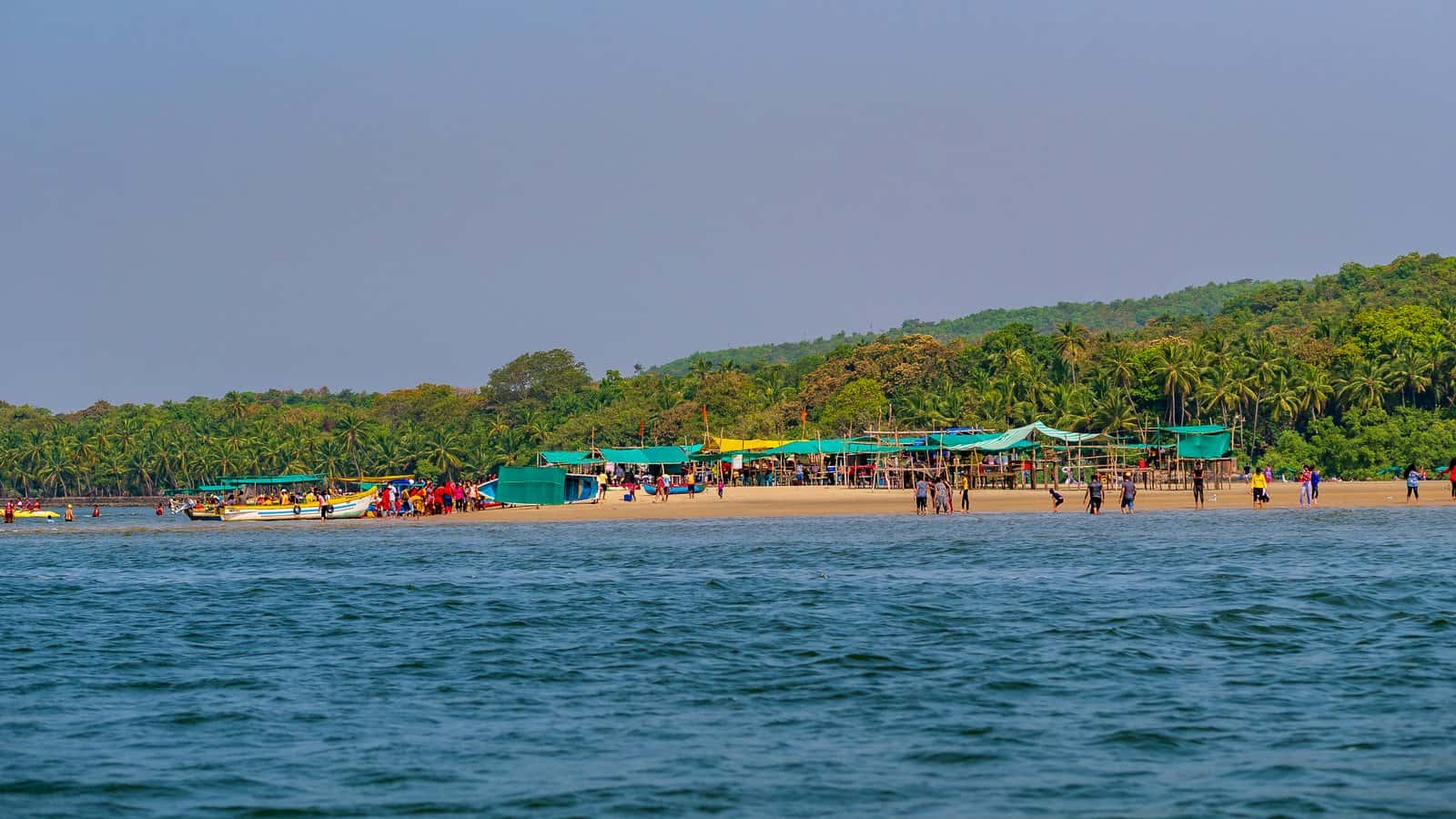
- Tarkarli BeachA long, clean, gently shelving white-sand beach declared a Queen Beach of the Konkan, calm and shallow enough for families and children to wade and play. The dark sand can make the water look greenish rather than blue, but it is one of the cleaner beaches on the coast and the base for the water sports.
- Sindhudurg FortThe sea fort built by Chhatrapati Shivaji Maharaj on an offshore rock, reached by a short ferry of about 10 to 15 minutes from Malvan jetty. The ferry runs roughly 8:00 am to 5:30 pm, the boat fee is commonly about 50 rupees for Indians and about 200 rupees for foreign nationals, and two to three hours is enough to walk the ramparts. It is closed when the sea is rough.
- Karli backwaters and Tsunami IslandBehind the beach, the Karli river backwaters are calm and scenic, the setting for the houseboats and the dolphin boats off Devbagh. Tsunami Island is a sandbar that emerges only at low tide, so a visit and its water sports have to be timed to the tide; ask your boatman to plan around low water.
- Malvan Marine Sanctuary and the dive sitesThe waters off Malvan and Tarkarli are a marine sanctuary with corals, molluscs and pearl oysters, which is what you go down to see on a dive. It is not a tropical reef, but it is the only scuba site in Maharashtra, and the only one many Indian divers ever try first.
Two natural rhythms shape a Tarkarli day. The tide decides Tsunami Island and the best of the backwater sports, so go at low water; and the season decides whether the sea is open at all, with the ferries and diving running October to May and stopping in the monsoon. Plan the fort and the dive for a calm clear morning and let the afternoon be the beach and the backwater.
Scuba, snorkelling, dolphins and the backwater
Beyond the beach, these are the experiences people come for, and how to arrange each one honestly, with the visibility and timing reality.
- Scuba diving, the headline experienceTarkarli is the only scuba site in Maharashtra. A beginner try-dive needs no swimming, takes you a few metres down with an instructor, and lasts a short while; expect honest rather than tropical visibility, clear on a good morning and as little as about one metre on a poor day. Go early, on a calm clear day, and pick a careful operator.
- Snorkelling, for everyoneThe family-friendly alternative to scuba: a mask, a life vest and the shallow reef, with no real age limit, so non-swimmers, children and seniors can all see the underwater life without descending. On a clear morning it is the gentle, low-stress way to enjoy the water.
- Dolphin spotting off DevbaghBoats from Devbagh go out to look for dolphins in the Arabian Sea. It is best as an early-morning trip when the sea is calm and the dolphins more active; sightings are never guaranteed, so treat it as a lovely boat ride that may be crowned by dolphins rather than a sure thing.
- The Karli backwater and Tsunami IslandKayaking, boating and the sandbar of Tsunami Island make a calm contrast to the open sea, all on the sheltered Karli backwaters. Tsunami Island only appears at low tide, so time the boat to the tide and you get a stretch of sand in the middle of the water to yourself.
- The MTDC houseboat cruiseMTDC's two Kerala-style houseboats, Karli and Hiranyakeshi, cruise the creek and anchor near Devbagh overnight, a slow, scenic alternative to a beach room. They are said to be the only such houseboats in Maharashtra, and a quiet treat for couples and families who want the backwater.
- Banana boats, jet ski and the combo packagesThe usual beach water sports, banana and bumper rides, jet ski and parasailing, are sold singly or in combo packages with scuba and underwater media. Agree exactly what is included and the price before you start, as combos are quoted high and the cheapest scuba slot is often the most basic.
If you do one thing carefully, make it the scuba or snorkel on a calm, clear morning with a careful operator. The visibility is honest and weather-dependent, so the difference between a magical first dive and a murky one is the morning you choose and the operator who briefs you properly. Give it the best conditions and Tarkarli's underwater world, the only one in the state, is worth the trip on its own.
Where to stay in Tarkarli, and how many nights
Stay at the MTDC beach resort, in a village homestay, in a beach cottage, or on the backwater houseboat. Two to three nights is the sweet spot.
- MTDC resort and IISDA: on the beachThe government MTDC resort sits right on the beach beside the IISDA scuba campus, with simple AC and non-AC cottages, bamboo houses, direct beach access and Malvani food. It is the convenient, no-fuss base for the diving and the beach, and the houseboats are run by the same MTDC operation.
- Konkani homestays in Tarkarli and DevbaghThe warmest, most local way to stay: family homestays in Tarkarli and Devbagh villages, from basic rooms to furnished AC ones, usually with home-cooked Malvani meals. They are the best value and the friendliest, and the hosts often arrange boats and dives.
- Beach cottages and resortsA handful of private cottages and small resorts dot the beach and the backwater, some with pools and sea views. Better for couples and families who want a bit more comfort than a homestay, though Tarkarli stays simpler and quieter than Goa throughout.
- How many nightsTwo to three nights is right: one day for scuba or snorkelling and the beach, one for Sindhudurg Fort and Malvan, and a backwater or dolphin morning. One night feels rushed given the long journey in, and a third night lets the place slow down.
Tarkarli is a favourite Maharashtra family getaway, so the MTDC resort, the houseboats and the better homestays fill on long weekends and through the Diwali, Christmas and summer-holiday peaks, with rates rising well above the off-season. If your dates fall on a holiday, book the room and the houseboat well ahead, and reconfirm the current tariff rather than relying on an old quote.
Tarkarli costs and a realistic budget
Tarkarli is gentle on the wallet outside peak weekends. Here is what the main things cost, so you can plan and avoid being overcharged on the water sports.
- The water sportsA basic try-scuba dive is roughly 500 to 1,000 rupees per person at many shore operators, with deeper or longer dives and combo packages including underwater photos and video running to about 1,400 to 2,200 rupees. Snorkelling, banana and jet-ski rides are typically a few hundred rupees each. Reconfirm the rate and what is included before you pay.
- The Sindhudurg ferry and fortThe boat to Sindhudurg Fort is commonly about 50 rupees per person for Indians and about 200 rupees for foreign nationals, a fixed and modest cost. The ferry runs roughly 8:00 am to 5:30 pm, weather permitting, and the fort itself has no heavy charge beyond the boat.
- Rooms and foodBasic homestay and cottage rooms can start from a few hundred to about 1,500 rupees off-season, with MTDC and AC cottages higher, all rising on peak weekends. A Malvani fish thali at a homestay or resort is inexpensive and a highlight, and the home-cooked food is part of the value.
- Cash and cardsTarkarli is a remote village, so it runs largely on cash. ATMs are mainly in Malvan town, cards and UPI are accepted by bigger resorts but not by boatmen, homestays and small eateries, so carry enough cash for the water sports, the boats and meals.
The single thing that saves money and avoids friction in Tarkarli is to agree the water-sports package and exactly what it includes before you start, whether that is a basic dive of about 500 to 1,000 rupees or a combo of about 1,400 to 2,200 rupees. The cheapest scuba slot is usually the most basic, and combos are quoted high, so confirm the dive depth, the time underwater and whether photos and video are included, and the only common complaint disappears.
Practical logistics: cash, getting around, food and SIM
The small things that make a remote Konkan trip smooth, from carrying cash to getting around by rickshaw and eating the Malvani thali.
- Carry cash, ATMs are in MalvanTarkarli is a village, so bank ATMs are mainly in Malvan town about 8 km away. Boatmen, homestays and small eateries take cash, not cards, so draw enough in Malvan or before you arrive and keep small notes for the water sports and the ferry.
- Getting aroundAuto-rickshaws and hired taxis cover the short hops between Tarkarli, Devbagh, Malvan and the jetty, and state buses run on the main routes. Many homestays arrange a bike, a rickshaw or a boat. Distances are short, but transport is village-paced, so allow time.
- Eat the Malvani foodMalvan and Tarkarli are the home of Malvani cuisine, so lean into the fish and prawn curries, kombdi vade, sol kadhi and the local thali. In the April to May season the Konkan Alphonso mangoes and cashews are superb. Homestays and the MTDC resort serve the real thing.
- SIM, signal and languageMobile coverage is generally fine in Tarkarli and Malvan but can be patchy in the deeper backwater and on the water, so download maps offline. Marathi is the local language, with Hindi widely understood and enough English in the tourist trade to manage easily.
Safety: the sea, the dive, and choosing an operator
Tarkarli is calm and family-friendly, but the open sea, the currents and the choice of dive operator deserve respect. A little care keeps the trip happy.
- Choose a careful dive operatorScuba is safe with the right people. MTDC's IISDA at Tarkarli is a PADI 5-star certified centre, the safest starting point; many beach-shack operators are cheaper but not certified to the same standard. Pick one who briefs you properly, has an instructor descend with you and a second person tracking from the surface, and uses well-kept gear.
- Respect the sea and the currentsThe Konkan sea has currents and the beach shelves into deeper water. Swim only in the calm shallow stretch, heed local advice and any flags, do not swim out alone or after drinking, and keep children within arm's reach. In the monsoon the sea is dangerous and the water sports are off.
- The age and non-swimmer rulesA beginner try-dive is generally for ages about 10 and up and needs no swimming, because the instructor controls the descent and can surface you in seconds. Tell the operator about any heart, ear, sinus or breathing condition or pregnancy, as these can rule out a dive; when in doubt, snorkel with a life vest instead.
- Sun, water and healthDrink bottled or filtered water, take the usual care with shellfish if you have a sensitive stomach, and carry strong sun protection for the open boats and the beach. There is a basic health setup in Malvan, but serious care is in the bigger towns, so travel with your essential medicines.
The most important safety call at Tarkarli is the sea state. Passenger ferries are barred in the monsoon for good reason, and even in season a sudden rough patch can make the fort boat, the dive or the dolphin trip unsafe. If the operator or the jetty is not running boats that day, do not push for one; the sea decides, and the calm clear morning is both the safest and the best dive you will get.
Tarkarli for every kind of traveller, and on access
Tarkarli suits very different visitors in different ways. Here is what it offers you, and the one tip that matters for each, including non-swimmers and seniors.
- Families with childrenOne of the best family beaches in Maharashtra: calm shallow water, snorkelling and banana boats kids love, the fort boat and dolphin trips, and home-cooked food. Keep little ones within reach in the sea, and choose snorkelling with a life vest over scuba for younger children.
- CouplesQuiet, clean and unhurried, the opposite of Goa's party coast. The backwater houseboat, a sunset on the empty beach and the fort make a gentle few days. An overnight on the houseboat is the romantic splurge.
- Non-swimmers and seniors, and on accessVery doable. Non-swimmers can snorkel in a life vest and even try a beginner scuba dive with an instructor, or simply enjoy the calm shallow beach and the backwater boats. Seniors should take the fort ramparts and the boat steps slowly and pick a calm day; tell any operator about heart, ear or breathing conditions before a dive.
- First-time scuba diversTarkarli is where many Indians try scuba for the first time, no certification or swimming needed for a try-dive. Start at the PADI 5-star IISDA or a careful operator, go on a clear calm morning, and treat the honest visibility as part of the adventure rather than a disappointment.
- Solo travellersA friendly, low-key village trip, easy to do alone with homestays, shared boats and group dives. It is quieter and more remote than Goa, so plan transport and cash ahead, and the homestay hosts make it sociable.
- PhotographersThe sea fort rising from the water, the empty white-sand beach, the backwater at dawn and the underwater life on a clear dive. Protect your gear from spray and sand, and use a waterproof setup or the operator's underwater camera for the dive.
A suggested Tarkarli itinerary
How to shape two or three unhurried days so you catch the calm morning sea for the dive and the right tide for the backwater.
- Day one: arrive and the beachGiven the long journey in, arrive, settle into your homestay or the MTDC resort, and ease into the beach and a first Malvani thali. If you arrive early enough and the sea is calm, a late-afternoon snorkel or beach water sports is a gentle start.
- Day two, morning: scuba or snorkelDo the water early, when the sea is calmest and the visibility best. Pick a careful operator, dive or snorkel on a clear morning, and keep the underwater media if you want a record. Rest and eat through the warm middle of the day.
- Day two, afternoon and evening: the fortTake the Malvan jetty ferry to Sindhudurg Fort, allowing for the roughly 8:00 am to 5:30 pm hours and two to three hours on the ramparts, then a sunset back on the beach. On a tight trip you can swap the fort to the morning and dive in the afternoon if the sea allows.
- Day three, if you have it: backwater and dolphinsA morning dolphin boat off Devbagh, a low-tide visit to Tsunami Island, or a houseboat cruise on the Karli backwater, timed to the tide. A third day turns a rushed dash into the calm Konkan break Tarkarli does best, before the long journey home.
The two things that break a tight Tarkarli plan are diving in the afternoon when the sea has roughened and the visibility dropped, and reaching Tsunami Island at high tide when the sandbar is underwater. Put the scuba or snorkel in the calm clear morning, time the backwater and the island to low water, and keep the fort and the beach for the rest of the day, and the trip flows without a wasted boat.
The real questions travellers ask about Tarkarli
Straight answers to the questions that come up again and again on traveller forums, so you arrive already knowing the score.
- How clear is the water for scuba, really?Honest, not tropical. On a calm clear morning in season the visibility is good and the dive rewarding, but it can drop to around one metre on a poor day, and the dark sand makes the water look greenish rather than blue. Dive early on a clear day and set your expectations, and it is genuinely enjoyable.
- Can a non-swimmer or a child dive?Yes for a beginner try-dive: no swimming is needed because the instructor controls the descent, and the usual minimum age is about 10. Younger children and the unsure are better off snorkelling with a life vest, which has no real age limit and shows the shallow reef without descending.
- How many days do I need?Two to three nights. Given how far Tarkarli is from Mumbai and Pune, one night feels rushed; two lets you dive, see the fort and enjoy the beach, and a third adds the backwater, the dolphins or a houseboat night.
- Is Tarkarli better than Goa, or just different?Different. Tarkarli is quieter, cleaner and more family-oriented, with India's calmest first scuba dive and a sea fort, but without Goa's nightlife, choice of stays and easy access. Come for the calm clean Konkan, not for a party, and pair it with Goa if you want both.
- Is it open in the monsoon?Not for the water. From about June to September the sea is rough and muddy and passenger ferries are barred, so scuba, snorkelling and the fort boat stop. The Konkan is green and lovely then, but it is not a water-sports season, so plan accordingly.
- What are the Sindhudurg ferry timings and fee?The ferry from Malvan jetty runs roughly 8:00 am to 5:30 pm, weather permitting, with the boat about 50 rupees for Indians and about 200 rupees for foreign nationals, and the crossing takes 10 to 15 minutes. Go early, allow two to three hours on the fort, and reconfirm locally as hours shift with the season.
Planning Tarkarli from abroad
Tarkarli is the clean, quiet Indian-family beach, the calm counterpoint to Goa, reached through Goa or Mumbai. A little preparation makes the remoteness and the season easy to handle.
- It is remote and Indian, not a resort stripTarkarli is a Konkan village, not a developed beach resort like Goa. Expect homestays and simple cottages, home-cooked Malvani food, and a slower pace. That is its charm, but come for the calm and the diving, not for nightlife or a wide choice of international hotels.
- Come between October and MayThe water sports and the fort ferry run October to May, with the clearest water from about November to April, and shut in the monsoon when ferries are barred. Plan your trip in the dry season, and aim for the calm clear months for the best dive.
- Pair it with GoaGoa is the nearest international-standard airport and a natural pairing: do the beaches and nightlife of Goa, then drive a few hours up the coast through Kudal for the quiet, clean Konkan and India's only scuba dive at Tarkarli. The new Chipi Sindhudurg airport is closer but has limited flights.
- Carry cash and manage expectationsTarkarli runs on cash, with ATMs in Malvan town, and English is limited outside the tourist trade though enough to manage. The diving visibility is honest rather than tropical, so come for the experience and the calm coast, and the remoteness becomes a feature rather than a frustration.
Money, connectivity and timing for foreign visitors
The practical basics an overseas traveller needs for a remote Konkan village: cash, a SIM, the season window and how many days to give it.
- Carry cash, draw it in Malvan or GoaBoatmen, homestays and small eateries are cash places and ATMs are mainly in Malvan town, so draw enough cash in Goa, Mumbai or Malvan before you settle in. Bigger resorts take cards and UPI, but the water sports and the ferry are cash.
- Get a SIM at the airportPick up an Indian tourist SIM or an eSIM when you land in Goa or Mumbai rather than hunting in a small village. Coverage in Tarkarli is generally fine but patchy on the water and the deeper backwater, so download offline maps before you go out on a boat.
- How long to give it on a bigger tripTwo to three nights is the right weight for Tarkarli on a wider Goa-and-Konkan trip: enough for a dive, the fort and the backwater, without slowing a longer itinerary. Add the time for the road or rail in, which is several hours from Goa and a long haul from Mumbai.
- Time your visit to the seasonOctober to May is the window, November to April the clearest water, and the monsoon the closure. If you want the diving and the fort, come in the dry season and aim for a calm clear morning; the Konkan in the rains is green and beautiful but the sea is off limits.
If Goa is India's famous beach, Tarkarli is its quiet, clean, family one. It is remote and cash-driven and the diving visibility is honest rather than postcard-blue, but the calm shallow sea, the sea fort, the backwater houseboat and the home-cooked Malvani food add up to a gentler, more local coast than the resort strips. Slot it after Goa, give it two or three nights in the dry season, and let it be the slow, clean chapter of a Konkan trip.
Why a fort rises straight out of the sea off Tarkarli
Look out from Tarkarli beach and a line of grey ramparts stands on the water, the sea fort of Sindhudurg. Chhatrapati Shivaji Maharaj, the founder of the Maratha kingdom, chose this offshore rock in the 17th century to guard the Konkan coast against the European sea powers and the raiders of the Arabian Sea, and the fort was built directly onto the reef so that no land army could march on it and only a boat could reach it. Local tradition holds that the foundations were laid in molten lead to bind them to the rock, and that the fort still keeps rare handprints and a footprint said to be Shivaji's own pressed into its lime. Today the same short ferry that carried its defenders carries visitors across, and the fort that once watched for enemy sails now watches over a coast known for clear-season diving and quiet beaches. It is the reason Tarkarli feels like history and holiday at once.
Planning a Tarkarli trip?
Our Maharashtra travel experts plan your full journey for you: route, hotels, darshan timings and transport. You get a free day-by-day plan and an exact quote on WhatsApp, usually within a few hours. No payment is needed to get your plan.
Tour packages that visit Tarkarli
Every journey below is private, hand-crafted and fully customizable. Tell us your dates and we tailor the itinerary, the pace and the priests or guides around you.