Shillong Travel Guide
The comfortable, photogenic window is roughly October to April . Meghalaya is among the wettest places on earth, so the June to September monsoon is spectacular but heavy, and it...
When to visit Shillong, and why the season decides your trip
The comfortable, photogenic window is roughly October to April. Meghalaya is among the wettest places on earth, so the June to September monsoon is spectacular but heavy, and it is a real decision rather than a detail.
- October to April: clear, dry and the classic photosThis is the comfortable window, cool and mostly dry, and the only time Dawki's Umngot River turns glass-clear and Cherrapunji's gorges are calm enough to walk. Days are pleasant and nights cold, so carry a warm layer. November also brings the Shillong cherry-blossom season, a brief, lovely flush of pink across the city.
- Winter, December to February: cold and crispDaytime is fine for sightseeing but mornings are foggy and nights can drop towards freezing on the high ground, so pack genuinely warm clothes. The light is clear and the crowds thinner outside the festival weeks, which makes it a quietly rewarding time to come.
- June to September: the great Meghalaya monsoonMeghalaya is one of the wettest places on earth, and these months deliver thundering waterfalls and impossibly green hills, but also long downpours, fog, slippery trails and the odd landslide that closes a road. It is glorious if you came for the rain and the falls, and miserable if you wanted clear skies and Dawki's mirror water.
- Decide your season before you bookRoughly speaking, come October to April for clear weather, Dawki's clarity and easier trekking, and come in the monsoon only if the rain and the roaring falls are the point. Trying to get both in one trip leads to disappointment, so choose the experience you actually want first.
The Cherrapunji and Dawki images that sell Meghalaya are mostly dry-season scenes. In the monsoon the waterfalls are at their most dramatic, but the Umngot River at Dawki runs muddy rather than clear, root-bridge trails get slick and dangerous, fog can wipe out the viewpoints, and a landslide can shut a road for hours. None of that is a reason to skip the rains, but it is a reason to come knowing what you are choosing. Reconfirm road conditions locally before any monsoon day trip.
How to reach Shillong, and the airport truth
Almost everyone arrives through Guwahati Airport in Assam, then drives about 3 to 3.5 hours up to Shillong. The little Umroi airport near Shillong has only a handful of changeable flights, so do not plan around it.
- Guwahati is the real gatewayGuwahati Airport in Assam is about 100 to 120 km from Shillong, roughly 3 to 3.5 hours by road on NH6 through the hills, and it has by far the widest flight connections in the region. The drive itself, past Umiam Lake, is part of the experience. This is the route almost every traveller takes.
- Umroi airport: small and changeableShillong does have its own Umroi Airport, about 30 to 35 km from the city, but it handles only a few small-aircraft flights on routes that come and go, and several services have been suspended. Treat it as a bonus if a convenient flight exists, not as your plan, and check current routes before relying on it.
- Guwahati to Shillong by cab or shared taxiA private cab from Guwahati to Shillong is typically about 2,200 to 2,600 rupees for the car. A seat in a shared taxi or sumo from Paltan Bazaar in Guwahati is about 400 to 800 rupees per person and drops you at Police Bazaar in central Shillong. We can arrange a private car with an experienced hill driver for a smoother arrival.
- By rail and by busThere is no railway into Shillong; the nearest railhead is Guwahati, so the train gets you to Assam and the last leg is by road. Meghalaya and Assam state transport buses run the Guwahati to Shillong route cheaply but more slowly than a shared taxi, and they are a fine budget option if you are not in a hurry.
Fly into Delhi or Kolkata, connect to Guwahati, then drive about 3 to 3.5 hours up to Shillong. There are no international flights into Meghalaya, and Guwahati is the practical hub for the whole Northeast.
Route through Delhi or Kolkata to Guwahati, then continue by road. Kolkata is often the shortest connection into the Northeast, and it has occasional direct links to little Umroi as well, though schedules change.
Fly to Guwahati from any metro and drive up, or take a train to Guwahati and continue by shared taxi or bus. The Guwahati to Shillong road is the simplest and most reliable way in.
The sights of Shillong, and the Air Force rule at the Peak
Shillong is lakes, falls, a fine tribal museum and the high viewpoint at Shillong Peak. One sight, the Peak, sits inside an Air Force base, and its rules surprise a lot of first-timers.
- Shillong Peak, inside the Air Force baseThe highest point around, at about 1,965 metres, gives the classic view over the city, but it sits inside an Indian Air Force station and the rules follow from that. Carry an original Indian photo ID for the security check, expect entry to close by mid-afternoon, around 3:30 pm, and do not photograph the base itself, only the view. The small charge is roughly 30 to 40 rupees.
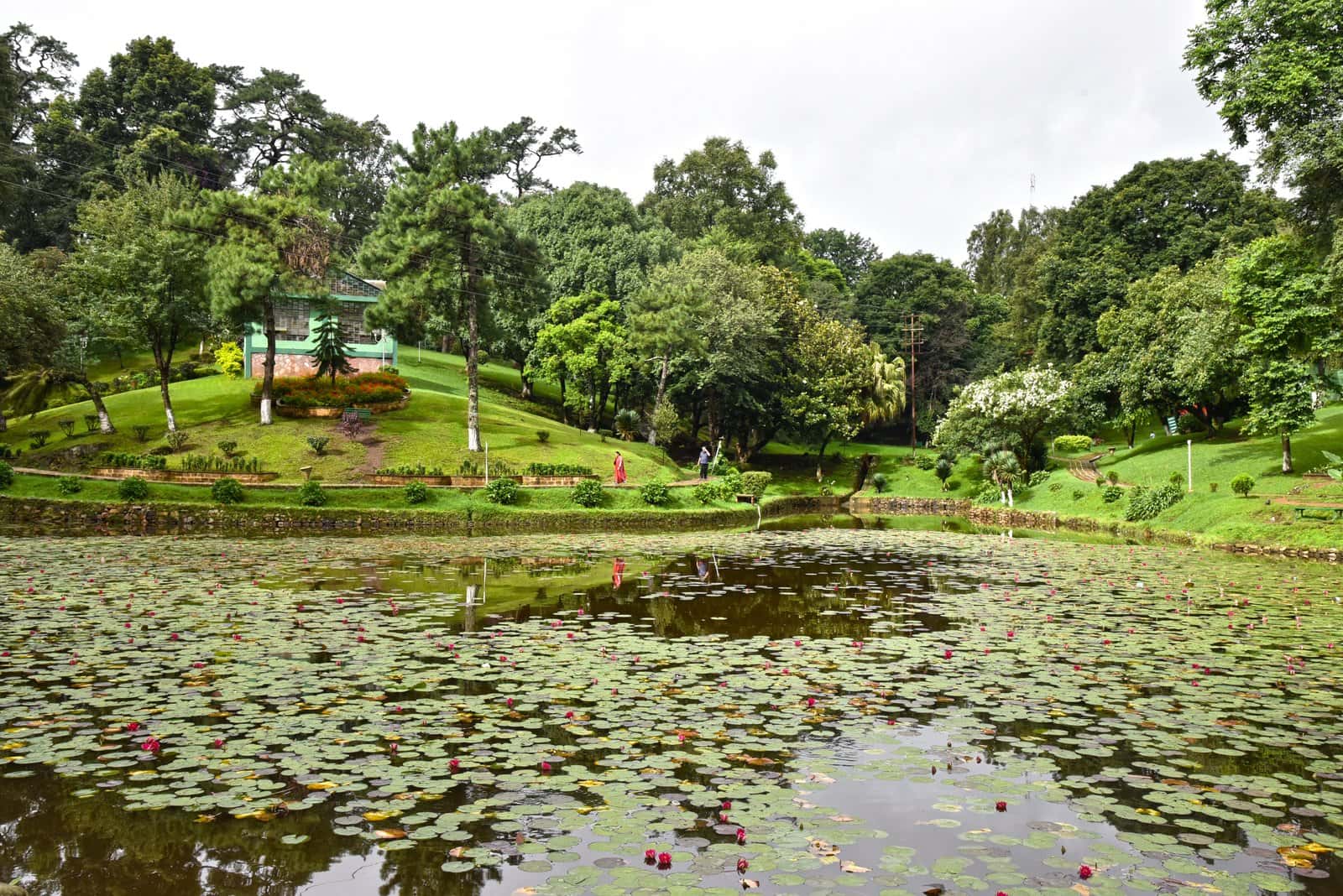
- Ward's Lake and Umiam LakeWard's Lake, also called Pollock's Lake, is a calm man-made lake in the city centre with a wooden bridge and paddle boats, a gentle stroll for any age. Umiam Lake, or Barapani, a few kilometres out on the Guwahati road, is the big reservoir for sunset views, boating and water sports, and you will likely pass it on the way in.
- Elephant FallsA pretty three-tiered waterfall about 12 km from the city, with a short stepped walk down to the viewpoints, open roughly 9 am to 5 pm with a small entry fee of about 20 rupees and about 20 rupees more for a camera. It is at its fullest just after the monsoon. One of the easier sights, though the steps can be slippery when wet.
- Don Bosco Museum and the CathedralThe Don Bosco Centre for Indigenous Cultures is a genuinely good seven-storey museum of Northeast India's tribes, well worth two hours, but it is closed on Sundays and public holidays, so plan around that. The Cathedral of Mary Help of Christians nearby is a quiet, pretty stop that speaks to Shillong's strong Christian heritage.
Because Shillong Peak is inside an active Air Force station, foreign nationals are generally not permitted to enter, and even Indian visitors must produce an original photo ID at the gate. Entry is usually cut off in the mid-afternoon and visitors are asked to leave by about 4 pm. If you are an overseas traveller, do not build your day around the Peak; the views from Laitlum Canyons or from the Umiam Lake viewpoints are open to everyone and just as memorable. Reconfirm current access on the day, as base rules can change.
Cherrapunji, Mawlynnong and Dawki, the great day trips
The real magic of a Shillong trip lies outside the city: the waterfalls and caves of Cherrapunji, Asia's cleanest village at Mawlynnong, and Dawki's clear river. Here is how far each is and how to pair them.
- Cherrapunji (Sohra)About 54 km and 1.5 to 2 hours from Shillong, this is the classic day out: Nohkalikai Falls, India's tallest plunge waterfall at about 340 metres, the Seven Sisters or Nohsngithiang Falls, and lit limestone caves like Mawsmai, with a small entry of roughly 20 to 30 rupees at the cave. Despite the famous tag, the wettest-place-on-earth record is now held by neighbouring Mawsynram, with Cherrapunji a close second.
- Mawlynnong and the Riwai root bridgeMawlynnong, marketed as Asia's cleanest village after a 2003 magazine feature, is about 78 to 90 km and roughly 3 hours away, with a village entry of about 100 rupees, a bamboo sky-view tower and the easy Riwai single living root bridge nearby. It is small, so pair it with Dawki on one long day rather than visiting it on its own.
- Dawki and the Umngot RiverAbout 82 km and 2.5 to 3.5 hours away near the Bangladesh border, Dawki is famous for water so clear the boats look airborne, but only in the dry months. A boat for up to about six people is around 700 to 800 rupees. Combine it with Mawlynnong, leave Shillong early, and accept that this is a full day on the road.
- Mawphlang and Laitlum, the quieter halfMawphlang Sacred Forest, about 25 km out, is an ancient grove the Khasi protect for ritual, walked with a local guide and a small fee. Laitlum Canyons, around 25 km the other way, is a dramatic, open gorge viewpoint with far fewer crowds. Both are gentler, half-day outings that balance the big-ticket day trips.
The sensible pairings are Cherrapunji as one day, and Mawlynnong with Dawki as another long day, since the latter two sit in the same direction towards the border. Some villages, including Mawlynnong at times, restrict day-tripper access on Sundays, and the Don Bosco Museum back in the city is shut on Sundays too, so a Sunday is best spent on a flexible outdoor day rather than a museum or a single small village. Reconfirm any Sunday plan locally before you set off.
Signature experiences, and the root-bridge trek truth
Beyond the viewpoints, these are the experiences people remember, and the honest word on how hard the famous double-decker root bridge trek really is.
- The double-decker living root bridge at NongriatThe signature Meghalaya experience, but a serious one: from the trailhead at Tyrna village it is roughly 3,500 steep steps down and back, a moderate-to-hard hike of about 4 to 6 hours that hurts the knees on the climb out. The reward is a magical, living, two-tier bridge of woven tree roots. Take water, start early, and consider a night at a Nongriat homestay so you are not climbing out in the dark.
- The easy root bridge at RiwaiIf the Nongriat trek is too much, the single living root bridge at Riwai near Mawlynnong is a short, gentle walk of a few hundred metres with a small fee of about 30 rupees. It gives you the same wonder of a grown-not-built bridge without the punishing steps, which makes it the right choice for families with young children and for older travellers.
- Boating on Dawki's clear waterIn the dry months a slow row on the Umngot River at Dawki, where the boat seems to hang above its own shadow, is the photo everyone comes for. Wear the provided life jacket, agree the boat price first, and come in the morning before the light flattens. In the monsoon the river is muddy, so save this for October to April.
- Umiam Lake and a sunset over the waterUmiam Lake, just outside the city on the Guwahati road, is the easy, lovely counterpoint to the long treks: boating, kayaking and water sports by day and a calm sunset over the reservoir in the evening. It is the gentle experience that suits everyone, and it sits right on your way in or out.
- Caves and waterfalls at CherrapunjiWalking a lit limestone cave like Mawsmai or Arwah and standing at the rim of Nohkalikai Falls are the unhurried highlights of a Cherrapunji day. The caves are short and mostly easy, with a low ceiling in places, and the falls are roadside viewpoints, so this is a day that suits a wide range of fitness.
- The Shillong cherry blossom, if your dates matchIf you visit around November you may catch the brief cherry-blossom flush and the festival the city builds around it, with music and food at venues like Ward's Lake and the Polo Grounds. Dates shift year to year, so reconfirm the festival window before you plan a trip around it.
The single most common bad surprise in Meghalaya is arriving at Tyrna expecting a viewpoint and finding 3,500 steps. The double-decker bridge is worth every step for a fit walker, but it is a genuine half-day trek down a steep stone staircase, and the climb back tests the knees and the lungs. If you are unsure, do the easy Riwai bridge instead and keep the legend without the suffering. There is no shame in choosing the gentle version.
Where to stay, and why splitting nights saves you driving
Shillong has the hotels and the food, but a single base means long daily drives. Many travellers split nights, two in Shillong then one near Cherrapunji or Nongriat, to cut the road time.
- Shillong city: the comfortable baseShillong has the widest choice of hotels, restaurants, cafes and connectivity, and the central Police Bazaar area keeps everything walkable. The trade-off is that every day trip is a long out-and-back drive, and weekend traffic through Police Bazaar can be slow, so start early.
- Cherrapunji and homestays: closer to the fallsBasing a night near Cherrapunji or Sohra puts you within reach of the waterfalls, caves and the root-bridge trailheads first thing in the morning, before the day-trippers arrive. Homestays here are simpler than Shillong's hotels but quieter and friendlier, and they cut hours of driving.
- A night in NongriatIf you are doing the double-decker trek, a homestay down in Nongriat village turns a brutal there-and-back day into a relaxed two-day walk, letting you swim in the natural pools and climb out fresh the next morning. Rooms are basic, electricity can be patchy, and you carry your own bag down the steps, so pack light.
- How to split your nightsA common and sensible pattern is two nights in Shillong for the city, Umiam Lake and a Dawki-Mawlynnong day, then one or two nights near Cherrapunji or in Nongriat for the falls and the root bridges. It keeps the driving humane and gets you to the best sights early, before the crowds and the afternoon cloud.
It is tempting to keep one Shillong hotel and day-trip to everything, but the geography fights you: Dawki and Mawlynnong alone are a 7 to 8 hour driving day there and back, and you reach the best spots in the flat afternoon light with the crowds. Splitting even one night out towards Cherrapunji transforms the trip, and it is the single most useful planning move most first-timers miss.
Shillong and Meghalaya costs, and a realistic budget
Meghalaya is moderate on the wallet, but the transport adds up because of the distances. Here is what the main things cost so you can plan and avoid being overcharged.
- The fixed entry feesMost sights are cheap: Elephant Falls is about 20 rupees plus about 20 rupees for a camera, Cherrapunji caves roughly 20 to 30 rupees, Mawlynnong village about 100 rupees, the Riwai root bridge about 30 rupees, and the Don Bosco Museum about 100 rupees for an Indian adult or about 200 rupees for a foreign adult. These small, fixed numbers are a useful anchor.
- Transport is the real costThe Guwahati to Shillong cab runs about 2,200 to 2,600 rupees for the car, or about 400 to 800 rupees a seat shared. A full day of local sightseeing by private taxi is commonly about 2,000 to 3,000 rupees for the car, while a shared sumo seat on a set route is far less. Because the distances are long, the car, not the entry fees, is where your money goes.
- A rough daily budgetExcluding your room and the Guwahati transfer, plan on roughly 1,500 to 2,500 rupees a day as a backpacker sharing transport, about 3,500 to 6,000 rupees mid-range with a private car split between a couple, and more for a comfortable private day with a driver. The Dawki boat at about 700 to 800 rupees for the boat splits nicely across a group.
- Cash, cards and ATMsShillong has plenty of ATMs and cards and UPI work in the city, but the valleys, villages and homestays around Cherrapunji, Dawki and Nongriat are largely cash places where signal is patchy. Draw enough cash in Shillong for your day trips and homestays so you are not caught short in a village with no working ATM.
In Meghalaya the entry fees are trivial; the cost that moves your budget is the car. Long distances mean a private vehicle for sightseeing is the big line item, so the way to control spend is to share a sumo on fixed routes, split a private car across a couple or a group, or base closer to the sights to cut the hours. Agree the day rate and the route with your driver before you set off, and the only common friction disappears.
Practical logistics: roads, fog, fuel, SIM and getting around
The small things that make a Meghalaya day smooth, from foggy mountain roads and patchy signal to fuel stops, ATMs and how to get around.
- Hill roads, fog and an early startRoads are narrow, winding and shared with overtaking traffic, and mornings can be foggy, so visibility often improves only by mid-morning. Start your day trips early to beat both the fog and the Police Bazaar traffic, and never plan to drive the mountain roads after dark if you can avoid it.
- Self-drive or a driverMost visitors hire a car with a local driver rather than self-drive, because the hill roads, the overtaking culture and the fog are a lot to handle for a first-timer, and a Khasi driver knows the conditions and the shortcuts. If you do self-drive, take it slowly on the bends and keep fuel topped up, as pumps thin out in the valleys.
- SIM, signal and connectivityShillong has reliable mobile data, but coverage thins fast in the Cherrapunji gorges, Dawki and especially down in Nongriat, where it can vanish. Download offline maps before you leave the hotel, tell your homestay roughly when to expect you, and do not rely on a live connection in the valleys.
- Getting around town and the languageWithin Shillong, shared sumos and local taxis handle the short hops, and Police Bazaar is the walkable centre for food and shopping. Khasi is the main local language, but English is very widely spoken across Meghalaya thanks to its strong school tradition, so communicating is easy for any visitor.
Safety, the permit rules, and staying well in the hills
Meghalaya is one of the friendlier, safer Northeast states, but the road conditions, the weather and the foreigner registration rule are the things to plan for.
- Permits: none, but foreigners must registerMeghalaya does not require an Inner Line Permit, unlike Arunachal Pradesh, Nagaland, Mizoram and Manipur, so Indian travellers simply carry a photo ID. Foreign nationals, however, are required to register with the Foreigners Registration Office in Shillong, usually within 24 hours of arrival, so make that an early task and keep your passport handy.
- The roads are the real riskThe most likely hazard here is the road, not crime: narrow bends, fog, overtaking and the odd monsoon landslide. Use a careful local driver, avoid night driving in the hills, keep car sickness tablets handy for the twists, and never push a day trip when the weather has turned, since a road can close without warning.
- Weather, altitude and healthShillong sits high enough to be genuinely cold in winter, so pack warm clothes and a rain layer in any season. Drink bottled or filtered water, take the usual care with food, and on the root-bridge trek carry water and watch your footing on wet steps. Pharmacies are good in Shillong but thin in the villages, so carry a basic kit.
- Respect, dress and the sacred grovesMeghalaya is largely Christian with strong matrilineal Khasi, Jaintia and Garo traditions, and locals are warm but value respect: dress modestly, ask before photographing people, and at sacred forests like Mawphlang follow your guide's rules and take nothing, not even a leaf, out of the grove.
Meghalaya is widely regarded as one of the more relaxed and welcoming Northeast states for independent and solo female travellers, helped by its matrilineal Khasi society and the easy reach of English. Standard precautions apply: prefer shared transport you can vet, avoid lonely roads and the steep root-bridge trails alone after dark, and keep someone informed of your day-trip plan given the patchy signal in the valleys. The friction travellers report is far more about roads and weather than personal safety.
Shillong and Meghalaya for every kind of traveller
Meghalaya suits very different visitors in different ways. Here is what it offers you and the one tip that matters for each, including how a senior plans around the steps and the long drives.
- Couples and honeymoonersGreen hills, clear rivers, sunsets over Umiam Lake and quiet homestays make Meghalaya a soft, scenic honeymoon. Split a night out towards Cherrapunji for the falls at dawn, and you swap a rushed loop for a slow, romantic one.
- Families with childrenEasy wins are Elephant Falls, Ward's Lake boating, Umiam Lake and the gentle Riwai root bridge. Skip the 3,500-step Nongriat trek with small children, and remember the Dawki-Mawlynnong day is a long one on winding roads, so carry snacks and car sickness tablets.
- Senior travellers and on accessibilityVery doable with planning. Stick to the step-light sights, Ward's Lake, Umiam Lake, the Cherrapunji roadside viewpoints and the easy Riwai bridge, and skip the Nongriat trek and the steeper falls. Note that Shillong Peak needs an Indian photo ID and bars foreign nationals. Keep driving days short by basing closer to the sights, and break the long Guwahati transfer if needed.
- Backpackers and budget travellersShared sumos on fixed routes, homestays in Cherrapunji and Nongriat, and cheap, hearty food make Meghalaya friendly on a budget. The root-bridge trek and the Dawki boat split nicely across a group, and English everywhere makes independent travel simple.
- Solo female travellersOne of the easier, more welcoming Northeast states for solo women, with a matrilineal Khasi society and widespread English. Use shared transport you can vet, keep someone posted on your plan given the patchy signal, and avoid the steep trails alone after dark.
- PhotographersDawki's clear water in the dry months, Nohkalikai in full monsoon flow, the living root bridges and the cherry blossom in November are the standout frames. Remember you cannot photograph the Air Force base at Shillong Peak, only the view, and ask before photographing people in the villages.
How long to spend, and a sensible Meghalaya itinerary
Give Meghalaya 4 to 7 days. Here is how to shape it so the driving stays humane and you reach the best sights early, with the Cherrapunji and Dawki day trips built in.
- Days one and two: arrive and see ShillongLand at Guwahati, drive up past Umiam Lake, and settle into Shillong. Give a full day to the city: Ward's Lake, Elephant Falls, the Don Bosco Museum (not on a Sunday), Shillong Peak if you carry the right ID, and a sunset at Umiam Lake on the way back.
- Day three: the Dawki and Mawlynnong loopStart early for the long day towards the border: the clear Umngot River at Dawki for a morning boat ride, then Asia's cleanest village at Mawlynnong and the easy Riwai root bridge, back to Shillong by evening. This is the day that rewards an early start the most.
- Days four and five: Cherrapunji and the root bridgesMove out towards Cherrapunji and stay a night to reach the falls, caves and the Nongriat trailhead before the crowds. Fit walkers can take on the double-decker root-bridge trek with a night in Nongriat; everyone else does the roadside falls and caves and the easy bridge.
- Stretch to six or seven daysWith more time, add Mawphlang Sacred Forest and Laitlum Canyons for quieter, gentler half-days, or simply slow the pace so the long drives do not stack up. Four days is the honest minimum to do Meghalaya without rushing; five to seven days is where it relaxes into the trip it should be.
The classic mistake is to keep one Shillong base and day-trip to everything, which turns Dawki, Cherrapunji and the root bridges into 7 to 8 hour driving days that reach the best spots in flat afternoon light. Build at least one night out towards Cherrapunji or Nongriat into your plan, leave early every day, and keep a Sunday flexible because of the museum and village closures. That single change is the difference between a tiring loop and a relaxed trip.
The real questions travellers ask about Shillong
Straight answers to the questions that come up again and again on traveller forums, so you arrive already knowing the score.
- How many days do I need?Four days is the honest minimum to cover Shillong, a Cherrapunji day and a Dawki-Mawlynnong day without rushing. Five to seven days lets you add the Nongriat trek with a night in the village, plus Mawphlang and Laitlum, at a relaxed pace. Less than three days means a tiring blur of driving.
- Do I need a permit for Meghalaya?No Inner Line Permit is needed, unlike Arunachal, Nagaland, Mizoram and Manipur. Indian travellers just carry a photo ID. Foreign nationals do not need an ILP either, but are required to register with the Foreigners Registration Office in Shillong, usually within 24 hours of arrival.
- Should I base in Shillong or move around?Base in Shillong for the first two nights for the city and the Dawki day, then move out to a Cherrapunji or Nongriat homestay for the falls and root bridges. Doing everything from a single Shillong hotel means long daily drives and reaching the best sights late in the day.
- Is the root-bridge trek too hard?The Nongriat double-decker is a real trek of roughly 3,500 steep steps down and back, about 4 to 6 hours, hard on the knees climbing out. If that is too much, do the easy Riwai single root bridge near Mawlynnong instead, which is a short, gentle walk anyone can manage.
- Is Dawki worth the long drive?In the dry months, October to April, yes: the clear water and the floating-boat effect are genuinely special, and it pairs with Mawlynnong on one day. In the monsoon the river runs muddy and the magic is gone, so the season decides whether it is worth the 2.5 to 3.5 hour drive each way.
- Can foreign nationals visit Shillong Peak?Generally no. Shillong Peak is inside an Air Force station that bars foreign nationals and requires an original Indian photo ID even from Indian visitors, with entry cut off mid-afternoon. Overseas travellers should head to Laitlum Canyons or the Umiam Lake viewpoints instead, which are open to all.
Planning Shillong and Meghalaya from abroad
Meghalaya is one of the gentler, friendlier Northeast states for an overseas visitor, with no Inner Line Permit and widespread English. A little preparation handles the registration rule and the Air Force quirk at the Peak.
- No ILP, but register as a foreignerMeghalaya needs no Inner Line Permit, which makes it easier than Arunachal or Nagaland, but foreign nationals are required to register with the Foreigners Registration Office in Shillong, usually within 24 hours of arrival. Make that an early task on day one and keep your passport accessible throughout the trip.
- Skip Shillong Peak, choose open viewpointsShillong Peak sits inside an Air Force base that generally does not admit foreign nationals, so do not build your day around it. Laitlum Canyons and the Umiam Lake viewpoints are open to everyone and give views every bit as memorable, with none of the security hurdles.
- Route it through GuwahatiFly into Delhi or Kolkata, connect to Guwahati, then drive about 3 to 3.5 hours up to Shillong. Meghalaya pairs naturally with the wider Northeast, so many overseas visitors combine it with Kaziranga in Assam for the one-horned rhino, an easy add on the same loop.
- English everywhere, warm welcomeThanks to a strong school tradition, English is very widely spoken across Meghalaya, which makes independent travel unusually easy for an overseas visitor. The Khasi matrilineal culture is warm and curious, so a respectful traveller is met with real friendliness rather than hard selling.
Money, connectivity and timing for foreign visitors
The practical basics an overseas traveller needs for a hill state with long drives and patchy valleys: cash, a SIM, and how many days to give Meghalaya on a wider India trip.
- Carry cash, the valleys are cash-onlyShillong has ATMs and cards work in the city, but the homestays and small vendors around Cherrapunji, Dawki and down in Nongriat run on cash with patchy signal. Draw enough rupees in Shillong to cover your day trips and homestays, since a working ATM is rare once you leave the city.
- Get a SIM in Guwahati or ShillongPick up an Indian tourist SIM or an eSIM when you land, ideally in Guwahati or in Shillong itself, rather than counting on one in a village. Coverage is good in Shillong but thins fast in the gorges and valleys, so download offline maps before any day trip.
- How long to give it on a bigger tripOn a Northeast trip, four to seven days in Meghalaya is the right weight: enough for Shillong, Cherrapunji, Dawki and at least one root bridge, while leaving room to add Kaziranga in Assam. Less than four days and the long drives eat the trip; more and you can slow right down.
- Time it to the dry seasonOctober to April is the comfortable window with clear weather and Dawki's clarity. If you want the full force of the monsoon and the roaring falls, come June to September, but expect rain, fog and the odd road closure, and accept that Dawki will be muddy rather than clear.
Meghalaya is an unusually easy introduction to Northeast India: no Inner Line Permit, English almost everywhere, a warm matrilineal Khasi culture, and scenery, the clear rivers, the living root bridges and the wettest hills on earth, that you will find nowhere else. Route it through Guwahati, give it four to seven days, base smart to keep the driving humane, and many overseas visitors say it becomes the part of India they talk about most when they get home.
The bridges the Khasi grow instead of build
In the wettest hills on earth, where wooden bridges rot and bamboo washes away in a single monsoon, the Khasi and Jaintia people of Meghalaya found a different answer: they grow their bridges from living trees. Over fifteen to thirty years they patiently train the aerial roots of the Ficus elastica, the Indian rubber fig, guiding them across a stream on bamboo scaffolding until the roots reach the far bank, take hold, and slowly fuse into a single living span. Unlike anything humans assemble, these bridges do not decay with age; they grow stronger every year, some are well over a century old, and the famous double-decker at Nongriat carries dozens of people across the gorge on roots that are still quietly thickening. It is a tradition found nowhere else on earth, passed down through generations who plant a bridge they will not live to see finished, for grandchildren they will never meet. Meghalaya has placed these root bridges on India's UNESCO World Heritage tentative list, and standing on one, feeling it flex gently underfoot, is the single image most travellers carry home from these hills.
Planning a Shillong trip?
Our Meghalaya travel experts plan your full journey for you: route, hotels, darshan timings and transport. You get a free day-by-day plan and an exact quote on WhatsApp, usually within a few hours. No payment is needed to get your plan.
Tour packages that visit Shillong
Every journey below is private, hand-crafted and fully customizable. Tell us your dates and we tailor the itinerary, the pace and the priests or guides around you.
 7D / 6N
Assam Meghalaya Tour
- Guwahati
- Shillong
 5D / 4N
Guwahati Shillong Cherrapunjee Tour
- Visit Kamakhya Temple at Guwahati.
- Visit Elephant Falls in the outskirts of Shillong.